Our readers keep the lights on and my smoothie glass nicely filled. As an Amazon Associate, I earn from qualifying purchases.
Stepping into interchangeable-lens photography for the first time feels like a maze of sensor sizes, lens mounts, and conflicting online opinions. The real challenge isn’t choosing a camera—it’s finding the one that matches your specific shooting habits without burying you in menus or requiring a second mortgage.
I’m Mohammad Maruf — the founder and writer behind WellFizz. I’ve spent years dissecting mirrorless camera specifications, analyzing user workflows, and breaking down the real-world differences between sensor formats and autofocus systems for new shooters.
After dozens of hours comparing sensor performance, autofocus speed, and body ergonomics, I’ve identified the models that genuinely serve beginners. The best beginner mirrorless camera balances intuitive controls with room to grow, and this guide reveals which ones deliver that rare combination.
How To Choose The Best Beginner Mirrorless Camera
Three factors define your first mirrorless experience: sensor format, autofocus behavior, and stabilized shooting. These specs determine whether you outgrow the camera in six months or keep it for five years.
Sensor Format: APS-C vs. Micro Four Thirds
APS-C sensors (found in Sony, Canon, and Nikon beginner models) deliver shallower depth of field for portrait blur and better low-light noise performance due to their larger physical area. Micro Four Thirds sensors (Panasonic LUMIX and OM SYSTEM) keep lenses significantly smaller and lighter, and the 2x crop factor gives more reach with telephoto lenses—ideal for wildlife beginners on a budget.
Autofocus System Reliability
Phase-detection autofocus covers the frame with more points and handles moving subjects better than contrast-detection alone, especially in video. Look for eye-detection AF that tracks people and animals during continuous shooting—this single feature reduces missed shots more than any other spec for beginners learning action photography.
In-Body Image Stabilization Impact
IBIS compensates for handheld shake across all lenses, not just stabilized kit zooms. A camera with 4.5 stops of IBIS lets you shoot at 1/15th second without blur, effectively gaining two to three stops of light. For beginners shooting family gatherings or travel candids without a tripod, this feature saves more shots than a faster lens.
Quick Comparison
On smaller screens, swipe sideways to see the full table.
| Model | Category | Best For | Key Spec | Amazon |
|---|---|---|---|---|
| OM SYSTEM OM-1 Mark II | Premium MFT | Weather-sealed adventure photography | 20MP Stacked BSI + Cross Quad Pixel AF | Amazon |
| Canon EOS RP | Full-Frame | Full-frame entry at a mid-range price | 26.2MP Full-Frame + 5-stop IS lens | Amazon |
| Nikon Z50 II | APS-C Twin Kit | Two-lens travel versatility | 20.9MP APS-C + 31 Picture Controls | Amazon |
| Sony Alpha a6400 | APS-C Hybrid | Fast autofocus for action | 24.2MP APS-C + 0.02 sec AF | Amazon |
| Sony Alpha ZV-E10 | Vlogging APS-C | Video-first content creation | 24.2MP APS-C + 4K from 6K oversampling | Amazon |
| OM SYSTEM E-M10 Mark IV | Compact MFT | Pocketable walk-around with selfie screen | 20MP MFT + 4.5-stop IBIS | Amazon |
| Nikon Z 30 | Vlogging APS-C | Streaming and mobile content | 20.9MP APS-C + 4K 30p unlimited | Amazon |
| Canon EOS R50 V | Creator APS-C | Vertical video and live streaming | 24.2MP APS-C + CLog3 10-bit | Amazon |
| Canon EOS R100 | Budget APS-C | Two-lens starter kit simplicity | 24.1MP APS-C + 143 AF zones | Amazon |
| Panasonic LUMIX G85 | Value MFT | Stabilized 4K video on a budget | 16MP MFT + 5-axis IBIS | Amazon |
| Panasonic LUMIX G100 | Compact MFT | Ultra-portable with tracking audio | 20.3MP MFT + 360° mic | Amazon |
In‑Depth Reviews
1. OM SYSTEM OM-1 Mark II

The OM-1 Mark II pushes Micro Four Thirds into a class of its own with a 20-megapixel Stacked BSI sensor that reads out fast enough to eliminate rolling shutter on electronic shutter. The TruePic X processor runs computational photography features like Handheld High Res Shot that produces 50-megapixel images without a tripod—a genuine advantage for beginners who don’t carry support gear.
Cross Quad Pixel AF delivers 1,053 cross-type focus points across 100 percent of the frame, locking onto birds and fast-moving children with a confidence that entry-level cameras usually lack. Paired with the M.Zuiko 12-40mm f/2.8 PRO II lens, the kit delivers constant aperture zoom with professional edge-to-edge sharpness and a minimum focus distance that doubles as a macro walk-around lens.
The IP53 rating means dust and rain won’t stop shooting, and the in-body stabilization has been measured to hold handheld shots at shutter speeds that would leave most cameras unusable. Beginners who treat this as their first and only camera will never find themselves wishing for more.
Why it’s great
- Weather sealing for all-season outdoor shooting
- Exceptional in-body image stabilization replaces a tripod
- Computational modes add creative power without post-processing
Good to know
- Premium budget tier; investment-grade purchase
- 10-bit internal color limits grading flexibility for video purists
2. Canon EOS RP + RF24-105mm f/4-7.1

Full-frame sensors capture roughly 2.5 times more light than APS-C crop sensors, which translates to visibly cleaner shadows and smoother tonal transitions at ISO 6400 and above. The Canon EOS RP uses a 26.2-megapixel full-frame CMOS sensor paired with the DIGIC 8 processor, producing images with shallow depth of field control that beginners associate with “professional” results straight out of the box.
The RF 24-105mm f/4-7.1 IS STM kit lens spans wide-angle to short telephoto with five stops of optical stabilization, removing blur from handheld video and low-light stills. Dual Pixel CMOS AF covers 143 zones with eye detection, and the 180-degree vari-angle touchscreen makes waist-level and overhead compositions straightforward.
The body itself is the lightest full-frame EOS R series camera at just 1.07 pounds, making it the most portable entry point into Canon’s RF ecosystem. Beginners who value the full-frame look for portraits and travel should prioritize this over any APS-C alternative.
Why it’s great
- Full-frame sensor produces professional bokeh and low-light quality
- Lightweight body for a full-frame camera
- RF lens library offers a clear upgrade path
Good to know
- 4K video has a 1.6x crop and 30-minute recording limit
- Kit lens aperture narrows to f/7.1 at telephoto end
3. Nikon Z50 II with Two Lenses

Nikon’s Z50 II arrives with 31 built-in Picture Control presets that let beginners dial in a stylistic look before pressing the shutter, removing the intimidation of RAW editing. The 20.9-megapixel DX-format sensor sits several times larger than a smartphone sensor, and paired with the twin-lens kit—16-50mm f/3.5-6.3 VR plus 50-250mm f/4.5-6.3 VR—you cover 24-375mm equivalent range for landscape portraits to wildlife reach.
The autofocus system detects nine subject types including birds and airplanes, with dedicated modes that improve tracking accuracy. 4K UHD video at 60p and in-camera 120p slow-motion in Full HD provide creative video options without external gear, and electronic VR smooths handheld pans.
The built-in flash with Night Portrait mode balances foreground and background for low-light group shots, while SnapBridge wireless transfers images to your phone in seconds. This kit eliminates the need to buy a second lens for months or years.
Why it’s great
- Two-lens kit covers wide to telephoto without extra purchases
- 31 Picture Control presets make stylized images easy
- Bird and airplane AF subject detection
Good to know
- LED flip screen drains battery noticeably faster
- Menu system requires initial learning investment
4. Sony Alpha a6400 with 16-50mm OSS II

The a6400 holds a specific reputation among mirrorless shooters for its 0.02-second autofocus acquisition time—the fastest in its class at launch and still competitive today. The 425 phase-detection points cover 84 percent of the sensor area, and Real-time Eye AF for humans and animals works during continuous shooting at 11 frames per second in full RAW with autofocus tracking.
The 24.2-megapixel Exmor CMOS sensor with front-end LSI processes 4K video oversampled from 5K via full pixel readout with no binning, delivering exceptionally sharp 4K footage. The 180-degree tiltable touchscreen LCD angles forward for self-recording, and the E-mount system gives access to the widest third-party lens selection in the mirrorless market.
ISO range extends to 51,200, and the Creative Style and Picture Profile customization lets beginners grow into color grading without switching camera systems. This body is the most future-proofed for a beginner who plans to upgrade lenses over the next decade.
Why it’s great
- Industry-leading autofocus speed with reliable eye tracking
- E-mount lens ecosystem is the largest mirrorless platform
- 4K oversampled from 5K delivers exceptional sharpness
Good to know
- No in-body image stabilization; relies on lens OSS
- Battery life is average for video recording
5. Sony Alpha ZV-E10 (Body Only)
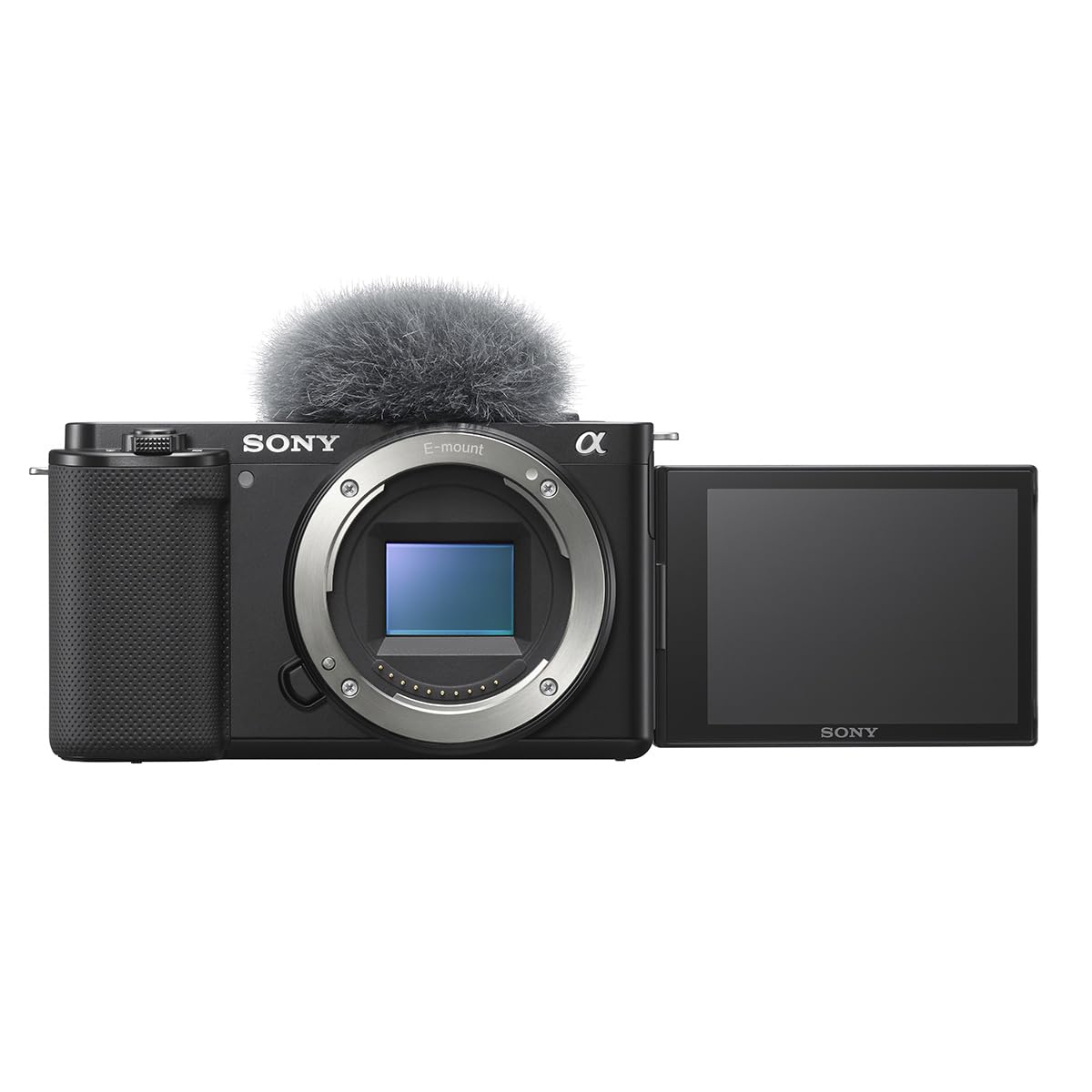
Sony designed the ZV-E10 specifically for vloggers and content creators, including a Product Showcase Setting that transitions focus from your face to an object held in front of the lens with a smooth ramp—no button pressing required. The 24.2-megapixel APS-C Exmor sensor captures 4K video oversampled from 6K with full pixel readout, producing footage with significantly more detail than binning-based cameras.
The Background Defocus button instantly toggles between deep and shallow depth of field, mimicking the “portrait mode” effect smartphone users are familiar with. The directional three-capsule microphone with wind screen captures cleaner audio than any built-in camera mic, and the single USB cable live streaming setup bypasses capture cards entirely.
The body-only format lets beginners choose their own lens—a 16-50mm kit zoom for all-purpose use or a fast prime like the Sigma 16mm f/1.4 for interior vlogging—rather than paying for a bundled optic they may replace immediately.
Why it’s great
- Product showcase mode is uniquely useful for reviewers and sellers
- 4K oversampled from 6K produces exceptional video sharpness
- Simple USB webcam setup without extra hardware
Good to know
- No built-in electronic viewfinder
- Rolling shutter is severe in fast pans and walking shots
6. OM SYSTEM E-M10 Mark IV with 14-42mm EZ

The E-M10 Mark IV is the smallest Micro Four Thirds camera with in-body 5-axis stabilization, rated at 4.5 shutter speed stops of compensation. Combined with the collapsing 14-42mm EZ pancake zoom, the entire kit slides into a jacket pocket—the only camera on this list that genuinely disappears when not in use.
The 20-megapixel Live MOS sensor delivers colors that OM SYSTEM users consistently describe as “film-like,” and the 16 Art Filters including Instant Film add creative character without editing. The flip-down monitor automatically triggers selfie mode, making it the most natural self-portrait camera for beginners who want family and travel shots without asking strangers to take photos.
OI Share app connectivity for background Bluetooth transfers, and the dedicated selfie mode with skin smoothing, make this the most approachable camera for someone who has never used interchangeable lenses. The learning menu system explains settings in plain language rather than technical abbreviations.
Why it’s great
- Remarkably compact; fits in a jacket pocket with the kit lens
- 4.5-stop IBIS eliminates blur in most handheld situations
- Selfie screen and modes designed for social users
Good to know
- No external charger included; charges in-camera only
- Wi-Fi app connection is slower than modern competition
7. Nikon Z 30 with 16-50mm VR

Nikon’s most compact mirrorless camera is engineered for creators who value portability over viewfinders. The Z 30 uses a 20.9-megapixel APS-C sensor with hybrid autofocus that combines 209 phase-detection and contrast-detection points, plus eye tracking for people and pets that remains locked during 4K video recording.
The flip-out touchscreen selfie monitor with a red REC light gives clear visual confirmation during recording, and the built-in stereo microphone with adjustable sensitivity captures room sound without external mics. USB-C connectivity provides constant power during long streams and transfers files at high speed.
Plug-and-play webcam operation over USB-C at Full HD 60p or HDMI at 4K 30p eliminates the need for capture cards. The 16-50mm VR kit lens includes vibration reduction that pairs with the sensor-shift stabilization for smooth walking footage.
Why it’s great
- Designed specifically for seamless live streaming and vlogging
- Unlimited 4K recording without overheating (most setups)
- Constant power over USB-C for marathon sessions
Good to know
- No electronic viewfinder; live view only on rear screen
- USB-C PD cable required for streaming—not included in box
8. Canon EOS R50 V (Body Only)
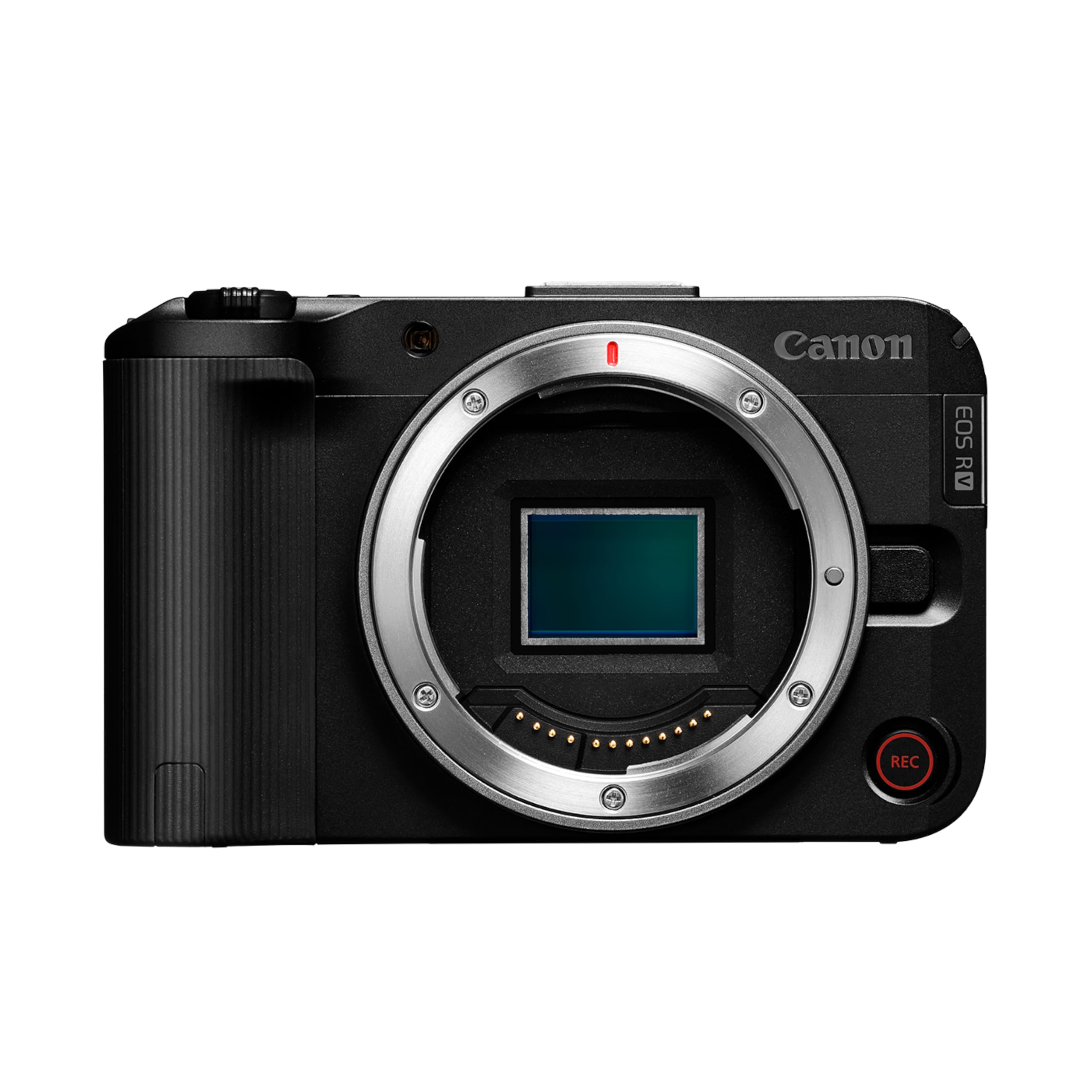
Canon’s first EOS V series camera is built for vertical video, with a body design that includes a dedicated tripod mount positioned for portrait orientation from the start. The 24.2-megapixel APS-C sensor feeds the DIGIC X processor, enabling 4K crop at 59.94p and full-width 4K at 29.97p with Dual Pixel CMOS AF II that registers people priority and detects animals and vehicles.
CLog3 gamma in 10-bit 4:2:2 provides the color grading latitude that beginner-to-intermediate video creators need for matching shots from multiple cameras. The Slow and Fast mode allows creative frame rate control for hyperlapses and slow-motion without desktop editing.
The body-only format keeps the weight down for gimbal use, and the RF lens mount gives access to Canon’s modern mirrorless optics including the compact 18-45mm kit lens if purchased separately. This is the most deliberate video-first beginner camera from a major brand.
Why it’s great
- Vertical video tripod mount designed for social media content
- CLog3 10-bit recording for professional color grading
- Front record button for one-handed self-recording
Good to know
- No built-in flash or electronic viewfinder
- Overheating reported after 30-35 minutes of 4K30
9. Canon EOS R100 with Two Lenses

The Canon EOS R100 is the entry point to Canon’s RF mirrorless system, and this two-lens kit bundles the RF-S 18-45mm and RF-S 55-210mm to cover a 29-336mm equivalent range. The 24.1-megapixel APS-C sensor with DIGIC 8 processor delivers the same image quality as Canon’s higher-priced R50 and R10 bodies in a smaller chassis.
Dual Pixel CMOS AF covers 143 zones with subject detection and eye detection during Servo AF, while the 6.5 fps continuous shooting captures action sequences without the buffer filling too quickly for casual shooting. The built-in flash provides fill light for indoor candids without buying a speedlight.
The body is the smallest and lightest in the entire EOS R series, weighing under 0.7 pounds. For a beginner who knows they want Canon color science and RF lens compatibility but needs the lowest upfront investment, this kit delivers a complete two-lens setup at a budget-friendly total.
Why it’s great
- Two-lens kit covers wide to telephoto in one purchase
- Compactest EOS R body for daily carry
- Built-in flash eliminates separate purchase for indoor shots
Good to know
- Fixed non-touch screen limits angle flexibility
- Basic autofocus menu requires manual lens mode setting per mode
10. Panasonic LUMIX G85 with 12-60mm O.I.S.

The Panasonic G85 packs class-leading dual image stabilization that combines 5-axis in-body stabilization with the Power O.I.S. in the 12-60mm kit lens for smooth handheld video and sharp low-light photos. The 16-megapixel Micro Four Thirds sensor lacks a low-pass filter, which resolves approximately 10 percent more fine detail than previous 16-megapixel MFT sensors—noticeably more texture in foliage and fabric patterns.
The magnesium alloy body with weather sealing protects against dust and light rain, while the integrated eye-level OLED live viewfinder and 3-inch tilt-and-touch LCD give flexibility in bright outdoor conditions. 4K QFHD video recording and 4K Photo mode capture 30 fps burst stills with the ability to refocus after capture via Post Focus.
The ergonomics are widely praised among video users for the larger grip and intuitive button layout. For beginners who prioritize stabilized 4K video and weather resistance at a budget-friendly entry point, the G85 remains a reference standard.
Why it’s great
- Dual image stabilization (IBIS + lens OIS) smooths handheld video
- Weather-sealed construction for outdoor reliability
- 4K Photo with Post Focus lets you adjust focus after capture
Good to know
- 16MP sensor is lower resolution than newer competitors
- Battery life is below average for all-day shooting
11. Panasonic LUMIX G100 with 12-32mm

The LUMIX G100 is the lightest camera on this list at under 1 pound with the 12-32mm pancake zoom attached—a form factor that competes directly with premium compact cameras while offering Micro Four Thirds lens interchangeability. The 20.3-megapixel sensor captures 4K UHD video at 24p and 30p with V-Log L recording for color grading flexibility.
The unique differentiator is the built-in microphone with Nokia OZO audio technology that uses three internal capsules to track sound directionally. As you zoom the lens, the microphone adjusts its pickup pattern to match the subject in the frame, reducing crowd noise for vloggers and event shooters.
The iA (Intelligent Auto) mode handles exposure decisions for absolute beginners, while manual modes unlock as skills develop. The 360-degree tracking audio and social media frame marker for vertical crops make this the most purpose-built camera for creating phone-friendly content with better image quality than any smartphone.
Why it’s great
- Tracking audio microphone adjusts with zoom for clear subject sound
- Extremely lightweight and compact for one-handed recording
- V-Log L recording for color grading in post-production
Good to know
- Very limited 4K video recording time; stops at 5-10 minutes
- Contrast-detection autofocus struggles with fast-moving subjects
FAQ
Should a beginner start with APS-C or Micro Four Thirds?
How many megapixels do I actually need as a beginner?
Is in-body stabilization worth paying extra for in a beginner camera?
Should I buy a camera with a viewfinder or only a rear screen?
How important is weather sealing for a first camera?
Final Thoughts: The Verdict
For most beginners, the best beginner mirrorless camera winner is the OM SYSTEM OM-1 Mark II because its weather sealing, computational photography modes, and class-leading stabilization remove the technical friction of learning exposure. If you want full-frame image quality at the lowest upfront cost, grab the Canon EOS RP. And for the most portable and affordable two-lens kit that covers every situation, nothing beats the Nikon Z50 II.

Mo Maruf
I created WellFizz to bridge the gap between vague wellness advice and actionable solutions. My mission is simple: to decode the research and give you practical tools you can actually use.
Beyond the data, I am a passionate traveler. I believe that stepping away from the screen to explore new environments is essential for mental clarity and physical vitality.