Our readers keep the lights on and my smoothie glass nicely filled. As an Amazon Associate, I earn from qualifying purchases.
That crunch under your slippers in the dark, the sudden flutter of wings near the fruit bowl, or the trail of tiny ants marching across the countertop—these invaders turn a sanctuary into a warzone. Home bug infestations aren’t just a nuisance; they compromise hygiene and peace of mind, which is why choosing the right defense system is a decision that affects your daily comfort and health.
I’m Mohammad Maruf — the founder and writer behind WellFizz. I’ve spent years analyzing chemical formulations, active ingredient concentrations, and delivery mechanisms to separate marketing fluff from real-world effectiveness in the pest control category.
Whether you’re battling fruit flies by the trash bin or a persistent ant trail along the baseboard, the right solution depends on the specific invader and your tolerance for synthetic chemicals. This guide breaks down the most effective options to help you confidently select the best bug repellent for home use, covering both natural and synthetic solutions that actually deliver results.
How To Choose The Best Bug Repellent For Home
Selecting a home bug repellent isn’t a one-size-fits-all equation. The most effective choice depends on whether you’re dealing with a chronic ant problem, a sudden fruit fly swarm, or a general creepy-crawly prevention strategy. Here are the three critical factors to evaluate before you buy.
Pest Type: Flying vs. Crawling Insects
The biological behavior of the target pest dictates the delivery mechanism. For flying insects like fruit flies, gnats, and moths, attractant-based traps that use UV light or sticky surfaces are highly effective because they lure the insect out of the air. For crawling insects like ants, roaches, and spiders, you need a residual barrier spray that leaves a chemical film on surfaces they traverse, or a direct-contact aerosol for immediate knockdown. Using a barrier spray for airborne pests is largely ineffective, while a plug-in trap does nothing to stop an ant trail.
Active Ingredient: Natural vs. Synthetic
The active ingredient is the engine of the product. Synthetic chemicals like Cyhalothrin (a pyrethroid) offer powerful, long-lasting residual effects, often persisting for weeks after application, making them ideal for serious infestations and perimeter defense. Natural essential oils like Peppermint or Lemongrass are contact repellents that degrade quickly (hours to days), requiring more frequent reapplication. While safer for pets and children when used as directed, they are generally better for maintenance and mild deterrence than for eradicating an established colony. Always check the label for concentration—a higher percentage of essential oil often correlates with better performance, but also a stronger scent.
Application & Residual Life
Consider how much time you want to spend on pest control. Plug-in devices require no daily effort, only periodic cartridge replacements every 3-4 weeks. Ready-to-use spray bottles offer immediate targeted application but demand regular reapplication to maintain a barrier, especially in high-traffic areas or after cleaning. Pressurized aerosol insecticides provide a fast knockdown on contact but often have a shorter residual life than liquid concentrates. For a “set-it-and-forget-it” approach, a plug-in trap is best for flying insects. For a proactive weekly barrier, a spray is non-negotiable.
Quick Comparison
On smaller screens, swipe sideways to see the full table.
| Model | Category | Best For | Key Spec | Amazon |
|---|---|---|---|---|
| Wondercide Ant & Roach Spray | Natural Aerosol | Pet-safe indoor kitchen use | 1.23 lbs (2-pack) | Amazon |
| BASF PT 221L Insecticide | Synthetic Aerosol | Severe crawling insect infestations | 0.05% Cyhalothrin | Amazon |
| Zevo Flying Insect Trap | Plug-in Device | Ongoing fruit fly & gnat control | Blue & UV Light | Amazon |
| Mighty Mint Peppermint Spray | Natural Spray | General deterrence & preemptive barrier | Extra-Concentrated Oil | Amazon |
| Smart Grower Peppermint Spray | Natural Spray | Rodent & insect multisurface repellent | Maximum Strength Oil | Amazon |
In‑Depth Reviews
1. Wondercide Ant & Roach Aerosol Spray

Wondercide nails the balance between powerful efficacy and household safety. This 10-ounce 2-pack aerosol uses lab-proven, plant-based active ingredients like lemongrass and geraniol to kill over 20 common pests—including ants, roaches, spiders, and stink bugs—on contact. The quick-knockdown formula makes it ideal for seeing immediate results when you spot a roach scurrying across the counter or a spider web in the corner.
What sets this apart is its dual role as a killer and a deterrent without the lingering toxicity of synthetic pyrethroids. You can spray it around baseboards, cabinets, and window frames in the kitchen without worrying about residue harming your small dog or cat. The natural scent is mild and dissipates quickly, leaving no harsh chemical fumes behind, which is a huge plus for families with young children or respiratory sensitivities.
The main trade-off is the can design; some users report the nozzle can clog halfway through the can, leading to wasted product. Also, the spray leaves a slightly oily residue on hard surfaces like ceramic tile or linoleum, so it’s best for targeted crack-and-crevice application rather than broad floor coverage. For a pet-friendly, everyday indoor spray that genuinely works, this is the top-tier choice.
Why it’s great
- Kills over 20 pest types on contact using essential oils.
- Lab-proven effective while being safe around pets and kids.
- Pleasant, mild scent that fades quickly without chemical smell.
Good to know
- Spray nozzle has a tendency to clog before the can is empty.
- Leaves an oily residue, not ideal for broad floor applications.
2. BASF PT 221L Pressurized Insecticide

When you’re facing a serious infestation—think roaches in the walls, ants pouring through a crack, or bed bugs in a bedroom—gentle essential oils aren’t going to cut it. The BASF PT 221L is a professional-grade pressurized aerosol that delivers 0.05% Cyhalothrin, a synthetic pyrethroid that provides fast knockdown and a long-term residual barrier lasting up to 21 days between applications in food-handling environments.
This isn’t a spray you use casually; it’s a precision tool for crack-and-crevice treatment. You inject it under sinks, behind appliances, around weep holes, and into wall voids where insects travel and nest. Exterminators frequently use this exact formula, and a single can can last a homeowner nearly two years if used sparingly for spot treatments. It has a very low odor compared to older insecticides, so it’s not overwhelming to apply indoors.
The primary downside is the nozzle design, which can be finicky and difficult to control the spray pattern with precision. Also, because Cyhalothrin is a potent synthetic, you must keep pets and children away from treated areas until the spray is completely dry. It is not a repellent for casual use; it’s a chemical barrier for serious biological warfare against established insect populations inside your home’s structure.
Why it’s great
- Professional-grade 0.05% Cyhalothrin for severe infestations.
- Provides long-lasting residual control up to 21 days.
- Low odor formula compared to traditional insecticides.
Good to know
- Nozzle can be difficult to use for precise application.
- Requires strict safety precautions around children and pets until dry.
3. Zevo Flying Insect Trap & Cartridge
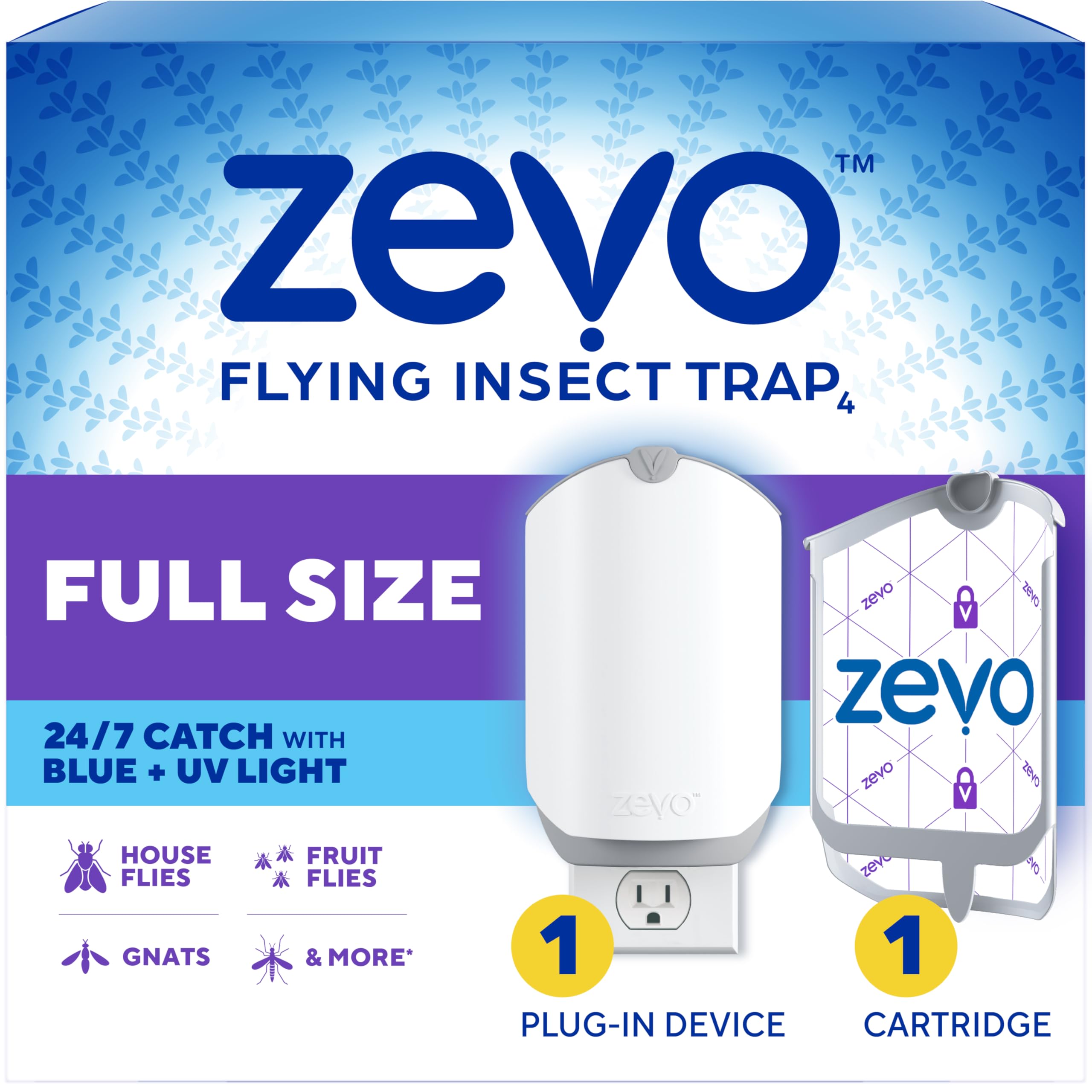
The Zevo trap is the perfect solution for the specific, annoying problem of flying insects indoors—gnats around the plant soil, fruit flies near the compost bin, and drain flies in the bathroom. It uses a combination of blue and UV light to attract insects 24/7, then traps them on a powerful adhesive backing that you never have to touch. The plug-in design is discreet, silent, and odorless, making it a seamless addition to any room.
Users report seeing results fast, with the sticky pad catching dozens of gnats within the first week. The cartridge is designed to last about 3-4 weeks, and replacing it is a simple, mess-free process—just pull the old one out and slide the new one in. The swiveling plug allows it to fit in standard sockets without blocking the second outlet. It’s an excellent passive defense system for flying insects, especially in the kitchen or bedroom where noise and odor are undesirable.
However, it is strictly a trap for flying insects. It will do nothing for crawling insects like ants or roaches trying to enter your home. The blue light can be bright at night in a dark room, which may bother light-sensitive sleepers. It also isn’t a complete solution for a heavy housefly infestation; it targets small flies best. For those, a more aggressive flying insect killer or different lure type may be needed.
Why it’s great
- Continuous 24/7 attraction with blue and UV light.
- Mess-free, no-touch disposal of trapped insects.
- Silent, odorless operation perfect for bedrooms and kitchens.
Good to know
- Only effective against small flying insects like gnats and fruit flies.
- Blue light can be disruptive in a pitch-black bedroom at night.
4. Mighty Mint Peppermint Oil Insect Repellent Spray

Mighty Mint has built a loyal following among pet owners and parents who want a non-toxic barrier they can use liberally. This 16-ounce spray uses an extra-concentrated, plant-based peppermint oil formula that acts as a powerful deterrent for spiders, ants, roaches, earwigs, and even mice. The crisp, minty scent is a welcome change from acrid chemical sprays, and it’s safe to use on baseboards, entryways, patios, and even around pet beds and food bowls.
As a contact repellent, it works best as a maintenance tool for mild to moderate activity. Users frequently report seeing a dramatic reduction in earwig and spider sightings after spraying window sills and door thresholds. It can also be used in the garden on roses to deter aphids without harming the plants. The formula dries clear and does not stain most surfaces, which is a huge practical advantage over oilier alternatives.
The effectiveness against a full-blown infestation is limited. For major ant or roach problems, it acts more as a barrier than a killer, and insects may simply find a way around the treated area. The strong peppermint odor persists strongly for about 20-30 minutes after spraying, which some find overwhelming, and it requires frequent reapplication, especially after cleaning or rain, to maintain the barrier.
Why it’s great
- Extra-concentrated formula provides a strong deterrent barrier.
- Safe for use around pets, children, and food preparation areas.
- Dries clear and does not stain baseboards or fabrics.
Good to know
- Strong minty odor is intense for the first 30 minutes.
- Not powerful enough to eliminate serious, established infestations.
5. Smart Grower Peppermint Oil Spray
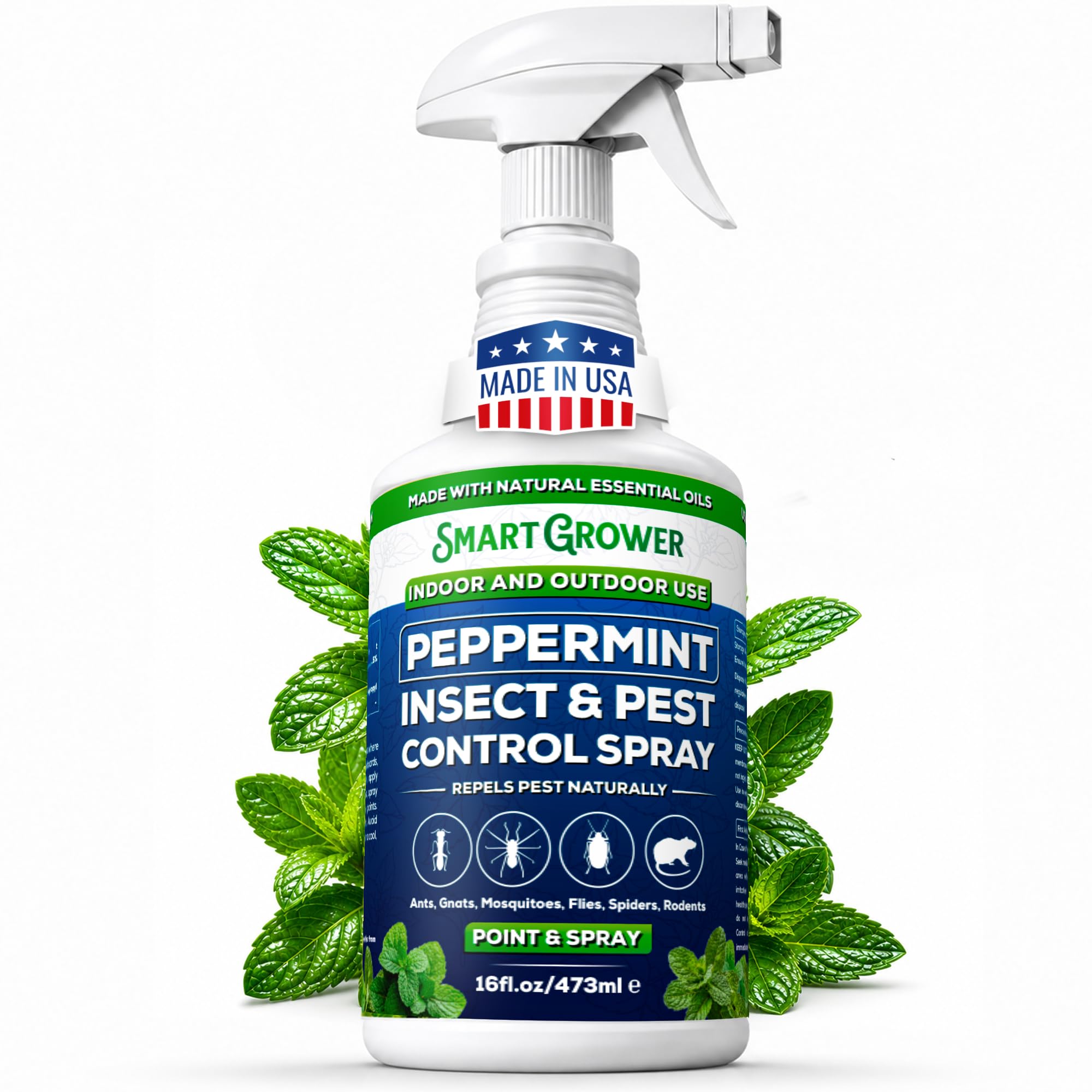
The Smart Grower spray stands out for its broad-spectrum claim, targeting not just insects but also rodents like mice and rats. It’s a maximum-strength, 100% pure peppermint essential oil formula that is ready-to-use—no mixing required. For a natural repellent, it packs a strong olfactory punch that pests find overwhelming. The versatility is its strongest selling point, allowing you to use it indoors, outdoors, in the garage, attic, basement, and even in your car to drive out spiders and ants.
Users find it particularly effective against crickets, camel spiders, and small ant trails. The peppermint scent is pleasant for humans and acts as a clear biological boundary for many pests. It is considered safe to use around dogs, though some pets may actively avoid the smell, which is a bonus for keeping them out of treated areas. The spray is also gentle enough to be used on garden plants, making it a true multi-surface solution for the natural gardener.
The main performance gap is against larger or more aggressive pests. It does little to deter hornets or nesting wasps that are determined to protect their territory, and it is completely ineffective against river mosquitoes. Some users also report that the spray nozzle can detach when the bottle warms up, potentially causing a spill inside the home. It is a fantastic deterrent for maintenance, but like all natural oils, it falls short against heavy infestations and requires regular reapplication.
Why it’s great
- Effective against a wide range of insects and also repels rodents.
- 100% pure peppermint oil formula is safe for household use.
- Versatile for indoor, outdoor, garden, and vehicle application.
Good to know
- Nozzle can detach and leak when the bottle warms up.
- Not effective against large, aggressive flying insects like hornets.
FAQ
What is the difference between a bug repellent and an insecticide for home use?
Can I use outdoor bug spray inside my home?
How often should I reapply a natural peppermint oil bug spray?
Final Thoughts: The Verdict
For most users, the best bug repellent for home winner is the Wondercide Ant & Roach Spray because it delivers professional-level contact kill without sacrificing the safety profile needed for a family home with pets and kids. If you want to chemically obliterate a serious crawling insect infestation, grab the BASF PT 221L. And for a passive, silent defense against those persistent gnats and fruit flies, nothing beats the Zevo Flying Insect Trap.

Mo Maruf
I created WellFizz to bridge the gap between vague wellness advice and actionable solutions. My mission is simple: to decode the research and give you practical tools you can actually use.
Beyond the data, I am a passionate traveler. I believe that stepping away from the screen to explore new environments is essential for mental clarity and physical vitality.