Our readers keep the lights on and my smoothie glass nicely filled. As an Amazon Associate, I earn from qualifying purchases.
That morning ritual of sweeping pigeon droppings off your balcony railing or watching a crow pry open your plant pot is exhausting. Birds see a balcony as a perfect perch or nesting ledge, and once they claim it, they are stubborn tenants. The right deterrent does not just scare them temporarily—it physically blocks or discourages the landing, so the problem stops at the source.
I’m Mohammad Maruf — the founder and writer behind WellFizz. I’ve spent years analyzing the materials, fastening methods, and real-world durability tests of home and garden hardware to separate products that simply look the part from those that actually hold up against persistent pests.
Whether you are dealing with pigeons, sparrows, or squirrels, this guide breaks down the top contenders to help you reclaim your outdoor space. Here is our researched take on the best bird deterrent for balcony.
How To Choose The Best Bird Deterrent For Balcony
Birds are creatures of habit. A successful deterrent exploits that by making the surface feel unsafe or physically inaccessible. The wrong choice wastes money and leaves you cleaning up messes. Focus on three factors: the bird species, your railing and surface type, and whether you can make permanent modifications.
Identify the Perpetrator
Pigeons and doves are heavy-bodied birds that look for flat, stable ledges. They are best stopped by spike strips that deny them a footing. Sparrows and smaller finches can squeeze through narrow gaps, so fine mesh netting works better. Squirrels and larger pests require sturdier materials like stainless steel spikes or thick polyester netting.
Match the Material to Your Surface
If you have a metal or glass railing, suction-cup or zip-tie netting is a renter-friendly option that leaves no residue. For concrete sills and wooden ledges, adhesive-mount spikes or screw-in strips provide a permanent, low-maintenance solution. Decoys like fake owls are a temporary fix at best—birds habituate quickly, especially on a static balcony ledge.
Prioritize Density and Durability
Netting should have a small enough mesh size (0.5 cm or smaller) to prevent small birds from squeezing through, and it must resist UV degradation. Spikes must be made of rust-proof material—304 stainless steel is the standard—and the wires should be dense enough that a bird cannot comfortably settle between them. Cheap plastic spikes often snap or become brittle within one season.
Quick Comparison
On smaller screens, swipe sideways to see the full table.
| Model | Category | Best For | Key Spec | Amazon |
|---|---|---|---|---|
| OFFO Black Pre-Assembled Bird Spikes | Spike Strip | Ledges & railings | 10.8 ft, 304 Stainless Steel | Amazon |
| Abimars Garden Mesh Netting | Barrier Net | Full balcony enclosure | 6.6′ x 33′, Nano-Composite | Amazon |
| Hosuly Banister Guard | Safety Netting | Gap blocking & pets | 15 x 3 ft, 0.5 cm mesh | Amazon |
| Hedoc 2 Pack Fake Owl Decoys | Visual Scare | Short-term garden scaring | 10.3″ tall, PE Plastic | Amazon |
| ESSFF Pet & Garden Safeguard | Plastic Mesh | Low-cost deck blocking | 15.7″ x 32.8 ft, PE Netting | Amazon |
In‑Depth Reviews
1. OFFO Black Pre-Assembled Bird Spikes

This is the most direct physical deterrent in the lineup. Made from 304 stainless steel with a matte black finish, each spike strip is pre-assembled in 10.8-foot sections, meaning you unbox it and install immediately. The wire flexibility allows you to bend the strips around curved railings or over uneven ledger stones, which is a common headache with rigid spike strips.
Users consistently report that pigeons and squirrels stop landing on treated surfaces within days. The corrosion resistance of 304 stainless steel is critical for outdoor use—even in coastal or rainy environments, these spikes will not rust or snap. Installation is straightforward: use heavy-duty outdoor tape for smooth surfaces, screws for wood, or zip ties for metal railings. The black color blends well with most architectural finishes.
For building ledges, AC unit tops, or wrought-iron balcony railings where birds perch directly, this is the most cost-effective long-term solution. Unlike plastic spikes that degrade in UV, the steel wires maintain their stiffness for years. The only trade-off is that installation requires a clear, flat surface—it will not work well on surfaces with deep grooves or heavy textures.
Why it’s great
- Pre-assembled and ready to install right out of the box
- Flexible wires bend around corners and curved ledges
- Rust-proof 304 stainless steel holds up in all weather
Good to know
- Requires a flat mounting surface for best contact
- Adhesive may fail on painted or rough-textured surfaces
2. Abimars Garden Mesh Netting
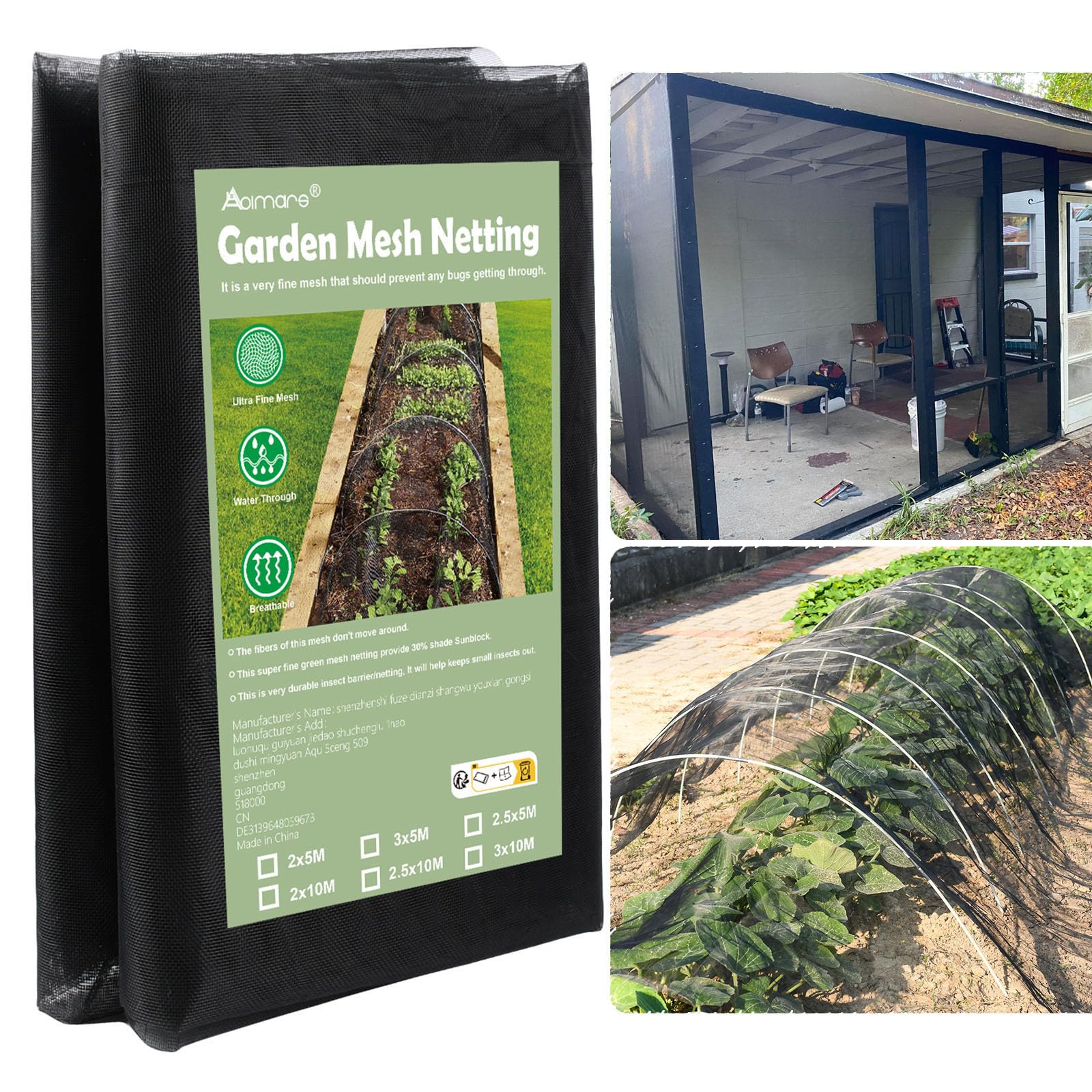
If your bird problem involves entire sections of your balcony—especially if birds are flying in from above or squeezing through railings—this nano-composite mesh is the gold standard. The weave is ultra-fine yet extra-thick, which makes it much more tear-resistant than standard polyethylene netting. It cuts cleanly without fraying, so you can size it to custom dimensions.
Beyond bird exclusion, the mesh also provides 30% shade and UPF 40+ protection, making the balcony cooler on hot days while letting air pass through. The fixed-weave construction means the fibers do not shift or gap over time, which is a common issue with loose-woven nets that birds eventually force their way through. Users praise its durability against wind and even hail.
Installation requires a bit more planning—you will need hooks, a pole system, or tension wire to hang it securely around the perimeter. It is overkill for simply covering a small gap between railings, but for wrapping an entire balcony or patio enclosure against birds and mosquitoes, it is the most robust option here.
Why it’s great
- Nano-composite material resists tearing and UV damage
- Ultra-fine mesh blocks small birds and insects equally
- Provides useful shade and UV protection while maintaining airflow
Good to know
- Requires a frame or supporting structure for proper installation
- Overly thick for small gap repairs or quick fixes
3. Hosuly Banister Guard

This netting is designed specifically to fill vertical gaps between banister bars—the exact spots where smaller birds squeeze through to nest or perch on the balcony floor. The 0.5 cm fine mesh is dense enough to block sparrows and finches, yet the black polyester fabric is nearly invisible when installed, preserving your view.
Installation uses a rope-and-buckle system that requires no drilling, making it ideal for rentals where you cannot modify the structure. The included 45 zip-tie buckles and 25 nylon ropes give you plenty of hardware to secure the mesh tightly. Users mention that the material is sturdy and does not sag or gap over several seasons of weather exposure.
The downside is that installation is a two-person job to keep the net taut, and the straight rectangular shape can be tricky on angled stair railings. It is primarily a gap-filler rather than a full-coverage barrier, so it works best when your balcony railing has widely spaced vertical bars that birds can slip through.
Why it’s great
- No-drill installation with included buckle and rope hardware
- Fine 0.5 cm mesh blocks small birds without blocking the view
- Durable polyester material resists sagging and deformation
Good to know
- Better suited for vertical gaps than full horizontal coverage
- Two people are recommended for a smooth, tensioned install
4. Hedoc 2 Pack Fake Owl Decoys

This classic visual scare tactic uses realistic great horned owl features—bright yellow eyes and detailed feather texture—to spook birds on first sight. The two-pack is convenient for covering both ends of a balcony, and the hollow plastic body can be filled with sand to add stability. It is a non-lethal, decorative solution that doubles as garden ornament.
The catch is habituation. Most reviewers report that birds return within one to three weeks once they realize the owl never moves or makes noise. To extend effectiveness, you need to move the decoy every few days and reposition its head, which is not practical for many balcony setups. It works best as a temporary tool during planting seasons or as a supplement to a physical barrier.
For fruit or vegetable planters on the balcony, the decoys can help scare away berry-eating birds for a short window. The PE plastic handles sun and rain well. If you have a persistent flock that has already settled, a static decoy alone will not be enough to evict them.
Why it’s great
- Highly realistic detailing and bright eye coloration
- Two decoys allow wider coverage or rotation
- Can be weighted with sand for wind stability
Good to know
- Effectiveness fades quickly as birds acclimate to the static decoy
- Requires frequent repositioning to maintain any deterrent effect
5. ESSFF Pet & Garden Safeguard Plastic Netting
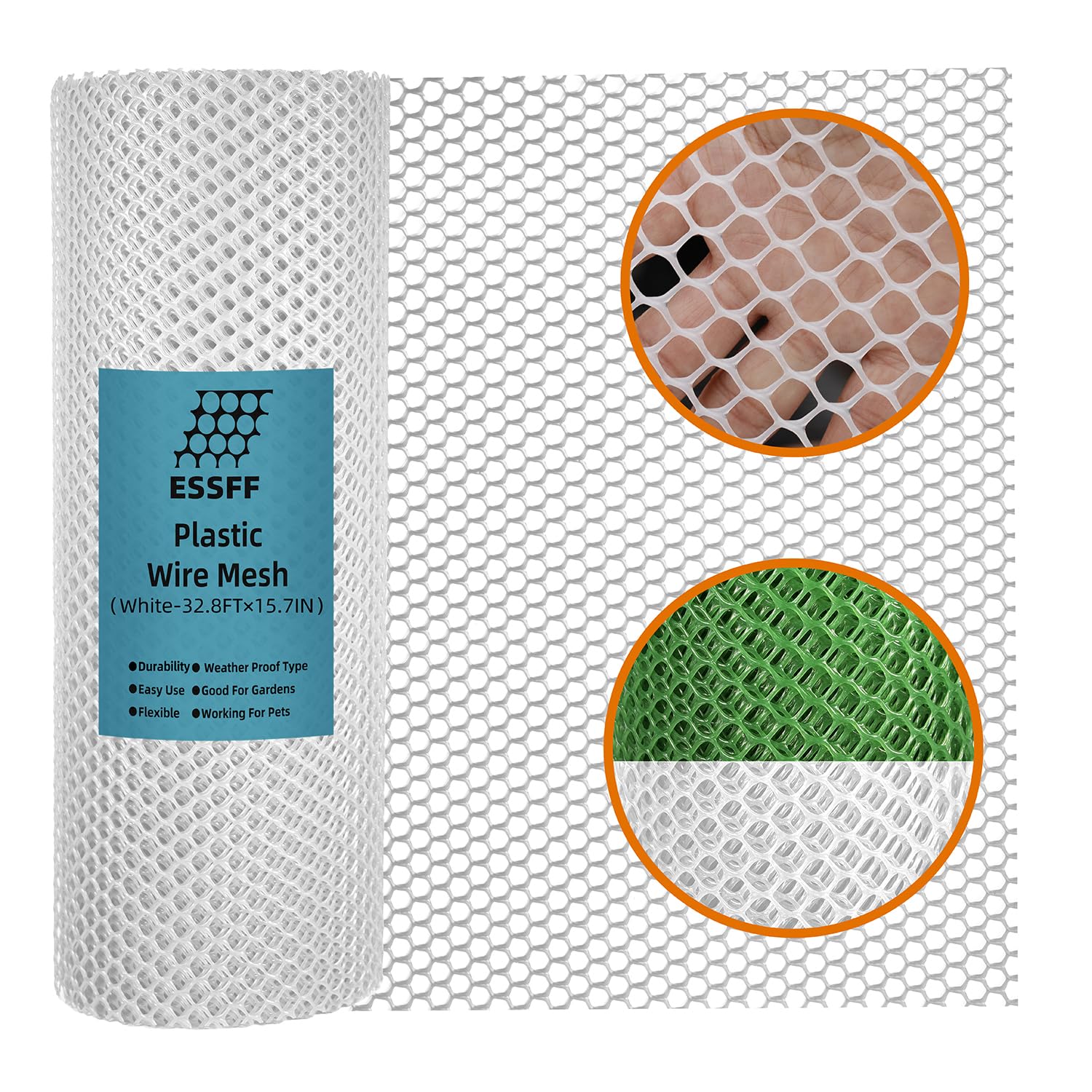
This roll of white polyethylene netting is the most affordable option for blocking birds from accessing large areas quickly. At 15.7 inches tall and 32.8 feet long, it is designed for low-level horizontal gaps—think the space under your balcony railing where birds hop onto the floor. It is lightweight and can be cut to length with standard scissors.
The material is noticeably thinner and less rigid than the nano-composite mesh or polyester netting. It works well for stopping dogs from sticking their heads through railings, and it provides a physical deterrent for pigeons attempting to walk through a gap. The white color has a decorative vintage look that some users like for garden edging.
Long-term durability is the biggest concern. The plastic netting can become brittle after a full season of direct sunlight, and sharp edges can be a minor hazard when cutting. It is a viable budget-friendly starter solution, but if you face persistent bird pressure or want a solution that lasts multiple years, upgrading to a thicker material is advisable.
Why it’s great
- Very low cost for a large 32.8-foot roll coverage
- Easy to cut and install with basic tools
- Lightweight and unobtrusive for low-level gaps
Good to know
- Thinner material may become brittle after prolonged sun exposure
- Sharp edges when cut require careful handling
FAQ
Will fake owl decoys work on pigeons?
Can I install bird spikes on a rental balcony without damaging the surface?
How do I stop birds from nesting under my balcony awning?
Final Thoughts: The Verdict
For most users, the best bird deterrent for balcony winner is the OFFO Black Pre-Assembled Bird Spikes because it provides an immediate, low-maintenance physical barrier that stops pigeons and squirrels from landing on ledges and railings for years. If you need to enclose an entire balcony against small birds and insects, grab the Abimars Garden Mesh Netting. And for a renter-friendly gap-filler that blocks sparrows without drilling, nothing beats the Hosuly Banister Guard.

Mo Maruf
I created WellFizz to bridge the gap between vague wellness advice and actionable solutions. My mission is simple: to decode the research and give you practical tools you can actually use.
Beyond the data, I am a passionate traveler. I believe that stepping away from the screen to explore new environments is essential for mental clarity and physical vitality.