Our readers keep the lights on and my smoothie glass nicely filled. As an Amazon Associate, I earn from qualifying purchases.
Wrist-based optical sensors from smartwatches often lag, drop out during interval sprints, or lock onto your cadence instead of your pulse. A dedicated Bluetooth chest strap or armband eliminates guesswork, giving you real-time HR data you can actually trust for zone training, HIIT, cycling, and recovery tracking.
I’m Mohammad Maruf — the founder and writer behind WellFizz. I’ve spent years dissecting fitness sensor hardware, comparing optical vs. ECG architecture, battery chemistries, and Bluetooth/ANT+ stack reliability to separate true performers from marketing claims.
For those who demand consistent readings without chest-strap discomfort, the right bluetooth heart rate monitor must balance placement flexibility, battery endurance, dual-protocol connectivity, and sensor-grade accuracy that doesn’t waver mid-workout.
How To Choose The Best Bluetooth Heart Rate Monitor
Choosing between optical and ECG sensor types, deciding on armband vs. chest strap form factor, and weighing battery life against recharge convenience are the core decisions that determine whether a monitor becomes a daily training partner or a drawer-dweller.
Optical vs. ECG: Accuracy and Placement
Optical sensors (armbands, watches) use light-emitting diodes to detect blood volume changes under the skin. They are comfortable for all-day wear but can lag during rapid HR changes and are vulnerable to motion artifacts if the band shifts. ECG chest straps detect the heart’s electrical signal directly via skin-contact electrodes, offering beat-by-beat precision and immediate response to intensity spikes — ideal for interval training and HRV analysis.
Dual-Protocol Connectivity: Bluetooth + ANT+
Bluetooth connects to smartphones and most fitness apps. ANT+ is a lower-latency protocol used by Garmin, Wahoo, Peloton, and many gym consoles. A monitor that supports both simultaneously lets you broadcast live HR to a bike computer while recording data on a phone app without disconnecting or pairing twice.
Battery Life and Charging Method
Rechargeable lithium-ion batteries (common in armbands and newer chest straps) eliminate recurring coin-cell costs but eventually wear out after hundreds of cycles. Replaceable CR2025/CR2032 batteries last longer overall but require spare cells. Consider your training frequency — daily users benefit from a magnetic USB charger that tops up between sessions, while occasional users may prefer a coin-cell strap that stays ready for months.
Quick Comparison
On smaller screens, swipe sideways to see the full table.
| Model | Category | Best For | Key Spec | Amazon |
|---|---|---|---|---|
| Polar H10 | Chest Strap | ECG-level accuracy & HRV analysis | 400h battery, CR2025 replaceable | Amazon |
| Polar Verity Sense | Optical Armband | Chest-strap freedom with optical convenience | 30h battery, dual Bluetooth + ANT+ | Amazon |
| Wahoo TRACKR | Chest Strap | 200h rechargeable with Wahoo ecosystem | 200h battery, USB-C rechargeable | Amazon |
| Wahoo TICKR FIT | Optical Armband | Proven armband for daily gym & cycling | 35h battery, magnetic charger | Amazon |
| Scosche Rhythm+ 2.0 | Optical Armband | Versatile forearm/bicep placement & HRV data | 24h battery, IP68 waterproof | Amazon |
| iGPSPORT HR70 | Optical Armband | Budget armband with zone LEDs & haptics | 65h battery, Type-C magnetic | Amazon |
| Magene H613 | Chest Strap | 100h budget strap with offline storage | 100h battery, 17h offline memory | Amazon |
In‑Depth Reviews
1. Polar H10 Heart Rate Monitor Chest Strap
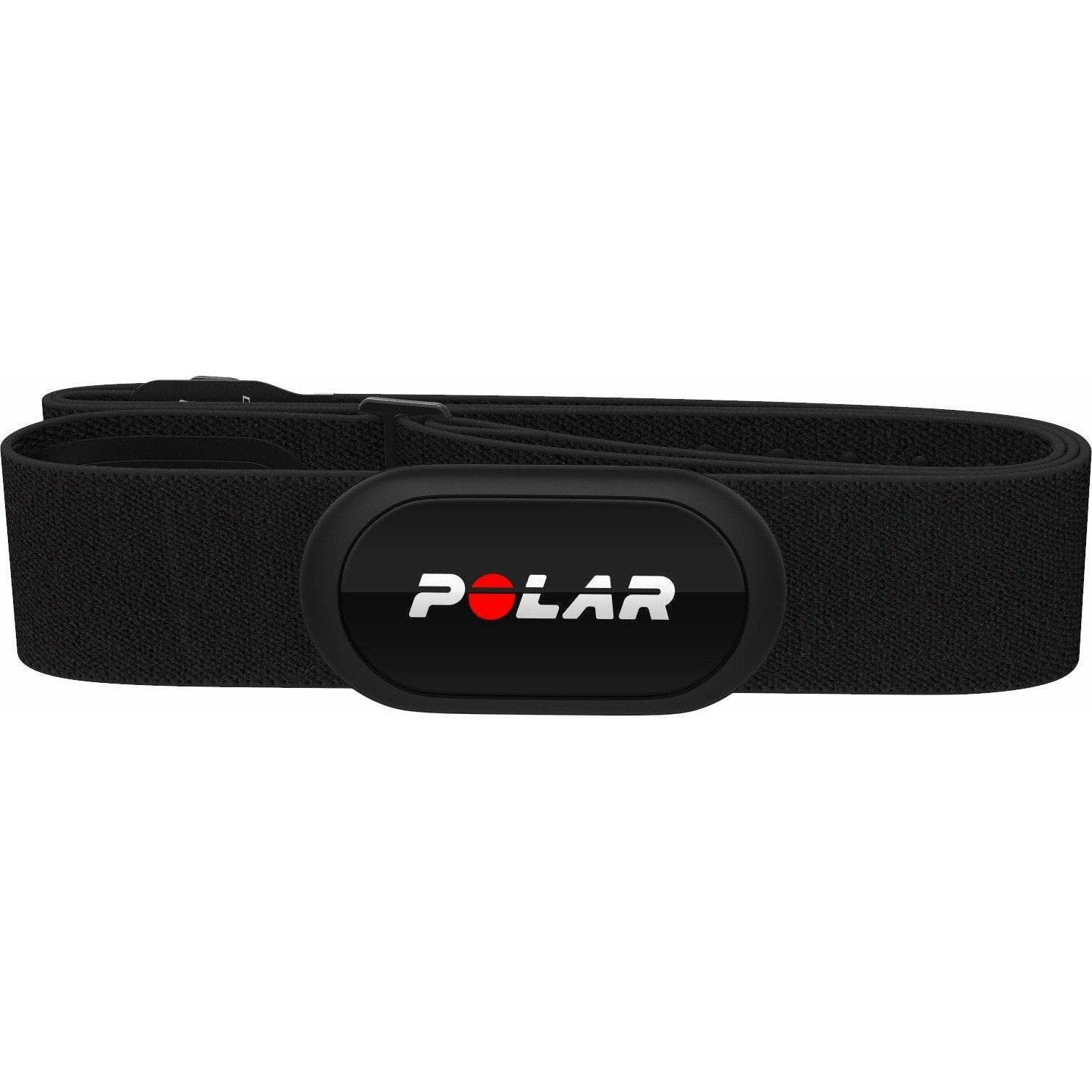
The Polar H10 is widely regarded as the benchmark for consumer ECG heart rate monitoring. Its electrode-laden Pro Chest Strap uses silicone dots to prevent slippage and delivers beat-by-beat accuracy that outperforms most optical sensors during interval sprints and HRV recording. The sensor supports Bluetooth, ANT+, and legacy 5 kHz simultaneously, allowing two Bluetooth connections plus unlimited ANT+ broadcasts to bike computers, smartwatches, and gym consoles.
Battery life is rated at 400 hours from a replaceable CR2025 coin cell — no recharge cycles to worry about, though replacing the button cell every 6–12 months is required. The internal memory stores one full workout, which can be offloaded post-session via the Polar Flow app. Some users report the included strap runs small for chest circumferences over 42 inches, requiring an aftermarket XXXL strap from Polar directly.
Durability feedback is mixed: the pod itself is robust and waterproof to 30 meters, but the strap electrodes can degrade after 6–8 months of heavy use, causing intermittent dropouts. Replacing the strap restores full accuracy. For cyclists, runners, and athletes who demand clinical-grade HR data for zone training and recovery analytics, the H10 remains the reference point.
Why it’s great
- ECG-level accuracy validated by third-party studies (99.3% cycling accuracy)
- Dual Bluetooth plus ANT+ simultaneous connections for multi-device setups
- 400-hour replaceable coin-cell battery eliminates recharge downtime
- Internal memory for offline workout recording
Good to know
- Included strap may be too short for larger chests (over 42 inches)
- Strap electrodes degrade after months of frequent use, requiring replacement
- Not rechargeable — requires periodic CR2025 battery swaps
2. Polar Verity Sense Optical Heart Rate Monitor Armband

The Polar Verity Sense bridges the gap between the uncompromising accuracy of a chest strap and the convenience of an armband. Its optical sensor sits on the upper arm or forearm and broadcasts heart rate via two simultaneous Bluetooth channels plus unlimited ANT+ connections. The included goggle clip also makes it usable for swim training, though optical readings underwater can be less consistent than in air.
Battery life is approximately 30 hours of active use with a non-replaceable rechargeable lithium-ion cell, which charges via a proprietary snap-on cradle. The single-button design simplifies start/stop operations, and the sensor is only 3 cm wide — barely noticeable once strapped on. Reviewers consistently praise its comfort compared to chest straps, especially during long runs and gym sessions where freedom of movement matters.
The main limitations are battery endurance — 30 hours is lower than many competitors — and the Polar Flow/Bear app ecosystem, which some Android users find unreliable for daily activity tracking. The armband also requires snug placement against bare skin to avoid optical noise. For athletes who dislike chest straps but want Polar’s sensor lineage and dual-protocol flexibility, the Verity Sense is a compelling middle ground.
Why it’s great
- Comfortable optical armband eliminates chest-strap discomfort entirely
- Two simultaneous Bluetooth channels plus unlimited ANT+ for multi-device broadcasting
- Includes swim goggle clip for pool training
- Minimalist single-button operation with snug, low-profile form factor
Good to know
- Battery life (30h) is shorter than many rivals; non-replaceable cell
- Polar app ecosystem has reported stability issues, especially on Android
- Optical accuracy is slightly lower than ECG chest straps during rapid HR changes
3. Wahoo TRACKR Heart Rate Monitor

The Wahoo TRACKR is a modern rechargeable chest strap that addresses the biggest pain point of ECG monitors: recurring battery changes. Its high-capacity lithium-ion cell delivers up to 200 hours of active use and charges via USB-C, making it a set-and-forget device for daily trainers who log multiple sessions per week. The slim, soft strap keeps the sensor pod securely in place without the bulk of older chest straps.
Connectivity covers Bluetooth and ANT+ simultaneously, pairing instantly with Wahoo’s own ELEMNT bike computers, Zwift, Peloton, and third-party apps like Cyclemeter and Strava. An intuitive LED indicator confirms heart rate detection, battery level, and connection status at a glance. Reviewers consistently note that the TRACKR eliminates the finicky pairing issues sometimes experienced with the older TICKR line.
Potential downsides include a strap design that hooks together — some users find the clip mechanism fiddly, and the included strap may not fit larger torsos comfortably, requiring a third-party replacement. The sensor pod itself is durable and waterproof, but after nearly a year of use, no significant dropouts or accuracy complaints have emerged. For Wahoo ecosystem users and those prioritizing rechargeability over replaceable batteries, the TRACKR is a strong upgrade.
Why it’s great
- USB-C rechargeable with 200-hour active battery life — no button cells needed
- Rock-solid Bluetooth and ANT+ connectivity; minimal pairing friction
- Slim, comfortable strap stays secure during intense workouts
- Clear LED indicators for connection, heart rate detection, and battery status
Good to know
- Strap hook mechanism can be awkward to fasten
- Included strap may be small for larger users; third-party alternatives needed
- Premium pricing reflects the rechargeable feature set
4. Wahoo TICKR FIT Heart Rate Armband

The Wahoo TICKR FIT has been a staple in the armband HRM market for years, and for good reason. Its optical sensor sits on the forearm or triceps and broadcasts via Bluetooth and ANT+ simultaneously, connecting to smartphones, GPS watches, and gym equipment. The included two-band set (small and large) accommodates different arm circumferences, and the durable plastic housing holds up to daily sweat and rain exposure.
Battery life averages 35 hours per charge with a magnetic USB charging cable, and users report the unit lasting several years before the internal lithium-ion cell eventually fails. The Wahoo Fitness app provides real-time HR, calorie estimates, and customizable zone alerts. Many long-term owners report 4–5 years of near-daily use without hardware issues, making the TICKR FIT one of the most reliable armband options on the market.
Placement is critical: the sensor needs a snug, bare-skin contact point on the outer forearm or below the shoulder to avoid dropouts. Some users experience a learning curve finding the sweet spot, especially during cycling when arm angle changes. The band material, while comfortable, can lose tension over years of use, but replacement bands are widely available. For a proven, mid-range armband with excellent ecosystem support, the TICKR FIT remains a default recommendation.
Why it’s great
- Proven reliability; many users report 4+ years of daily use
- Dual Bluetooth and ANT+ connectivity for multi-device setups
- Comfortable forearm/triceps placement without chest-strap restrictions
- Easy magnetic charging with solid 35-hour battery life
Good to know
- Requires precise placement on forearm/triceps to avoid signal dropouts
- Band tension can loosen over extended use
- Calorie estimates can read high for HIIT-style workouts
5. Scosche Rhythm+ 2.0 Heart Rate Monitor Armband

The Scosche Rhythm+ 2.0 is an optical armband that emphasizes placement flexibility and HRV data depth. It can be worn on the forearm, bicep, or triceps, making it adaptable for runners, cyclists, and gym-goers who want to shift the sensor depending on activity. The optical sensor captures RR interval data for HRV analysis, streaming to apps like HRV4Training, Welltory, and Morpheus for recovery insights that go beyond basic heart rate.
Battery life is rated at 24 hours continuous use — shorter than some competitors but sufficient for most training weeks between charges. The IP68 waterproof rating means it survives full submersion, sweat, and rain without issue. Connectivity combines Bluetooth and ANT+ for concurrent broadcasting to devices like Peloton, Zwift, and Wahoo computers. Users praise the stable connection and consistent readings once the band is snug against the skin.
Some reviews flag occasional wild swings or dropouts during rowing and paddling, and the proprietary charger is a minor inconvenience if misplaced. The armband also needs to be tight enough to prevent optical noise, which can feel restrictive for some. For athletes who want HRV data and flexible arm placement without sacrificing broadcast compatibility, the Rhythm+ 2.0 is a capable mid-range armband.
Why it’s great
- Placement flexibility: forearm, bicep, or triceps options
- Captures RR interval data for HRV analysis with third-party apps
- IP68 waterproof rating for full submersion and heavy sweat
- Stable Bluetooth and ANT+ connectivity across multiple devices
Good to know
- 24-hour battery life is lower than many contemporaries
- Proprietary charger can be easy to lose; no USB-C
- Occasional accuracy dropouts during rowing and paddling movements
6. iGPSPORT Heart Rate Monitor Armband HR70
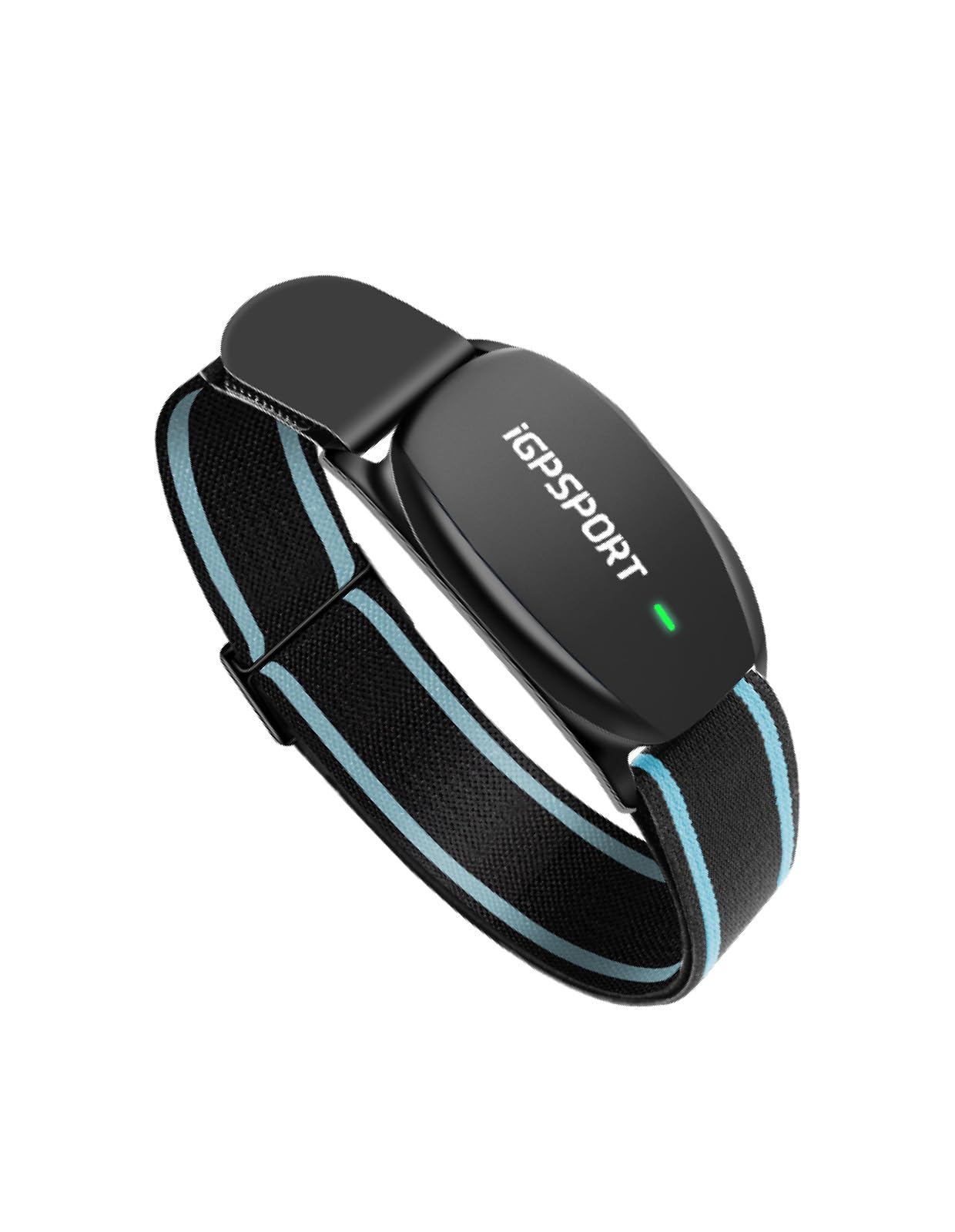
The iGPSPORT HR70 packs an unusual combination of features for its price tier: ±1 BPM accuracy claims, multi-color LED heart rate zone indicators, haptic vibration alerts, and a 65-hour battery life. The optical sensor uses photoelectric transmission for real-time heart rate monitoring and connects via Bluetooth 5.0 and ANT+ to over 200 apps including Wahoo, Strava, and Polar Beat. The armband itself is soft, breathable, and adjustable.
The LED indicators provide instant visual feedback of your current heart rate zone (warm-up, fat-burning, aerobic, threshold, anaerobic) without needing to glance at a phone or computer. The haptic vibration can be set to trigger at custom HR thresholds, acting as an alert if you drift out of your target zone. Battery life is excellent — users report 2–3 weeks of regular use between charges via the included Type-C magnetic cable.
Some units have experienced charging issues after a year of use due to polarity problems with the magnetic connector, and a few users report the device turning itself off mid-session. The ±1 BPM accuracy is ambitious for an optical sensor — real-world performance is generally solid but not quite that precise during rapid HR transitions. For budget-conscious athletes who want zone alerts and long battery life, the HR70 delivers strong value despite occasional QC concerns.
Why it’s great
- Excellent 65-hour battery life with Type-C magnetic charging
- Multi-color LED zone indicators offer at-a-glance training feedback
- Haptic vibration alerts for customizable HR threshold warnings
- Broad compatibility (200+ apps) via Bluetooth 5.0 and ANT+
Good to know
- Magnetic charger polarity can fail after extended use, preventing charging
- Some units auto-power-off mid-session without warning
- Claimed ±1 BPM accuracy may be optimistic for optical sensor
7. Magene H613 Heart Rate Monitor Chest Strap

The Magene H613 enters the budget-electrode chest strap category with impressive specs: 100-hour rechargeable battery via magnetic charging, 17 hours of offline storage, multi-color LED zone indicators, and a buzzer for HR threshold alerts. The ECG sensor claims millimeter-level accuracy for high-intensity workouts like cycling and HIIT, and supports Bluetooth (up to 3 devices simultaneously) plus ANT+ broadcasting for Magene, Garmin, Zwift, and Strava.
Three strap sizes cover a wide range of body types, from 140 cm teens to 210 cm athletes, and the ultra-light 12.4g pod stays comfortable during dynamic movements. The offline storage is a standout feature at this price — it records HR data without a phone, syncing later via the OnelapFit app for detailed zone and calorie reports. The multi-color LED on the sensor itself gives real-time zone feedback at a glance, similar to pricier units.
Some users note the strap material is functional but not as supple as Polar or Garmin offerings, and the magnetic charger is proprietary. Accuracy is generally reliable for steady-state and moderate interval work, though reviewers caution that during very rapid HR changes the sensor may lag slightly behind the H10. For riders and runners on a budget who want ECG-level measurement and offline storage, the H613 punches well above its weight.
Why it’s great
- 100-hour rechargeable battery with convenient magnetic charging
- 17-hour offline storage for phone-free workout recording
- Multi-color LED zone indicators and HR buzzer alerts
- Three strap sizes accommodate teens to tall athletes
Good to know
- Strap material feels less premium than Polar or Garmin alternatives
- Proprietary magnetic charger (not USB-C)
- May have slight lag vs. H10 during very rapid HR transitions
FAQ
Is an optical armband as accurate as a chest strap for heart rate?
Can I use a Bluetooth heart rate monitor with Peloton or Zwift?
What does HRV (heart rate variability) data let me do?
Final Thoughts: The Verdict
For most users, the bluetooth heart rate monitor winner is the Polar H10 because its ECG-level accuracy, dual-protocol connectivity, and 400-hour replaceable battery set the benchmark for serious training and HRV analysis. If you want a comfortable armband that avoids the chest strap entirely, grab the Polar Verity Sense. And for a rechargeable, fuss-free chest strap with USB-C convenience, nothing beats the Wahoo TRACKR.

Mo Maruf
I created WellFizz to bridge the gap between vague wellness advice and actionable solutions. My mission is simple: to decode the research and give you practical tools you can actually use.
Beyond the data, I am a passionate traveler. I believe that stepping away from the screen to explore new environments is essential for mental clarity and physical vitality.