Our readers keep the lights on and my smoothie glass nicely filled. As an Amazon Associate, I earn from qualifying purchases.
The frustration of watching perfectly good cedar siding, deck joists, and fascia boards get riddled with perfect half-inch holes is a uniquely expensive kind of homeowner dread. Carpenter bees don’t eat the wood; they tunnel into it to lay eggs, and each burrow can extend a foot or more, inviting moisture rot and woodpecker damage that turns a cosmetic issue into a structural repair bill. Stopping them requires a product that penetrates that tunnel, not just a surface spray that washes away in the next rain.
I’m Mohammad Maruf — the founder and writer behind WellFizz. My research process involves cross-referencing label active ingredients, reading through state-level registration restrictions, and analyzing real homeowner field reports to separate treatments that merely claim control from those that actually sterilize the nest.
After evaluating dust formulations, foaming aerosols, and wettable powders, the best carpenter bee insecticide must deliver residual power inside a dark tunnel that the bee cannot avoid crawling through.
How To Choose The Best Carpenter Bee Insecticide
Carpenter bees are not regular wasps. They burrow deep, and a treatment that merely kills the adult outside the hole does nothing to stop the larvae developing inside. The right product needs to reach the brood chamber and keep working for weeks. Here is what matters most when you are making that call.
Dust vs. Foam vs. Liquid Spray
A liquid spray evaporates or gets absorbed into the wood grain before it reaches the bend in the tunnel. Foam expands and can fill the void, but bees sometimes shake it off before the active ingredient breaches their exoskeleton. Dust, by contrast, clings to the bee’s body hairs as it walks through the treated area and gets carried deep into the nest. For carpenter bee work, dust formulations with a long residual window are the most reliable option.
Active Ingredient Chemistry: Pyrethroids and Desiccants
Most effective carpenter bee insecticides use a synthetic pyrethroid such as lambda-cyhalothrin or cyfluthrin, which disrupts the insect’s nervous system on contact. Some products pair this with a silica gel desiccant that physically absorbs the waxy cuticle layer, causing the bee to dry out. This dual mechanism is particularly valuable against established nests because it works even if the bee does not ingest a lethal dose immediately.
Tunnel Delivery and Residual Life
A straw, a bellows duster, or a pressurized dust stream determines whether your insecticide actually reaches the brood chamber. Products with an extension tube that lets you puff dust deep into a gallery are far more effective than a broad spray you apply to the wood surface. Look for a residual label claim of several months in dry, protected environments — that is the difference between killing today’s bee and preventing next season’s re-infestation.
Quick Comparison
On smaller screens, swipe sideways to see the full table.
| Model | Category | Best For | Key Spec | Amazon |
|---|---|---|---|---|
| BASF PT Tri-Die | Pressurized Dust | Deep void treatment & yellow jackets | Lambda-cyhalothrin + silica gel | Amazon |
| Tempo Dust | Powder Dust | Wood bee galleries & attic voids | Cyfluthrin 1% powder | Amazon |
| Atticus Tirade | Powder Dust | Multi-pest indoor & outdoor use | Cyfluthrin 1% fine dust | Amazon |
| Spectracide Foam | Foaming Aerosol | Ground nests & surface tunnel entry | Foam expansion in void spaces | Amazon |
| Spectracide Wasp Spray | Jet Spray Aerosol | Reaching high eaves & soffits at range | 27-foot jet stream reach | Amazon |
In‑Depth Reviews
1. BASF PT Tri-Die Pressurized Dust Insecticide

The BASF PT Tri-Die combines lambda-cyhalothrin with a silica gel desiccant in a pressurized dust format that shoots deep into cracks and wall voids. This dual chemistry is what makes it lethal against carpenter bees: the pyrethroid hits the nervous system quickly, while the desiccant keeps working by physically drying out any insect that walks through the dust days later. Users report eliminating yellow jacket nests in two days with a single one-second burst, which mirrors the kind of tunnel-penetrating action needed for carpenter bee galleries.
The pressurized can includes a straw that lets you direct the plume upward into a hole without gravity pulling the product back out. That matters when you are treating the underside of a fascia board or a porch beam. The dust leaves a chalky residue, so expect to see a white film around the entry point, but that residue is also what signals that the tunnel is protected for the season.
One practical trade-off: the force of the propellant can overspray and coat surfaces in a fine dust layer, which may be annoying in finished indoor areas but is entirely manageable for outdoor wood treatment. Some users found the straw fit stiff initially, but once inserted it delivers exactly where aimed.
Why it’s great
- Dual-action kills both through neurotoxin and desiccation
- Pressurized delivery reaches deep into tunnels without a bulb duster
- Residual silica layer remains active for months in dry voids
Good to know
- Chalky residue can be messy on visible wood surfaces
- Straw insertion takes a bit of force on first use
2. Tempo Dust Insecticide Powder (Bayer)
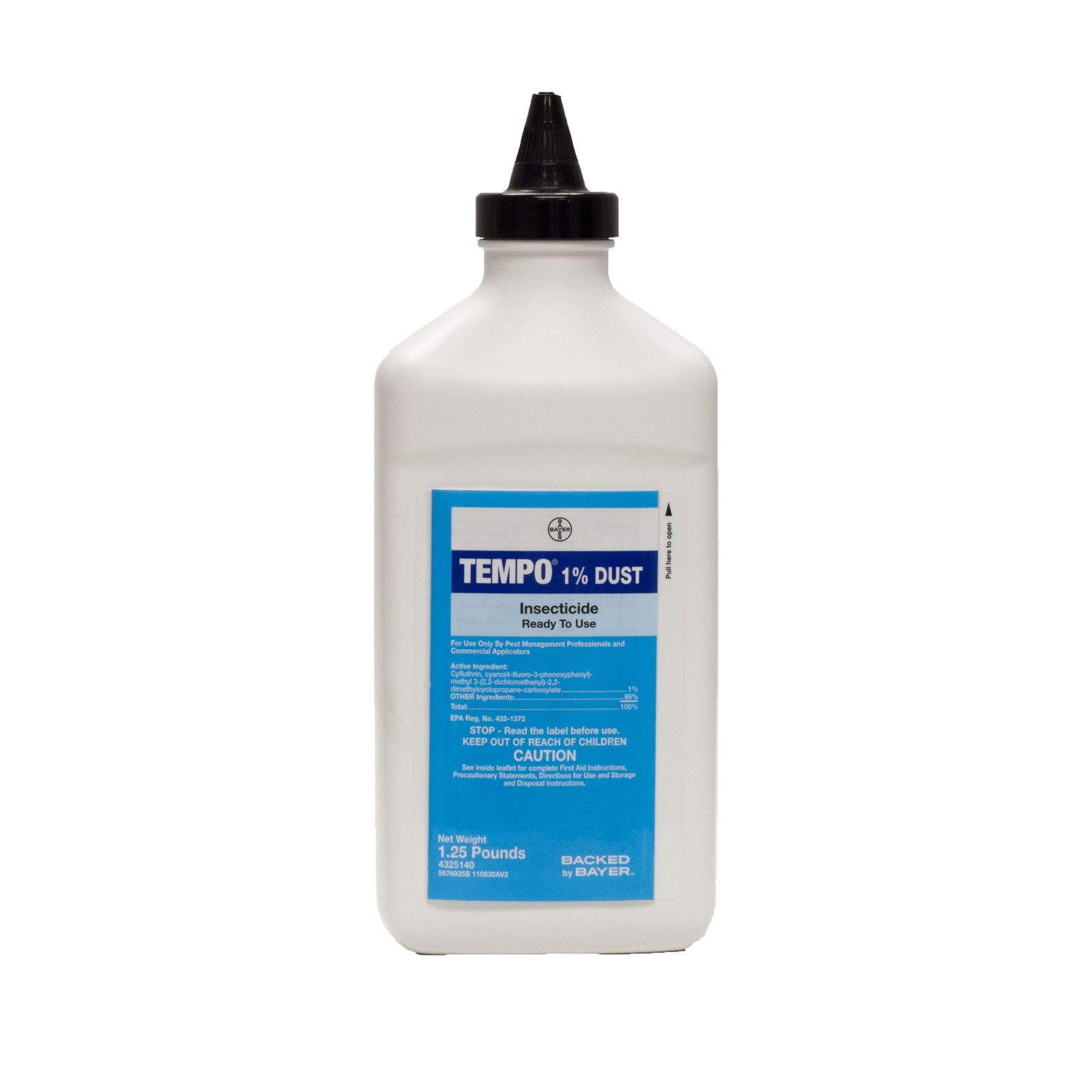
Tempo Dust from Bayer has a strong reputation among beekeepers and pest pros for being the go-to treatment for “wood bees” — the colloquial name for carpenter bees. The cyfluthrin 1% formulation is fine enough to puff deep into a ½-inch hole with a bulb duster, and users consistently report that a single generous treatment stops activity within a day. One reviewer noted it eradicated an in-ground yellow jacket nest when mixed with another product, showing its versatility beyond just wood boring species.
Each pound of dust covers roughly 1000 square feet, making this a cost-effective option if you have multiple structures or a large deck perimeter to treat. The dust is non-staining and low-odor, which matters when applying near living areas or around window frames. However, this product is not registered for sale in California, New York, South Carolina, or Connecticut, so check state restrictions before ordering.
The main drawback is that you need to purchase a separate bellows duster to apply it properly — using the bottle tip alone does not get the dust far enough into the tunnel. Once you pair it with a duster, the residual power is excellent. Several users described it as “life-saving” for swarms on second-story eaves where other sprays had failed.
Why it’s great
- Low-odor and non-staining on wood surfaces
- Excellent residual control in sheltered tunnels
- High coverage at 1000 sq. ft. per pound
Good to know
- Requires a bulb duster for effective gallery penetration
- Not available in several states including CA and NY
3. Atticus Tirade 1% Cyfluthrin Dust Insecticide
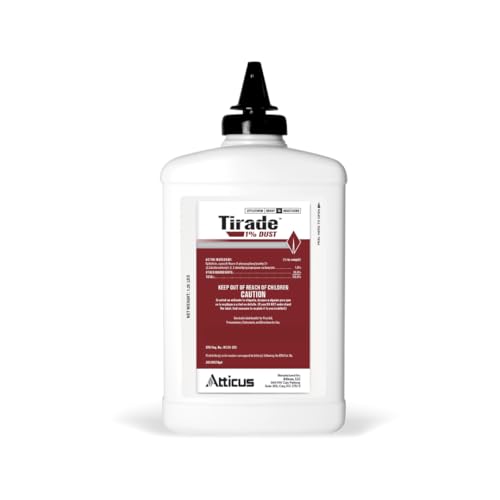
The Atticus Tirade uses the same active ingredient (cyfluthrin 1%) as the leading brand but at a lower cost per ounce, and it is EPA-registered for both indoor and outdoor use. Customers specifically call out its effectiveness on carpenter bees nesting in deck railings and window frames, noting that a re-application after two days stopped bees from returning for the rest of the season. The fine powder texture is ideal for a bulb duster and leaves no visible stain on painted or finished wood.
One unique advantage of this product is its label approval for use in pet kennels and upholstery for bed bug control, which speaks to its safety profile when used according to directions. For carpenter bee work, you want the dust to linger in the tunnel without degrading from humidity, and Tirade holds up well in covered, dry voids. Users report wiping out wasp nests, hornets, and even black widow spiders alongside carpenter bees.
The main catch here is that like many cyfluthrin dusts, Tirade is not registered for sale in Alaska, California, Hawaii, Puerto Rico, or Vermont. If you live in a restricted state, you will need to choose a different formulation. Also, the 1.25 lb bottle is generous, but if you only have a few holes to treat, a smaller dust container might be more practical.
Why it’s great
- EPA-registered for residential and commercial indoor/outdoor use
- Fine powder texture stays suspended in tunnel air currents
- Controls over 50 insect species beyond carpenter bees
Good to know
- Not available in CA, NY, AK, HI, or VT
- Requires a separate duster for best tunnel penetration
4. Spectracide Carpenter Bee & Ground-Nesting Yellowjacket Killer Foam (Pack of 3)

Spectracide’s foaming aerosol takes a different approach: instead of dust, it expands into the tunnel and fills the void space where bees travel. The foam formulation is specifically labeled for carpenter bees and ground-nesting yellowjackets, and the extension tube lets you direct the foam deep into the entry hole. Users who sprayed directly into holes at night — when bees are least active — reported the foam disabled wasps on contact and prevented them from exiting.
That said, carpenter bee reviews on this product are mixed. The foam does not have the same long-lasting residual that dust provides, meaning that if a bee tunnels into a new, unfoamed section, it remains unexposed. For surface nests or ground holes where foam fills the entire cavity, it works well; for deep, winding carpenter bee galleries, dust tends to outperform foam.
The pack of three cans is convenient if you have multiple structures to treat, and the foam is much cleaner than dust on visible surfaces. Just do not expect a single application to sterilize a months-old network of interconnected tunnels — you may need to re-treat every few days until activity stops completely.
Why it’s great
- Foam expands to fill irregular void spaces and galleries
- Extension tube provides targeted delivery into entry holes
- Cleaner application than dust on finished wood surfaces
Good to know
- May require multiple applications for deep carpenter bee tunnels
- Bees can shake off foam if not fully engulfed
5. Spectracide Wasp & Hornet Killer (12 Pack)
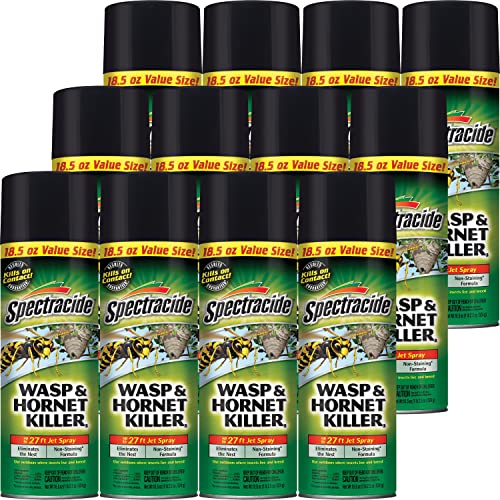
This Spectracide aerosol is not a dedicated carpenter bee treatment — it is designed for wasp, hornet, and yellow jacket nests that you need to hit from a safe distance. The jet spray reaches up to 27 feet, which is invaluable when a nest is tucked under a second-story soffit or high in a gable-end eave. The formula foams on contact and engulfs the nest, and users report that it incapacitates aggressive wasps quickly enough to prevent them from flying back at you.
For carpenter bees specifically, this product is most useful as a follow-up tool. If you have already treated the tunnels with dust but need to knock down the adult bees that are hovering around the porch on a warm afternoon, the 27-foot reach lets you pick them off without climbing a ladder. The non-staining formula is also a plus — it does not leave a visible residue on siding or paint when used according to directions.
The limitation is that this is a knockdown spray, not a residual treatment. It kills on contact but does not linger inside the wood tunnel to protect against future activity. Carpenter bees that are already inside the gallery when you spray will die, but the spray will not prevent new bees from tunneling into untreated wood. Use this as your aerial defense and rely on a dust or foam product for the structural defense.
Why it’s great
- Long 27-foot reach for high, dangerous nests
- Non-staining formula safe for siding and painted wood
- Quick knockdown of aggressive bees and wasps
Good to know
- Low residual activity — does not prevent new tunneling
- Best as a contact spray, not a wood treatment
FAQ
Should I plug the carpenter bee hole after applying insecticide?
Do dust insecticides stop working after rain exposure?
Final Thoughts: The Verdict
For most users, the best carpenter bee insecticide winner is the BASF PT Tri-Die because its pressurized dust delivery and dual-mechanism chemistry (lambda-cyhalothrin + silica gel) provide both immediate knockdown and lasting residual action inside deep wood galleries. If you want a budget-friendly option that still delivers professional-grade control, grab the Tempo Dust and pair it with a bellows duster. And for reaching high soffits or killing hovering adults on contact, nothing beats the Spectracide Wasp Spray with its 27-foot jet reach.

Mo Maruf
I created WellFizz to bridge the gap between vague wellness advice and actionable solutions. My mission is simple: to decode the research and give you practical tools you can actually use.
Beyond the data, I am a passionate traveler. I believe that stepping away from the screen to explore new environments is essential for mental clarity and physical vitality.