Our readers keep the lights on and my smoothie glass nicely filled. As an Amazon Associate, I earn from qualifying purchases.
A worksite demands boots that can shrug off falling debris, standing water, and 12-hour shifts without turning your feet into a liability. The wrong pair means blisters, cold toes, or worse — a bruised metatarsal from a dropped beam. You need a shoe that balances puncture resistance, waterproofing, and all-day arch support, because every minute spent thinking about your feet is a minute not focused on the task at hand.
I’m Mohammad Maruf — the founder and writer behind WellFizz. I’ve spent years analyzing safety footwear construction, from steel toe impact ratings to outsole rubber compounds and waterproof membrane breathability.
The list below narrows the field to nine contenders that actually hold up on concrete, mud, and rebar. This is your guide to the best boots for construction workers.
How To Choose The Best Boots For Construction Workers
Construction site footwear isn’t about fashion — it’s a safety system. The wrong decision can mean a lost toe from a dropped I-beam or a fall on a wet slab. Focus on these factors to match a boot to your specific work environment.
Safety Toe Type: Steel vs. Composite
Steel toes handle the highest impact (up to 75 ft-lbs) and compression (2,500 lbs) but conduct cold, making them uncomfortable on winter sites. Composite toes are lighter and non-metallic — they won’t set off metal detectors and stay warmer in freezing temps, but some models reduce toe-box volume, which can pinch wider feet. ASTM F2413-18 ratings are the baseline; look for the I/C (impact/compression) marking inside the boot.
Waterproofing Membrane and Construction
Rubber and neoprene boots (like the wellingtons on this list) offer total submersion protection but trap sweat. Sealed leather boots with a waterproof membrane — Timberland PRO’s proprietary film or Ariat’s H2O barrier — breathe better for all-day wear but require periodic re-treatment. Check the seam construction: vulcanized or direct-attach soles prevent delamination better than cement construction on wet sites.
Outsole Grip and Puncture Protection
Look for a rubber compound rated for oil and slip resistance (ASTM F3445). Deep, multi-directional lugs shed mud on soft ground, while a wedge sole provides maximum flat-surface contact on concrete. A steel or composite shank between the insole and outsole adds puncture defense against nails and rebar — critical for framing and demolition work.
Quick Comparison
On smaller screens, swipe sideways to see the full table.
| Model | Category | Best For | Key Spec | Amazon |
|---|---|---|---|---|
| Timberland PRO Titan EV | Composite Toe | All-day comfort on concrete | 4.21 lbs per boot | Amazon |
| Ariat Rebar Lift 6″ | Composite Toe | Rough terrain & cold weather | Triple-stitched heel | Amazon |
| Timberland PRO Endurance 6″ | Steel Toe | Harsh industrial plants | Puncture-resistant | Amazon |
| Wolverine Trade Wedge Romeo | Steel Toe | Long standing hours | Wedge sole design | Amazon |
| Wolverine Floorhand (Women’s) | Steel Toe | Zero break-in needed | Thick waterproof leather | Amazon |
| GIEESHIELD Rubber Work Boot | Steel Toe | Wet/muddy sites | 6mm neoprene lining | Amazon |
| Hunthor Rubber Work Boot | Steel Toe | Cold wet environments | 1-year warranty | Amazon |
| Georgia Boot Eagle One Chelsea | Steel Toe | Farm & light construction | Slip-on convenience | Amazon |
| TIDEWE Work Boot | Steel Toe | Budget-friendly wet work | Puncture-proof sole | Amazon |
In‑Depth Reviews
1. Timberland PRO Titan EV 6″ Composite Toe
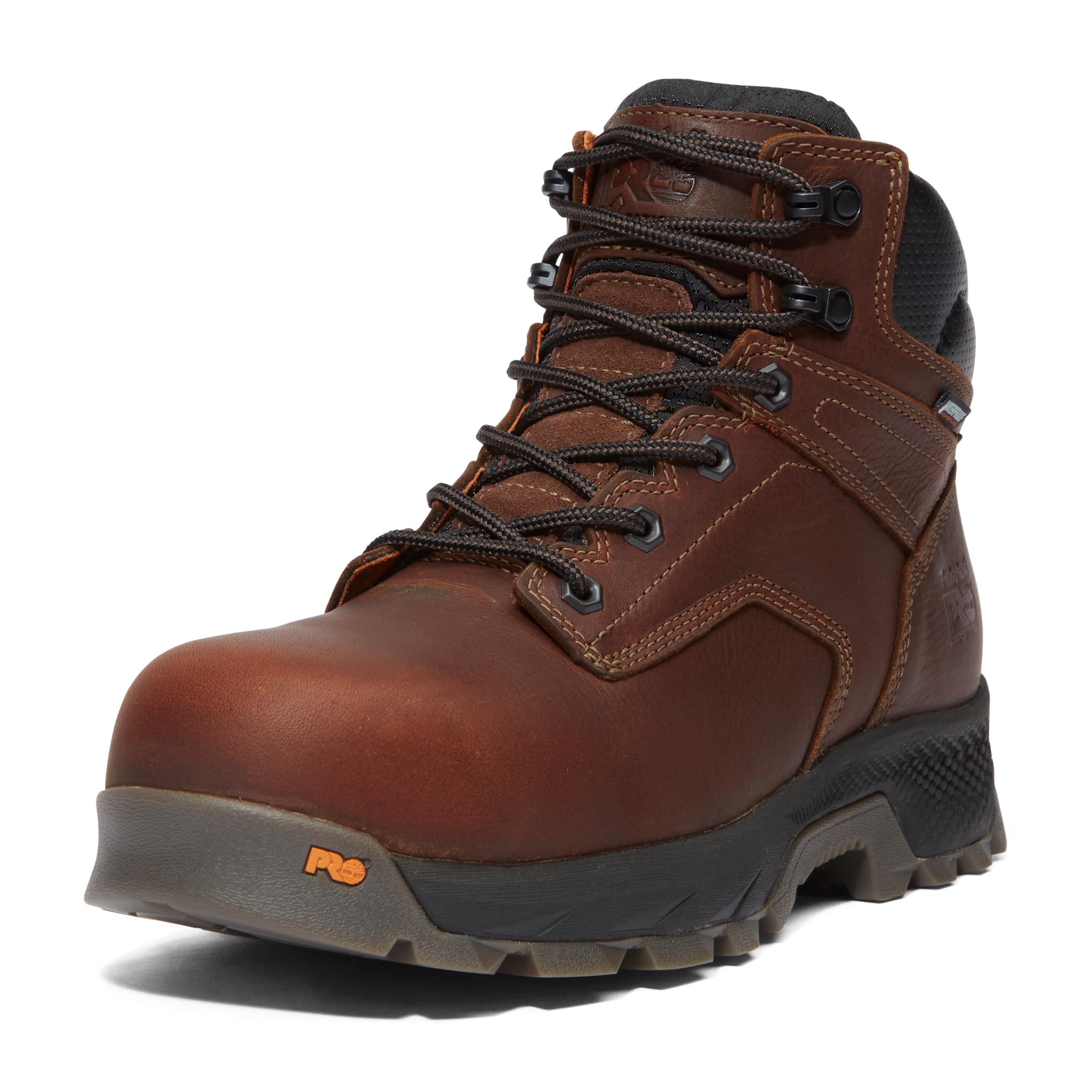
The Timberland PRO Titan EV hits the sweet spot where safety compliance meets all-day foot comfort. Weighing only 4.21 pounds per boot, this composite-toe model sheds significant weight compared to steel-toe alternatives — crucial for workers logging 7-plus miles daily on concrete slabs. The out-of-box feel is remarkably soft, with zero break-in period reported by multiple reviewers who suffer from plantar fasciitis and neuropathy.
The waterproof membrane and slip-resistant outsole tackle wet surfaces without the clammy feeling of rubber boots. Testers praised the roomy toe box, which accommodates wider feet without pinching, and the secure lacing system that locks the heel in place. After five months of daily commercial HVAC work, one reviewer noted the boots still looked and performed like new, retaining traction on wet surfaces.
The composite toe won’t conduct cold on winter sites — a real advantage over steel. The only downside is cosmetic: the leather scuffs more readily than some thicker-hide competitors. For a premium boot that combines lightweight construction, immediate comfort, and proven durability, the Titan EV justifies its place at the top of the list.
Why it’s great
- Lightweight composite construction reduces foot fatigue on long shifts.
- Excellent arch support works well for plantar fasciitis sufferers.
- Slip-resistant outsole performs on wet concrete and oily surfaces.
Good to know
- Leather upper scuffs more easily than some competitors.
- Premium tier pricing may stretch strict project budgets.
2. Ariat Rebar Lift 6″ Waterproof Composite Toe
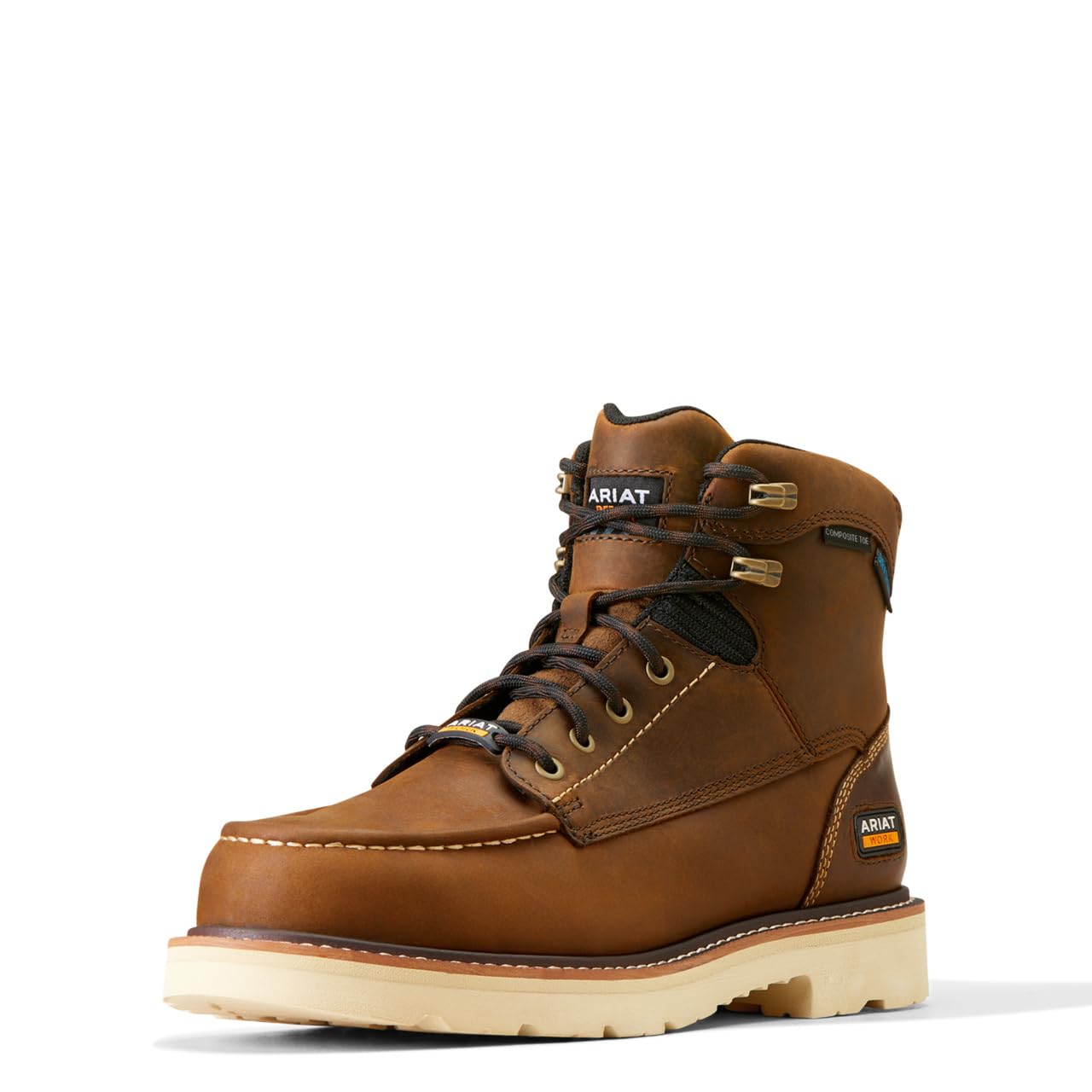
The Ariat Rebar Lift is built for the roughest terrain, with construction details that signal longevity. Triple stitching at the heel and mid, double stitching at the upper ankle, and a thick oil-resistant sole give this boot an almost indestructible feel. The rich brown leather looks sharp enough for a contractor meeting yet rugged enough for a day on rebar.
Minnesota winter testers confirm the boot keeps feet warm in blizzards while maintaining dryness through standing water. The composite toe adds a layer of insulation without the cold-bridge effect of steel. Workers walking 7–8 miles daily on rough terrain reported the boot held up exceptionally well after months of abuse, with the outsole maintaining grip on loose gravel and mud.
The fit runs slightly snug at first, but the leather stretches after a few days, allowing room for an extra insole if needed. At 5.5 pounds per boot, it’s noticeably heavier than the Titan EV, but the trade-off is bombproof construction. For commercial framers and rough-terrain workers who prioritize durability over featherweight feel, the Rebar Lift is a top contender.
Why it’s great
- Triple-stitched construction for exceptional durability on rough terrain.
- Oil-resistant outsole performs well on slippery and uneven surfaces.
- Rich leather upper looks professional for client-facing roles.
Good to know
- Heavier build may cause fatigue for high-mileage concrete workers.
- Snug initial fit requires a short break-in period.
3. Timberland PRO Endurance 6″ Steel Toe

The Endurance lives up to its name — testers report two years of daily wear in harsh oily aviation plants and commercial HVAC environments with only cosmetic scuffing. The puncture-resistant plate adds a layer of protection against nails and sharp debris, a non-negotiable feature for demolition and rough framing. The steel toe meets ASTM impact standards for falling object protection.
Arch support is a standout feature; workers spending 10-plus hours on their feet noted significantly less foot fatigue compared to cheaper boots. The waterproof membrane holds up well, though the leather requires periodic treatment to maintain its seal. The break-in period takes about two weeks — longer than the Titan EV but typical for steel-toe boots with stiffer construction.
At roughly , the Endurance sits in the mid-to-premium segment, but the durability payoff is real. The boot also adds roughly an inch of height, which some workers appreciate for reaching overhead without heel slip. The main trade-off is weight — steel toe and thicker leather make this a heavier boot than composite alternatives.
Why it’s great
- Proven two-year lifespan in harsh industrial conditions.
- Strong arch support reduces fatigue for 10-hour standing shifts.
- Puncture-resistant plate adds critical protection on debris-heavy sites.
Good to know
- Heavy construction may cause fatigue for high-mileage walkers.
- Two-week break-in period required before full comfort is achieved.
4. Wolverine Trade Wedge Steel Toe Romeo

The Wolverine Trade Wedge Romeo is purpose-built for workers who stand all day on hard surfaces. The wedge sole design maximizes contact area with concrete, distributing weight evenly and reducing pressure points. Oil rig workers reported the boot provided immediate comfort from the first wear, eliminating the dreaded break-in blisters common with stiffer work boots.
At a mid-range price point, this boot punches above its weight in comfort. The steel toe offers full ASTM-rated protection without the exaggerated bulk of some wellington-style boots. The slip-on Chelsea design means quick entry and exit — ideal for workers who need to remove boots for clean room access or break times. The fit runs about a half-size large, so sizing down ensures a locked-in heel.
Durability after a month on an offshore rig appears promising, though long-term data is still emerging for this 2025 model. The boot doesn’t feel heavy, which is a plus for workers moving between ladders and scaffolding. For concrete finishers, warehouse workers, and anyone prioritizing standing comfort, the Trade Wedge is a smart mid-range bet.
Why it’s great
- Wedge sole distributes weight evenly for concrete floor comfort.
- Immediate comfort with zero break-in period needed.
- Slip-on Chelsea design enables quick removal and entry.
Good to know
- Runs a half-size large; consider sizing down.
- Early production model limits long-term durability data.
5. Wolverine Women’s Floorhand 6″ Steel Toe

Women in construction often struggle to find safety toe boots that fit properly without excess volume. The Wolverine Floorhand solves this with a true women’s last that eliminates heel slip and toe-box slop. The real leather upper requires zero break-in — multiple reviewers noted the boot felt broken-in from the first wear, with no rubbing on the pinky toe or aggravating existing bunions.
Compared to the popular Timberland women’s boot, the Wolverine offers thicker, more rugged leather and a substantially lower price point. The steel toe provides full protection, and the waterproof construction has held up through hours of wet work. The sole is noticeably thicker than many competitors, adding both insulation and cushioning for concrete floors.
Some long-term users report sole separation after extended exposure to standing water, suggesting this boot is better suited for dry construction environments than constant submersion. However, six-year repeat buyers confirm the Floorhand consistently delivers two-plus years of daily wear. For women needing a properly proportioned steel-toe boot that skips the break-in misery, this is the clear pick.
Why it’s great
- True women’s last eliminates heel slip and excess volume.
- Zero break-in required — comfortable from first wear.
- Thick waterproof leather outlasts similarly priced competitors.
Good to know
- Potential sole separation with prolonged water exposure.
- Not designed for heavy-duty industrial use.
6. GIEESHIELD Rubber Work Boot Steel Toe
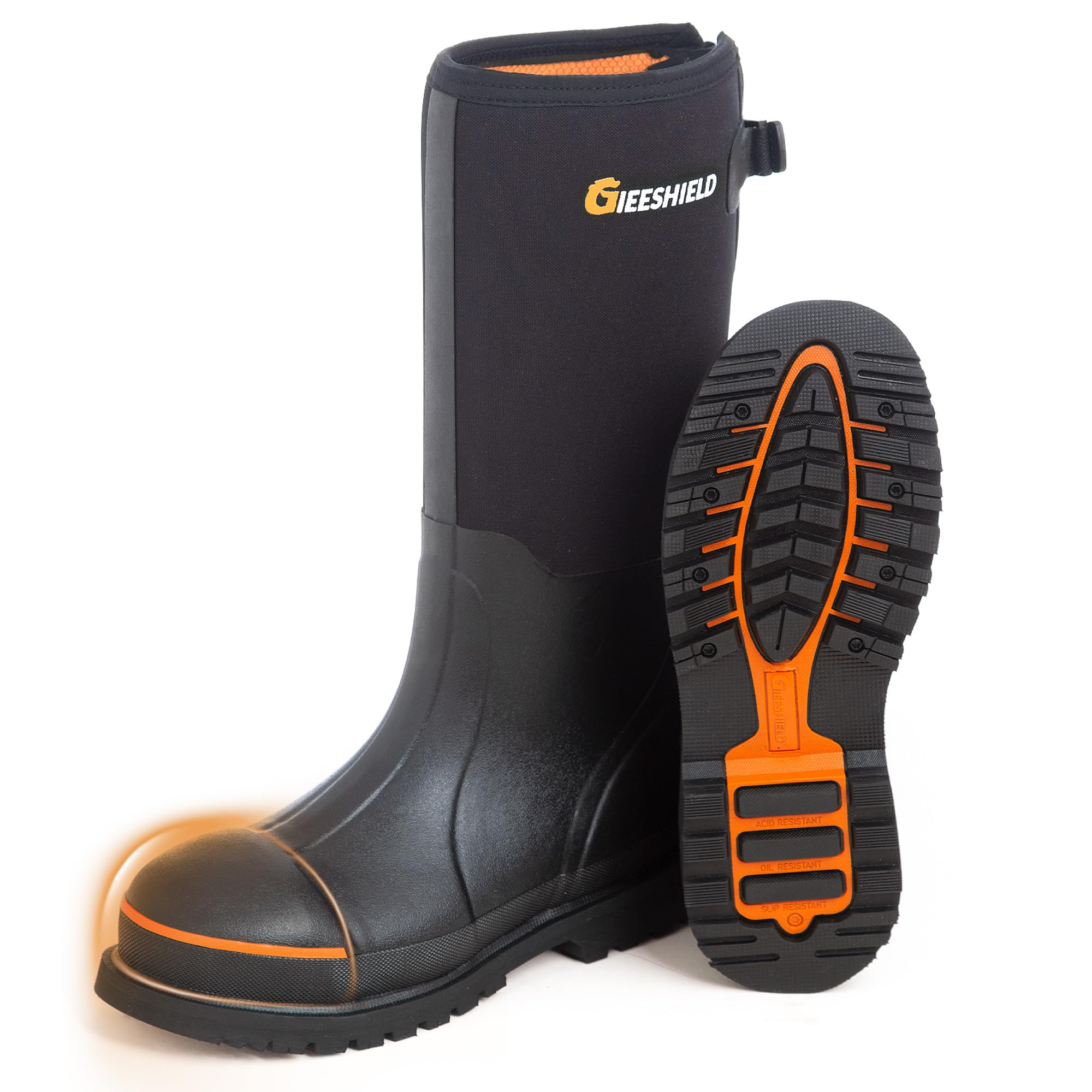
When your day involves standing in four inches of muddy water or pouring concrete, leather boots won’t cut it. The GIEESHIELD rubber boot delivers total submersion protection with vulcanized seams that guarantee no leaks. The 6mm neoprene lining provides warmth down to about 30 degrees Fahrenheit, though toes will feel the chill below that threshold — typical for steel-toe rubber boots without thick insulation.
The pull-on design and heel kick tab make entry and exit simple, even with muddy gloves. The rubber outsole with deep tread provides solid grip on wet mud and concrete, though it’s not as sure-footed on sheer wet steel plates as some dedicated slip-resistant outsoles. The boot fits snug through the calf, which is good for keeping water out but may be tight for workers with thicker calves.
At roughly , this boot offers serious waterproof performance at a moderate price. The steel shank adds puncture protection against hidden nails in flooded areas. The trade-off is breathability — neoprene traps heat and sweat, making this a cold-weather specialist rather than a year-round solution. For muddy foundations, sewer work, and rainy framing days, the GIEESHIELD is a reliable rubber shell.
Why it’s great
- Vulcanized seams ensure total waterproofing in standing water.
- Steel shank adds puncture protection against submerged debris.
- Easy pull-on design with heel kick tab for quick removal.
Good to know
- Neoprene lining limits breathability in warm conditions.
- Toes get cold below 30 degrees Fahrenheit despite insulation.
7. Hunthor Rubber Work Boot Steel Toe

The Hunthor rubber boot punches well above its price tier for cold, wet environments. One reviewer switched from Red Wings to these boots for seafood packing work and found the Hunthor kept him warmer, drier, and more comfortable. The thick, pliable rubber sole prevents cracking when crouching — a problem with stiffer budget wellingtons. The 6mm neoprene insulation and steel toe provide a warm, protective shell in sub-freezing conditions.
The boot runs slightly small in the calf; workers with thicker lower legs may find the shaft circumference restrictive. The steel toe is noticeable — you can feel the weight when walking, but that’s expected for a fully rubber boot at this price. The top strap makes on/off easy, and the included one-year warranty adds a layer of protection uncommon in budget-friendly rubber boots.
Customer feedback is overwhelmingly positive. Workers with plantar fasciitis reported comfortable all-day wear during multi-hour storm shifts, with feet staying bone dry. The boot runs true to shoe size, though those between sizes should size up to accommodate thick socks. For budget-conscious workers who need reliable waterproof warmth, the Hunthor delivers surprising value.
Why it’s great
- Pliable rubber sole withstands crouching without cracking.
- One-year warranty provides peace of mind on a budget-friendly boot.
- Excellent warmth retention in sub-freezing wet conditions.
Good to know
- Narrow calf fit may not accommodate thicker lower legs.
- Steel toe is heavy; noticeable during prolonged walking.
8. Georgia Boot Eagle One Steel Toe Chelsea
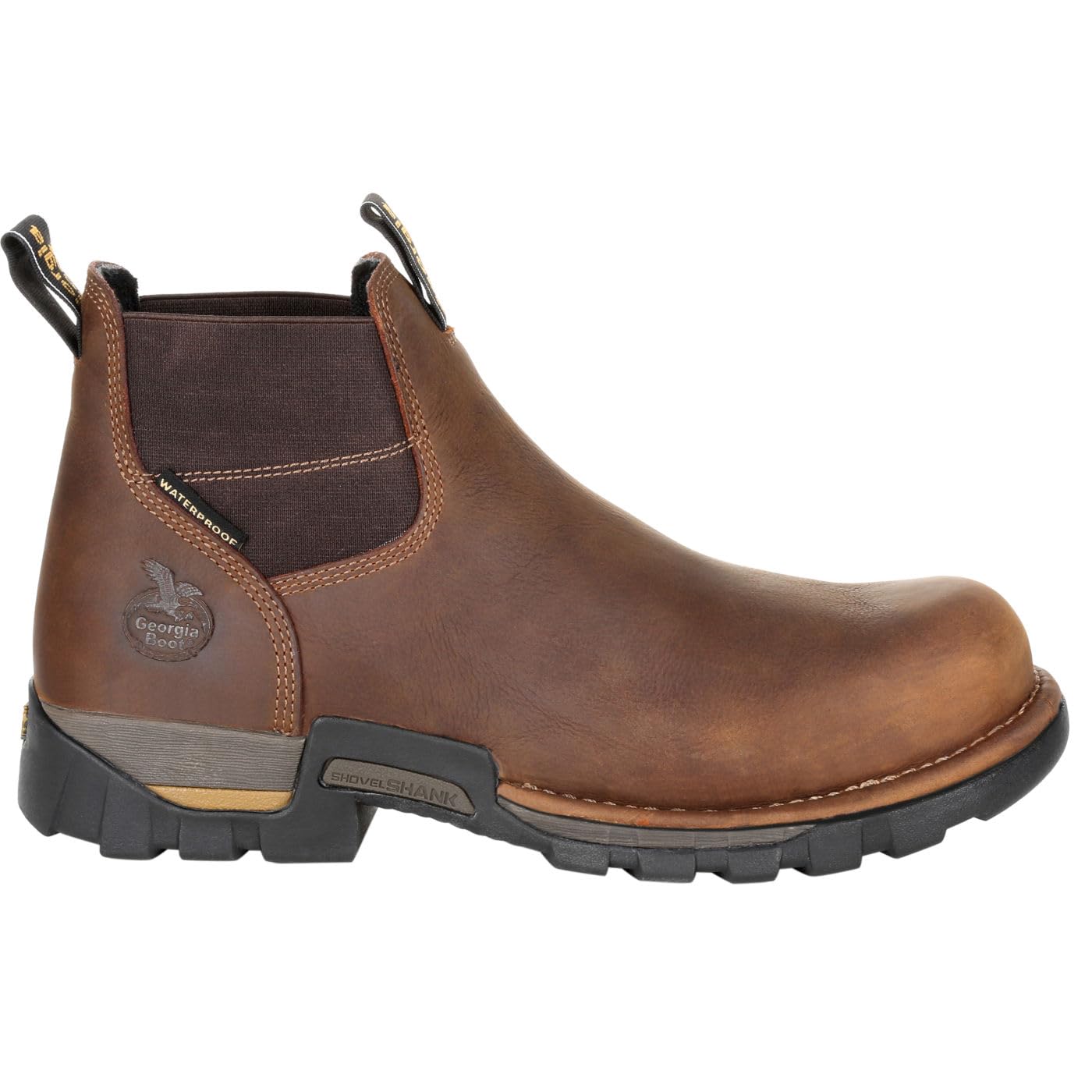
The Georgia Boot Eagle One offers a compelling alternative to premium slip-on work boots at a moderate price. Multiple reviewers reported 2.5 years of daily farm use — outlasting Danner, Thorogood, Twisted X, and Ariat boots in the same application. The Chelsea silhouette provides lace-up-like heel lock without the hassle of laces, making it ideal for workers who need quick on/off throughout the day.
The boot runs large — about a half to full size big. Ordering a half-size down ensures a secure fit without heel slip. The wide fit accommodates very wide feet well, a common complaint with other Chelsea work boots. The waterproofing fades after about a year of daily wear, but regular application of mink oil can extend the seal. The boot is slightly heavy, but the durability trade-off is worth it for most users.
The arch support is notably good for a slip-on style. Dump truck drivers reported no foot sores after 12-hour shifts. The sole is stiff, providing good stability on uneven ground. For farm work, light construction, or anyone who values easy entry and proven longevity, the Eagle One is a reliable mid-range option.
Why it’s great
- Proven 2.5-year lifespan outlasts many premium competitors.
- Slip-on design with lace-like heel lock for convenience.
- Excellent arch support for 12-hour shift comfort.
Good to know
- Runs large; order a half to full size down.
- Waterproofing fades after one year without mink oil treatment.
9. TIDEWE Work Boot Steel Toe
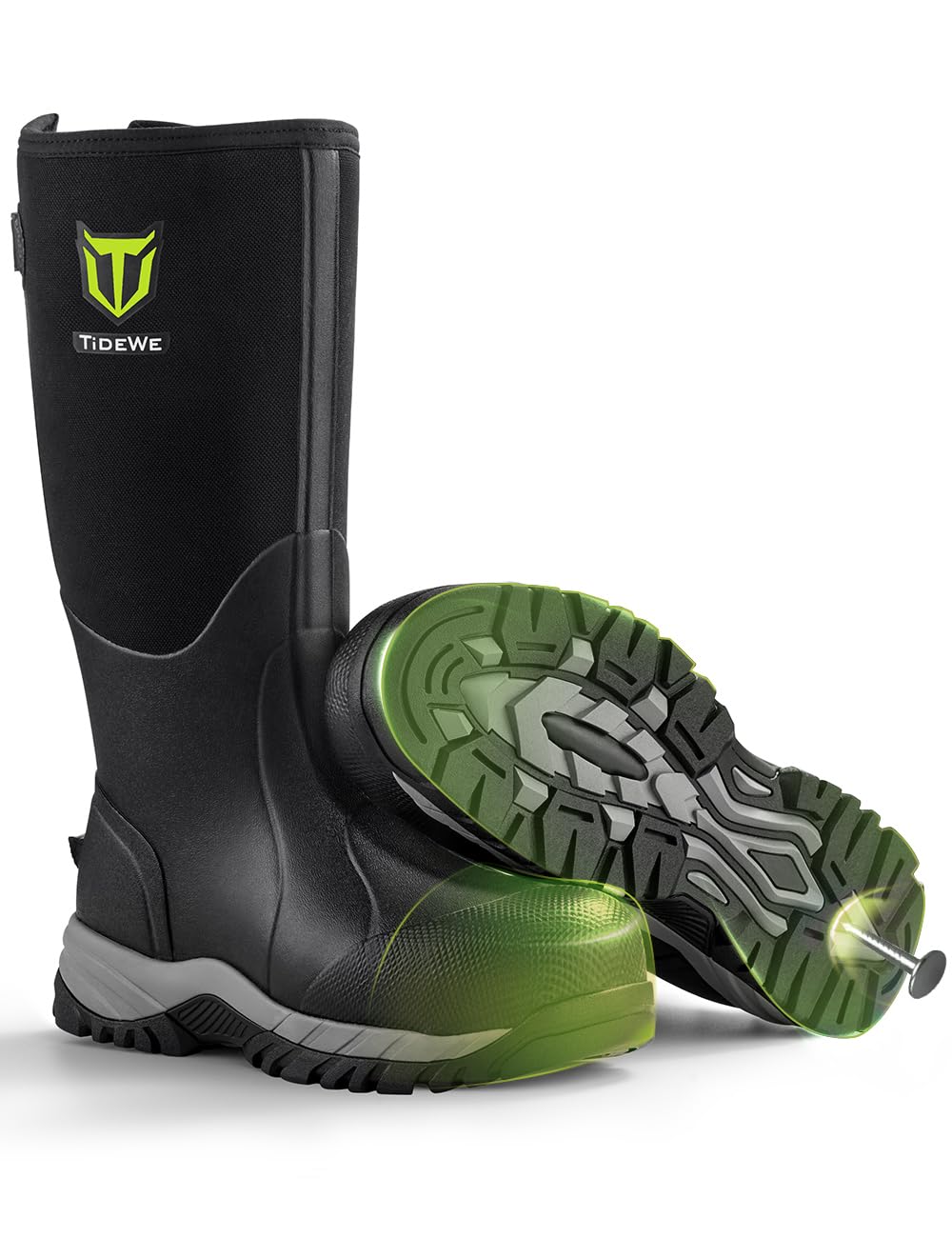
The TIDEWE work boot is the entry-level contender that still delivers essential safety features. The steel toe, puncture-proof sole, and steel shank provide the baseline protection needed for construction sites. The 6mm neoprene lining and rubber shell offer waterproof warmth suitable for wet conditions. The design is straightforward and functional, with a pull-on style and kick tab for easy removal.
The boot runs significantly large — customers routinely report needing a full size down from their normal shoe size. The tread provides decent traction on most surfaces, but several users noted slipping on wet floors, so this isn’t the best choice for constantly wet or oily concrete. The insulation is effective at keeping feet warm, but the lack of breathability causes excessive sweating in moderate temperatures.
At its budget-friendly price, the TIDEWE is a solid value for light construction, gardening, or farm work where the primary needs are steel toe protection and waterproofing. The puncture-resistant sole adds a layer of security for nail-strewn sites. For daily heavy construction use, the sizing inconsistency and limited grip make it a secondary or backup option rather than a primary boot.
Why it’s great
- Steel toe and puncture-proof sole meet essential safety standards.
- Waterproof rubber construction keeps feet dry in wet conditions.
- Good warm insulation for cold weather work sites.
Good to know
- Runs a full size large; ordering down is essential.
- Traction is limited on wet or oily surfaces.
- Insulation causes excessive foot sweat in moderate temperatures.
FAQ
How do I know if a steel toe boot fits correctly?
Can I replace the insoles in my work boots for better arch support?
How often should I replace my construction work boots?
Final Thoughts: The Verdict
For most users, the best boots for construction workers winner is the Timberland PRO Titan EV because it combines lightweight composite protection, immediate comfort, and proven durability in a package that works for concrete, steel, and everything in between. If you need total waterproof submersion for wet sites, grab the GIEESHIELD Rubber Boot. And for women who need a properly fitted zero-break-in steel toe, nothing beats the Wolverine Floorhand.

Mo Maruf
I created WellFizz to bridge the gap between vague wellness advice and actionable solutions. My mission is simple: to decode the research and give you practical tools you can actually use.
Beyond the data, I am a passionate traveler. I believe that stepping away from the screen to explore new environments is essential for mental clarity and physical vitality.