Our readers keep the lights on and my smoothie glass nicely filled. As an Amazon Associate, I earn from qualifying purchases.
Finding a 120Hz TV under a strict budget used to be a fool’s errand, forcing a trade-off between high-refresh-rate fluidity and acceptable picture quality. Today, that compromise is finally fading, but only if you know where to look and which spec sheets to trust.
I’m Mohammad Maruf — the founder and writer behind WellFizz. I specialize in analyzing the real-world performance metrics behind the marketing hype, and I’ve spent years dissecting the value proposition of consumer electronics to separate legitimate specs from category buzzwords.
This guide breaks down the current landscape to help you find a true best budget 120hz tv that delivers genuine motion clarity, responsive gaming, and solid HDR performance without draining your wallet.
How To Choose The Best Budget 120Hz TV
A low price tag doesn’t have to mean low frame rates. But the budget 120Hz segment is riddled with cleverly marked “effective” refresh rates that aren’t native. Here’s how to cut through the clutter and land the right set.
Native 120Hz vs. Motion Interpolation
The single most important distinction is whether the panel physically clocks a 120Hz refresh rate or uses software trickery (Motion Rate, Picture Smoothing) to simulate higher motion. Look for “Native 120Hz” or “120Hz Panel Refresh Rate” in the specs. Any phrase like “Motion Rate 240” or “Effective 120Hz” without a panel refresh rate mention is likely interpolation, which adds input lag and blurs the image during fast scenes.
HDMI 2.1: The Gateway to 4K 120Hz
To push a 4K image at 120 frames per second from a gaming console or PC, you need HDMI 2.1 bandwidth. Without it, the TV might force a drop to 1080p to hit the high refresh rate. Check that at least one HDMI port supports 4K 120Hz. Many budget models only offer 1440p 120Hz via HDMI 2.0, so confirm your connection’s capabilities assuming you want full 4K resolution. VRR (Variable Refresh Rate) and ALLM (Auto Low Latency Mode) are crucial upgrades that eliminate screen tearing and minimize input lag during gameplay.
Panel Technology: QLED, Mini-LED, or Standard LED
At a budget price, you’re unlikely to find OLED, but QLED (quantum dot) technology provides noticeably richer colors and higher brightness than standard LED/LCD panels. Mini-LED backlighting offers vastly improved local dimming for deeper blacks and brighter highlights, but it typically comes at a premium. Standard LED panels are the floor, and while they can still be good, you’ll want to check contrast ratio and peak brightness specs.
Quick Comparison
On smaller screens, swipe sideways to see the full table.
| Model | Category | Best For | Key Spec | Amazon |
|---|---|---|---|---|
| iFFALCON 55U85 | Mini-LED Gaming | Hardcore console & PC gaming | Native 144Hz, 4x HDMI 2.1 | Amazon |
| TCL 55T7 | QLED 120Hz | All-around gaming & movies | Native 120Hz, Dolby Vision | Amazon |
| Hisense 55U6 | Mini-LED Value | Bright room HDR & cinematic media | Native 144Hz, 1000 nits | Amazon |
| Samsung 43Q8F | Premium QLED | Compact dedicated gaming station | Native 144Hz, Quantum HDR | Amazon |
| TCL 55Q65 | QLED Balanced | Main living room QLED on Fire TV | Game Accelerator 120, Dolby Vision | Amazon |
| LG 55QNED82AUA | QNED AI | AI-enhanced picture & user experience | 4K Upscaling, VRR/FreeSync | Amazon |
| Samsung 43Q7F | QLED Entry | Affordable 4K with upscaling | Quantum Dot, Object Tracking Sound | Amazon |
| Dell S2725QS | Productivity Monitor | Mixed computer work & entertainment | 27-inch 4K 120Hz IPS | Amazon |
| Hisense 55E6 | Entry-Level QLED | Budget-first large screen | Motion Rate 120, Dolby Vision | Amazon |
In‑Depth Reviews
1. iFFALCON 55″ 4K MiniLED Smart TV (55U85)
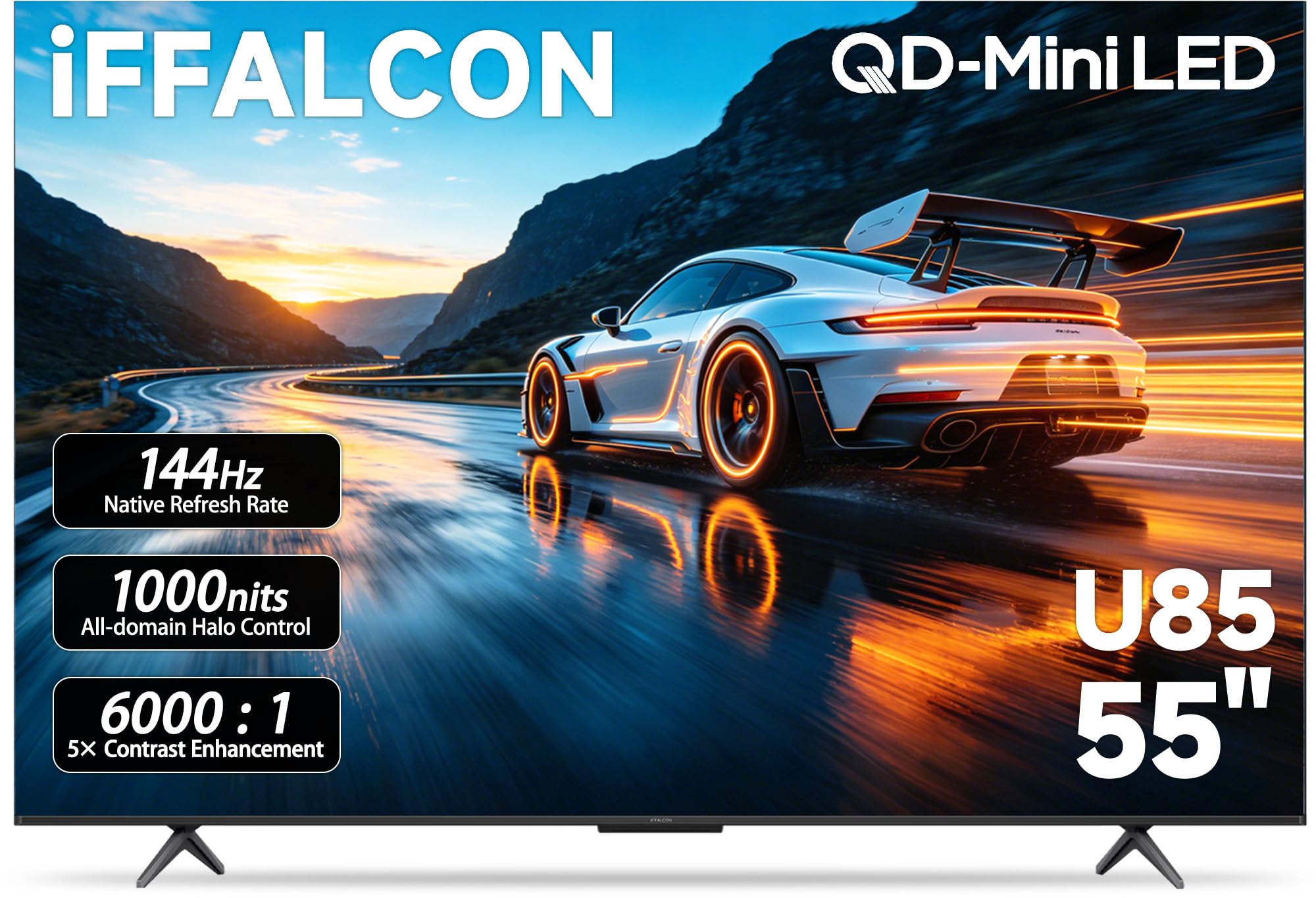
The iFFALCON 55U85 is the dark horse that redefines value in the budget 120Hz space. This 55-inch Mini-LED unit packs a native 144Hz panel that automatically lifts motion clarity above the standard 120Hz plateau, and it backs this performance with four full-bandwidth HDMI 2.1 ports — a feature set that usually lives in the premium zone. The 6,000:1 contrast ratio and 1,000-nit peak brightness, combined with Dolby Vision Gaming and IMAX Enhanced certification, produce surprisingly deep blacks and punchy highlights that compete well above its price tier.
Console and PC gamers are the clear target audience here. The inclusion of FreeSync Premium Pro dramatically reduces screen tearing and stabilizes frame timing, and the VRR window (48-144Hz) covers everything from smooth 60fps titles to high-frame-rate e-sports. User reviews consistently highlight zero ghosting and buttery motion across Xbox Series X, PS5, and PC titles, and the built-in 50W 2.1-channel audio with DTS Virtual:X creates a genuinely immersive soundscape that postpones the need for a dedicated soundbar.
The trade-off is physical thickness; this isn’t an ultra-slim wall-hugging display. The Google TV interface is snappy and free of excessive bloat, but its real secret weapon is the built-in hotel mode, IR control, and IP management — features aimed at property owners and commercial installers that typical consumer models ignore. For pure performance-per-dollar in a high-refresh-rate gaming television, this is the unit to beat.
Why it’s great
- Native 144Hz panel with FreeSync Premium Pro delivers the smoothest budget gaming experience available.
- Four HDMI 2.1 ports (two at 144Hz) provide unmatched connectivity without needing a switch.
- Mini-LED backlight ensures excellent contrast and HDR impact for the price.
Good to know
- The chassis is thicker than ultra-slim competitors, so flush wall mounting is harder.
- Best value is realized when it’s on sale, as retail price approaches baseline OLED territory.
2. TCL Amazon Exclusive 55″ T7 Series (55T7)

The TCL T7 series represents the sweet spot where QLED color volume meets a true 120Hz native panel. Its DCI-P3-wide color gamut, powered by quantum dot technology, creates images that look vivid and punchy straight out of the box, while the Motion Rate 480 technology with MEMC frame insertion ensures that fast-moving content — from sweeping movie scenes to racing games — remains blur-free without adding distracting artifacts.
This is a strong choice for mixed-usage households. The Google TV interface is responsive and integrates Chromecast, AirPlay 2, and Alexa/Google Assistant control seamlessly. Four HDMI inputs, including one with eARC, let you connect a console, streaming box, and soundbar without juggling cables. User feedback highlights how the Mini-LED backlight (used in the T7 line) produces deep contrast and vibrant highlights, though it does exhibit some glare in bright rooms if ambient lighting isn’t controlled.
Where the T7 really shines is its gaming versatility. With support for 120Hz 4K input from a PC or next-gen console (and the ability to hit 144-240Hz at 1080p on a PC), it flexes beyond its stated 120Hz limit. The only notable hiccup reported by users is an occasional issue with power-saving mode when connected to a PC, requiring a quick HDMI unplug/replug to wake — a minor software quirk in an otherwise stellar picture.
Why it’s great
- QLED quantum dots deliver a wide DCI-P3 color space for vibrant, lifelike images.
- True native 120Hz panel with MEMC creates ultra-smooth motion for sports and action.
- Versatile connectivity supports both console and PC gaming at high frame rates.
Good to know
- Power-saving mode can cause wake issues when connected to a PC via HDMI.
- Must complete internet/Google setup before using any input for the first time.
3. Hisense 55″ U6 Series Mini-LED (55U65QF)
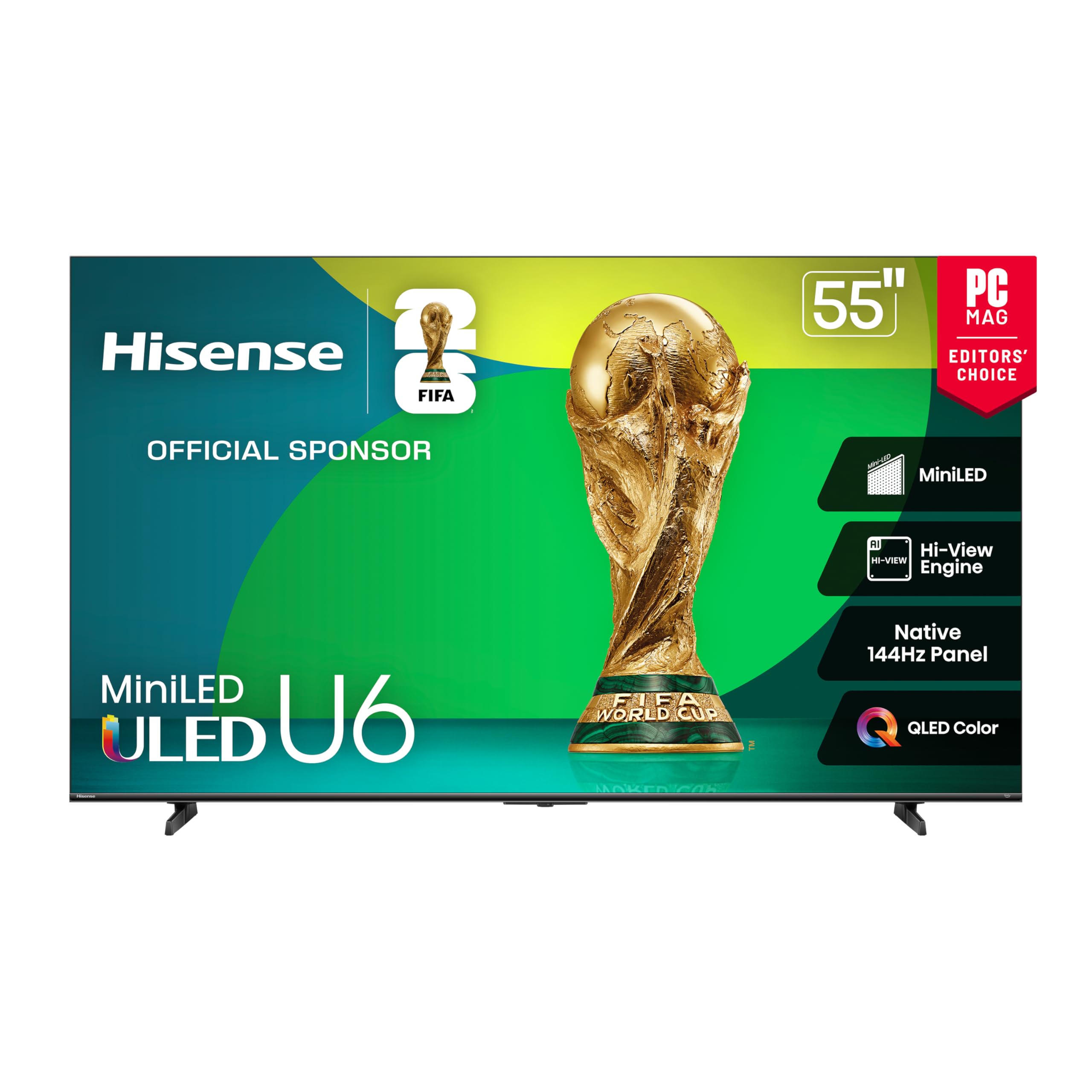
The Hisense U6 enters the conversation as the Mini-LED champion that brings HDR performance into the budget segment without compromise. With up to 1,000 nits of peak brightness and up to 600 local dimming zones, this set handles bright-room viewing and high-dynamic-range content with a control that its direct-LED competitors simply cannot match. The native 144Hz panel aligns perfectly with the Motion Rate 480 rating, giving fast-paced sports and gaming a crisp, tear-free edge.
The Hi-View AI Engine works behind the scenes to optimize picture and sound per scene, and the inclusion of Dolby Vision IQ (which reads room light) is a thoughtful touch that ensures accurate contrast without manual fiddling. This TV also features a built-in subwoofer, and user reviews consistently mention that its audio output is the best they’ve heard from a built-in setup — deep, rumbling low end that elevates movies and music beyond the usual flat TV sound.
Gamers benefit from the 144Hz Game Mode Pro with AMD FreeSync Premium, which locks the VRR window to 48-144Hz for a super-fluid frame delivery. The main user gripe is that only two of the four HDMI ports support the full 144Hz bandwidth, so careful port allocation is necessary. For a living room where brightness and contrast are the top priorities, this Hisense punches far above its price point.
Why it’s great
- Up to 1000 nits brightness and 600 local dimming zones produce outstanding HDR and deep blacks.
- Built-in subwoofer delivers the richest integrated audio in its price class.
- Native 144Hz panel with FreeSync Premium provides top-tier high-refresh-rate gaming.
Good to know
- Only 2 of 4 HDMI ports support 144Hz bandwidth; the other two are limited to 60Hz.
- The unit is slightly heavy, so a second person is recommended during setup.
4. Samsung 43″ QLED Q8F (2025 Model)

The Samsung Q8F brings a slice of premium engineering to the compact 43-inch category, packing a native 144Hz panel and Samsung’s Quantum Dot technology for 100% Color Volume. This is the set for a gaming desk setup, a small media room, or a bedroom where space is at a premium but motion performance cannot be sacrificed. The AirSlim design is genuinely low-profile, letting it sit close to the wall for a clean, minimal look.
Under the hood, the Q4 AI Gen1 Processor handles 4K upscaling with surprising sharpness, taking 1080p and 1440p content and making it look near-native on the 4K screen. VRR at up to 4K 144Hz handles console gaming with no perceivable tearing, and the SolarCell remote (which charges via light) eliminates battery swapping, a small but delightful quality-of-life addition. User reviews rave about the crisp, vibrant picture and the ease of integration with other Samsung devices through the SmartThings app.
The built-in sound is merely adequate — fine for news and casual shows, but a soundbar is definitely recommended for immersive games or movies. The stand is also relatively unstable; wall mounting is the better long-term option. For a dedicated high-refresh-rate station in a compact footprint, the Q8F delivers Samsung’s rock-solid processing and color science at a mid-range price.
Why it’s great
- 100% Color Volume with Quantum Dot provides rich, accurate colors that don’t wash out.
- Native 144Hz panel with VRR support up to 4K ensures ultra-smooth gaming performance.
- Sleek AirSlim design and SolarCell remote add premium feel to a compact frame.
Good to know
- Built-in speakers lack bass and depth, making a soundbar a near-necessity.
- Included stand can feel unstable; wall mounting is recommended for the best experience.
5. TCL 55″ Q65 QLED 4K Fire TV (55Q651F)

The TCL Q65 is a textbook example of how to bring QLED color and high-refresh-rate gaming into a family-friendly package without overcomplicating the budget. The 4K UltraHD panel is paired with the Game Accelerator 120 feature, which enables up to 120Hz VRR for responsive console gameplay. The High Brightness+ LED backlight ensures the quantum dot colors pop even in well-lit living rooms, and the HDR PRO+ support covers Dolby Vision, HDR10+, and HLG.
The built-in Fire TV interface is the star for streaming households — it brings live TV, apps, and music together in one interface. With Alexa voice control built into the remote, navigation is snappy, and the Auto Game Mode (ALLM) switches the TV into low-latency mode as soon as you fire up a console. User reviews consistently praise the brilliant picture quality and the sheer value of the QLED panel at this price point, with deep blacks and vibrant sports broadcasts being common highlights.
There are two things to note: the built-in TV speakers are average, so anyone used to a soundbar will notice thinness, especially in action sequences. Some users have also reported a bug where the brightness resets to 100% when switching inputs, which can be annoying for a dark-room movie setup. For a general-purpose, 120Hz-capable QLED that serves the whole family, the Q65 is an excellent pick.
Why it’s great
- QLED quantum dots produce rich, vibrant colors that outperform standard LED panels.
- Game Accelerator 120 delivers up to 120Hz VRR for smooth, lag-free console gaming.
- Fire TV interface combined with Alexa voice control offers a seamless streaming experience.
Good to know
- Built-in sound is average and requires a soundbar for immersive audio.
- Brightness can reset to 100% when switching inputs, needing a quick manual readjustment.
6. LG 55″ QNED82AUA (2025 Model)

LG’s QNED82AUA brings the company’s powerful Alpha 7 AI Processor Gen8 to the budget bracket. This processor handles 4K upscaling with real intelligence, cleaning up low-resolution content and adding dynamic tone mapping that makes HDR10 content look substantially richer than its source suggests. The Dynamic QNED Color reproduces 100% Color Volume, so the luminance and saturation hold up across the entire brightness range — not just in the mid-tones.
Gaming is handled via VRR and FreeSync, which minimize tearing during gameplay. The integrated Game Optimizer and Game Dashboard make it simple to switch between picture modes for different genres. LG’s webOS platform remains one of the most polished smart TV interfaces, and the inclusion of Filmmaker Mode for purists who want to see content at the director’s intended frame rate and color settings is a welcome nod to cinephiles.
The main downside is that this unit uses HDMI 2.0 ports, which means it cannot accept a 4K 120Hz signal from a console — it will achieve higher refresh rates at lower resolutions. For PC gamers who need full-bandwidth 4K 120Hz, this is a limiting factor. However, for users primarily interested in streaming quality, AI-enhanced picture processing, and a premium brand experience at a mid-range price, this LG delivers.
Why it’s great
- Alpha 7 AI Gen8 Processor provides exceptional 4K upscaling and dynamic tone mapping.
- 100% Color Volume and QNED technology ensure vibrant colors at any brightness level.
- webOS platform with Filmmaker Mode offers a polished, user-friendly experience.
Good to know
- HDMI 2.0 ports limit 4K 120Hz input; higher refresh rates require dropping resolution.
- The remote’s motion cursor can be imprecise, and the mute button is missing from the standard remote.
7. Samsung 43″ QLED Q7F (2025 Model)

The Samsung Q7F is the most affordable entry point into the brand’s QLED ecosystem, and it brings the core Quantum Dot promise — over a billion colors that stay true even in bright scenes — to a smaller 43-inch screen. The Q4 AI Gen1 Processor handles 4K upscaling effectively, making standard HD streaming look clean and detailed. The Samsung Vision AI engine optimizes color and sound per content type, creating a noticeably polished experience straight out of the box.
This TV works well in a compact gaming space thanks to its Game Mode, which reduces input lag, and it integrates seamlessly with the Samsung SmartThings ecosystem for controlling IoT devices. The remote is SolarCell-powered, and the setup via the SmartThings app (especially with a Galaxy phone) is the fastest in the business. User reviews highlight excellent picture quality, easy setup, and strong value for the price, though some note the plastic build feels lighter than earlier Samsung models.
The trade-off is audio performance — the built-in speakers lack low-end weight, and the lack of an optical audio out (relying instead on eARC over HDMI) means older soundbars or audio systems may need an adapter. Additionally, some crucial gaming settings (like UHD color depth) are hidden behind menus and come turned off by default, requiring a bit of setup work. For Samsung loyalists seeking a QLED with great upscaling at a low cost, the Q7F is a solid choice.
Why it’s great
- Samsung’s QLED technology delivers accurate, vibrant color across billions of shades at any brightness.
- AI-powered 4K upscaling and content optimization enhance picture quality for all sources.
- Seamless SmartThings integration and SolarCell remote provide a premium user experience.
Good to know
- Speakers lack bass, and there is no optical audio out for legacy sound systems.
- Some key gaming settings are hidden and off by default, requiring initial configuration.
8. Dell 27 Plus 4K Monitor – S2725QS

The Dell S2725QS is a 27-inch 4K monitor that deserves mention in the budget high-refresh-rate conversation because it nails a specific use case: the hybrid work-and-play desktop. With a native 120Hz refresh rate and AMD FreeSync Premium, this IPS panel provides a tear-free 4K experience for both productivity and controller-based gaming. The 1500:1 contrast ratio, combined with 99% sRGB coverage, makes text look crisp and colors appear natural for photo editing or document-heavy tasks.
Its biggest differentiator is the improved ComfortView Plus hardware, which reduces harmful blue light emissions to 35% or less without washing out colors — a genuine ergonomic upgrade for all-day use. The built-in speakers are surprisingly capable for desktop use, offering more detail and frequency response than the previous generation. The ultra-thin bezel and ash-white finish give it a clean, modern aesthetic that fits well in a home office or dorm setting.
On the gaming side, the 0.03ms response time (MPRT) keeps motion clear, but this is not a competitive esports monitor — some users report noticeable ghosting in fast-paced shooters at 4K, and the G-Sync compatibility is unofficial (works but not certified). For a desktop user who splits time between Adobe Creative Suite, Netflix, and relaxed console gaming, the S2725QS is a fantastic 4K 120Hz panel at a very accessible price.
Why it’s great
- True 4K 120Hz IPS panel with FreeSync Premium delivers smooth motion for work and play.
- ComfortView Plus reduces blue light to 35% without sacrificing color accuracy.
- Built-in speakers outperform most monitors, offering detailed and spacious audio.
Good to know
- Some ghosting occurs in competitive PC shooters; better suited to controller/console gaming.
- A slight yellow tint has been reported by some users, requiring manual color calibration.
9. Hisense 55″ E6 Cinema Series QLED (55E6QF)
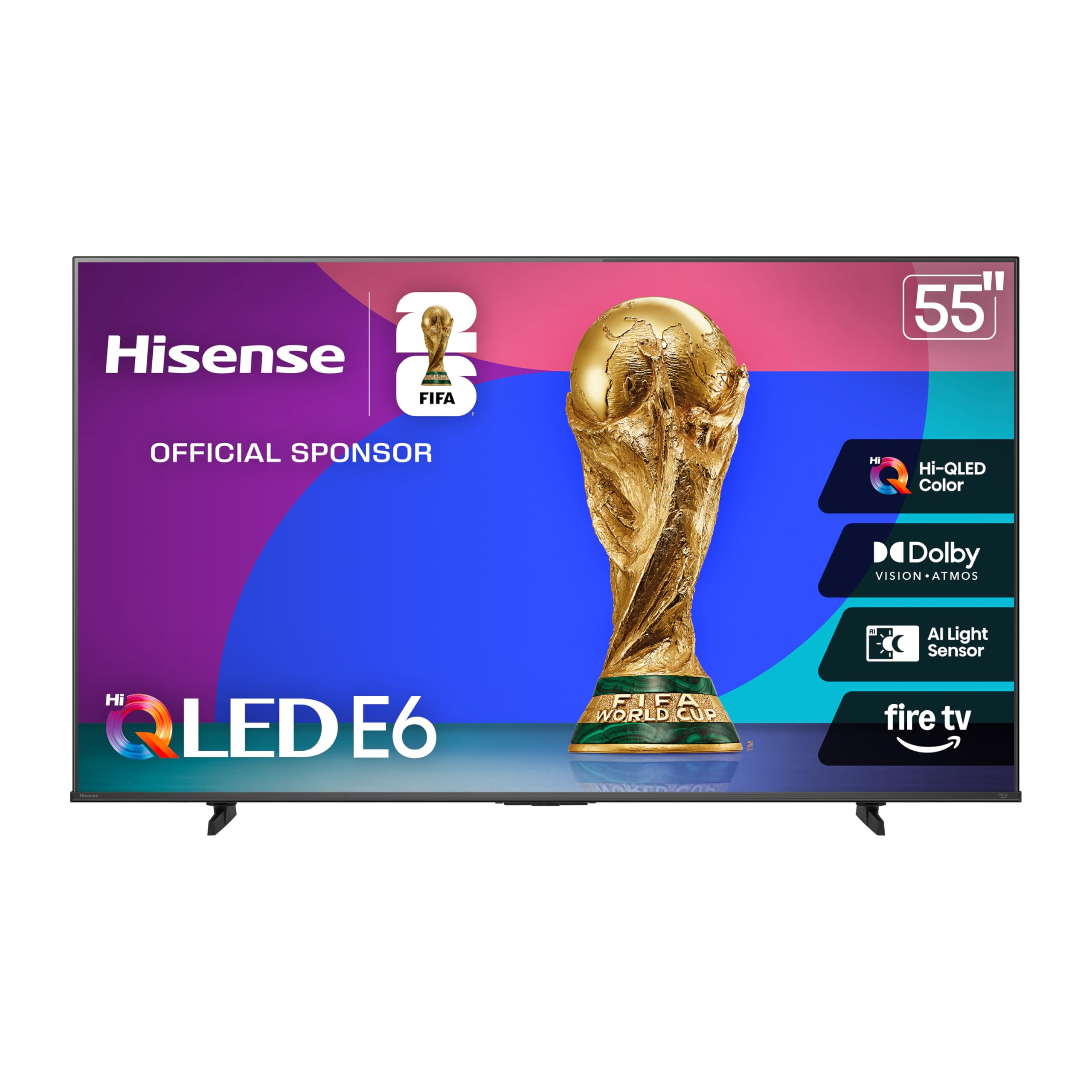
The Hisense E6 is the most accessible way to get a QLED panel and 120Hz motion technology into a 55-inch screen without stretching the budget. It uses Hi-QLED Color to render a wide color gamut, and while it doesn’t feature local dimming, the Total HDR Solution (covering Dolby Vision, HDR10+, HDR10, and HLG) does a respectable job of producing bright highlights and solid contrast. The Motion Rate 120 spec is driven by frame insertion, making this a good entry point for sports fans and casual gamers who want clearer motion than a standard 60Hz set can provide.
The built-in Fire TV platform puts streaming content front and center, with Alexa voice search integrated for hands-free navigation. The Dolby Vision and Dolby Atmos pairing brings a cinematic feel to films, and the overall picture — especially for SDR content — is bright and colorful for the price. Users consistently say the value is outstanding for a 55-inch QLED, praising the crisp 4K resolution and vibrant HDR support.
The main compromises are software and motion authenticity. The Fire TV OS can feel sluggish, with a 60-90 second boot time and some menu lag, which can be frustrating if you’re used to snappier smart platforms. Crucially, this is a Motion Rate 120 set, not a native 120Hz panel, so purists looking for true high-refresh-rate input (like 4K 120Hz from a PS5 or Xbox) should look elsewhere. For a living room QLED that prioritizes size and color over raw refresh rate, the E6 is a great budget-friendly option.
Why it’s great
- Hi-QLED panel delivers rich, vibrant colors that significantly outperform standard LED screens.
- Dolby Vision and Dolby Atmos support provide a cinematic experience for movies and shows.
- Excellent value for a 55-inch QLED, making big-screen color accessible to a wider audience.
Good to know
- Motion Rate 120 is frame-interpolation, not a native 120Hz panel; it adds some input lag.
- Fire TV interface can be sluggish, with a longer boot time and occasional menu stutter.
FAQ
Does a budget 120Hz TV support 4K 120Hz from a PS5 or Xbox Series X?
What is the difference between Motion Rate 240 and a native 120Hz panel?
Is QLED worth it on a budget 120Hz TV, or is standard LED fine?
Final Thoughts: The Verdict
For most users, the best budget 120hz tv winner is the iFFALCON 55U85 because it offers a native 144Hz Mini-LED panel with four HDMI 2.1 ports and FreeSync Premium Pro at a stunningly low price — the complete gaming and home theater package. If you want superior out-of-the-box color and smooth motion for mixed living-room use, grab the TCL 55T7. And for a brilliant HDR-focused display that works beautifully in bright rooms, nothing beats the Hisense 55U6.

Mo Maruf
I created WellFizz to bridge the gap between vague wellness advice and actionable solutions. My mission is simple: to decode the research and give you practical tools you can actually use.
Beyond the data, I am a passionate traveler. I believe that stepping away from the screen to explore new environments is essential for mental clarity and physical vitality.