Our readers keep the lights on and my smoothie glass nicely filled. As an Amazon Associate, I earn from qualifying purchases.
Re-tearing a ligament while simply walking across a room is a fear that defines recovery. A flimsy sleeve that offers no lateral resistance can undo weeks of healing in a single misstep. The right brace must lock the talus in place without grinding into the peroneal tendons or cutting off circulation.
I’m Mohammad Maruf — the founder and writer behind WellFizz. I’ve spent countless hours comparing stirrup designs, figure-8 strapping systems, and auto-adaptive pad technologies to understand exactly which engineering choices prevent that dreaded ankle inversion.
After combing through hundreds of verified reviews and examining strap geometry, pad density, and material breathability, this breakdown of the best ankle brace for torn ligaments will help you bypass the cheap sleeves and find real structural support.
How To Choose The Best Ankle Brace For Torn Ligaments
Ligament tears — whether a Grade 1 stretch or a Grade 2 partial rupture — require a brace that resists inversion and eversion mechanically, not just wraps warmth around the joint. Three engineering details separate a recovery tool from a glorified sock.
Side Stabilizers vs. Soft Compression
Soft neoprene sleeves improve proprioception and manage swelling, but they offer near-zero resistance against lateral roll. For a torn ATFL or CFL, look for braces with semi-rigid medial and lateral stays — either molded plastic stirrups or flexible side pads that physically block the ankle from collapsing outward. The stiffness of the stabilizer must match the severity of the tear: Grade 1 can manage with flexible pads; Grade 2 needs rigid stirrups.
Strapping Architecture: Figure-8 and Lace-Up Systems
A single wrap strap can loosen within minutes of walking. Figure-8 strapping crosses the ankle dorsally, locking the heel into the brace and preventing the brace from rotating around the leg. Lace-up systems distribute compression evenly across the entire joint — essential for reducing post-injury swelling without creating pressure points over the tibialis anterior tendon. The best designs combine both: a lace-up base that custom-fits the forefoot and heel, topped with figure-8 Velcro straps that lock the talocrural joint.
Low-Profile Fit and Fabric Breathability
A brace that does not fit inside a standard sneaker is a brace you will stop wearing after three days. Measure the brace’s bulk around the Achilles and the medial arch — any bunching here causes blisters and shoe-fitting problems. Breathable fabrics matter more than padding here: 600+ micro-vent meshes or moisture-wicking neoprene prevent skin maceration during all-day wear, which is critical when the brace must be worn for weeks during ligament healing.
Quick Comparison
On smaller screens, swipe sideways to see the full table.
| Model | Category | Best For | Key Spec | Amazon |
|---|---|---|---|---|
| DonJoy Stabilizing Speed Pro | Lace-Up Standalone | Returning to high-level sports | 800D Ballistic Nylon & Full Circumferential Strap | Amazon |
| ZOELION Auto-adaptive | Slim Lace-Up | Daily wear with normal shoes | Auto-adaptive side pads + 600+ micro-vents | Amazon |
| Velpeau Stirrup Brace | Semi-Rigid Stirrup | Grade 1-2 ligament injury recovery | Bi-injection plastic splints + gel pads | Amazon |
| Neo-G Figure 8 | Neoprene + Strap | Moderate support for daily activity | Class 1 Medical Device, figure-8 strap | Amazon |
| Dr.Welland Adjustable | Entry-Level Adjustable | Budget-friendly recovery support | Neoprene with side stabilizers | Amazon |
In‑Depth Reviews
1. DonJoy Stabilizing Speed Pro Ankle Support Brace

This is the brace your physical therapist will recommend for a reason. The DonJoy Speed Pro uses 800D ballistic nylon — the same material found in high-end luggage — around the reinforced eyelet area, which prevents the lace eyelets from tearing out under tension. The full circumferential elastic strap wraps the upper ankle and compresses the tibia and fibula, providing the proximal stability necessary when the distal ligaments are compromised.
The removable articulated medial and lateral stays are the standout feature for torn ligaments. Unlike fixed plastic stirrups that dig into the malleoli, these stays contour to the ankle’s natural shape and can be removed for cleaning or for patients who need a softer transition from full immobilization. The lace-up closure system uses a speed-lace mechanism with two Velcro gathering tabs on the top, eliminating the five-minute struggle of traditional lace-up braces.
Verified reviewers consistently note that this brace was the only thing that allowed them to transition from a cam boot after a fracture. The fit is universal — works on either foot — and the low-profile design slides into most sneakers, though the bulk near the Achilles can require looser laces. If you need the platinum standard for returning to sport after a ligament tear, this is it.
Why it’s great
- Speed-lace system cuts application to under 10 seconds
- Ballistic nylon eyelet zone prevents lace-eyelet tearing under high load
- Removable stays allow customization and easy cleaning
Good to know
- D-rings on top strap can hit pressure points on the anterior shin
- Heel fabric can bunch and cause irritation during long walks
2. ZOELION Ankle Brace with Auto-adaptive Side Pads
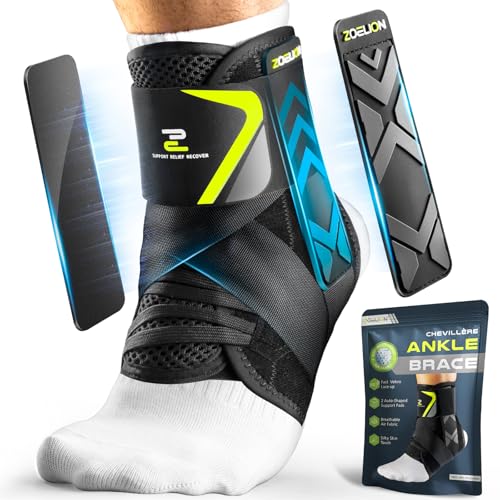
The ZOELION solves the problem that plagues most ligament braces: the side stabilizers pressing into the bone. Its Nu-Form auto-adaptive pads on the medial and lateral sides use a flexible material that self-contours to the ankle’s geometry, providing anti-roll resistance without the hard plastic edge that causes malleolar pain. For Grade 1 ligament sprains where the joint is still irritable, this design is a genuine comfort advantage.
The triple-lock system combines an adjustable inner ankle wrap, figure-8 stabilizing straps, and a wide top closure that locks the brace rotationally. The hook-and-loop lace-up mechanism replaces traditional shoe-style laces — reviewers mention it takes seconds to apply and stays secure through a full day of walking. The low-elastic fabric and open-heel design allow dorsiflexion for a normal gait pattern, which is critical during early recovery to avoid limping.
With over 600 micro-vents across the fabric, this is the most breathable option in this comparison. It fits slim enough to slide into narrow sneakers without bulging, making it ideal for returning to work or light activity during ligament healing. The one limitation: the auto-adaptive pads offer less rigid inversion resistance than a full plastic stirrup, so Grade 2 tears may need something more aggressive.
Why it’s great
- Auto-adaptive pads prevent pressure on the malleoli while blocking inversion
- Hook-and-loop lace-up is faster and more durable than shoe-lace variants
- Very breathable — 600+ micro-vents reduce moisture during all-day wear
Good to know
- Side pads are less rigid than full stirrups, limiting use for severe Grade 2 tears
- May feel less supportive under heavy cutting or jumping loads
3. Velpeau Ankle Stabilizer Brace
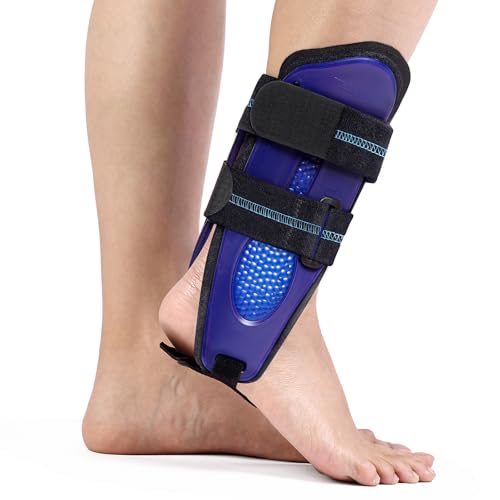
The Velpeau is a classic semi-rigid stirrup brace that uses bi-injection molding to create plastic splints with gel-protected holes where the medial and lateral malleoli sit. This design prevents the hard plastic from making direct contact with the bone — a detail that matters enormously when every step is painful from a torn ATFL. The splint edges are wrapped in a soft gel material that will not scratch the skin or damage shoe interiors.
It comes in two pad versions: foam pads made from moisture-wicking modal fabric and high-density sponge, and a gel pad version that can be frozen for cold compress therapy during acute swelling. For ligament tears in the first 72 hours, having a brace that doubles as an ice source is a genuine rehabilitation advantage. The two large lateral straps with a buckle system make installation simple, and the brace fits both left and right feet without any adjustment.
Reviewers consistently report that this brace effectively prevents side-to-side movement while allowing a normal stride — the hallmark of a well-designed stirrup. The bulk is noticeable, and some users with thicker calves found the top strap’s permanent pin limited expansion, so check the sizing carefully if your calf circumference is above average. For Grade 1 to mid-Grade 2 ligament injuries, this is a sturdy workhorse.
Why it’s great
- Gel-protected malleolus holes prevent bone pressure from the plastic splint
- Gel pad version can be frozen to provide cold compression for acute swelling
- Bi-injection splints are semi-rigid — optimal resistance for Grade 1-2 tears
Good to know
- Visible bulk around the ankle can require a full shoe size up
- Top strap permanent pin limits calf expansion — not for very large calves
4. Neo-G Ankle Brace with Figure of 8 Strap

Neo G positions this brace as a Class 1 Medical Device, registered internationally, and it is trusted by physiotherapists as a partner of the Chartered Society of Physiotherapy. The figure-8 strap configuration reduces excessive plantarflexion, eversion, and inversion — the three planes of motion that provoke ligament pain. The neoprene construction provides therapeutic warmth that improves blood flow to the injured ligaments, which can accelerate healing during the sub-acute phase.
What sets this brace apart is how it handles peroneal tendon irritation. Multiple verified reviewers specifically mention that this brace does not dig into the area around the malleolar tip — a common complaint with stirrup-style braces. For patients with a torn ligament and coexisting peroneal tendinopathy, this is a comfortable option that provides moderate stability without aggravating adjacent structures. The one-size-fits-all design is generous and accommodates most adult feet.
The trade-off is that this is not a high-resistance brace. The neoprene body provides compression and proprioceptive feedback, not mechanical blocking. For a Grade 1 tear where the goal is to reduce swelling and remind the brain not to twist the ankle, this is excellent. For a Grade 2 tear where you need rigid inversion protection, it may not be enough — consider this more of a comfort brace for controlled environments.
Why it’s great
- Class 1 Medical Device — medically certified for injury recovery
- Neoprene construction heats the joint, improving blood flow for ligament healing
- Figure-8 design avoids pressure on the peroneal tendons and malleolar tip
Good to know
- One-size-fits-all can feel large — may not secure very petite or very large ankles
- Moderate support only — not sufficient for Grade 2 tears needing rigid lateral stops
5. Dr.Welland Ankle Brace with Side Stabilizers
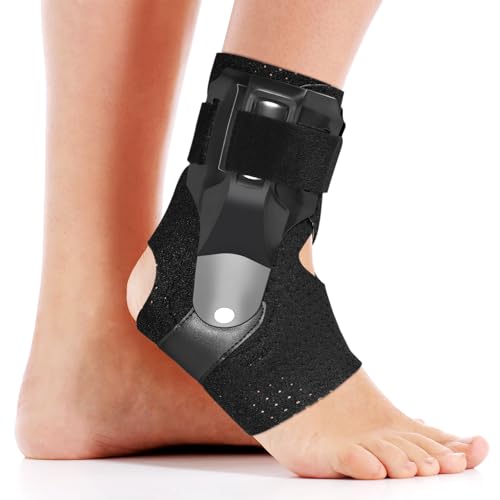
The Dr.Welland earns its spot at the table by delivering side stabilizers at an entry-level price point. Designed by orthopedic surgeons and physical therapists, this brace uses adjustable arch and ankle straps that allow you to calibrate the compression level around the ankle joint. The neoprene material is moisture-wicking and designed to improve blood circulation — useful for reducing swelling in the first days after a ligament sprain.
Customer reviews reveal a surprising strength: this brace fits well inside Hoka running shoes and other zero-drop footwear, which is unusual for a brace with side stabilizers. One reviewer with a tibial nerve injury mentioned it minimizes ankle torque/rotation without the seams digging into the plantar fascia. Another parent reported their child with Down syndrome tolerated wearing it all day without complaint — a real-world test of comfort that few braces pass.
Several users noted that the plastic buckle broke after extended use, requiring a replacement purchase. If you need a brace for short-term recovery — say two to four weeks of moderate walking — this will serve well. For six months of daily wear or high-impact activity, the plastic components may not hold up. It is a competent, comfortable option for the early rehabilitation phase when cost is the primary concern.
Why it’s great
- Adjustable arch and ankle straps provide customized compression for varying swelling levels
- Slim side stabilizers fit inside most athletic shoes, including zero-drop models like Hoka
- Neoprene construction is comfortable for all-day wear, even for sensitive skin
Good to know
- Plastic buckle is the weak point — several reviewers reported it breaking after weeks of use
- Side stabilizers are less rigid than full stirrups, offering moderate inversion resistance
FAQ
Can I wear an ankle brace for torn ligaments inside my regular shoes?
How do I know whether I need a stirrup brace or a lace-up brace for a Grade 1 ligament tear?
How long should I wear an ankle brace after a ligament tear before removing it at night?
Final Thoughts: The Verdict
For most users recovering from a torn ligament, the ankle brace for torn ligaments winner is the DonJoy Stabilizing Speed Pro because the ballistic nylon construction, speed-lace system, and removable articulated stays provide the highest level of mechanical protection available. If you need a slim, breathable brace that fits inside narrow shoes for daily wear, grab the ZOELION Auto-adaptive. And for budget-conscious recovery from Grade 1 sprains, nothing beats the comfortable fit of the Dr.Welland Adjustable.

Mo Maruf
I created WellFizz to bridge the gap between vague wellness advice and actionable solutions. My mission is simple: to decode the research and give you practical tools you can actually use.
Beyond the data, I am a passionate traveler. I believe that stepping away from the screen to explore new environments is essential for mental clarity and physical vitality.