Our readers keep the lights on and my smoothie glass nicely filled. As an Amazon Associate, I earn from qualifying purchases.
Teaching the ABCs to a wiggly toddler is less about flash cards and more about finding the toy that makes them forget they are learning. The alphabet toys that actually work are the ones that turn letter recognition into a physical game—snapping, spinning, matching, or stacking. Passive screens can’t compete with the sensory feedback of connecting a dinosaur tail to its head or fitting a chunky wooden letter into its puzzle well.
I’m Mohammad Maruf — the founder and writer behind WellFizz. Over the past decade I’ve analyzed thousands of educational toys, focusing on how tactile design, durability, and progressive difficulty affect a toddler’s engagement with early literacy tools.
Whether you need a quiet puzzle for solo play or an interactive electronic toy that rewards every touch, this guide breaks down the top picks for best alphabet learning toys based on real parent feedback and hands-on design analysis.
How To Choose The Best Alphabet Learning Toys
Alphabet toys vary wildly in how they present letters—some rely on puzzle-fitting, others on snap-together halves, and a few use lights and audio cues. The key is matching the toy’s interaction style to your child’s current motor and cognitive stage.
Prioritize Tactile Manipulation Over Passive Viewing
Toddlers learn best when they physically manipulate objects. A toy that requires pinching, pulling, or inserting a letter builds fine motor control while reinforcing letter shapes. Look for chunky pieces with a thickness of at least 0.5 inches to make gripping easy for small hands.
Check for Progressive Difficulty Modes
Electronic toys should move from simple letter identification to question-based “find the letter” modes. For non-electronic sets, look for double-sided letters (uppercase and lowercase) or matching games that grow with the child. A toy that only offers one difficulty level will be abandoned within weeks.
Evaluate Durability and Safety Edges
Alphabet toys get thrown, dropped, and chewed. Wooden pieces must have a smooth, splinter-free finish and non-toxic paint. Plastic snap-together toys should have no sharp corners, and the connection mechanism should withstand repeated pulling without breaking.
Quick Comparison
On smaller screens, swipe sideways to see the full table.
| Model | Category | Best For | Key Spec | Amazon |
|---|---|---|---|---|
| Coogam Matching Letters Dinosaur | Snap-Together Dinos | Fine motor + letter matching | 26 double-sided dinos | Amazon |
| Hape Wooden Alphabet Puzzle | Wooden Puzzle | Quiet solo play | Chunky 0.7-inch stand-up letters | Amazon |
| Learning Resources Snap-n-Learn ABC Elephants | Snap-Together Animals | Counting + spelling practice | 26 linkable elephants | Amazon |
| Jetbotell ABC Animal Match Game | Animal Matching | Lowercase letter recognition | 52 pieces with storage bag | Amazon |
| Aigybobo Spin & Sing Alphabet Zoo | Electronic Tabletop | Audio/visual engagement | 4 learning modes + lights | Amazon |
In‑Depth Reviews
1. Coogam Matching Letters Dinosaur

The Coogam dinosaur set hits the sweet spot between fine motor challenge and alphabet reinforcement. Each of the 26 dinosaurs splits into a head and a tail half, with the same uppercase and lowercase letter printed on both sides. The squarish center connector is just tight enough to require a purposeful push and pull, which builds hand strength without frustrating small fingers. Parents report that the color-coded halves also teach sorting and color identification naturally during play.
The three dinosaur types—T-Rex, Triceratops, and Brachiosaurus—add a layer of imaginative play that pure letter sets lack. Children frequently name the dinos while matching, which extends engagement beyond simple alphabet drills. The included drawstring bag makes cleanup portable, and the smooth plastic edges pass the safety check even for toddlers who like to chew their toys.
One nuance: any head can attach to any tail regardless of letter, so a child can technically “match” a D head to an F tail. That design choice means an adult needs to guide the initial learning sessions to emphasize letter matching rather than just snapping. Once the concept clicks, however, this toy becomes a self-directed learning tool that grows with the child from age 2 through pre-K.
Why it’s great
- Double-sided letters reinforce uppercase and lowercase simultaneously
- Smooth, lightweight plastic with no sharp edges
- Dinos encourage pretend play alongside letter practice
Good to know
- Any head can snap onto any tail, which may confuse initial letter matching
- Younger toddlers (under 2.5) may struggle to pull the halves apart
2. Hape Wooden Alphabet Puzzle

This Hape puzzle is the gold standard for a quiet, screen-free alphabet activity. The chunky wooden letters are thick enough—0.7 inches—to stand upright on their own, which means kids can pull them out of the puzzle base and line them up in sequence for spelling practice. The hand-painted finish uses bright, cheerful colors without any distracting cartoon characters, keeping the letter shape as the focal point.
Parents consistently highlight the durability: reviews report no color chipping or splintering after months of daily rough use by twins. The puzzle board itself measures roughly 11 inches square, which is compact enough to fit on a small play table or a lap during car rides. The letters are also big enough to pose no choking hazard, fitting comfortably into a toddler’s palm.
The only trade-off is the initial asymmetry frustration. Letters like O and C can fit upside down and still look visually correct, which may confuse a child just learning orientation. That said, multiple parents noted that this “problem” actually turned into a teaching moment about rotation and spatial awareness. For a Montessori-style introduction to the alphabet, this wooden set remains unmatched.
Why it’s great
- Thick, stand-up letters allow spelling and stacking outside the puzzle board
- Non-toxic finish withstands chewing and rough play without chipping
- Compact size travels easily for car or restaurant use
Good to know
- Circular letters can fit upside down, which may temporarily confuse beginners
- Small footprint means the letters are shorter than some premium puzzle sets
3. Learning Resources Snap-n-Learn ABC Elephants

Learning Resources takes the snap-together concept in a different direction: the 26 colorful elephants link together to form a chain, which introduces sequencing and simple word-building. Each elephant half features a letter on its side, and the plastic snaps are designed for easy one-handed connecting by small hands. The storage container doubles as a carry handle, making it ideal for preschool classrooms where toys rotate between stations.
The elephant theme is a hit with animal-loving toddlers. Reviewers report that kids as young as 2 years old start linking elephants in alphabetical order unprompted, and older children (ages 3-4) use them to spell their names or simple three-letter words. The set also works for counting practice, color sorting, and imaginative play—each elephant has a distinct color that helps with visual differentiation.
The main drawback is quality control on individual letters. A small number of reviews mention missing letters in the package, particularly the letter Y. While customer service from Learning Resources typically replaces missing pieces, this inconsistency means you should count the pieces immediately upon arrival. For the price, however, the sheer versatility of a toy that teaches letters, counting, colors, and sequencing is hard to beat.
Why it’s great
- Linkable design teaches alphabetical order and simple spelling
- Elephant theme engages animal lovers and encourages pretend play
- Sturdy container with handle keeps pieces organized
Good to know
- Occasional missing letters reported in packaging
- Not ideal for children under 18 months due to small snap connectors
4. Jetbotell ABC Animal Match Game

The Jetbotell set stands out for its sheer volume: 52 pieces total—26 uppercase letters and 26 lowercase animals—plus 10 separate animal figures and a storage bag. The core mechanic involves matching uppercase letter cards to their lowercase counterparts attached to plastic animals. The animals themselves feature favorites like giraffes, elephants, and lions, each with a smooth, pull-apart design that any child over 18 months can manage.
What sets this toy apart is the emphasis on lowercase letters. Most alphabet games focus on uppercase, but children encounter lowercase text far more often in books. The Jetbotell system forces them to recognize both cases by pairing them physically. The square-shaped connectors prevent pieces from twisting during play, though they do require a firm pull to separate. Parents of younger toddlers (around 2 years) note it takes a few sessions before the child can pull them apart without help.
The storage bag is a thoughtful inclusion—few things kill a toy’s lifespan faster than lost pieces. That said, the bag is thin, so it’s best used on a shelf rather than tossed into a toy bin. For families who want a comprehensive lowercase-learning tool that also satisfies the safari animal obsession, this is the pick.
Why it’s great
- Emphasizes lowercase letter recognition, which most toys neglect
- 10 separate animal figures add extra pretend-play value
- Drawstring storage bag helps prevent lost pieces
Good to know
- Square connectors require adult-level force to separate at first
- Storage bag is thin and may tear with rough handling
5. Aigybobo Spin & Sing Alphabet Zoo
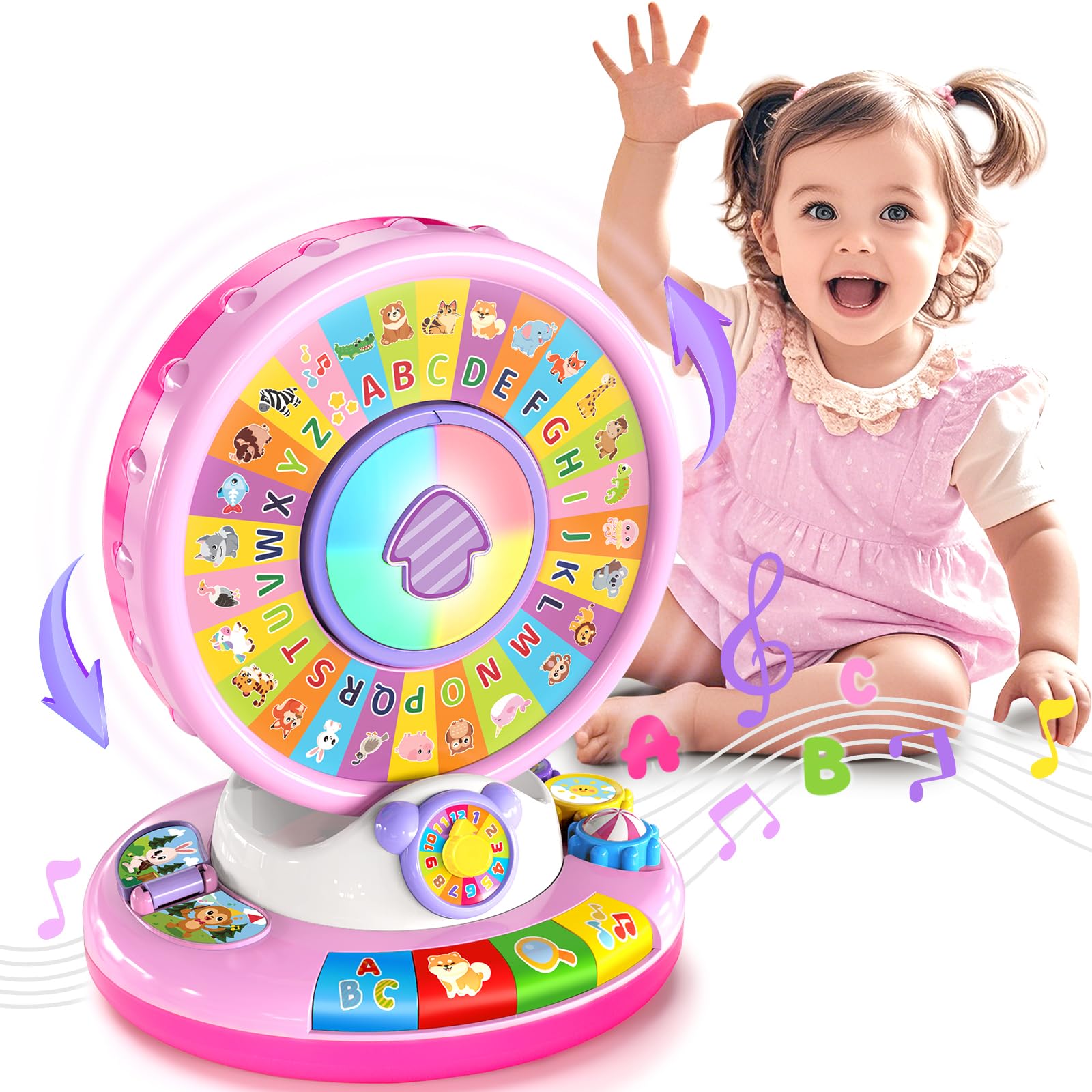
For families whose toddler responds better to audio cues and visual rewards, the Spin & Sing Alphabet Zoo delivers a full sensory experience. The wheel spins 360 degrees to reveal different letters and animals, each triggering a voice that says the letter name and the animal sound. The four progressive modes move from simple identification to a quiz format where the toy asks “Find the G” and lights up the correct answer.
The Ferris-wheel shape is intentionally attention-grabbing, and the adjustable volume control is a godsend for parents who value their sanity. The music mode plays four instrumental songs (piano and violin versions), which keeps the toy interesting even when the child isn’t actively learning letters. The pointer on the side also offers basic number learning and sound effects from moving gear blades.
This is not a quiet toy—the lights and sounds are designed to engage, so it will compete with other noise sources in the room. The pink colorway may be a dealbreaker for families wanting a gender-neutral option. For a first birthday gift or a speech therapy aid, however, the immediate feedback loop and clear audio make this the best electronic choice on the list.
Why it’s great
- Four progressive learning modes grow with the child’s skill level
- Adjustable volume prevents overstimulation
- Lights and music maintain attention for longer play sessions
Good to know
- Battery-powered and not silent during play
- Available only in pink as of this writing
FAQ
At what age should I introduce an alphabet puzzle?
Should I focus on uppercase or lowercase letters first?
Are electronic alphabet toys better than wooden ones for learning?
Final Thoughts: The Verdict
For most users, the best alphabet learning toys winner is the Coogam Matching Letters Dinosaur because it combines durable construction, double-sided uppercase and lowercase exposure, and a fine motor challenge that actually engages toddlers for sustained play. If you want a quiet, screen-free option that also teaches spatial reasoning, grab the Hape Wooden Alphabet Puzzle. And for audio-visual learners who thrive on lights and sounds, nothing beats the Aigybobo Spin & Sing Alphabet Zoo.

Mo Maruf
I created WellFizz to bridge the gap between vague wellness advice and actionable solutions. My mission is simple: to decode the research and give you practical tools you can actually use.
Beyond the data, I am a passionate traveler. I believe that stepping away from the screen to explore new environments is essential for mental clarity and physical vitality.