Our readers keep the lights on and my smoothie glass nicely filled. As an Amazon Associate, I earn from qualifying purchases.
For an athlete, the difference between a personal best and an average performance often comes down to a single element: oxygen efficiency. Training your respiratory muscles is the missing piece between feeling winded in the first quarter and maintaining power through the final sprint. The right breathing trainer forces your diaphragm and intercostal muscles to work harder, expanding your lung capacity and allowing you to recover faster between bursts.
I’m Mohammad Maruf — the founder and writer behind WellFizz. I’ve spent years analyzing sports-science accessories, from compression gear to respiratory resistance devices, breaking down the measurable specs athletes actually need to see.
Whether you train for triathlons, combat sports, or simply want to drop your resting heart rate, the best breathing trainer for athletes is the tool that turns controlled breathing into a competitive advantage during your hardest sessions.
How To Choose The Best Breathing Trainer For Athletes
Not every breathing device is built for athletic conditioning. Some are primarily clinical tools designed for mucus clearance, while others focus strictly on singing breath support. Athletes need a trainer that provides progressive resistance, targets both inhalation and exhalation, and is portable enough for daily use between gym sessions. Here are the three factors that separate the serious trainers from the gimmicks.
Adjustable Resistance Range
The best trainers offer a wide spectrum of resistance so you can start comfortably and progress over weeks. Look for devices with at least 4-6 distinct levels. A single fixed resistance will not challenge you as your inspiratory muscles grow stronger. The ability to micro-adjust resistance mid-workout keeps the muscles under consistent tension without hitting a plateau.
Inhale vs. Exhale Training
Your diaphragm controls inhalation, but your intercostal and abdominal muscles control exhalation. Many trainers only load the inhale. For full respiratory conditioning, choose a dual-way device that provides resistance on both phases. This delivers a more balanced workout that mimics the demands of high-intensity sport, where explosive exhalation is just as critical as a deep inhale.
Build Quality and Portability
A plastic device tossed into a gym bag needs to survive drops, moisture, and repeated cleaning. Medical-grade or food-grade silicone and polycarbonate materials are non-negotiable for longevity. Compact designs that fit in a pocket or shaker bottle compartment are easier to use consistently, and a device that disassembles for quick water rinsing will stay hygienic without hassle.
Quick Comparison
On smaller screens, swipe sideways to see the full table.
| Model | Category | Best For | Key Spec | Amazon |
|---|---|---|---|---|
| Expand-A-Lung (3 Pack) | Dual-Way | All-day endurance & stamina | Dual inhale/exhale resistance | Amazon |
| TRAININGMASK 2.0 | Altitude Mask | Simulated high-altitude training | 36 adjustable resistance levels | Amazon |
| The Breather Pink | App-Guided | Guided structured daily sessions | 6 independent resistance levels | Amazon |
| POWERbreathe MR | Clinical-Grade | Measured inspiratory strength gains | Single fixed resistance setting | Amazon |
| The Breather Voice | Vocal/Breath Control | Diaphragm support for sustained output | Customizable inhale & exhale | Amazon |
| Tilcare Breathing Trainer | Entry-Level | Beginner lung conditioning | 6-level dial resistance control | Amazon |
| Flutter Valve PAC Device | Mucus Clearance | Recovery & secretion clearance | 3 steel ball resistance levels | Amazon |
In‑Depth Reviews
1. Expand-A-Lung (3 Pack Breathing Exercise Fitness Trainer)
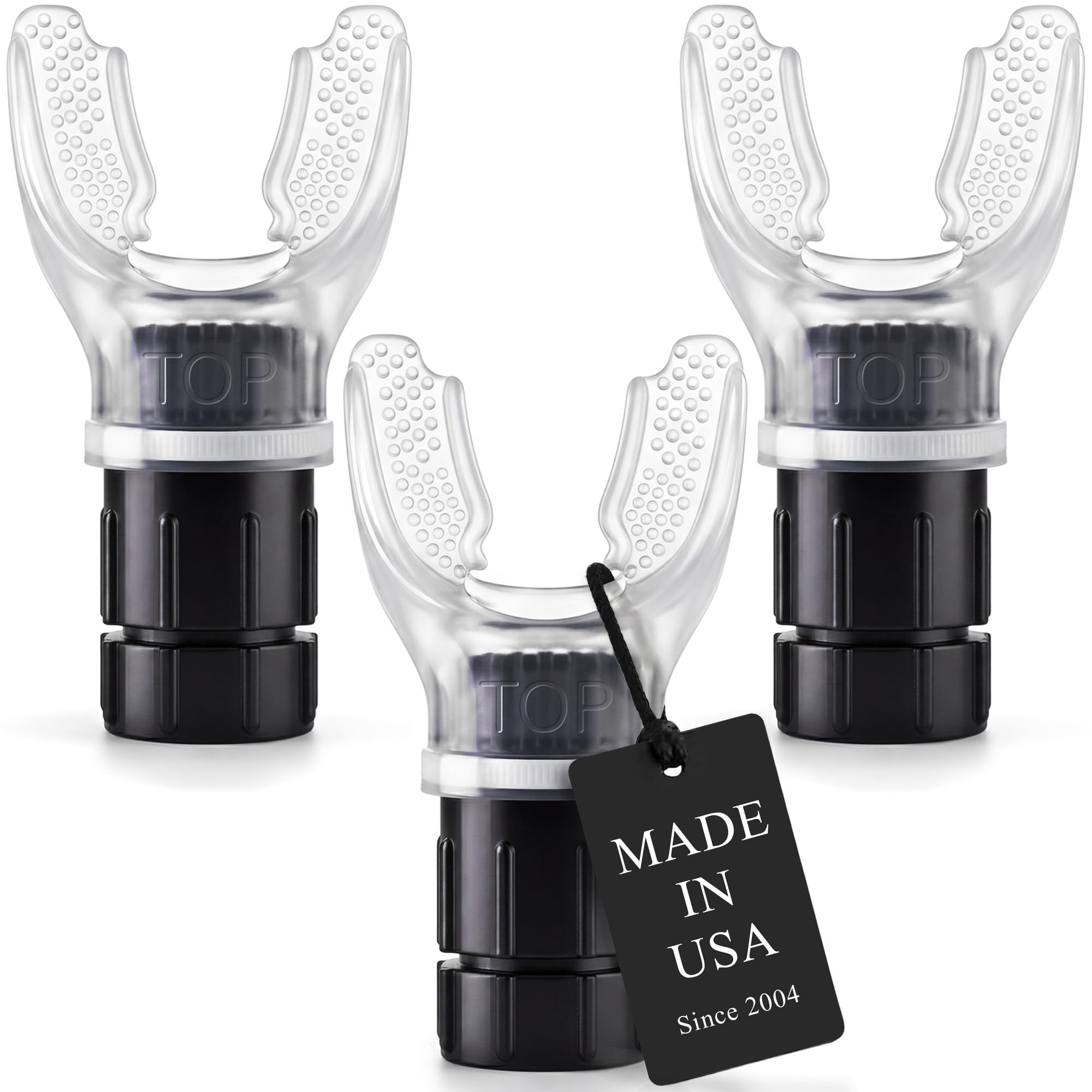
The Expand-A-Lung is the gold standard for athletes who want both inhale and exhale resistance in a single device. Unlike trainers that only load your inspiratory muscles, this unit forces your diaphragm and intercostal muscles to fight on every phase of the breath cycle. The simple knob adjustment provides a wide resistance range, from very light to challenging, making it ideal for progressive overload over several weeks.
At just four inches long, it disappears into a gym bag, and the pure silicone mouthpiece is comfortable enough for 10-15 rep sets without irritating your lips or gums. The three-pack value means you can keep one at home, one in your car, and one at the office without any excuse to skip a session. Users report measurable improvements in oxygen saturation and reduced resting heart rate after two weeks of consistent use.
The design looks less polished than some competitors, but the function is undeniable. Constructed in the USA since 2004, this trainer has a long track record of durability. The only catch is that the resistance adjustment can feel a bit vague — turn the base until you feel the desired load, then commit to that setting.
Why it’s great
- Trains both inhalation and exhalation simultaneously
- Food-grade silicone mouthpiece is soft and easy to clean
- Compact enough for pocket or gym bag carry
Good to know
- Resistance dial lacks clear click-stops, making precise tuning tricky
- Instructions are minimal — you need to experiment to find your level
2. TRAININGMASK 2.0 Turn Flow Resistance Training Mask

The TRAININGMASK 2.0 takes a completely different approach than mouthpiece-style trainers. Instead of handheld resistance, this full-face mask simulates elevation by restricting airflow at the valve level, forcing your body to adapt to lower oxygen availability. With 36 on-the-fly adjustable resistance levels, you can dial in exactly the intensity that matches your current fitness level or workout phase.
The patented flux valve technology creates a real physiological demand: your breathing muscles work harder to overcome the restricted flow, and over weeks your body develops better oxygen uptake efficiency. This is not a passive device — many athletes describe the experience as genuinely uncomfortable in the best way, producing noticeable gains in work capacity and cardiovascular tolerance.
Fit and seal matter with this mask. The hook-and-loop closure and silicone construction provide a snug fit, but users with beards may struggle to get a perfect seal. The head strap can also interfere with over-ear headphones during training. It is a more involved setup than a simple tube, but for athletes serious about altitude simulation, it delivers results that a handheld device cannot replicate.
Why it’s great
- 36 resistance levels offer exceptional fine-tuning
- Proven altitude simulation backed by athlete testimonials
- Durable silicone construction with secure fit
Good to know
- Seal can be compromised by facial hair, reducing effectiveness
- Head strap pulls on ears, making it incompatible with over-ear earbuds
3. The Breather Pink — Guided Lung Trainer

The Breather Pink offers the most user-friendly entry point into respiratory training, especially for athletes who want structure without guesswork. The included guided coaching app walks you through five-minute morning and evening sessions, showing you exactly when to inhale and exhale. This pacing guidance is surprisingly valuable — it keeps you from rushing through reps and ensures you are actually loading the diaphragm fully.
With six independent resistance levels for inhalation and six for exhalation, you can train each phase at different intensities. This is a meaningful feature for athletes working on specific weaknesses, such as shallow inhales or weak forced exhalation during high-intensity intervals. The device itself is compact and light, fitting easily into a jacket pocket or small compartment of a gym bag.
The main criticism is that the device does not come with a carrying case, which feels like an oversight at this price point. The mouthpiece is removable for cleaning, but the smooth plastic body can be slippery during use. For athletes who prefer a guided approach with measurable progress tracking, however, the app integration makes this a compelling choice.
Why it’s great
- Guided app provides structured pacing for consistent training
- Independent inhale and exhale resistance settings
- Quick five-minute sessions fit easily into any routine
Good to know
- No storage case included with the device
- Smooth plastic body can feel slippery during deep reps
4. POWERbreathe — Blue, Medium Resistance

POWERbreathe is the most clinically studied name in respiratory training, and the Blue Medium Resistance model is a tried-and-true tool for athletes who want focused inspiratory muscle strength. Unlike adjustable dial trainers, the POWERbreathe uses a fixed spring-loaded valve that provides consistent resistance on every inhale. This makes it simple to track progress — as you get stronger, you move up to the next resistance color.
Medium Resistance (Blue) is appropriate for the majority of recreational to serious athletes. Users report measurable force increases of around 70% after just five weeks of twice-daily use, along with improved jogging endurance and more efficient asthma medication inhalation. The unit includes a compact carrying case, which keeps it clean between sessions.
The limitation is that it only trains inhalation — there is no exhalation resistance. For athletes who also need forced exhalation conditioning, this will not be a complete solution. The single resistance setting per unit also means you eventually need to purchase an additional unit to progress, rather than simply dialing up resistance on the same device.
Why it’s great
- Clinically validated inspiratory muscle training methodology
- Comes with protective carrying case
- Consistent spring-loaded resistance makes progress easy to measure
Good to know
- Only trains inspiratory muscles, not exhalation
- Fixed resistance requires buying a new unit to increase difficulty
5. The Breather Voice — Respiratory Breath & Lung Trainer

While The Breather Voice is marketed toward singers, its resistance-based diaphragm training translates directly to athletic performance. The device forces you to engage your full diaphragm during both inhale and exhale phases, which is exactly what athletes need for sustained high-intensity output. The customizable resistance levels allow for progressive overload, and the small size makes it easy to carry between sessions.
The companion app provides five-minute guided morning and night sessions, which helps build consistency. Users report noticeable improvements in breath support and abdominal muscle engagement after several weeks. For combat athletes, swimmers, and endurance runners who rely on controlled breathing, this device delivers specificity that general trainers often miss.
The app lacks a backward navigation button and an audible countdown for sets, which can be mildly frustrating during workouts. Additionally, the design is focused on breath control rather than raw airway resistance — it will not simulate altitude or provide the same high-pressure load as an altitude mask. It is a precision tool for diaphragm conditioning, not a one-size-fits-all lung blaster.
Why it’s great
- Customizable inhale and exhale resistance for balanced training
- Small and lightweight for daily carry
- App-guided sessions improve routine adherence
Good to know
- App interface lacks backward navigation and audible set timer
- More focused on breath control than high-pressure resistance
6. Tilcare Breathing Trainer & Lung Trainer
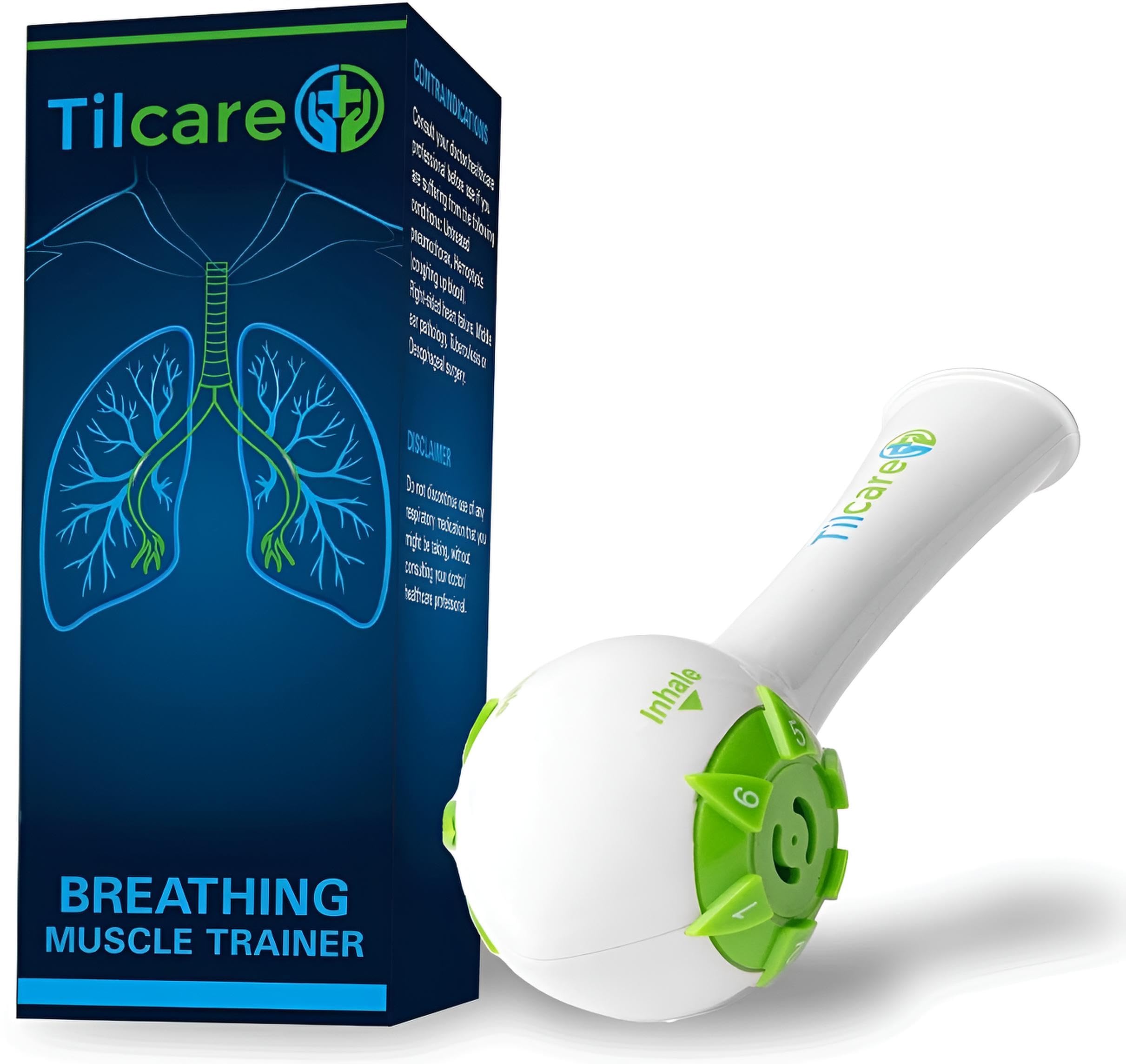
The Tilcare Breathing Trainer offers a six-level resistance dial at a price point that makes respiratory training accessible to anyone. It works on both inhalation and exhalation, which is rare in this price tier, and the compact cylindrical design fits into a small pocket or bag pouch. The food-grade materials mean it is safe for frequent use and easy to rinse clean under running water.
Users with COPD and general lung weakness have reported significant improvements in chest congestion and overall breathing comfort after regular use. For athletes, the adjustable dial provides enough range to progress from light resistance to a moderate challenge, though the upper end may not satisfy advanced competitors looking for extreme loading. The device is lightweight at just 1.76 ounces, so it is nearly unnoticeable in a gym bag.
The primary concern is build consistency. A small number of users report that the internal mechanism can become obstructed after a week of use, blocking inhalation completely. While this seems to be a minority issue, it suggests quality control is not as tight as on more expensive trainers. For budget-conscious beginners, it is a solid starting point, but serious athletes may outgrow it quickly.
Why it’s great
- Affordable entry point with adjustable resistance on both inhale and exhale
- Extremely lightweight and portable
- Food-grade materials are easy to clean
Good to know
- Some units have reported internal obstruction after short use
- Maximum resistance may not challenge advanced athletes
7. Flutter Valve Breathing Exercise Device for Lungs
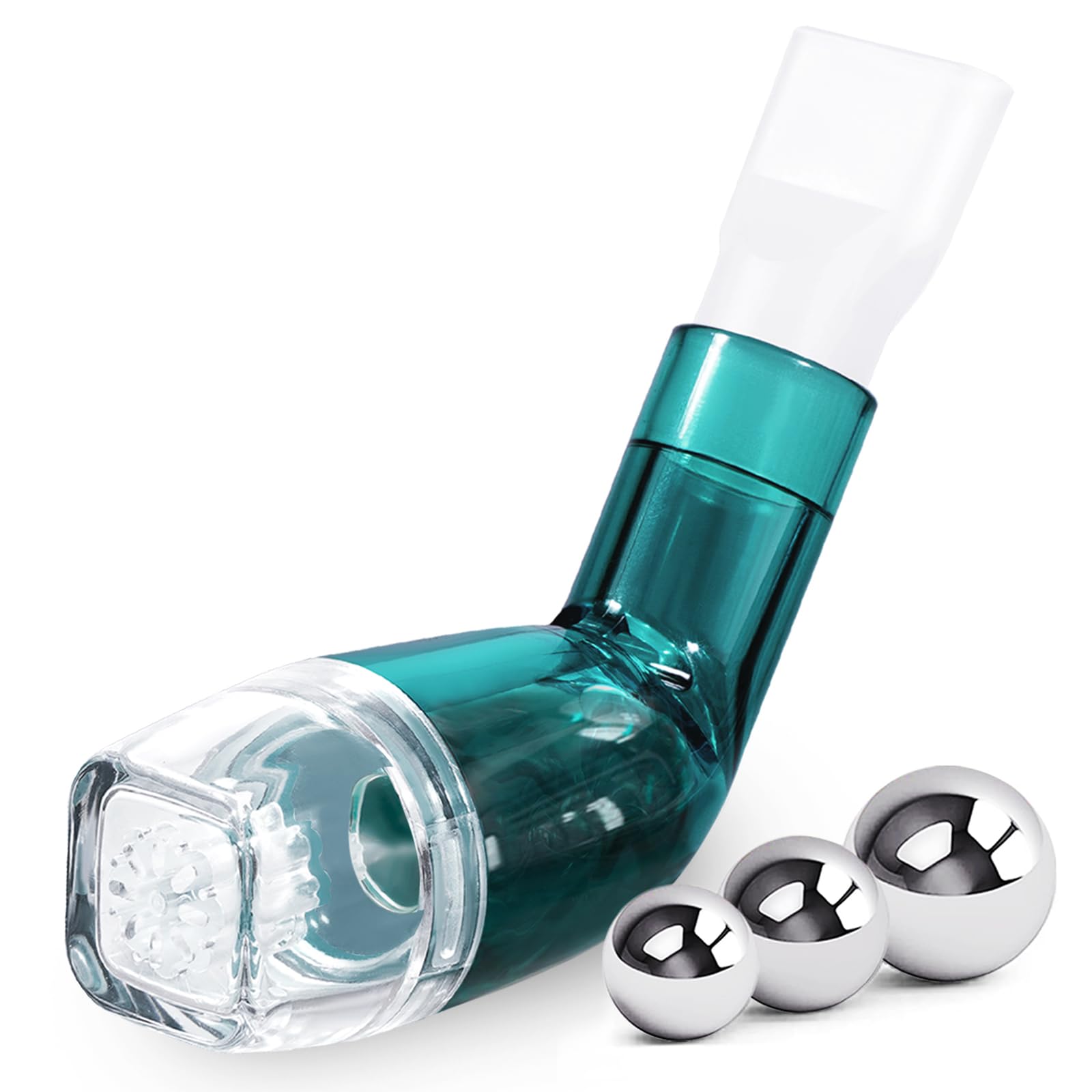
This Flutter Valve device is distinct from other trainers on this list because its primary purpose is mucus clearance through oscillatory positive expiratory pressure (OPEP). It uses three different-sized steel balls to create a vibrating flutter that loosens secretions in the airways. While not designed for traditional athletic lung strengthening, it is invaluable during recovery from respiratory illness or for athletes who struggle with post-nasal drip during allergy season.
Constructed from medical-grade polycarbonate, the device is shatter-resistant and transparent so you can see the steel balls moving during use. It disassembles easily for thorough cleaning, which is important for a device that deals with mucus. Users report that incorporating it twice daily during allergy season reduces chest tightness and clears airways, making subsequent training sessions feel more productive.
This is not a general-purpose breathing trainer for progressive overload. The three resistance levels are defined by ball size, which is a fixed range rather than a dial-controlled spectrum. For athletes seeking to improve VO2 max or inspiratory muscle strength, this device serves a complementary role rather than a primary one. It excels as an adjunct tool for respiratory hygiene and post-illness recovery.
Why it’s great
- Effective OPEP therapy for loosening airway mucus
- Medical-grade polycarbonate construction is durable and shatter-resistant
- Transparent design with visible steel balls for feedback
Good to know
- Only three fixed resistance levels — not progressive like dial trainers
- Purpose is mucus clearance, not inspiratory muscle strength building
FAQ
How many minutes per day should an athlete use a breathing trainer?
Will a breathing trainer help with my running or cycling endurance?
Can I use a breathing trainer if I have asthma or exercise-induced bronchoconstriction?
Final Thoughts: The Verdict
For most athletes, the best breathing trainer for athletes winner is the Expand-A-Lung 3 Pack because its dual-way resistance delivers complete respiratory conditioning in a compact, durable form that travels anywhere. If you want the most clinical, science-backed approach with guided pacing, grab the POWERbreathe Blue MR. And for simulated elevation training that pushes your cardiovascular system to adapt under real stress, nothing beats the TRAININGMASK 2.0.

Mo Maruf
I created WellFizz to bridge the gap between vague wellness advice and actionable solutions. My mission is simple: to decode the research and give you practical tools you can actually use.
Beyond the data, I am a passionate traveler. I believe that stepping away from the screen to explore new environments is essential for mental clarity and physical vitality.