Our readers keep the lights on and my smoothie glass nicely filled. As an Amazon Associate, I earn from qualifying purchases.
Carbon monoxide is invisible, odorless, and completely undetectable by human senses — making it the ultimate travel threat in hotels, rental cars, RVs, and vacation homes. Unlike your stationary home detector, a travel-ready unit must be compact, battery-powered, and rugged enough to survive a packed bag while delivering reliable low-level alerts.
I’m Mohammad Maruf — the founder and writer behind WellFizz. I’ve spent years analyzing portable safety hardware, from sensor response curves to real-world failure modes, so you get detectors that actually work when you need them most.
Whether you’re road-tripping, flying to a rental, or living in an RV, the best carbon monoxide detector for travel needs to balance sensitivity, portability, and battery stamina without triggering false alarms at every campfire.
How To Choose The Best Carbon Monoxide Detector For Travel
Choosing a CO detector for travel isn’t the same as picking one for your kitchen wall. You need to weigh portability against sensor sensitivity, battery life against alert volume, and certification against real-world use in cars, tents, and hotel rooms. Here are the three factors that separate a travel-ready unit from a stationary brick.
Low-Level Alarm Threshold
Standard home CO detectors only alarm at 70 ppm or higher — a level that can take 1 to 4 hours to trigger. For travel, where you might sleep in a small RV or a car with a hidden exhaust leak, you want a detector that alarms at 9 ppm to 35 ppm. Low-level alarms catch dangerous CO buildup early, before symptoms like headache or nausea set in. Look for units that alarm at or below 35 ppm for true travel safety.
Power Source & Battery Life
Travel detectors run on either disposable AA/coin-cell batteries or built-in rechargeable cells. AA-powered units offer the convenience of swapping batteries anywhere, while rechargeable models with USB-C mean fewer batteries to pack but require access to power. For extended trips, a detector that lasts 8 to 12 months on a single battery set is ideal — you won’t be caught with a dead unit halfway through a road trip.
Portability & Durability
A travel CO detector must survive being tossed in a backpack, clipped to a belt, or mounted in a car. Look for lightweight designs under 6 ounces, compact dimensions that fit in a palm, and optional mounting clips or lanyards. For professionals or rugged use, an IP67 water-resistant rating ensures the sensor survives rain, spills, and dusty environments without failing.
Quick Comparison
On smaller screens, swipe sideways to see the full table.
| Model | Category | Best For | Key Spec | Amazon |
|---|---|---|---|---|
| Forensics Detectors FD-CAR001 | Premium | Early low-level detection in vehicles | 9 ppm alarm threshold | Amazon |
| Sensorcon Inspector INS-CO-01 | Premium | Professional field use and water resistance | IP67 waterproof rating | Amazon |
| TOPTES CT-580 | Mid-Range | RVers and DIY leak pinpointing | 0 to 1000 ppm range | Amazon |
| Kidde COBD | Mid-Range | Simple home-to-hotel carry | 85 dB alarm volume | Amazon |
| Siterwell GS828A | Budget-Friendly | Multi-room or multi-pack coverage | 10-year product life | Amazon |
In‑Depth Reviews
1. Forensics Detectors FD-CAR001

This is the only travel CO detector that alarms at 9 ppm — a threshold aligned with WHO, EPA, OSHA, and NIOSH recommended exposure limits. While standard home units wait until 70 ppm, the FD-CAR001 catches dangerous CO buildup early, within 60 seconds of detection. Its Japanese electrochemical sensor is factory-calibrated and 100% tested in the USA, so you get laboratory-grade accuracy in a tiny 2-ounce package.
The metal body design is barely larger than a key fob at 1.9 by 2.7 inches, making it the most packable unit on this list. It runs for 8 to 12 months on two CR2032 coin-cell batteries, and a single button controls power, test, and reset. The bright red LED and buzzer provide clear alerts — though the buzzer can be hard to hear with noise-canceling headphones, so mount it in visible line of sight.
Real users have credited it with detecting 400 ppm CO in aircraft cockpits, finding intermittent exhaust leaks in classic cars, and saving lives by prompting early landings. It also stores the highest recorded CO level in memory, a useful feature for troubleshooting intermittent leaks after the fact.
Why it’s great
- First-to-alarm at 9 ppm catches CO before symptoms appear
- Ultra-light 2-ounce metal body fits anywhere
- 8–12 month battery life on standard coin cells
- Stores peak CO reading for leak diagnostics
Good to know
- Buzzer may be too quiet for use with noise-canceling headphones
- Requires outdoor calibration before first use for accurate baseline
- Intended primarily for vehicle and aircraft use, not entire hotel rooms
2. Sensorcon Inspector INS-CO-01

The Sensorcon Inspector is built like a tank with an IP67 water-resistant housing that survives rain, dust, and accidental submersion — ideal for outdoor camping, RV adventures, or professional inspection work. Its advanced electrochemical sensor reads CO from 1 to 1,999 ppm with a ±2 ppm accuracy margin, making it one of the most precise handheld detectors available outside of laboratory equipment.
Dual alerts kick in at 35 ppm (LED flash and 80–85 dB tone) with a ceiling limit alarm at 200 ppm. The unit includes a rugged steel clip and lanyard loop for hands-free attachment to a backpack, belt, or gear vest. Battery life reaches up to two years on a single set of lithium cells, and the large LCD displays real-time CO readings continuously rather than waiting for an alarm state.
Users report it reacts instantly to tiny CO sources — breath, motorcycle exhaust, even fresh coffee grounds — which means it’s extremely sensitive but can trigger false positives if stored near strong combustion odors. A safety feature powers the unit down after a period of zero CO detection, preserving battery during transit. It weighs just 3.84 ounces and measures 3.2 by 2.2 inches, so it disappears into a daypack.
Why it’s great
- IP67 waterproof and dustproof for all-weather travel
- Reads CO from 1 ppm with ±2 ppm accuracy
- Two-year battery life on lithium cells
- Steel clip and lanyard for hands-free carry
Good to know
- Alarm threshold at 35 ppm — later than 9 ppm alternatives
- Extreme sensitivity can trigger alerts near coffee roasters or strong exhaust
- Premium price reflects professional-grade build
3. TOPTES CT-580

The TOPTES CT-580 is a rechargeable handheld CO detector designed for both personal safety and professional leak investigation. Its DDS electrochemical sensor delivers a response in under 0.3 seconds, covering a 0 to 1,000 ppm range with two user-selectable alarm thresholds. This is the only unit in the lineup with a full TFT color display, showing real-time CO concentration graphs and menu options for alarm history and calibration settings.
Three alarm modes — indicator light, audible tone, and vibration — ensure you never miss an alert, whether you’re sleeping in a tent or working on a job site with ear protection. The USB-C rechargeable battery means no hunting for AA or coin cells mid-trip, and the built-in flashlight adds utility for dark RV compartments or engine bays. It ships with a protective hard case and Type-C cable, making it the most complete travel kit on this list.
Users have successfully used it to pinpoint propane water heater leaks in RVs, detect hidden cracked vent pipes reaching 1,800 ppm, and confirm zero CO in vehicle cabins for peace of mind.
Why it’s great
- USB-C rechargeable — no disposable batteries needed
- 0.3-second response time for rapid CO detection
- TFT color display shows real-time concentration data
- Three alarm modes: visual, audible, and vibration
Good to know
- No IP rating — less weather-resistant than premium options
- Heavier than coin-cell competitors at roughly double the weight
- Rechargeable battery may require midday charging on long trips
4. Kidde COBD
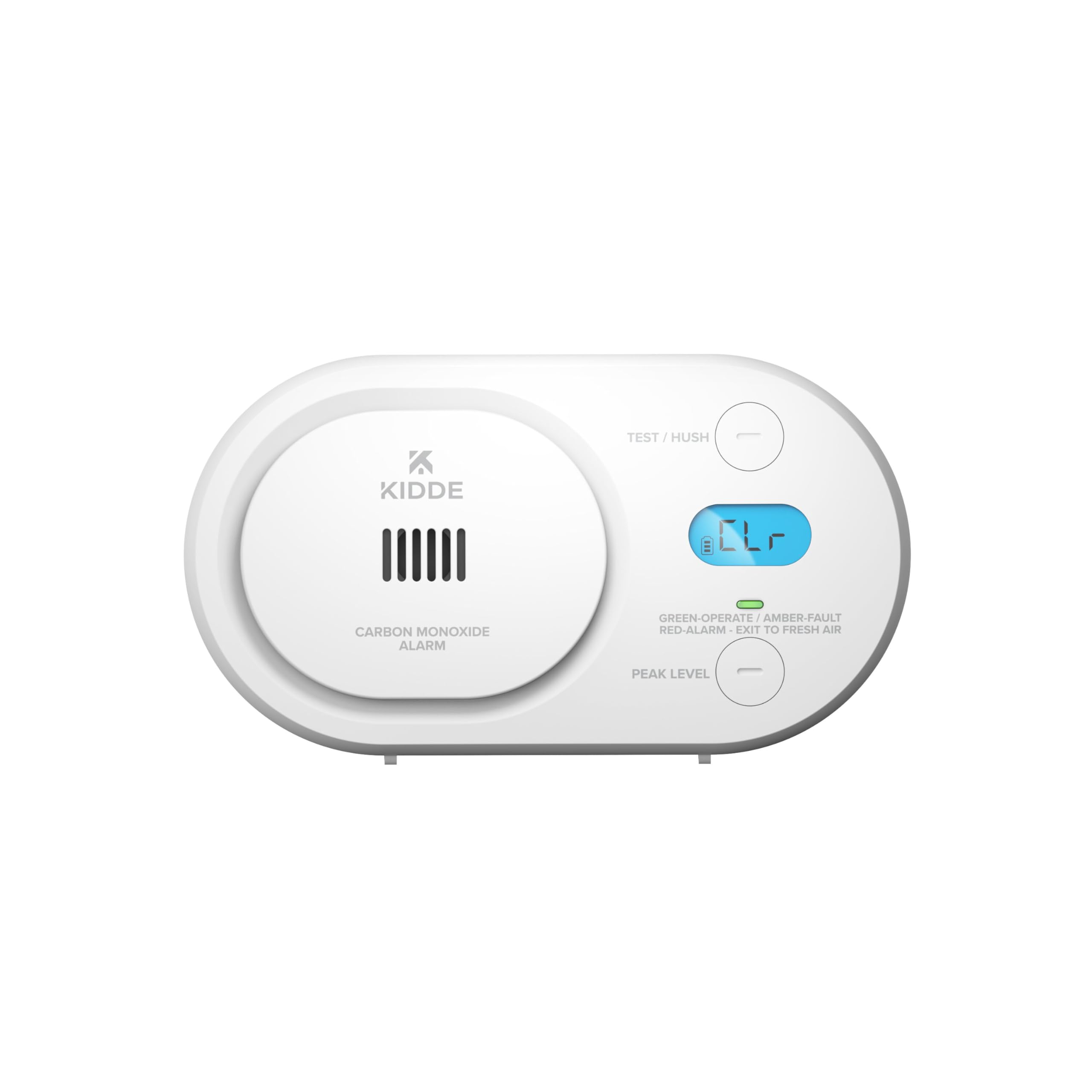
The Kidde COBD is the closest thing to bringing your home detector on the road — it’s UL 2034, 5th Edition certified, ETL listed, and runs on two included AA batteries. Unlike specialty travel units, this one was designed for residential use but is small enough to toss in a suitcase at 5.14 by 2.83 inches and just under 6 ounces. Its backlit digital display shows real-time CO levels and alarm status, while the 85 dB siren is loud enough to wake even heavy sleepers.
Installation is genuinely zero-effort: pull the battery tab, place it on a table or mount it on a wall with included screws, and you’re protected. The test/hush button lets you silence nuisance alarms or verify function with one press. Customer reviews confirm it picked up CO from heavy traffic when tested in a car, proving its sensor is live and responsive even in borderline conditions.
Where it falls short for dedicated travel use is its alarm threshold — like most residential detectors, it only alarms at 70 ppm or higher, meaning you won’t get early warnings at the 9 to 35 ppm levels that catch CO before symptoms start. For simple hotel-to-home carry where you just want basic protection, this is the most affordable UL-certified option on the list.
Why it’s great
- UL 2034 5th Edition certified for peace of mind
- AA battery powered — universally replaceable anywhere
- Large backlit display shows current CO ppm reading
- 10-year limited warranty covers long-term ownership
Good to know
- Only alarms at 70 ppm — misses early low-level CO buildup
- No clip or lanyard for hands-free carry
- Bulkier than dedicated travel detectors at nearly 6 ounces
5. Siterwell GS828A
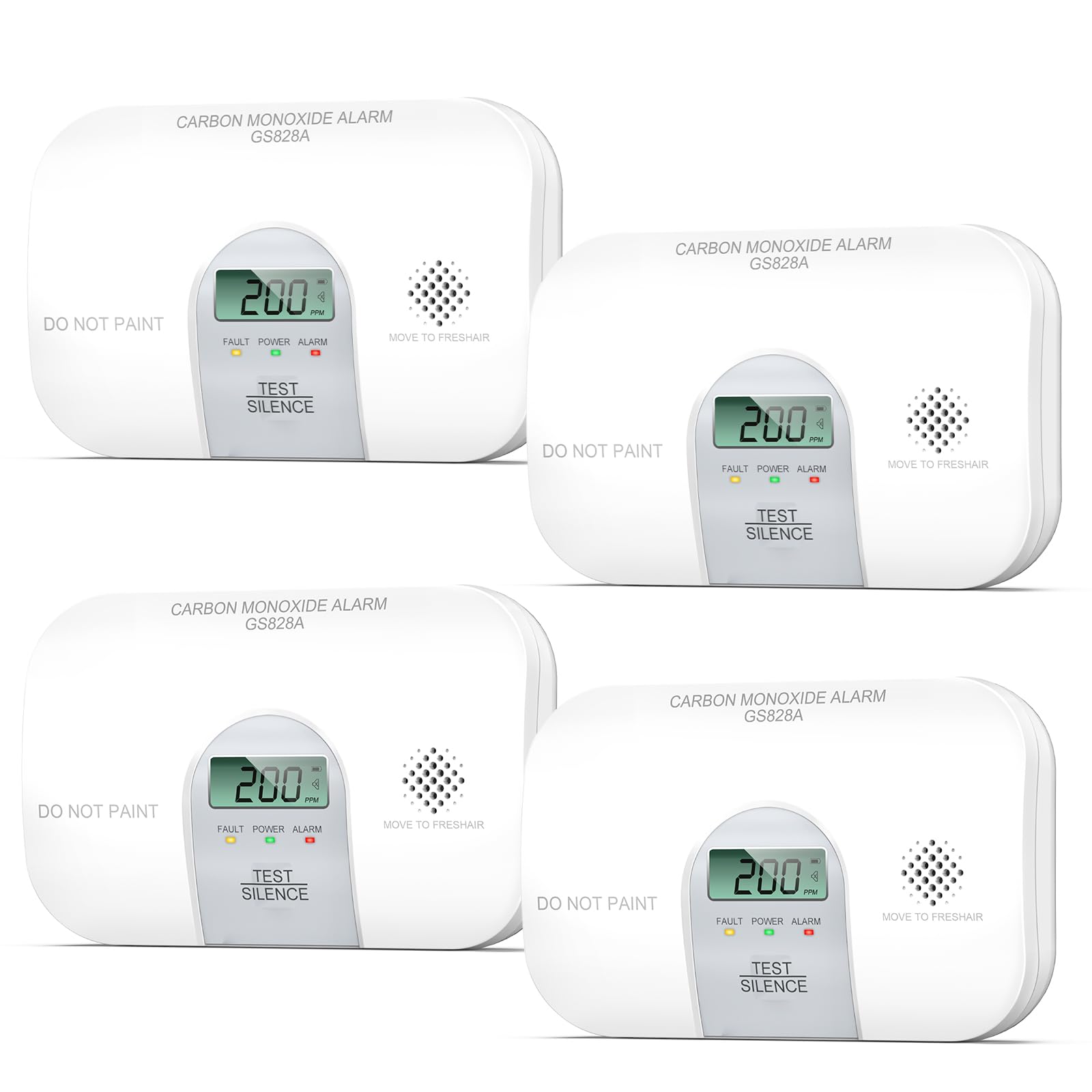
The Siterwell GS828A is the budget-friendly option that doesn’t skimp on safety fundamentals. It’s ETL listed with an advanced electrochemical sensor that detects CO accurately and sounds an 85 dB alarm within 3 meters. The built-in LCD displays real-time levels, and a tri-color LED — red for alarm, green for power, yellow for fault — gives you status at a glance without needing to read a number.
This unit runs on two AA alkaline batteries that provide continuous power for the entire 10-year product life, assuming regular battery replacements. It can be wall-mounted or placed freestanding on any flat surface thanks to an integrated kickstand. The 4-pack configuration means you can keep one in your car, one in your travel bag, and two at home — making it the most cost-effective way to achieve comprehensive coverage across multiple locations.
The main compromise for travel is size and weight: at 1.7 pounds for four units, even a single detector is noticeably heavier than the Forensics 2-ounce unit. The 70 ppm alarm threshold is also standard residential, not low-level. However, users consistently praise its accuracy and value, with many saying it outperforms more expensive brands in side-by-side tests. The bright pulsing LED every 20 minutes can be distracting in dark bedrooms, but placing it in a hallway solves that issue.
Why it’s great
- Excellent value — 4-pack covers home, car, and travel
- ETL listed with tested electrochemical sensor accuracy
- 10-year product life with user-replaceable AA batteries
- Freestanding kickstand works on any flat surface
Good to know
- 70 ppm alarm threshold — no early low-level warning
- Pulsing green status LED can be bright in dark rooms
- Bulkier than dedicated travel detectors at 4.7 by 3.14 inches
FAQ
What alarm threshold should a travel CO detector have?
Can I use a home CO detector for travel?
Final Thoughts: The Verdict
For most users, the best carbon monoxide detector for travel winner is the Forensics Detectors FD-CAR001 because its 9 ppm alarm threshold gives you the earliest possible warning in the smallest 2-ounce package. If you want IP67 water resistance and professional-grade accuracy, grab the Sensorcon Inspector INS-CO-01. And for budget-friendly multi-room coverage, nothing beats the Siterwell GS828A 4-pack.

Mo Maruf
I created WellFizz to bridge the gap between vague wellness advice and actionable solutions. My mission is simple: to decode the research and give you practical tools you can actually use.
Beyond the data, I am a passionate traveler. I believe that stepping away from the screen to explore new environments is essential for mental clarity and physical vitality.