Our readers keep the lights on and my smoothie glass nicely filled. As an Amazon Associate, I earn from qualifying purchases.
Wrist-based trackers often miss steps during slow walks or when your arms are still, but an ankle pedometer solves that by measuring motion from your leg. It clips to your sock or ankle strap, capturing every stride whether you’re pushing a cart, carrying a child, or walking a slow dog. This focused tool cuts through the noise of multi-sensor wearables to deliver one thing that actually matters—real step count.
I’m Mohammad Maruf — the founder and writer behind WellFizz. I’ve spent years analyzing consumer-grade tracking hardware, from basic mechanical step counters to modern 3D tri-axis sensors, to find which units actually match manual counts.
Below, I break down the five most reliable ankle pedometer models on the market, ranked by sensor accuracy, battery longevity, and everyday usability. Whether you’re a senior seeking simplicity or a walker who wants honest data, this guide covers the best ankle pedometer options available right now.
How To Choose The Best Ankle Pedometer
Not all pedometers are built for ankle wear, where the tilt and swing differ from a hip pocket or wrist. The three factors below separate a genuinely reliable step counter from one that will overcount every time you sit or shift in your chair.
Sensor Type: Tri-Axis vs. Simple Mechanical
Mechanical pedometers rely on a pendulum that only detects vertical hip bounce—useless when worn on an ankle that moves in all three planes. A 3D tri-axis sensor, found in every product on this list, measures acceleration along the X, Y, and Z axes. This enables the pedometer to register steps whether the unit is upright, upside down, or lying sideways in a bag.
Display Readability & Data Overload
Ankle pedometers are small—most have a 1.7‑inch or smaller screen. A large, high-contrast digital readout matters if you are elderly, have presbyopia, or want to glance down without bending. Some models display only step count; others add distance and calories. The simpler the display, the fewer buttons you need to press mid-walk.
Battery Life and Setup Complexity
The best units use a pre-installed CR2032 coin cell that lasts about 12 months and requires no daily charging. Rechargeable models come with lithium‑polymer batteries that last 7–14 days between charges but add a USB cable and a magnetic dock. For a true set‑and‑forget ankle pedometer, the replaceable coin cell is the more practical choice, especially for seniors who do not want another device to charge every night.
Quick Comparison
On smaller screens, swipe sideways to see the full table.
| Model | Category | Best For | Key Spec | Amazon |
|---|---|---|---|---|
| 3DActive 3DFitBud A420S | Mid-Range | Quick daily step tracking | 3D Tri-Axis Sensor | Amazon |
| Realalt 3DTriSport | Mid-Range | 30‑day memory & multi-metric tracking | 30-Day Memory | Amazon |
| Zeacool Fitness Tracker | Premium | All-day health monitoring on wrist | 5 ATM Waterproof | Amazon |
| Moremore Fitness Tracker | Premium | AMOLED display & smart notifications | 1.1″ AMOLED Touch | Amazon |
| USMECBL Fitness Tracker | Budget | IP68 waterproof comfort | IP68 Waterproof | Amazon |
In‑Depth Reviews
1. 3DActive 3DFitBud Simple Step Counter A420S

The 3DFitBud is the purest expression of a step counter: no Bluetooth, no app, no distance calibration—just a 3D tri-axis sensor that logs every stride. Its 1.7-inch screen is one of the largest in this category, displaying step count in high-contrast numbers that remain readable even in direct sunlight. Users consistently report accuracy within 10–15 steps of manual counts, which puts it ahead of most wrist-based trackers that can inflate arm-swing movements.
Setup takes about ten seconds. Remove the clear plastic tab from the pre-installed CR2032 battery, clip the unit to your sock or ankle strap, and you’re tracking. The auto-sleep feature pauses the sensor when you are stationary for a while and wakes as soon as you move again, extending the battery to roughly a full year. The included lanyard gives you a backup wearing option if the clip feels insecure on very narrow ankle straps.
The single-function focus is intentional—you get step count and nothing else. There is no weekly memory, no calorie estimation, and no pace calculation. For users who found previous fitness trackers too noisy or complex, this simplicity is the feature. If you want data beyond daily steps, you will need to log numbers manually.
Why it’s great
- Ready to use out of the box with battery included
- Large 1.7‑inch display is easy to read at a glance
- Auto sleep/wake preserves battery up to 12 months
Good to know
- No 30-day memory—only resets daily
- No distance, calories, or time tracking
2. Realalt 3DTriSport Walking Pedometer

The Realalt 3DTriSport is the most complete non-smart pedometer in this comparison. Alongside steps, it calculates distance in miles or kilometers, calorie burn, and total exercise time. Its 30-day memory logs daily records automatically, so you can review a month of data without pairing to a phone. This makes it ideal for users who want trend visibility—like seniors tracking rehab progress—without the friction of an app.
The 3D tri-axis sensor is tuned for hip, pocket, or lanyard positions. One reviewer reported a deviation of only 0.02 miles after a full treadmill walk compared to Google Maps distance. Another noted that the unit survived an accidental toilet drop, dried out, and resumed normal function. The 1.7‑inch screen shows all four metrics simultaneously, though the font shrinks to accommodate the extra numbers.
Setup requires a few more button presses than the 3DFitBud. You have to set your stride length and weight for distance and calories to be accurate. The included mini screwdriver helps open the battery compartment, and support staff are known to call back personally if you get stuck. Some users found the multi-step error deletion algorithm delayed counting by about 40 steps, but this is typical of any non-smart pedometer that filters out vibration noise.
Why it’s great
- Stores up to 30 days of daily records
- Tracks steps, distance, calories, and time
- 18‑month warranty and responsive customer support
Good to know
- Setup requires entering stride length and weight
- Lanyard accuracy drops to ~85% compared to waist clip
3. Zeacool Fitness Tracker

The Zeacool tracker shifts from clipped ankle pedometer to full wrist-worn smartwatch with a 1.10‑inch AMOLED HD touch screen. Its 5 ATM waterproof rating means you can swim, shower, or dive in it without worry—critical for users who want continuous step tracking through water aerobics or pool walks. The silicone band is skin-friendly and notably lightweight, making it comfortable for 24/7 wear including sleep tracking.
Health monitoring goes well beyond simple steps. The Zeacool measures real-time heart rate, blood oxygen saturation, blood pressure, and sleep stages (deep, light, awake). Users report that the blood pressure readings align closely with their medical monitor, which adds credibility for those monitoring hypertension. The magnetic fast charger refills the 14-day battery in about an hour, and standby time reaches 30 days.
Step accuracy on the wrist can be less reliable than a dedicated ankle-clip pedometer. One reviewer noted that while step, heart rate, and calorie tracking felt accurate, sleep tracking occasionally reported a 12‑hour session when only 7 hours had passed. If your primary goal is precise step counting, the wrist placement introduces arm-swing variance that a dedicated ankle sensor avoids.
Why it’s great
- 5 ATM waterproof for swimming and deep water use
- AMOLED screen with customizable watch faces
- Blood pressure monitor matches medical device accuracy
Good to know
- Sleep stage detection can over-report total duration
- Wrist placement introduces step inaccuracy vs ankle clip
4. Moremore Fitness Tracker
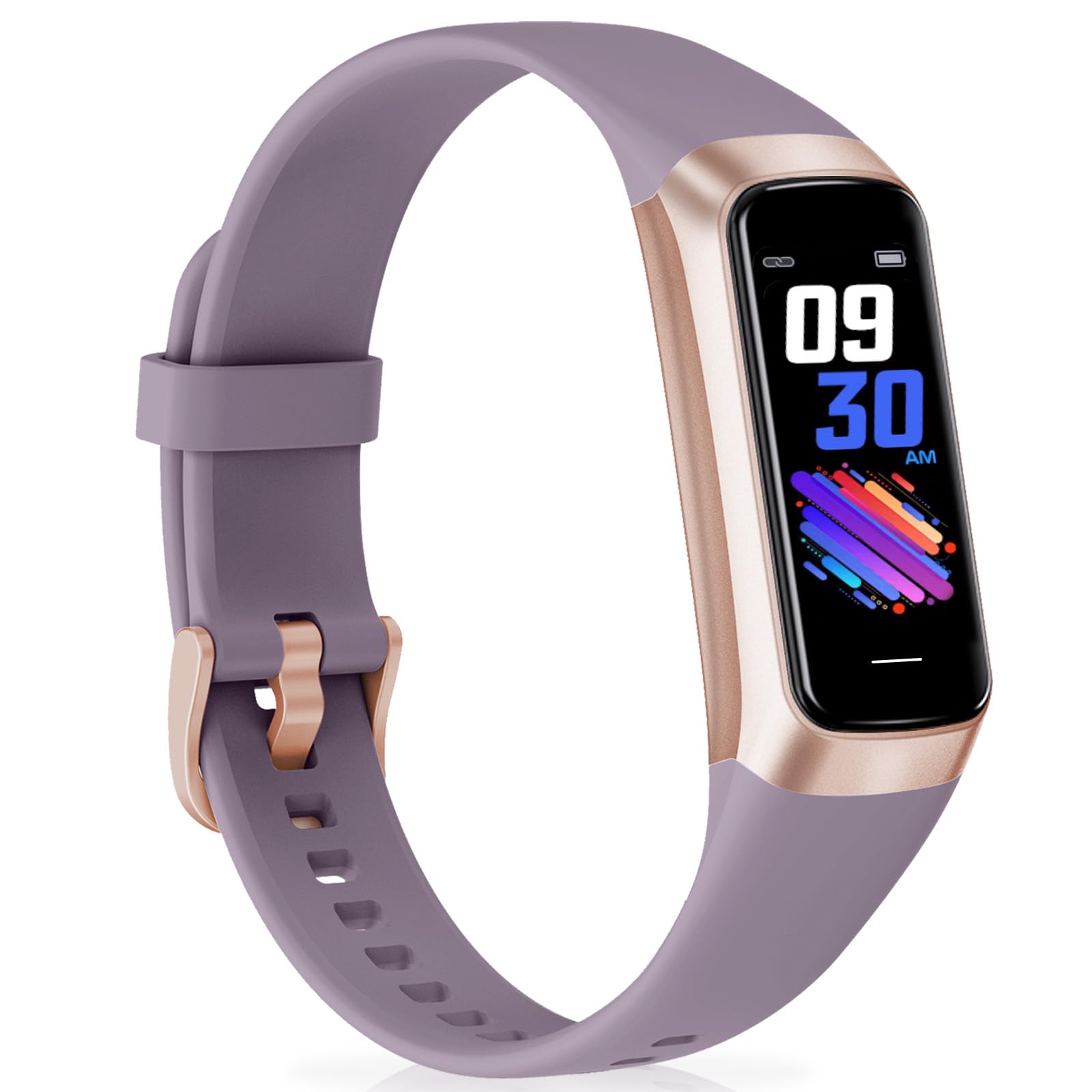
The Moremore tracker focuses on visual quality with a vibrant 1.1‑inch AMOLED touch screen that looks more like a premium smartwatch display than a budget activity tracker. It packs 25 sports modes including walking, running, dancing, and yoga, plus smart notifications for calls, texts, and WhatsApp messages. For users who want step counting without giving up phone alerts, this is a strong wrist-worn alternative to a silent ankle pedometer.
Health sensors cover heart rate, blood pressure, blood oxygen, and sleep analysis. The battery lasts about 7 days in regular use, which is shorter than the coin-cell ankle pedometers but standard for AMOLED wearables. Charging is magnetic and takes roughly one hour. The lightweight silicone band and thin casing mean you barely notice it during sleep or daily wear, which helps with consistent step tracking adherence.
Step accuracy, like all wrist trackers, depends on arm swing. Pushing a shopping cart or holding a railing will undercount steps, whereas an ankle pedometer would not miss a beat. If you need reliable step data for medical or rehabilitation purposes, the ankle-clip format still wins. If you want a comfortable wrist device with a gorgeous screen and basic step trends, the Moremore delivers for the price.
Why it’s great
- Bright AMOLED screen with custom watch faces
- Smart notifications for calls and messaging apps
- Ultra-lightweight and comfortable for all-day wear
Good to know
- No GPS geotagging for outdoor routes
- Step count accuracy drops when arms are still
5. USMECBL Fitness Tracker

The USMECBL tracker is built for users who prioritize waterproofing and long battery life in a tiny form factor. Its IP68 rating means it survives rain, sweat, swimming, and showering without a second thought—real utility for outdoor walkers or pool-based rehab. The 1.47‑inch OLED display is clear and responsive, and the silicone band is so lightweight that several reviewers noted they forgot they were wearing it, even while sleeping.
Health monitoring includes 24/7 heart rate, blood oxygen, and sleep stage analysis. The battery life is one of the strongest in this wrist-worn group, reaching 10–14 days on a full charge with notifications enabled. Standby mode stretches to 30 days, which means you can wear it continuously without daily charging anxiety. The shake-to-take remote camera feature is a nice touch for group photos during walks.
Step accuracy is the main weak point. One verified reviewer counted 8 steps but the device logged 42, a 5x overcount. While other users found it accurate, the inconsistency suggests the filtering algorithm is less refined than on dedicated ankle pedometers. If precise step data matters more than extra features or waterproofing, a simpler tri-axis clip-on pedometer remains the more reliable investment.
Why it’s great
- IP68 waterproof for swimming and rain
- 10–14 day battery with continuous health monitoring
- Ultra-slim and comfortable for overnight wear
Good to know
- Step counter can overcount up to 5x on some units
- No integrated GPS for distance tracking
FAQ
Can I wear an ankle pedometer on my sock without irritating my skin?
Why does my ankle pedometer count steps when I am just sitting and moving my leg?
How do I make an ankle pedometer more accurate for slow walking?
Final Thoughts: The Verdict
For most users, the best ankle pedometer winner is the 3DActive 3DFitBud Simple Step Counter A420S because it delivers reliable 3D tri-axis step counting with a huge display and no setup complexity, all in a package that lasts a full year on one battery. If you want 30-day memory plus distance and calorie tracking, grab the Realalt 3DTriSport for its deeper data logging and solid support. And for a full-featured wrist tracker that is waterproof and swim-ready, the Zeacool Fitness Tracker offers the broadest health monitoring in a premium AMOLED watch format.

Mo Maruf
I created WellFizz to bridge the gap between vague wellness advice and actionable solutions. My mission is simple: to decode the research and give you practical tools you can actually use.
Beyond the data, I am a passionate traveler. I believe that stepping away from the screen to explore new environments is essential for mental clarity and physical vitality.