Our readers keep the lights on and my smoothie glass nicely filled. As an Amazon Associate, I earn from qualifying purchases.
The real challenge isn’t finding a board — it’s sorting through finger-jointed blanks, unfinished planks, and pre-oiled tops to find the one that won’t warp under a heavy pot or split after a season of use. Every wood species, every joint pattern, and every finish choice changes how the block behaves over the next decade.
I’m Mohammad Maruf — the founder and writer behind WellFizz. I’ve spent years analyzing millwork specs, wood hardness ratings, and finish absorption rates to help home cooks and DIY builders separate genuine durability from marketing talk.
This guide breaks down nine distinct options by wood type, construction, and intended use so you can confidently choose the right best butcher block for your kitchen island, workbench, or custom tabletop project.
How To Choose The Best Butcher Block
Selecting a butcher block that lasts comes down to three fixed variables: the species of hardwood, the way the wood strips are joined, and the finish applied before or after delivery. Ignore any one of these, and you risk buying a slab that looks good for a month then starts splitting at the seams.
Wood Species & Hardness
Hard maple sits at the top of the Janka hardness scale (around 1450 lbf), making it the professional standard for commercial kitchens that see constant knife work and heavy equipment. Birch comes slightly softer at roughly 1260 lbf but offers a tighter closed grain that resists moisture absorption better in high-humidity environments. Beech (Janka ~1300) strikes a middle ground with excellent wear resistance. Acacia, often between 1700 and 2300 lbf depending on growth conditions, is among the hardest options but has more open grain patterns that may require heavier sealing. Hevea, or rubberwood, sits around 1100 lbf — softer but still durable enough for residential prep work and desktops.
Construction Method: Edge-Grain vs. Finger-Jointed vs. Face-Grain
Edge-grain construction, where the long edges of each strip are glued together, produces the most stable surface for cutting and chopping because the wood expands and contracts evenly across the slab. Finger-jointed blocks use short offcuts connected by interlocking glue profiles; they are more prone to seasonal cracking and look less uniform. Face-grain construction, common in end-grain butcher blocks, is the most forgiving on knife edges but requires the thickest slabs and the most careful maintenance. For a countertop or desk, edge-grain with a minimum 1.5-inch thickness gives you the best ratio of stability to weight.
Finish: Pre-Oiled, Pre-Sealed, or Unfinished
A pre-finished block arrives with food-grade mineral oil or a hard wax-oil blend already absorbed into the surface, meaning you can start using it immediately for food prep. Unfinished blocks come bare and require you to sand and apply oil or polyurethane yourself — this gives you full control over the final look but adds a weekend of labor. A factory-applied penetrating oil finish, like the one John Boos uses, saturates deep into the wood fibers and can be refreshed annually. Sealed finishes like polyurethane create a hard top layer that blocks moisture entirely but cannot be used as a cutting surface.
Dimensions and Load Rating
The standard width for a kitchen island butcher block is 25 to 30 inches, with lengths ranging from 36 inches for small prep stations up to 72 or 96 inches for full countertop runs. The 1.5-inch thickness is the industry benchmark for a reason: thinner slabs (0.75-inch or 1-inch) will cup or bow under heavy use, especially near a sink or dishwasher. Some premium blocks list a load capacity — a 300-pound rating is adequate for a desktop with dual monitors, while 500 pounds is necessary for a kitchen island that supports a microwave, mixer, and daily chopping.
Quick Comparison
On smaller screens, swipe sideways to see the full table.
| Model | Category | Best For | Key Spec | Amazon |
|---|---|---|---|---|
| CONSDAN 36″ Hard Maple | Edge-Grain | Food-safe cutting surface | 1.5″ thick solid maple, pre-oiled | Amazon |
| PLAMMA 3ft Solid Birch | Unfinished | DIY custom stain projects | 34 lbs, closed-grain birch | Amazon |
| FLEXISPOT Acacia Desktop | Single Slab | Office standing desk top | 60″x30″ beveled edge | Amazon |
| John Boos JNS10 Work Table | Commercial | Heavy-duty pro kitchen | 125 lbs, NSF rated | Amazon |
| Howizz 72″ Acacia | Oversized | Large island or workbench | 74 lbs, 36″ wide slab | Amazon |
| Bme Hevea 4ft Unfinished | Universal | DIY desk or baking station | 500 lb load capacity | Amazon |
| RKVPCNE Birch 3ft | Budget | Small prep island | 300 lb scratch-resistant | Amazon |
| PLAMMA 6ft Solid Birch | Long Span | Full countertop run | 64 lbs, 72″ length | Amazon |
| JubiNatural 48″ Beech | Mid-Size | Compact kitchen islands | 48″x25″ beech hardwood | Amazon |
In‑Depth Reviews
1. CONSDAN 36″ Solid Hard Maple Butcher Block
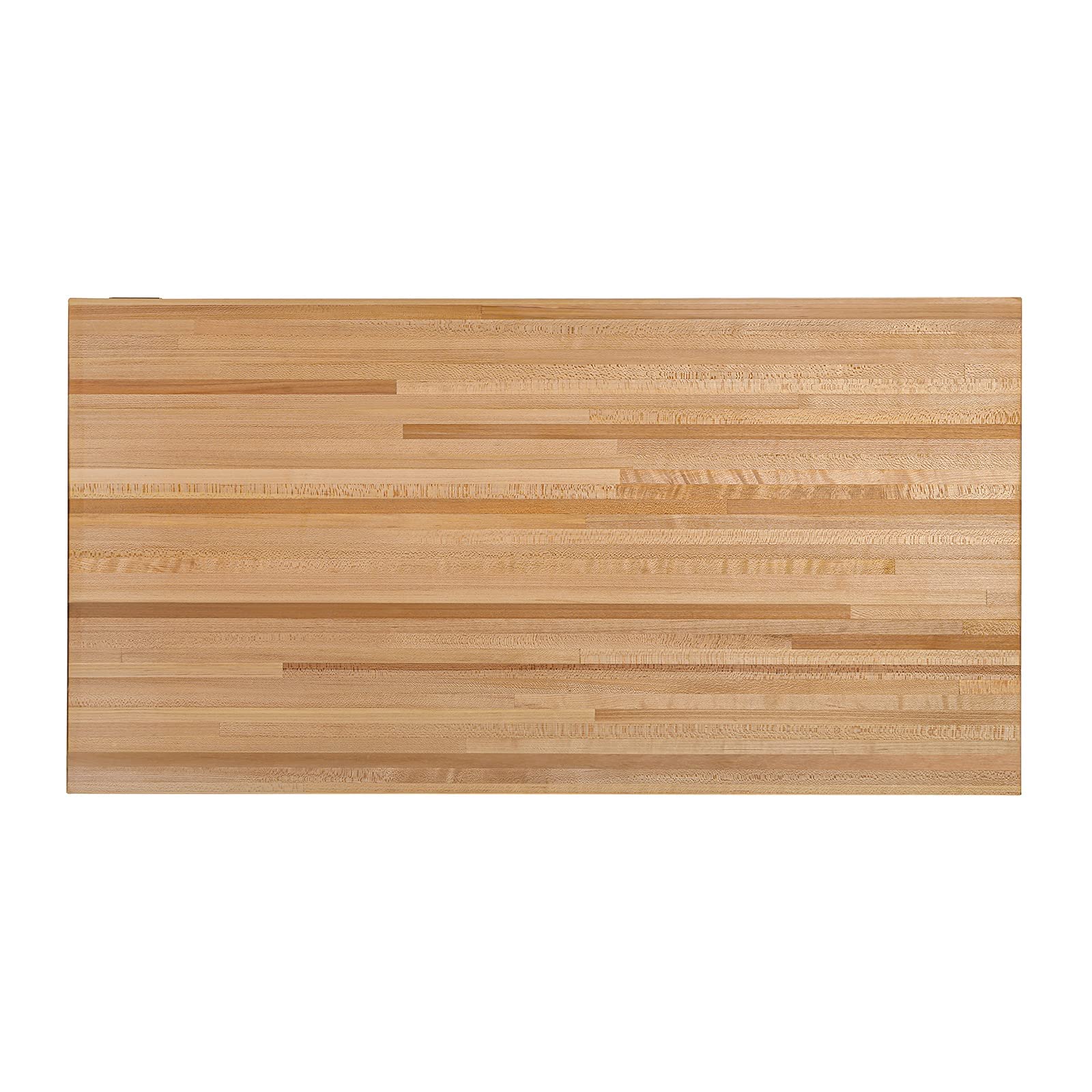
This is the rare pre-finished block that arrives ready for direct food contact without a weekend of sanding. CONSDAN uses USA-grown hard maple — the same species that dominates commercial kitchens — and applies a food-grade oil at the factory. The 1.5-inch thickness gives it the heft (over 35 pounds) to stay planted during heavy chopping, and the closed grain of maple means bacteria have fewer pores to hide in compared to more open-grained woods.
Multiple verified buyers confirm the surface arrived smooth enough to use immediately, with no chemical odor and no need to re-sand. The 36-by-25-inch footprint fits standard 24-inch base cabinets with a slight overhang, making it a drop-in upgrade for an existing island or a laundry-room counter replacement. The non-porous oil finish resists moisture penetration, but you should still wipe spills within a few minutes to avoid long-term staining.
When comparing this to the unfinished birch options below, the CONSDAN maple saves you roughly four to six hours of finishing labor and removes the guesswork around food-safe sealants. If you want a butcher block you can use for food prep the day it arrives, this is the most straightforward pick in the lineup.
Why it’s great
- Ready to use immediately with food-safe oil finish
- USA-grown hard maple offers superior knife-edge durability
- Heavy and stable at 1.5 inches thick
Good to know
- Limited to 36-inch length only in this model
- Maple requires periodic re-oiling every 3-4 months
2. PLAMMA 3ft Solid Birch Butcher Block (Unfinished)
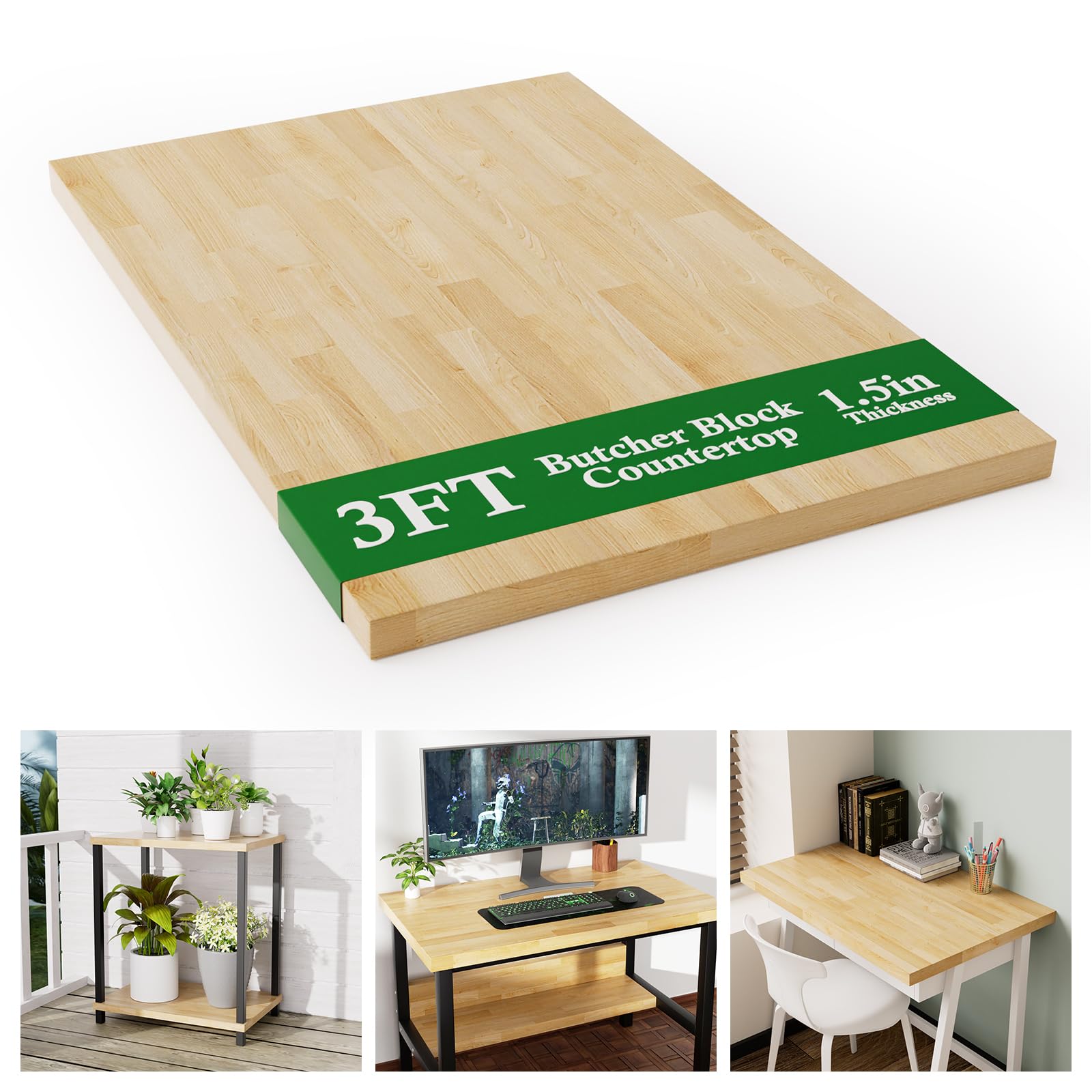
PLAMMA delivers what many reviewers call “insanely smooth” pre-sanded birch at a price point that undercuts comparable maple options by a clear margin. The 36-by-25-inch slab weighs 34 pounds and comes with no chemical smell — just a faint, pleasant birch scent. Because the block is unfinished, you have complete freedom to stain, oil, or paint it to match your existing cabinetry or furniture.
The tight grain of birch resists moisture intrusion better than oak or ash, making this a strong candidate for a kitchen island that sees daily meal prep. Multiple users noted that the surface took oil evenly on the first coat, with no blotchy spots — a sign that the sanding was done to a consistent grit across the entire slab. The factory packaging uses multiple layers of heavy-duty cardboard and foam, which kept the block flat and damage-free during transit.
If you’re comfortable spending an afternoon applying your own finish, this PLAMMA block gives you premium-grade wood at a mid-range investment. The main trade-off is time: you’ll need to sand lightly (320-grit), apply at least three coats of mineral oil or a hard wax oil blend, and let each coat cure before using the surface for food prep.
Why it’s great
- Exceptionally smooth pre-sanded surface straight out of the box
- Light birch scent with zero chemical odor
- Full customization freedom for stain or paint
Good to know
- Requires complete finishing process before food use
- Not pre-drilled for mounting hardware
3. FLEXISPOT Acacia Solid Wood Desktop 60×30
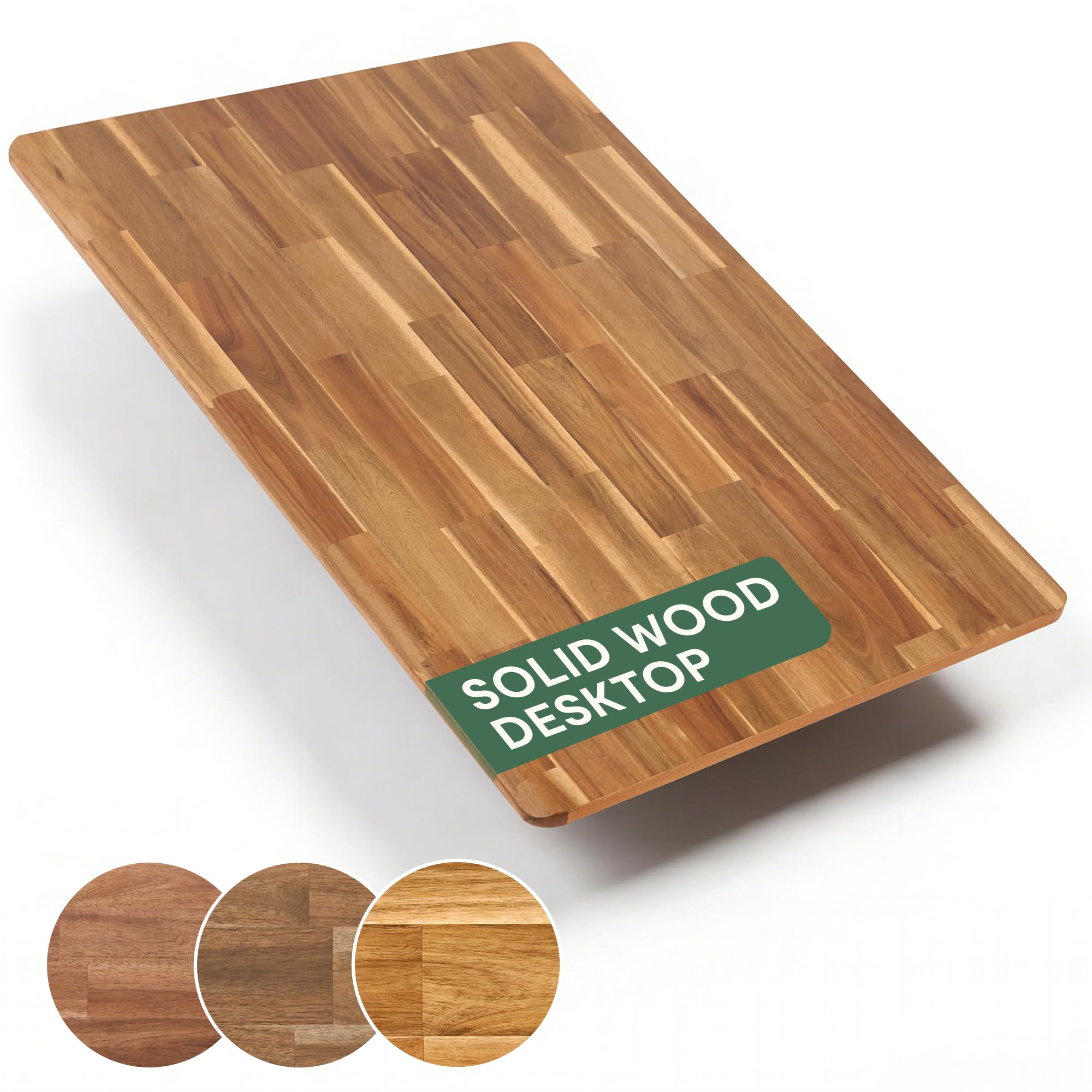
FLEXISPOT deviates from the standard butcher block mold by crafting this top from a single slab of solid acacia rather than glued edge-grain strips. The result is a dramatic, uninterrupted grain pattern that no two units will replicate exactly. The beveled front edge reduces wrist pressure during typing, making this a purpose-built desktop for sit-stand workstations rather than a heavy chopping surface.
Acacia’s Janka hardness hovers between 1700 and 2300 lbf, which is significantly harder than maple or birch. That density means the board resists denting from dropped monitors or keyboard trays, but it also means the wood is more prone to cracks if the moisture content isn’t controlled during manufacturing. FLEXISPOT specifies controlled moisture treatment, and the majority of reviews confirm stable performance without warping over the first several months of use.
The 60×30-inch surface comfortably fits a dual-monitor arm setup plus a laptop stand without feeling cramped. If you need a butcher block top specifically for a sit-stand desk frame and you want the visual drama of solid acacia rather than uniform strips, this is your best match. Just be aware that the natural color tends toward a reddish-cherry tone rather than the walnut-brown shown in some product photos.
Why it’s great
- Single-slab construction shows unique full-width grain
- Beveled front edge improves ergonomic comfort
- Very high density resists dents and scratches
Good to know
- Color is noticeably redder than marketing images suggest
- Open grain pattern requires thorough sealing for moisture resistance
4. John Boos Maple Top Work Table with Adjustable Shelf
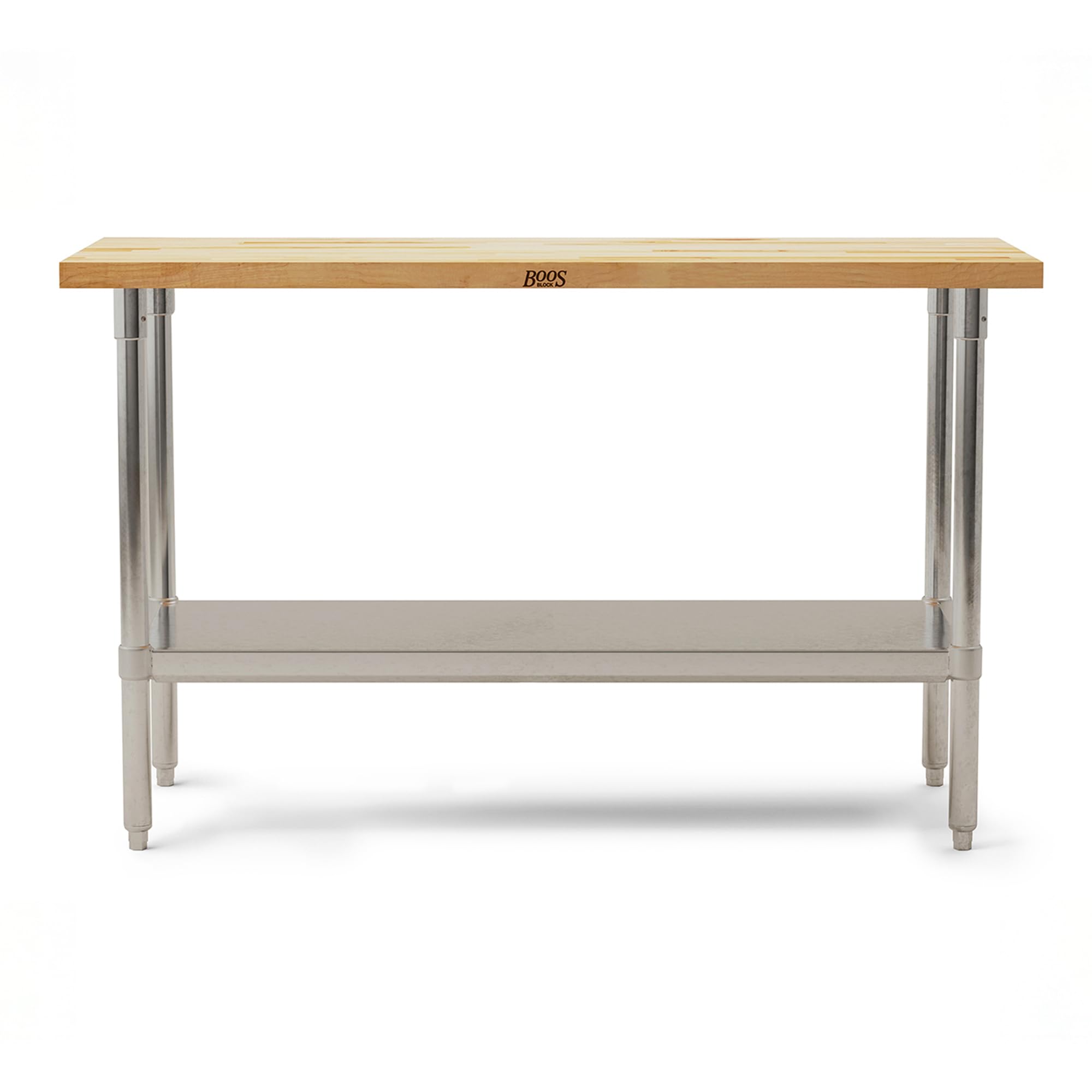
John Boos is the benchmark that most other butcher block manufacturers measure themselves against. This work table combines a 1.5-inch thick edge-grain maple top with a galvanized steel undershelf and adjustable bullet feet, creating a freestanding workstation rated for commercial use. The maple top comes factory-finished with Boos’ proprietary penetrating oil, which saturates deep into the wood and forms a moisture-resistant barrier that can be refreshed annually.
At 125 pounds total weight, this is not a portable piece — it’s designed to stay put in a professional kitchen or serious home cooking space. The 60×30-inch surface provides generous room for rolling dough, staging multiple sheet pans, or using a stand mixer without the unit walking across the counter. The adjustable shelf underneath holds heavy equipment like a countertop oven or large mixing bowls without sagging.
The assembly requires roughly 90 minutes and includes all necessary hardware, though you should plan to use the Boos Block Mystery Oil (sold separately) for the first deep conditioning. If you need the highest durability certification (NSF) and a complete table system rather than just a slab, this is the definitive choice.
Why it’s great
- NSF approved for commercial food preparation
- Complete work table with adjustable steel shelf
- Factory oil finish penetrates deep for lasting protection
Good to know
- Requires two people for assembly and positioning
- Undershelf is galvanized steel, not stainless
5. Howizz 72″ Acacia Butcher Block Countertop

For projects that demand both length and width, the Howizz 72×36-inch slab offers the largest uninterrupted work surface in this lineup. The acacia construction brings extreme hardness and a dramatic grain variation that ranges from golden brown to deep amber streaks, giving each slab a one-of-a-kind appearance. The block ships unfinished and pre-sanded to 150-grit, ready for your choice of oil, stain, or polyurethane.
At 74 pounds and 36 inches wide, this block functions best as a full-size kitchen island top, a sprawling workbench, or a custom dining table. The finger-jointed construction uses smaller acacia strips glued together, which is standard for blocks this wide to prevent the natural movement of a single slab from causing warps. Several reviewers reported successful installation in Caribbean and coastal environments where humidity typically wrecks thinner boards, noting that thorough oiling kept the surface flat.
The main practical concern is the weight and size of the packaging — you will need two people to maneuver the box from the delivery truck to your workspace. The finger joints are visible on close inspection, so if you want a seamless mono-surface look, consider the FLEXISPOT single-slab acacia instead. For raw surface area at a reasonable per-square-foot cost, this Howizz slab is unmatched.
Why it’s great
- Beefy 36-inch width provides massive workspace
- Acacia hardness resists cuts and impacts exceptionally well
- Multi-layer packaging prevents shipping damage on large slabs
Good to know
- Finger joints are visible and may require filler for a seamless look
- Very heavy — mandatory two-person handling
6. Bme Hevea Solid Wood Butcher Block 4ft Unfinished

Hevea brasiliensis — rubberwood — is a sustainable hardwood that punches above its weight class when it comes to stability. The Bme block measures 48 by 30 inches with a full 1.5-inch thickness and is rated to support up to 500 pounds, making it one of the strongest slabs in this list relative to its footprint. The wood’s naturally straight grain and uniform light color accept stain evenly, which is why multiple reviewers chose to finish it in a dark oak or walnut tone that looks unmistakably premium.
The unfinished surface arrives pre-sanded but not fully sealed, so you should budget an afternoon for sanding with 220-grit, then applying a food-grade oil or polyurethane topcoat. The weight of 52 pounds means it will stay put on a desk frame or cabinet base without shifting, and the 30-inch depth is generous enough for a keyboard, monitor, and writing space on a single plane. One reviewer used it as a baking station counter, direct-installed over existing cabinets with small metal brackets, and reported zero flex or sag.
Compared to the PLAMMA birch block at a similar price point, the Bme hevea offers a wider 30-inch depth and a higher weight rating, but the wood is slightly softer on the Janka scale. If your project involves heavy appliances or you need the extra 5 inches of depth for a deeper island, this is the smarter buy.
Why it’s great
- 500-pound load rating handles heavy equipment
- 30-inch depth fits deeper islands and desks
- Straight grain accepts stain uniformly without blotching
Good to know
- Requires finishing before use as a food surface
- Hevea is slightly softer than maple or acacia
7. RKVPCNE Birch Butcher Block 3ft
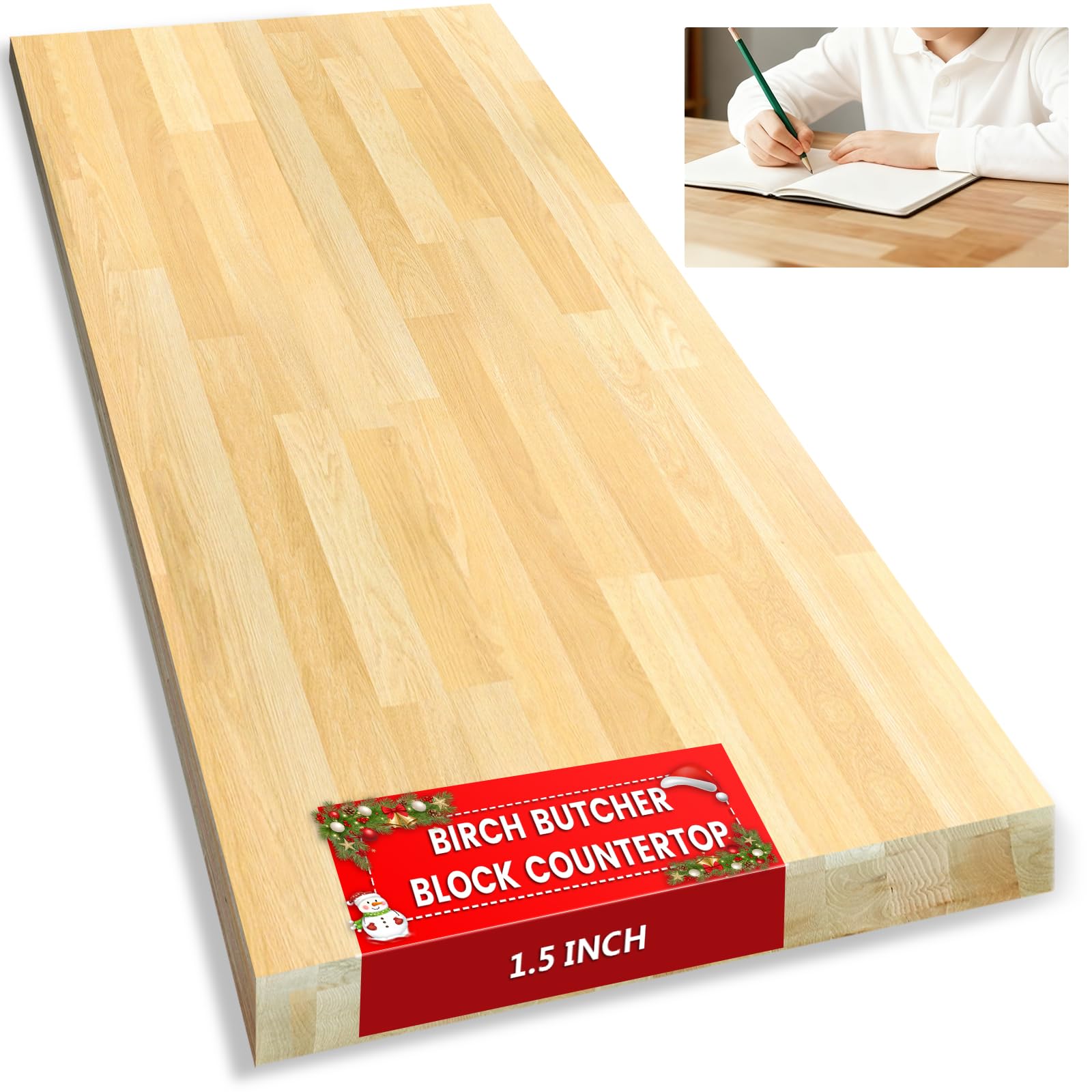
The RKVPCNE birch block offers the same closed-grain advantages as the PLAMMA birch at a slightly higher list price, but with a scratch-resistant surface that reviewers consistently praised after applying their own polyurethane finish. The 36-by-25-inch slab arrives unfinished with the edges and faces sanded smooth, though some buyers noted a need for light touch-up sanding on the corners before applying their chosen sealant.
Multiple verified purchasers used this block as a laundry room countertop between washer and dryer, applying multiple coats of water-based polycrylic for moisture protection. The 1.5-inch thickness held steady without warping despite direct exposure to steam and occasional splashes. The block is also lightweight enough (under 30 pounds per the weight data) that one person can carry it to the installation site without assistance.
The main difference between this and the PLAMMA birch is the packaging and the amount of prep work required out of the box. Several reviewers mentioned needing to spend extra time sanding edges that had minor tool marks. If you want a birch block and you have the patience to put in an extra 30 minutes of detail sanding, this is a reliable, budget-friendly work surface.
Why it’s great
- Scratch-resistant surface after sealing
- Lighter weight makes solo handling and installation easier
- Closed-grain birch resists moisture well
Good to know
- Edges may require additional sanding before finishing
- Unfinished — no food-safe protection out of the box
8. PLAMMA 6ft Solid Birch Butcher Block (Unfinished)
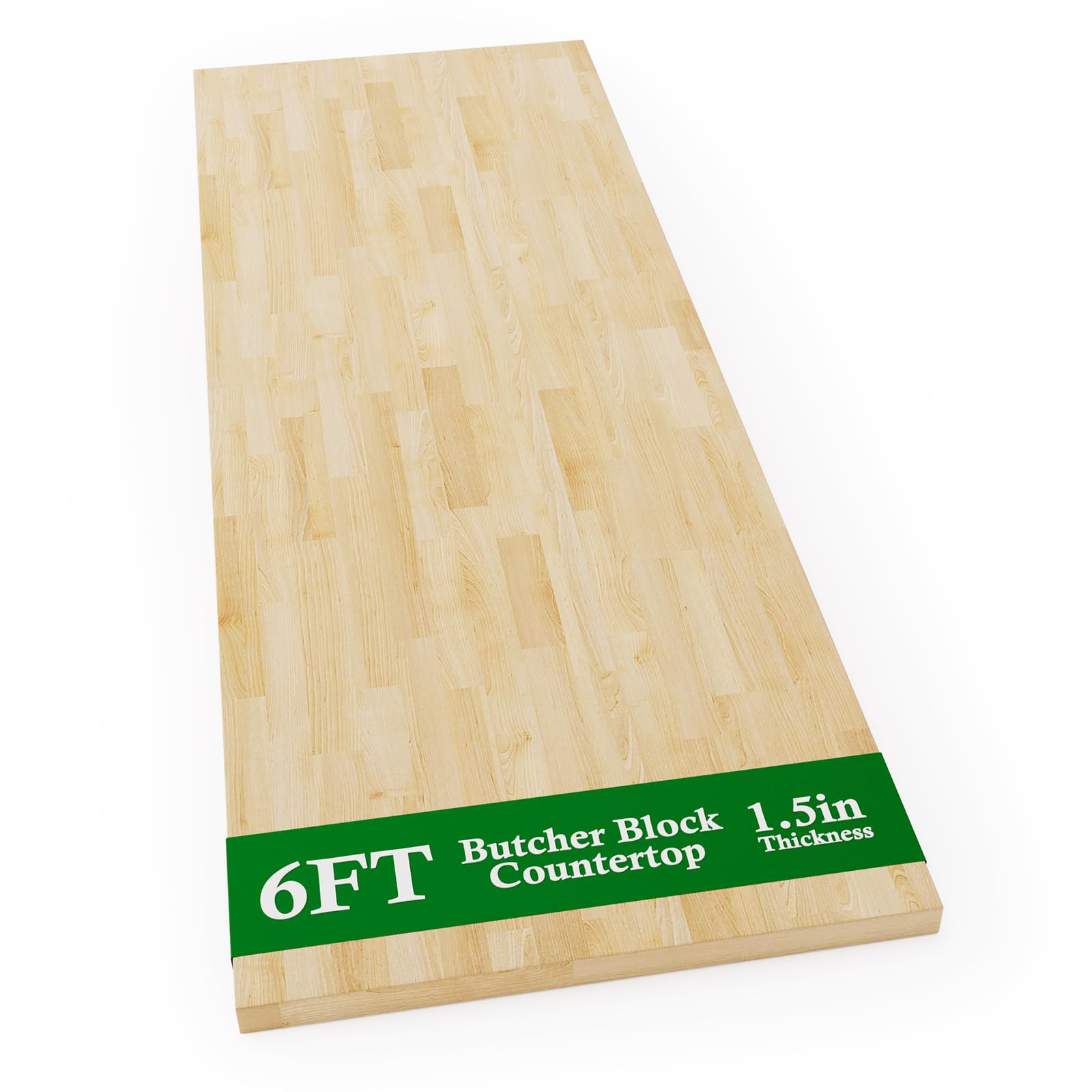
This is the longer sibling of the 3ft PLAMMA birch block, extending the same closed-grain birch construction to a full 72-inch span. The 1.5-inch thickness and 25-inch width mirror the shorter version, so if you need a continuous surface across a long stretch of cabinets or a large island, this eliminates the need for a visible seam between two shorter boards.
The same “insanely smooth” pre-sanded finish carries over from the 3-foot model, with reviewers noting that the longer slab required no additional sanding before oiling. At 64 pounds, this is a two-person lift for installation, though the weight ensures the block stays perfectly flat without bowing in the middle. The unfinished surface accepts stain evenly, and multiple users reported using a simple oil-and-wax combination that left the wood feeling like silk after curing.
If your project calls for a 6-foot continuous butcher block countertop and you don’t want to pay for pre-finished maple, this PLAMMA birch is the obvious pick. The total finishing time will be roughly two hours longer than a shorter block simply because of the surface area, but the raw material quality is consistent end to end.
Why it’s great
- Continuous 72-inch length eliminates seam gaps
- Same ultra-smooth pre-sanded surface as the shorter version
- Heavy enough to remain flat without center support sag
Good to know
- Requires two people to carry and position safely
- Unfinished — full sealing process required before use
9. JubiNatural 48″ Beech Butcher Block Countertop
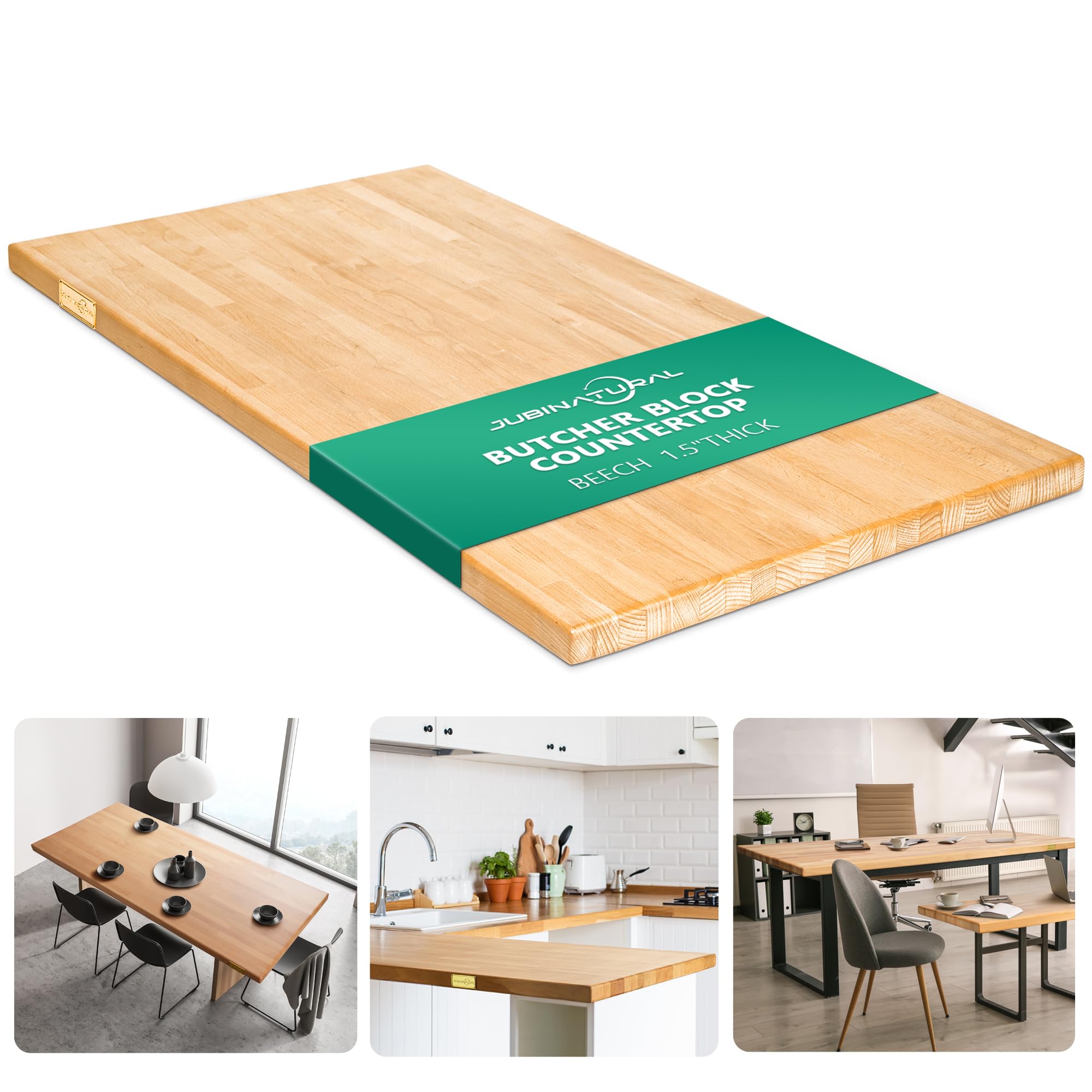
Beech hardwood occupies a useful middle ground in the Janka hardness scale — harder than birch and hevea, slightly softer than maple, but with a more prominent grain pattern that takes stain beautifully. The JubiNatural 48-inch block arrives with a carefully pre-sanded surface that multiple reviewers described as “ready to finish” with no rough spots or glue residue. The recommended uses listed by the manufacturer include desk, kitchen island, and laundry room, confirming its versatility across different room types.
Buyers consistently noted that the packaging was robust enough to prevent damage during shipping, with zero reports of cracked corners or warped edges. The 1.5-inch thickness provides enough material for a solid counter feel without being excessively heavy — one reviewer easily installed it as a drop-in dishwasher surround by cutting it down with a circular saw. The beech wood’s light caramel color provides a warm base that darkens beautifully with oil or amber-toned stains.
If you need a 4-foot butcher block and beech is your preferred species for its combination of hardness and visual warmth, this JubiNatural block delivers a cleanly made product that requires only oiling before it’s ready to serve as a prep surface or desk top.
Why it’s great
- Beech offers better hardness than birch at a similar price point
- Pre-sanded surface requires no additional sanding before finishing
- Perfect 48-inch length for compact island setups
Good to know
- Beech grain is more pronounced than maple or birch
- Unfinished — must be sealed before food contact
FAQ
Can I use a polyurethane-finished butcher block for cutting food?
How often should I re-oil my butcher block countertop?
What’s the difference between edge-grain and end-grain butcher blocks?
Can I cut a butcher block to a custom size at home?
Why does my butcher block have small cracks near the seams?
Final Thoughts: The Verdict
For most users, the best butcher block winner is the CONSDAN 36″ Hard Maple because it arrives pre-finished with food-safe oil, uses USA-grown maple with a proven Janka hardness rating, and requires zero extra effort before food prep. If you want to save money and don’t mind spending a weekend staining, grab the PLAMMA 3ft Solid Birch — its closed-grain birch takes finish beautifully and undercuts the maple options by a clear margin. And for a complete commercial-grade worktable that includes a steel shelf, nothing beats the John Boos Maple Top Work Table.

Mo Maruf
I created WellFizz to bridge the gap between vague wellness advice and actionable solutions. My mission is simple: to decode the research and give you practical tools you can actually use.
Beyond the data, I am a passionate traveler. I believe that stepping away from the screen to explore new environments is essential for mental clarity and physical vitality.