Our readers keep the lights on and my smoothie glass nicely filled. As an Amazon Associate, I earn from qualifying purchases.
The step from a manual hand-crank roller to an automatic pasta maker isn’t just about saving your wrists — it changes the entire texture of the dough. A motor pulls the sheet at a consistent speed, preventing the uneven stretching that happens when you slow down or speed up by hand. You get a more uniform gluten network, which translates to noodles that hold sauce differently. That consistency is the real upgrade, not just the convenience.
I’m Mohammad Maruf — the founder and writer behind WellFizz. I’ve spent years analyzing kitchen appliance hardware, from motor torque curves to food-grade metallurgy, so I know exactly which specs separate a machine that lasts a decade from one that stalls after a dozen uses.
Whether you’re a weekend pasta enthusiast or looking to batch-make noodles for the week, finding a reliable machine is the key to unlocking restaurant-quality results at home. This guide breaks down the top contenders for the best automatic pasta maker across every budget and use case.
How To Choose The Best Automatic Pasta Maker
An automatic pasta maker is a multi-year kitchen investment, so understanding a few core specs upfront will save you from ending up with a machine that overheats, jams, or struggles with stiff dough. Focus on these three areas before clicking buy.
Motor Power and Duty Cycle
Wattage isn’t just about speed — it tells you how well the machine handles dense doughs like whole wheat or spelt without stalling. A 135W motor is sufficient for standard all-purpose flour batches, while 300W motors like the Lello unit can power through a full extrusion cycle with minimal strain. Also check for thermal protection: motors that overheat and shut down after 20 minutes are frustrating if you plan on making multiple batches back-to-back.
Roller vs. Extrusion Design
There are two main architectures in automatic pasta makers. Roller-and-cutter machines (like the GVODE or the KitchenAid attachments) produce flat sheets that you cut into fettuccine, spaghetti, or lasagna. Extrusion presses (like the KitchenAid Gourmet Pasta Press or the Lello PastaMaster) push dough through a die to create shapes like rigatoni, macaroni, or fusilli. Your choice depends on whether you primarily want long noodles or tubular pasta shapes.
Build Materials and Cleanup
Look for 304 or 430 food-grade stainless steel for components that contact dough. Machines with anodized aluminum or chrome-steel rollers are lighter but may not resist acidic doughs as well over time. Cleaning is the most underrated pain point: machines with a removable cover or a dedicated cleaning brush make post-cooking maintenance significantly faster. Units that are dishwasher-safe simplify cleanup further, but always verify which parts are actually safe for the dishwasher.
Quick Comparison
On smaller screens, swipe sideways to see the full table.
| Model | Category | Best For | Key Spec | Amazon |
|---|---|---|---|---|
| Lello 2730 3000 PastaMaster | Press | Full-cycle extrusion | 300W motor, 8 pasta discs | Amazon |
| KitchenAid Ksmpexta Gourmet Pasta Press | Press | Six shaped pasta discs | 6 quick-change shaping dies | Amazon |
| KitchenAid 3-in-1 Pasta Attachment | Roller | All-in-one sheet/cut | 8 thickness settings, 5″ sheets | Amazon |
| Luzrise Electric Pasta Maker 4-Blade | Roller | Multiple noodle widths | 4 blades, 9 thickness adjustments | Amazon |
| MARCATO Pastadrive 110W | Add-on | Motorizing existing Atlas | 110W motor, chrome steel build | Amazon |
| NEWTRY Electric Pasta Maker 3-Blade | Roller | Dumpling skins + noodles | 3 blade types, 1-4mm thickness | Amazon |
| Newhai Electric Pasta Maker 2-Blade | Roller | Basic home pasta rolls | 2 blades, 11 lb/h output | Amazon |
| WICHEMI Electric Pasta Maker 3-Blade | Roller | High-speed batch production | 22 lb/h, 3 shaped noodles | Amazon |
| GVODE Electric Pasta Maker | Roller | Entry-level motorized roller | 700W max motor, 8 thickness settings | Amazon |
In‑Depth Reviews
1. Lello 2730 3000 PastaMaster Automatic Pasta Maker

The Lello PastaMaster is the only machine on this list that handles the entire pasta-making cycle — mixing, kneading, and extruding — in a single unit. Its 300-watt motor is substantially more powerful than typical roller machines, allowing it to push stiff dough through dies for spaghetti, fettuccine, penne, and conchigliette without laboring. The machine produces about 3 pounds of pasta in roughly 20 minutes, which is fast enough for a family dinner or weekly meal prep.
Build quality is robust, with a metal housing and stainless steel components that feel solid on the countertop. The safety interlock requiring the mixing bowl and cover to be properly seated before operation is a thoughtful touch, especially in households with curious kids. The included recipe book with 38 recipes helps beginners get started immediately without guesswork on hydration ratios.
The main trade-off is noise level — several users describe it as sounding like a rock crusher during the extrusion phase. It’s also heavier at 21 pounds and takes up more counter space than a roller-and-cutter unit. Customer support from Lello is notably responsive, with quick replacements for cracked components reported by multiple long-term users.
Why it’s great
- Full-cycle automation from mixing to extrusion
- 300W motor handles dense whole wheat doughs easily
- Includes 8 different shape discs for variety
- Excellent manufacturer support and replacement parts
Good to know
- Very loud during operation
- Heavy at 21 pounds; not portable
- Steep learning curve for dough hydration beginners
- Extrusion can slow down if dough is too dry
2. KitchenAid Ksmpexta Gourmet Pasta Press Attachment

This press attachment transforms any household KitchenAid stand mixer into a dedicated pasta extrusion station. The six interchangeable discs cover the most popular shapes: spaghetti, bucatini, rigatoni, fusilli, and two sizes of macaroni. That range of tubular and twisted pasta is something roller-and-cutter machines simply cannot produce, making this the right choice if you want more than flat noodles.
The auger-driven design pushes dough through the die at a steady rate, and the built-in wire cutter lets you control noodle length precisely. The storage case keeps all parts organized, and the stainless steel cleaning tool is effective at pushing residue out of the dies after use. Dough consistency is critical here — a hydration level around 30-35% works best to avoid jams or gummy output.
Cleanup is the biggest friction point. Dough trapped inside the narrow dies must be picked out manually or with the included tool; letting it dry makes this significantly harder. The attachment is also limited to KitchenAid owners, so it’s not a standalone solution. For households that already own a mixer and want shaped pasta, this is a space-efficient upgrade.
Why it’s great
- Produce tubular pasta shapes not possible with rollers
- Compact storage case keeps everything organized
- Compatible with all household KitchenAid stand mixers
- Built-in wire cutter for adjustable noodle length
Good to know
- Requires a KitchenAid stand mixer to function
- Cleaning the dies is time-consuming
- Dough hydration must be precise to avoid jams
- Learning curve for gluten-free or alternate flours
3. KitchenAid 3-in-1 Pasta Attachment
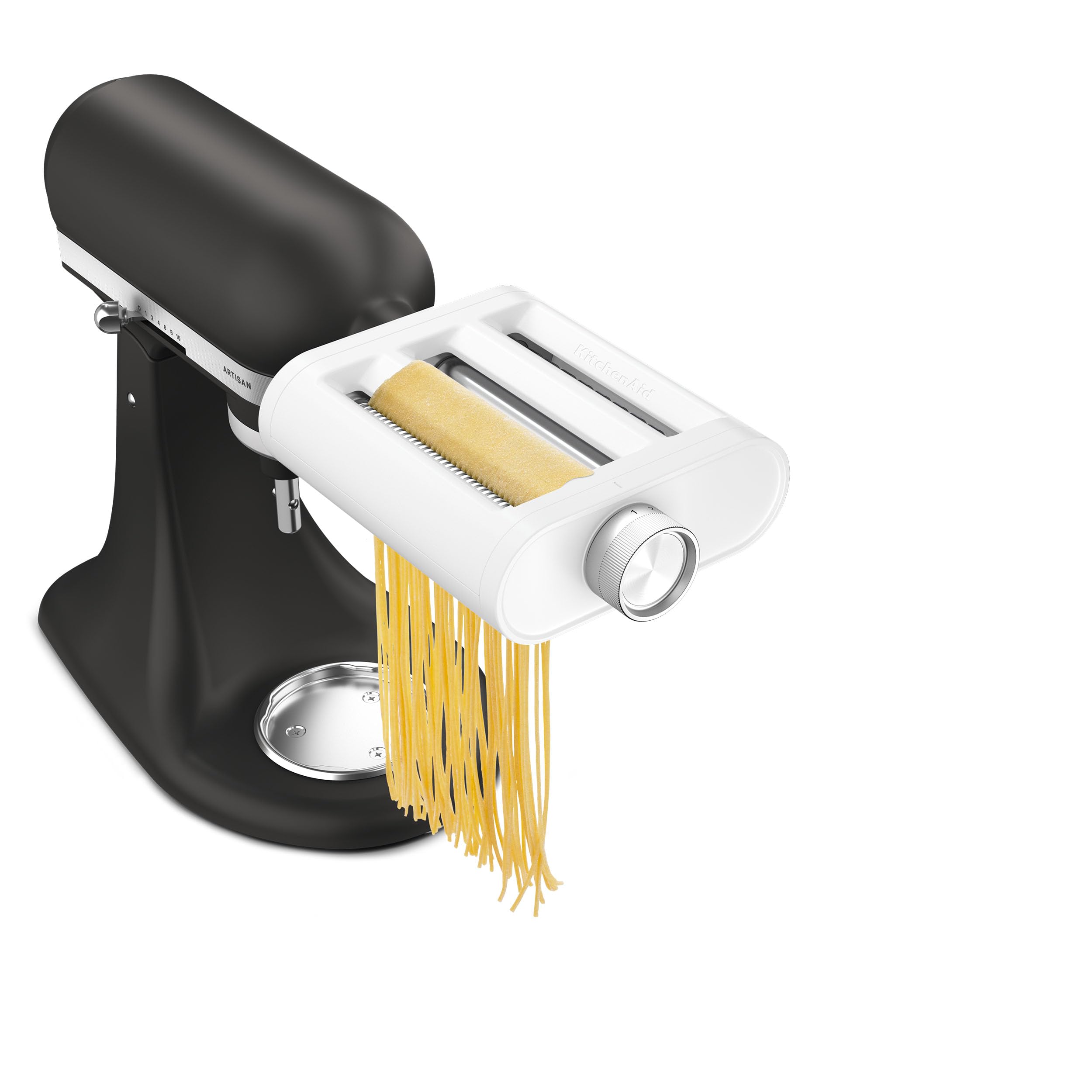
The 3-in-1 attachment solves the biggest annoyance of standalone pasta rollers: the need to swap between roller and cutter attachments mid-process. This unit combines rolling, spaghetti cutting, and fettuccine cutting into a single housing, so you move from dough sheet to finished noodles without changing hardware. The roller produces 5-inch-wide sheets with eight thickness settings, from paper-thin for ravioli to thick for pappardelle-style cuts.
Build quality is typical KitchenAid — the roller and cutters are made from durable materials and feel well-constructed. The removable top cover and included cleaning brush make cleanup more straightforward than dedicated press attachments. Users consistently report that this attachment makes pasta-making feel less intimidating, especially for those who avoided hand-rolling due to the effort.
The limitation is that you’re restricted to flat sheet noodles — no tubular shapes, no fusilli. The vermicelli setting produces a very thin noodle; if you prefer a thicker spaghetti, you’ll need to use the fettuccine cutter or a separate die set. This is a semi-automatic machine (powered by your mixer), so it still requires you to feed the dough and catch the output.
Why it’s great
- All-in-one design eliminates attachment swapping
- Eight thickness settings for diverse applications
- Easy to clean with provided brush and removable cover
- Consistent, even rolling powered by stand mixer
Good to know
- Only makes flat noodles — no tubular pasta
- Requires a KitchenAid stand mixer to operate
- Vermicelli cutter may be too thin for some preferences
- Not fully automatic; manual dough feeding required
4. Luzrise Electric Pasta Maker (4-Blade)

With four blade options (1.5mm, 2.5mm, 4mm, and 9mm) and nine thickness adjustments from 0.5mm to 5mm, this Luzrise unit offers the widest noodle versatility among standalone electric roller machines. The 135W motor is rated for up to one hour of continuous operation — a key detail for batch cooking sessions — and the motor housing includes a dedicated heat dissipation system to prevent overheating.
The build uses 304 stainless steel for the body and blades, with an eco-friendly ABS shield covering the roller to prevent scratches during handling. Anti-slip pads on the base keep the machine stable even when working with stiff dough at the higher thickness settings. Users report excellent results for Asian udon-style noodles, empanada dough, and perogies, not just Italian pasta.
The machine is on the heavier side at roughly 13 pounds, and the 2-year warranty adds peace of mind that cheaper units lack. Some users reported a defective first unit, but the replacement process was fast (within 2 days). For home cooks who want a standalone machine that can produce multiple noodle widths without needing a separate mixer, this is the strongest mid-range option.
Why it’s great
- Four blade widths cover everything from angel hair to wide noodles
- Continuous 1-hour operation without thermal shutdown
- 304 stainless steel construction with protective ABS shield
- 2-year warranty included for peace of mind
Good to know
- Heavier than some roller-only competitors
- Occasional quality control issues on first units
- Dough can bunch up inside if not properly hydrated
- Non-standard blade sizes may be hard to source separately
5. MARCATO Made in Italy Pastadrive 110W

If you already own a Marcato Atlas 150 or Ampia manual pasta machine, this motor attachment is the most elegant way to upgrade without replacing your entire setup. The 110W motor attaches to the side of your existing manual roller and drives the rollers at a consistent speed, freeing both hands for dough management. The chrome steel construction matches the aesthetic of the original machine.
The motor provides smooth, even torque through the rolling process, which eliminates the uneven sheet thickness that can happen when hand-cranking. Users frequently mention that this attachment makes pasta-making enjoyable rather than tiresome, especially for long lasagna sheets that require multiple passes through progressively thinner settings. It’s also compact — the motor unit itself is only about 7 inches tall.
The motor attaches to the front of the machine, which can slightly obstruct catching the dough sheet as it exits the bottom rollers. This positioning requires a minor adjustment to your workflow. A small number of users reported motor failure after about 6 months, so the warranty terms are worth checking before purchase. Overall, it’s a targeted solution for existing Marcato owners, not a standalone machine.
Why it’s great
- Upgrades existing manual machine without full replacement
- Consistent motor speed prevents uneven dough stretching
- Compact add-on unit with small footprint
- Made and assembled in Italy with chrome steel quality
Good to know
- Only works with Marcato Atlas and Ampia machines
- Motor placement can obstruct dough sheet exit
- Reported reliability issues in a minority of units
- 110W motor less powerful than integrated roller machines
6. NEWTRY Electric Pasta Maker 3-Blade

The NEWTRY unit distinguishes itself with a redesigned knob system that replaces the fragile snap-fit knobs found on earlier models. The twist-adjustment knob controls both the roller thickness and the cutting/pressing mode switch, and it’s noticeably more durable under regular use. The machine offers three blade types — 2.5mm round, 4mm flat, and 9mm wide — covering the most common pasta shapes.
The body is made from 410 stainless steel, which is food-grade and rust-resistant. The pressing rollers produce even dough sheets, and the thickness adjustment range from 1mm to 4mm allows for dumpling wrappers at the thicker settings or delicate pasta at the thinner ones. Users who batch-cook for large families find the 11 lb/h output adequate for weekly meal prep without overwhelming the motor.
Single-speed operation and high speed can make it difficult to guide the dough sheet smoothly, occasionally resulting in accordion-style folds if you’re not actively managing the output. Some units have shown motor heating after 15-20 minutes of continuous use, and there have been reports of failure within the first 6 months — though customer service seems responsive with replacement offers and video troubleshooting.
Why it’s great
- Durable upgraded knob design compared to earlier models
- 410 stainless steel body resists rust and corrosion
- Three blade types for diverse noodle styles
- Customer service provides video support and replacements
Good to know
- Single-speed operation runs fast and requires manual guidance
- Motor can overheat during extended batch use
- Some units have failed within months of purchase
- Not suitable for commercial or extremely heavy use
7. Newhai Electric Pasta Maker 2-Blade
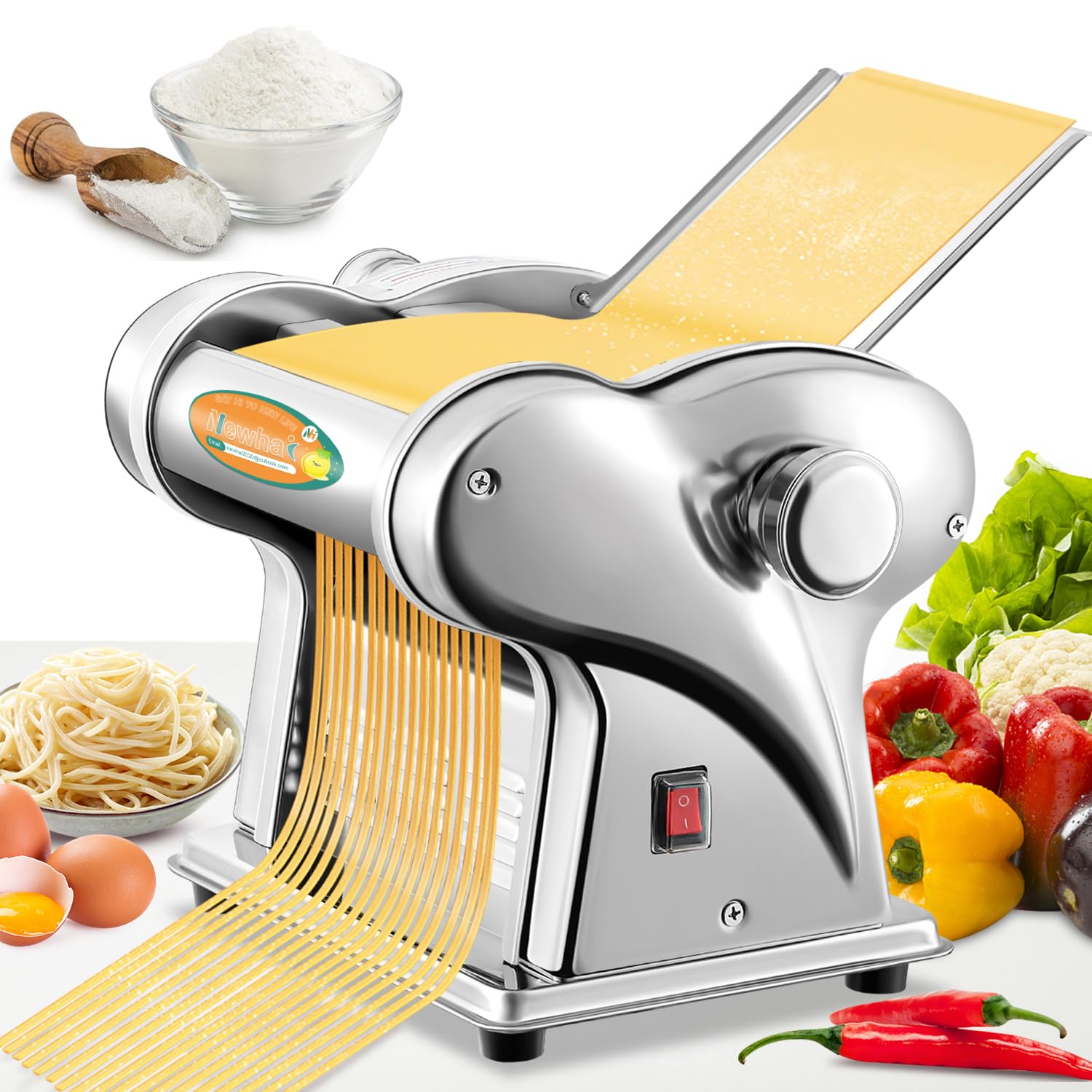
The Newhai machine focuses on quieter operation, with users noting that the 135W motor produces minimal noise during pressing and cutting. This is a meaningful advantage if you frequently make pasta early in the morning or late at night without wanting to disturb the household. The machine offers two blade options: 1.5mm thin round noodles and 4mm flat noodles, plus dough sheet pressing with adjustable thickness from 0.5mm to 3mm across 8 gear settings.
Build quality is respectable, with a 430 stainless steel body and food-grade stainless steel for the roller and blades in contact with food. The rounded corners prevent accidental scratches during handling, and the one-key switch toggles between pressing and cutting functions smoothly. Users report excellent results for large batch cooking — one reviewer processed 50 pounds of egg noodles over two days with consistent output.
The 2-blade limitation means less noodle variety compared to 3- or 4-blade competitors. A significant number of users flagged that the machine’s initial protective oil must be cleaned off thoroughly before first use, and some reported black residue coming off the gears even after multiple passes. The thinnest noodle setting may only produce indents rather than clean cuts, and the machine can overheat with frequent back-to-back use.
Why it’s great
- Quiet motor operation suitable for early/late cooking
- Rounded stainless steel edges for safe handling
- One-key switching between pressing and cutting modes
- Handles large batch volumes reliably
Good to know
- Only 2 blade options limit noodle variety
- Initial protective oil must be cleaned thoroughly
- Some units leave black gear residue on dough
- Motor can overheat during extended continuous use
8. WICHEMI Electric Pasta Maker 3-Blade

The WICHEMI machine boasts the highest throughput in this price segment at 22 pounds per hour, making it an appealing option if you regularly cook for large groups or want to batch-prepare pasta for freezing. It offers three blade types — 2.5mm round noodles, 4mm flat noodles, and 9mm flat noodles — along with the ability to press dough sheets for dumpling or wonton wrappers between 1mm and 3.5mm thickness.
The body is 304 food-grade stainless steel, which should resist rust and wear better than lower-grade alloys over time. At 17.6 pounds, it’s heavy enough to stay planted on the countertop during operation without needing clamping. The 135W motor drives the auger efficiently, and the one-key switch makes swapping between pressing and cutting straightforward. Users with arthritis or hand fatigue find the automatic operation especially liberating.
Several reviews note a concerning issue with gear oil leaking onto the pasta during the first few uses, producing a noticeable mechanical taste. Thoroughly running dough through the machine to absorb the oil is essential before making edible pasta. Some users also report motor heat buildup after 15-20 minutes of continuous operation, raising questions about long-term durability for heavy users.
Why it’s great
- Fast 22 lb/h output for batch cooking
- Three blade types plus dumpling wrapper capability
- 304 stainless steel body resists corrosion
- Heavy base stays stable without clamping
Good to know
- Gear oil residue requires multiple cleaning runs
- Motor heats up during extended sessions
- Manual lacks detailed guidance for beginners
- Fine spaghetti setting produces very thin noodles
9. GVODE Electric Pasta Maker 3-in-1
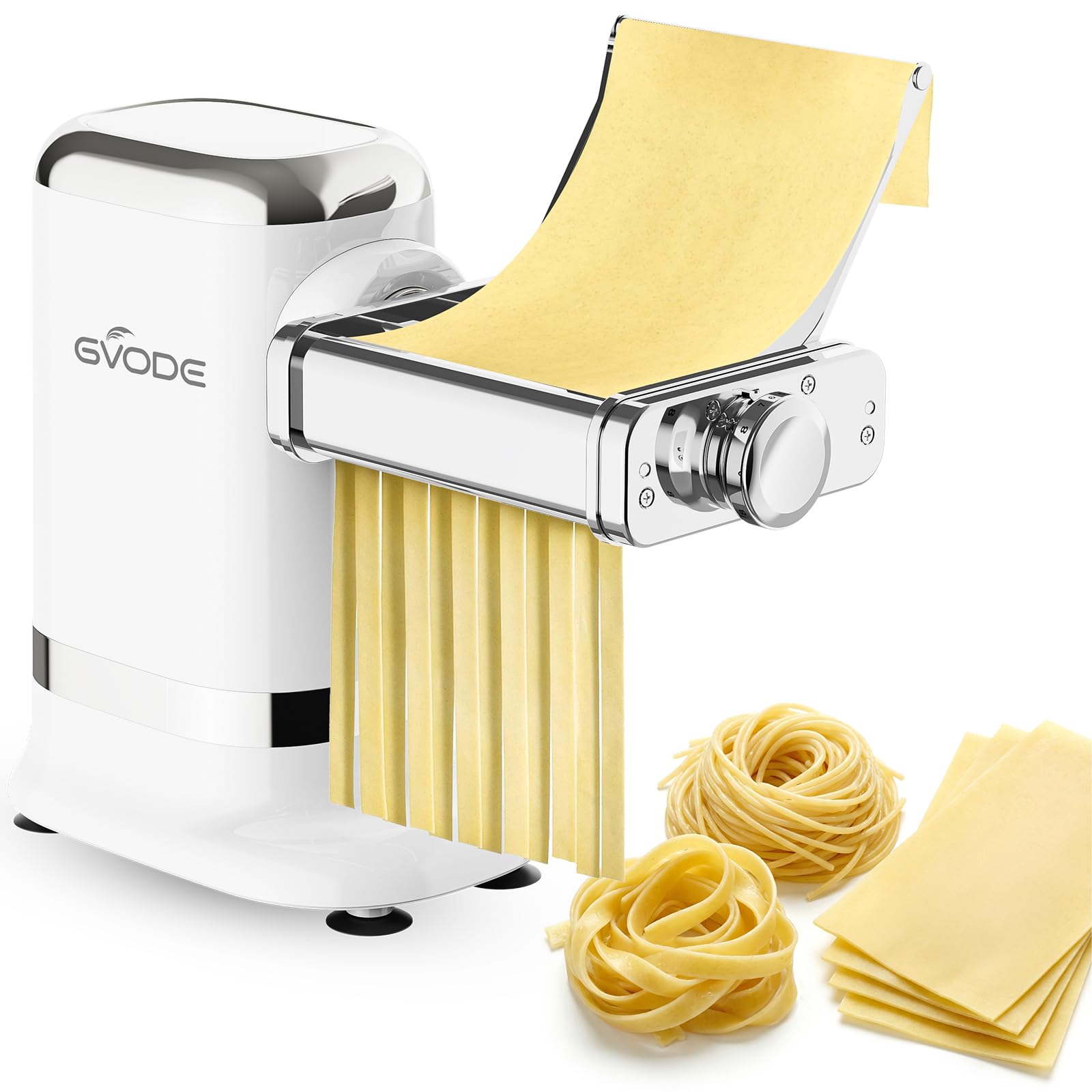
The GVODE machine combines a 700W max motor with a unique design that separates the motor housing from the roller assembly. This separate-type configuration means you don’t need to clamp the unit to a counter or worry about the motor heat transferring to the dough. It offers 8 adjustable thickness settings from 0.4mm to 2mm, plus built-in fettuccine and spaghetti cutters.
The standout feature is the dedicated roller guide that auto-feeds dough into the cutters, reducing the need to manually guide the sheet as it exits the rollers. This is particularly helpful for beginners who struggle with the timing of feeding and catching. Users consistently report that the machine produces perfectly consistent noodle thickness with minimal effort — one user processed 6 batches of fettuccine in under 20 minutes with both hands free.
Tool-free installation makes swapping between roller and cutter attachments quick, and the included cleaning brush simplifies post-use maintenance. The thickness numbering on the knob is reversed (7 to 1 instead of 1 to 7), which causes initial confusion until you adjust. While the motor is powerful, the overall build feels lighter than premium units, and long-term durability is unproven given it’s a newer model on the market.
Why it’s great
- High 700W motor for consistent dough feeding
- Separate roller design prevents motor heat transfer
- Auto-feed roller guide reduces manual input
- Tool-free installation and quick attachment swapping
Good to know
- Thickness knob numbering is reversed from standard
- Lighter build may not feel as durable as premium units
- Only includes fettuccine and spaghetti cutters
- Long-term reliability not yet established
FAQ
Can I use gluten-free flour in an automatic pasta maker?
What dough hydration works best for an electric pasta roller?
How do I clean and maintain the cutting blades on my pasta maker?
What is the difference between a pasta roller and a pasta press?
Final Thoughts: The Verdict
For most users, the best automatic pasta maker winner is the Lello 2730 3000 PastaMaster because its full-cycle automation and 300W motor produce consistent results batch after batch without needing a separate stand mixer. If you want shaped pasta like rigatoni and fusilli from your existing KitchenAid, grab the KitchenAid Gourmet Pasta Press. And for the best value in a standalone roller machine with multiple blade options and a long duty cycle, nothing beats the Luzrise 4-Blade Electric Pasta Maker.

Mo Maruf
I created WellFizz to bridge the gap between vague wellness advice and actionable solutions. My mission is simple: to decode the research and give you practical tools you can actually use.
Beyond the data, I am a passionate traveler. I believe that stepping away from the screen to explore new environments is essential for mental clarity and physical vitality.