Our readers keep the lights on and my smoothie glass nicely filled. As an Amazon Associate, I earn from qualifying purchases.
Sticking a smartphone in someone’s face for family photos gets old, and the compressed, over-processed look from a phone’s tiny sensor isn’t fooling anyone. The real issue is that the budget camera aisle is littered with knockoffs that promise 8K but deliver grainy, useless files. The few worthwhile options—cameras with actual optical zoom, decent sensors, and reliable autofocus—are buried under noise.
I’m Mohammad Maruf — the founder and writer behind WellFizz. I have spent years analyzing the retail camera market, parsing technical specifications, and cross-referencing real user feedback to separate the handful of genuinely capable sub-$200 shooters from the scams.
This guide breaks down the nine models that actually hold their own at this price point, from a Sony superzoom to a 5K camcorder with optical zoom, so you finally know which camera for $200 is worth your cash and which one you should scroll right past.
How To Choose The Best Camera For $200
Buying a camera at this price point requires a strategy. You are either looking for a reliable point-and-shoot with a real optical zoom, or a feature-packed video camcorder that can double as a webcam. The traps are everywhere—fake resolutions, tiny sensors, and autofocus that hunts in anything less than perfect light. Focus on these three pillars to make the right call.
Optical Zoom vs. Digital Zoom
Digital zoom is a marketing trick. It simply crops into the image, reducing resolution and introducing noise. Optical zoom, on the other hand, uses physical lens elements to magnify the subject while preserving every pixel. In the sub-$200 range, a 25x or 35x optical zoom is a massive advantage over a smartphone, giving you clean shots of distant subjects that no phone can match. Always prioritize a camera with a stated optical zoom range; anything claiming high “digital zoom” is a red flag.
Sensor Realism: Megapixels Are Not Resolution
An “88MP” sensor in a camera for this price is almost certainly a software-interpolated number hiding a much smaller, noisier sensor. A genuine 16MP or 20MP sensor on a 1/2.3-inch or larger format will produce sharper, more color-accurate images than a cheap 48MP or 88MP sensor that struggles in low light. Look for the sensor size in inches (1/2.3-inch is standard here) and ignore the inflated megapixel count. A good 16MP image from a Kodak or Sony is far more usable than a noisy 88MP file from a generic brand.
Autofocus and Stabilization
At this price, you will not get professional phase-detect autofocus, but you want a camera that locks on quickly in decent light. Contrast-detection autofocus is common, and it works fine for static subjects. For video, look for electronic image stabilization (EIS) or, in rare cases, a gyroscope-based system. Optical image stabilization (OIS) is a premium feature at this budget, so when you see it on a model like the Kodak AZ255, it’s a strong reason to choose it for handheld shooting.
Quick Comparison
On smaller screens, swipe sideways to see the full table.
| Model | Category | Best For | Key Spec | Amazon |
|---|---|---|---|---|
| Sony Cyber-shot DSC-H300 (Renewed) | Superzoom | Sharp long-range photography | 35x optical zoom, 20.1MP | Amazon |
| Kodak PIXPRO FZ55 Bundle | Point-and-Shoot | Travel and everyday snapshots | 5x optical zoom, 16MP | Amazon |
| Kodak PIXPRO AZ255-BK | Superzoom | Stabilized video and zooms | 25x optical zoom, 16MP, OIS | Amazon |
| Xtra Edge Action Camera | Action Cam | Rugged 4K POV footage | 1/1.3″ sensor, waterproof to 52 ft | Amazon |
| FJFJOPK 5K Video Camera | Camcorder | Vlogging with optical zoom | 8x optical zoom, 5K video | Amazon |
| FlyFrost 8K Video Camera | Camcorder | All-in-one vlogging kit | 18x digital zoom, 88MP stills | Amazon |
| XNSIAKXA 8K Digital Camera | Camcorder | Beginner content creation | 16x digital zoom, 88MP stills | Amazon |
| ANNKE Security Camera System | Surveillance | Home security recording | 4x 1080P cameras, 2TB HDD | Amazon |
| Fujifilm X-S20 | Mirrorless | Professional image quality | 26.1MP sensor, IBIS | Amazon |
In‑Depth Reviews
1. Sony Cyber-shot DSC-H300 (Renewed)

This renewed Sony Cyber-shot is the most optically capable camera you can get for the money. Its 35x optical zoom is a league above anything else on this list—you can fill the frame with a deer at 100 yards or capture a stage performer from the back row. The 20.1MP sensor, while built on older CCD technology, delivers detailed, natural-looking images that hold up well for prints and social media.
The ergonomics are distinctly old-school: a bulky body with a pronounced grip that feels solid, if a bit heavy. It runs on AA batteries, which is a double-edged sword—you can buy alkalines anywhere, but a set dies quickly with heavy use. Optical SteadyShot stabilization helps keep the long end of the zoom usable, though you will still want a tripod for the best results. Sweep Panorama mode is a fun bonus for landscapes.
Buying renewed means you are getting a camera that was built to a higher standard than most new sub-$200 gear. The trade-off is that it lacks modern features like WiFi, 4K video, or a touchscreen. If your priority is still photography with real reach, this is the best tool for the job. Just budget for rechargeable AA batteries.
Why it’s great
- 35x optical zoom is unmatched in this price range.
- Optical SteadyShot reduces blur at full telephoto.
- Solid build quality from a trusted brand.
Good to know
- Runs on AA batteries—invest in rechargeable NiMH cells.
- Only shoots 720p HD video, not 4K.
- No WiFi or touchscreen; limited to basic connectivity.
2. Kodak PIXPRO FZ55 Digital Camera Bundle
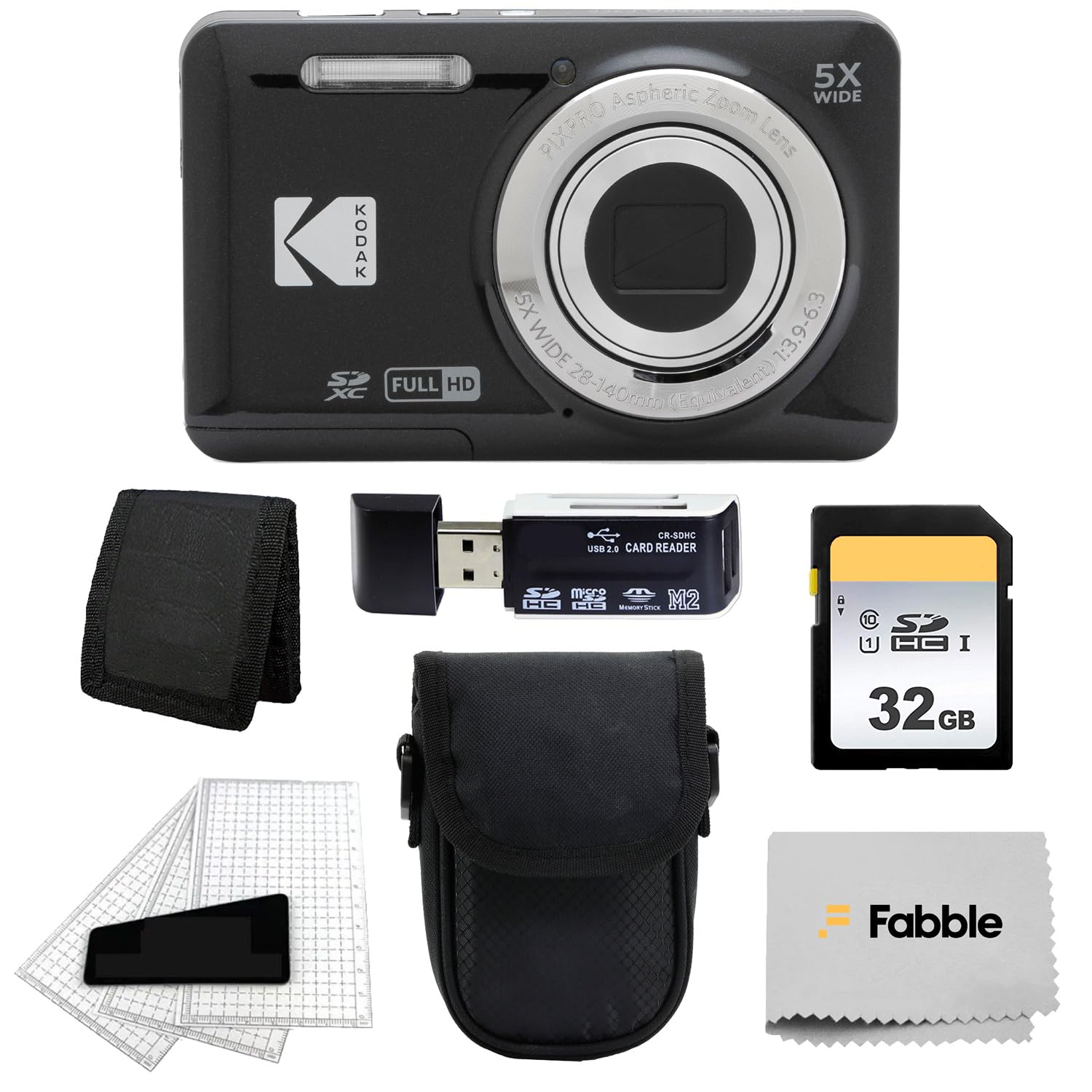
This bundle takes the already solid Kodak FZ55 and adds everything you need to start shooting immediately: a 64GB SD card, a card reader, a protective case, and a memory card wallet. The camera itself is a compact, pocketable point-and-shoot with a 28mm wide-angle lens and a 5x optical zoom. It is the definition of a grab-and-go camera for travel, daily carry, or a first camera for a young photographer.
The 16MP 1/2.3-inch CMOS sensor is modest but honest. It captures clean, colorful images in good light without the exaggerated processing of a phone. Full HD 1080p video at 30fps is adequate for home movies. The 2.7-inch LCD screen is not a touchscreen, but the physical controls are simple enough for anyone to master in minutes. Face and smile detection work reliably for group photos.
The bundle value is real—buying the accessories separately would cost more. However, the camera’s 5x zoom is limited compared to a superzoom, and the lack of any optical image stabilization means you need steady hands for sharp shots at full zoom. If you want the smallest, simplest camera that still takes dedicated photos, this is the safest bet in the budget tier.
Why it’s great
- Complete bundle includes 64GB card, case, and reader.
- Compact and lightweight for pocket carry.
- Very easy to use with reliable face detection.
Good to know
- 5x zoom is modest; need to get closer for distant subjects.
- No optical image stabilization.
- No WiFi; transfer via SD card reader only.
3. Kodak PIXPRO AZ255-BK

The Kodak AZ255 is the sweet spot for someone who wants a long zoom but wants to avoid the bulk of the Sony H300 or the expense of a DSLR. Its 25x optical zoom (24-600mm equivalent) covers everything from wide landscapes to distant wildlife. The standout feature here is optical image stabilization (OIS), which physically steadies the lens—meaning your handheld shots at maximum zoom come out far sharper than they would on a non-stabilized camera.
The 16MP CMOS sensor is paired with a 3-inch LCD screen that works fine for framing, though it can be hard to see in bright sunlight. It runs on four AA batteries, which is a minor annoyance for some, but the camera does include batteries in the box to get you started. Full HD 1080p video is smooth and, thanks to the OIS, watchable without a tripod. The macro mode is surprisingly decent for close-ups of flowers or small objects.
A few quirks: the auto white balance can lean warm indoors, and the contrast-detect autofocus is slow in low light. The user experience is very beginner-friendly, though, with a straightforward menu and a mode dial that clearly labels each scene setting. For the price, you are getting a true superzoom with stabilization that simply outperforms any similarly priced camcorder for still photography.
Why it’s great
- 25x optical zoom with optical image stabilization (OIS).
- Excellent macro mode for close-up detail shots.
- Runs on AA batteries—easy to replace on the go.
Good to know
- AA batteries drain relatively fast with heavy zoom use.
- Autofocus can struggle in dim conditions.
- No built-in WiFi; requires an adapter for phone transfer.
4. Xtra Edge Action Camera
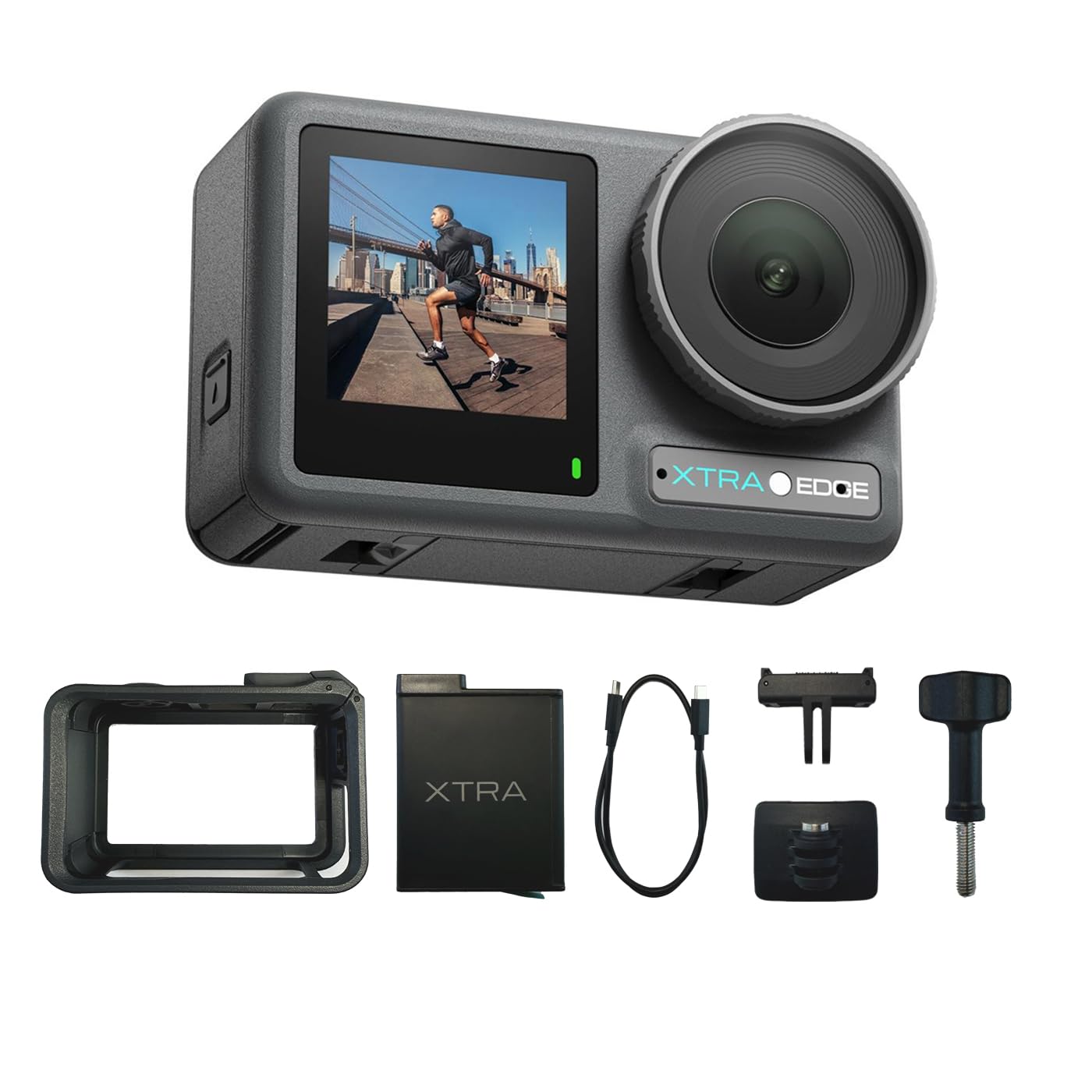
For action-oriented shooters, the Xtra Edge is the best action camera you can land at this budget. Its 1/1.3-inch sensor is genuinely large for the price class, pulling in enough light to produce vibrant 4K footage that holds detail in both bright highlights and shadowed areas. The hyper stabilization is excellent—smooth enough for running, biking, or bumpy car mounts without the jello-effect that plagues cheap action cams.
Waterproofing to 52 feet without an extra housing is a major selling point for snorkeling, surfing, or rainy hikes. The magnetic quick mount makes switching from horizontal to vertical shooting for social media clips effortless. The included bundle comes with a cold-resistant battery and a dual-orientation frame. Battery life ratings of about three hours hold up in real-world use, though recharging is slower than premium models.
There are trade-offs at this price: the touchscreen is responsive but not as bright as a GoPro’s, and low-light video shows more noise than you would get from a flagship action cam. Audio quality is decent for in-camera recording, but wind noise is noticeable without an external mic. For casual vloggers and adventure-seekers who want stabilized 4K without spending three times as much, this camera delivers on every core promise.
Why it’s great
- Large 1/1.3″ sensor for rich, detailed 4K footage.
- Hyper stabilization produces smooth action shots.
- Waterproof to 52 feet without extra housing.
Good to know
- Low-light footage shows visible noise.
- Slow USB charging; plan to charge overnight.
- Microphone picks up wind noise outdoors.
5. FJFJOPK 5K Video Camera
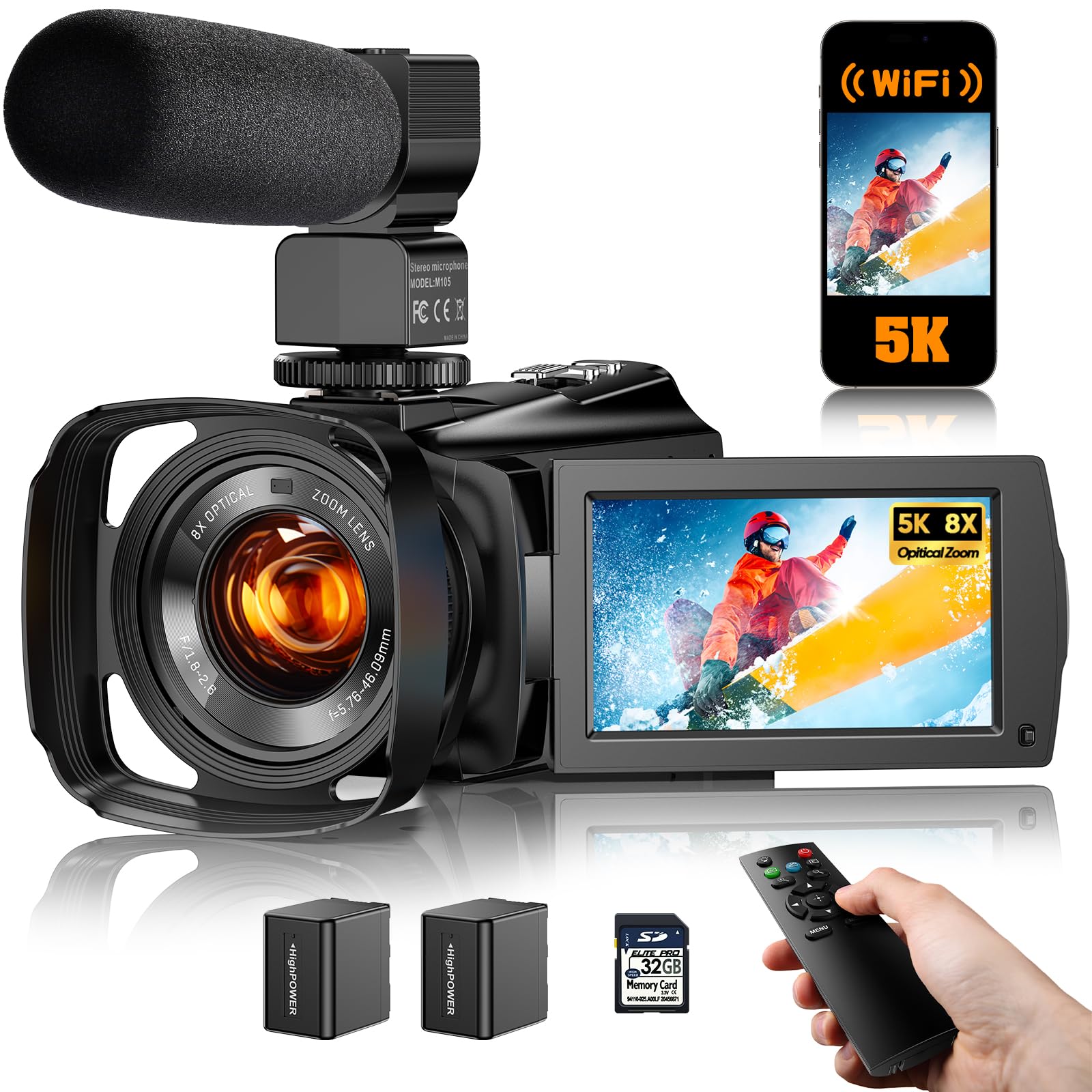
This camcorder carves out a unique niche in the sub-$200 market: true 8x optical zoom paired with a 3.6-inch IPS touchscreen and dual batteries. Where most video cameras in this bracket use digital zoom to inflate their numbers, the FJFJOPK keeps your video crisp as you zoom in, making it genuinely useful for classroom events, concerts, or wildlife observation. The 5K video resolution is an oversampled interpolation of a smaller sensor’s output, but the resulting footage is pleasantly sharp for YouTube and social media.
The inclusion of a TOF laser autofocus assist is rare at this price. It helps the camera lock on quickly in dim scenarios, and the customizable zone autofocus lets you choose manual, single-shot, or continuous AF. Full-color night vision is functional in very dark rooms, though the image becomes grainy at longer distances. WiFi transfer via the “Viipulse” app is fast, and the 32GB card it ships with holds about an hour of 5K footage.
Software issues appear in some units: the touchscreen can be unresponsive to certain inputs, and the remote lacks range. The microphone is adequate for indoor use but picks up handling noise easily. For someone who needs a dedicated video camera with real optical zoom, built-in stabilization, and a complete kit, this is the most versatile option in the list.
Why it’s great
- True 8x optical zoom for sharp, lossless magnification.
- TOF laser assist improves autofocus in low light.
- Comes with two batteries, external mic, and 32GB card.
Good to know
- Touchscreen responsiveness is inconsistent.
- Microphone picks up handling clicks.
- 5K is processed from a smaller sensor, not native.
6. FlyFrost 8K Video Camera
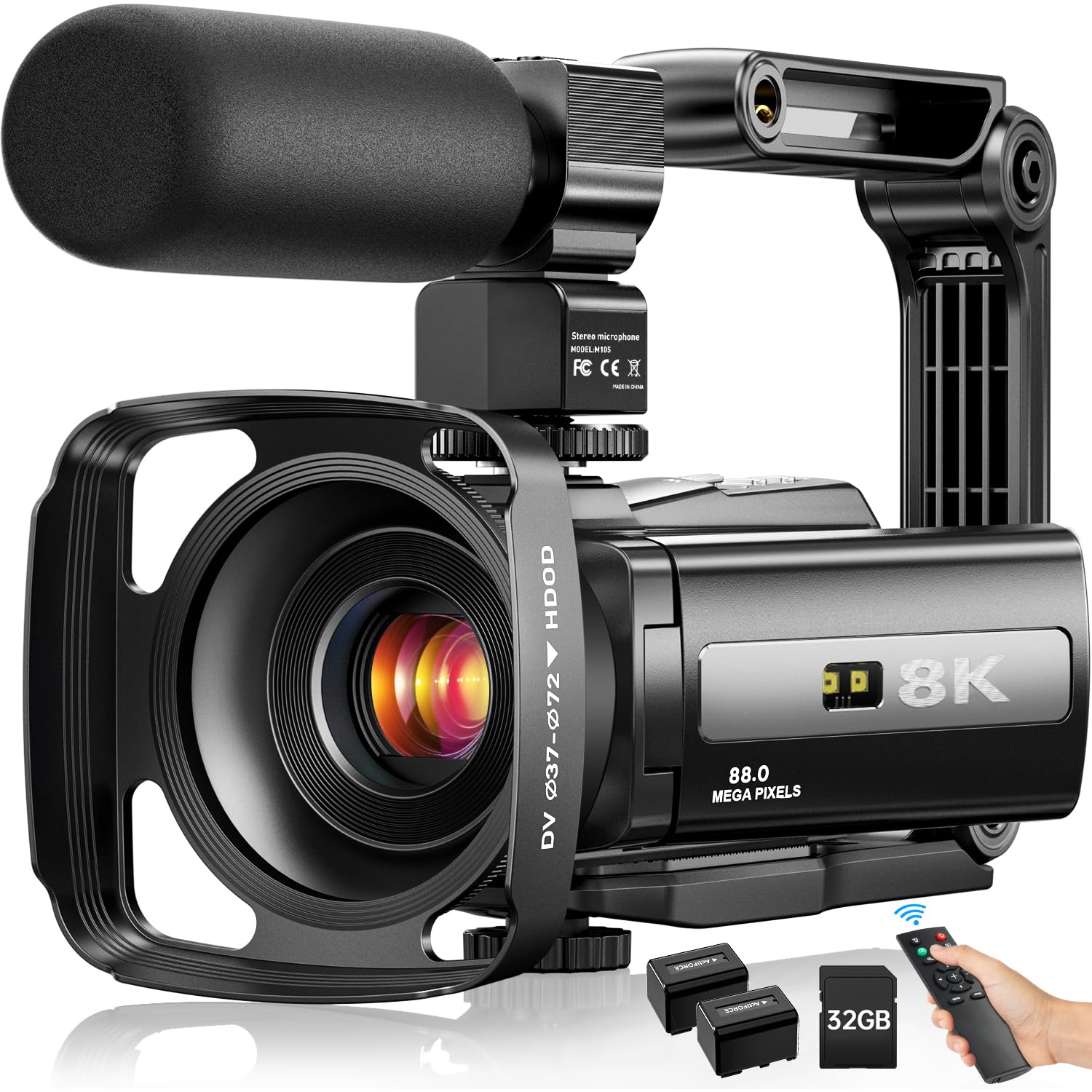
The FlyFrost is structured as a one-box solution for new vloggers. It includes a lens hood, handheld stabilizer, external microphone, two batteries, a remote, a 32GB card, and a carrying case. The value in accessories is undeniable—buying these separately would push the total far higher. The camera itself records at a spec-sheet-impressive 8K resolution and 88MP stills, though both numbers are software-upscaled from a smaller native sensor.
IR night vision is a functional feature for shooting in complete darkness, producing grainy but recognizable black-and-white footage. The 3-inch touchscreen rotates 270 degrees, making selfie-style framing easy. WiFi connectivity works well for quick transfers to a phone. The included handheld stabilizer is a basic frame that steadies handheld pans, adding minimal bulk. Most users report consistent performance without the major quality issues of cheaper no-name brands.
The biggest limitation is the 18x digital zoom—it degrades image quality as you zoom in, especially at high magnification. The fixed-focus lens means you cannot manually pull focus for creative shots. Autofocus is contrast-detection only, and it hunts noticeably in dim conditions. For someone who wants a complete vlogging setup out of the box and values the kit over raw image quality, this is a practical choice.
Why it’s great
- Generous accessory kit: stabilizer, mic, remote, case.
- Rotating touchscreen ideal for self-recording.
- IR night vision works in total darkness.
Good to know
- Digital zoom reduces sharpness significantly.
- Fixed-focus lens; no manual focus control.
- Autofocus hunt in low light can be distracting.
7. XNSIAKXA 8K Digital Camera
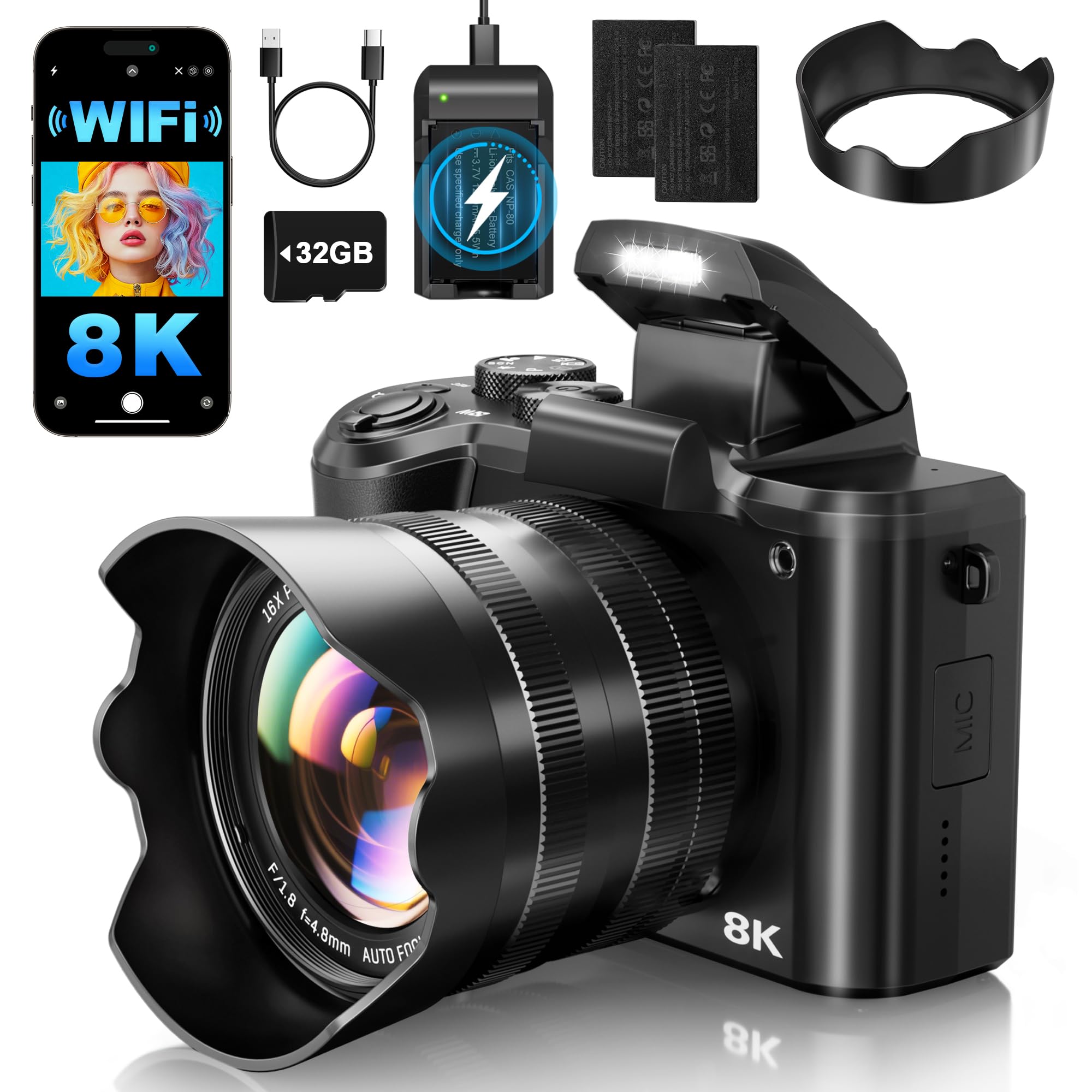
The XNSIAKXA is the most affordable option in this lineup, and it clearly targets the absolute beginner who wants a gadget that looks more serious than a smartphone. The dual-lens design—front and rear—allows for easy selfie shooting, and the 3.2-inch IPS touchscreen is decently responsive for the price. The 360-degree rotary dial for mode switching is a genuinely clever touch that reduces menu-diving.
Image quality is where the budget shows. The “8K” and “88MP” headline figures do not translate to real-world sharpness; photos in good light are acceptable for social media, but indoor and low-light shots are soft and noisy. The 16x digital zoom is essentially unusable past 4x. The included 32GB card and pair of batteries are welcome, but real battery life runs under an hour of continuous use, contradicting the “150 minutes” claim.
Build quality is decent for the cost, and the camera bag is a nice inclusion. WiFi transfer works via the “iSmart DV2” app, though the app interface is clunky. Positive reviews far outnumber negative ones, but the negative reports cite poor autofocus and grainy photos. This camera is best viewed as a toy for a child or an ultra-budget content creator who just needs the look of a camera on a tripod.
Why it’s great
- Lowest entry price in the list.
- Dual front/rear lens for easy vlogging.
- Includes bag, two batteries, and SD card.
Good to know
- 8K/88MP are heavily interpolated—results are soft.
- Digital zoom past 4x is very blurry.
- Battery life is under one hour of real use.
8. ANNKE 2MP Security Camera System
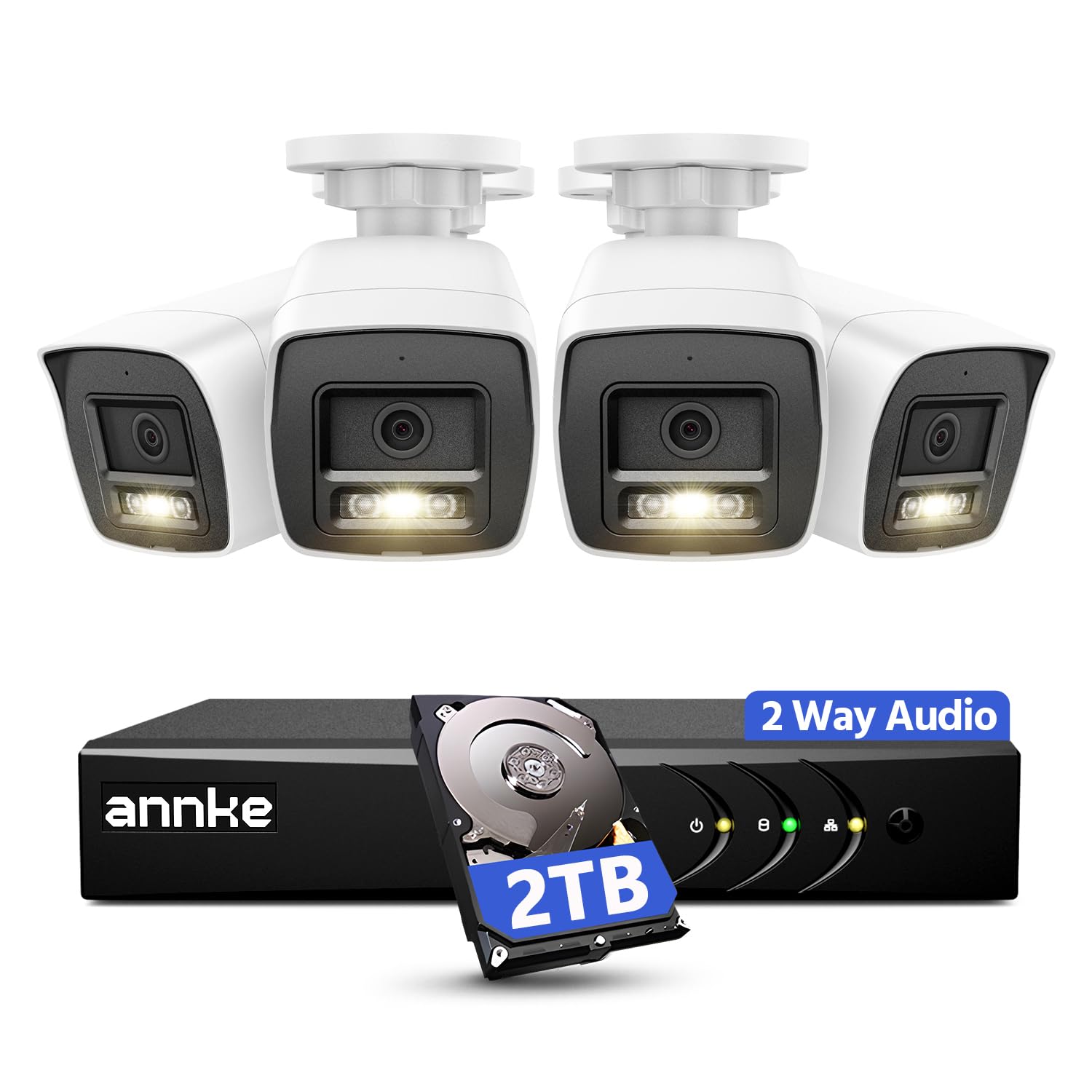
This ANNKE system shifts gears entirely—it is a wired home surveillance kit, not a handheld camera. It includes an 8-channel DVR pre-loaded with a 2TB hard drive and four 2MP (1080P) wired bullet cameras with IP67 weather resistance. The value per camera is exceptional for a complete, expandable system that does not rely on a WiFi network or cloud subscription.
Image quality is crisp for security purposes, with smart color night vision that switches from black-and-white to full color when the built-in white light detects motion. AI motion detection tags human and vehicle events separately, reducing false alerts from animals or leaves. The two-way audio feature lets you speak through the cameras, which is ideal for deterring delivery thieves or talking to someone at the door.
Installation requires running BNC cables, which means drilling and routing through walls or attics—it is not a plug-and-play setup. The DVR’s playback interface is functional but clunky when scrubbing through footage at high speeds. For anyone who values hardwired reliability over wireless convenience, this system outperforms any Ring or Arlo setup in terms of continuous recording and video clarity.
Why it’s great
- Complete 4-camera system with 2TB onboard storage.
- Smart color night vision and AI human/vehicle detection.
- Reliable wired connection—no WiFi dependence.
Good to know
- Requires drilling and running BNC cables for setup.
- Playback scrubbing is slow at speeds above 4x.
- Camera details (faces, license plates) soft at 8x zoom.
9. Fujifilm X-S20 Mirrorless Camera Body

The Fujifilm X-S20 is the outlier on this list—a genuine mirrorless camera that costs significantly more than our title implies. It earns a place because it represents the ceiling of what a camera can deliver when budget is no object, and it shows what the frame you are buying into can become if you ever move up. Its 26.1MP X-Trans CMOS 4 sensor paired with the X-Processor 5 engine produces images that rival professional full-frame bodies, with Fujifilm’s iconic film simulations out of the box.
The in-body image stabilization (IBIS) is rated at seven stops, meaning you can handhold at shutter speeds that would be impossible on any other camera in this article. Autofocus is fast and accurate, with subject detection for animals, birds, cars, and people. The 180-degree vari-angle touchscreen is ideal for vlogging, and the 6.2K 10-bit internal video recording is overkill for most users but provides room to grow.
There are genuine downsides: the battery life is improved but still demands a spare for a full day of shooting, the single SD card slot is limiting for professional workflows, and it has no weather sealing—so you need to be careful in rain or dust. The overheating reports from some users suggest it is not built for extended 4K recording in hot climates. For a photographer ready to invest in a system, however, this body is the gateway to a world of high-quality X-mount lenses and uncompromising image quality.
Why it’s great
- Class-leading image quality and Fujifilm film simulations.
- 7-stop in-body stabilization (IBIS) for ultra-stable handheld shots.
- 6.2K 10-bit video with robust codec support.
Good to know
- Overheating possible during extended 4K recording in heat.
- No weather sealing—avoid heavy rain or dusty environments.
- Single SD card slot limits redundancy for paid work.
FAQ
Can I get a usable 8K video camera for $200?
Why does the Sony H300 use AA batteries instead of a lithium-ion pack?
Is a 16MP or 20MP camera from 2015 still good enough for modern social media?
Final Thoughts: The Verdict
For most users, the camera for $200 winner is the Sony Cyber-shot DSC-H300 (Renewed) because its 35x optical zoom and 20.1MP sensor deliver unmatched reach and detail for still photography at this price. If you want stabilized handheld video and an all-in-one zoom, grab the Kodak PIXPRO AZ255-BK. And for rugged 4K action footage, nothing beats the Xtra Edge Action Camera at this budget.

Mo Maruf
I created WellFizz to bridge the gap between vague wellness advice and actionable solutions. My mission is simple: to decode the research and give you practical tools you can actually use.
Beyond the data, I am a passionate traveler. I believe that stepping away from the screen to explore new environments is essential for mental clarity and physical vitality.