Our readers keep the lights on and my smoothie glass nicely filled. As an Amazon Associate, I earn from qualifying purchases.
Shaving weight from your pack without blowing your gear budget is the central tension of every thru-hike and weekend scramble. The wrong sleeping bag leaves you carrying ounces of dead weight or shivering through a 40°F night, two failures that wreck momentum and morale. A true budget-friendly backpacking sleeping bag must hit a specific trifecta: a packed weight under three pounds, a comfort rating that matches your coldest expected night, and a stuffed size that doesn’t swallow your pack’s entire volume.
I’m Mohammad Maruf — the founder and writer behind WellFizz. I’ve spent five years analyzing the outdoor gear market, cross-referencing fill-power data, denier ratings, and real-world temperature validation to separate marketing claims from trail-ready performance in the sub- sleeping bag segment.
After evaluating dozens of options by weight, insulation type, temperature accuracy, and packed volume, I’ve narrowed the field to the seven most compelling candidates for thrifty backpackers. This guide delivers the actionable framework you need to choose the right best backpacking sleeping bag on a budget for your specific trip style and climate range.
How to choose a budget backpacking sleeping bag
When you’re pinching dollars and ounces, the decisions around insulation type, shape, and temperature rating become critical. A bag that’s two pounds heavier than necessary punishes your legs all day, while one that’s ten degrees too cold punishes your sleep all night. Here’s what to look for in a sub- backpacking bag.
Down vs. Synthetic fill under
Down bags compress smaller and weigh less for the same warmth, which is why they dominate the budget backpacker space. At this price point you’ll typically find 550 to 650 fill-power duck down. The trade-off: down loses its insulating loft when wet, and budget down bags often have lower-quality water-repellent treatments. Synthetic bags like the Cirroloft used in the Kelty Cosmic Synthetic maintain warmth when damp and cost less per gram, but they’re heavier and bulkier — meaning you’ll sacrifice pack space you might need for other gear.
Temperature rating deception
Many budget bags list a single “rating” that is actually the extreme survival limit, not a comfortable sleep temperature. Look for the EN or ISO test standard that provides comfort, limit, and extreme figures. A bag rated to 20°F in the extreme zone might only keep you comfortable down to 35°F. For a budget three-season bag, target a comfort rating of at least 30°F to 35°F if you plan to camp in spring or fall conditions.
Shape: Mummy vs. Envelope
Mummy bags taper at the feet and include a hood that cinches around your face. That shape eliminates dead air space, making them warmer and lighter for a given temperature rating. Envelope or rectangular bags give you room to move but require more fabric and insulation to hold heat — they’re heavier and bulkier for the same warmth. For backpacking, a mummy bag is almost always the better choice unless you sleep exclusively in summer warmth and value spread-eagle comfort over pack weight.
Quick comparison
On smaller screens, swipe sideways to see the full table.
| Model | Category | Best For | Key Spec | Amazon |
|---|---|---|---|---|
| Naturehike CW295 | Ultralight Down | Minimalist three-season thru-hikes | 1.3 lbs / 650 FP down | Amazon |
| Clostnature Mummy | Cold-Weather Down | Shoulder-season campers on a tight budget | 3.08 lbs / 550 FP down | Amazon |
| ZOOOBELIVES Alplive T400 | Summer Down | Hot-weather hikers who want a quilt-like bag | 1.7 lbs / 650 FP down | Amazon |
| TETON Sports ALTOS | Synthetic Mummy | Damp-condition backpackers who need reliable warmth | 2.8 lbs / Dupont Sonora fill | Amazon |
| Kelty Cosmic Synthetic | Midweight Synthetic | Budget backpackers wanting a trusted brand at 20°F | 2 lbs 13 oz / Cirroloft fill | Amazon |
| QEZER Semi-Rectangular | Spacious Down | Tall or broad-shouldered users who hate mummy confinement | 3.68 lbs / 600 FP down | Amazon |
| Kelty Cosmic 20 Down | Premium Down | Weight-conscious hikers wanting RDS-certified down | 2 lbs 6 oz / 550 FP down | Amazon |
In‑depth reviews
1. Naturehike Ultralight RDS Down Sleeping Bag CW295

At just 1.3 pounds with a 650-fill-power RDS-certified duck down fill, the Naturehike CW295 shatters the weight-to-warmth ratio you expect for under . It’s built with a 20D 400T nylon shell that feels soft against skin yet resists tears on rocky tent floors. The individual down channels prevent the insulation from shifting overnight, so you don’t wake up with a cold spot under your hip even after restless turning.
The comfortable temperature range of 42–52°F slots this bag perfectly for summer ridge walks and early-fall overnights above treeline. It’s a true mummy shape with a YKK two-way zipper that doesn’t snag, and the foot-end opens if you need to vent on warmer nights. The compressed size of 4.7″ x 10.2″ leaves enough room in your pack for a bear canister or an extra liter of water.
Some users report the elastic drawstring at the neck has weak stitching — a minor design concern that’s fixable with a single pass through a sewing kit. For anyone building a lightweight kit on a strict budget, the Naturehike CW295 is the benchmark. It’s the lightest bag in this lineup by a full half pound and still delivers genuine down insulation at a price that doesn’t demand compromises.
Why it’s great
- Ultralight 1.3-lb build that packs down smaller than a Nalgene bottle
- RDS-certified 650-fill down for ethical sourcing and high loft
- YKK zipper glides smoothly with anti-snag design
Good to know
- Neck drawstring stitching may need reinforcement after repeated use
- Comfort rating only goes to 42°F — not for freezing nights
- Available in two sizes; tall users may need the CWM400 version
2. Clostnature Down Mummy Sleeping Bag
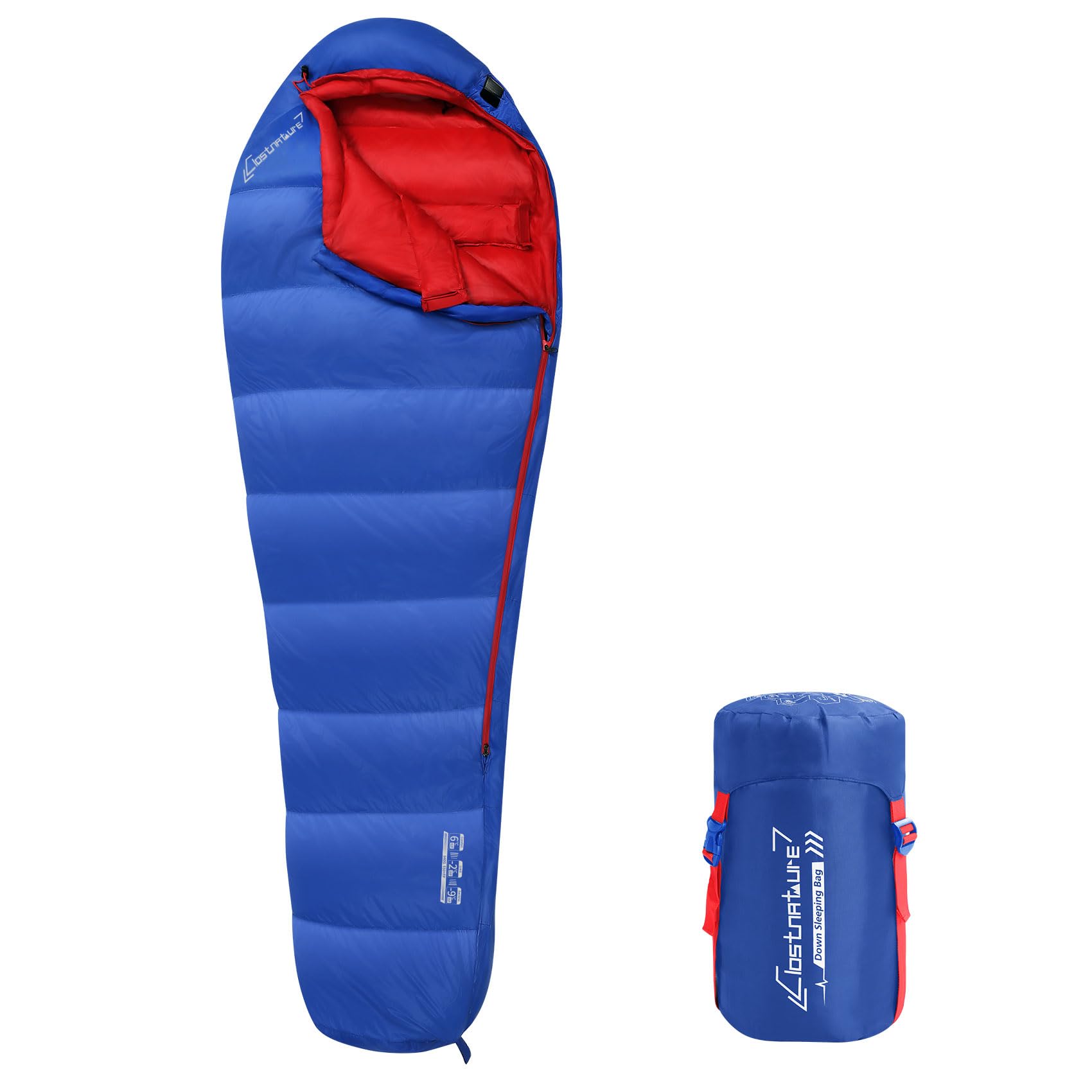
The Clostnature mummy bag is the cold-weather specialist of this budget lineup, packing 840 grams of 550-fill white duck down into a 20D nylon shell with a DWR coating. It claims a comfort rating of 43°F and an extreme rating of 16°F, which means you can push this bag into late-fall trips where other budget bags would leave you shivering. The independent down channel construction keeps the fill evenly distributed, and the chest-level drawstring lets you cinch down the fit to eliminate drafts.
At 3.08 pounds and a compressed size of 15″ x 7.8″, it’s not the lightest option here, but the warmth-per-dollar ratio is hard to beat. The mummy shape hugs your body closely, and the hood with Velcro strap and drawstring seals in heat efficiently. Two-way zippers allow foot-ventilation on milder nights, and an interior stash pocket holds a phone or headlamp within reach.
The included compression sack is functional but tight — some users find it easier to repack using a larger mesh bag that comes separate. A few reviewers noted the bag needs 1–2 hours of lofting after unpacking to reach full thickness. If your trips regularly dip below freezing and you’re willing to carry an extra 1.7 pounds over the Naturehike, this bag delivers winter-ready warmth at a price that undercuts most insulated options.
Why it’s great
- Extreme rating of 16°F makes it viable for early-winter backpacking
- Independent down channels prevent cold spots from shifting fill
- Two-way zipper allows foot venting on transitional nights
Good to know
- Weighs over 3 pounds — heavier than ultralight alternatives
- Compression sack opening is small, making repacking slow
- Requires unpacking and airing for 1–2 hours before first use
3. ZOOOBELIVES Alplive T400 Ultralight Down Sleeping Bag

The Alplive T400 is best understood as a convertible quilt that happens to have a zipper. It uses 650-fill hydrophobic down in an envelope shape with a footbox vent and a full-length side zipper that lets you open the bag flat as a blanket. The 20D nylon shell has a DWR treatment that sheds light condensation, and the total weight of 1.7 pounds makes it one of the lightest options for warm-weather trips.
Real comfort sits around 50°F, which limits this bag strictly to summer nights above treeline or tropical camping. The rectangular shape provides generous room to shift around — a welcome feature for side sleepers who feel claustrophobic in mummy bags. Two Alplive T400 bags can zip together to create a double bag for couples, and the foot zipper gives you the option to vent your feet without unzipping the whole bag.
The construction uses tube stitching rather than true baffles, which creates minor cold spots at the seams compared to a fully baffled down bag. The compression sack is functional but not as compact as the bag’s potential; some users swap it for a smaller aftermarket sack. For hot-sleeping backpackers who prioritize spaciousness and ultralight summer weight over winter warmth, the Alplive T400 is a versatile, comfortable choice.
Why it’s great
- Converts from mummy bag to open quilt for flexible temperature regulation
- Generous envelope shape suits side sleepers and restless movers
- Hydrophobic down treatment helps resist moisture in humid camps
Good to know
- Comfort rating around 50°F — too cool for spring or fall use
- Tube stitching instead of true baffles creates minor cold seams
- Compression sack is adequate but not optimized for minimal packed size
4. TETON Sports ALTOS 20 Degree Synthetic Mummy
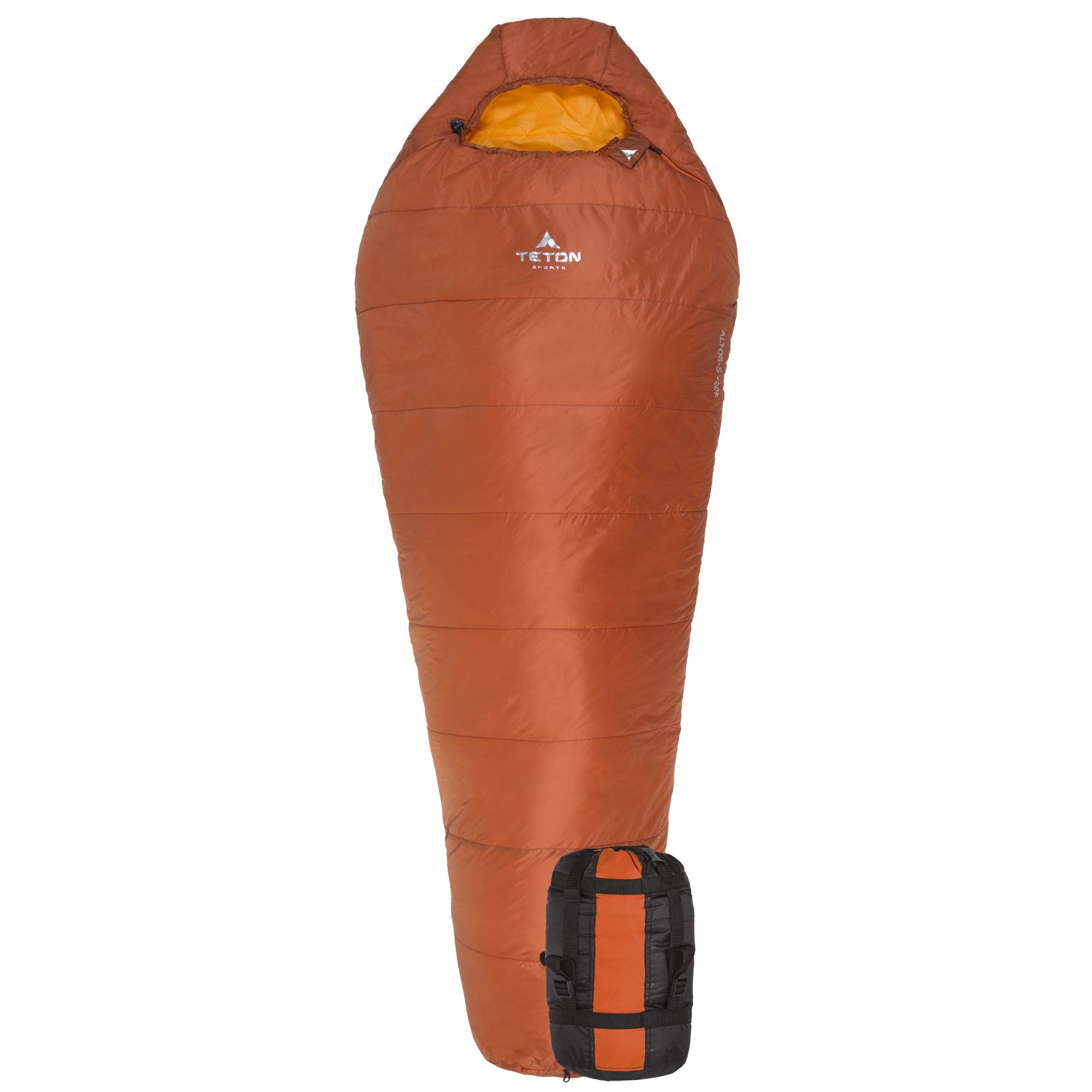
The TETON Sports ALTOS is the synthetic-fill standout of this roundup, using Dupont Sonora insulation that retains loft when damp — a real advantage for trips where rain or condensation is likely. It’s a mummy cut with a built-out footbox that gives your toes room to spread without increasing dead air volume. The ripstop polyester shell feels tougher than the 20D nylon shells on the down competitors, making this bag a better choice for rough-ground campsites or shared gear rentals.
Weighing 2.8 pounds and compressing to a slightly larger bundle than the down options, the ALTOS is still packable enough for weekend backpacks. The comfort rating sits closer to 30°F than the claimed 20°F rating — a common gap in budget bags — so pair it with an insulated pad and a thermal layer for nights below freezing. The compression sack uses heavy-duty straps that cinch down the bag efficiently without fighting the zipper.
Customer reports confirm the bag survived rain exposure on Mt. Fuji without losing warmth, and the 84″ length accommodates tall users without foot-box pressure. The trade-off is breathability: the shell can trap heat on mild nights, and the draft flap along the zipper is effective but adds a few ounces. For backpackers who camp in wet climates or want a bag that won’t fail after a single soaking, the ALTOS is the synthetic benchmark at this price point.
Why it’s great
- Dupont Sonora synthetic fill maintains warmth even when wet
- Spacious footbox and extended length fit tall or broad users well
- Ripstop polyester shell resists tears and abrasion on rough terrain
Good to know
- Comfort rating is closer to 30°F despite the 20°F marketing claim
- Heavier and bulkier than down competitors at the same price tier
- Shell traps heat in mild conditions — less breathable than down
5. Kelty Cosmic Synthetic 20 Degree Backpacking Bag

The Kelty Cosmic Synthetic is the entry-level synthetic bag from a brand that’s been designing backpacking gear since 1952. It uses Cirroloft synthetic insulation — Kelty’s proprietary hollow-fiber fill — that provides reliable warmth down to 20°F without the weight penalty that cheap synthetic bags usually carry. The 380T nylon taffeta shell feels smooth and resists snagging, and the integrated compression stuff sack helps you achieve a packed size that rivals lower-end down bags.
What sets this bag apart is the tailored fit: a natural-fit footbox gives your toes room to wiggle, and the regular size fits sleepers up to six feet. The synthetic fill has a clear advantage over budget down in damp environments — it won’t clump when exposed to tent condensation or a surprise rain shower. A stash pocket on the outside of the bag keeps your phone or headlamp accessible without digging inside the tent.
Some users report the zipper can catch if you zip too aggressively, though the nylon strip inside helps reduce snags. The mummy shape may feel restrictive for claustrophobic sleepers, though the bag can be fully unzipped and used as a quilt. For backpackers who want a brand with a real warranty, a synthetic fill that works in wet conditions, and a 20°F rating that actually holds around 30–35°F comfort, the Kelty Cosmic Synthetic is the most trustworthy budget synthetic on the market.
Why it’s great
- Cirroloft synthetic insulation retains warmth in wet conditions reliably
- Integrated compression sack packs the bag down to a small watermelon size
- Kelty’s lifetime warranty and brand history provide real peace of mind
Good to know
- Zipper can catch if pulled quickly despite the anti-snag strip
- Mummy shape feels restrictive for large-shouldered users
- Comfort rating sits closer to 30°F than the 20°F marketing number
6. QEZER 600 Fill Down Sleeping Bag

The QEZER down bag is the semi-rectangular alternative for backpackers who find mummy bags suffocating but still want down insulation. It offers a generous 86.6″ x 30.7″ interior with a foot zipper for ventilation and the ability to zip two bags together into a double. The 600-fill-power duck down is packed at 2.2 pounds, and the 400T high-density nylon shell has a moisture-proof, tear-resistant finish that protects the fill from light rain.
Comfort temperature sits between 18°F and 32°F, making this one of the warmest budget-friendly down bags in the roundup. The semi-rectangular shape means you sacrifice some thermal efficiency compared to a mummy bag, but for tall or side-sleeping users who can’t tolerate a tapered cut, the extra space is worth the weight penalty. The included compression sack is thin, and a larger mesh storage sack is provided for longer-term storage.
A few users reported the outer 20D nylon is thin enough that a stray splinter or sharp rock can punch a small hole, though patching with nylon tape is straightforward. The bag is noticeably heavier than the Naturehike or ZOOOBELIVES options — 3.68 pounds is a lot to carry on multi-day trips. For car-campers and short-distance backpackers who prioritize stretch-out room and down warmth over ultralight weight, the QEZER delivers a spacious, warm sleep system at a mid-range price.
Why it’s great
- Semi-rectangular shape offers ample room for side sleepers and tall users
- Comfort rating down to 18°F with 600-fill down provides genuine cold-weather capability
- Two bags zip together for couples camping
Good to know
- 3.68-pound weight is too heavy for ultralight or long-distance backpacking
- Outer 20D nylon is thin and can puncture from sharp debris
- Compression sack is low-quality; upgrade to a dedicated dry sack
7. Kelty Cosmic 20 Down Mummy Sleeping Bag

The Kelty Cosmic 20 Down is the most premium bag in this lineup, and it earns that position through material choices that matter to environmentally conscious backpackers. The shell is 100% recycled nylon, the liner is recycled polyester taffeta, and both use PFAS-free DWR. The 550-fill-power down is RDS-certified and traceable — you can look up the batch number on the tag to see the exact source. At 2 pounds 6 ounces for the regular size, it’s tied for the lightest down option here after the Naturehike.
The ISO limit rating of 21°F is one of the most honest temperature claims in this comparison. The bag features a drawstring hood with a draft collar that seals around your neck, two-way zippers that don’t snag, and a silky soft liner that feels noticeably higher-end than the 20D nylon shells on the cheaper bags. The compressed size of 13″ x 7″ fits easily into a 50-liter pack with room to spare for other gear.
The mummy cut is snug through the shoulders — broad-chested or muscular sleepers may find it restrictive, and some users report it’s tight to zip with one arm bent. The trade-off in shoulder room is what allows the bag to achieve its light weight and small pack size. For backpackers who prioritize sustainable materials, honest temperature ratings, and a trusted Colorado brand, the Kelty Cosmic 20 is the premium budget-conscious choice that doesn’t sacrifice ethics for weight savings.
Why it’s great
- Recycled shell and liner with PFAS-free DWR for low environmental impact
- RDS-certified traceable down with honest ISO temperature ratings
- Packs to 13″ x 7″ — one of the most compressible options under
Good to know
- Mummy cut is tight in the shoulders for broad or muscular users
- Premium price is the highest in this comparison
- Hood and draft collar add warmth but can feel restrictive for some
FAQ
Can I use a 50°F bag in 30°F weather if I wear extra layers?
How do I properly store a down sleeping bag between trips?
What’s the difference between comfort, limit, and extreme temperature ratings?
Final thoughts: The verdict
For most backpackers shopping the best backpacking sleeping bag on a budget, the winner is the Naturehike CW295 because it delivers genuine 650-fill RDS down at just 1.3 pounds for a price that undercuts almost every competitor by half. If you need a bag that can handle below-freezing nights without breaking the bank, grab the Clostnature mummy for its 16°F extreme rating and generous down fill. And for the eco-minded hiker who wants sustainable materials and honest temperature ratings, nothing beats the Kelty Cosmic 20 Down — the most responsible choice for budget-conscious backpackers who refuse to compromise on environmental ethics or warmth.

Mo Maruf
I created WellFizz to bridge the gap between vague wellness advice and actionable solutions. My mission is simple: to decode the research and give you practical tools you can actually use.
Beyond the data, I am a passionate traveler. I believe that stepping away from the screen to explore new environments is essential for mental clarity and physical vitality.