Our readers keep the lights on and my smoothie glass nicely filled. As an Amazon Associate, I earn from qualifying purchases.
The moment you lock eyes on a 120 format negative, you understand why digital full-frame sensors still play catch-up. That massive 6×6 or 6×7 transparency, held up to the light, reveals a tonal depth and resolving power that no 35mm frame can touch. But finding the right body — one with smooth film transport, accurate rangefinder or waist-level finder optics, and a lens that renders with that unmistakable medium-format signature — requires navigating a market of legendary but aging mechanical marvels.
I’m Mohammad Maruf — the founder and writer behind WellFizz. I’ve spent years analyzing the mechanical tolerances, shutter accuracy, and lens quality of medium-format systems to separate the true workhorses from overpriced shelf queens.
Whether you are a studio portraitist craving that creamy roll-off or a street photographer who wants the ultimate negative, a 120 film camera remains the most direct path to image quality that still feels like art.
How To Choose The Best 120 Film Camera
Selecting a medium-format camera isn’t like picking a digital body. The film format, the viewfinder system, and the condition of the mechanical internals define whether your camera will deliver sharp, evenly spaced frames or leave you with light leaks and blank rolls.
Format and Aspect Ratio
120 film comes in multiple frame sizes determined by the camera’s back or mask. 6×6 produces a square negative ideal for waist-level finder composition and twin-lens reflex cameras. 6×7 offers a near-perfect rectangle that prints beautifully at 8×10 without cropping. 6×4.5 gives more frames per roll but sacrifices that signature medium-format look. Choose your aspect ratio first — it dictates the entire system you will invest in.
Viewfinder and Focusing System
Rangefinder cameras offer a bright, parallax-corrected frame and quiet operation, excellent for street photography. SLR-style medium format bodies give you through-the-lens composition and close focusing but are heavier and louder due to the mirror slap. A waist-level finder provides that classic top-down composing experience but requires a focusing hood in bright outdoor light. Know your shooting style before picking a viewing system.
Shutter Type and Reliability
Leaf shutters in the lens allow flash sync at any speed up to 1/500th, but require each lens to have its own shutter, increasing cost and repair complexity. Focal plane shutters in the body offer faster top speeds and interchangeable lenses without redundant shutters, but sync flash only at lower speeds. More critically, older shutters need professional CLA (clean, lubricate, adjust) — a camera that sounds “slow” or “sticky” will ruin your exposure consistency.
Light Seals and Film Transport
Foam light seals degrade on every 120 camera over 20 years old. Check for sticky residue, crumbling foam, or missing seals around the back door. The film advance mechanism must feel smooth and precise — a rough or skipping advance often leads to overlapping frames or film jams. A camera with well-maintained seals and a butter-smooth winder is worth twice the price of a cosmetically clean body with deteriorated internals.
Quick Comparison
On smaller screens, swipe sideways to see the full table.
| Model | Category | Best For | Key Spec | Amazon |
|---|---|---|---|---|
| Fujifilm GFX 100 II | Mirrorless Digital MF | Professional studio and landscape work | 102MP medium-format sensor | Amazon |
| Hasselblad X1D II 50C | Compact Digital MF | Travel and portrait photographers | 50MP CMOS, 16-bit color | Amazon |
| Pentax 645Z | Digital SLR MF | All-round digital medium format | 51.4MP, weather-sealed | Amazon |
| Mamiya RZ67 Pro II | Film SLR MF | Studio portraiture and fashion | 6×7, bellows focusing | Amazon |
| Mamiya 7 II | Rangefinder Film MF | Street and travel film photography | 6×7, lightweight body | Amazon |
| Hasselblad 500C/M | Vintage V-System MF | Classic modular film system | 6×6, leaf shutter | Amazon |
| Rolleiflex 2.8FX | Twin Lens Reflex MF | Quiet street and candid shooting | 6×6, Tessar lens | Amazon |
| Kiev 88 CM | Budget Film MF | Entry-level medium format | 6×6, interchangeable backs | Amazon |
| Pentax 6×7 MLU | Vintage SLR MF | Landscape and portrait hybrid | 6×7, mirror lock-up | Amazon |
In‑Depth Reviews
1. Fujifilm GFX 100 II

The GFX 100 II is the current pinnacle of medium-format digital imaging. Its 102MP back-side illuminated sensor delivers a dynamic range that crushes most full-frame cameras, with 16-bit raw files that hold detail from deep shadow to bright highlight in a single exposure. The IBIS system is good for about 8 stops, making handheld shooting possible even with the system’s large glass, while the phase-detect autofocus array covers nearly the entire frame.
Fujifilm’s film simulation algorithms are baked into the processing engine, giving you faithful Velvia, Classic Chrome, and the new Nostalgic Neg profiles that emulate classic medium-format film stocks. The electronic viewfinder is a 9.44M-dot OLED unit that rivals optical finders for clarity. The body is weather-sealed against dust and moisture, suitable for demanding outdoor environments.
One compromise is file size: each raw exposure runs about 200MB, demanding fast CFexpress cards and substantial storage. Battery life under heavy use hovers around 400 shots per charge. The high price of entry limits this to serious professionals or dedicated enthusiasts who need the ultimate resolution without stitching multiple frames.
Why it’s great
- Class-leading 102MP resolution and 16-bit raw depth
- Effective in-body stabilization for handheld medium format
- Robust weather sealing and phase-detect autofocus
Good to know
- Extremely large file sizes require fast CFexpress media
- Battery life is moderate for the sensor size
- Premium cost is an investment for pro-grade work
2. Hasselblad X1D II 50C

Hasselblad’s X1D II 50C is a compact medium-format body that prioritizes ergonomics and color science over raw megapixel count. The 50MP CMOS sensor, while lower resolution than the GFX 100 II, uses a unique microlens design that delivers exceptional per-pixel sharpness and Hasselblad’s legendary “Natural Color Solution” — the most accurate out-of-camera color reproduction in medium format. The body weighs only 650 grams, making it the lightest digital medium-format camera on the market.
The interface is minimalist, with a top-plate LCD and two primary dials, reducing menu diving. The leaf shutter lenses from the XCD series sync flash at all speeds up to 1/2000th, a huge advantage for studio strobe work. The 3.6M-dot rear touchscreen offers excellent visibility even in daylight. The electronic viewfinder runs at 60fps with minimal blackout.
Autofocus speed is slower than top full-frame mirrorless bodies — this is not an action camera. The single UHS-II SD card slot is a bottleneck for backup. The lens ecosystem, while growing, is limited compared to Fujifilm’s GF system. Battery life is rated at roughly 420 shots per charge, but real-world use often yields fewer frames.
Why it’s great
- Best-in-class color science for natural, accurate skin tones
- Extremely compact and lightweight for digital medium format
- Leaf shutter lenses allow full-speed flash sync
Good to know
- Autofocus is slower than comparable competitors
- Limited native lens selection compared to GFX system
- Only one SD card slot with no backup capability
3. Pentax 645Z

The Pentax 645Z is a workhorse that offers 51.4MP of medium-format capture in a body that feels like a rugged DSLR rather than a fragile studio tool. Its 44x33mm CMOS sensor is the same size as the GFX and X1D systems, but the 645Z includes a unique pixel-shift resolution mode that composites four sequential exposures into a 204MP file with true RGB color at each pixel location — ideal for product and reproduction work where detail is critical.
The optical viewfinder is large and bright, with 98% frame coverage. The body is fully weather-sealed with 76 individual seals, allowing confident use in rain or dusty environments. The dual SD card slots provide redundant recording or overflow capacity. The 645Z uses the same D-LI90 battery as Pentax’s full-frame DSLRs, with a real-world endurance of over 700 shots per charge.
The 645 autofocus system uses 27 points with 25 cross-type sensors — fine for landscape and portrait work but not suited for fast-moving subjects. The contrast-detection AF in live view can be sluggish. The body weight of 1.5kg with the battery and lens mount is substantial, and the range of compatible lenses is smaller than full-frame systems.
Why it’s great
- Pixel-shift mode generates 204MP files for ultra-detailed captures
- Excellent weather sealing for outdoor shooting
- Outstanding battery life for a medium-format camera
Good to know
- AF system is outdated for action or sports photography
- Body is heavy at over three pounds
- Smaller native lens library than newer medium-format systems
4. Mamiya RZ67 Pro II

The Mamiya RZ67 Pro II is a 6×7 SLR system built around a rack-and-pinion bellows focusing mechanism that allows close focusing without extension tubes. The 6×7 negative is 56×69.5mm, nearly three times the area of full-frame 35mm, delivering smooth tonality and detail that digital struggles to replicate. The RZ67 lenses are leaf-shutter designs, allowing flash sync at any speed up to 1/400th.
The revolving back lets you switch between portrait and landscape orientation without rotating the entire camera. Interchangeable film backs allow mid-roll switching between color, black and white, and instant film. The waist-level finder with a pop-up magnifier provides a bright, ground-glass composing experience. The RZ67 accepts a power winder for motorized film advance — helpful in the studio.
This camera is heavy at about 2.3kg with a standard lens and back. The bellows are precise but need periodic maintenance to keep the rails smooth. Metered finders are available but require a separate battery. The film advance knob can feel stiff with cold lubricant; a CLA is recommended for used copies.
Why it’s great
- Large 6×7 negative for stunning detail and shallow depth of field
- Revolving back for easy composition switching
- Leaf-shutter lenses provide full flash sync at any shutter speed
Good to know
- Heavy and bulky — not suitable for travel or handheld use
- Bellows rails require occasional professional servicing
- Metered finders are often sold separately and use obsolete batteries
5. Mamiya 7 II

The Mamiya 7 II is a 6×7 rangefinder that delivers the largest frame area of any medium-format rangefinder camera. The body weighs under 1.2kg with a standard 80mm f/4 lens, making it the lightest 6×7 system available for travel and street photography. The rangefinder patch is bright and contrasty, with automatic parallax compensation and bright-line frames for 65mm, 80mm, and 150mm lenses.
The lenses — particularly the 43mm f/4.5 and 50mm f/4.5 — are optically superb, with center resolution that rivals high-end digital medium-format glass. The leaf shutters in each lens allow flash sync at all speeds. The camera has aperture-priority auto exposure with center-weighted metering that remains accurate for most scenes. The film advance is smooth and fast, allowing rapid sequential frames.
The rangefinder mechanism can go out of alignment over decades and requires professional calibration. The built-in meter uses a 6V PX28 battery that has a modern equivalent, but the battery check circuit is a simple LED that can be misleading. The 150mm lens produces considerable parallax at close distances. The camera’s electronic shutter relies on the battery — if it dies mid-roll, the shutter locks.
Why it’s great
- Lightweight and portable for a 6×7 system
- Exceptional lens optics, especially the wide-angle glass
- Quiet rangefinder operation for candid shooting
Good to know
- Rangefinder alignment can drift and requires specialist service
- Electronic shutter locks if the battery dies mid-roll
- Meter uses a harder-to-find 6V battery
6. Hasselblad 500C/M

The Hasselblad 500C/M is the most iconic modular 6×6 SLR ever built. Its V-System uses interchangeable film backs, viewfinders, and focusing screens, allowing you to build a camera that fits your exact needs. The body is built around a Compur leaf shutter in each lens, enabling flash sync at all speeds up to 1/500th. The 80mm f/2.8 Planar lens is one of the most revered normal lenses in photography.
The square 6×6 format on 120 film produces a negative that requires no rotation for 8×8 or 10×10 prints. The waist-level finder with a folding hood and pop-up magnifier gives a brilliant viewing experience. The film backs are precise and reliable when maintained. The 500C/M’s mechanical design means it operates without any batteries — only the built-in meter in the optional prism finder needs power.
The Compur shutters are prone to slow speeds sticking if not exercised regularly. Light seals in both the film back and the body need replacement every 15-20 years. The maximum shutter speed of 1/500th limits action photography. The body alone without lens or back is still heavy, and the system demands a significant carrying case.
Why it’s great
- Fully mechanical operation with no battery needed
- Modular system allows endless customization
- Legendary Zeiss lenses with beautiful rendering
Good to know
- Shutters need regular exercise to prevent sticky slow speeds
- Light seals require periodic replacement
- Maximum shutter speed is limited to 1/500th
7. Rolleiflex 2.8FX

The Rolleiflex 2.8FX is a modern twin-lens reflex camera that produces 6×6 negatives with near-silent operation. The viewing lens projects a bright, waist-level image onto a ground glass with a built-in magnifier for critical focusing. The taking lens is a Carl Zeiss Tessar 80mm f/2.8, delivering sharpness and contrast that competes with the best medium-format optics. The shutter is a Synchro-Compur leaf type with speeds from 1 to 1/500th plus bulb.
The TLR design eliminates mirror slap, making the 2.8FX essentially silent — ideal for concert halls, religious ceremonies, or any situation where discretion matters. The waist-level finder gives a natural composing angle when the camera is held at chest height, allowing you to engage with subjects without hiding behind a viewfinder. The camera accepts 120 roll film for 12 exposures per roll.
The parallax between viewing and taking lenses is minimal at moderate distances but becomes noticeable at close range. The fixed 80mm lens, while excellent, offers no zoom flexibility. The film advance knob operates smoothly but lacks a rapid-wind lever. The camera is heavier than a typical rangefinder but well-balanced in the hands.
Why it’s great
- Nearly silent operation with no mirror slap
- Excellent Zeiss Tessar lens quality
- Natural waist-level composing experience
Good to know
- Parallax error increases at close focusing distances
- Fixed 80mm lens with no focal length flexibility
- Heavier than rangefinder alternatives of the same format
8. Kiev 88 CM
The Kiev 88 CM is a Soviet-era modular 6×6 SLR inspired by the Hasselblad 1600F. It offers interchangeable film backs, viewfinders, and lenses at a fraction of the Hasselblad price, making it the most affordable entry into modular medium-format photography. The standard Volna-3 80mm f/2.8 lens produces respectable sharpness when stopped down to f/5.6 or f/8. The waist-level finder with a magnifier gives the classic top-down composing experience.
The body accepts standard Kiev/Arsenal lenses and some Pentacon Six mount lenses with an adapter. The film backs are available in 6×6 format only, with 12 exposures per 120 roll. The shutter is a metal focal-plane type with speeds from 1/2 to 1/1000th plus bulb. The camera is fully mechanical and operates without any batteries.
Quality control on Kiev bodies was inconsistent from the factory. Light seals are almost always degraded and need replacement. The film advance mechanism can be rough and suffers from overlapped frames on some copies. Shutter speed accuracy varies widely — a CLA is essential before trusting it with important work. The mirror damping is poor, causing significant vibration at slower shutter speeds.
Why it’s great
- Very low-cost entry to medium-format modular system
- Interchangeable backs and lenses for system growth
- Fully mechanical, no battery required
Good to know
- Inconsistent build quality and factory tolerances
- Light seals nearly always need replacement
- Shutter accuracy often unreliable without a CLA
9. Pentax 6×7 MLU
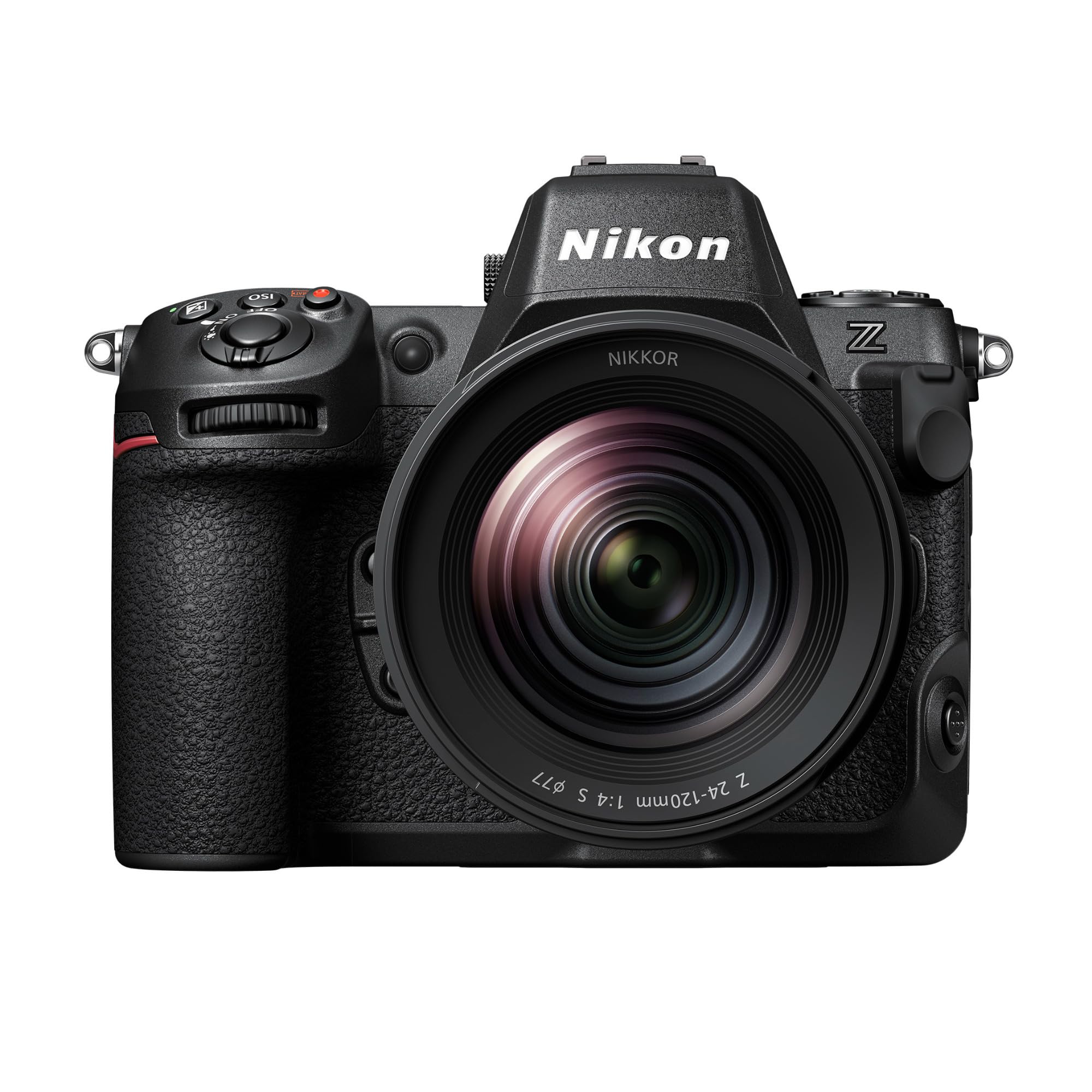
The Pentax 6×7 MLU is a 6×7 SLR that feels like a full-frame 35mm body scaled up to medium format. The mirror lock-up (MLU) mechanism allows you to flip the mirror before taking the shot, eliminating the substantial vibration from the large reflex mirror that otherwise blurs images at speeds around 1/30th to 1/125th. The 105mm f/2.4 Takumar lens is legendary for its sharpness and unique rendering with a smooth bokeh.
The camera uses a focal plane shutter with speeds from bulb to 1/1000th, and provides a massive, bright pentaprism viewfinder with microprism and split-image focusing aids. The oversized shutter button and film advance lever are positioned for comfortable right-hand operation. The 6×7 format delivers a 56x70mm negative that prints to 8×10 without cropping. The camera accepts standard 120 film for 10 exposures per roll.
The MLU version adds weight and complexity — the MLU mechanism can jam on well-used copies. The mirror slap is genuinely loud and pronounced even with MLU engaged for the shutter release. The film transport is not as smooth as more modern systems, and the pressure plate can mark film edges if dirty. The battery is a standard 6V PX28 for the built-in TTL meter, which can fail without notice.
Why it’s great
- Large 6×7 negative with excellent Takumar lens options
- Mirror lock-up reduces vibration in critical exposures
- Familiar SLR handling scaled up to medium format
Good to know
- Mirror slap is loud and jarring despite MLU feature
- MLU mechanism can jam on high-mileage bodies
- Film transport can mark film edges if rollers are dirty
FAQ
What does 120 format look like compared to 35mm film?
Can I use 220 film in a 120 camera?
Why does my 120 camera sometimes produce overlapping frames?
How do I check if a 120 camera has light leaks?
Do I need a light meter for film 120 cameras?
Final Thoughts: The Verdict
For most users seeking the best value and modern features, the 120 film camera winner is the Fujifilm GFX 100 II because it combines the largest commercial medium-format sensor with advanced autofocus and stabilization in a weather-sealed body. If you want a compact system with the best color science, grab the Hasselblad X1D II 50C. And for those on a film budget who want a modular 6×6 system with interchangeable backs, nothing beats the value of the Kiev 88 CM.

Mo Maruf
I created WellFizz to bridge the gap between vague wellness advice and actionable solutions. My mission is simple: to decode the research and give you practical tools you can actually use.
Beyond the data, I am a passionate traveler. I believe that stepping away from the screen to explore new environments is essential for mental clarity and physical vitality.