Our readers keep the lights on and my smoothie glass nicely filled. As an Amazon Associate, I earn from qualifying purchases.
That sliver of light under your garage door isn’t just a minor annoyance—it’s an open invitation for drafts, dust, and determined rodents. Whether you’re battling freezing winter winds, summer humidity, or pests looking for a warm nesting spot, a worn-out bottom seal is the weakest link in your garage’s defenses. Replacing it is one of the most cost-effective upgrades you can make for energy efficiency and home protection.
I’m Mohammad Maruf — the founder and writer behind WellFizz. My research into home weatherproofing hardware has focused on material science, seal longevity, and the precise dimensional tolerances that determine whether a seal actually blocks the elements or just looks pretty for a season.
After analyzing the fit, flexibility, and material composition of today’s top options, I’ve found the absolute best candidates to keep your space dry and quiet. This guide breaks down the contenders for the best bottom garage door seal based on real-world installation feedback and rubber durability specs.
How To Choose The Best Bottom Garage Door Seal
Picking the right seal isn’t about selecting the most expensive roll off the shelf. The three factors that matter most are your track’s T-end channel size, the material’s flexibility across seasons, and the overall width of the rubber bulb. Ignore any of these and you’ll end up with a seal that either won’t slide into the track or leaves a gap big enough for a field mouse to stroll through.
Measure Your Track Channel First
The most common mistake is buying a seal with a T-end that doesn’t match your door’s retainer. Most residential doors use either a 1/4-inch or 5/16-inch T-end. A 5/16-inch T will fit snugly into a 1/4-inch channel if you force it, but you risk damaging the rubber on install day. Pull your old seal out and measure the flat “T” portion with a caliper—that single measurement rules out half the market instantly.
Material Matters More Than Brand
Standard vinyl seals are cheap and stiff, and they get brittle in sub-freezing temperatures. EPDM rubber stays flexible from -40°F to 240°F, resists ozone cracking, and bounces back after the door crushes it daily. If you live where winter temperatures drop below freezing, EPDM is the only sensible choice. Vinyl works fine in mild climates, but don’t expect it to survive a decade of garage door slams in Minnesota.
Width and Shape Affect the Seal
The bulb width—typically 3 to 4 inches—determines how much of the gap between the door bottom and the concrete floor gets filled. A 3.75-inch seal is standard for most residential doors. The profile shape (U-shaped vs. flat) also changes how the seal compresses. The U-shaped bulb design with internal insulation layers provides better sound dampening and a tighter overall seal against uneven floors.
Quick Comparison
On smaller screens, swipe sideways to see the full table.
| Model | Category | Best For | Key Spec | Amazon |
|---|---|---|---|---|
| Holikme EPDM Rubber Kit | EPDM Rubber | All-Weather Protection | 22ft / 5/16″ T-End | Amazon |
| HOOIMA T-End Rubber Strip | Heavy Duty Rubber | Wide Track Compatibility | 20ft / 4-6/16″ T-End | Amazon |
| Universal-Grey 5/16″ T-End | Standard Rubber | Amarr/Clopay Fit | 20ft / 5/16″ T-End | Amazon |
| Earthtec 3″ Vinyl Strip | Vinyl | Budget-Friendly Seal | 16ft / 1/4″ T-End | Amazon |
| DGSL U-Bottom Rubber Strip | Multi-Layer Rubber | Sound Deadening Value | 20ft / 5/16″ T-End | Amazon |
In‑Depth Reviews
1. Holikme EPDM Rubber Weather Stripping Kit
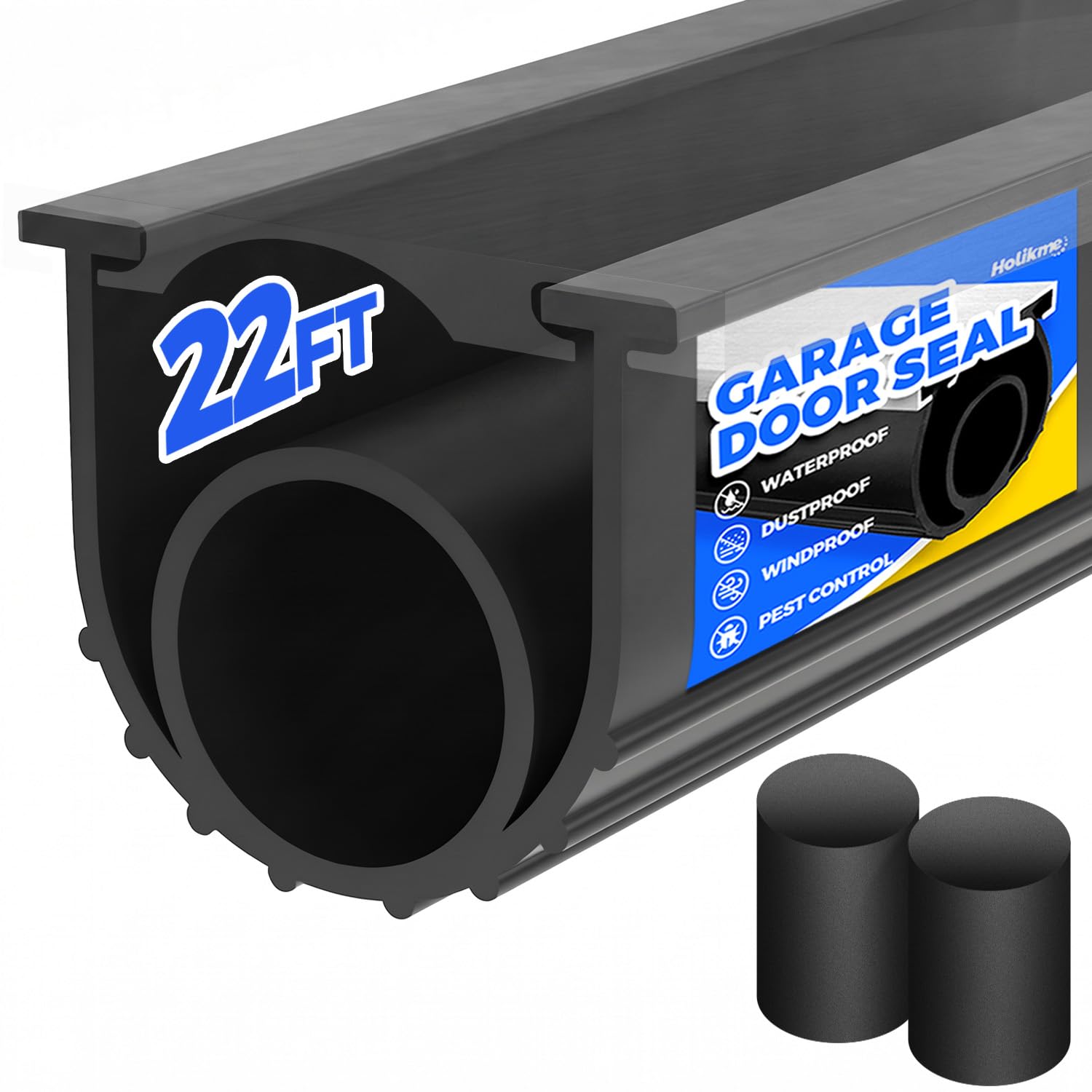
The Holikme kit is the smartest engineering in this category because it addresses what every other seal ignores: the open tube ends. While standard U-shaped seals leave the center channel exposed to insects and drafts, this kit includes two custom-fit rubber end plugs that cap the channel completely. The EPDM rubber formulation remains flexible from -40°F up to 240°F, which means it won’t crack in a deep freeze or turn into a brittle strip after a summer of direct sunlight on the driveway.
At 22 feet long with a 5/16-inch T-end and a 3.74-inch bulb width, it offers just over 20 feet of usable material after trimming for an 18-foot door, giving you room for error. Real-world installation reports consistently note that the rubber is noticeably softer and thicker than local hardware store rolls selling for twice the price. The soapy water or silicone lubricant trick is essential here—this rubber grips the aluminum track aggressively, and trying to force it dry will test your patience.
Customers with 18-foot doors report a tight, light-free seal after a 45-minute two-person install. The only minor complaint is that the kit includes only two end plugs, so if you’re sealing two separate doors you’ll need to trim scrap from the cut-off excess to plug the second channel. The measured 22-foot-plus roll length confirms you’re not getting shorted on material, and the flexibility advantage over vinyl is obvious the moment you uncoil it.
Why it’s great
- EPDM rubber stays soft and flexible down to -40°F without cracking.
- Included end plugs prevent the hollow channel from becoming a pest highway.
- Noticeably thicker and more pliable than budget vinyl seals at big-box stores.
Good to know
- Only two end plugs provided—buyers with double-wide doors may need to improvise.
- High rubber friction requires lubricant for smooth installation.
2. HOOIMA Garage Door Bottom Weather Seal

The HOOIMA seal stands out for its forgiving T-end sizing—it’s listed at 5/16 inch but accommodates track channels from 4/16 to 6/16 inches, making it a solid option for older doors where the retainer may have worn or corroded beyond standard dimensions. The 3.75-inch width matches the industry standard for residential doors, and the black rubber compound handles temperature swings from -40°F to 140°F without losing its shape after repeated door drops.
Installation reports are consistently positive, with several customers noting a 15- to 20-minute solo job using silicone spray on the track as a lubricant. The rubber is dense enough to hold up in dry desert climates without drying out or cracking, which is a common failure mode for cheaper vinyl compounds. The heavy-duty weather seal claim holds up in practice—users report no light gaps and a noticeable reduction in wind noise after replacement.
Where this seal falls slightly short of the premium tier is the lack of included end plugs or installation accessories. You get a straightforward 20-foot roll of rubber, no more, no less. That’s fine for a straightforward replacement, but if you want the extra pest-blocking detail of channel plugs, you’ll need to add your own. For a reliable, no-fuss seal that fits a wide range of track sizes without needing a second person, this is a strong middle-of-the-road contender.
Why it’s great
- Flexible T-end sizing fits 4/16 to 6/16-inch track channels for older or worn retainers.
- Dense rubber compound resists cracking in dry, high-heat climates.
- Quick solo install reported in under 20 minutes with lubricant.
Good to know
- No end plugs included—channel ends remain open to pests and debris.
- Not the thickest bulb available; less forgiving on very uneven concrete floors.
3. Universal-Grey 5/16″ T-End 20′ Rubber Seal

The Universal-Grey seal carves out its spot as the reliable workhorse for Amarr and Clopay owners who don’t need premium EPDM but still want a proper fit. The 5/16-inch T-end slides into standard T-track retainers smoothly, and the rubber compound stays workable from -40°F to 140°F—identical to the temperature range of the more expensive options. The grey color blends better with lighter garage doors than the standard black, which matters if your door’s bottom edge is visible from the street.
Customer feedback across multiple installs highlights how cleaning the T-track thoroughly with a brush and soapy water, followed by a WD-40 lubricant pass, makes the installation trivial even for a single person. Several homeowners with 9-foot doors report completing both sides in under three hours total, including the time spent cutting the old seal into manageable chunks for removal. The rubber is slightly more pliable than the original OEM seal on 15-year-old doors, which actually helps achieve a tighter compression seal.
The main drawbacks are the absence of any warranty extension beyond the standard 2-year coverage and the tendency for the last foot of the spool to arrive with a persistent curl or crinkle from shipping. Most buyers simply trim that section off given the generous 20-foot length covers most standard doors with slack. If you need a solid, no-drama replacement for a common residential door and don’t want to overthink the purchase, this one delivers exactly what it promises.
Why it’s great
- Proven compatibility with Amarr and Clopay T-track doors with minimal modification.
- Grey color option matches lighter garage door finishes more naturally than black.
- Pliable enough for single-person installation with track lubricant.
Good to know
- Last section of the spool may arrive with a persistent kink from shipping.
- No end plugs included; channel ends remain open without modification.
4. Earthtec 3″ Garage Door Bottom Seal Weatherstrip

The Earthtec strip is the entry-level option for homeowners with a 1/4-inch T-track who want a straightforward seal without spending for rubber they don’t need. The vinyl material is lighter than EPDM, which makes it easier to slide into the track for a first-time DIYer, but that lightness comes with trade-offs in cold-weather performance. The 3-inch width is narrower than the 3.75-inch standard, meaning it works best on doors where the gap between the bottom panel and the floor is relatively even.
Installation stories from buyers consistently mention the 15-minute timeline and the need for a second person to feed the seal through while someone pulls from the opposite end. The grey color is a plus for aesthetic matching, and the double-T design accommodates both 1/4-inch and 5/16-inch retainers with a reasonable fit. Several customers replacing chipmunk-damaged seals report success combining this strip with steel wool and masonry for full pest exclusion.
The most significant limitation is material stiffness. Multiple reviews note that the vinyl takes on the shape of the floor beneath it but doesn’t spring back to a flat profile the way a rubber compound would. That means if your garage floor has a noticeable slope or crack, this seal may leave gaps on the high side. It’s perfectly adequate for smooth, level concrete in mild climates, but buyers facing extreme cold or uneven slabs should budget for the EPDM upgrade.
Why it’s great
- Very low-effort installation at 15 minutes with a helper.
- Grey vinyl matches lighter door finishes and standard residential trim.
- Compatible with both 1/4-inch and 5/16-inch T-track channels.
Good to know
- Vinyl becomes stiff in freezing temperatures and may crack over time.
- Doesn’t rebound well on uneven floors—can leave light gaps on high spots.
5. DGSL U-Bottom Weather Stripping Rubber Seal Strip

The DGSL seal differentiates itself with a U-shaped bulb that contains seven internal insulation round layers—a design detail that brings measurable sound dampening to the category. While most bottom seals are a single rubber extrusion, this multi-layer approach reduces outside noise transmission by roughly a factor of five according to the manufacturer’s claims, which tracks with customer reports of a noticeably quieter garage after installation. The 5/16-inch T-end and 3.75-inch width align with the residential standard, and the black rubber compound operates from -40°F to 140°F.
Installation feedback is largely positive, with several buyers noting the seal slides into the track easily after applying soapy water to the channel. The 20-foot length provides enough material for a 16-foot door with plenty of overhang for trimming. Customers who replaced seals damaged by chipmunks and mice report immediate elimination of pest entry points, and the rubber’s flexibility helps it conform to minor floor irregularities without creating visible gaps.
The primary downside is the shipping packaging—the roll can arrive with a compressed fold that takes time to relax into a straight profile. Leaving it in the sun for an hour before installation helps. Additionally, while the insulation layers are effective for sound, the U-shaped profile is more susceptible to trapping moisture against the concrete if the drainage holes in the track aren’t clear. It’s a capable all-rounder, but the Holikme’s EPDM compound and end plugs offer better long-term durability for a similar investment.
Why it’s great
- Seven internal insulation layers reduce garage noise transmission noticeably.
- Flexible rubber conforms to uneven concrete floors without leaving gaps.
- Easy slide-in installation with soapy water as lubricant.
Good to know
- U-shaped profile can trap moisture against the floor if track drainage is blocked.
- Roll may arrive with a compressed fold that needs time in sunlight to relax.
FAQ
How do I know if my garage door track uses a 1/4-inch or 5/16-inch T-end?
Can I install a bottom garage door seal by myself or do I need a helper?
Final Thoughts: The Verdict
For most users, the best bottom garage door seal winner is the Holikme EPDM Rubber Kit because its soft EPDM compound, included end plugs, and generous 22-foot length address every common failure point of standard seals in one package. If you need a forgiving T-end fit for an older or worn track retainer, grab the HOOIMA Weather Seal. And for a straightforward, budget-friendly replacement on a door with a 1/4-inch track and mild climate, nothing beats the simplicity of the Earthtec Vinyl Strip.

Mo Maruf
I created WellFizz to bridge the gap between vague wellness advice and actionable solutions. My mission is simple: to decode the research and give you practical tools you can actually use.
Beyond the data, I am a passionate traveler. I believe that stepping away from the screen to explore new environments is essential for mental clarity and physical vitality.