Our readers keep the lights on and my smoothie glass nicely filled. As an Amazon Associate, I earn from qualifying purchases.
Indoor air often carries more volatile organic compounds (VOCs) from furniture, paint, and cleaning products than outdoor air. While mechanical purifiers handle particulate matter, certain tropical foliage pulls formaldehyde, benzene, and xylene out of the air through a leaf-level metabolic process that is both silent and chemical-free. Selecting the right species for your light levels and care availability is the difference between a decorative dust collector and a living filtration system.
I’m Mohammad Maruf — the founder and writer behind WellFizz. My research dives deep into the specific CO₂ drawdown rates, VOC absorption coefficients, and soil microbiome requirements that determine whether a houseplant actually moves the needle on indoor air quality. I don’t just list what looks nice; I analyze which species have the documented phytoremediation capacity to earn their spot on a bookshelf.
This guide breaks down the five species with the strongest track record for improving indoor air chemistry, helping you identify the best air filtering plants that thrive in your specific home environment without demanding a horticulture degree to keep alive.
How To Choose The Best Air Filtering Plants
Selecting a plant for air purification requires more than grabbing the largest leaf you see. Three factors separate a plant that merely survives indoors from one that actively scrubs your air: the species’ documented VOC uptake rate, its light tolerance relative to your room, and its maintenance demands fitting your schedule. Focus on these rather than flower color or pot aesthetics.
Phytoremediation Capacity
Not every green leaf filters equally. NASA’s Clean Air Study identified specific species — particularly Peace Lily, Spider Plant, and certain Philodendrons — that metabolize formaldehyde, benzene, and trichloroethylene through leaf cells and root microbes. Look for plants with high transpiration rates and large leaf surface areas; these move more air through their tissues per hour, translating to measurable drops in VOC concentration in sealed rooms.
Light and Humidity Matching
A plant placed in the wrong light level will stop transpiring, halting its air-cleaning function. Peace Lily and Philodendron Brasil tolerate low indirect light typical of north-facing bedrooms, while Spider Plants and Prayer Plants need medium indirect light to maintain their growth rate. Measure your room’s foot-candles with a simple phone app before buying, and match the plant’s natural understory habitat — tropical ground dwellers need less light than canopy species.
Care Consistency and Toxicity
An air-filtering plant that dies after three months because you forgot to water it cleans nothing. Prioritize species with visible wilt cues (Peace Lily droops dramatically when thirsty) or forgiving root systems (Spider Plants store water in tubers). If you share space with cats or dogs, cross-reference the plant against the ASPCA toxic plant list — Peace Lilies and Philodendrons contain calcium oxalate crystals that cause oral irritation, whereas Prayer Plants and Spider Plants are generally considered non-toxic.
Quick Comparison
On smaller screens, swipe sideways to see the full table.
| Model | Category | Best For | Key Spec | Amazon |
|---|---|---|---|---|
| Spider Plant Variety Pack | Variety Pack | Multiple rooms & variety | 4 species in one order | Amazon |
| Peace Lily | Flowering | Low light & visual bloom | 6-inch pot with blooms | Amazon |
| Anthurium Purple | Blooming | Long-lasting purple flowers | Year-round bloom period | Amazon |
| Lemon Lime Maranta | Pet Safe | Pet-friendly households | 14-inch avg height | Amazon |
| Philodendron Brasil | Trailing | Hanging baskets & shelves | Variegated heartleaf | Amazon |
In‑Depth Reviews
1. Spider Plant Variety Pack
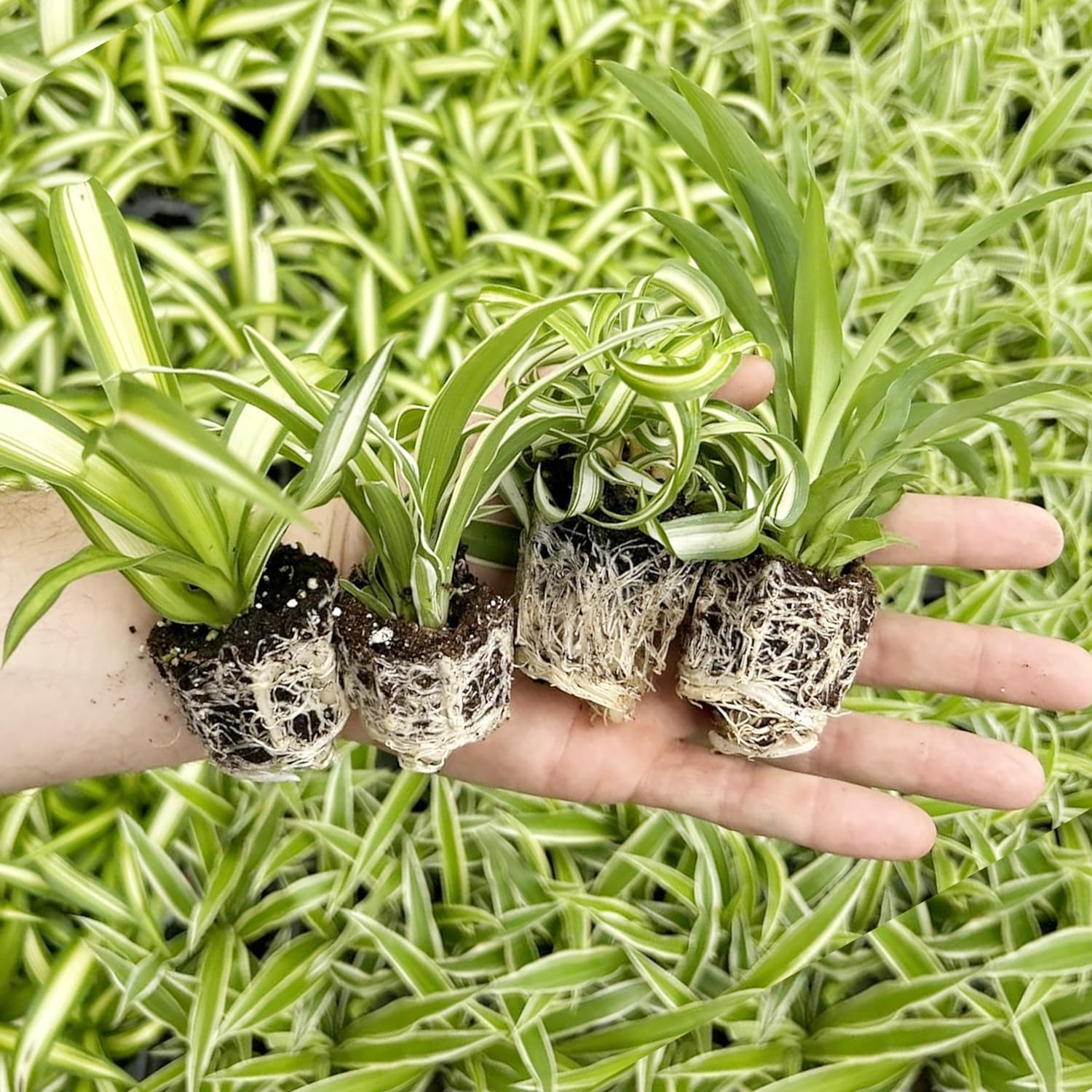
This variety pack delivers four distinct Spider Plant cultivars — Ocean, Hawaiian, Green, and Bonnie Curly — each with different leaf architecture and growth habits. The Bonnie Curly’s twisted leaves make it ideal for hanging baskets, while the upright Ocean variety fills floor space with broader foliage. Because Spider Plants are among the most documented species in the NASA Clean Air Study for formaldehyde and xylene removal, having four separate specimens in one order dramatically increases the total leaf surface area working to filter your indoor air.
Customer reports consistently highlight the extensive root systems packed into each 4-inch starter pot, with multiple reviewers noting that the plants arrived larger than expected and ready for immediate repotting. The bare-root shipment method avoids soil compaction during transit, and the drought-tolerant storage roots help the plants bounce back quickly after shipping stress. No harmful chemicals or GMOs are used in cultivation, keeping the plants safe for homes with pets.
Position one plant in each room or cluster all four on a single sunny shelf for maximum transpiration-driven air movement. Spider Plants prefer medium indirect light and can tolerate occasional missed waterings thanks to their thick, fleshy roots. Over the first month, you will see new plantlets (spiderettes) emerge that can be propagated to expand your air-cleaning arsenal at zero additional cost.
Why it’s great
- Four different cultivars in one purchase covers varied aesthetics
- Extensive root systems documented in every customer review
- Drought tolerant and forgiving for forgetful waterers
Good to know
- Bare root shipment requires immediate potting upon arrival
- Variegated varieties need more light to maintain leaf patterns
2. American Plant Exchange Peace Lily
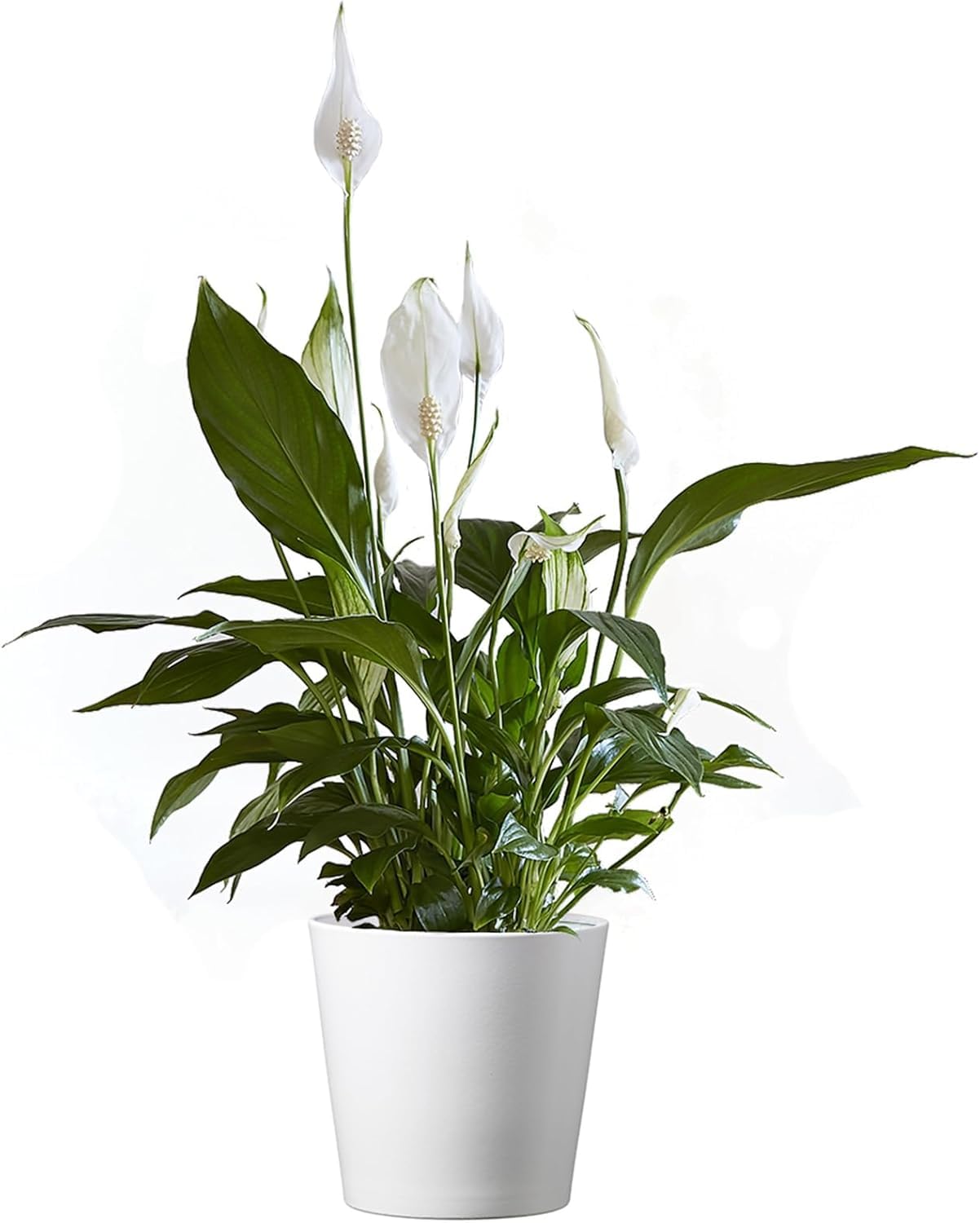
The Peace Lily (Spathiphyllum) consistently tops NASA’s rankings for removing benzene, formaldehyde, and trichloroethylene from sealed chambers. This dwarf variety arrives in a 6-inch Deco pot at a compact size suitable for desks or shelves, yet its broad, dark-green leaves maintain a high transpiration rate even in low indirect light. The signature white spathe flowers appear year-round, providing a visual cue that the plant is actively photosynthesizing and filtering.
Multiple verified buyers report that plants arriving slightly wilted from shipping bounced back within 24 hours after watering — the Peace Lily’s dramatic droop response is actually a useful feature, signaling thirst before the roots suffer damage. The organic potting medium retains moisture without becoming waterlogged, supporting the constant hydration needed for continuous VOC uptake. Expect the plant to reach roughly 6 inches in height at delivery, with new leaves emerging within weeks under normal room conditions.
Cold-weather shipping without insulation has caused frost damage in some deliveries during winter months, so consider ordering when temperatures are moderate or choose a seller that offers heat packs. The Peace Lily is toxic to pets if ingested due to calcium oxalate crystals, making it unsuitable for homes where cats or dogs chew on foliage. Otherwise, this is the most forgiving flowering air purifier available for low-light spaces.
Why it’s great
- Top performer in NASA’s Clean Air Study for multiple VOCs
- Dramatic droop when thirsty makes watering timing obvious
- Produces white blooms year-round in low indirect light
Good to know
- Toxic to cats and dogs if leaves are consumed
- Winter shipping without heat pack may cause leaf blackening
3. Anthurium Purple Andraeanum

Anthurium species offer a dual benefit: glossy heart-shaped leaves that filter ammonia and formaldehyde, plus long-lasting purple spathes that retain their color for weeks. This California-sourced plant arrives in a 4-inch nursery pot with active blooms already visible, eliminating the waiting period common with young houseplants. The organic growing medium includes slow-release nutrients that support continuous flowering without frequent fertilization.
Buyers consistently praise the plant’s health upon arrival, with multiple five-star reviews noting robust root systems and moist soil that kept the specimen hydrated through cross-country transit. The Anthurium’s natural understory habitat makes it comfortable in moderate indirect light — think east-facing window or a few feet back from a south-facing sill. Water only when the entire pot feels dry, which prevents root rot while maintaining the steady transpiration needed for air cleaning.
The cold weather protection warning is critical: if temperatures along the shipping route drop below 45°F, you must purchase the insulation add-on or live arrival is not guaranteed. This is a true tropical specimen that cannot tolerate frost. Once established, the Anthurium’s year-round blooming cycle provides a continuous visual reward alongside its air-purifying function, making it a strong choice for offices and living rooms where decorative appeal matters.
Why it’s great
- Glossy purple blooms last weeks without fading
- Healthy root systems verified in customer reviews
- Compact growth suits desks and small shelves
Good to know
- Requires cold weather insulation below 45°F shipping temps
- May arrive smaller than product photos if you choose the 4-inch pot
4. Lemon Lime Maranta Prayer Plant

For households with cats and dogs, the Lemon Lime Maranta (Prayer Plant) is one of the few air-filtering species that carries ASPCA non-toxic certification while maintaining active phytoremediation capacity. Its oval leaves feature vivid lime-green centers with dark-green feathered veins, and the plant’s signature nyctinastic movement — leaves folding upward at night like praying hands — adds an interactive element that helps you notice its health at a glance.
This plant arrives 12–16 inches tall in a 4-inch nursery pot with healthy root systems that multiple buyers describe as “full and large.” The bright indirect light requirement is slightly higher than a Peace Lily’s — a spot near an east window or under grow lights works best. Water when the top half of the soil feels dry, roughly every 7–10 days, and maintain humidity above 40% by misting or using a pebble tray to prevent leaf edge browning.
Customer feedback emphasizes the plant’s rapid growth after repotting, with several reviewers needing to size up within two months. The Lemon Lime variety is particularly vigorous compared to standard green Marantas, producing new leaves consistently when given warmth (65–75°F). While its VOC absorption rate hasn’t been studied as extensively as Spider Plants or Peace Lilies, the large leaf surface area and high transpiration rate provide meaningful air movement and particulate capture in small to medium rooms.
Why it’s great
- ASPCA recognized as non-toxic for pets
- Vibrant leaf variegation with nighttime folding movement
- Fast growing and easy to propagate from cuttings
Good to know
- Needs higher humidity than typical indoor air provides
- Leaves will curl if under-watered for more than a few days
5. Philodendron Heartleaf Brasil

Philodendron hederaceum ‘Brasil’ brings the classic heartleaf form with striking chartreuse and dark-green variegation, making it one of the most visually adaptable air-filtering plants for bookshelves and hanging baskets. The trailing vines can extend several feet over time, multiplying the leaf surface area available for VOC absorption — particularly formaldehyde and benzene, which Philodendrons are well-documented to reduce in sealed chamber studies.
This specimen ships from a certified California facility with careful packaging that buyers consistently rate as “best plant packaging ever received.” The 4-inch pot holds a full, bushy plant with multiple stems, not a single cutting. Philodendron Brasil thrives in conditions that would kill more demanding species: average home humidity, partial shade, and watering only when the top half of the soil dries out. The low maintenance requirement makes it a reliable choice for office desks or bedrooms where consistent care attention is limited.
One key consideration: Philodendrons contain calcium oxalate crystals that irritate mouth and throat if ingested, so this plant should stay out of reach of pets and small children. The variegated leaves need medium indirect light to maintain their pale yellow stripes — too little light and the plant reverts to solid green, which reduces its photosynthetic efficiency and air-cleaning capacity. Regular pruning of the longest vines encourages bushier growth and more leaves per square foot of pot space.
Why it’s great
- Trailing habit maximizes leaf surface in vertical space
- Remarkably tolerant of inconsistent watering and low humidity
- Buyers consistently report “perfect condition” on arrival
Good to know
- Mildly toxic to pets if leaves are chewed
- Variegation fades in low light, reducing cleaning capacity
FAQ
How many air filtering plants do I need per room to see a measurable difference?
Can air filtering plants replace a mechanical HEPA purifier?
Final Thoughts: The Verdict
For most users, the best air filtering plants winner is the Spider Plant Variety Pack because it delivers four different cultivars with proven formaldehyde and xylene reduction, forgiving care requirements, and the ability to propagate indefinitely. If you want a flowering specimen that thrives in low light, grab the Peace Lily. And for pet-friendly households where non-toxic foliage is non-negotiable, nothing beats the Lemon Lime Maranta Prayer Plant.

Mo Maruf
I created WellFizz to bridge the gap between vague wellness advice and actionable solutions. My mission is simple: to decode the research and give you practical tools you can actually use.
Beyond the data, I am a passionate traveler. I believe that stepping away from the screen to explore new environments is essential for mental clarity and physical vitality.