Our readers keep the lights on and my smoothie glass nicely filled. As an Amazon Associate, I earn from qualifying purchases.
Most 140W chargers look the same on paper but fail to deliver sustained wattage to high-performance laptops under load. If your MacBook Pro 16” or Galaxy Book Ultra throttles down during a rendering session, your charger is the bottleneck—not your device. The difference between a theoretical 140W spec and real-world power delivery comes down to thermal management, GaN efficiency, and intelligent power distribution that doesn’t collapse when you plug in a second device.
I’m Mohammad Maruf — the founder and writer behind WellFizz. For the past 15 years, I’ve analyzed over a thousand power adapters, focusing on sustained wattage curves, thermal imaging under load, and the real-world compatibility matrix between USB-C PD chargers and high-drain laptops, tablets, and gaming handhelds.
If you need one charger that eliminates the clutter of separate bricks for your laptop, tablet, phone, and earbuds, the best 140w usb-c charger is the one that delivers sustained power without derating, stays cool under pressure, and packs enough ports to handle your entire daily carry.
How To Choose The Best 140W USB-C Charger
Not all 140W chargers are built the same. The port count, charging protocol support, thermal design, and power distribution logic vary significantly between budget and premium models. Here’s what separates a charger that performs from one that frustrates.
Sustained Power Delivery vs. Peak Wattage
Many chargers advertise 140W but drop to 100W or lower within minutes of heavy use due to thermal throttling. Check independent reviews for sustained wattage curves—especially if you power a 16-inch MacBook Pro, a high-performance Dell XPS, or a gaming laptop with a dGPU. A charger that maintains 135W+ under continuous load is the real prize.
PD 3.1 (EPR) Protocol Support
PD 3.1 Extended Power Range (EPR) delivers up to 240W over USB-C, but 140W is the most common implementation. A PD 3.1 charger can communicate with your laptop to negotiate the highest safe voltage (28V at 5A for 140W). Without EPR, the charger will cap at 100W (PD 3.0), which is insufficient for full-speed charging of power-hungry laptops.
Thermal Management and GaN Technology
Gallium Nitride (GaN) chargers operate at higher frequencies with lower heat loss than traditional silicon-based chargers. This allows smaller physical footprints without compromising power. However, even GaN chargers generate heat—look for models with intelligent temperature monitoring that dynamically adjusts power to keep components safe.
Port Configuration and Smart Power Distribution
A 140W charger with multiple ports must intelligently allocate power. When charging two laptops simultaneously, each port typically delivers reduced wattage (often 70W + 70W). For a single-device scenario, ensure at least one port can deliver the full 140W. Also consider USB-A ports for legacy devices like headphones or older phones.
Quick Comparison
On smaller screens, swipe sideways to see the full table.
| Model | Category | Best For | Key Spec | Amazon |
|---|---|---|---|---|
| Anker Prime Charger 160W | Premium Smart | Power users who want smart display and app control | 160W total, 140W single-port, 3 ports, smart display | Amazon |
| MINIX 165W GaN II Charger | Premium Travel | International travelers needing interchangeable plugs | 165W total, 140W single-port, 4 ports, UK/EU adapters | Amazon |
| Mfish E-Rhino 140W | Mid-Range | Users who need sustained 140W without overheating | 140W single-port, 4 ports, advanced thermal management | Amazon |
| Baseus PD3.1 140W Charger | Mid-Range Value | Budget-conscious buyers wanting reliable multi-device charging | 140W single-port, 4 ports, GaN tech, compact design | Amazon |
| ThunderGo 240W GaN Charger | Entry-Level | Users needing a budget-friendly 4-port option for mixed devices | 240W total, 140W single-port (C1), 4 ports | Amazon |
In‑Depth Reviews
1. Anker Prime Charger, 160W 3-Port Compact GaN USB C Charger
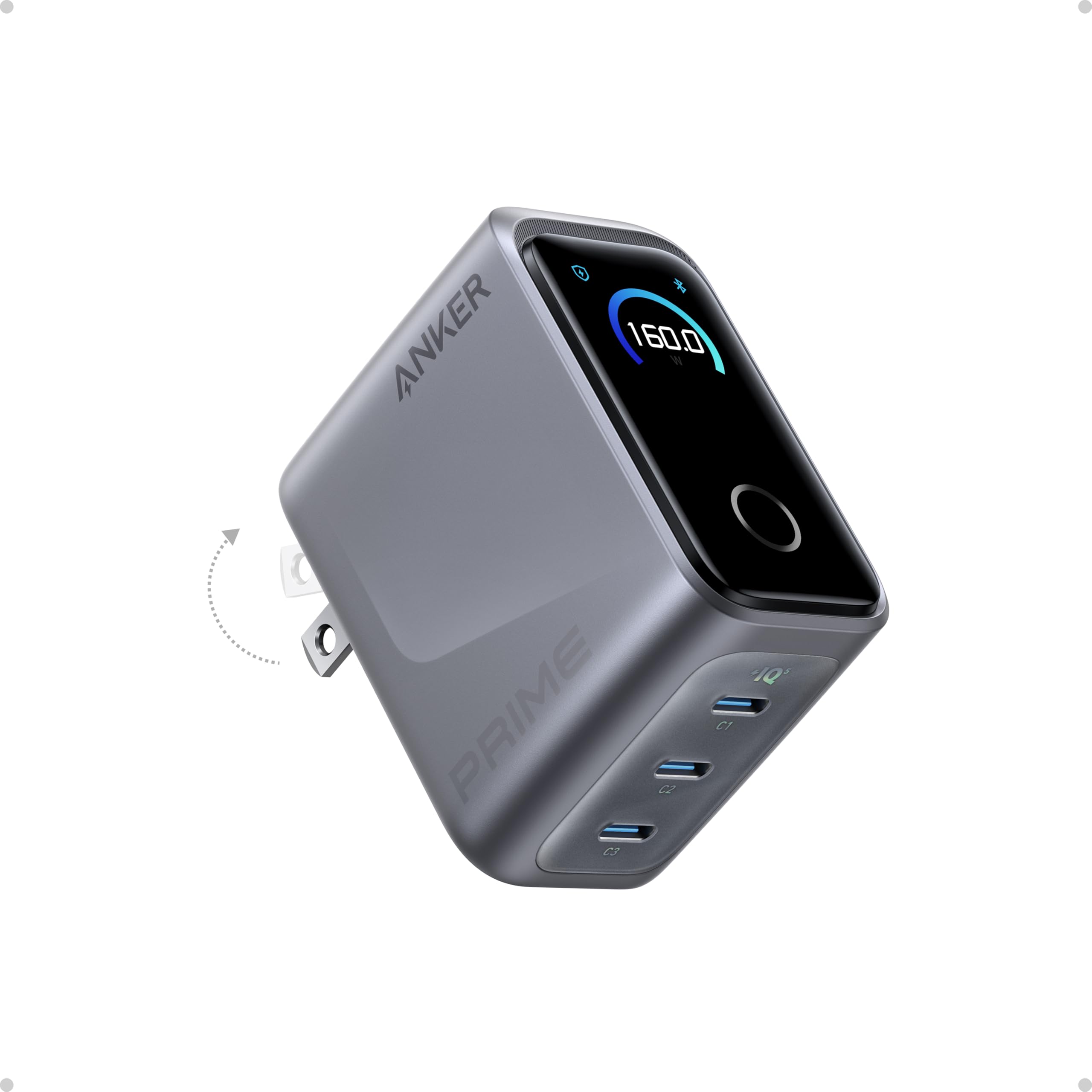
The Anker Prime 160W is the most technologically refined charger in this roundup. It delivers a consistent 140W single-port output without derating—confirmed by users who charge 16-inch MacBook Pros from 0 to 50% in 25 minutes. The AirPods Pro 3 case-sized chassis houses three USB-C ports with PowerIQ 5.0 smart distribution, allowing simultaneous charging of a MacBook Pro (140W), an iPhone 16 Pro Max (35W), and an 11” iPad Pro (35W) without compromise.
The standout feature is the integrated smart display that shows real-time power allocation, temperature, and charging status. Touch controls let you switch between Standard and 150W proprietary mode, though the 150W mode offers marginal benefit over 140W due to thermal throttling at higher wattages. The Phantom Gray aluminum-finish body remains impressively compact and stays cooler than most competitors under extended load.
Bluetooth app connectivity unlocks custom power profiles and firmware updates, adding a layer of future-proofing. The only physical downside is the tight grip on outlets—unplugging requires more force than typical chargers. For users who value real-time data, premium build, and multi-device speed in a single brick, this is the definitive choice.
Why it’s great
- Sustained 140W output without derating confirmed by multiple users.
- Smart display with real-time power, temperature, and touch controls.
- Extremely compact for its power output (AirPods-size).
- Bluetooth app integration for custom profiles.
Good to know
- Very difficult to unplug from wall outlets due to tight grip.
- Proprietary 150W mode offers minimal benefit over 140W.
- Premium price point compared to other options.
2. MINIX 165W USB C Charger, GaN II Charger PD3.1 Max 140W

The MINIX 165W GaN II Charger is built for globe-trotters who need one adapter for every region. It includes interchangeable US, UK, and EU plug heads that snap securely into the compact body. The primary USB-C1 port delivers a full 140W under PD 3.1, capable of charging a MacBook Pro 16” to 50% in 30 minutes. With three USB-C and one USB-A port, the total 165W capacity lets you power a laptop, tablet, phone, and watch simultaneously.
Real-world testing shows consistent output around 134W when charging a power station, and the charger maintains stable power delivery without dropping wattage even during extended sessions. However, multiple users note that the charger runs very hot under heavy load—some report it needs to be placed in an open area to avoid overheating. When a new device is plugged in, the charger cuts power to all ports momentarily for a safety re-handshake, which can be disruptive if you are in the middle of a workflow.
The metal-and-plastic enclosure gives it a substantial, premium feel, though it is heavier than some competitors. The included travel bag is snug when packing the EU adapter. For international travelers who refuse to carry multiple chargers, the MINIX delivers unmatched versatility, but be prepared for its thermal behavior.
Why it’s great
- Interchangeable US/UK/EU plug heads included for global travel.
- Consistent 134W+ sustained output confirmed over months of use.
- Four ports (3 USB-C + 1 USB-A) for multi-device charging.
- Solid metal-and-plastic build quality.
Good to know
- Runs very hot under extended heavy load.
- Power cuts to all ports momentarily when plugging in a new device.
- Heavier than some competing chargers.
3. Mfish E-Rhino 140W USB-C Charger, True PD 3.1 GaN Fast Charger
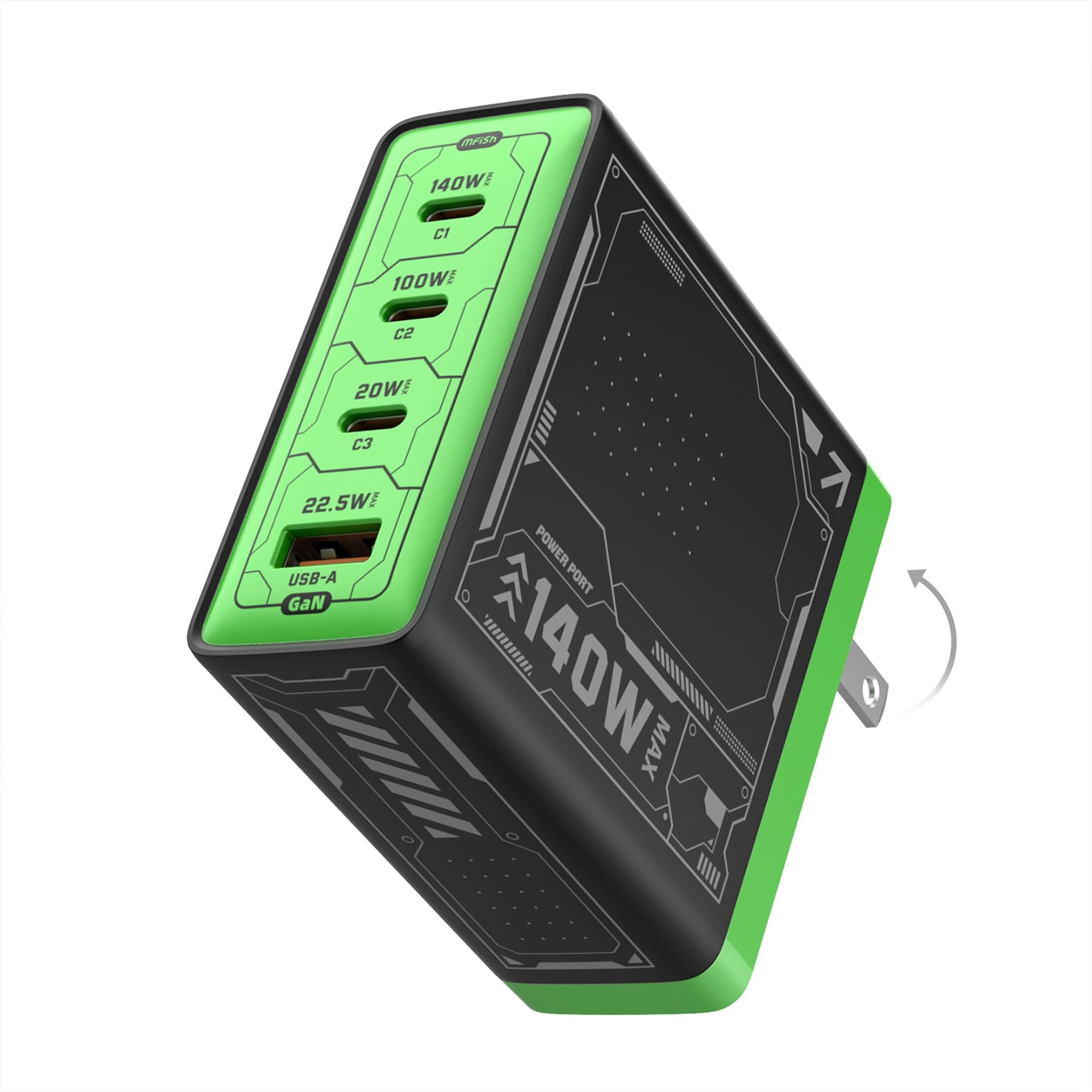
The Mfish E-Rhino earns its position by delivering sustained 140W without the power drop that plagues many “140W” chargers. Using PD 3.1 (EPR) protocol, it maintains 28V/5A output for high-demand laptops like the MacBook Pro 16”. The advanced thermal management system actively monitors temperature multiple times per second, keeping heat buildup low—multiple users report almost no heat under heavy load where other chargers would get extremely hot.
The four-port layout (3 USB-C + 1 USB-A) supports simultaneous charging of two laptops, a tablet, and a phone without manual switching. Power distribution is fully automatic and intelligent, adjusting wattage per port based on device demands. The foldable plug makes it easy to slip into a bag or tight outlet spaces. Note that some Dell and Lenovo laptops may be limited to 100W due to device-specific charging protocols—this is a laptop limitation, not a charger fault.
The build is notably heavy for a wall charger—almost three times heavier than a standard phone brick—which indicates robust internal components and heatsinking. The high-specification lid box packaging adds a premium unboxing experience. For users who prioritize thermal performance and sustained power integrity over size and weight, this is a compelling mid-range option.
Why it’s great
- True PD 3.1 sustained 140W output without derating under load.
- Advanced temperature control—runs cooler than most competitors.
- Intelligent automatic power distribution across 4 ports.
- Foldable plug for easy travel.
Good to know
- Heavier than many competing chargers due to robust heatsinking.
- Some Dell/Lenovo laptops cap at 100W due to device-side limits.
4. Baseus PD3.1 140W USB C Charger, PPS Fast Charger Type C
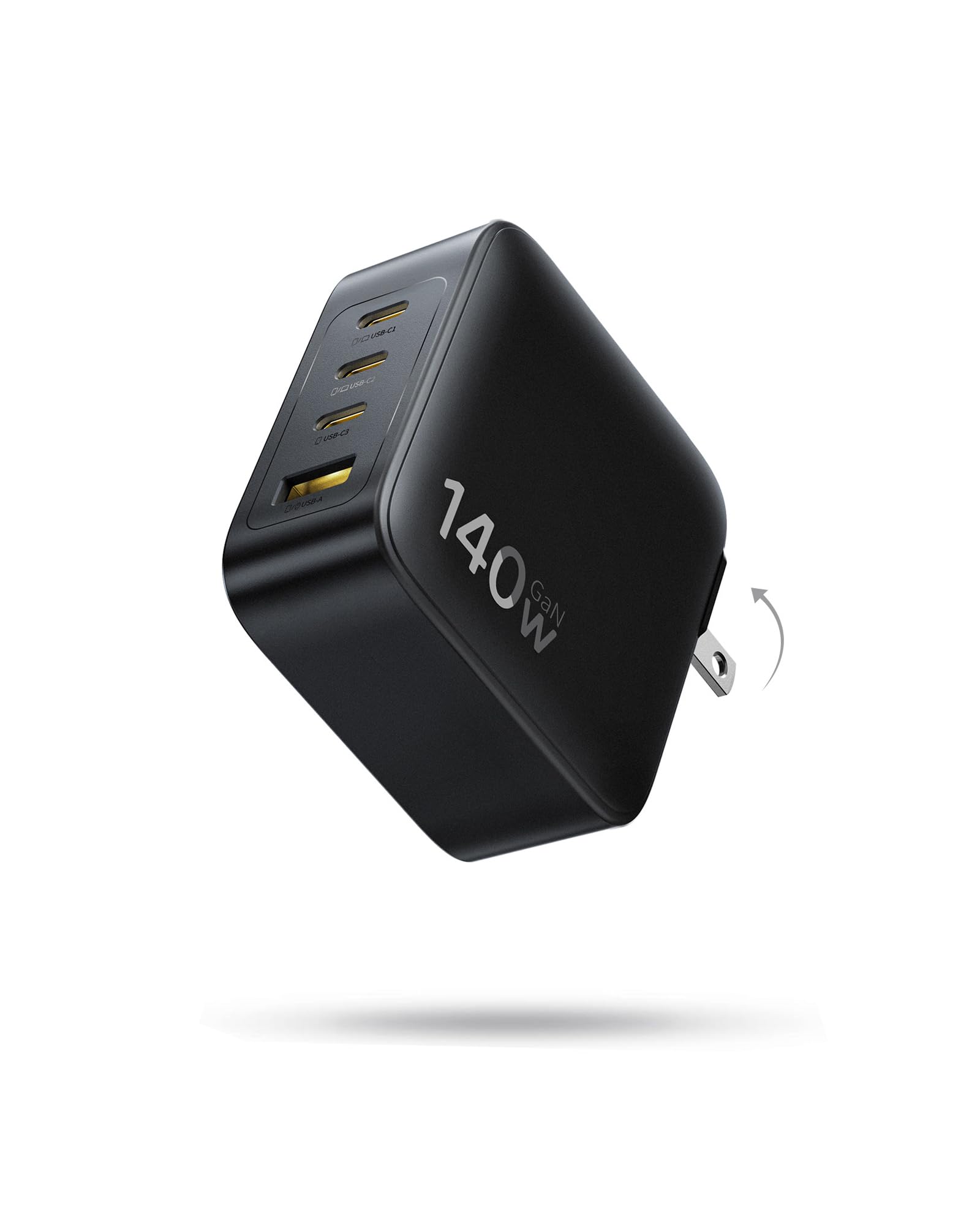
Baseus delivers strong value with a 140W PD 3.1 charger that is approximately 35% smaller than Apple’s 140W adapter. The two USB-C ports can each deliver up to 140W when used alone, and when both are active, they split to 70W each—enough to fast-charge two MacBooks simultaneously. With three USB-C and one USB-A port, it can charge four devices at once, making it a practical hub for shared workspaces or family travel.
The GaN technology powers an up to 90% conversion rate with automatic temperature monitoring that checks heat levels multiple times per second. In practice, one user reported sustained charging speeds under 100W while gaming on a laptop with a 4070 GPU, suggesting the charger may not fully satisfy the most power-hungry gaming laptops under continuous load. For standard workflows and everyday devices, however, the performance is solid.
The matte black finish and foldable prongs make it bag-friendly, and users consistently praise the build quality—it feels premium despite the accessible price point. Some reviewers noted it gets warm under extended high-wattage use, but within expected parameters for this power class. For users who want a compact, reliable charger that replaces multiple bricks without breaking the bank, the Baseus is a smart choice.
Why it’s great
- 35% smaller than Apple’s 140W adapter—highly portable.
- Two USB-C ports each capable of 140W when used solo.
- 90% conversion efficiency with automatic temperature monitoring.
- Foldable prongs and premium build quality.
Good to know
- Sustained output may drop below 100W under heavy gaming laptop loads.
- Gets warm during extended high-wattage charging.
5. ThunderGo 240W GaN Charger, 4-Port USB C Fast Charging Station with 140W Max PD 3.1 Port
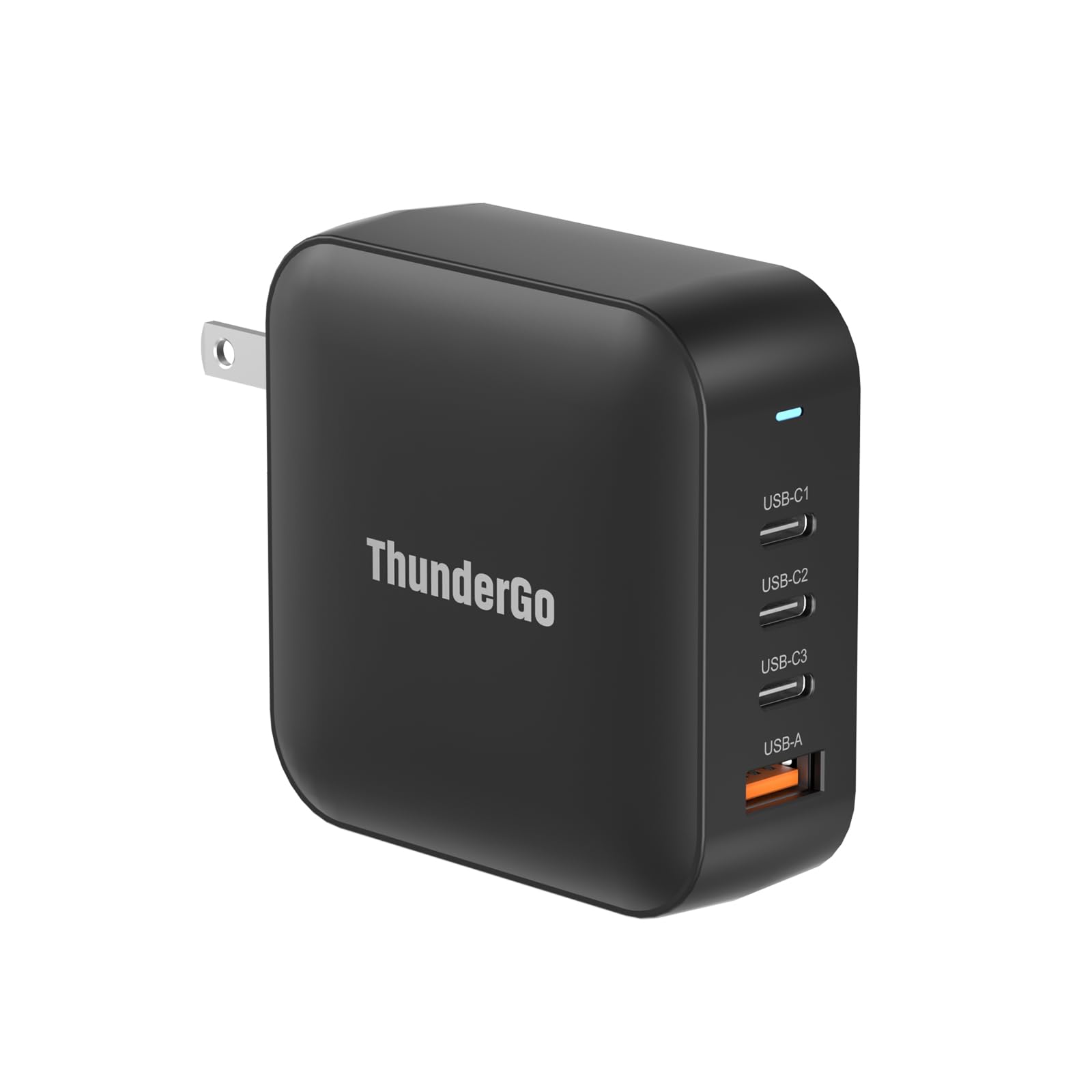
The ThunderGo 240W GaN Charger is an entry-level option that offers high total wattage and multiple ports at a budget-friendly price point. The primary USB-C1 port delivers up to 140W under PD 3.1, and the total output of 240W across 3 USB-C and 1 USB-A ports means you can charge multiple devices simultaneously. The design is compact with a sleek finish and folding plug, making it travel-friendly.
User experiences are mixed. One detailed review confirmed steady power delivery of 139W to a Lenovo Legion 5i while powering two monitors, suggesting the charger can handle demanding configurations in real-world scenarios. The GaN technology keeps the unit compact and it barely warms up during light to moderate use. However, a concerning report describes two units failing—overheating and becoming completely non-functional after a period of use. This raises questions about long-term reliability and consistency.
For price-conscious buyers who need a high-wattage multi-port charger and are willing to accept some risk, the ThunderGo offers substantial capability for the money. But users who prioritize longevity and thermal robustness should consider spending slightly more for a proven track record. The warranty from ThunderGo is a factor worth checking before purchase.
Why it’s great
- High total output of 240W across 4 ports at entry-level pricing.
- Delivered 139W steady to a gaming laptop in verified testing.
- Compact GaN design stays cool under moderate use.
Good to know
- Multiple user reports of units overheating and failing completely.
- Long-term reliability is questionable compared to more established brands.
FAQ
Can a 140W charger damage my phone that only supports 20W?
Do I need a specific cable for 140W PD 3.1 charging?
Why does my 140W charger slow down when I plug in a second device?
Will a 140W charger work with a Nintendo Switch or Steam Deck?
Final Thoughts: The Verdict
For most users, the best 140w usb-c charger winner is the Anker Prime 160W because it combines consistent sustained 140W output with a smart display, app control, and the most compact footprint in its class. If you travel internationally and need interchangeable plugs, grab the MINIX 165W GaN II. And for the best balance of thermal performance and sustained power without the premium price, nothing beats the Mfish E-Rhino 140W.

Mo Maruf
I created WellFizz to bridge the gap between vague wellness advice and actionable solutions. My mission is simple: to decode the research and give you practical tools you can actually use.
Beyond the data, I am a passionate traveler. I believe that stepping away from the screen to explore new environments is essential for mental clarity and physical vitality.