Our readers keep the lights on and my smoothie glass nicely filled. As an Amazon Associate, I earn from qualifying purchases.
The quiet of the night can amplify every parental worry. When your baby is sleeping, having a reliable window into their well-being isn’t a luxury—it’s a cornerstone of peace. The right monitor acts as a vigilant partner, letting you rest while it keeps watch.
I’m Mohammad Maruf — the founder and writer behind WellFizz. For over a decade, I’ve specialized in dissecting health tech specifications and analyzing real-world user data to separate marketing hype from genuine performance in the wellness market.
This guide cuts through the noise by comparing the core technologies, from movement sensors to true oxygen monitors. Through detailed analysis of features and real-user data, we identify the top devices that deliver reliable performance for the best baby pulse oximeter for overnight monitoring.
How To Choose The Best Baby Pulse Oximeter For Overnight Monitoring
Selecting an overnight monitor requires matching technology to your specific concerns. The market offers two primary solutions: movement-based apnea monitors and true pulse oximeters that measure blood oxygen. Your choice depends on whether you need general breathing reassurance or specific oxygen saturation data.
Movement Monitor vs. Pulse Oximeter
Movement monitors (like clip-on or under-mattress sensors) detect abdominal motion, signaling breathing. They are excellent for general peace of mind regarding breathing pauses and are often simpler. True pulse oximeters use light to measure SpO2 (oxygen saturation) and pulse rate directly, providing specific data crucial for monitoring known respiratory or cardiac concerns.
Key Features for Overnight Use
For any all-night device, comfort and secure attachment are paramount to avoid false alarms. Look for soft, wrap-around probes for oximeters or secure, lightweight clips for movement monitors. Customizable alarm thresholds allow you to set safe SpO2 and heart rate ranges. Finally, consider battery life and whether the device operates independently or requires a constant app connection, which can drain your phone.
Data Tracking and Connectivity
If you need to share trends with a pediatrician, prioritize devices with built-in memory and app connectivity that can generate sleep reports or export raw data. Simpler monitors may only provide real-time alerts, which is sufficient for immediate peace of mind but offers no historical record.
Quick Comparison
On smaller screens, swipe sideways to see the full table.
| Model | Type | Best For | Key Feature | Amazon |
|---|---|---|---|---|
| MugaTree Handheld | Handheld Pulse Ox | Continuous SpO2 & Pulse | Infant foot probe & app | Amazon |
| MedChirrup Handheld | Handheld Pulse Ox | Medical-grade accuracy | 500 data sets, multi-language | Amazon |
| Sense-U Pro Monitor | Clip-On Multi-Sensor | Breathing, position & temp | Gentle vibration alert | Amazon |
| EMAY Sleep Monitor | Recordable Pulse Ox | Detailed sleep data | 40-hour built-in memory | Amazon |
| Babysense 7 | Non-Wearable Monitor | Full crib coverage | Under-mattress sensor pads | Amazon |
| BellyButton Monitor | Clip-On Movement | Value-focused reassurance | 7-day battery, no Wi-Fi needed | Amazon |
| BabySmile E-202 | Standalone Movement | Simple, no-app operation | 6-month battery life | Amazon |
| Sense-U Pro Clip-On | Clip-On Multi-Sensor | Sleep trend analysis | Light/deep sleep reports | Amazon |
| MedChirrup Wrap-Around | Handheld Pulse Ox | Secure infant placement | Wrap-around probe design | Amazon |
| MedChirrup Medical Grade | Handheld Pulse Ox | Adults & kids | Long-term family monitoring | Amazon |
| MugaTree Dual Probe | Handheld Pulse Ox | Multi-user families | Adult & baby probes included | Amazon |
In‑Depth Reviews
1. MugaTree Handheld Pulse Oximeter
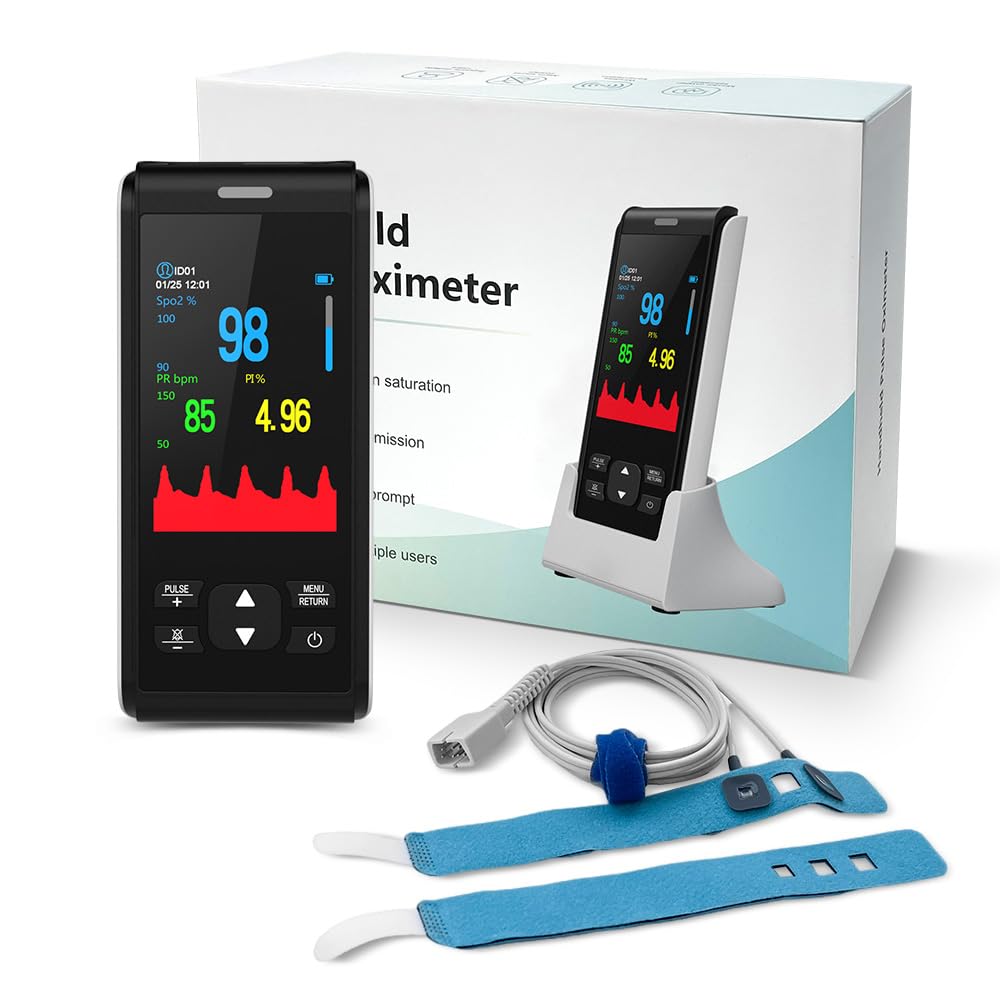
This handheld unit strikes an ideal balance between dedicated medical-grade performance and parent-friendly features. It includes a specialized soft probe designed for an infant’s foot or finger, which is critical for securing an accurate reading on a small, wiggly patient overnight. The device provides continuous monitoring with customizable alarm thresholds for both SpO2 and pulse rate, alerting you audibly if levels dip below your set parameters.
Connectivity is a strong suit here. The free companion app allows you to track and store data, with support for up to 10 different user profiles—perfect for families or caregivers. The magnetic charging cradle keeps the unit ready and makes it a convenient bedside companion. Users consistently report its readings align with clinical devices, providing trustworthy data.
For overnight monitoring, the secure infant probe and loud, reliable alarms are its greatest assets. While it requires the baby to be relatively still for a proper reading, the design prioritizes comfort to minimize disruption. It’s a comprehensive solution that delivers the specific oxygen saturation data many concerned parents are seeking.
Why it’s great
- Includes a specialized, comfortable infant probe for accurate placement.
- Customizable alarms and app connectivity for detailed trend tracking.
- Rechargeable with a convenient magnetic dock, avoiding battery waste.
Good to know
- Requires the baby to be fairly still for an accurate continuous reading.
- The app is necessary to access historical data and full customization.
2. MedChirrup Handheld Pulse Oximeter
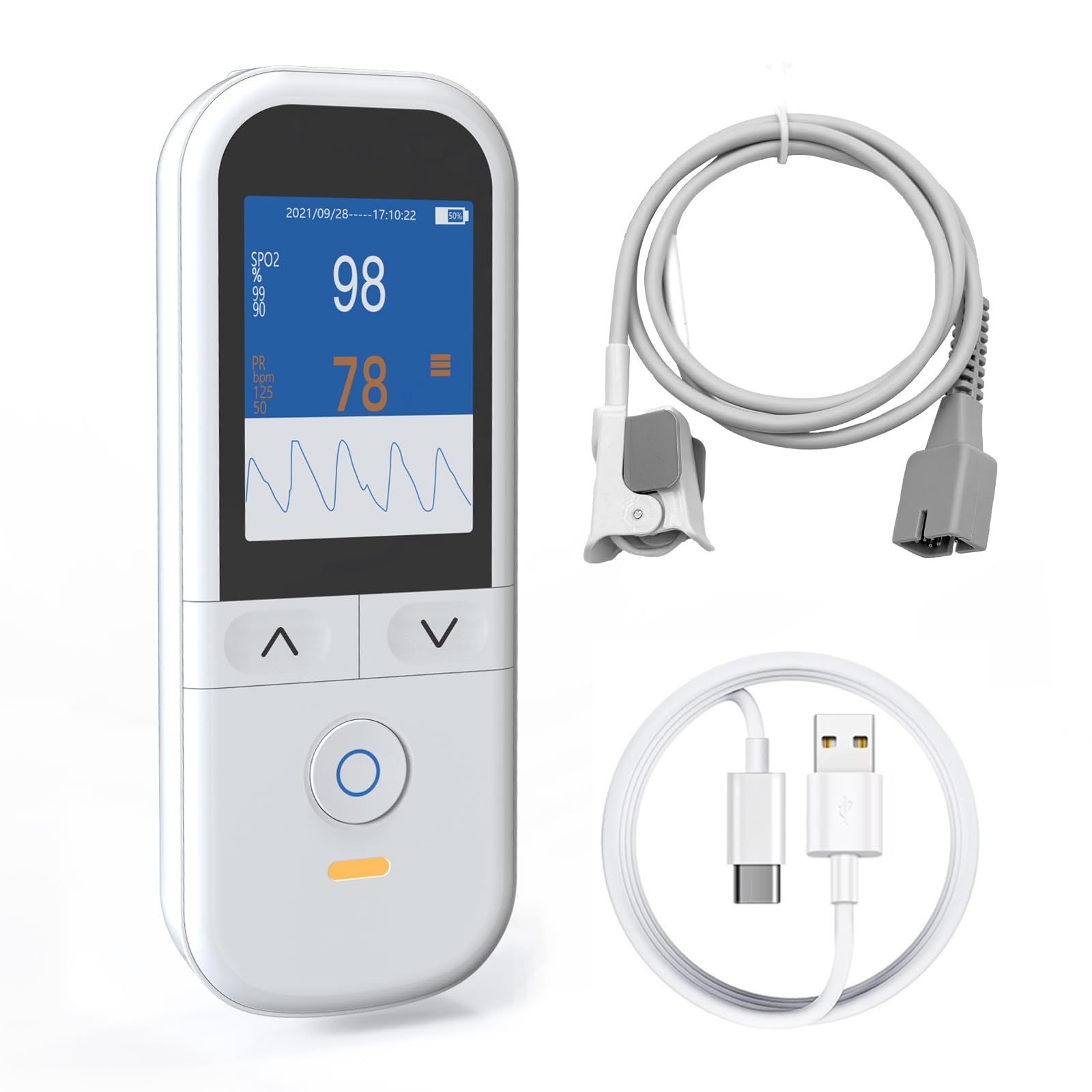
If your primary need is clinical-level data integrity, this MedChirrup model is engineered to deliver. It boasts a stated accuracy of ±1% for SpO2 and ±1 bpm for pulse rate, specifications that inspire confidence for tracking subtle overnight variations. The device stores an impressive 500 data sets with 20-hour continuous logs per patient, creating a robust record you can review directly on its clear HD screen or share with a healthcare provider.
The build quality reflects its professional orientation, with a silicone-lined finger clip and clear, intuitive display. It features multilingual support and customizable audio and visual alarms that trigger when readings fall outside your preset safe zones. Users, and even some medical professionals according to reviews, have noted its reliability and consistency over time.
This is a tool for the data-driven parent. It forgoes some of the “baby-specific” aesthetics for uncompromising performance. The USB-C charging offers modern convenience, and the week-long battery life on a charge supports sustained monitoring. It represents a premium investment in precision.
Why it’s great
- High-accuracy sensors with medical-grade performance claims.
- Extensive internal data storage and clear on-device display.
- Durable construction and reliable, long-lasting battery performance.
Good to know
- The interface, while powerful, can be less intuitive than simpler models.
- Designed as a general handheld unit, not specifically styled for infants.
3. Sense-U Pro Baby Monitor
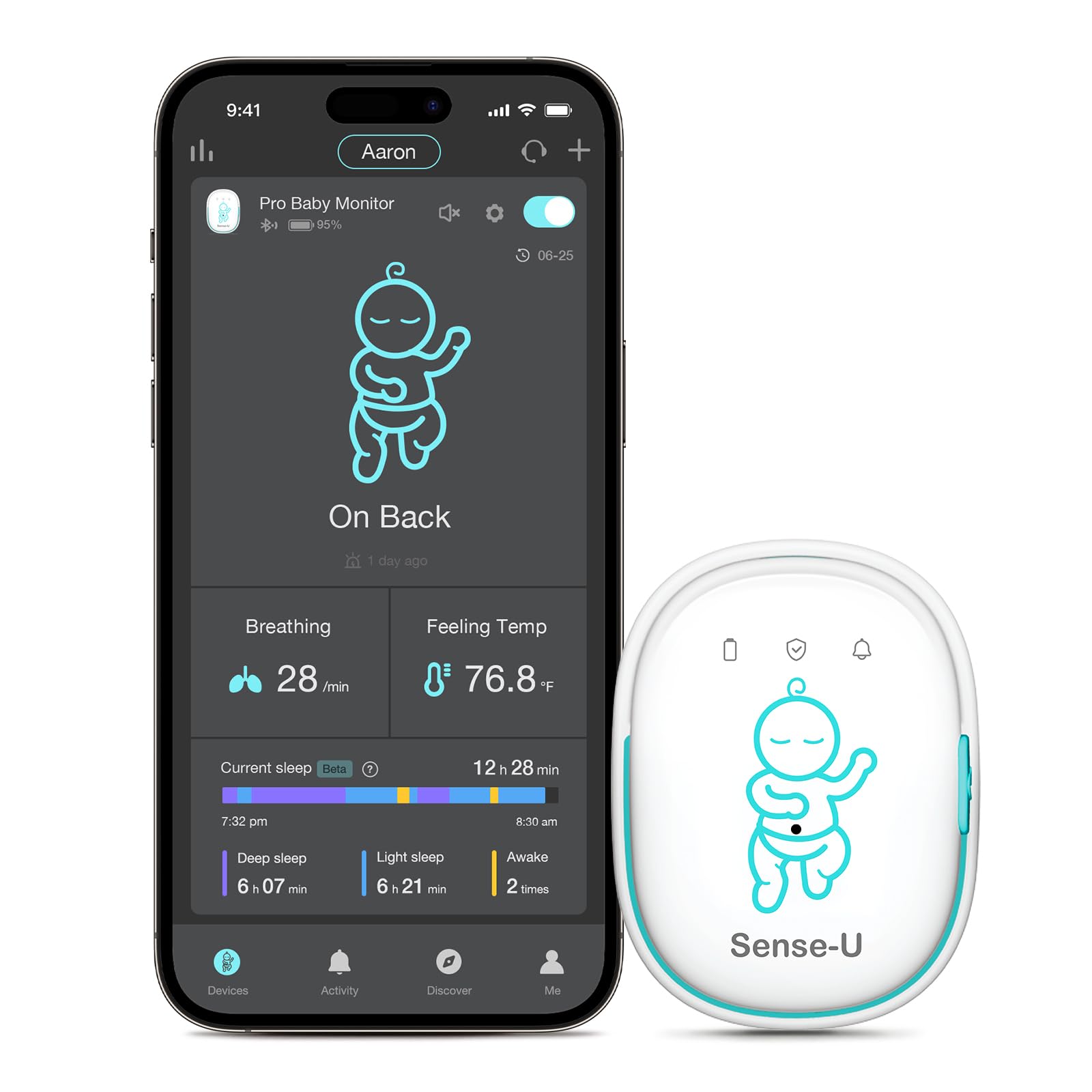
This clip-on monitor takes a holistic approach to sleep safety by tracking three key risk factors: breathing movement, sleep position (roll-over), and temperature. Its intelligent alert system first uses a gentle vibration on the baby’s body to rouse them if breathing pauses are detected, only escalating to an audible alarm and phone notification if movement doesn’t resume. This two-stage warning is a thoughtful feature that can prevent unnecessary panic.
The accompanying app provides in-depth sleep analysis, breaking down light and deep sleep cycles and overall sleep trends. This transforms the device from a simple alarm into a wellness tool that can help you understand your baby’s sleep patterns. The clip-on design is lightweight and boasts an excellent battery life of over a week per charge.
It’s important to note this is not a pulse oximeter; it doesn’t measure blood oxygen. Instead, it’s a sophisticated movement and environmental monitor. For parents worried about apnea due to position or overheating, and who value sleep quality data, this is a top-tier, feature-rich choice.
Why it’s great
- Multi-parameter monitoring (breathing, position, temperature) in one device.
- Gentle vibration as a first-stage alert is innovative and less jarring.
- Provides valuable sleep stage analysis and long-term trend data.
Good to know
- Does not measure blood oxygen saturation (SpO2) or pulse rate.
- Effectiveness can be impacted if the clip isn’t attached securely to the diaper.
4. EMAY Sleep Oxygen Monitor

The EMAY monitor is built for the parent or patient who needs to capture and analyze trends. Its standout feature is 40 hours of built-in memory, allowing you to record an entire night’s worth of SpO2 and pulse data without needing a live connection to your phone. You simply put it on at bedtime, take it off in the morning, and sync the data to the app at your convenience.
This functionality is incredibly useful for spotting patterns or providing a physician with concrete evidence of overnight desaturations. The free app generates summary reports, including an Oxygen Desaturation Index (ODI), and allows export of raw data for deeper analysis in third-party software. It’s a tool that bridges the gap between simple spot-checking and a professional sleep study.
The device uses AAA batteries, which can be a pro for travel but a con for ongoing cost; using rechargeables is highly recommended. The finger spring is noted to be firm, which ensures a good reading but may require a comfort break for some during all-night wear.
Why it’s great
- Independent data recording eliminates the need for all-night Bluetooth.
- Generates detailed reports and ODI scores useful for medical consultation.
- Reliable accuracy for identifying trends in oxygen levels over time.
Good to know
- Runs on AAA batteries, which drain relatively quickly with continuous use.
- The finger clamp can feel tight, potentially causing discomfort during long sessions.
5. Babysense 7 Breathing Movement Monitor
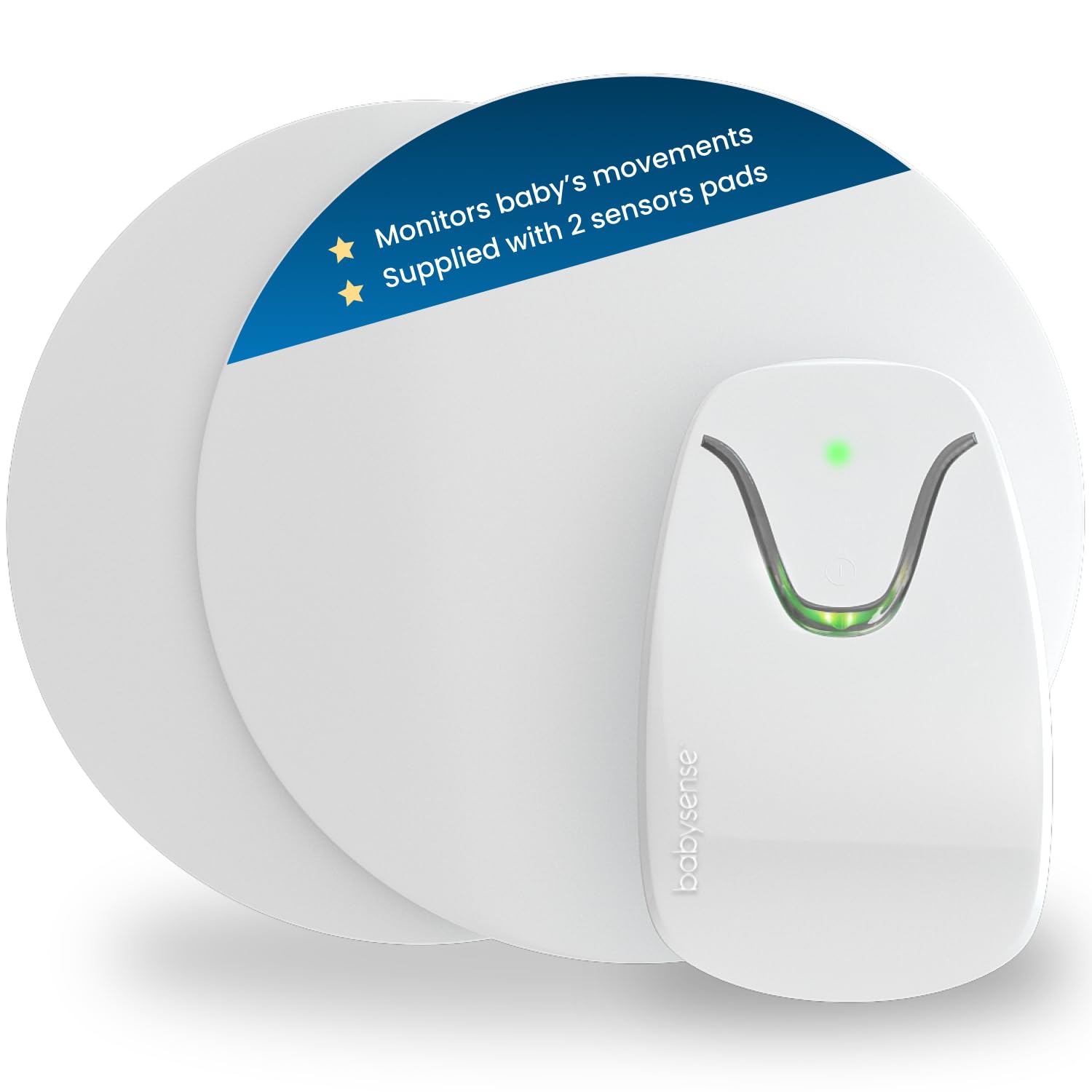
For parents who want zero devices on their baby, the Babysense 7 offers a compelling solution. This system uses two highly sensitive sensor pads that slide under the crib mattress, detecting the slightest micro-movements of breathing through the mattress itself. It’s a completely passive, non-wearable technology that many find reassuringly simple and safe.
The system provides full crib coverage and sounds an alarm if no movement is detected for 20 seconds. Its setup is straightforward, and because it has no direct contact with the infant, there are no concerns about skin irritation, secure attachment, or the device being dislodged. It’s also FSA/HSA eligible, making it a practical purchase for many families.
The main limitation is that it cannot be used with memory foam mattresses, as they dampen the micro-vibrations. It also doesn’t provide any data on oxygen levels or heart rate, strictly focusing on movement as a proxy for breathing. For pure, straightforward breathing apnea monitoring without any wearables, it’s a trusted and effective choice.
Why it’s great
- No wearable components—completely non-contact and baby-safe.
- Covers the entire crib area with two sensitive sensor pads.
- Simple operation with a reliable auditory alarm, FSA/HSA eligible.
Good to know
- Will not work with memory foam or overly soft mattresses.
- Only monitors movement, not oxygen saturation or heart rate.
6. BellyButton Baby Movement Monitor
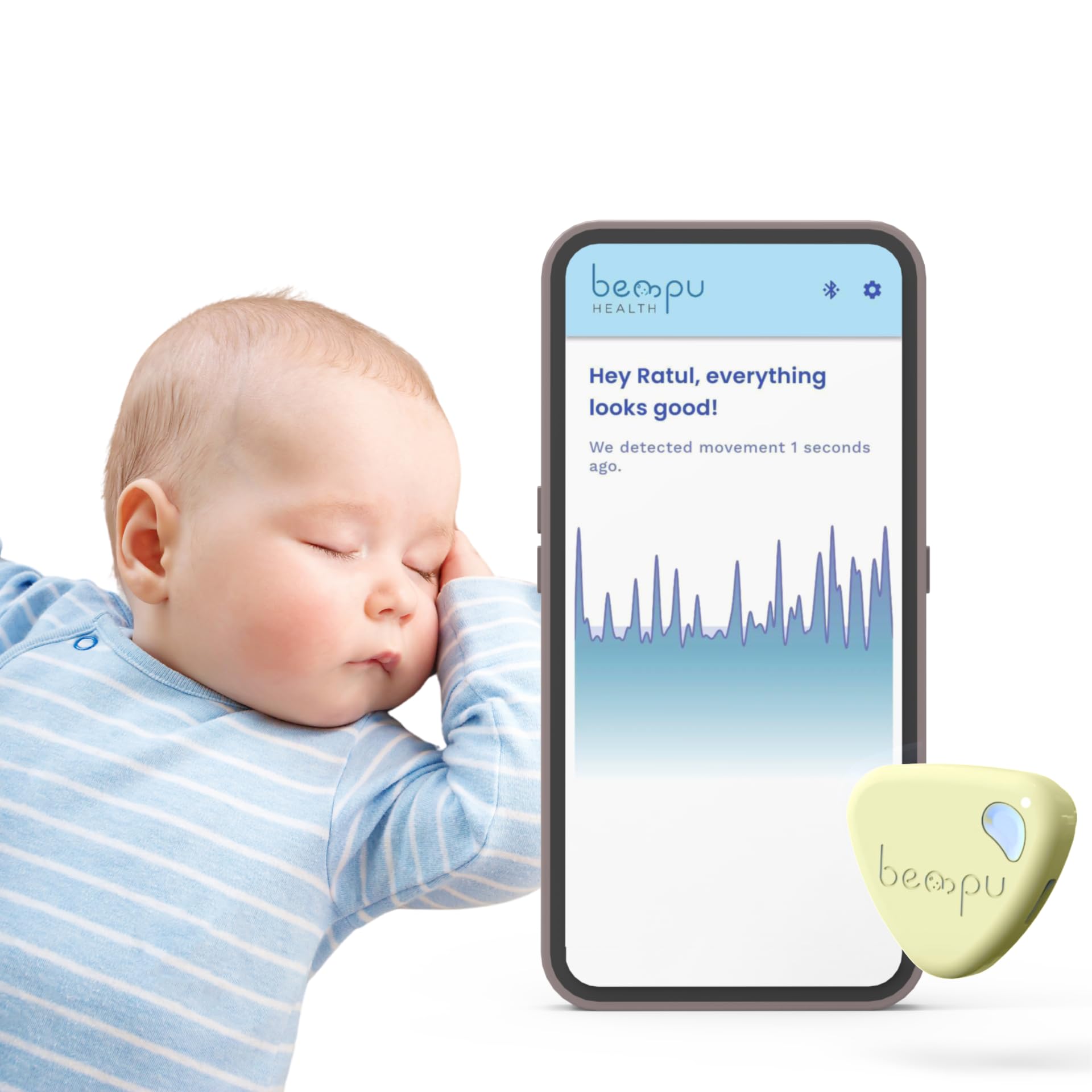
This entry-point clip-on movement monitor delivers core reassurance without complexity. It tracks abdominal movements and will alert you via a gentle device vibration followed by an audible alarm if no motion is detected. It connects via Bluetooth to a simple app for customizable alerts but can also function in a standalone mode, giving you flexibility.
Parents praise its ease of use, with setup taking mere seconds, and its impressive battery life—up to a week on a single one-hour charge. The compact, lightweight clip is designed to secure to clothing or a diaper without bothering the baby. For those seeking a straightforward digital guardian for basic breathing monitoring, it represents a strong value proposition.
The technology is focused solely on movement detection. It doesn’t track oxygen, temperature, or sleep position. However, for its intended purpose of providing baseline peace of mind about breathing pauses, it performs reliably and is a very accessible option for new parents.
Why it’s great
- Excellent battery life and quick recharge for uninterrupted use.
- Simple setup and the option to use with or without a smartphone app.
- Lightweight, secure clip and gentle first-stage vibration alert.
Good to know
- Bluetooth connection to the app can occasionally drop, requiring a re-pair.
- As a movement-only monitor, it provides less data than multi-feature devices.
7. BabySmile E-202 Movement Monitor
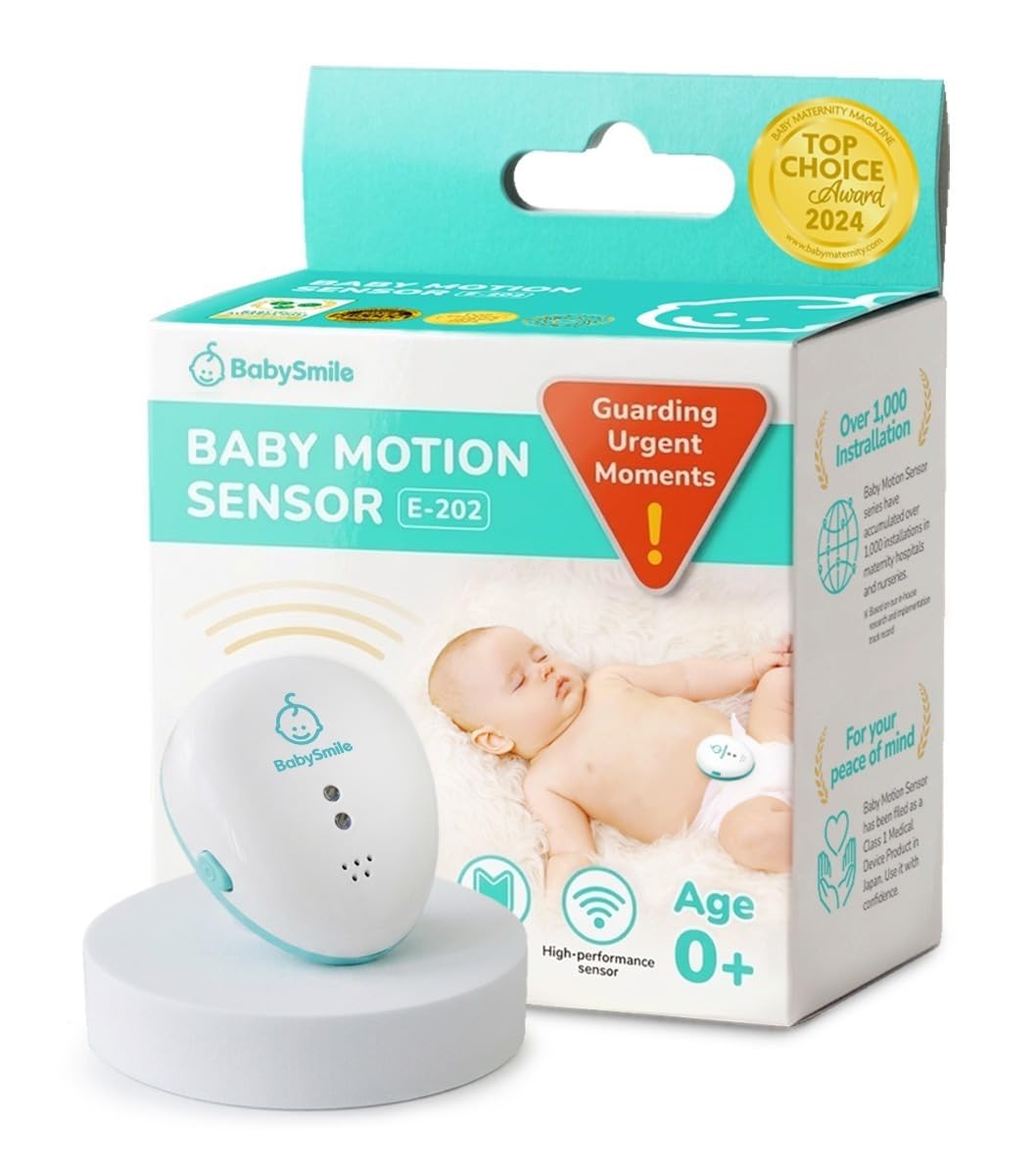
For parents who prefer a completely independent device with no smartphones or apps involved, the BabySmile E-202 is a compelling option. This self-contained movement monitor clips onto the diaper and operates on its own, sounding an alarm if no movement is detected for 20 seconds. Its standout feature is an exceptional battery life—approximately six months of daily use from a single set of alkaline batteries.
The philosophy here is ultimate simplicity: no Bluetooth pairing, no app downloads, no Wi-Fi networks. You clip it on and it works. This makes it incredibly easy for grandparents or other caregivers to use and eliminates any concerns about digital connectivity or radio frequencies. The device is designed to detect even the slightest movements, providing focused reassurance on the core question of breathing motion.
This simplicity is also its limitation. It offers no data tracking, temperature sensing, or connectivity of any kind. Proper clipping is essential to prevent false alarms from the device becoming dislodged. For those who want a straightforward, analog-style alert system that requires zero technical setup, this monitor delivers fundamental peace of mind with remarkable longevity.
Why it’s great
- Extremely long battery life (up to 6 months), eliminating frequent charging.
- Totally standalone operation with no app, phone, or Wi-Fi required.
- Simple and intuitive for anyone to use immediately.
Good to know
- Provides no historical data, connectivity, or additional features like temperature tracking.
- Secure attachment is critical; improper clipping can lead to false alarms.
8. Sense-U Pro Clip-On Monitor
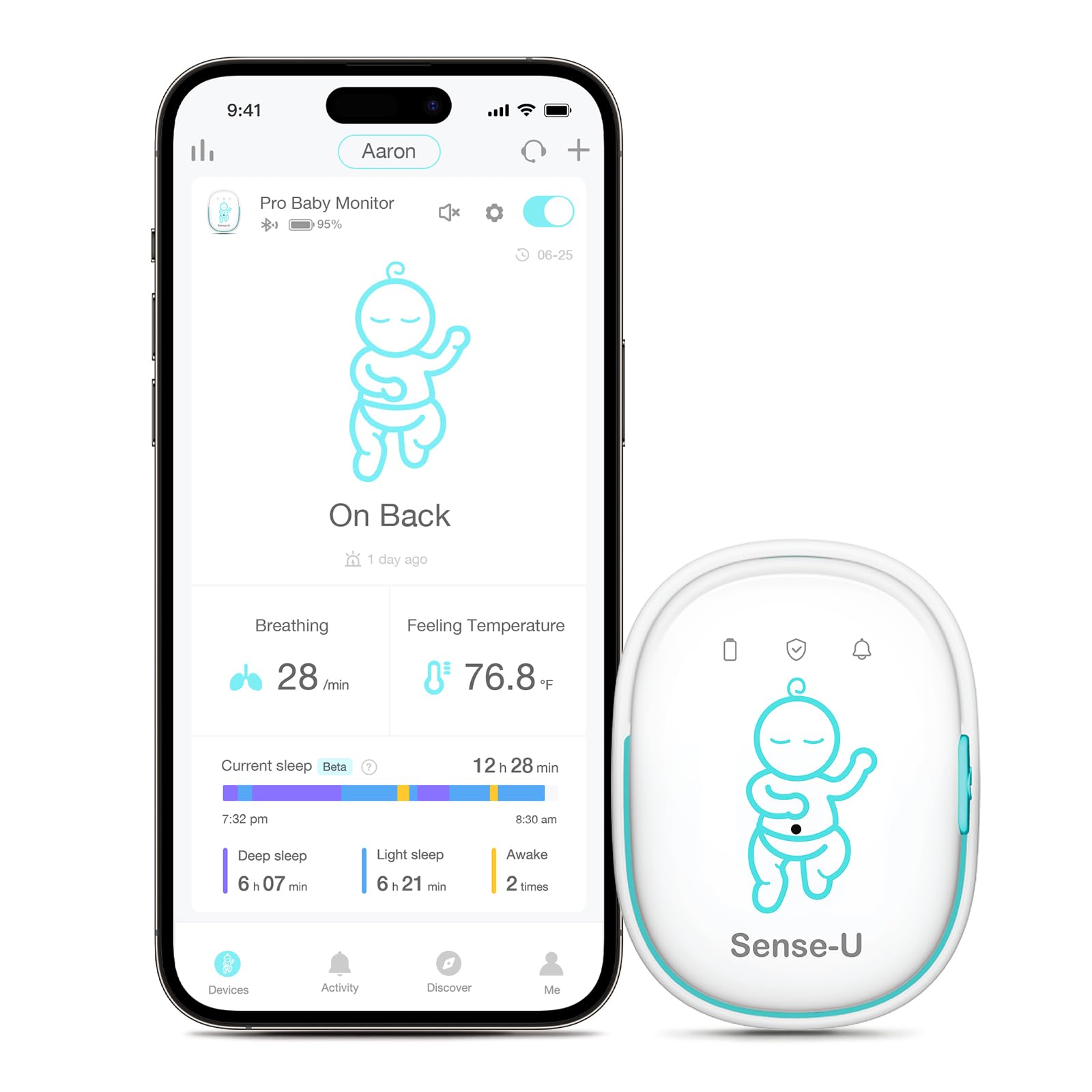
This version of the Sense-U Pro focuses on delivering rich sleep data alongside safety alerts. It clips onto the diaper and monitors abdominal movement, sleep position, and skin temperature. The accompanying app provides detailed breakdowns of sleep cycles, distinguishing between light and deep sleep stages and tracking overall sleep trends over time.
The device uses the same intelligent alert protocol as its sibling: a gentle vibration first, followed by an audible and app alert if no movement resumes. This focus on providing insights, not just alarms, helps parents understand their baby’s sleep patterns, which can be valuable for establishing routines. The rechargeable battery lasts over a week, supporting continuous monitoring without daily charging hassle.
As with all clip-on monitors, consistent and secure placement is key to accurate readings. The app-based system provides a wealth of information but requires a smartphone to access the full functionality. For the parent who views sleep data as a tool for improving overall infant wellness, this device is a powerful ally.
Why it’s great
- Detailed sleep stage analysis and long-term trend reporting in the app.
- Combines safety alerts (breathing, roll-over, temp) with wellness insights.
- Long-lasting rechargeable battery and comfortable, lightweight design.
Good to know
- Full feature set relies on smartphone app connectivity.
- May trigger alerts during diaper changes if not temporarily paused.
9. MedChirrup Handheld with Wrap Probe
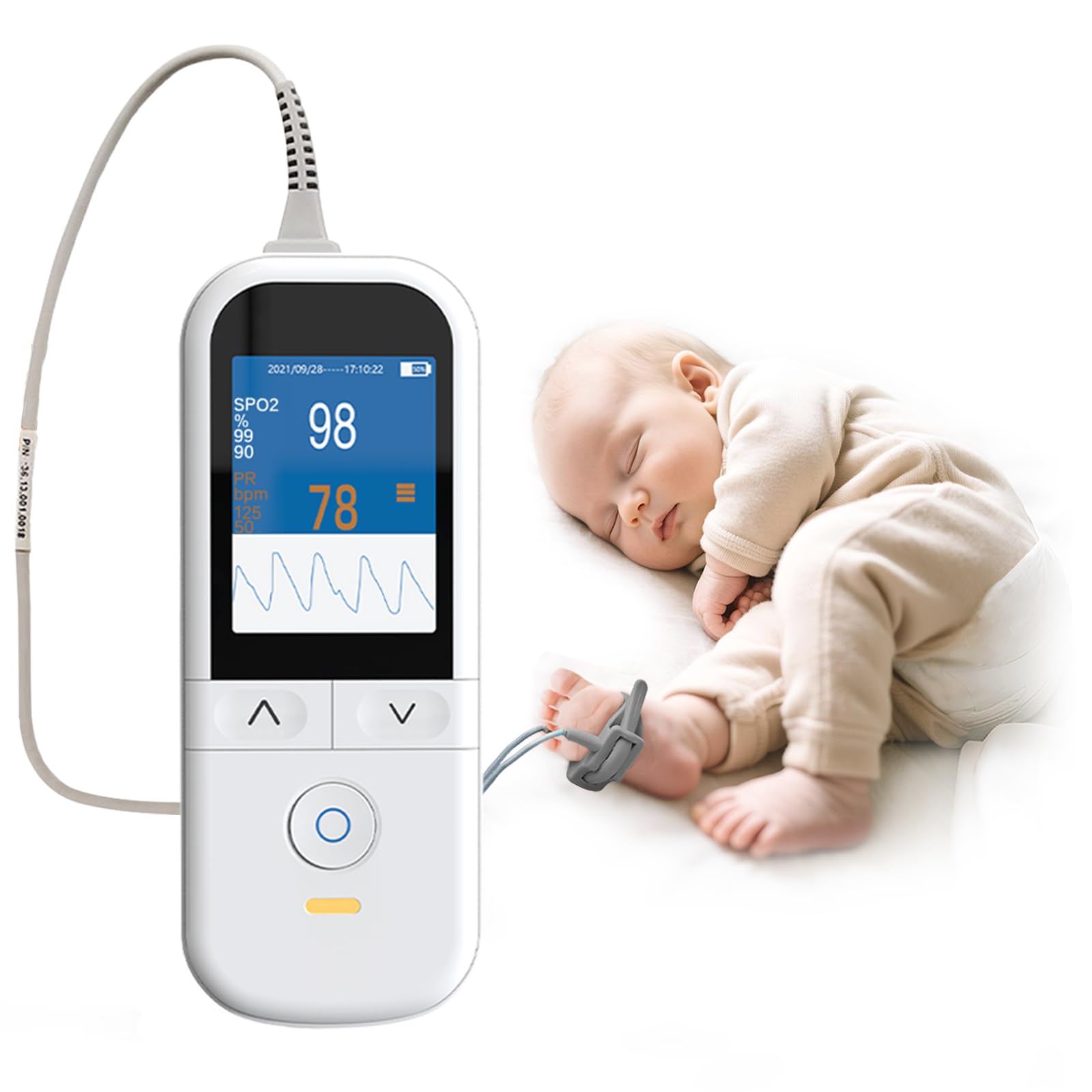
Designed specifically for the challenge of monitoring small, active infants, this oximeter features a flexible wrap-around probe. This design contours to a baby’s tiny foot or finger, providing a more secure and comfortable fit than traditional clip-style probes. The secure fit is crucial for maintaining a good signal and preventing false readings during overnight movement.
It shares the high-performance specs of other MedChirrup models, including customizable alarms, 500 data set storage, and a clear HD display. The USB-C rechargeable battery offers around 8 hours of continuous monitoring. This device addresses the primary physical challenge of infant oximetry: keeping the sensor in the right place all night.
While the wrap design improves security, it’s still important to ensure it’s not too tight. The 8-hour battery life is sufficient for a full night but requires daily charging if used continuously. For parents whose main concern is obtaining reliable SpO2 readings from a wiggly newborn, this specialized probe design is a significant advantage.
Why it’s great
- Wrap-around probe offers a more secure and comfortable fit for infant extremities.
- Maintains high accuracy and data storage features of the medical-grade line.
- Modern USB-C charging for convenient power management.
Good to know
- Battery life for continuous use is limited to roughly one night per charge.
- As a handheld unit, it requires careful placement each night.
10. MedChirrup Medical Grade Pulse Oximeter
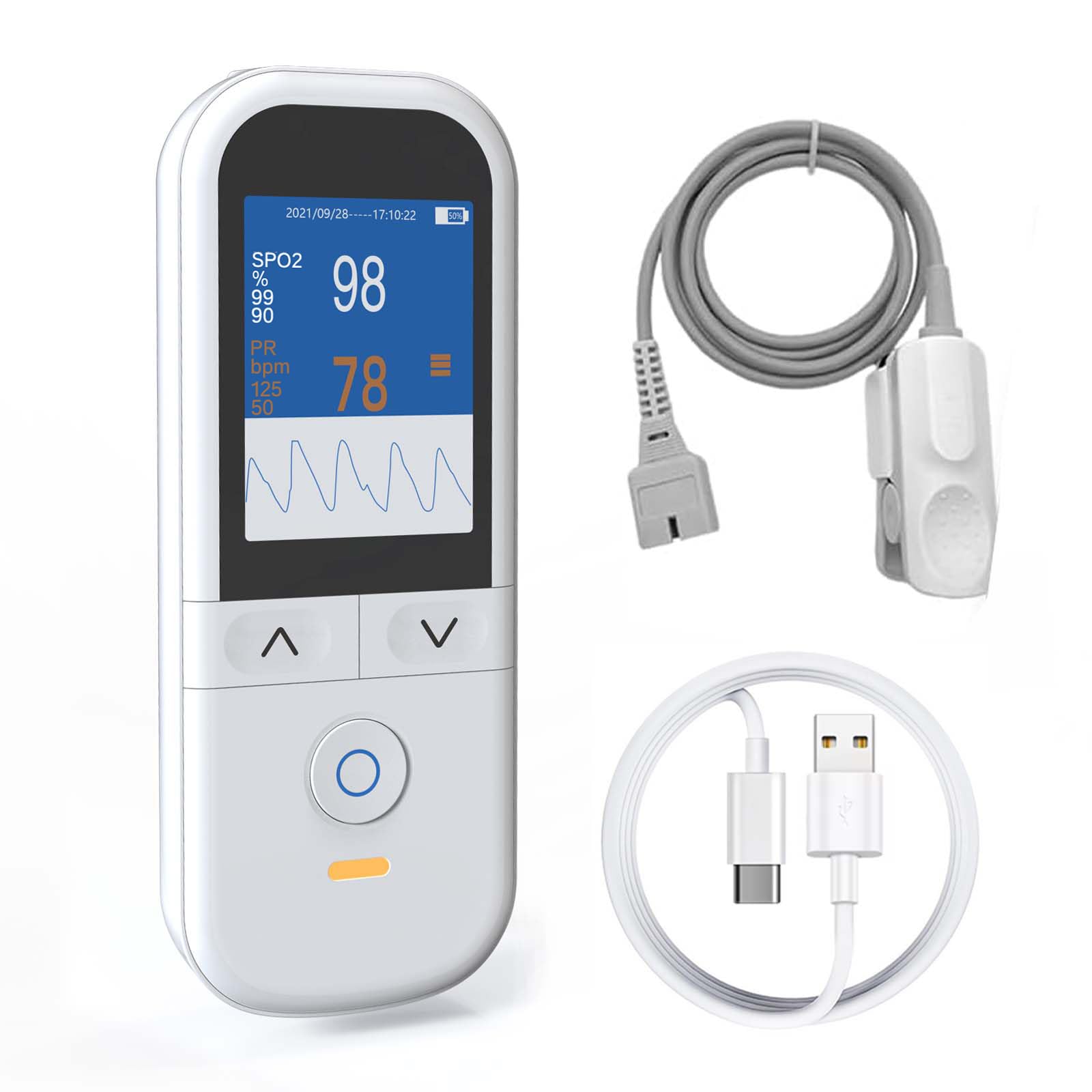
This model is built as a versatile health monitor for the whole household. While excellent for pediatric use, it’s also designed with adults in mind, making it ideal for families monitoring multiple members, perhaps a child with respiratory concerns and an elderly relative. It delivers the same high accuracy, extensive data storage, and customizable alarms as the brand’s other professional units.
The large, bright display is easy to read in low light, and the device supports continuous monitoring with instant audio-visual alerts. The robust data tracking allows you to maintain separate logs, useful for tracking a child’s progress over time or comparing readings between family members. Its construction feels durable, meant for reliable long-term use.
The interface, while powerful, may have a steeper learning curve, especially for those less tech-savvy. It represents a premium investment but one that spreads its value across multiple users and needs. For a family seeking one high-quality device to serve several monitoring purposes, this is a top contender.
Why it’s great
- Versatile tool suitable for infants, children, and adults in the family.
- High-capacity battery and robust data history for long-term trend spotting.
- Clear display and reliable, medical-grade performance.
Good to know
- The interface and setup can be complex for some users.
- As a general-purpose oximeter, it lacks infant-specific probes (uses a standard finger clip).
11. MugaTree Pulse Oximeter with Adult & Baby Probes
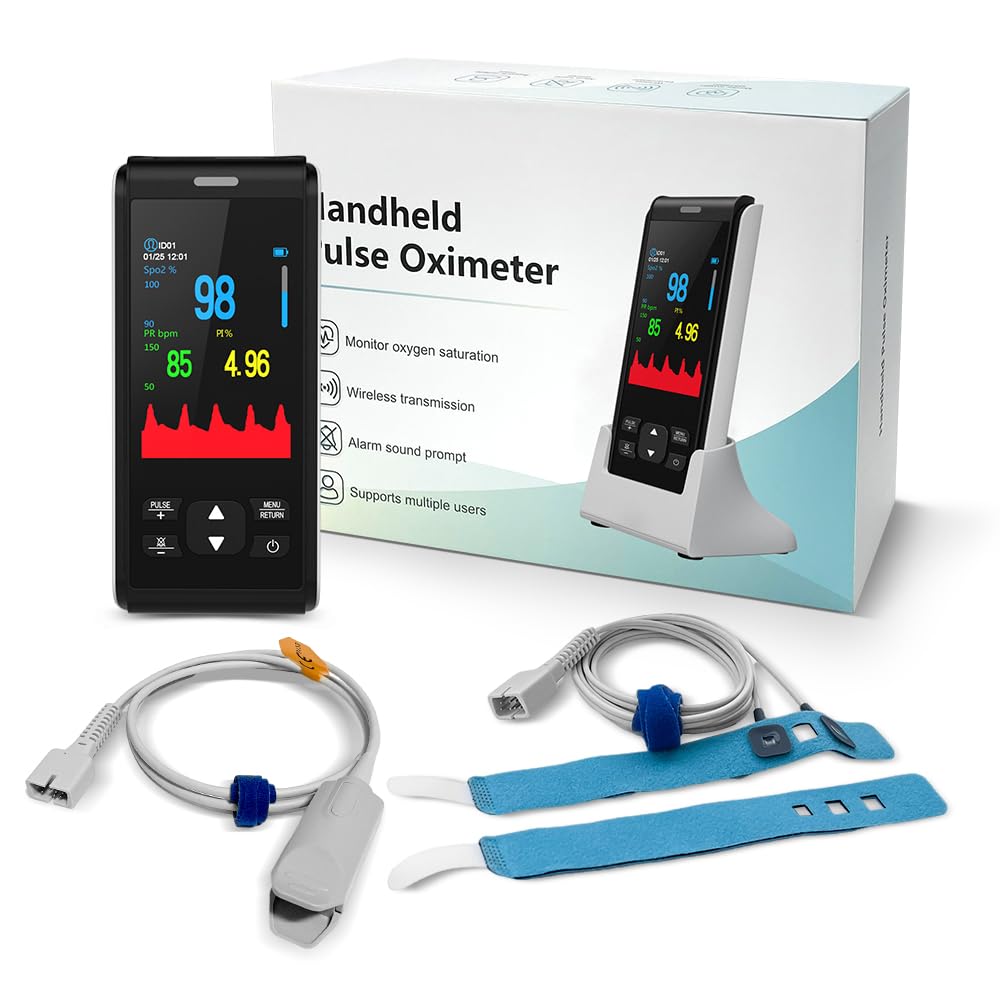
This package is the most complete out-of-the-box solution, including both a standard adult finger probe and a dedicated soft infant foot probe. This allows the single handheld unit to be used seamlessly by parents and caregivers for spot checks and then attached to the baby for overnight continuous monitoring without needing separate devices.
It incorporates all the smart features of the MugaTree line: a comprehensive app supporting up to 10 users, customizable alarms, and data trending. The inclusion of both probes makes it exceptionally flexible and cost-effective for a household that anticipates needing oximetry for various members. The magnetic charging dock keeps it organized and ready.
The performance and considerations are similar to the first MugaTree model reviewed. The key advantage here is the bundled accessories, providing immediate capability for both adult and infant monitoring. It’s an ideal choice for families who want one device to cover all their oxygen saturation tracking needs.
Why it’s great
- Includes both adult and infant probes, offering immediate versatility.
- Powerful app with multi-user support and data sharing features.
- Complete kit in one purchase, often representing a good value.
Good to know
- Shares the same requirement for infant stillness during readings.
- As a bundled kit, it sits at a higher point than basic models.
Understanding the Specs
SpO2 Range & Accuracy
SpO2 (peripheral oxygen saturation) range indicates the lowest and highest levels the device can measure (e.g., 70-100%). Accuracy, often noted as ±1-2%, tells you how close the reading is to a true value. For infant monitoring, a range starting at 70% or lower and high accuracy are critical for detecting potentially dangerous dips (desaturations) that require attention.
Probe Type & Fit
This is the sensor that attaches to the baby. For pulse oximeters, look for soft, wrap-around or dedicated infant foot probes designed for tiny digits, ensuring a secure fit without being too tight. For movement monitors, the clip should be lightweight, secure, and easy to attach to a diaper or clothing. A proper fit is the single biggest factor in preventing false alarms and ensuring reliable data.
FAQ
What is the difference between a movement monitor and a pulse oximeter?
Are these devices considered medical grade?
How do I prevent false alarms at night?
Can I use an adult finger pulse oximeter on my baby?
Final Thoughts: The Verdict
For most people, the best baby pulse oximeter for overnight monitoring winner is the MugaTree Handheld Pulse Oximeter because it combines a dedicated infant probe, reliable alarms, and helpful app connectivity at a mid-range point. If you want comprehensive sleep data and multi-feature alerts, grab the Sense-U Pro Baby Monitor. And for pure, simple breathing movement monitoring with no apps or fuss, nothing beats the BabySmile E-202.

Mo Maruf
I created WellFizz to bridge the gap between vague wellness advice and actionable solutions. My mission is simple: to decode the research and give you practical tools you can actually use.
Beyond the data, I am a passionate traveler. I believe that stepping away from the screen to explore new environments is essential for mental clarity and physical vitality.