Our readers keep the lights on and my smoothie glass nicely filled. As an Amazon Associate, I earn from qualifying purchases.
That moment when you review your footage and see every bump, wobble, and jitter—it’s enough to make you want to put the camera down. The frustration of unstable video can undermine even the most beautiful composition, leaving your content looking unprofessional. The right camera stabilizer isn’t just an accessory; it’s the bridge between shaky handheld chaos and the buttery-smooth, cinematic motion you envision.
I’m Mohammad Maruf — the founder and writer behind WellFizz. My work involves deep market research and analyzing thousands of data points and technical specifications to understand exactly how gear performs in real-world creative scenarios, not just on paper.
This guide cuts through the noise to bring you a curated selection of stabilizers, from versatile all-in-one kits to professional powerhouse gimbals, so you can make an informed choice that matches your creative workflow and finally transform your best camera stabilizer search into a confident purchase.
How To Choose The Best Camera Stabilizer
Selecting a stabilizer is about more than just eliminating shake; it’s about finding a tool that becomes a seamless extension of your creative process. The ideal choice harmonizes with your camera, your shooting habits, and the specific challenges you face, whether that’s filming dynamic events or creating polished vlogs on the move.
Payload Capacity: The Foundation of Stability
This is the maximum weight your stabilizer can hold while operating smoothly. It’s the most critical spec. You must account for your camera body and the heaviest lens you plan to use. Consistently operating at or near the maximum limit will cause the motors to struggle, leading to jittery footage and reduced battery life. For mirrorless setups, a mid-range capacity is often sufficient, while full-frame DSLRs with large zooms demand a premium, high-capacity model.
Form Factor & Ergonomics
Consider how you shoot. Handheld gimbals offer maximum flexibility for dynamic, moving shots but require arm strength over time. Briefcase-style handles enable comfortable low-angle work. All-in-one “pocket” cameras with built-in gimbals sacrifice some customization for ultimate portability and quick deployment. The physical design should feel like a natural fit for your typical shooting duration and style.
Smart Features & Connectivity
Modern stabilizers are intelligent. Built-in AI tracking allows solo creators to be both director and subject. Bluetooth camera control lets you start/stop recording and adjust focus without touching your camera. A clear touchscreen interface and a companion app for deeper customization can significantly streamline your workflow. These features move a stabilizer from being a simple tool to an active creative partner.
Quick Comparison
On smaller screens, swipe sideways to see the full table.
| Model | Type | Best For | Key Feature | Amazon |
|---|---|---|---|---|
| FeiyuTech SCORP Mini 3 Pro Kit | 3-Axis Gimbal | Versatile solo creators | Detachable handle, AI tracking, full kit | Amazon |
| DJI RS 5 Combo | 3-Axis Gimbal | Professional filmmakers | Enhanced tracking, fine-tuning knobs, fast charge | Amazon |
| ZHIYUN Crane 4 | 3-Axis Gimbal | Full-frame camera users | Built-in 10W fill light, long arms | Amazon |
| DJI Osmo Pocket 3 | All-in-One Camera | Vloggers & travelers | 1” sensor, built-in 3-axis gimbal, rotating screen | Amazon |
| FeiyuTech SCORP 3 Kit | 3-Axis Gimbal | Heavier mirrorless/DSLR setups | 7.72lb payload, detachable handle, AI tracking | Amazon |
| MOZA AirCross 2 | 3-Axis Gimbal | Extended runtime needs | Compact fold, 12-hour battery, app control | Amazon |
| Ikan Beholder EC1 | 3-Axis Gimbal | Enthusiasts on a budget | Encoder motors, OLED screen | Amazon |
| DJI Pocket 2 Combo | All-in-One Camera | Ultra-portable content | Pocket-sized, 3-axis gimbal, 4K60 | Amazon |
In‑Depth Reviews
1. FeiyuTech SCORP Mini 3 Pro Kit
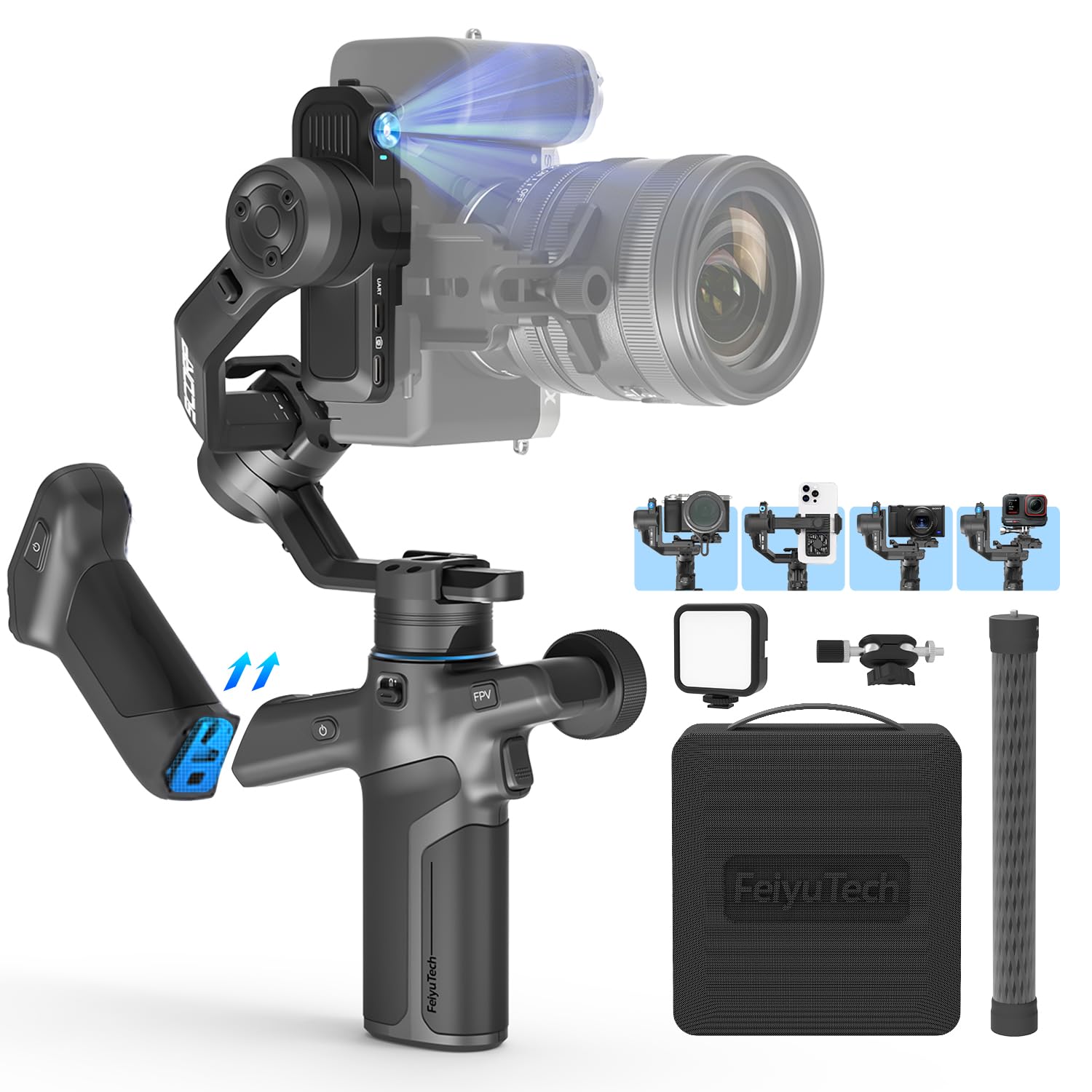
The FeiyuTech SCORP Mini 3 Pro Kit represents a mid-range powerhouse that brilliantly solves multiple pain points for the active creator. Its standout feature is the detachable OLED touchscreen handle, which wirelessly controls the gimbal from up to 39 feet away. This transforms solo shooting, allowing you to frame perfect low-angle shots or walk-through reveals without being tethered to the camera itself.
It’s engineered as a true hybrid tool. With a 4.4-pound payload, it can swiftly switch between a mirrorless camera, a smartphone, and an action cam, including native vertical mounting for social media. The built-in AI tracking module recognizes faces and responds to gestures, reliably following a subject up to 59 feet away without needing a phone app—a game-changer for vloggers and documentary shooters working alone.
Included in the kit is a thoughtful array of accessories: a carbon fiber extension pole, a fill light, a carrying case, and an articulating arm. This “ready-to-shoot” approach means you’re equipped for various scenarios right out of the box. While it requires careful balancing as noted in user reviews, those who follow the setup process are rewarded with incredibly smooth, professional-grade stabilization.
Why it’s great
- Incredibly versatile all-in-one kit with essential accessories included.
- Detachable handle and AI tracking empower true solo operation.
- Smoothly handles quick swaps between different cameras and orientations.
Good to know
- Requires precise balancing and calibration for optimal performance.
- Bluetooth camera control compatibility can vary by camera model.
2. DJI RS 5 Combo
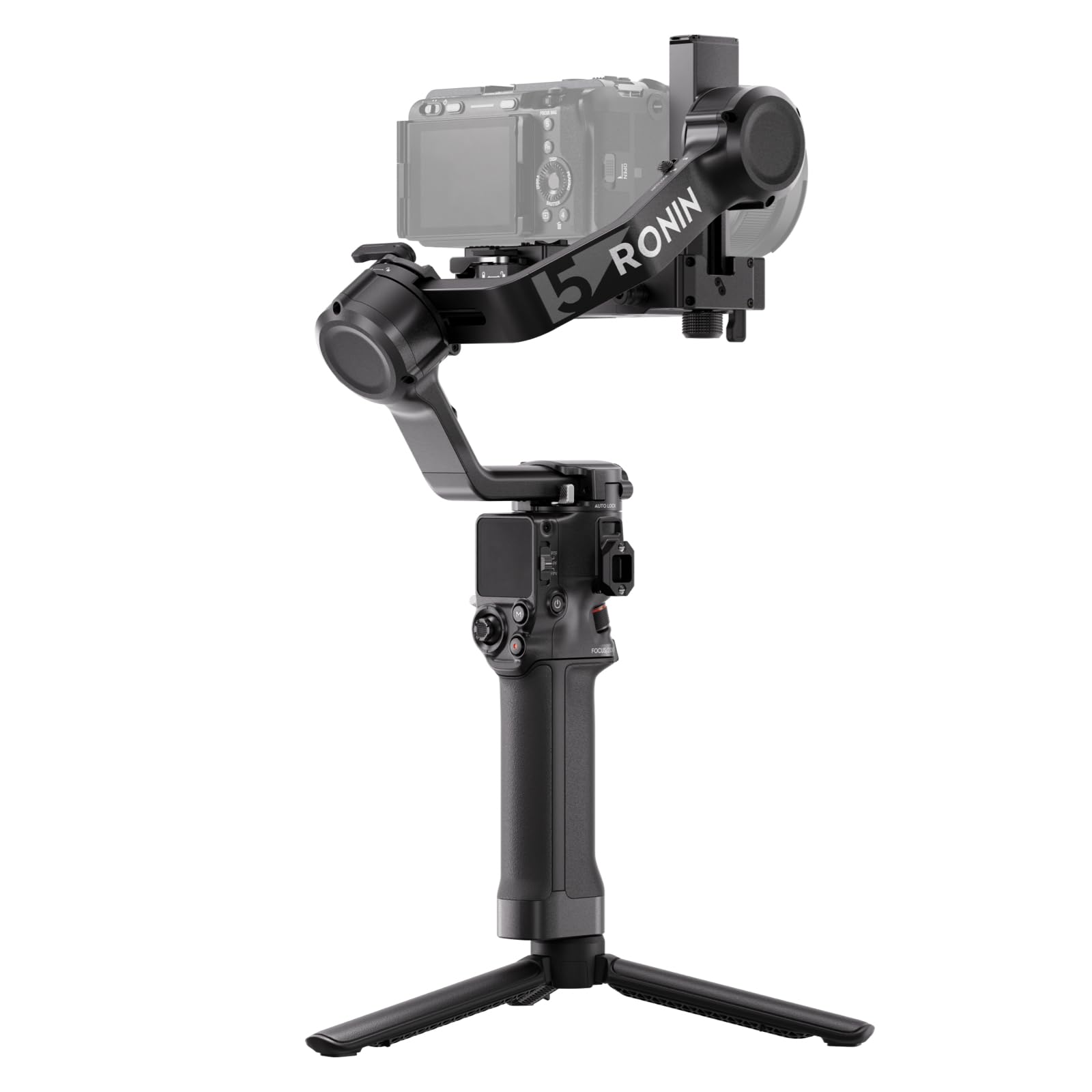
The DJI RS 5 sits at the premium tier of handheld gimbals, designed for professional videographers and filmmakers who demand reliability and precision. Its build quality is exceptional, featuring fine-tuning knobs on each axis that allow for micro-adjustments to achieve perfect balance with heavier cinema cameras and lens combinations. This level of control is crucial for achieving flawless, repeatable smoothness.
Workflow efficiency is a core strength. The second-generation automated axis locks are a significant quality-of-life upgrade, allowing the gimbal to be locked for transport and unlocked for shooting in one swift motion. When combined with the quick-open tripod and the optional electronic briefcase handle for low-angle work, the RS 5 gets you from your bag to a shooting-ready state faster than almost any competitor.
It also incorporates intelligent features like the Enhanced Intelligent Tracking module for reliable subject follow and a unique Z-axis indicator that provides visual feedback to help you smooth out your walking motion. With fast charging and extended battery life, it’s built for long shooting days. This is a tool where every detail is optimized for the serious creator.
Why it’s great
- Professional-grade build with precise fine-tuning knobs for heavy setups.
- Automated axis locks and quick-deploy design maximize shooting time.
- Excellent battery life with fast charging minimizes downtime.
Good to know
- Premium investment best justified for professional use.
- The ecosystem (handles, accessories) can add to the total cost.
3. ZHIYUN Crane 4

The ZHIYUN Crane 4 is a formidable gimbal built for content creators and indie filmmakers who use full-frame mirrorless or compact cinema cameras. Its extended arm length and robust motors provide a high payload capacity, ensuring stability even with substantial camera rigs. The integrated quick-release system also allows for a seamless, native switch between horizontal and vertical shooting modes—a must for multi-platform creators.
Its most innovative feature is the built-in 10W fill light. With a high CRI rating and adjustable color temperature, this light provides a significant quality boost for interviews, close-ups, or shooting in dim environments, eliminating the need to carry and mount a separate light source. This all-in-one approach simplifies your gear bag and streamlines setup time on location.
Control is centered around a 1.22-inch color touchscreen and a customizable front dial, giving you direct access to gimbal modes, motion timelapse, and even camera parameters like ISO and aperture when connected via Bluetooth. While it’s a solid and capable piece of engineering, some users note that achieving perfect balance, especially in vertical mode, requires patience and attention to detail.
Why it’s great
- Built-in high-quality fill light solves a major on-the-go lighting need.
- Strong motors and design accommodate heavier full-frame setups.
- Native horizontal/vertical switching is fast and secure.
Good to know
- Balance calibration, particularly for vertical video, has a learning curve.
- It’s a substantial piece of gear, which affects portability.
4. DJI Osmo Pocket 3
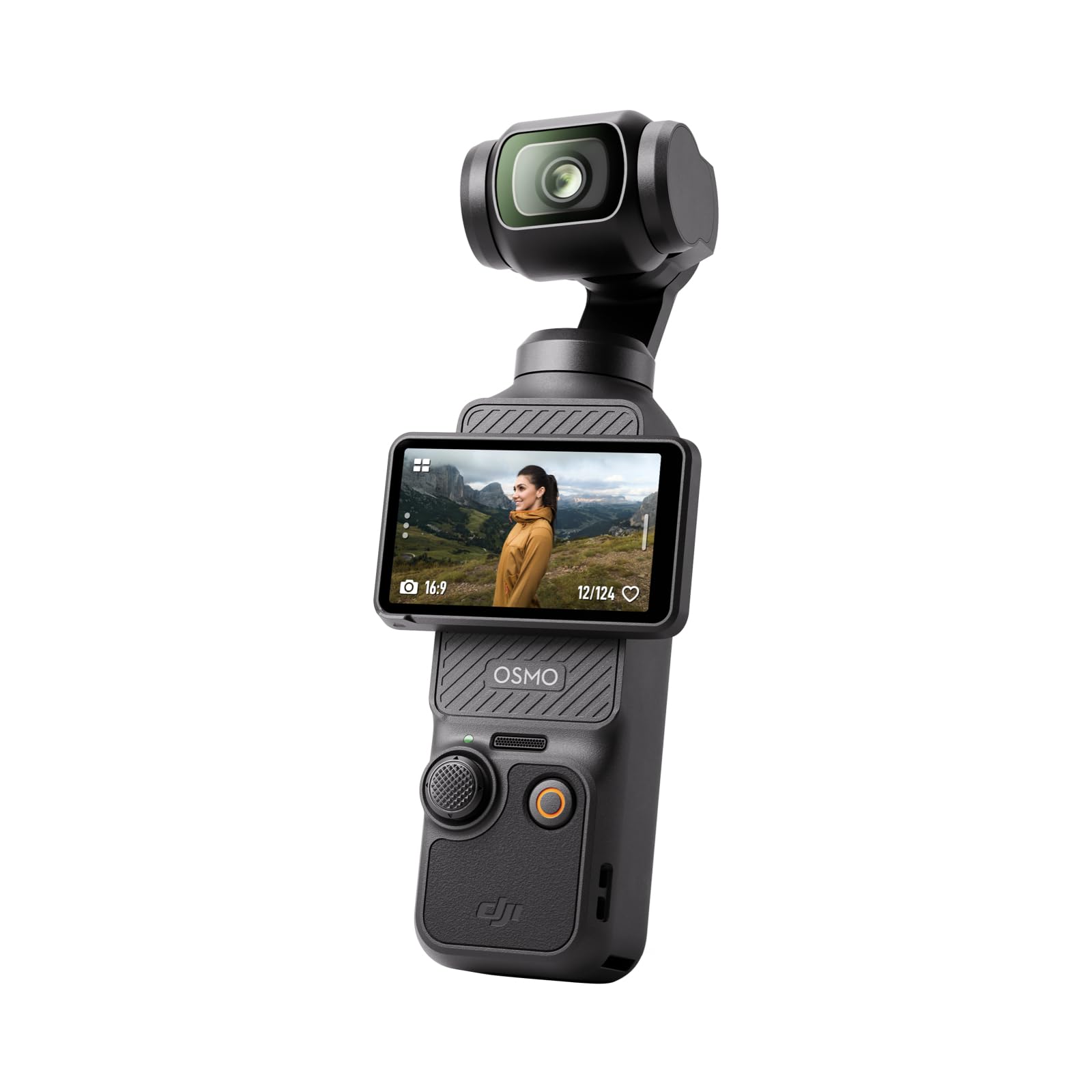
The DJI Osmo Pocket 3 redefines convenience by integrating a capable camera, a 3-axis mechanical gimbal, and a large rotating touchscreen into a device that literally fits in your pocket. This isn’t an accessory for your existing camera; it’s a complete, ultra-portable filming solution. The 1-inch sensor is a major leap forward, capturing excellent 4K video with strong low-light performance and a pleasing depth of field that rivals bulkier setups.
Stabilization is effortless and always on. The mechanical gimbal provides genuinely cinematic smoothness whether you’re walking, running, or even filming from a moving vehicle. The 2-inch screen rotates automatically when you switch between horizontal and vertical recording, making it perfect for creators who publish across YouTube, TikTok, and Instagram without any awkward adapters or post-processing crops.
Features like ActiveTrack 6.0 for subject following, D-Log M color profile for grading flexibility, and direct connectivity to wireless DJI microphones make it a surprisingly powerful tool. For travelers, event attendees, or daily vloggers who prioritize “grab-and-shoot” simplicity without sacrificing serious video quality, the Pocket 3 is in a class of its own.
Why it’s great
- Unbeatable portability with pro-level 3-axis mechanical stabilization built-in.
- Large 1-inch sensor delivers superb image quality for its size.
- Rotating screen makes switching orientations for social media intuitive.
Good to know
- It’s a dedicated camera, so you cannot use your existing DSLR or mirrorless body.
- While robust, the gimbal mechanism is exposed and requires careful handling.
5. FeiyuTech SCORP 3 Kit
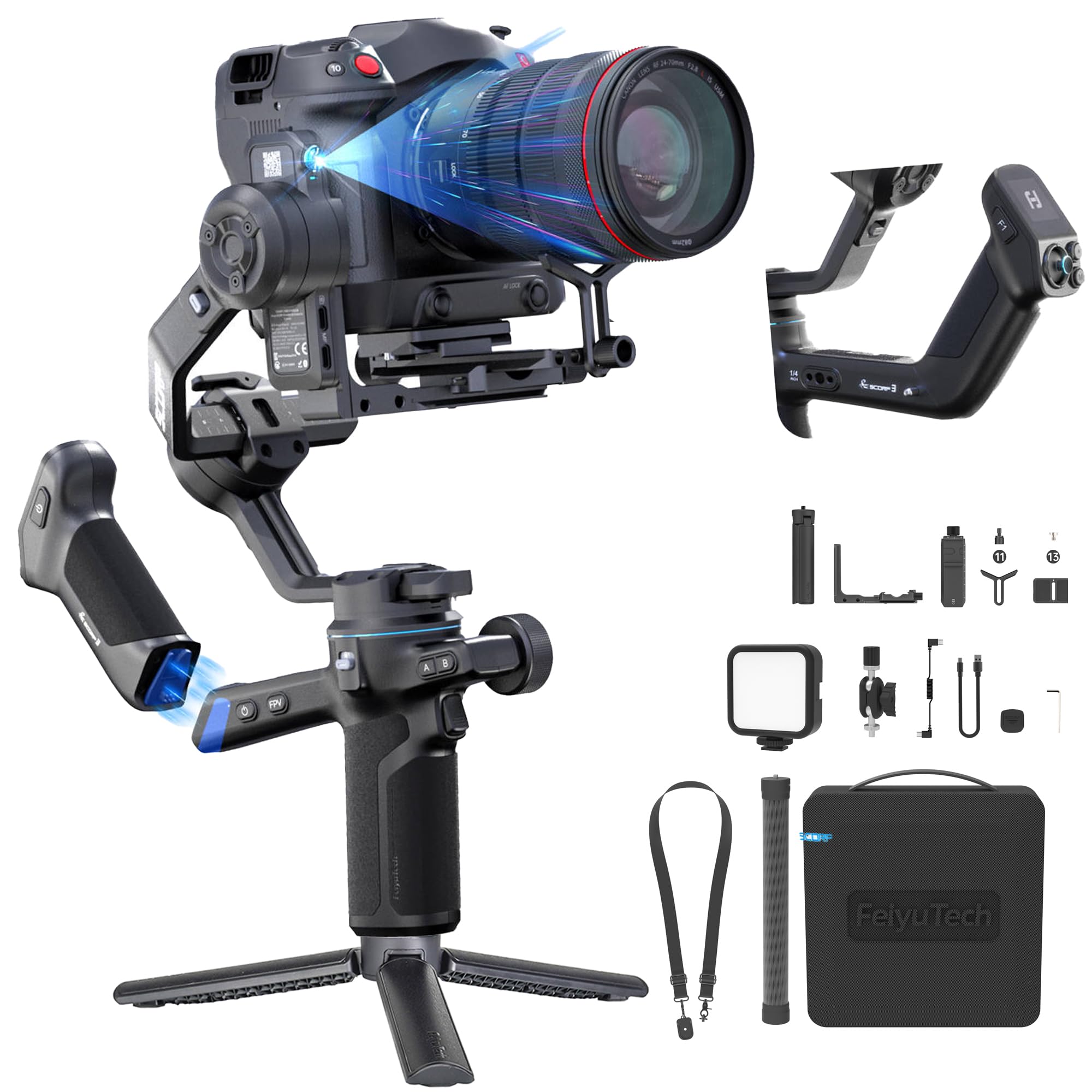
The FeiyuTech SCORP 3 is the bigger sibling to the Mini 3 Pro, designed for videographers who need to stabilize heavier DSLR and mirrorless kits. With a substantial 7.72-pound payload, extended axis arms, and a repositionable mounting slider, it offers tremendous flexibility in balancing larger camera and lens combinations. This makes it a viable option for users with full-frame cameras and fast-aperture zooms.
It shares many of the smart features of the Mini model, including the detachable wireless handle for remote operation and the built-in AI tracking module that works without a smartphone. The upgraded 10th-generation stabilization algorithm is designed to cancel out shakes more effectively, delivering what FeiyuTech calls “cinema-grade smoothness.” The included hard case is a welcome addition for protecting this investment during transport.
User feedback highlights its capability as a professional tool for serious work, particularly praising its performance in mid-to-low moving shots and low-angle scenarios. However, it’s important to note that even with its high payload, extremely heavy cinema rigs might push its limits, and as with all gimbals, proper balancing is non-negotiable for perfect performance.
Why it’s great
- High payload capacity handles demanding DSLR and mirrorless setups.
- Detachable handle and built-in AI aid complex solo shots.
- Comes with a protective travel case for full kit organization.
Good to know
- Size and weight make it less ideal for all-day handheld shooting.
- Best performance requires staying well within its maximum weight limit.
6. MOZA AirCross 2

The MOZA AirCross 2 is a compelling mid-range option that emphasizes portability and endurance. Its clever folding design collapses into a surprisingly compact form factor, making it an excellent choice for creators who travel or need to pack light. Despite this, it boasts a respectable payload rating, aiming to accommodate a range of mirrorless cameras and standard lenses.
Its headline feature is the exceptional battery life, rated for up to 12 hours of runtime on a single charge. For event videographers, wedding shooters, or anyone who films for long stretches without easy access to power, this longevity is a major practical advantage. The companion MOZA app is also frequently praised for its depth, allowing detailed customization of motor strength, speed, and creative modes like the 360-degree “Inception” shot.
Feedback suggests its performance is stellar with lighter setups, but it can struggle at the upper end of its stated capacity, leading to motor jitter. This makes it a fantastic choice for users with APS-C or smaller full-frame mirrorless cameras, but potentially less ideal for those with heavier DSLR bodies and large lenses.
Why it’s great
- Superb battery life supports all-day shooting without recharge anxiety.
- Compact folding design enhances travel and storage convenience.
- Feature-rich app allows for deep customization of motor behavior and shots.
Good to know
- Motor strength may be insufficient for heavier camera/lens combinations.
- Some users report quality control issues requiring unit replacement.
7. Ikan Beholder EC1

The Ikan Beholder EC1 is a veteran in the gimbal space, offering an entry-level pathway into 3-axis stabilization for DSLR and mirrorless cameras. It’s built with 12-bit encoder motors, which provide precise positional feedback for smooth and responsive movement. This technology was a stepping stone to the more advanced systems in today’s gimbals but can still deliver very stable footage when properly configured.
Its design is straightforward and functional, featuring an OLED screen for mode status and basic controls. It supports a range of cameras within its 2.0 to 4.5-pound weight limit, making it suitable for many enthusiast-level setups. For budget-conscious filmmakers or those wanting to learn the fundamentals of balancing and operating a gimbal, the EC1 presents a lower-cost opportunity.
The consensus from long-term users is clear: its performance is highly dependent on meticulous balancing and, often, connecting to a computer to fine-tune the motor PID settings via third-party software. This hands-on approach is great for tinkerers but can be a barrier for those seeking a plug-and-play experience. The included case is also noted as being less robust than those from other brands.
Why it’s great
- Budget-friendly entry point into 3-axis gimbal technology.
- Encoder motors allow for smooth, controllable movement when dialed in.
- Can be a great learning tool for understanding gimbal mechanics.
Good to know
- Often requires PC software tweaking for optimal performance.
- Outdated design and support compared to newer models.
- Build quality and durability have been points of criticism.
8. DJI Pocket 2 Combo

The DJI Pocket 2 remains a compelling, ultra-compact all-in-one camera, especially for those who prioritize size and simplicity above all. As the predecessor to the Pocket 3, it packs a 3-axis motorized gimbal, a 1/1.7-inch sensor, and 4K/60fps video recording into a device barely larger than a lipstick tube. The included combo expands its versatility with a wireless module, a mini tripod, and other useful add-ons.
Its greatest strength is its sheer discretion and portability. You can have it ready to record in seconds, making it perfect for capturing candid moments, travel snippets, or casual vlogging where carrying a larger camera feels intrusive. Features like ActiveTrack 3.0 for subject following and a “Story Mode” with automated editing templates make content creation straightforward and fun.
Naturally, it makes compromises compared to its successor and dedicated cameras: the sensor is smaller, the screen is tiny, and low-light performance is more limited. However, for its size, the image quality and stabilization are impressive. It represents a fantastic value-oriented option for someone wanting the DJI pocketable experience without the latest premium features.
Why it’s great
- Extremely compact and lightweight; the ultimate grab-and-go video tool.
- Combo includes valuable accessories that expand creative possibilities.
- Proven, reliable stabilization in a remarkably small package.
Good to know
- Small sensor and screen show their age compared to newer models.
- Battery life is adequate but not exceptional for all-day use.
Understanding the Specs
Payload Capacity
This isn’t just a weight limit; it’s the guarantee of smooth operation. Always calculate your camera body’s weight plus your heaviest lens, microphone, and any other mounted accessories. Operating consistently at 80-90% of the stated capacity is a safe rule for ensuring the motors aren’t strained, which preserves battery life and prevents jitter.
Stabilization Type: Mechanical vs. Digital
Mechanical (3-axis) gimbals use brushless motors to physically counteract movement in three directions (tilt, pan, roll), providing the highest quality, most natural-looking stabilization. Digital or “EIS” (Electronic Image Stabilization) uses software to crop and adjust the image frame, which can sometimes introduce a warping effect and reduces resolution. The best results often combine both.
FAQ
Do I really need a gimbal if my camera has built-in stabilization?
How do I choose between a handheld gimbal and an all-in-one like the DJI Pocket?
What does AI tracking actually do on a gimbal?
Final Thoughts: The Verdict
For most people, the best camera stabilizer winner is the FeiyuTech SCORP Mini 3 Pro Kit because it delivers anunbeatable combination of smart features, versatility, and value in a ready-to-shoot kit. If you want professional-grade control and tracking for heavy cinema rigs, grab the DJI RS 5. And for creators who prioritize pocket-sized convenience without sacrificing stabilization, nothing beats the DJI Osmo Pocket 3.

Mo Maruf
I created WellFizz to bridge the gap between vague wellness advice and actionable solutions. My mission is simple: to decode the research and give you practical tools you can actually use.
Beyond the data, I am a passionate traveler. I believe that stepping away from the screen to explore new environments is essential for mental clarity and physical vitality.