Our readers keep the lights on and my smoothie glass nicely filled. As an Amazon Associate, I earn from qualifying purchases.
Choosing your first video camera feels like stepping onto a new planet—the language is unfamiliar, the specs are overwhelming, and the fear of an expensive mistake is real. You’re not just buying a gadget; you’re choosing the creative system you’ll learn and grow with for the next several years.
I’m Mohammad Maruf — the founder and writer behind WellFizz. For over a decade, I’ve specialized in analyzing market data and technical specifications to decode what features truly matter for beginners, separating marketing hype from genuine value.
This guide cuts through the noise by focusing on the cameras that offer the most intuitive path from pressing ‘record’ to creating compelling content, ensuring your investment today won’t limit your creativity tomorrow. Our research confirms the right best camera for video beginners provides reliable autofocus and clear menus.
How To Choose The Best Camera For Video Beginners
Moving beyond your smartphone means gaining control. The right beginner camera balances powerful capabilities with an interface that doesn’t fight you. Prioritize these elements to find a tool that empowers, rather than frustrates, your early filmmaking journey.
Autofocus That Actually Works for You
For a beginner, reliable autofocus is non-negotiable. Look for systems branded as “Dual Pixel AF,” “Real-time Eye AF,” or “Real-time Tracking.” These technologies automatically lock onto and follow faces (or even pets), letting you focus on composition and storytelling instead of constantly manual focusing. A camera with poor or sluggish autofocus will make every video session a struggle.
The Stabilization Sweet Spot
Shaky footage is the fastest way to make video look amateurish. You’ll encounter three main types: lens-based Optical Stabilization (O.I.S.), in-body sensor-shift stabilization (IBIS), and digital stabilization (which often crops the image). For beginners, a camera with either effective IBIS or a stabilized kit lens provides the most immediate benefit for handheld vlogs and moving shots, saving you from needing a gimbal right away.
Sensor Size & Lens Ecosystem
The sensor is your camera’s digital film. APS-C and Micro Four Thirds sensors offer a great balance of image quality, low-light performance, and compact lens sizes. Crucially, your camera’s lens mount (like Canon RF-S, Sony E, or Nikon Z) determines all future lens options. Choosing a system with a wide range of affordable, versatile lenses means your camera can grow with your skills without requiring a completely new investment down the line.
Beginner-Centric Features
Some cameras are designed with creators in mind. A fully articulating touchscreen is essential for framing yourself while vlogging. Clean HDMI output and webcam functionality are vital for streamers. Built-in creative filters or film simulations can deliver beautiful looks straight out of the camera, boosting confidence. Prioritize physical controls that are intuitive, not buried in complex menus.
Quick Comparison
On smaller screens, swipe sideways to see the full table.
| Model | Type | Best For | Key Feature | Amazon |
|---|---|---|---|---|
| Nikon Z 30 | Mirrorless | Vloggers & Streamers | Flip-Out Selfie Screen, 4K | Amazon |
| Sony ZV-E10 II | Mirrorless | Content Creators | Advanced AF, Product Showcase | Amazon |
| OM SYSTEM E-M10 Mark IV | Mirrorless | Travel & Photography Hybrid | In-Body 5-Axis Stabilization | Amazon |
| Canon EOS R100 | Mirrorless | Budget-Conscious Starters | Compact RF Mount System | Amazon |
| Fujifilm X-T50 | Mirrorless | Creative Image Quality | 40MP Sensor, Film Sim Dial | Amazon |
| Panasonic LUMIX G7 | Mirrorless | Budget 4K Filmmaking | External Mic Input, Tilt Screen | Amazon |
| Sony Alpha A6100 | Mirrorless | Fast Action & Stills | Blazing Fast Autofocus | Amazon |
| Nikon Z50 II | Mirrorless | Versatile Two-Lens Kit | Built-in Creative Presets | Amazon |
| Fujifilm X-T30 III | Mirrorless | Stylish Travel & Portraits | Film Simulations, Compact Body | Amazon |
| Canon EOS Rebel T7 | DSLR | Still Photography Focus | Entry-Level DSLR Value | Amazon |
| Panasonic LUMIX FZ80D | Bridge Camera | All-in-One Superzoom | 60x Optical Zoom, 4K Video | Amazon |
In‑Depth Reviews
1. Nikon Z 30

The Nikon Z 30 is engineered from the ground up for video-first creators, making it our top recommendation. It skips the traditional viewfinder in favor of a large, fully articulating touchscreen that flips out to the side—perfect for framing yourself while vlogging without the screen being blocked by cables. Its interface includes dedicated “vlogger essentials” like a tally light and adjustable mic sensitivity, removing guesswork.
You get crisp 4K video, reliable eye-detection autofocus for people and pets, and effective electronic stabilization that smooths out handheld shots. The camera supports unlimited recording times and can function as a plug-and-play webcam, a huge plus for streamers. Its compact, lightweight body is comfortable for all-day use, and it taps into Nikon’s growing Z-mount lens system for future growth.
While the lack of a viewfinder may give traditional photographers pause, for a beginner focused on video content, it’s a smart trade-off that keeps the design simple and cost-effective. The overall package delivers professional-looking results with an incredibly user-friendly approach.
Why it’s great
- Perfectly designed flip-out screen for self-recording.
- Straightforward creator-focused features and menus.
- Compact, lightweight build ideal for handheld use.
- Excellent autofocus and 4K video quality for its class.
Good to know
- No electronic viewfinder (EVF), which some may miss for photos.
- Battery life is average; consider a spare for long shoots.
2. Sony ZV-E10 II

Sony’s ZV-E10 II refines the formula for dedicated content creators, packing advanced features into a compact body. Its standout tool is the “Product Showcase” mode, which instantly shifts focus from your face to an object you hold up to the camera—incredibly useful for review channels or tutorials. The upgraded back-illuminated sensor delivers cleaner video in low light and the AI-powered Real-time Tracking autofocus is among the best available.
This model offers high-frame-rate recording for smooth slow-motion (120 fps in Full HD) and flexible 4K options. The side-flip screen is bright and responsive, and the camera includes a directional three-capsule mic with a windscreen. It’s designed for seamless integration into a creator’s workflow, from streaming via USB-C to easy wireless transfers.
As a premium option in the beginner space, the ZV-E10 II removes technical barriers, allowing you to produce polished, engaging content with minimal fuss. Its compatibility with Sony’s vast E-mount lens library also means your creative options are virtually limitless as you advance.
Why it’s great
- Best-in-class autofocus with specialized Product Showcase mode.
- Superior low-light performance from the back-illuminated sensor.
- Excellent slow-motion and high-frame-rate video options.
- Great built-in directional microphone.
Good to know
- Premium price point compared to other entry-level models.
- No in-body image stabilization (relies on lens OSS or digital).
3. OM SYSTEM Olympus E-M10 Mark IV

If you plan to shoot handheld video without a gimbal, the E-M10 Mark IV is a standout choice thanks to its exceptional 5-axis in-body image stabilization (IBIS). This sensor-shift technology dramatically smooths out camera shake, allowing for stable footage even when you’re walking. The camera’s classic, compact design is both stylish and functional, with dials for manual control that are satisfying to use.
It captures 4K video and offers a unique flip-down screen that’s ideal for waist-level shooting or simple selfies. The Micro Four Thirds system provides access to a huge range of compact, often budget-friendly lenses, making it a fantastic travel companion. The camera also includes fun creative filters you can apply in-camera for instant artistic effects.
While its autofocus isn’t as aggressively fast as some rivals, it’s perfectly capable for most beginner projects. The combination of pro-level stabilization, a portable form factor, and an engaging user experience makes it a deeply practical and enjoyable first camera.
Why it’s great
- Outstanding in-body stabilization for super smooth handheld video.
- Very compact and lightweight system with small lenses.
- Intuitive manual controls and fun creative filters.
- Flip-down screen is useful for candid shooting.
Good to know
- Autofocus, while good, is not class-leading for fast action.
- Flip-down screen isn’t as versatile for vlogging as a side-flip screen.
4. Canon EOS R100

The Canon EOS R100 is your most affordable gateway into the modern Canon RF mirrorless system. It delivers the core benefits that matter: Canon’s reliable Dual Pixel CMOS autofocus for smooth, accurate focus in video, a 24MP APS-C sensor for sharp images, and a compact, easy-to-carry body. The included RF-S 18-45mm lens covers useful wide to standard focal lengths for everyday shooting.
For beginners, its simplified menu system and helpful guide modes take the intimidation out of manual settings. It records Full HD video at up to 60p for smooth motion and offers 4K recording (with a crop), providing a path to higher resolution as you learn. The built-in Wi-Fi and Bluetooth make transferring clips to your phone a breeze for quick social media edits.
As an entry-level model, it makes compromises like a fixed rear screen and digital-only stabilization, but it nails the fundamentals of image quality and autofocus. It’s a trustworthy, no-frills starting point that lets you invest in better RF lenses later.
Why it’s great
- Excellent value to enter the Canon RF lens ecosystem.
- Proven Dual Pixel AF ensures sharp, confident focus.
- Very compact and lightweight, perfect for learners.
- Simple, guided menus reduce the initial learning curve.
Good to know
- Rear screen does not articulate for vlogging.
- 4K video has a significant crop, limiting wide-angle shots.
5. Fujifilm X-T50

The Fujifilm X-T50 is for the beginner who values stunning still photography as much as video and loves a tactile, artistic experience. Its new dedicated Film Simulation dial gives you instant access to Fuji’s legendary color profiles—like Classic Neg. and PRO Neg.—producing gorgeous, ready-to-share JPEGs and video straight out of the camera. This can be a massive confidence booster, as your footage looks professionally graded from day one.
It features a high-resolution 40MP sensor, capable in-body image stabilization (IBIS), and records 4K video at 60p. The body is surprisingly compact and light, with classic dials for shutter speed and ISO. It’s a camera that inspires creativity and rewards those willing to engage with its controls.
While its autofocus is competent, it may not track subjects as tenaciously as Sony or Canon’s best. The premium price reflects its high-end stills capabilities and unique color science. It’s an ideal choice if your video projects are stylized, cinematic, and intertwined with photography.
Why it’s great
- Unmatched color science with convenient film simulation dial.
- High-resolution 40MP sensor allows for creative cropping.
- Compact, well-built body with intuitive manual controls.
- Strong hybrid performance for both video and stills.
Good to know
- Premium price tag positions it at the high end for beginners.
- Autofocus, while good, prioritizes stills over video tracking.
6. Panasonic LUMIX G7

The Panasonic LUMIX G7 remains a legendary value proposition for aspiring filmmakers. It delivers uncropped 4K video recording, a rarity in its class, along with filmmaker-friendly features like a 3.5mm external microphone input and a fully articulating touchscreen. This combination allows you to capture high-quality audio and easily monitor yourself, fundamentals often missing from budget cameras.
Its Micro Four Thirds sensor is paired with snappy contrast-detect autofocus (though not as strong for continuous tracking as newer phase-detect systems). The camera also introduced clever “4K Photo” modes, letting you extract 8MP still images from 4K video bursts, perfect for capturing the perfect moment in action scenes.
While it’s an older model, its core video capabilities are still highly relevant. For the beginner who wants to learn the craft of filmmaking—focusing on manual exposure, composition, and audio—without a significant investment, the G7 is a powerful and capable tool.
Why it’s great
- Unbeatable value for uncropped 4K video and an external mic port.
- Fully articulating touchscreen for flexible shooting angles.
- Robust manual controls and a clean HDMI output.
- Access to the vast, affordable Micro Four Thirds lens library.
Good to know
- Older contrast-detect autofocus can “pulse” during video in some conditions.
- Lacks modern features like in-body stabilization or advanced tracking.
7. Sony Alpha A6100

The Sony A6100 packs the phenomenal autofocus technology from Sony’s higher-end cameras into a compact, mid-range body. Its Real-time Eye AF and Real-time Tracking are exceptionally fast and accurate, making it nearly impossible to miss a shot, whether you’re filming a talking-head video or chasing kids or pets around. This reliability lets you focus completely on your content.
It features a 24MP APS-C sensor, a 180-degree tilt-up screen for selfies, and 4K video recording. While it lacks in-body stabilization, many Sony E-mount lenses include Optical SteadyShot (OSS). The camera is also a stills powerhouse, capable of shooting at 11 frames per second, making it a brilliant hybrid for someone who wants top-tier performance for both photos and video.
The menu system is famously dense, which can be daunting at first, but once configured, its performance is outstanding. It’s the ideal choice for the active beginner who needs a camera that can keep up with fast-paced, unpredictable subjects.
Why it’s great
- Blazing fast and incredibly reliable Real-time Tracking autofocus.
- Excellent hybrid performance for high-speed stills and video.
- Compact body with a useful 180-degree flip-up screen.
- Taps into Sony’s extensive E-mount lens ecosystem.
Good to know
- Complex menu system has a steeper initial learning curve.
- No in-body image stabilization (IBIS).
8. Nikon Z50 II

The Nikon Z50 II with its two-lens kit (16-50mm and 50-250mm) offers remarkable versatility right out of the box. You get a wide-angle lens for vlogs and landscapes, plus a telephoto zoom for sports, wildlife, or details—covering nearly all the bases a beginner will encounter. The camera itself is an upgrade over the original Z50, featuring a higher-resolution sensor, 4K/60p video, and subject-detection autofocus.
A unique strength is its suite of in-camera “Picture Control” creative presets, which let you apply different color and tone profiles to your photos and videos in real-time. The flip-down screen is compact and the body includes a built-in flash, a handy feature often omitted on modern mirrorless cameras.
This package is for the beginner who doesn’t want to think about buying additional lenses for a long time. It’s a comprehensive system that encourages experimentation across different types of shooting, from wide establishing shots to tight close-ups, all while delivering Nikon’s renowned color science.
Why it’s great
- Incredible value with two lenses covering wide to super-telephoto.
- Powerful creative controls with built-in photo/video presets.
- Improved autofocus with subject detection for animals and vehicles.
- Built-in flash adds convenience for casual still photography.
Good to know
- Flip-down screen can be awkward when mounted on a tripod.
- The two-lens kit makes the overall investment higher.
9. Fujifilm X-T30 III
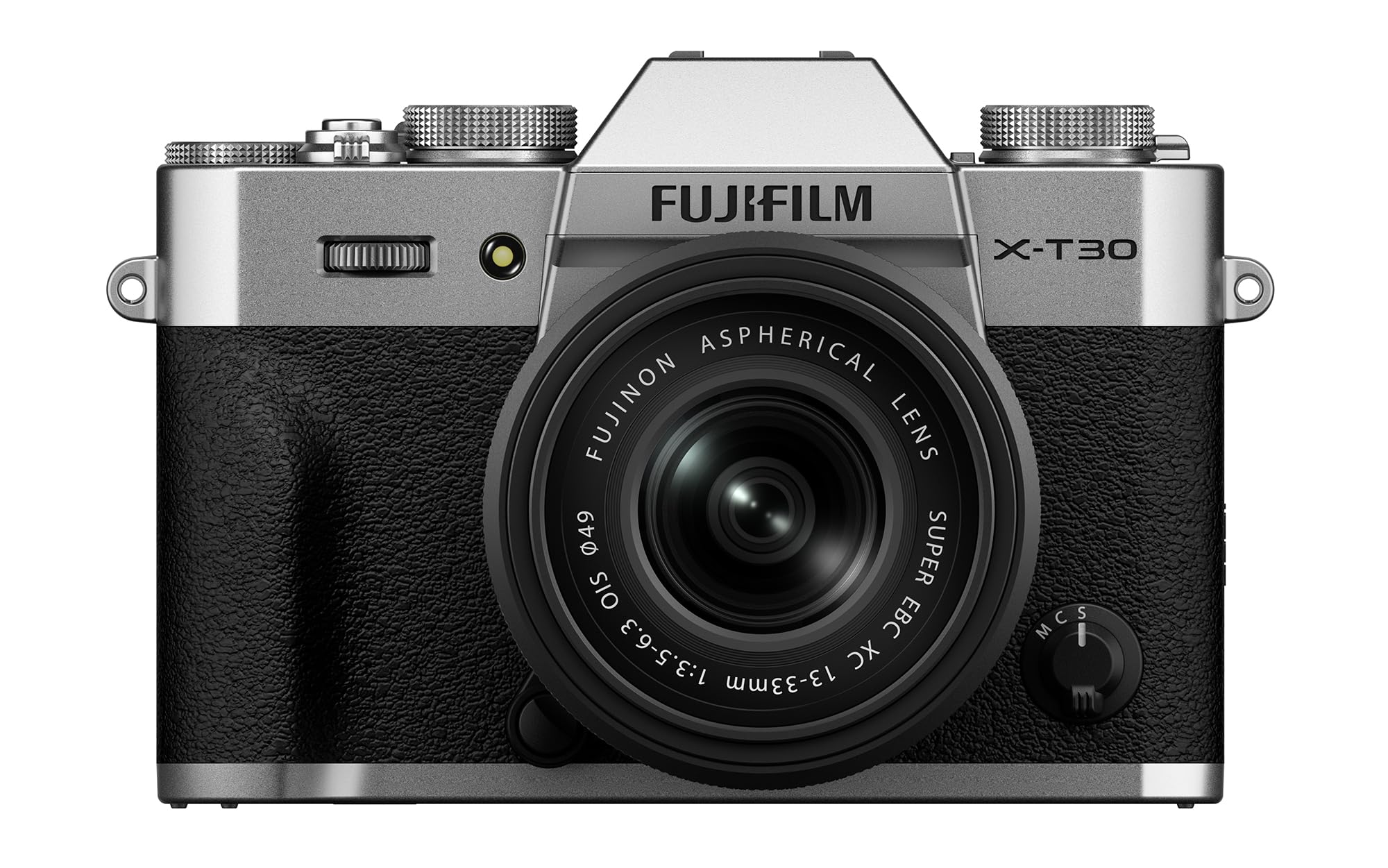
The Fujifilm X-T30 III is a compact, retro-styled gem that delivers professional image quality in a package you’ll love to carry. It shares the same 26MP sensor and processor as more expensive Fuji models, meaning you get access to the full suite of beloved Film Simulations (like Classic Chrome and Velvia) for that distinctive Fuji look in both photos and video.
Its autofocus is quick and includes subject detection, and it captures crisp 4K video. The body is remarkably small and light, especially when paired with Fuji’s compact prime lenses, making it an ideal travel companion. The tactile dials for shutter speed and exposure compensation make learning manual exposure intuitive and engaging.
It lacks a fully articulating screen (it only tilts) and in-body stabilization, so it’s best suited for creators who use a tripod or are comfortable with handheld techniques. For the beginner drawn to photography aesthetics and a hands-on shooting experience, the X-T30 III is deeply rewarding.
Why it’s great
- Superb Fuji color science and film simulations in a tiny body.
- Excellent hybrid performance for both stills and 4K video.
- Intuitive, tactile manual controls that are fun to use.
- Very portable system with small, high-quality lenses.
Good to know
- Tilt-only screen limits its use for front-facing vlogging.
- No in-body image stabilization.
10. Canon EOS Rebel T7

The Canon EOS Rebel T7 represents the classic DSLR entry point—a proven, reliable workhorse focused primarily on still photography. It features a 24MP APS-C sensor, an optical viewfinder, and built-in Wi-Fi for easy sharing. Its guide mode is exceptionally helpful for beginners, walking you through various shooting scenarios and explaining settings as you use them.
For video, it captures Full HD 1080p, which is sufficient for basic projects, web content, and learning the ropes of manual exposure. The battery life is excellent, and the camera feels solid and familiar in the hand. The Canon EF/EF-S lens system is one of the largest and most affordable in the world, giving you endless options for growth.
As a DSLR, it lacks some modern video conveniences like a flip screen, fast continuous autofocus in live view, and 4K recording. It’s best for the beginner whose primary passion is photography, but who also wants to dip their toes into simple video projects without a complex setup.
Why it’s great
- Outstanding beginner guide mode that teaches photography concepts.
- Excellent battery life and comfortable, traditional DSLR handling.
- Access to the vast and budget-friendly Canon EF/EF-S lens library.
- Reliable image quality for stills and simple Full HD video.
Good to know
- Limited to Full HD video; lacks 4K and modern video features.
- Fixed rear screen and slower live view autofocus hinder video versatility.
11. Panasonic LUMIX FZ80D

The Panasonic LUMIX FZ80D is a “bridge camera,” meaning it has a massive, built-in 20-1200mm equivalent zoom lens that covers everything from ultra-wide to super-telephoto. This all-in-one design is its greatest strength: you never need to change lenses, making it perfect for travel, wildlife, or events where you need to capture both wide scenes and distant details quickly.
It records 4K video and includes powerful optical image stabilization to help keep that huge zoom steady. Features like 4K Photo and Post Focus allow you to extract high-quality stills from video or choose your focus point after shooting, which are great learning tools. The large electronic viewfinder is bright and clear, even in sunlight.
The trade-off is a smaller sensor than mirrorless cameras, which can lead to noisier images in low light. The autofocus can be slower when fully zoomed. It’s the ideal choice for the beginner who values ultimate convenience and versatility in a single package and plans to shoot primarily in good lighting conditions.
Why it’s great
- Unbeatable all-in-one versatility with a 60x optical zoom lens.
- Strong optical stabilization for handheld use at long focal lengths.
- Helpful creative features like 4K Photo and Post Focus.
- No need to invest in or carry additional lenses.
Good to know
- Smaller sensor struggles in low light compared to APS-C cameras.
- Autofocus can hunt at the extreme telephoto end.
- Not part of an interchangeable lens system for future expansion.
Understanding the Specs
Autofocus: Phase Detect vs. Contrast Detect
Modern cameras use Phase Detection AF (PDAF) or Contrast Detection AF (CDAF). PDAF (found in Dual Pixel, Hybrid AF systems) is faster and better for tracking moving subjects in video, making it the preferred choice for beginners. CDAF can be accurate but may “pulse” or hunt for focus during recording. Look for terms like “Dual Pixel CMOS AF” (Canon) or “Real-time Tracking” (Sony) for the most reliable video autofocus.
Stabilization: IBIS, OIS, and Digital
In-Body Image Stabilization (IBIS) moves the sensor to counteract shake, working with any lens. Optical Image Stabilization (OIS) is built into specific lenses. Both are excellent. Digital stabilization (EIS) crops the image and can reduce quality. For beginners, a camera with IBIS or a kit lens with OIS provides the most forgiving handheld shooting experience, reducing the immediate need for a gimbal.
FAQ
Is a mirrorless camera better than a DSLR for video beginners?
Do I need 4K video as a beginner?
What is the most important feature for vlogging?
Can I use my beginner camera for live streaming?
Final Thoughts: The Verdict
For most people, the best camera for video beginners winner is the Nikon Z 30 because it perfectly balances creator-friendly design, excellent video quality, and an intuitive user experience. If you want the absolute best autofocus and specialized tools for product reviews, grab the Sony ZV-E10 II. And for rock-solid handheld stabilization without extra gear, nothing beats the OM SYSTEM E-M10 Mark IV.

Mo Maruf
I created WellFizz to bridge the gap between vague wellness advice and actionable solutions. My mission is simple: to decode the research and give you practical tools you can actually use.
Beyond the data, I am a passionate traveler. I believe that stepping away from the screen to explore new environments is essential for mental clarity and physical vitality.