Our readers keep the lights on and my smoothie glass nicely filled. As an Amazon Associate, I earn from qualifying purchases.
Choosing a 1000Wh power station is more than just grabbing the biggest battery you can find. It’s about finding the right balance of power delivery, recharge speed, and long-term durability to match your specific life, whether that’s weekend camping, remote work, or reliable home backup. The wrong choice can leave you underpowered when you need it most or burdened with a unit that’s frustratingly slow to rejuvenate.
I’m Mohammad Maruf — the founder and writer behind WellFizz. My process involves diving deep into market trends, dissecting technical specifications from engineering data sheets, and analyzing thousands of data points from real-world user experiences to separate marketing hype from genuine performance.
After scrutinizing the latest models, their real-world test results, and underlying battery technology, I’ve compiled this guide to help you cut through the noise. Our detailed analysis reveals the top performers that balance capacity, portability, and reliability for your essential power needs, helping you select the best 1000wh power station.
How To Choose The Best 1000Wh Power Station
A 1000Wh (watt-hour) capacity represents a sweet spot in portable power: enough to run essential home appliances during an outage or fully support a camping trip, while still remaining somewhat portable. The key is to look beyond the headline capacity number and focus on how that power is delivered, managed, and replenished.
Output Power: The Engine Under the Hood
The continuous AC output wattage determines what you can actually run. A station with a 1000Wh battery but only a 300W inverter can’t power a 1000W microwave—it will overload. For true versatility, look for an output of 1500W or higher, which handles kitchen appliances, power tools, and space heaters. Pay equal attention to the surge rating, which is the brief burst of power needed to start motor-driven devices like refrigerators or pumps.
Battery Chemistry: Your Long-Term Investment
This is the most critical factor for longevity and safety. Most premium stations now use Lithium Iron Phosphate (LiFePO4 or LFP) chemistry. These batteries last for 3000-4000 charge cycles (versus 500-800 for standard lithium-ion), operate more safely with less heat, and perform better in extreme temperatures. While sometimes heavier, the decade-long lifespan of LiFePO4 offers far better value over time.
Recharge Speed: Getting Back in the Game
A 1000Wh battery is a large tank to fill. Recharge times can vary wildly from 1 hour to over 6 hours via a wall outlet. Fast AC recharging, often called “Turbo” or “Hyper” mode, is a game-changer for emergency preparedness, allowing you to top up between outages or during a short trip to a cafe. Also, check the maximum solar input if you plan to go off-grid; a higher wattage acceptance means faster solar charging.
Quick Comparison
On smaller screens, swipe sideways to see the full table.
| Model | Type | Best For | Key Feature | Amazon |
|---|---|---|---|---|
| DJI Power 1000 | LiFePO4 | Quiet Home Backup & Camping | Ultra-quiet 23dB operation | Amazon |
| Anker SOLIX C1000 Gen 2 | LiFePO4 | Fastest Recharge & Tech Users | 49-minute full AC charge | Amazon |
| Jackery Explorer 1000 v2 | LiFePO4 | Lightweight Portability | Lightest 1kWh class at 23.8 lbs | Amazon |
| OUPES Mega 1 | LiFePO4 | Expandable Power & High Output | Expandable to 5kWh, 2000W output | Amazon |
| DJI Power 1000 V2 | LiFePO4 | Fast Recharge & Drone Users | 37 min to 80% charge, 140W USB-C | Amazon |
| BLUETTI Elite 100 V2 | LiFePO4 | Compact Design & High Port Count | 35% smaller footprint, 11 ports | Amazon |
| UDPOWER S1200 | LiFePO4 | Maximum AC Outlets | 5 AC outlets, 14 total ports | Amazon |
| Anker SOLIX C1000 | LiFePO4 | Balanced Performance | 58-min full charge, 1800W output | Amazon |
| Jackery Solar Generator 1000 v2 Kit | LiFePO4 | Complete Off-Grid Starter Kit | Includes 200W solar panel | Amazon |
| Jackery Explorer 2000 v2 | LiFePO4 | Extended Runtime & Home Backup | 2042Wh capacity, 2200W output | Amazon |
| DaranEner 300W | LiFePO4 | Entry-Level & Ultra-Portable | Compact & lightweight, 192Wh | Amazon |
In‑Depth Reviews
1. DJI Power 1000

The DJI Power 1000 establishes a compelling benchmark in the mid-range category by masterfully balancing substantial power with remarkably quiet operation. Its 1024Wh LiFePO4 battery and 2200W continuous output (2600W surge) provide enough muscle to run high-draw appliances like microwaves or small power tools, making it versatile for both emergency home backup and serious camping trips.
Where this unit truly distinguishes itself is in its acoustic performance. Operating at just 23 decibels—quieter than a typical refrigerator hum—it’s ideal for environments where noise is a concern, such as inside an RV, a bedroom powering a CPAP machine, or a quiet campsite. The build quality feels substantial and premium, reflecting DJI’s reputation for robust engineering in other tech sectors.
Recharging is impressively swift, reaching full capacity in about 70 minutes via AC, and it supports up to 800W of solar input for off-grid flexibility. The interface is clean, with well-organized ports and a clear display. For users seeking a reliable, quiet, and well-rounded power station that doesn’t scream for attention, the DJI Power 1000 is a top-tier contender.
Why it’s great
- Exceptionally quiet operation makes it suitable for indoor use.
- Strong 2200W output handles a wide range of appliances.
- Solid build quality with a reputable brand’s engineering.
- Fast AC and solar recharging capabilities.
Good to know
- Heavier than some competing models with similar capacity.
- Port selection, while sufficient, is not the most expansive.
2. Anker SOLIX C1000 Gen 2
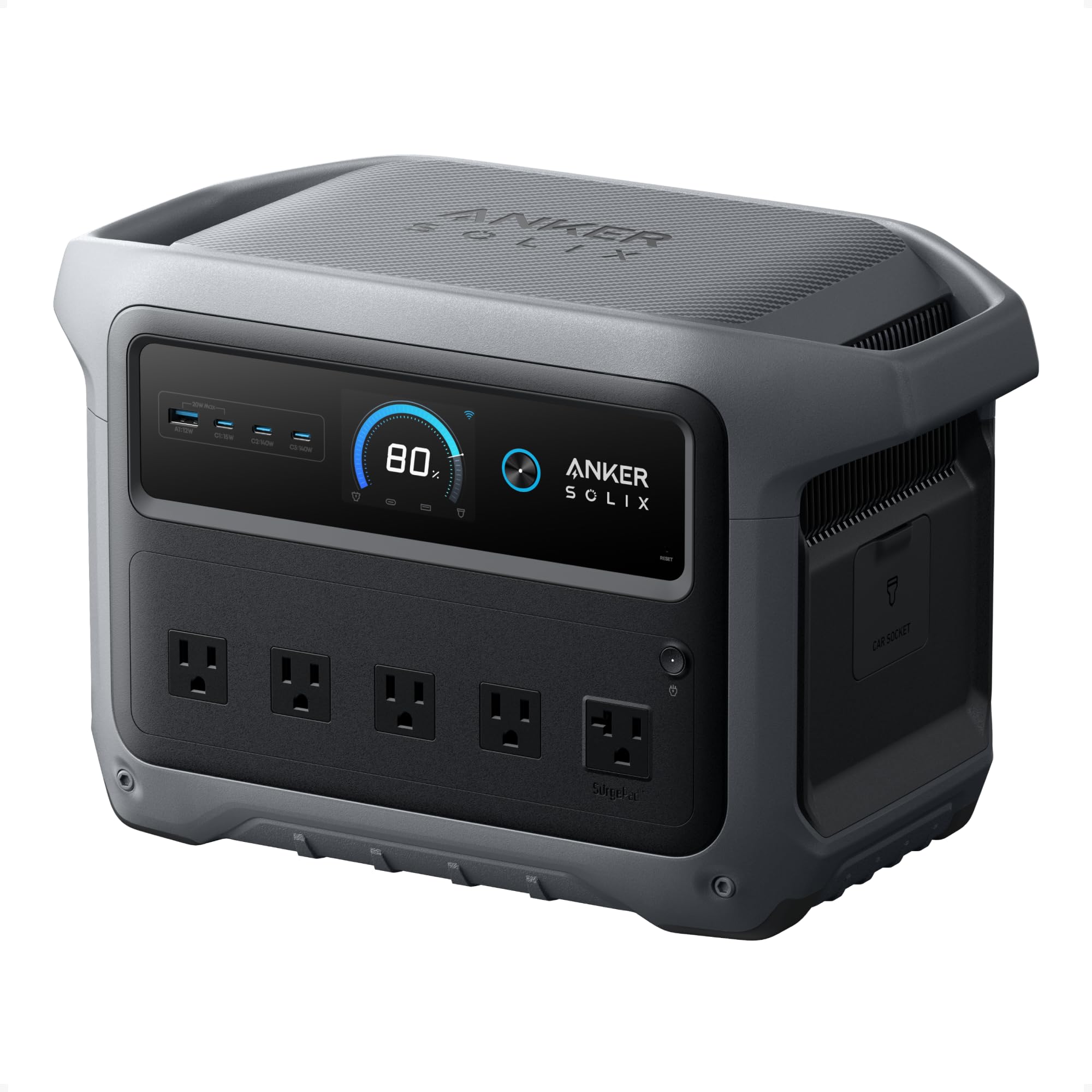
If your top priority is minimizing downtime, the Anker SOLIX C1000 Gen 2 is in a league of its own. Its HyperFlash technology enables a breathtaking full recharge from zero in just 49 minutes via a wall outlet. This is a transformative feature for emergency scenarios where power outages may be rolling, or for camping trips where a quick stop at a cafe can fully refuel your power bank.
Beyond raw speed, it delivers robust performance with a 2000W continuous output (3000W surge) from a 1024Wh LiFePO4 battery. The unit is also designed to be 14% smaller and 11% lighter than previous-generation models, improving portability. Anker’s app integration is excellent, offering detailed monitoring, a UPS mode with under 10ms switchover, and the ability to schedule charging during off-peak hours to save on electricity costs.
This power station is for the tech-savvy user who values cutting-edge features and incredible recharge speed above all else. It represents a significant step forward in power station convenience, turning a multi-hour waiting period into a brief coffee break.
Why it’s great
- Industry-leading 49-minute full recharge time.
- High 2000W/3000W output for demanding devices.
- Compact and lighter design for its class.
- Advanced app with UPS mode and scheduling.
Good to know
- The ultra-fast charge feature requires a robust wall outlet and circuit.
- Premium features come at a higher cost point.
3. Jackery Explorer 1000 v2

The Jackery Explorer 1000 v2 excels by perfecting the fundamentals in a lightweight, user-friendly package. Weighing only 23.8 pounds, it’s the lightest station in its capacity class, making it genuinely easy to carry with its foldable handle—a major advantage for campers or anyone who needs to move their power source frequently.
It doesn’t sacrifice performance for weight, offering a 1500W continuous output (3000W surge) from its 1070Wh LiFePO4 battery. Recharging is flexible: you can opt for a 1-hour emergency fast charge via the app or a slightly longer, battery-health-optimized 1.7-hour standard charge. The interface is straightforward, with a clear display and simple physical controls that don’t require a smartphone to operate.
This model is the archetype of a reliable, no-fuss portable power station. It’s built on Jackery’s proven platform, offering a great balance of weight, power, and simplicity, making it an excellent choice for both beginners and seasoned outdoor enthusiasts.
Why it’s great
- Remarkably lightweight and portable for a 1kWh unit.
- Simple, intuitive operation without mandatory app use.
- Option for 1-hour fast charging when needed.
- Trusted brand with a long market presence.
Good to know
- The output wattage (1500W) is lower than some newer competitors.
- Solar charging requires proprietary Jackery solar panels.
4. OUPES Mega 1
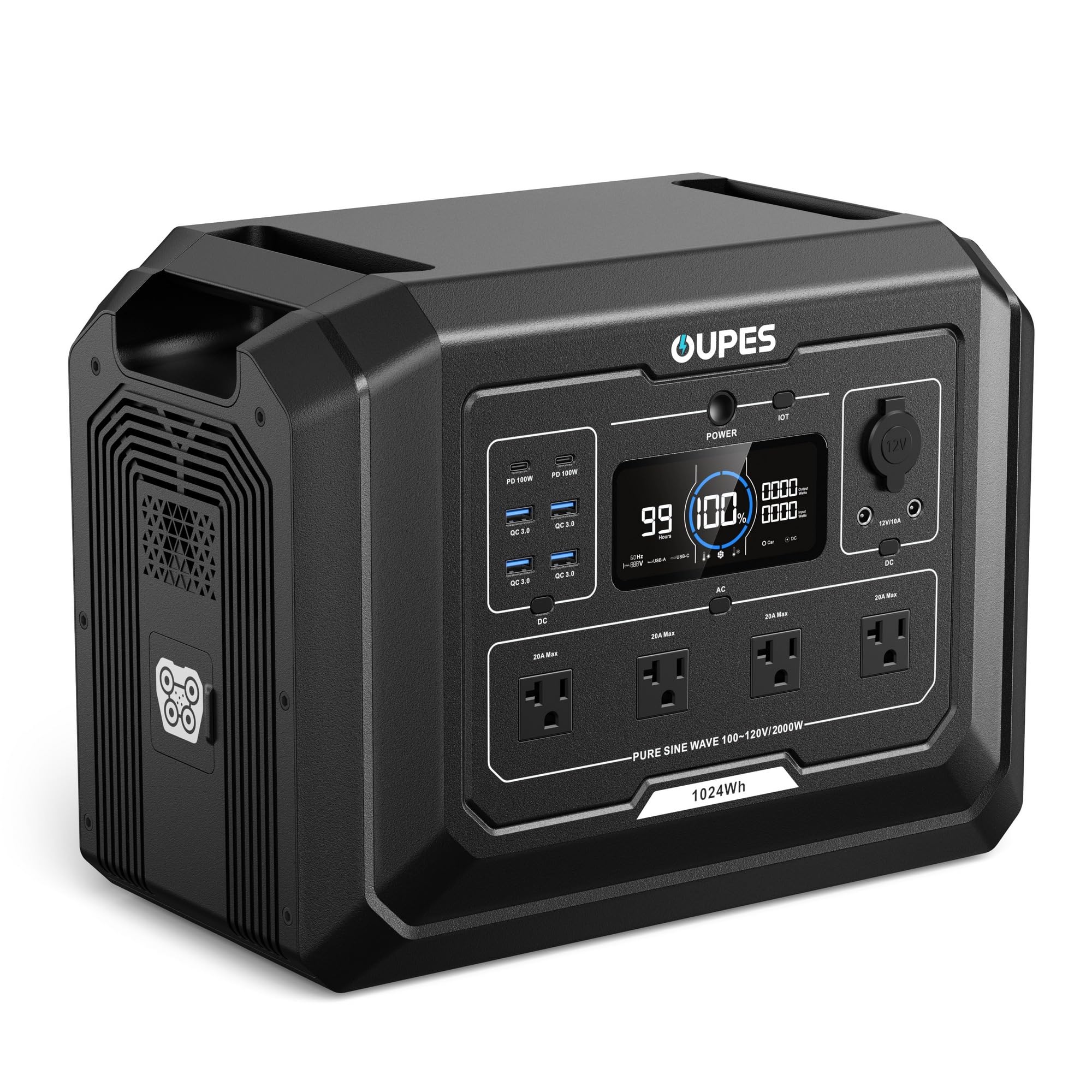
The OUPES Mega 1 is built for users whose power needs might grow, offering a unique modular expansion system. Starting with a solid base of 1024Wh and a strong 2000W continuous output (4500W surge), its real potential is unlocked by connecting up to two additional B2 battery units, expanding total capacity to a massive 5kWh without needing extra inverters or complex wiring.
Performance is robust, featuring a professional-grade UPS function with a <20ms switchover time to protect sensitive electronics. It also boasts impressively fast recharging, reaching 80% in 36 minutes via AC. The unit includes smart app control for monitoring and supports high solar input for off-grid sustainability.
This is the ideal choice for someone planning a scalable power system, whether for a growing off-grid cabin setup, a more capable RV power solution, or simply wanting the option to extend runtime in the future without replacing the entire unit. It offers high-end features at a competitive point.
Why it’s great
- Modular design allows capacity expansion up to 5kWh.
- High 2000W output with a massive 4500W surge.
- Fast AC recharging and reliable UPS function.
- Good solar charging compatibility.
Good to know
- Expansion batteries are a separate, significant purchase.
- The unit is on the heavier side for its base capacity.
5. DJI Power 1000 V2

The DJI Power 1000 V2 takes the solid foundation of the original and supercharges the recharge experience. Its headline feature is a blistering recharge speed, going from zero to 80% in approximately 37 minutes. This ensures you spend less time tethered to an outlet and more time using your gear, whether prepping for back-to-back storms or between adventures on a road trip.
It also upgrades the USB-C capabilities, offering dual 140W ports for charging powerful laptops and compatible DJI drone batteries at high speed—a boon for content creators. The output remains substantial at 2600W, and it maintains the series’ signature quiet operation (as low as 26dB) and robust LiFePO4 battery with a 10-year lifespan.
This model is tailored for users who prioritize rapid turnaround and have high-wattage USB-C devices. It’s an evolution focused on speed and modern device compatibility, making it a fantastic choice for tech professionals and outdoor creatives.
Why it’s great
- Extremely fast partial recharge (37 min to 80%).
- High-power 140W USB-C ports for laptops and drones.
- Maintains quiet operation and strong build quality.
- Improved 10ms UPS switchover time.
Good to know
- Similar in weight and size to the original model.
- Premium price for the latest generation features.
6. BLUETTI Elite 100 V2
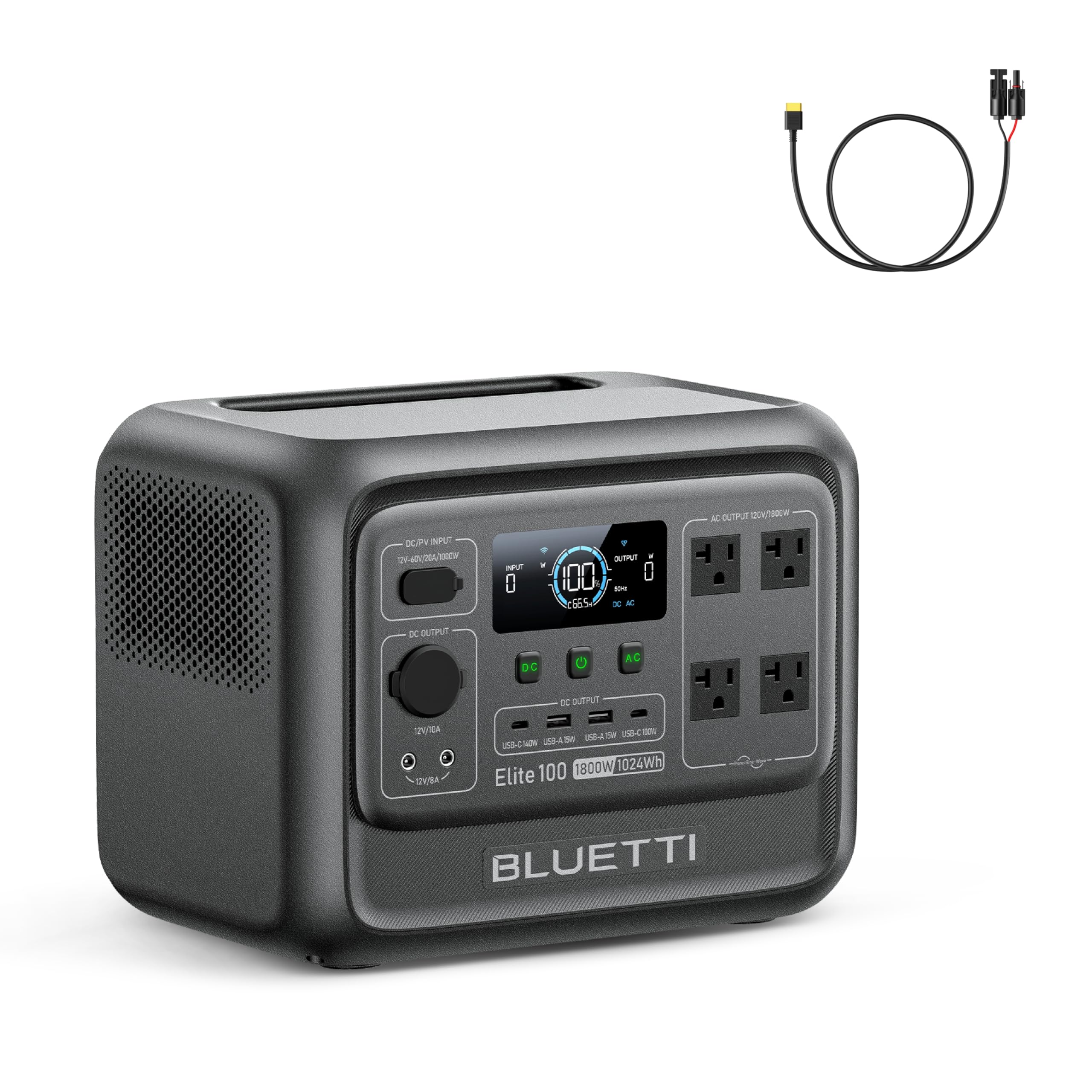
The BLUETTI Elite 100 V2 tackles a common pain point: the bulk of a 1000Wh power station. It achieves a footprint that is 35% smaller than many competitors, with a concealed carry handle that makes one-handed transport surprisingly feasible. This engineering feat makes it much easier to integrate into tight spaces like a crowded RV, a packed car trunk, or a discreet corner of your home.
Despite its compact size, it doesn’t compromise on power or ports. It delivers 1800W continuous output (3600W surge) and features a generous total of 11 ports, including multiple AC outlets and USB options. Recharge is respectably quick (70 minutes to full via AC or solar), and it includes a reliable UPS function for seamless backup power.
If storage space and easy portability are primary concerns, but you still need full 1kWh capability, the Elite 100 V2 is a standout solution. It proves you don’t have to sacrifice substantial power for a manageable form factor.
Why it’s great
- Exceptionally compact design for its capacity.
- High port count with 11 total outlets.
- Strong 1800W/3600W output in a small package.
- Discreet, integrated carry handle.
Good to know
- Some users report the turbo charging mode can be finicky.
- The smaller size may mean less surface area for cooling under extreme loads.
7. UDPOWER S1200

The UDPOWER S1200 solves a specific but common problem: outlet scarcity. It boasts five AC outlets, which is two to three more than most competitors in this class. This allows you to power a multi-device workstation, several camping appliances, or a cluster of home electronics simultaneously without needing bulky power strips, reducing cord clutter and potential points of failure.
With a 1190Wh LiFePO4 battery and 1200W continuous output (1800W surge), it provides solid core performance. It also includes a wealth of other ports, including dual 100W USB-C, for a total of 14 charging points. Features like a sub-25dB quiet fan, fast AC recharging, and a <0.01s UPS switch add to its utility.
This model is a powerhouse for users who need to run many AC-dependent devices at once. It’s perfect for powering a full desk setup during an outage, a multi-appliance camping kitchen, or a small array of power tools on a job site.
Why it’s great
- Unmatched five AC outlets for simultaneous device use.
- High total port count (14) with fast USB-C.
- Quiet operation and effective UPS functionality.
- Above-average 1190Wh capacity.
Good to know
- The 1200W output is lower relative to its high capacity.
- Design and brand are less established than some rivals.
8. Anker SOLIX C1000

The original Anker SOLIX C1000 remains a highly competent and reliable choice, offering a compelling mix of speed, power, and smart features. Its 58-minute full recharge time was groundbreaking when released and is still very competitive. With a 1056Wh LiFePO4 battery and 1800W continuous output (2400W surge via SurgePad technology), it capably runs most household and outdoor appliances.
This model shines with its thoughtful integration. The accompanying app provides deep control, allowing you to customize charging speeds, monitor real-time stats, and manage power remotely. It’s also designed to be 15% smaller than other 1kWh units, aiding portability. For users who appreciate smart features and robust performance from a trusted brand in power electronics, this is a solid, well-rounded investment.
While the Gen 2 version is faster, this model often represents a more accessible entry point into Anker’s premium power station ecosystem, losing little in terms of real-world usability for most people.
Why it’s great
- Very fast 58-minute AC recharge.
- Powerful 1800W output with effective surge handling.
- Excellent app integration for monitoring and control.
- Compact design from a reputable brand.
Good to know
- Recharge speed is surpassed by the newer Gen 2 model.
- Slightly lower capacity than some nominal 1024Wh units.
9. Jackery Solar Generator 1000 v2 Kit

This package combines the excellent Jackery Explorer 1000 v2 power station with a 200W SolarSaga solar panel, providing a complete, ready-to-deploy off-grid power system. For those new to solar charging or who want guaranteed compatibility, getting a matched set from the manufacturer eliminates guesswork and ensures optimal charging performance.
The power station itself offers the lightweight, user-friendly experience reviewed earlier. The included 200W folding solar panel is portable, relatively easy to set up, and features a built-in sun dial for optimal positioning. This kit allows you to harvest free solar energy to recharge the station during the day, dramatically extending your off-grid runtime for camping, van life, or extended emergencies.
While it represents a higher initial investment, the value of a fully integrated system from a single brand with cohesive warranties and support is significant. It’s the most straightforward path to energy independence for recreational use.
Why it’s great
- Complete, compatible solar generator system in one purchase.
- Includes a portable, efficient 200W folding solar panel.
- Simplifies the off-grid setup process for beginners.
- Backed by unified warranty and support.
Good to know
- The solar panel connection uses a proprietary Jackery cable, which can be a single point of failure.
- Higher initial cost compared to buying the station alone.
10. Jackery Explorer 2000 v2

For scenarios demanding extended runtime or the ability to power larger appliances for longer periods, the Jackery Explorer 2000 v2 steps up with double the standard capacity. Its 2042Wh LiFePO4 battery can run a medium refrigerator for well over a day or sustain a comprehensive home office setup through an extended outage, providing a significant buffer and peace of mind.
Despite its large capacity, Jackery has made it surprisingly manageable. At 39.5 lbs, it’s 41% lighter than many competing 2kWh stations, thanks to advanced cell-to-body (CTB) packaging. It delivers a robust 2200W of continuous AC power and features ultra-fast recharging, reaching 80% in 66 minutes. The silent charging mode and reliable UPS function round out a premium feature set.
This model is for those who have determined that 1000Wh is insufficient for their needs. It’s the logical upgrade for whole-house essential backup, longer boondocking trips, or powering energy-intensive tools without frequent recharging interruptions.
Why it’s great
- Double the capacity (2042Wh) for extended runtime.
- High 2200W output handles more demanding appliances.
- Relatively lightweight for its class due to CTB design.
- Maintains Jackery’s user-friendly interface and fast charge.
Good to know
- Naturally heavier and larger than 1kWh models.
- A significant step up in cost.
11. DaranEner 300W
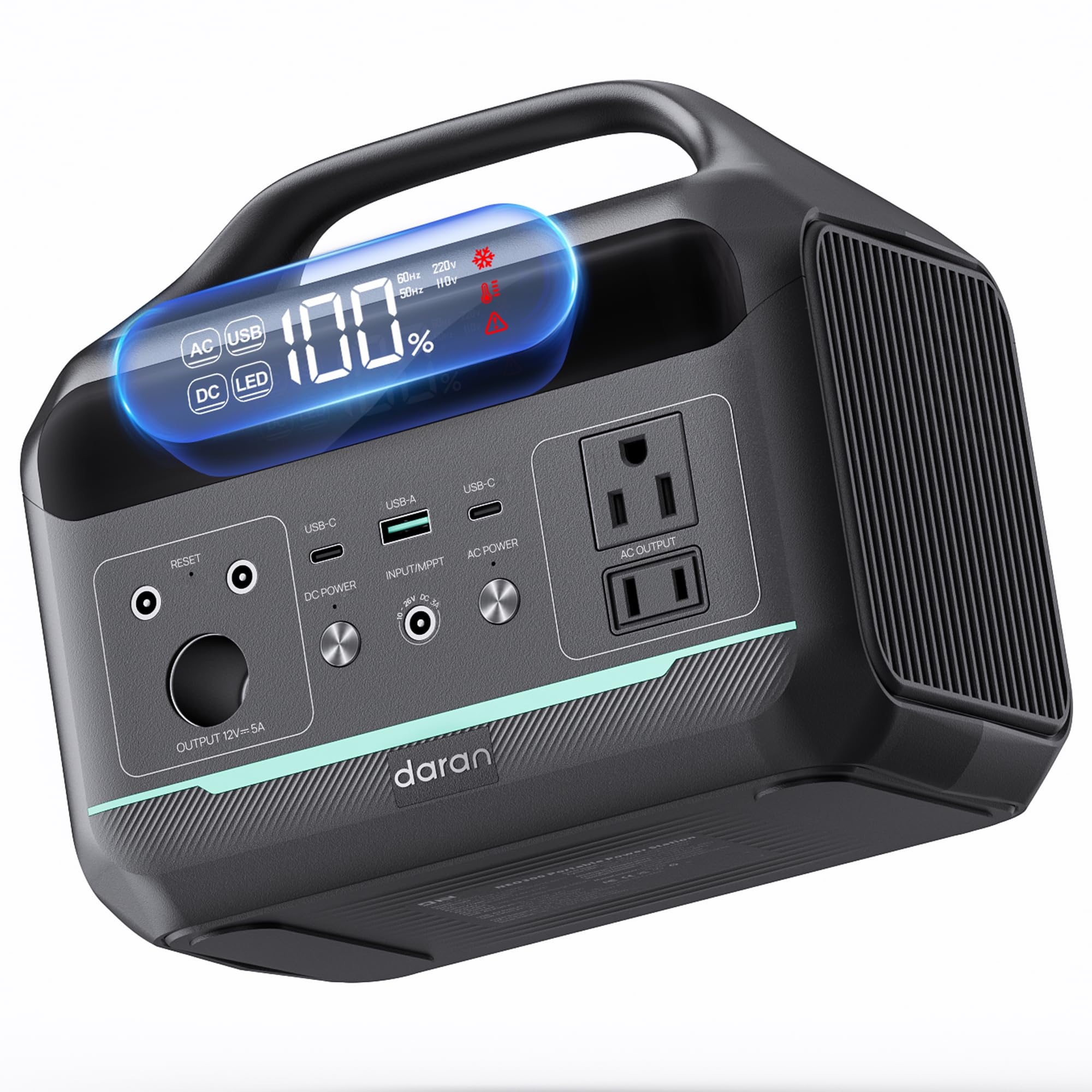
It’s important to note this unit is included to illustrate an entry-level option, but its 192Wh capacity is far below the 1000Wh scope of this guide. The DaranEner 300W is a compact, lightweight power station built around a LiFePO4 battery, designed for low-power applications like charging phones, laptops, small fans, or LED lights during short trips or brief outages.
Weighing under 7 pounds, it’s truly portable and includes a useful built-in LED flashlight with multiple modes. With eight ports, including two AC outlets (300W pure sine wave), it can power several small devices simultaneously. For its intended use—day trips, tailgating, or as a supplemental power bank for electronics—it offers good value and the safety of LiFePO4 chemistry.
However, its limited capacity and output mean it cannot run kitchen appliances, CPAP machines through the night, or serve as meaningful home backup. It’s a capable device for specific, low-wattage needs but exists in a different category from the 1000Wh stations reviewed above.
Why it’s great
- Very affordable and highly portable.
- Includes LiFePO4 battery for longevity.
- Useful for charging small devices and as a flashlight.
- Good number of ports for its size.
Good to know
- Capacity (192Wh) is not suitable for home backup or running appliances.
- 300W output severely limits what devices it can power.
Understanding the Specs
Watt-Hours (Wh) vs. Output Watts (W)
Think of Watt-Hours (Wh) as the size of your fuel tank—it’s the total energy storage. A 1000Wh battery can theoretically deliver 1000 watts for 1 hour, 500 watts for 2 hours, and so on. Output Watts (W) is the size of the fuel line—it’s the maximum power the inverter can deliver at any moment. You need both a large enough “tank” (Wh) for runtime and a wide enough “fuel line” (W) to run your specific appliances.
LiFePO4 vs. Lithium-Ion
This is a critical long-term value decision. Traditional Lithium-Ion batteries typically last 500-800 full charge cycles before significant degradation. Lithium Iron Phosphate (LiFePO4) batteries are rated for 3000-4000+ cycles. While sometimes slightly heavier and more expensive upfront, a LiFePO4 battery can last a decade or more with regular use, offering far lower cost per cycle and enhanced safety due to superior thermal and chemical stability.
FAQ
Can a 1000Wh power station run a refrigerator?
How long does it take to charge a 1000Wh power station?
What is the difference between a power station and a gas generator?
What does UPS function mean on a power station?
Final Thoughts: The Verdict
For most people, the best 1000wh power station winner is the DJI Power 1000 because it delivers an exceptional balance of quiet operation, robust power output, and reliable brand engineering. If you want the absolute fastest recharge to minimize downtime, grab the Anker SOLIX C1000 Gen 2. And for maximum portability and a proven user-friendly experience, nothing beats the Jackery Explorer 1000 v2.

Mo Maruf
I created WellFizz to bridge the gap between vague wellness advice and actionable solutions. My mission is simple: to decode the research and give you practical tools you can actually use.
Beyond the data, I am a passionate traveler. I believe that stepping away from the screen to explore new environments is essential for mental clarity and physical vitality.