Our readers keep the lights on and my smoothie glass nicely filled. As an Amazon Associate, I earn from qualifying purchases.
Choosing the right graphics card for 1080p gaming can feel like a maze of confusing numbers and marketing terms. It’s easy to either underspend on a card that struggles or wildly overspend on power you’ll never use at this resolution. The key is finding that precise balance of performance, features, and longevity that fits your specific build and goals.
I’m Mohammad Maruf — the founder and writer behind WellFizz. My background in product research is rooted in analyzing market data, comparing technical specifications, and distilling thousands of user experiences to identify the true value leaders in crowded tech categories.
This guide is the result of deep-diving into the current landscape, separating the genuinely capable performers from the hype. Our goal is to match you with a card that delivers the smooth, high-fidelity experience you want. best 1080p graphics card for your needs hinges on understanding a few key specs beyond the brand name.
How To Choose The Best 1080P Graphics Card
Navigating the 1080p GPU market requires focusing on a few critical areas. It’s not just about the highest frame rate today, but about a card that will remain capable and compatible with your system for years to come.
Performance Sweet Spot (GPU Architecture & Core Count)
For 1080p, you don’t need the absolute latest flagship architecture, but you do want a modern-enough design. Cards based on NVIDIA’s Turing (GTX 16-series) or Ampere (RTX 30-series) architectures, or AMD’s RDNA 3 (RX 7000-series), offer excellent efficiency and performance per watt. Look for a card with enough streaming processors or CUDA cores to handle detailed textures and effects without choking.
Memory: Capacity, Speed, and Interface
6GB of VRAM is the current comfortable minimum for 1080p gaming, allowing for high texture settings in most titles. 8GB provides more headroom for future games and mods. The memory type is also crucial; GDDR6 is the standard for modern mid-range cards, offering significant speed advantages over older DDR4 or GDDR5. The memory bus width (e.g., 128-bit, 192-bit) affects how quickly the GPU can access that VRAM.
Cooling and Form Factor
A dual-fan design is typical for this performance tier and offers a good balance of cooling and noise. Consider your PC case: compact “ITX” or “Low Profile” cards are essential for small form factor builds, while standard dual- or triple-slot cards offer potentially better thermals in mid-tower cases. Look for features like 0dB fan stop for silent operation during light tasks.
Feature Set and Future-Proofing
Decide which modern features are important to you. NVIDIA’s DLSS (AI upscaling) and AMD’s FSR can dramatically boost frame rates in supported games. If you’re interested in ray-traced lighting effects, an RTX card from NVIDIA or an RDNA 3 card from AMD will handle it far better than older, non-RT hardware. Also, ensure the card has the display outputs (HDMI 2.1, DisplayPort 1.4) you need for your monitor.
Quick Comparison
On smaller screens, swipe sideways to see the full table.
| Model | Type | Best For | Key Feature | Amazon |
|---|---|---|---|---|
| ASRock Radeon RX 7600 | AMD RDNA 3 | High-FPS 1080p Gaming | 8GB GDDR6, 0dB Silent Cooling | Amazon |
| ASUS Dual RTX 3050 6GB OC | NVIDIA Ampere | Efficient 1080p with DLSS | PCIe Slot Powered, Axial-Tech Fans | Amazon |
| ZOTAC Gaming GTX 1660 Super | NVIDIA Turing | Proven Value Gaming | Super Compact 6.83-inch Design | Amazon |
| XFX Speedster RX 7600 | AMD RDNA 3 | VR & High-Refresh 1080p | Dual Fan Cooling, 8GB GDDR6 | Amazon |
| MSI RTX 3050 Ventus 2X 6G | NVIDIA Ampere | Low-Power System Upgrades | 96-bit Bus, 1492 MHz Boost | Amazon |
| EVGA GTX 1660 Super SC Ultra | NVIDIA Turing | Quiet, Reliable Performance | 1830 MHz Boost, Metal Backplate | Amazon |
| MSI RTX 3050 LP 6G OC | NVIDIA Ampere | Small Form Factor PCs | Low Profile Design, Dual Fans | Amazon |
| ZER-LON GTX 1660 Super | NVIDIA Turing | Budget-Conscious Gamers | Triple Display Support, 6GB GDDR6 | Amazon |
| ASRock Intel Arc A380 | Intel Alchemist | Media Encoding & Light Gaming | 6GB GDDR6, Single Slot ITX | Amazon |
| PNY RTX 5070 Epic-X ARGB | NVIDIA Blackwell | Overkill Future-Proofing | 12GB GDDR7, DLSS 4, Triple Fan | Amazon |
| MSI Gaming GeForce GT 1030 | NVIDIA Pascal | Basic Display & Very Light Use | 4GB DDR4, Single Fan, Low Power | Amazon |
In‑Depth Reviews
1. ASRock Radeon RX 7600 Challenger 8GB OC
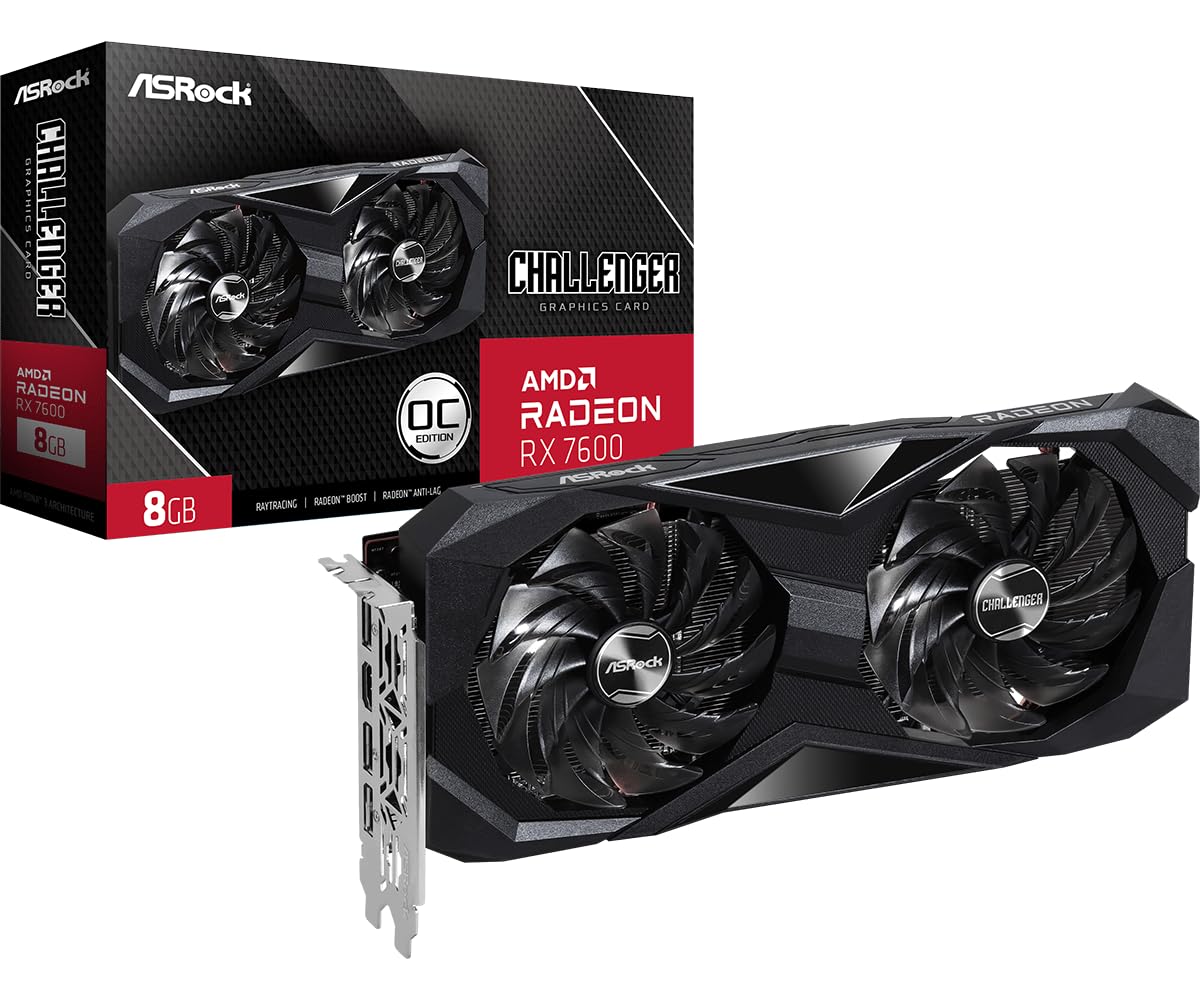
The ASRock Radeon RX 7600 stands as the performance sweet spot for serious 1080p gamers. Powered by AMD’s efficient RDNA 3 architecture, it’s engineered to deliver high frame rates with stunning visual fidelity, making it our top overall pick. With 8GB of fast GDDR6 memory, it handles modern games with high-resolution texture packs without breaking a sweat, offering a clear advantage over 6GB cards for future-proofing.
Its dual-fan cooling system is notably effective, featuring striped axial fans and an ultra-fit heatpipe that keeps thermals in check during extended sessions. The 0dB Silent Cooling technology is a fantastic quality-of-life feature, stopping the fans entirely during light tasks or idle periods for a completely silent desktop experience. The inclusion of a sturdy metal backplate adds rigidity, a premium feel, and aids in heat dissipation.
Users report exceptional satisfaction with its 1080p capabilities, noting smooth gameplay in demanding titles. It’s also proven to be a capable card for creative tasks like photo editing and CAD work, thanks to its ample memory and modern display outputs. For anyone building a balanced, high-performance 1080p gaming rig today, the RX 7600 represents the ideal blend of current power and forward-looking features.
Why it’s great
- Exceptional 1080p performance with high frame rates.
- 8GB GDDR6 provides excellent headroom for future games.
- Efficient and quiet cooling with a 0dB silent mode.
- Modern RDNA 3 architecture with support for advanced features.
Good to know
- Performance at higher resolutions like 1440p may require settings adjustments.
- Requires a single 8-pin power connector, so ensure your PSU has one available.
2. ASUS Dual NVIDIA GeForce RTX 3050 6GB OC Edition

The ASUS Dual RTX 3050 6GB OC Edition is a masterclass in efficient, capable 1080p gaming, particularly for those upgrading pre-built or compact systems. Its standout feature is drawing all its power directly from the PCIe motherboard slot, eliminating the need for separate power cables. This makes it a perfect, hassle-free upgrade for countless OEM desktops with proprietary power supplies.
Performance is solid for its class, handling esports titles with ease and providing playable frame rates in more demanding AAA games at medium-to-high 1080p settings. The inclusion of NVIDIA’s Ampere architecture brings access to valuable features like DLSS, which can intelligently boost performance in supported titles. ASUS’s Axial-tech fan design ensures cool and relatively quiet operation, with the two-slot form factor maximizing compatibility.
Feedback from users upgrading from older cards like the GTX 1050 or integrated graphics is overwhelmingly positive, citing it as a transformative plug-and-play experience. It’s heralded as the best possible GPU for systems like the Dell Optiplex MiniTower, where power connector availability is a major constraint. For a straightforward, no-fuss 1080p upgrade that leverages modern NVIDIA features, this ASUS model is a top-tier choice.
Why it’s great
- No external power cable needed—ideal for OEM system upgrades.
- Access to NVIDIA features like DLSS for a performance boost.
- Compact dual-slot design with effective, quiet cooling.
- Plug-and-play installation with high user satisfaction.
Good to know
- 6GB VRAM is adequate but may limit future texture settings.
- Ray tracing performance is limited; best used sparingly if at all.
3. ZOTAC Gaming GeForce GTX 1660 Super 6GB

The ZOTAC GTX 1660 Super remains a legendary value champion in the 1080p arena. Based on NVIDIA’s proven Turing architecture and equipped with 6GB of speedy GDDR6 memory, it delivers remarkably smooth performance in a vast library of games. Its most notable physical trait is its super-compact 6.83-inch length, allowing it to fit into 99% of PC cases, from cramped pre-builts to spacious towers.
In practice, this card is praised for its ability to run games from its era at ultra settings and handle newer titles at very respectable medium-to-high settings. Users upgrading from older cards like the GTX 960 or RX 570 report dramatic improvements in frame rates and overall smoothness. The dual-fan cooler manages thermals adequately, though some enthusiasts recommend using ZOTAC’s FireStorm software to create a custom fan curve for optimal temperatures under heavy load.
For gamers on a strict budget or those looking for a reliable card to breathe new life into an older system, the 1660 Super represents incredible dollar-for-dollar performance. It lacks ray tracing cores, but its raw rasterization power for 1080p gaming is still highly relevant and effective, making it a smart, no-regrets purchase for practical gamers.
Why it’s great
- Outstanding price-to-performance ratio for 1080p gaming.
- Extremely compact size ensures maximum compatibility.
- 6GB of fast GDDR6 memory handles most games well.
- A proven, reliable workhorse with excellent user feedback.
Good to know
- Does not support hardware-accelerated ray tracing or DLSS.
- The small cooler can run warm; a custom fan curve is recommended.
4. XFX Speedster SWFT210 Radeon RX 7600 8GB

The XFX Speedster RX 7600 is another stellar execution of AMD’s RDNA 3 design, offering robust 1080p performance with a focus on strong cooling. It shares the same core specs as our top pick but comes from XFX with their distinct dual-fan SWFT cooling solution. This card is particularly noted by users for excelling in Virtual Reality applications, providing a smooth and immersive experience in titles like Half-Life: Alyx and driving sims.
Performance is consistently high, with users reporting excellent frame rates in demanding games at high settings. The card runs relatively cool and quiet under load, and its compact design makes it suitable for a wide range of case sizes. An important note from the community is to ensure you install the latest AMD drivers post-installation, as this has resolved early teething issues related to stability and thermals for some users.
For those who prioritize VR gaming or simply want a powerful, well-cooled 1080p card from a reputable AMD partner, the XFX Speedster is a fantastic option. Its 8GB frame buffer is again a key asset, ensuring it won’t be quickly bottlenecked by the increasing VRAM demands of modern game development.
Why it’s great
- Excellent VR performance, as reported by multiple users.
- Powerful 1080p gaming with high frame rates.
- Effective dual-fan cooling keeps noise levels manageable.
- Includes a modern display output selection (HDMI 2.1, DP 1.4).
Good to know
- Ensure you update to the latest GPU drivers immediately after installation.
- As with most performance cards, ensure your power supply is sufficient (550W recommended).
5. msi Gaming RTX 3050 Ventus 2X 6G OC

The MSI Ventus RTX 3050 6GB is a solid entry point into the world of NVIDIA’s RTX features. It delivers dependable 1080p gaming performance with the added benefit of access to DLSS and dedicated ray tracing cores (though use RT sparingly on this card). Its 70-watt power draw is a highlight, making it an efficient and cool-running component that’s easy on your system’s power supply.
This card solves a specific problem elegantly: upgrading systems where the previous GPU was bottlenecked by PCIe bandwidth, such as an RX 6400 in a PCIe 3.0 system. Users find it to be a stable and significant upgrade from older GTX 10-series cards, offering smoother gameplay and support for newer graphical features. The Ventus cooler from MSI is reliable and maintains low acoustics during general use.
If you’re looking for a modern NVIDIA architecture with its associated software suite and AI features, but need to maintain modest power consumption, the RTX 3050 6GB fills that niche perfectly. It’s a card that understands its role as an entry-level performer and executes it with competence.
Why it’s great
- Low 70W power draw makes it efficient and PSU-friendly.
- Provides access to NVIDIA’s DLSS and ray tracing ecosystem.
- A meaningful upgrade from older or bandwidth-limited GPUs.
- Quiet and compact dual-fan cooling solution.
Good to know
- Ray tracing performance is very limited; treat it as a bonus feature.
- The 96-bit memory interface is narrower than some competing models.
6. EVGA GeForce GTX 1660 Super SC Ultra Gaming

The EVGA GTX 1660 Super SC Ultra represents the premium end of the 1660 Super spectrum. It comes with a factory overclock pushing the boost clock to 1830 MHz, yielding a tangible performance bump over reference designs. EVGA’s cooling is highly regarded, with users consistently praising how cool and quiet this card runs even under gaming load, with temperatures often reported in the 50s and 60s Celsius.
The inclusion of a full metal backplate is a nice touch not always found in this segment, providing extra structural rigidity, protecting the PCB, and aiding in heat dissipation. It maintains the excellent 1080p gaming prowess of the 1660 Super lineage, easily handling popular titles at high settings. For users who value a whisper-quiet gaming experience and the build quality reassurance of a backplate, this EVGA model is a standout choice.
It’s a card built for longevity and pleasant daily use. While it lacks the RTX features of newer architectures, its sheer rasterization performance and refined cooling make it a beloved option for gamers who prioritize in-game smoothness and system quietness over cutting-edge lighting effects.
Why it’s great
- Exceptionally quiet and cool operation under load.
- Factory overclock provides extra performance out of the box.
- Premium feel with a protective metal backplate.
- Reliable performance from a trusted manufacturer.
Good to know
- Commands a premium within the 1660 Super category.
- No ray tracing or DLSS support, as expected for this generation.
7. MSI GeForce RTX 3050 LP 6G OC

The MSI RTX 3050 LP 6G OC is a specialist card that solves a critical problem: bringing modern gaming performance to small form factor (SFF) and slim desktop cases. Its Low Profile design, coupled with a dual-slot bracket, allows it to fit into restrictive chassis like the HP Pavilion TP01 or Dell Optiplex SFF models where full-height cards are simply not an option.
Despite its diminutive size, it doesn’t compromise on core specs, offering the same 6GB GDDR6 memory and RTX feature access as its full-sized siblings. Users are consistently amazed at the performance packed into this small package, reporting capable 1080p and even 1440p gaming in less demanding titles. The dual-fan cooler is surprisingly effective, keeping temperatures reasonable even in tight quarters.
For anyone with a pre-built office PC or a custom SFF build, this card is often the most powerful viable upgrade path. It demonstrates that you don’t need to sacrifice modern architecture and features just because your case has space constraints.
Why it’s great
- Unique low-profile design fits slim and SFF cases.
- Brings RTX features and modern gaming to compact systems.
- Surprisingly capable cooling for its size.
- Includes both half-height and full-height brackets for flexibility.
Good to know
- Performance is slightly constrained by the smaller cooler compared to full-size models.
- Ensure your slim case has adequate airflow for any added heat.
8. ZER-LON GeForce GTX 1660 Super 6GB

The ZER-LON GTX 1660 Super offers the core gaming performance of the 1660 Super at a very accessible point. It’s a compelling option for budget-conscious builders or those putting together a capable PC for lighter gaming and multitasking. The card includes a useful trio of display outputs—DVI, DisplayPort, and HDMI—making it easy to connect multiple monitors for a productivity or entertainment setup.
User feedback highlights its effectiveness as a kids’ gaming card for titles like Roblox, Fortnite, and Minecraft, where it provides smooth performance without issue. It’s also noted as a good upgrade from older GPUs like the GTX 1650, delivering a noticeable frame rate boost. The dual-fancooling system does a decent job, though it may run a bit warmer than some branded alternatives. It’s a no-frills card that focuses on delivering the essential 1660 Super experience.
This model is particularly appealing for those who want to allocate more of their budget to other components. While it may not have the brand recognition or extensive software suite of larger manufacturers, it provides the same core gaming performance. Users report good experiences with it in casual gaming builds and as a starter card for younger gamers.
It’s important to manage expectations: this is a budget-oriented model. Some users note that the packaging and accessories are minimal, and the cooling, while functional, may not be as refined as more expensive options. However, for the core task of 1080p gaming, it delivers the expected performance of a GTX 1660 Super.
Why it’s great
- Provides the essential 1660 Super performance at a very competitive point.
- Useful triple display output selection (DVI, DP, HDMI).
- Effective for casual and kids’ gaming (Roblox, Fortnite, Minecraft).
- A sensible budget upgrade from older, lower-tier GPUs.
Good to know
- Cooling solution is adequate but may run warmer than premium models.
- Packaging and accessories are very basic.
- Brand support and software may be limited compared to established names.
9. ASRock Intel Arc A380 Challenger ITX 6GB OC

The ASRock Intel Arc A380 is a unique and compelling option for a specific set of users. As Intel’s entry into the discrete GPU market, it excels in media encoding and transcoding tasks, thanks to its support for modern codecs like AV1. Its single-slot, ITX form factor makes it an ideal choice for compact builds, home servers, or systems dedicated to running Plex.
For light gaming, it’s capable, handling older and less demanding titles at 1080p. However, its primary strength lies in computational and media workloads. Users in the homelab community praise its stability and efficiency when handling multiple video transcoding streams, often replacing older NVIDIA cards for this specific purpose. The striped axial fan provides solid cooling in its compact footprint.
It’s important to note that driver maturity and compatibility have improved significantly since launch. For users whose primary need is a capable, low-power media engine or a space-efficient GPU for basic display and light tasks, the Intel Arc A380 offers a valuable and feature-rich alternative to the traditional AMD/NVIDIA duopoly.
Why it’s great
- Excellent media transcoding performance, including AV1 support.
- Extremely compact single-slot, ITX design.
- Low power consumption and stable for server/headless use.
- A cost-effective solution for Plex servers and light gaming.
Good to know
- Gaming performance is entry-level; not for demanding AAA titles.
- Early driver issues are largely resolved, but ensure your system supports ReBAR for optimal performance.
- Display output quirks may exist (e.g., HDMI signal before OS boot).
10. PNY NVIDIA GeForce RTX 5070 Epic-X ARGB OC
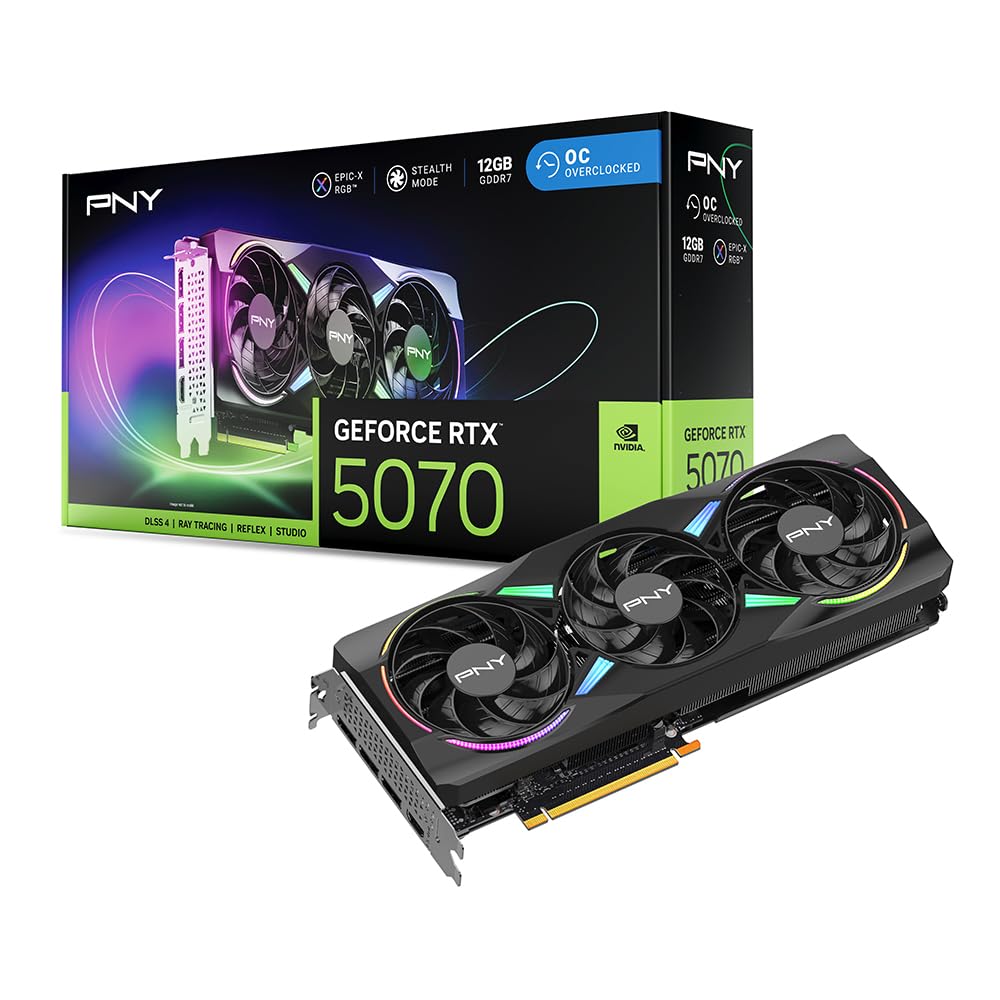
The PNY RTX 5070 is, without question, massive overkill for standard 1080p gaming. It belongs on this list as the ultimate future-proofing and “high-refresh-rate or nothing” option. Built on NVIDIA’s latest Blackwell architecture, it features 12GB of cutting-edge GDDR7 memory and supports DLSS 4, making it capable of maxing out any 1080p monitor with hundreds of frames per second for years to come.
This card is engineered for 1440p and even 4K gaming, which means at 1080p, it will utterly demolish any game you throw at it with all settings maxed, including ray tracing. The triple-fan cooling solution ensures it runs cool and quiet even under extreme loads. For users who plan to upgrade to a higher-resolution monitor soon, or who simply want the absolute smoothest possible experience at 1080p with every visual setting enabled, this is the card.
It’s a premium investment. The performance is exceptional, but it’s critical to assess whether your CPU and monitor can keep up with the frames it will produce at 1080p. For a no-compromises build where budget is a secondary concern, the RTX 5070 represents the pinnacle of performance you can buy for a gaming PC today.
Why it’s great
- Extreme overkill performance for 1080p, ensuring longevity.
- Access to the latest NVIDIA features like DLSS 4 and advanced ray tracing.
- 12GB of ultra-fast GDDR7 memory is future-proof.
- Excellent cooling with a triple-fan design.
Good to know
- Significant overkill for 1080p 60Hz gaming; your monitor may be the bottleneck.
- Requires a robust power supply and a capable CPU to avoid bottlenecks.
- Commands a premium price that may not be justified for pure 1080p use.
11. msi Gaming GeForce GT 1030 4GB DDR4

The MSI GT 1030 serves a very specific and important purpose: it’s a basic display adapter and light-use card, not a gaming GPU. It’s perfect for giving an older office PC a modern display output (like DisplayPort or HDMI), fixing a broken onboard video port, or providing a second monitor output. Its extremely low power draw means it runs entirely off the PCIe slot, making it compatible with almost any system.
For very light gaming or older titles, it can provide a playable experience, but it is not designed for modern 1080p gaming. Users report great success in using it to offload display duties from an aging CPU’s integrated graphics, breathing new life into an old system for general computing. It’s also a popular choice for home theater PCs (HTPCs) due to its silent operation and support for 4K video playback.
Setting the right expectation is key. If your goal is to play recent AAA games, this is not the card for you. However, if you need a reliable, efficient, and affordable solution to add display connectivity or handle basic desktop graphics, the GT 1030 is a competent and widely compatible tool for the job.
Why it’s great
- Ultra-low power, slot-powered design for maximum compatibility.
- Provides modern display outputs (DP, HDMI) to older systems.
- Can handle 4K video playback and very light computing tasks.
- A cost-effective fix for broken integrated graphics or added monitor support.
Good to know
- Not suitable for modern 1080p gaming; performance is very basic.
- Uses slower DDR4 memory, not GDDR5 or GDDR6.
- Purely a functional display adapter, not a performance component.
Understanding the Specs
VRAM (Video Memory)
Think of VRAM as the GPU’s short-term memory. It holds all the textures, models, and frame data needed to render your game. For 1080p, 6GB is the recommended minimum to avoid stuttering with high-quality textures. 8GB offers comfortable headroom for future games and mods, while 4GB is only suitable for very light gaming or non-gaming use. The memory type (GDDR6, GDDR7) determines its speed, with newer generations offering much higher bandwidth.
Boost Clock & Architecture
The Boost Clock (measured in MHz) indicates how fast the GPU’s cores can run under load, but it’s only comparable within the same architecture. A newer architecture (like NVIDIA’s Ampere or AMD’s RDNA 3) can do more work per clock cycle than an older one (like Pascal or older GCN). Therefore, a newer card with a lower clock speed can often outperform an older card with a higher clock. Focus on the generation and model first, then consider clock speeds for fine-tuning.
FAQ
Is 6GB of VRAM enough for 1080p gaming in 2025?
Do I need a GPU with ray tracing for 1080p?
What is the most important factor for 1080p gaming performance?
Can I upgrade my graphics card without changing my power supply?
Final Thoughts: The Verdict
For most people, the best 1080p graphics card winner is the ASRock Radeon RX 7600 because it delivers the perfect balance of high frame rates, future-proof 8GB VRAM, and modern features at a mid-range point. If you want the easiest upgrade for a pre-built PC, grab the ASUS Dual RTX 3050 6GB OC. And for the absolute best value on a tight budget, nothing beats the proven performance of the ZOTAC Gaming GTX 1660 Super.

Mo Maruf
I created WellFizz to bridge the gap between vague wellness advice and actionable solutions. My mission is simple: to decode the research and give you practical tools you can actually use.
Beyond the data, I am a passionate traveler. I believe that stepping away from the screen to explore new environments is essential for mental clarity and physical vitality.