Our readers keep the lights on and my smoothie glass nicely filled. As an Amazon Associate, I earn from qualifying purchases.
Working from home is not “just sitting.” It’s a chain of tiny, repetitive moments: leaning forward to read a line of text, hovering your shoulders during a video call, tucking one leg under you, scooting closer to the desk, rolling back for a stretch, then doing it again… hundreds of times a day.
If you’re shopping for the best ergonomic chair for home office, you’re already ahead of most people. You’re not just buying a chair—you’re buying a posture system that will quietly influence your energy, your focus, your back, your neck, and even how often you take breaks. The reason most buying guides feel useless is simple: they talk about “features,” but they skip the friction points that decide whether you’ll love a chair after week three.
This guide is written like a long-term owner, not a spec sheet. I’m going to focus on what actually matters once the “new chair excitement” wears off: seat depth that either supports your thighs or cuts circulation, armrests that either glide under your desk or crash into it, lumbar support that either lands in the right spot or nags your spine all day, and recline mechanics that either feel smooth and stable or slowly turn into squeaks and wobble.
Below you’ll find 17 chairs that real people are actually using for long days—mesh workhorses, easy-clean leather hybrids, space-saving flip-up arm picks, heavy-duty options for bigger bodies, and a few “comfort-first” designs with footrests and deeper recline ranges.
How to Choose the Best Ergonomic Chair For Home Office
A home-office chair isn’t “good” because it claims to be ergonomic. It’s good because it supports your body in your real posture—the one you actually sit in when you’re concentrating, when you’re tired, and when your day runs long. The smartest way to buy is to stop thinking “features” and start thinking “fit + friction.” Here’s the decision framework I use when helping someone choose a chair they’ll still love after the honeymoon phase.
1. First, identify what kind of sitter you are
Most people aren’t “neutral sitters.” We drift into patterns. Your chair needs to support your pattern, not fight it.
- The forward-lean worker: You hover over keyboard/mouse, shoulders creep up, and you need a lumbar system that supports without forcing you back.
- The long-call recliner: You live in video calls and deep-focus sessions; a stable recline + head support can reduce neck tension.
- The cross-legged / tucked-leg sitter: You need a wider, forgiving seat and armrests that can flip up or get out of the way.
- The compact-space worker: Your chair must slide under the desk cleanly; flip-up arms are a game changer in small rooms.
- The “hot back” sitter: You overheat easily; mesh matters, and leather/PU needs smart ventilation or it becomes sticky fast.
2. Seat depth is the quiet make-or-break detail
People obsess over lumbar support (important), but seat depth is the comfort lever you feel all day. When seat depth is wrong, you get one of two problems:
- Too short: your thighs aren’t supported, your hips do more work, and you start fidgeting (or you perch forward, which strains your lower back).
- Too long: the front edge presses behind the knees, circulation feels “pinched,” and you’ll either slouch or sit too far forward.
Higher-end chairs solve this with a sliding seat pan. Many mid-range chairs don’t. That doesn’t mean you’re stuck—it just means you need to choose based on your body proportions. If you’re petite, “short seat depth” can actually feel perfect. If you’re taller or have longer legs, prioritize chairs known for a more generous seat or a shape that supports without digging in.
3. Lumbar support: you want placement, not pressure
Good lumbar support isn’t a hard lump pushing your spine. It’s a system that lands in the right spot and holds you in a relaxed, upright posture without forcing you stiff. In this guide, you’ll see three main types:
- Adjustable lumbar pad: Moves up/down (and sometimes in/out). Great for dialing in placement for different heights.
- Mesh tension support: The backrest itself “gives” and supports. Feels breathable and forgiving, but can soften over time.
- Inflatable lumbar: You pump support to your preferred curve. Amazing when it fits your back shape—annoying if you prefer a “set and forget” feel.
The goal is not maximum arch. The goal is “supported neutral.” If you feel like you’re being shoved forward, your lumbar is too aggressive for your posture style.
4. Armrests: comfort feature or desk-collision device?
Armrests are one of the most misunderstood parts of ergonomic chairs. They’re helpful when they support your forearms lightly so your shoulders can relax. They’re harmful when they’re too tall, too wide, too hard, or when they smack into the desk and force your wrists into weird angles.
- Flip-up arms are a huge home-office win: slide the chair under the desk, sit cross-legged, play guitar, draw, or pull close without fighting the chair.
- Padded arms matter more than you think, especially if you work with elbows resting during calls.
- Desk clearance is real: if your armrests hit your desk edge, you will resent that chair daily—no matter how “ergonomic” it is.
5. Headrests are not mandatory—but they’re powerful for the right person
A headrest isn’t meant to hold your head while typing. It’s for micro-rest: leaning back to think, taking pressure off the neck during calls, and keeping your upper spine supported during recline. If you never recline, a headrest can feel useless (or even in the way). If you do long calls, reading, gaming, or frequent breaks in-chair, a headrest can be the “wow” feature that makes your chair feel like a daily upgrade.
6. Recline mechanics: smoothness beats extreme angles
Many chairs advertise big recline ranges. In real life, you care about three things:
- Stability: recline shouldn’t feel like the chair is “floating” or wobbling under you.
- Lock behavior: can you keep it upright when you want focus, and relaxed when you want a break?
- Noise: if it squeaks by month two, you’ll notice it forever.
If you want a “mini sofa” feel, a footrest chair can be incredible. If you want focus and posture, a clean tilt lock and stable base matters more than extreme recline.
7. Materials: choose based on heat, cleaning, and sensory comfort
- Mesh: best for airflow and long hours; can feel firm at first, and tension can soften after heavy use.
- PU/leather seats: easy to wipe clean (pets, snacks, kids, coffee spills), but can get warm—especially in humid rooms.
- Fabric seats: comfortable and less sticky, but cleaning is harder if you’re messy or have pets.
8. The “boring” details that separate a good chair from a regret
These are the details that show up repeatedly in real owner feedback:
- Assembly clarity: clear instructions, labeled hardware, and sensible packaging reduces stress and prevents mistakes.
- Missing parts response: good brands fix issues fast (replacement screws/arms/cylinders) and that matters long-term.
- Casters on your floor: rubbery wheels are kind to hardwood and quieter; some people swap casters later for silent rollerblade-style wheels.
- Seat firmness: “plush” isn’t always better; you want support that doesn’t collapse over time.
Quick Comparison: 17 Best Ergonomic Chair For Home Office Picks
Use this table to shortlist the models that match your body and work style, then jump to the deep reviews for the real-life details— like desk clearance, seat depth feel, long-session comfort, and the “tiny annoyances” that don’t show up in product photos.
On smaller screens, swipe or scroll sideways to see the full table.
| Model | Chair style | Ergonomic strength | Best match | Amazon |
|---|---|---|---|---|
| CYKOV Ergonomic Chair with Footrest | Footrest recliner | Deep recline + adjustable head/lumbar for work-to-break transitions | People who want posture + real “lean back” recovery | Amazon |
| GABRYLLY Ergonomic High Back (400 lb) | High-back mesh | Big-and-tall geometry + supportive mesh + proven popularity | Long hours, bigger frames, wide-seat lovers | Amazon |
| YFO Brown Leather Executive Task Chair | Leather mid-back | Supportive back + springy seat + optional armless setup | Style-forward home offices + cross-legged sitters | Amazon |
| MUXX.STIL PU Seat + Mesh Back (Black) | Easy-clean hybrid | Adjustable lumbar + flip-up arms + wipeable seat | Messy desks, pets, and “keep it clean” households | Amazon |
| MUXX.STIL Breathable Mesh (Khaki) | Mesh comfort | Adjustable lumbar + flip-up arms + cool-back airflow | People who overheat easily or want softer aesthetics | Amazon |
| CASASIO Ergonomic Chair (Extra-Thick Cushion) | Cushion-first mesh | Highly adjustable lumbar + plush seat for long sessions | People with joint sensitivity or “I need padding” bodies | Amazon |
| TRALT High Back Long-Hours Chair (Black) | High-back mesh | Adjustable lumbar + head support + stable everyday feel | All-day WFH setups that need reliable support | Amazon |
| X XISHE PU Seat + Mesh Back (Black) | Hybrid executive | Adjustable lumbar + flip-up arms + compact footprint | Small offices that still want a “grown-up” chair feel | Amazon |
| Ylzyxal Executive Chair (Air Lumbar) | Air-lumbar leather | Inflatable lumbar tuning + cushioned arms + quiet roll | People who want “dialed-in” lumbar feel | Amazon |
| TRALT Ergonomic Chair (Leather + Mesh, White) | Style + airflow | Strong lumbar support feel + easy assembly reputation | Clean, modern rooms + medium/tall users | Amazon |
| Marsail Ergonomic Chair (3D Arms + Headrest) | Adjustability pick | 3D arm tuning + adjustable lumbar + strong instruction clarity | People who change posture often and want micro-adjusts | Amazon |
| TRALT Office Chair (White, Lifetime Warranty) | Simple mesh | Comfortable basics + adjustable lumbar + space-saving arms | Small rooms, teens, or clean-looking workspaces | Amazon |
| Fizzin Ergonomic Chair (400 lb) | Heavy-duty mesh | High capacity + adjustable head/lumbar + stable feel | Big-and-tall shoppers who want value without flimsy parts | Amazon |
| NEO Chair High Back Mesh | Budget high-back | Breathable mesh + flip-up arms + dependable daily comfort | Students, first WFH setups, or spare-room offices | Amazon |
| Sweetcrispy High-Back Mesh (Headrest) | Budget recline | Headrest support + flip-up arms + deeper rocking range | People who want a headrest without a premium budget | Amazon |
| Sweetcrispy Mid-Back Manager Chair (Grey) | Budget mid-back | Simple lumbar curve + easy rolling + “solid basics” comfort | Homework, study desks, light-to-medium daily use | Amazon |
| BestOffice Mid-Back Mesh Chair | Starter pick | Breathable back + basic lumbar curve for simple setups | Temporary offices, spare chairs, tight-space backups | Amazon |
In‑Depth Reviews: 17 Home‑Office Chairs People Actually Enjoy Sitting In
Now we’ll go chair by chair. I’m going to talk like a long-session user, not a catalog: how the chair behaves after the first week, what “comfort” really means on hour five, what owners praise after months, and the small drawbacks that matter in a real home office.
1. CYKOV Ergonomic Office Chair with Footrest – The “Work Hard, Recover Better” Choice
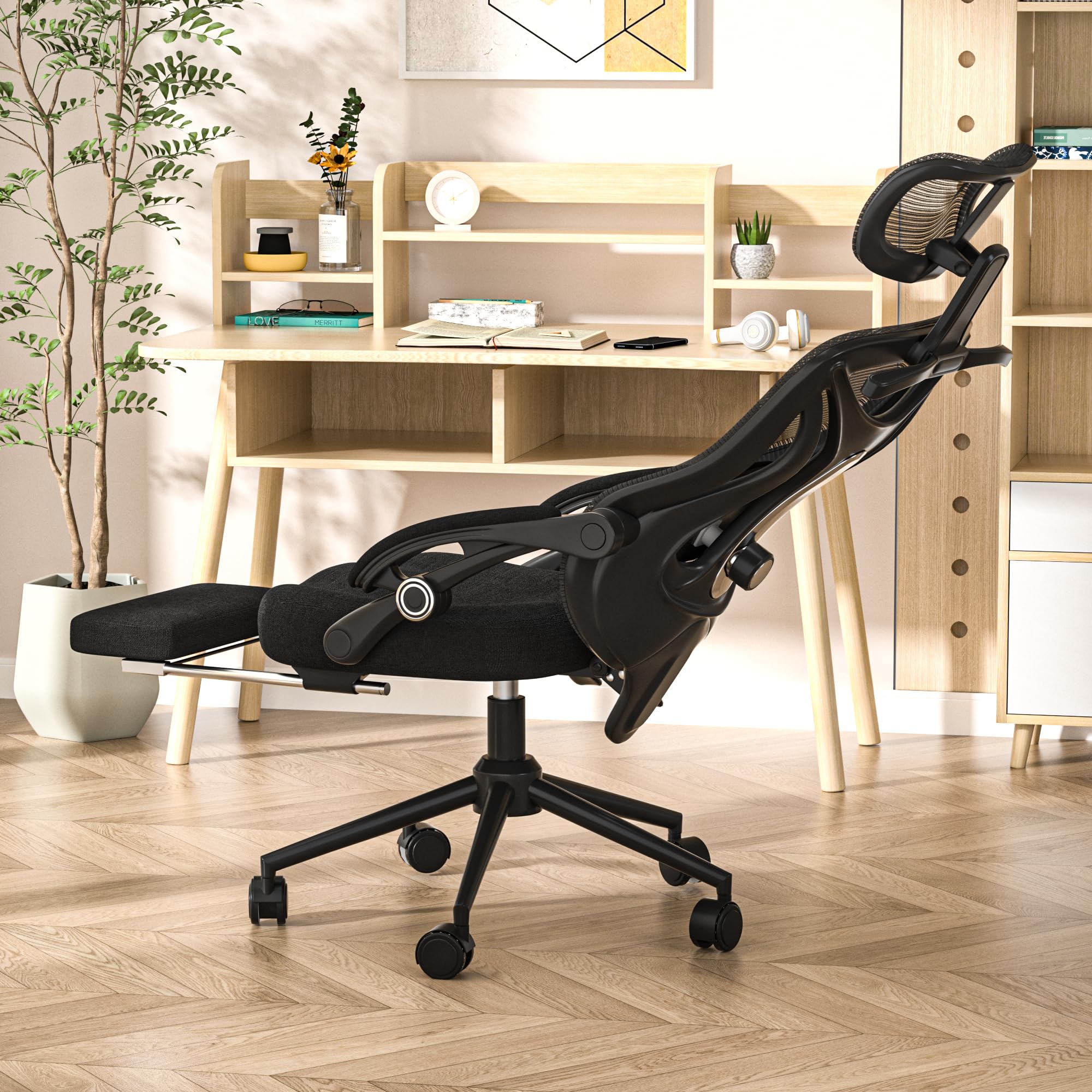
If your home office day includes both deep focus and real fatigue, a chair with a footrest can feel like cheating—in the best way. The CYKOV is designed around that exact rhythm: work upright, adjust support for posture, then recline and actually let your body decompress without needing to leave your desk. That “recovery loop” is what makes it such a strong overall pick for mixed workdays.
The biggest value here isn’t a single feature—it’s how the features work together. Owners consistently mention that the chair improves comfort quickly: head support reduces neck strain during short breaks, the lumbar adjustment lets you find a “supported neutral” rather than a forced arch, and the mesh back helps prevent the sweaty-back problem that makes long sitting feel worse over time. The footrest is the part people talk about most, especially taller users who need a proper leg extension to relax without knees dangling.
Here’s the important “expert” nuance: footrest chairs often trade away subtle rocking/tilt behavior because the design prioritizes stable reclining positions. In other words, you don’t buy this chair for fidgety rocking—you buy it for reliable posture + reliable rest. That’s why it’s so satisfying for people who take many micro-breaks or who end long meetings with tension in hips and low back.
Small real-life notes from owners are worth paying attention to: some say headrest adjustment can feel a bit “loose” until you find the sweet spot, and some people expect a rocking mode that isn’t always present on footrest models. The good news is that most users still describe the chair as sturdy, quiet, and noticeably more comfortable than basic office chairs—especially during long work sessions.
Why it’s a standout
- Work-to-rest transitions – Footrest + recline lets you recover without leaving the desk.
- Head + lumbar support combo – Helps reduce neck tension and lower-back fatigue across long days.
- Mesh back comfort – Better airflow means less “sticky” discomfort as hours stack up.
- Stable, quiet feel – Owners frequently mention smooth reclining and a solid build.
- Great for taller users – The leg support detail matters more than most chairs acknowledge.
Good to know
- Footrest chairs may feel less “rocky” than standard tilt chairs—think stable recline rather than active rocking.
- Headrest positioning can take a few tries to lock into your personal sweet spot.
- If you want a tiny, minimal chair footprint, this style can feel bulkier than basic mesh chairs.
Ideal for: people who work hard, take short in-chair breaks, and want a chair that supports posture and recovery without switching seats or adding a separate ottoman.
2. GABRYLLY Ergonomic Office Chair – The Proven High‑Back Mesh “Workhorse”

The GABRYLLY chair sits in a rare category: it’s not a “luxury brand flex,” but it behaves like a chair that has been stress-tested by thousands of real home offices. That matters because ergonomic chairs aren’t only about comfort—they’re about how consistently the chair holds its feel over time: does the mesh stay supportive, does the base stay stable, does the recline lock stay predictable, and does the chair keep quiet? This model has built a reputation as a dependable long-hours companion.
Owners often describe two immediate impressions: the chair feels more substantial than they expected, and the high-back geometry makes their posture feel “organized.” That second part is important. Many home office chairs support your lower back but leave your upper back and shoulders floating, which causes the classic end-of-day tightness. A high-back mesh chair with a headrest can reduce that “unsupported shoulder drift,” especially if you take calls, lean back to think, or do frequent posture resets.
Where the GABRYLLY gets interesting is the real-world nuance in reviews. Some shorter users mention that armrest height and seat height can feel a bit high at the lowest setting, and some people want more seat depth adjustment. But what’s impressive is how often people highlight strong customer service support—replacement parts, modification help, and responsive communication. In ergonomic furniture, that matters because little fit issues aren’t “defects,” they’re body-geometry problems. A brand that helps you solve fit issues extends the life of the chair dramatically.
If you’re sensitive to arm pad firmness, pay attention: multiple users mention that armrests can feel hard, especially during long calls. That’s not a dealbreaker (many people flip the arms up or add soft covers), but it’s the kind of detail that separates “pretty comfortable” from “perfect daily chair.”
Why it’s loved
- High-back posture organization – Supports more of your spine so you don’t “collapse” late in the day.
- Proven popularity – A chair this widely used tends to have fewer surprise flaws.
- Flip-up arms – Huge for desk clearance and cross-legged sitting flexibility.
- Mesh breathability – Helps reduce heat buildup on long sessions.
- Strong support reputation – Many owners report responsive service and replacement parts when needed.
Good to know
- Armrests can feel firm for some users; soft covers can help if you rest elbows often.
- Some petite users wish the chair could go slightly lower; a footrest can fix the “feet not flat” issue.
- If you demand a sliding seat pan, you may need to compromise or choose a different category.
Ideal for: people who work long hours and want a high-back mesh chair with a strong track record, flip-up arms, and a stable, “grown-up” office feel.
3. YFO Brown Leather Desk Chair – Retro‑Cool Looks with a Surprisingly Practical Seat

Some chairs are purchased for posture. This one is purchased for posture and vibe. The YFO brown leather chair has that retro, “racing seat” look that instantly upgrades a room, but what makes it worth including in a serious ergonomic guide is how it behaves in real use. Owners repeatedly describe it as generously sized, supportive, and more comfortable than expected for a mid-back leather chair.
The seat construction matters here: a spring-supported cushion can feel more forgiving over time than thin foam that compresses quickly. That translates to a seat that stays “alive” under you—comfortable, but not collapsing into a hammock. For people who sit for long sessions, that springy resilience can reduce that dead-seat numbness that makes you constantly reposition.
Where this chair becomes uniquely practical is the “two-in-one” identity. You can install it with arms or without. If you’re a cross-legged sitter, an armless setup can be a huge upgrade because it removes the side barriers that force awkward hip angles. If you’re a desk-edge leaner who rests forearms, armrests may still be helpful—just remember that fixed arm heights can collide with some desks.
Owners also highlight the “real-world” stuff that buying guides usually skip: assembly is generally quick, but the instructions can be a bit unclear, and hardware alignment may not be perfectly flush while still feeling sturdy. A few users mention missing screws or minor part issues—yet also mention that the seller shipped replacements quickly. That combination (minor hiccups + responsive support) is common in stylish chairs that try to deliver a premium feel without premium pricing.
One honest expectation: mid-back chairs can be extremely comfortable, but they aren’t a full spine solution for everyone. If you spend 8–10 hours a day seated and you want full upper-back support and head support, a high-back mesh chair will usually win. If you want style, solid comfort, and the option to go armless for flexible sitting, this chair delivers in a way most “pretty chairs” don’t.
Why you’ll like it
- Looks expensive – Retro leather design upgrades the entire home office aesthetic.
- Supportive seat feel – Spring-supported cushion stays comfortable through long sessions.
- Arms optional – A genuine win for cross-legged sitting and tight desk setups.
- Quiet, floor-friendly rolling – Rubber casters are kind to wood and smooth on carpet.
- Comfort-first back shape – Many owners report solid lower-back support for a mid-back style.
Good to know
- Mid-back design won’t satisfy everyone who wants full shoulder/head support.
- Assembly instructions can be clearer; do a “loose fit” before fully tightening screws.
- Some users still add a small cushion for ultra-long days—especially if they prefer softer lumbar feel.
Ideal for: style-forward home offices, cross-legged sitters who want an armless option, and anyone who wants a “real chair” feel without a bulky mesh tower.
4. MUXX.STIL PU Leather Seat Chair (Black) – Wipe‑Clean Comfort with Flip‑Up Arms
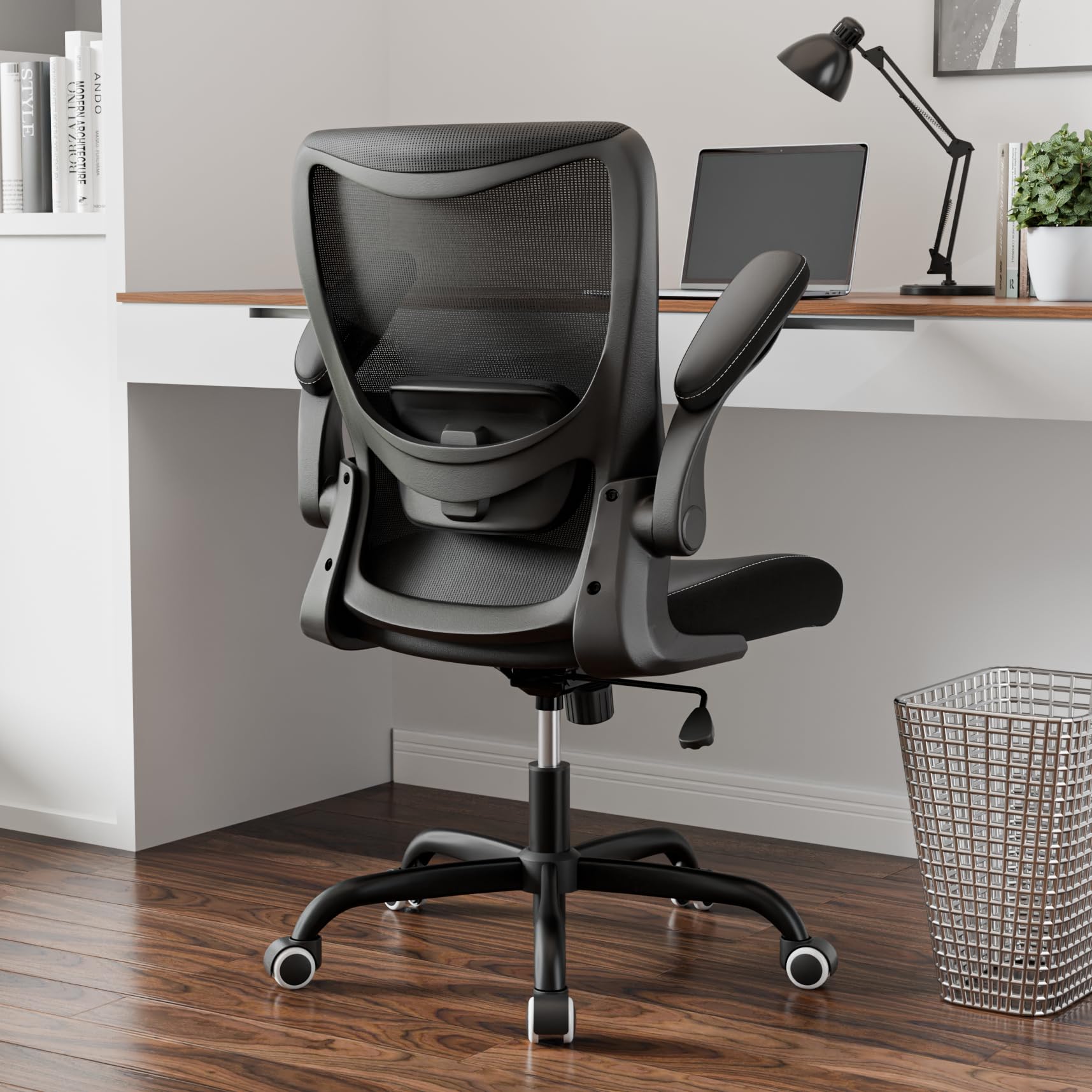
A lot of “ergonomic” chairs ignore a daily reality: life is messy. Coffee drips. Pets jump up. Kids touch everything. Lunch happens at the desk. This MUXX.STIL model earns its spot because it pairs a breathable back with a wipe-clean PU seat—meaning you get airflow where you sweat (back) and easy maintenance where spills happen (seat).
The comfort story here is about pressure distribution. Owners frequently mention the chair feels supportive for long sitting sessions, and the adjustable lumbar support helps keep posture from collapsing late in the day. The U-shaped seat concept (plus waterfall edge shaping) is designed to reduce thigh pressure—an underrated factor for people who feel numbness or leg fatigue after sitting.
Flip-up armrests are the hero feature. In a home office, armrests aren’t just about comfort—they’re about space control. If you want to slide the chair under your desk, pull in close for typing, or sit in wider postures, flip-up arms make the chair feel instantly more adaptable. This is exactly the kind of “small feature” that feels like a big upgrade once you live with it.
Real-life feedback tends to be consistently positive on assembly and build stability, with the occasional “I’m still testing the lumbar” comment— which is normal because lumbar support feels different depending on whether you like gentle support or pronounced support. If you’re new to adjustable lumbar, here’s the pro tip: set it lower than you think, then move it up in small steps across a week. Your back needs a little time to adapt to being supported.
Why it makes sense
- Easy-clean seat – Wipeable PU is a big win for real homes (pets, kids, snacks).
- Flip-up arms for space – Slides under desks and supports cross-legged sitting options.
- Adjustable lumbar support – Lets you dial in support rather than accept one “default” curve.
- Breathable back – Helps reduce heat buildup during long work sessions.
- Practical comfort geometry – Seat shaping is designed to reduce thigh pressure.
Good to know
- If you love ultra-soft plush seating, this may feel more “supportive” than “pillowy.”
- Lumbar comfort is personal—give yourself a week to tune placement before judging.
- Like many chairs, the best comfort depends on desk height alignment (chair height + keyboard position).
Ideal for: home offices where cleaning matters, spaces where flip-up arms improve daily workflow, and anyone who wants breathable support without a fabric seat that traps stains.
5. MUXX.STIL Ergonomic Mesh Chair (Khaki) – Cool‑Back Comfort with Space‑Saving Arms

If you want a chair that looks softer and more “home” than most black office chairs, the khaki MUXX.STIL is an easy win. But it’s not just aesthetics. The breathable mesh back solves one of the most common home office complaints: “I’m fine in the morning, and by afternoon my back feels hot and sticky.” Mesh doesn’t magically fix posture, but it dramatically improves comfort endurance.
The standout here is the lumbar system: a larger adjustable cushion designed to cradle the lower back rather than poke it. That “cradle” language sounds marketing-y, but in practice it matters. A larger lumbar contact area spreads support across more of your back, which often feels more natural for people who dislike small, aggressive lumbar bumps. Owners report it helps posture during long desk sessions, especially when paired with the S-shaped backrest design.
Flip-up arms again do a lot of heavy lifting in real daily life. The ability to tuck the chair under a desk changes how tidy your room feels, and it prevents that annoying “chair always in the way” effect in multi-purpose rooms. If your office is also a guest room, bedroom corner, or shared space, this feature moves from “nice” to “essential.”
If you’re on the fence because you’re unsure how “real” the lumbar support will feel: the right approach is to treat lumbar as an adjustable tool, not a verdict. Start with it supporting you gently while you sit upright. After a few days, you’ll know whether you need more support, less support, or a slightly different height. Owners who love this chair tend to be people who value a balanced, breathable feel rather than a super-stiff “posture correction” chair.
Why it’s a great home pick
- Breathable mesh back – A comfort multiplier for warm rooms and long sitting.
- Large adjustable lumbar cushion – Spreads support more naturally across the lower back.
- Flip-up arms – Saves space and improves desk clearance in small rooms.
- Comfortable seat shaping – Designed to reduce pressure on thighs and hips during long sessions.
- Home-friendly color – Looks softer and less “corporate” than typical office chairs.
Good to know
- Some users need longer time to judge lumbar comfort—fine tuning is part of the process.
- Max support capacity is lower than some heavy-duty chairs; heavier users may prefer a 330–400 lb category chair.
- If you want a headrest, choose a high-back model instead.
Ideal for: people who run hot, want flip-up arms for space control, and prefer a softer look that blends with home decor while still supporting long work sessions.
6. CASASIO Ergonomic Chair – The “My Joints Are Finally Calm” Cushion‑First Favorite
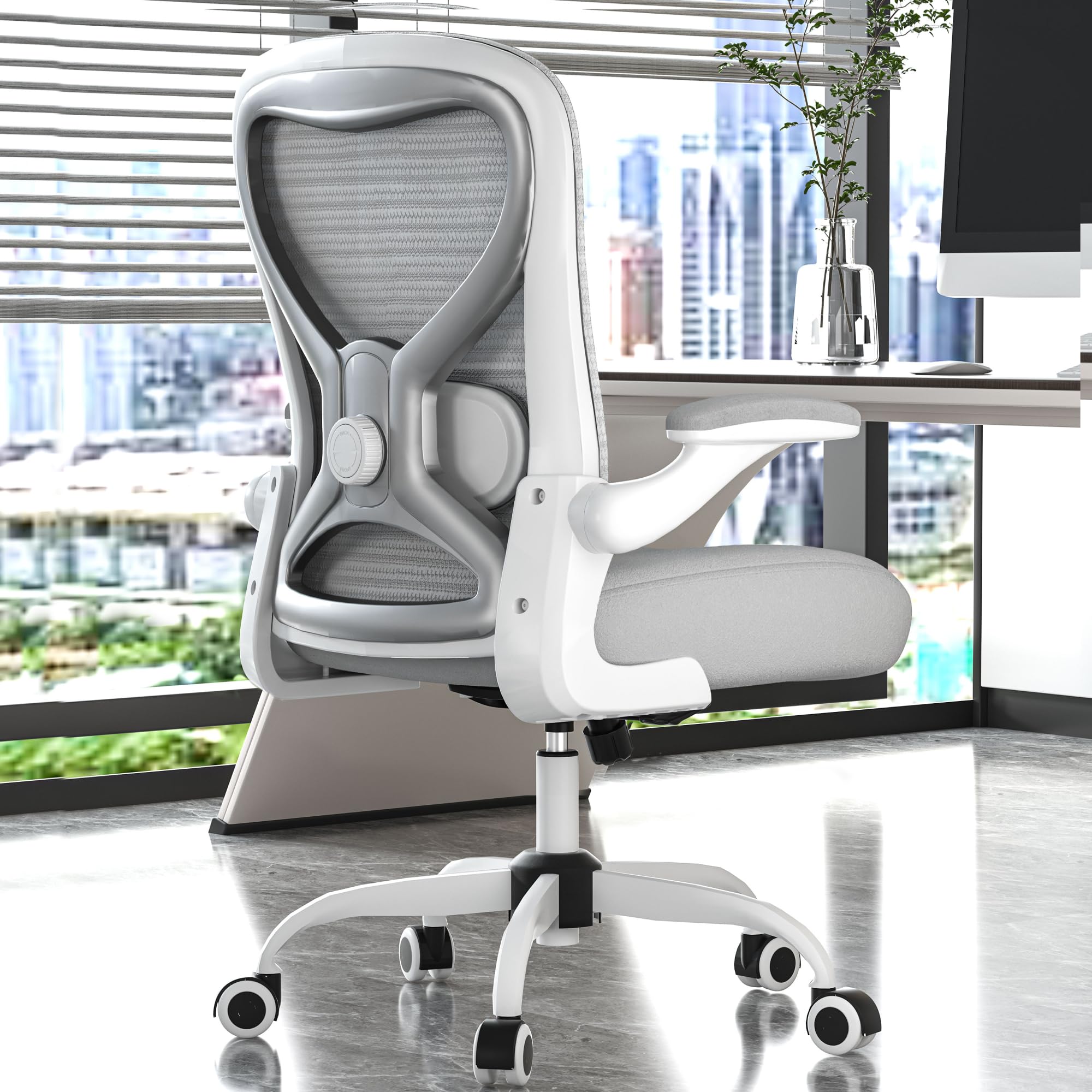
If you’ve ever sat in a chair that felt “fine” but triggered soreness in hips, tailbone, or joints by the end of the day, this is the category you should care about. The CASASIO is built around an unusually thick seat cushion and a lumbar support system that moves in multiple directions—up, down, in, and out—so the chair can meet your body instead of forcing your body to meet the chair.
The most telling owner feedback isn’t “it’s ergonomic.” It’s the specific lived experience: people describe being able to work long days without their usual flare-ups, appreciating that the chair stays quiet (no squeaks), and noticing that the lumbar system helps keep the spine upright without feeling like a hard bump. That’s exactly what you want from a comfort-first ergonomic chair: not a posture lecture, but a supportive baseline that reduces the amount of “work” your body does to sit.
Flip-up armrests show up again as a real-world win. Owners mention tucking it neatly under desks, using it for guitar or creative work, and generally appreciating that the chair doesn’t lock them into one posture. For people who alternate between typing, sketching, gaming, and instrument practice, that flexibility is hard to overvalue.
Here’s the expert layer: thick cushion chairs can either be magical or disappointing depending on foam quality. The good ones feel plush at first touch but still hold you “up” rather than letting you sink into a curved posture. Review themes suggest this chair hits that balance—soft, supportive, and not collapsing quickly. If you’ve gone through multiple chairs in a few years, this is the kind of build approach that tends to break that cycle.
Why people stick with it
- Extra-thick seat comfort – Reduces pressure points for hips and thighs on long sessions.
- Multi-direction lumbar adjust – Helps you place support where your back actually needs it.
- Quiet rolling + quiet sitting – Owners praise silent movement and no annoying creaks.
- Flip-up arms – Creates space and posture options, especially in tight home offices.
- Build feels sturdy – Review patterns suggest it doesn’t feel flimsy or “cheap.”
Good to know
- Thicker cushioning can feel warmer than ultra-minimal seats (mesh back helps balance this).
- Like all adjustable lumbar chairs, you’ll want a short “tuning period” to find the perfect position.
- If you want a very high headrest for frequent recline, consider a high-back headrest model.
Ideal for: people who sit long hours and prioritize cushion comfort, anyone with hip/thigh pressure sensitivity, and home offices where flip-up arms improve daily flow.
7. TRALT High Back Office Chair (Black) – The “Reliable Daily Driver” for Long Sessions

The TRALT long-hours chair earns its spot because it solves the “mid-range trap.” A lot of chairs in this category look great online, then arrive with weak lumbar, thin seats, or rattly movement. Owner feedback for this model consistently points in a better direction: supportive mesh that doesn’t trap heat, a comfortable seat cushion that feels like a real upgrade, and adjustability that actually changes comfort rather than just existing.
The adjustable lumbar support is the headline feature for good reason. A firm, well-placed lumbar curve can dramatically reduce end-of-day back fatigue, especially for people who tend to slump forward while concentrating. One of the most common “I didn’t realize I needed this” realizations in home offices is head support— not while typing, but while leaning back to think or taking short breaks. Owners who moved from chairs without headrests frequently mention how much difference that makes.
Flip-up armrests also show up as a practical win. Even if you don’t sit cross-legged, flip-up arms let you slide closer to your desk, keep your wrists in a better line, and keep your chair from turning your workspace into a cluttered obstacle course. If your armrests hit your desk today, this feature alone can change your relationship with sitting.
The honest negative pattern that appears in some feedback is recline lock behavior. A few users want a “slight recline lock” (a mid-angle hold) rather than only upright/tilt behavior. That’s not uncommon in mid-range chairs. If you’re a person who likes a tiny, consistent lean while working, test your comfort preferences. If you’re a “sit upright to focus, recline to rest” person, this chair tends to match that rhythm well.
Why it’s a smart pick
- Supportive mesh back – Comfortable, breathable, and steady across long hours.
- Adjustable lumbar – Helps reduce lower-back strain and improves posture endurance.
- Headrest support – Makes micro-breaks feel more restorative during long days.
- Flip-up arms – Better desk clearance and posture flexibility.
- Quiet rolling – Owners often notice smooth, quiet movement on home floors.
Good to know
- Recline locking may not satisfy people who want a very specific “slight recline” hold all day.
- If you’re extremely tall, lumbar placement may be near the upper limit—check fit expectations.
- Armrest geometry varies by desk; flip-up helps, but arm padding firmness is personal preference.
Ideal for: daily home office users who want a dependable high-back mesh chair that supports long sessions without jumping into luxury-tier pricing.
8. X XISHE Ergonomic Office Chair – Leather Seat Comfort + Mesh Back Breathability
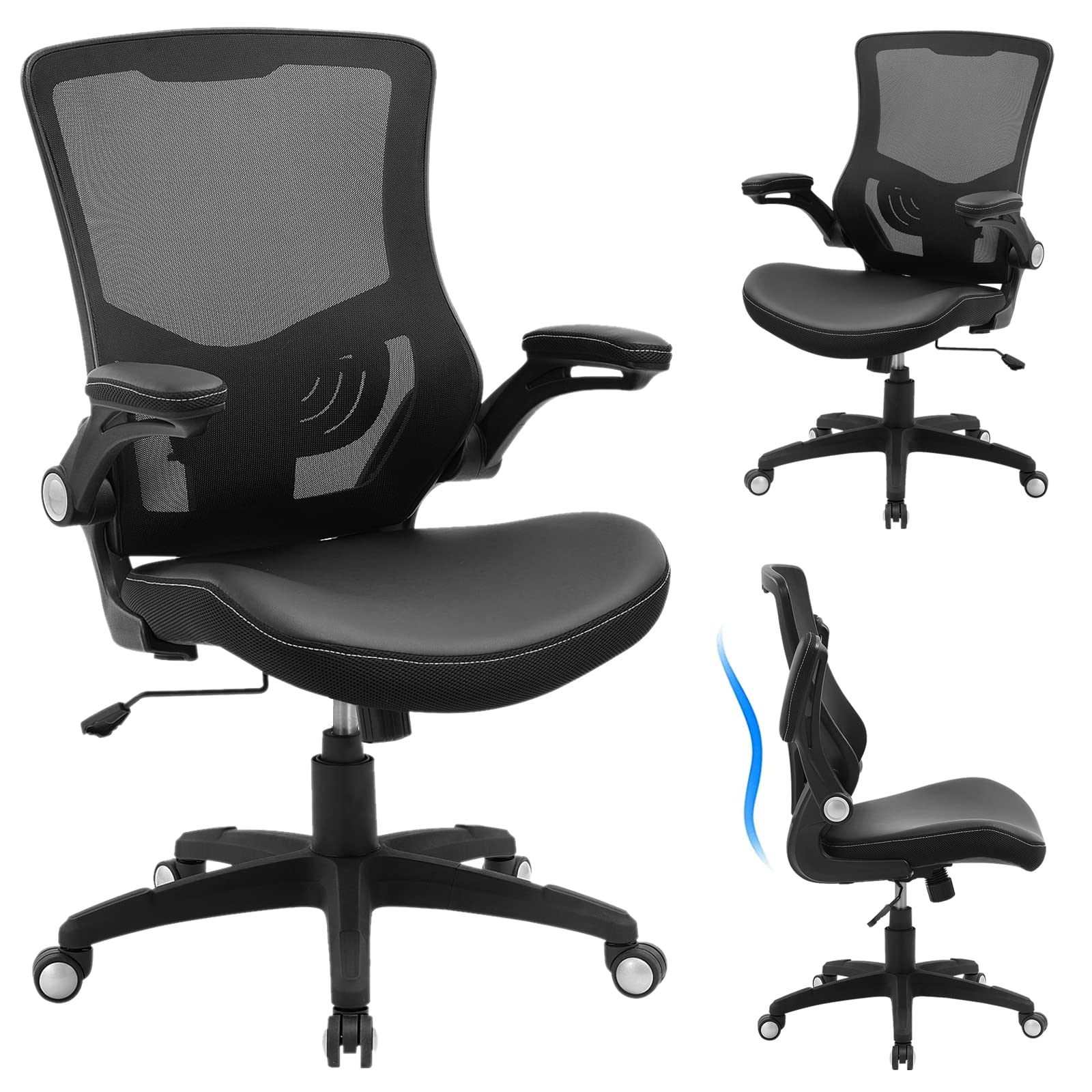
The hybrid chair concept is simple: the seat is where spills and wear happen, the back is where heat happens. The X XISHE leans into that reality by pairing a wipe-clean leather-style seat with a breathable mesh back. In a home office, that combination often feels better than “all fabric” (harder to clean) and better than “all leather” (hotter on long days).
Owners consistently praise the chair as a strong comfort upgrade for work-from-home use—especially noting smooth swivel behavior, helpful lumbar adjustability, and flip-up arms that make the chair easier to live with in tight spaces. That last part is bigger than it sounds: flip-up arms reduce the daily friction of getting close to your desk and keeping your space tidy.
The most useful insight from real reviews is not the praise—it’s the honest quality-control pattern. Some users experienced misaligned holes or missing instructions, then reported that the seller sent replacement parts or even a replacement chair. This matters for buyers because it tells you two things: (1) assembly can occasionally be inconsistent, so build patiently and don’t force alignment, and (2) support can be responsive when issues happen. In the real world, responsive support can be the difference between “regret purchase” and “problem solved.”
Comfort-wise, this chair is especially appealing for shorter-to-average height users who want a chair that doesn’t dominate the room. It’s described as solid and supportive without feeling like a huge corporate chair. The rocking/tilt function exists for short breaks, but the primary strength is everyday upright comfort with a seat surface that stays pleasant and easy to maintain.
Why it’s worth considering
- Easy-clean seat – Great for people who dislike cloth seats that “absorb life.”
- Mesh back airflow – Helps keep your back cooler on long workdays.
- Flip-up arms – Helps desk clearance, space-saving, and flexible sitting postures.
- Adjustable lumbar support – Noticeable comfort difference for WFH sessions.
- Compact, home-friendly feel – Supportive without looking overly bulky.
Good to know
- Occasional assembly alignment issues show up in feedback—assemble loosely first, then tighten.
- If you’re very tall and need deep seat support, confirm seat depth expectations before buying.
- Like most hybrids, it’s more “daily work comfort” than “luxury recliner experience.”
Ideal for: small home offices, people who want easy-clean seating, and anyone who values flip-up arms and breathable back comfort for daily work.
9. Ylzyxal Executive Chair – Inflatable Lumbar Support That You Can Dial In
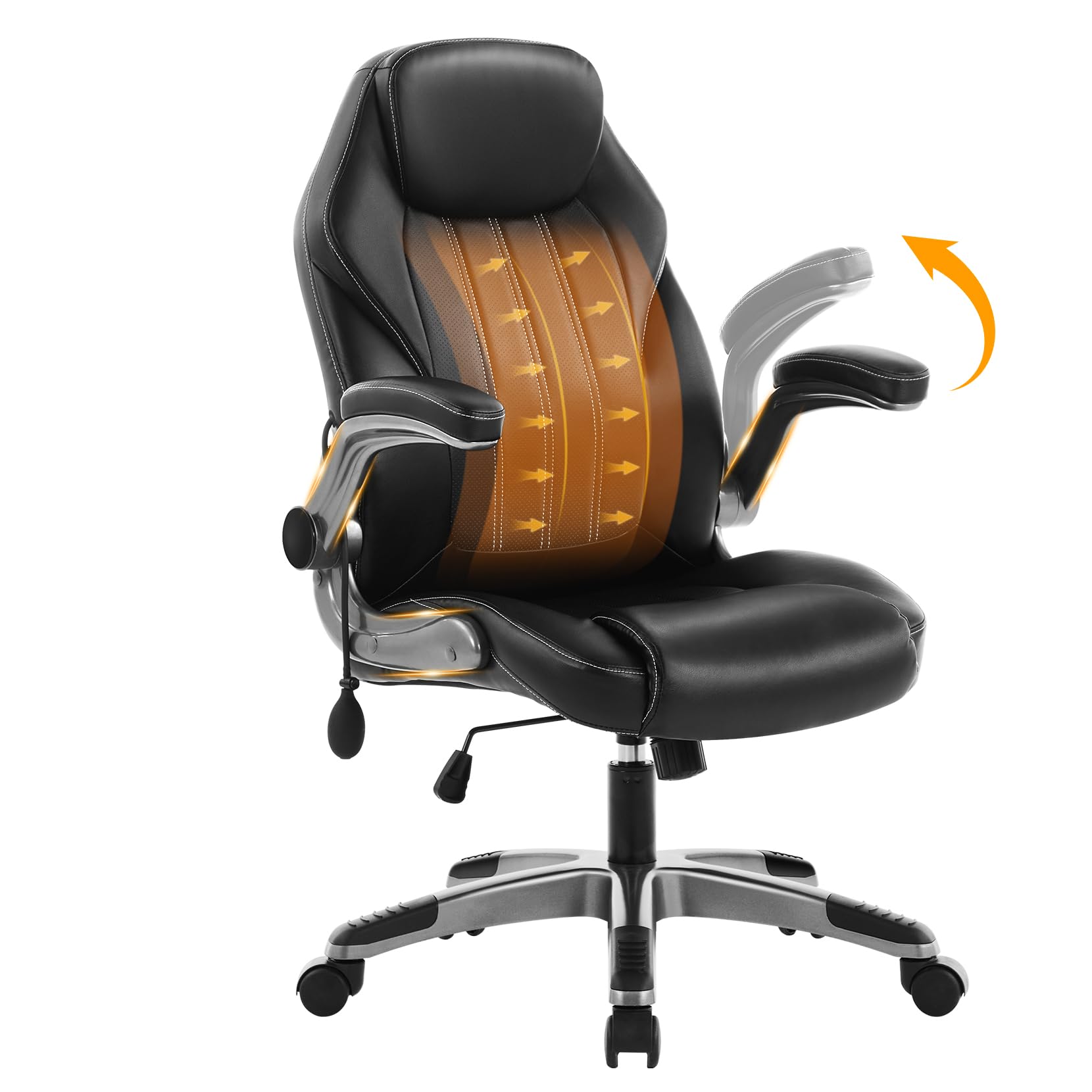
Most chairs force you into their lumbar shape. The Ylzyxal flips the script by using an inflatable lumbar system: you pump in support until the curve matches your back. When that works for your body, it can feel incredible— like the chair finally “fits” instead of merely supporting. This is one of the few mechanisms in this price category that truly changes the feel of the chair rather than offering a cosmetic adjustment.
Owner feedback hits a few strong themes: assembly is surprisingly fast and frustration-free, the chair rolls smoothly and quietly, and comfort is high out of the gate. People mention the chair feels sturdy without being heavy or awkward, and they appreciate that the recline is smooth and stable. The armrests are also described as well-padded—an underrated detail if you do long calls with elbows resting.
The deeper, expert truth about inflatable lumbar is this: it’s a “precision” tool, and precision tools require dialing. If you overinflate, the chair can feel like it’s poking you. If you underinflate, you might wonder what the hype is about. The right approach is to inflate just until you feel gentle contact, then add tiny amounts over a few days until your back feels supported without tension. When owners say the lumbar “works without leaking,” what they’re really saying is the mechanism stays reliable—meaning your preferred setting won’t disappear midweek.
The honest long-term note from reviews is also helpful: some users report that after months, the chair can feel a bit less comfortable than it did on day one. That’s normal for many chairs as your body adapts and as foam settles slightly. The question is whether the core support still feels good. Most owners still describe it as a strong value even after the initial plushness fades, which is a good sign for sustained use.
Why it’s different
- Inflatable lumbar tuning – Lets you match support to your back shape, not the chair’s default.
- Very quiet feel – Owners often mention no creaks and smooth rolling movement.
- Padded flip-up arms – Comfortable elbows + space-saving flexibility under desks.
- Comfort-first design – Many users describe it as one of the comfiest chairs they’ve tried in this class.
- Sturdy build – Feels stable during recline and daily rolling around the workspace.
Good to know
- Inflatable lumbar requires a little tuning—too much pressure can feel “pushy.”
- Head support depends on your recline style; upright typers may not use it much.
- Long-term comfort can soften slightly—common in many chairs as materials settle.
Ideal for: people who know lumbar placement is their biggest comfort issue, and who want a chair that lets them fine-tune support rather than accept a fixed back curve.
10. TRALT Ergonomic Office Chair (Leather, White) – Clean Aesthetic, Serious Lumbar Feel
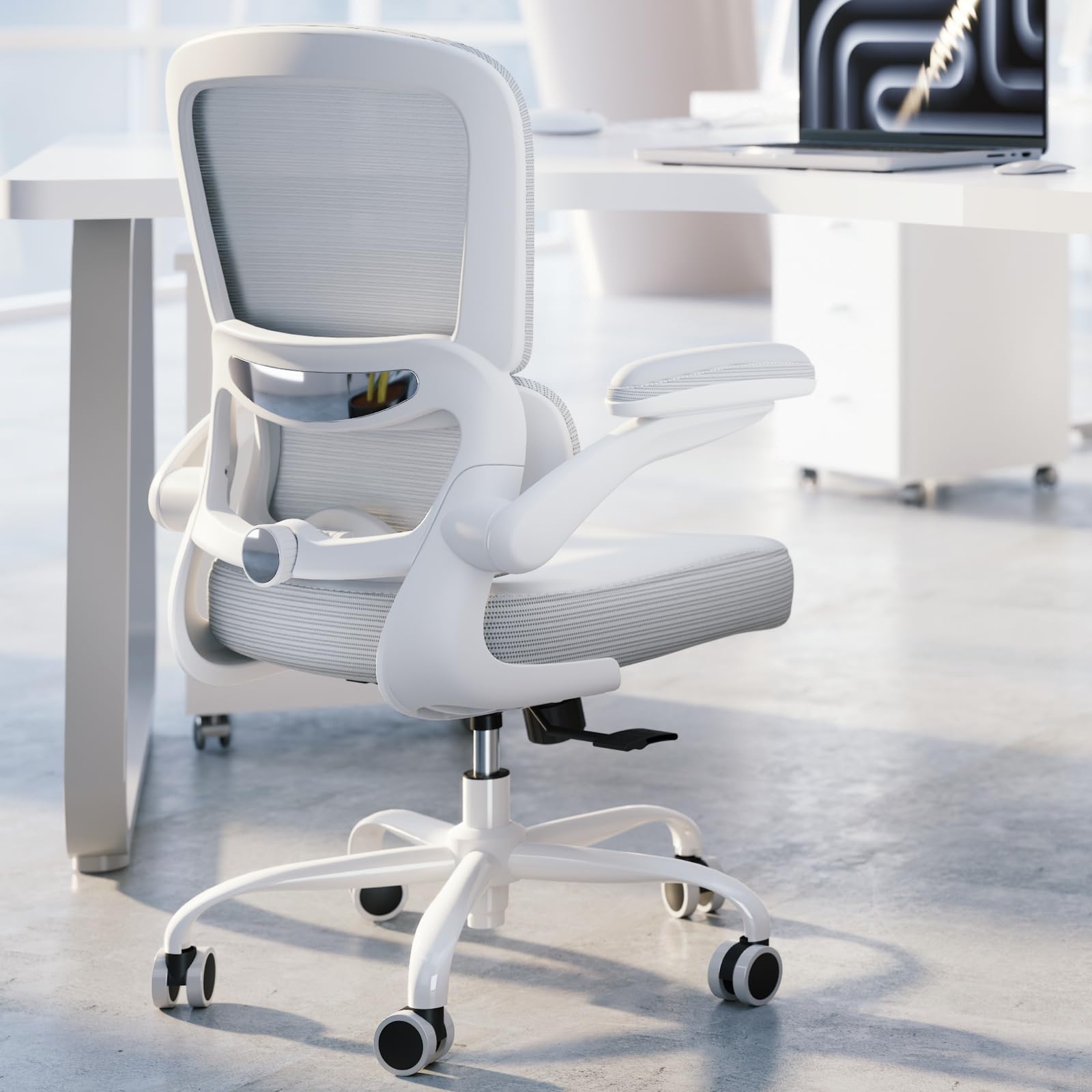
There’s a reason white chairs are hard to shop for: many look great but sacrifice comfort, or they’re comfortable but look overly “office.” This TRALT model hits a sweet spot by combining a clean, modern aesthetic with a design that owners repeatedly describe as genuinely supportive—especially in the lower back. If you’ve ever sat in a chair that looked sleek but left you aching, this one is designed to avoid that trap.
The most unusually valuable part of real-world feedback here is the assembly experience. Owners describe compact packaging, well-protected parts, clearly labeled hardware, and instructions that feel unusually easy to follow. That matters because assembly stress often correlates with build mistakes: a chair that’s easy to assemble correctly is more likely to feel stable, quiet, and aligned long-term.
Comfort-wise, the lumbar support gets highlighted repeatedly as “excellent.” That isn’t a casual compliment—it’s the feature that turns a chair from “fine” to “productive.” A strong lumbar curve helps your pelvis stay more neutral, which reduces the urge to slouch, which reduces fatigue. Flip-up armrests add real flexibility: tuck it under the desk, use it armless, or give yourself more space for creative work. Some armrest materials can feel cheaper to the touch, but the tradeoff is wipe-clean practicality.
One expert caution: this chair is designed with a fixed seat pan (no sliding depth adjustment). If you’re extremely tall or extremely petite, you may need to compromise by adjusting seat height and using a footrest (for petite users) or focusing on lumbar height placement (for tall users). Owners around average-to-taller heights tend to report the best fit, while very tall users should pay attention to where the lumbar lands at maximum adjustment.
Why it’s a home favorite
- Clean white aesthetic – Looks modern and intentional in home spaces.
- Standout lumbar support – A common theme is “hits the right spot” for long sessions.
- Flip-up arms – Improves desk clearance and allows armless use when preferred.
- Breathable mesh back – Reduces heat buildup over long days.
- Great assembly experience – Clear instructions and sensible packaging reduce setup frustration.
Good to know
- Seat pan doesn’t slide; extreme height/body proportions may need small desk setup tweaks.
- If you expect a “memory foam sink,” the seat may feel more supportive than plush.
- Arm pad feel is subjective; some users may prefer softer add-on covers for long calls.
Ideal for: modern home offices that want a white chair that still prioritizes real lumbar support and daily usability, especially for average-to-taller users.
11. Marsail Ergonomic Office Chair – 3D Armrests + Headrest for Posture Tweakers
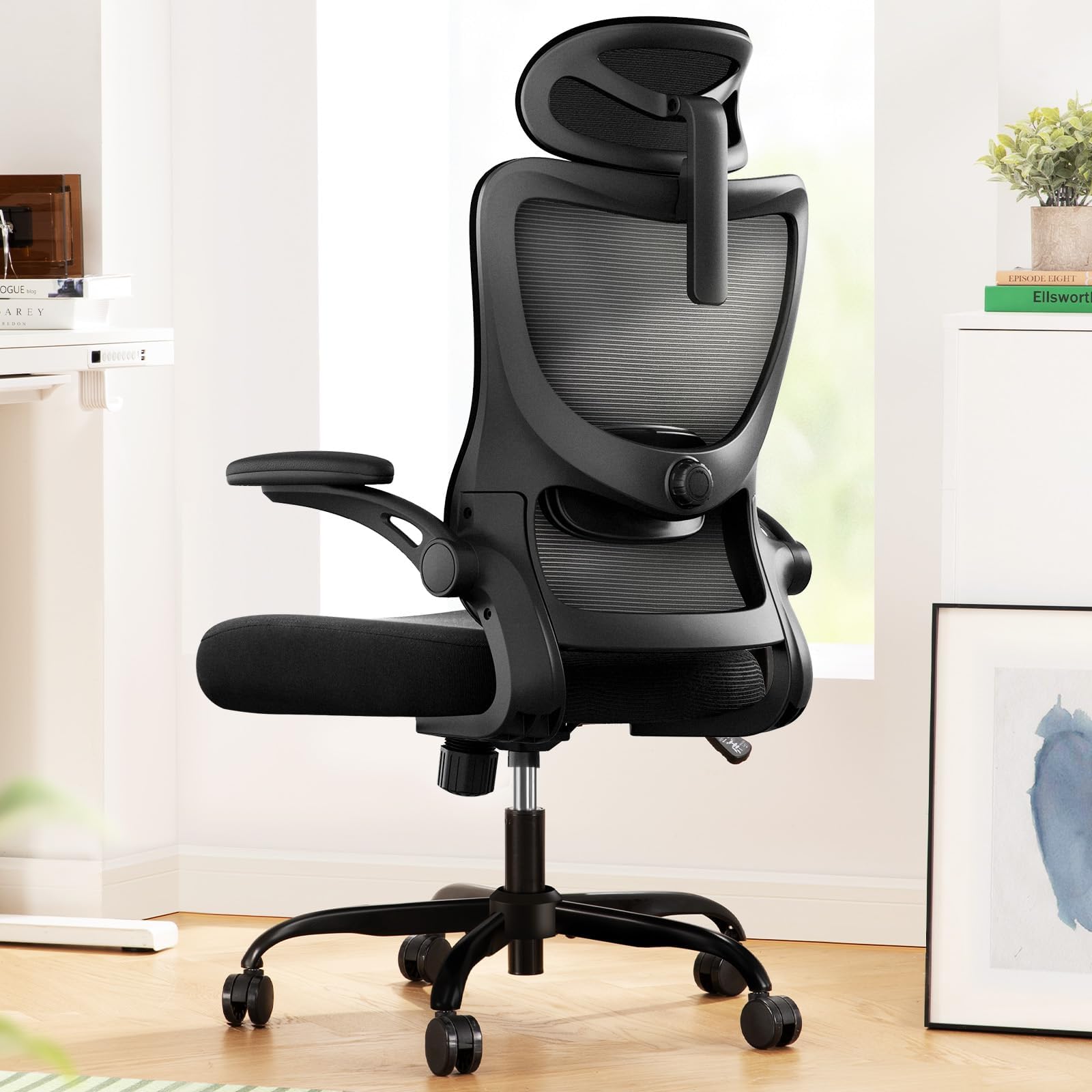
If you change posture often—typing upright, leaning back to think, turning to a second monitor, pulling close for precision work—armrest adjustability becomes far more important. The Marsail stands out because it treats arm support as a real ergonomic lever. Instead of fixed arms that force your shoulders into a single position, you get armrests that can move and rotate to meet your forearms where they naturally land.
Owners who like this chair tend to be the “I’ve read the ergonomics advice” crowd: they notice lumbar placement, appreciate headrest support, and value chairs that allow micro-adjustments rather than one stiff posture. The lumbar system adjusts forward/back and up/down, which helps solve a common home office mismatch: your desk height and your torso length might not match the chair’s default curve. When lumbar can move in two directions, you can often find a neutral fit faster.
A surprisingly consistent praise point is the assembly instructions. People describe them as unusually clear, with well-packed parts and included tools. That’s not just convenience—it directly affects stability. Chairs assembled cleanly tend to roll quieter, creak less, and feel more stable when you recline.
Now, the real-world caveats: some users want height-adjustable armrest pads (up/down), and some mention minor tipping sensation depending on posture and movement. Those are not universal issues, but they’re worth acknowledging. If you lean aggressively to one side or often sit perched on the edge of a seat, any chair can feel unstable. The Marsail seems to do best for users who sit centered and use the chair’s adjustments intentionally.
Why it’s a great “fit” chair
- 3D armrest tuning – Helps align elbows and reduce shoulder tension across different work tasks.
- Adjustable headrest – Useful for breaks, calls, and leaning back to think.
- Two-direction lumbar adjustment – Makes it easier to match support to your torso length.
- Breathable mesh comfort – Helps keep long sessions more comfortable.
- Excellent assembly guidance – Owners praise clear instructions and sensible packaging.
Good to know
- Some users wish for more vertical (up/down) armrest height adjustment.
- Very tall users may find lumbar hits near its upper limit—pay attention to fit.
- If you frequently lean hard to one side, any chair can feel less stable; posture habits matter.
Ideal for: people who tweak posture throughout the day, use multiple monitors, or want arm and lumbar tuning that actually changes how the chair feels.
12. TRALT Office Chair (White) – Simple Ergonomics with a Space‑Saving Personality

Not every home office needs a “feature monster.” Sometimes you want a chair that looks clean, feels supportive, assembles quickly, and doesn’t fight your desk. This TRALT white chair fits that role well: breathable mesh, adjustable lumbar, and flip-up arms so you can reclaim space instantly. It’s the kind of chair that works for adult home offices, teen bedrooms, and shared spaces because it doesn’t dominate the room visually.
Owners commonly highlight two things: comfort that feels better than expected, and assembly that’s simple enough to do without frustration. That second point is especially important for people buying a chair for a family member—if a chair is easy to build correctly, it’s more likely to be stable and quiet in use. A few users mention minor wheel noise over time, but many also note that wheels are one of the easiest parts to upgrade if you want ultra-silent rolling.
Comfort-wise, the chair earns praise for a seat that can accommodate a variety of sitting styles, including occasional cross-legged sitting. That’s often a sign the seat isn’t overly narrow or aggressively shaped. The lumbar support is described as cushy and helpful rather than stiff and pokey, which tends to suit people who want gentle support while staying flexible.
If you’re choosing between this and a more complex high-back option, the choice comes down to your workday length and your body’s sensitivity. If you do extremely long sessions or you need head support, a high-back chair may be better. If you want a clean-looking, dependable chair with real basics done right, this is an excellent “easy yes.”
Why it’s a solid home pick
- Clean white look – Blends into home decor without screaming “office furniture.”
- Breathable mesh comfort – Helps prevent overheating during long desk sessions.
- Flip-up arms – Slides under desks and adapts to small spaces easily.
- Simple assembly – Owners describe quick setup and well-fitting parts.
- Supportive everyday feel – Comfortable for homework, work, and general desk use.
Good to know
- If you need strong head/neck support, consider a high-back headrest model.
- Some users notice wheel noise; upgrading casters is a common fix.
- Like many mid-range chairs, it shines most when paired with a good desk height setup.
Ideal for: small rooms, clean-design lovers, and anyone who wants breathable comfort and flip-up arms without overcomplicated mechanisms.
13. Fizzin Ergonomic Office Chair (400 lb) – Strong Support Without the “Bulky Tank” Look

Heavy-duty chairs often come with a problem: they’re either overly bulky and stiff, or they’re “rated” high but feel questionable in daily stability. The Fizzin earns attention because owners describe it as stable, comfortable, and well-built—without reporting the typical wobble anxiety that can show up in cheaper high-capacity chairs.
The ergonomic story here is straight: adjustable headrest, adjustable lumbar, breathable mesh, and a thickened seat cushion that stays supportive during long days. Owners who work long hours describe it as a meaningful upgrade, especially noting that the lumbar adjustability helps their back feel better. That is exactly what you want to hear: not “it looks ergonomic,” but “my back feels better after work.”
The chair’s support profile is described as “firm enough to support, soft enough to sit all day,” which is a good sign for longevity. Ultra-soft seats often feel great for a week and then compress. Supportive seats feel slightly firm at first and remain consistent longer. This is especially relevant for heavier users, because seat foam breakdown happens faster under higher daily load.
The most honest critique in owner feedback is also practical: some users say it isn’t as “premium” as their last chair, but it still gets the job done well. That’s valuable because it sets expectations: you’re buying a strong, functional chair that prioritizes support and stability—not a luxury brand feel. If that matches your goal, it’s a very smart pick.
Why it’s a smart buy
- High-capacity stability – Built for heavier users without feeling flimsy or risky.
- Adjustable headrest + lumbar – Lets you tune support for long sessions.
- Breathable mesh back – Reduces heat buildup during extended sitting.
- Supportive thick cushion – Helps prevent pressure-point fatigue across long days.
- Easy assembly – Owners describe quick setup and stable final build.
Good to know
- If you want a luxury seat feel, this is more “functional support” than “premium plush.”
- Like many chairs, armrest positioning and desk height alignment still matter for shoulder comfort.
- Very tall users should pay attention to where headrest and lumbar land at max settings.
Ideal for: bigger bodies who want a stable, breathable, adjustable chair that feels dependable for long workdays without jumping into ultra-premium pricing.
14. NEO Chair High Back Mesh – The Affordable Chair That People Re‑Buy

Budget chairs usually come with one of two problems: they’re uncomfortable, or they fall apart fast. The NEO chair is interesting because a surprising number of owners describe it as comfortable enough for long daily use—and some even reorder it after years because the overall experience was so practical. That “re-buy” behavior is one of the strongest real-world signals a budget chair can earn.
What people like most is the core daily experience: the mesh back is supportive and breathable, the seat is wide enough for different body types (and even occasional cross-legged sitting), and the flip-up armrests add flexibility you normally don’t see at this level. Flip-up arms also make it a great “art chair” or “multi-use chair,” because you can get closer to your desk or remove arm interference instantly.
The honest long-term reality also shows up in reviews: heavy daily use can eventually reveal weakness (for example, bending or wear in the support structure), especially if you lean consistently to one side. That’s not a dealbreaker—it’s just the reality of budget engineering. The right way to buy this chair is as a strong value chair that you’ll use hard, enjoy, and potentially replace later if you outgrow its durability ceiling.
If you’re building a home office on a tighter budget, this chair is exactly the kind of pick that prevents “cheap chair misery.” It may not have premium lumbar tuning or a headrest, but it offers a stable, breathable, comfortable baseline—plus easy assembly and smooth rolling casters. That’s the core formula most people actually need to get productive at home.
Why it’s a great value
- Breathable mesh support – Comfortable for long sessions without overheating.
- Flip-up arms – Big flexibility win for desk clearance and cross-legged sitting.
- Wide, usable seat – Owners report it fits a range of heights comfortably.
- Easy assembly – Straightforward build with included tools.
- Re-buy behavior – Some owners repurchase after years, which is rare for budget chairs.
Good to know
- Like many budget chairs, extreme long-term heavy use can reveal durability limits.
- Lumbar support is decent but not “premium adjustable”—some users add a small pillow over time.
- No headrest; if you want neck support during recline, choose a headrest model.
Ideal for: students, first home office setups, spare rooms, and anyone who wants a breathable, flexible chair with flip-up arms at a very approachable tier.
15. Sweetcrispy High‑Back Mesh Chair – A Headrest Upgrade Without the Premium Spend

A headrest is one of the most noticeable “quality of life” upgrades—especially if you lean back during calls, take thinking breaks, or relax in-chair between tasks. The Sweetcrispy high-back chair delivers that headrest benefit at a budget-friendly tier, which is why it shows up so often in gift purchases and starter offices.
Owners describe the chair as sturdy and comfortable for long sitting, with a clean look and straightforward assembly. Many people specifically love the flip-up arms because they can lift them out of the way to sit differently or slide under a desk. That kind of flexibility is what makes a budget chair feel like it belongs in a real home office rather than a temporary setup.
Now for the honest “expert read” of the reviews: seat depth is a recurring theme. Some users wish the seat were slightly deeper—especially if they like to sit cross-legged. That’s a normal limitation in many chairs at this level, and it’s not a dealbreaker if your legs are shorter or if you sit more traditionally. But if you have long thighs and hate perched sitting, prioritize chairs described as having deeper seat support.
Another practical note: some components are plastic, which is typical in this category, so treat the chair with normal care (avoid dropping into it or leaning aggressively sideways). Used/refurbished purchases can occasionally arrive with missing parts (like mismatched armrests), but new units generally arrive complete. If you’re buying new, your main decision is whether the headrest + recline experience is worth the trade-off of a slightly more compact seat. For many people, it absolutely is.
Why people buy it
- Adjustable headrest – Big comfort win for breaks, calls, and leaning back.
- Flip-up arms – Flexibility for small spaces and alternative sitting postures.
- Comfortable enough for long sessions – Owners describe it as a meaningful upgrade from basic chairs.
- Easy assembly – Typically built in under an hour with included tools.
- Good starter “high-back” feel – Helps support upper back more than many mid-back chairs.
Good to know
- Seat depth may feel short for long-thigh users or frequent cross-legged sitters.
- Plastic components mean it’s best treated as a solid budget chair, not a forever tank.
- If you’re extremely sensitive to lumbar placement, choose a chair with multi-direction lumbar adjustment.
Ideal for: people who want a headrest for breaks and calls, need flip-up arms for desk clearance, and want a comfortable high-back feel without jumping into premium categories.
16. Sweetcrispy Mid‑Back Manager Chair (Grey) – “Solid Basics” with Smooth Rolling
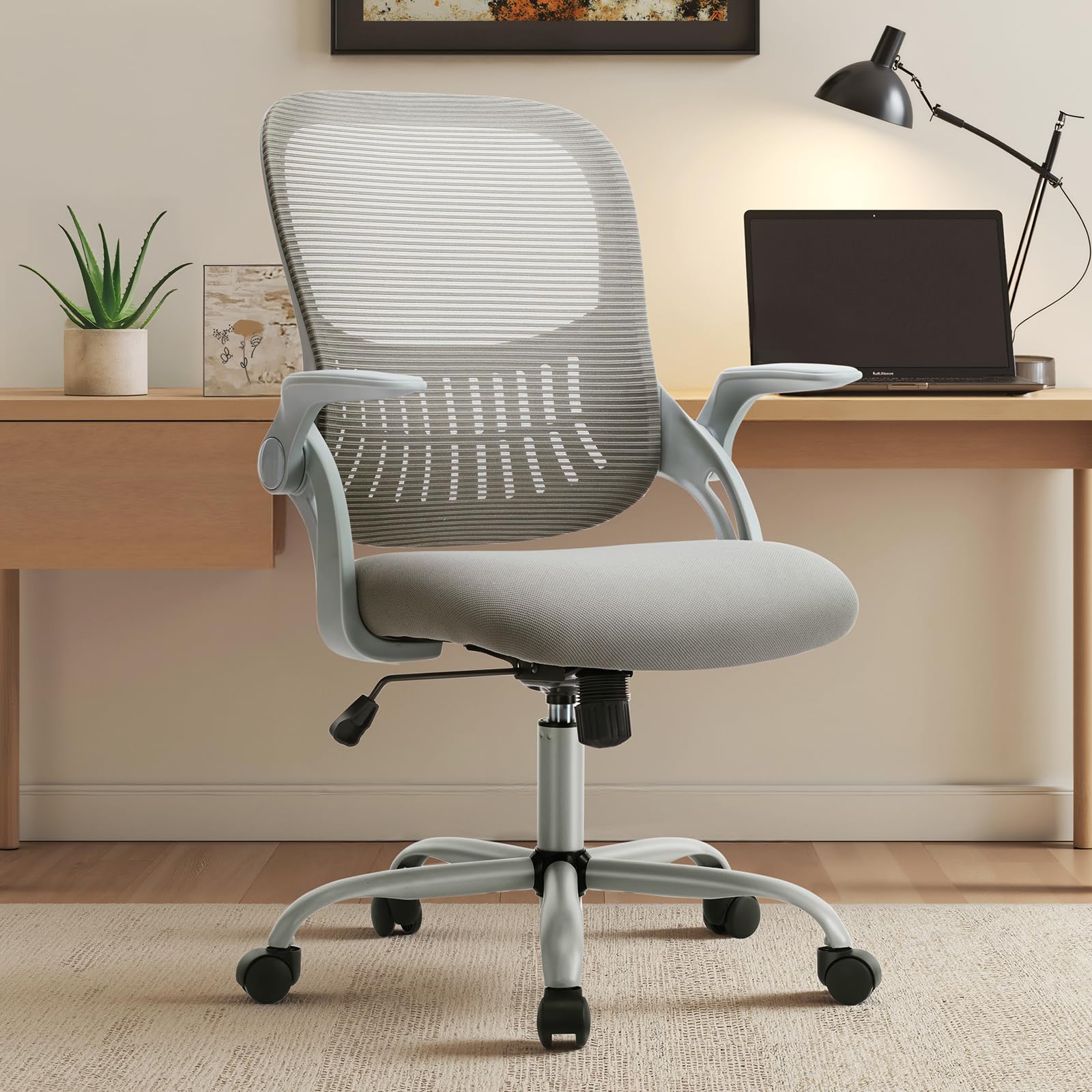
This chair is the definition of “don’t overthink it.” If you want a functional, comfortable, mid-back office chair for daily desk use, Sweetcrispy’s manager-style chair delivers the basics well: supportive seat, breathable mesh, smooth rolling, and flip-up arms so your workspace stays flexible. It’s especially popular in craft rooms, study setups, and home offices where you want comfort without a huge footprint.
Owners describe it as a solid upgrade from basic desk chairs, with a supportive seat that isn’t overly plush but feels comfortable for hours of work. That “medium-firm” comfort profile is often ideal for productivity because it supports you without encouraging slouchy sinking. The chair also earns praise for smooth recline and stable height adjustment—small details that improve daily experience more than people expect.
A useful real-world note from reviews: people who want an ultra-soft “couch seat” sometimes add a small cushion. But many also say it’s more comfortable than they expected, even compared with padded chairs that trap heat. Mesh-backed chairs often win long-term because they reduce that “hot back” fatigue that makes sitting feel unpleasant.
This chair isn’t trying to be a high-end ergonomic machine. It’s trying to be a dependable, good-looking daily chair that rolls smoothly, supports your back in a basic way, and keeps your desk area flexible. If that’s your goal, it’s a satisfying purchase.
Why it works
- Comfortable “everyday” seat – Supportive for hours without feeling mushy.
- Flip-up arms – Great for craft desks, small offices, and getting closer to the desk.
- Breathable mesh back – Helps keep long sessions cooler and more comfortable.
- Smooth rolling – Owners mention it glides well on common home floors.
- Easy assembly – Typically built in under an hour with clear instructions.
Good to know
- Mid-back design won’t provide the same upper-back support as high-back chairs.
- If you need strong, adjustable lumbar placement, choose a chair with multi-direction lumbar support.
- Very plush-seat lovers may want to add a small seat cushion for extra softness.
Ideal for: study desks, craft rooms, moderate daily office use, and anyone who wants a reliable mid-back chair with flip-up arms and smooth movement.
17. BestOffice Ergonomic Mid‑Back Chair – The “Get a Decent Chair Today” Starter Pick
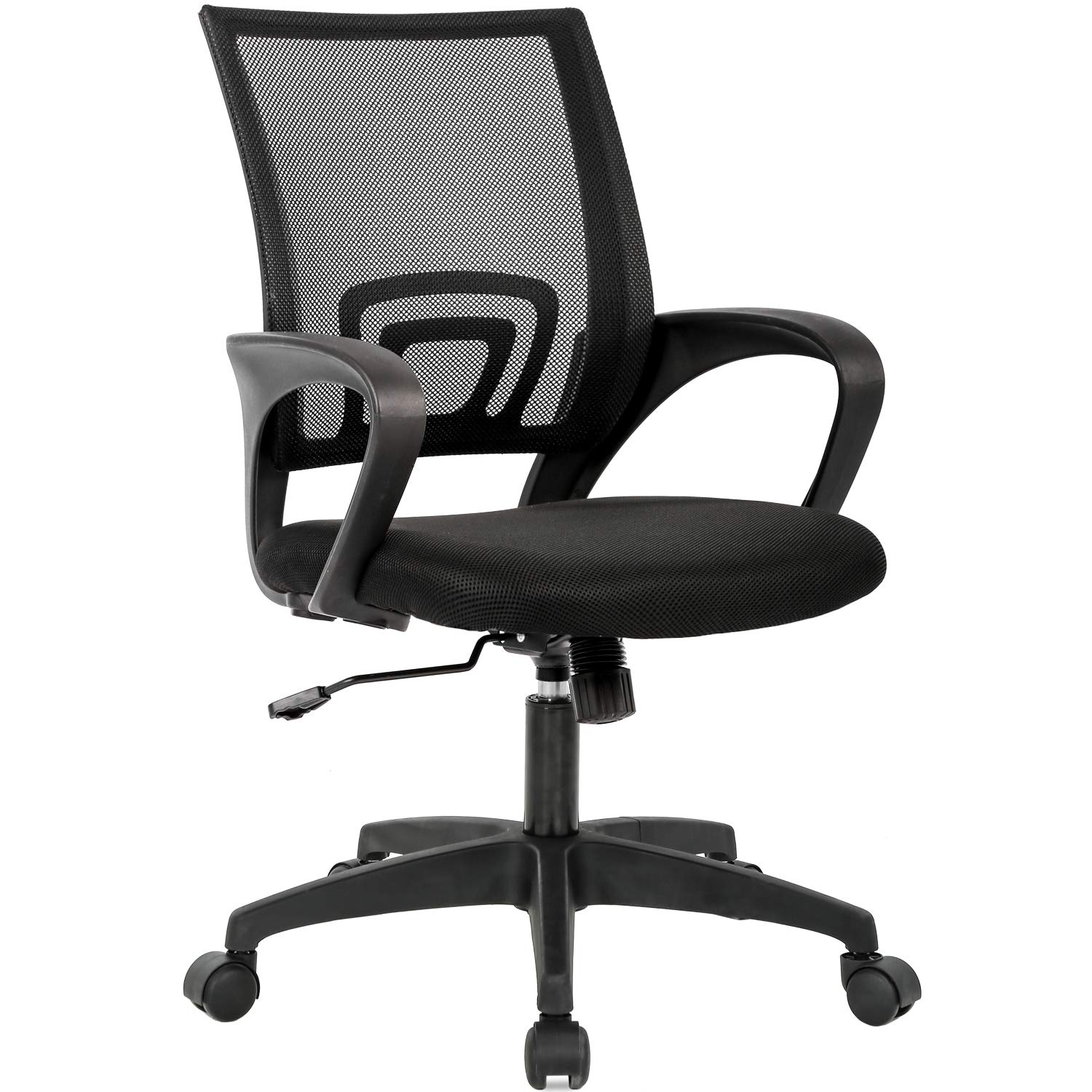
Sometimes you’re not trying to find the perfect chair—you’re trying to stop suffering now. The BestOffice mid-back chair is popular because it offers a breathable mesh back, basic lumbar curve support, and simple adjustability that makes an immediate difference compared with kitchen chairs or non-ergonomic stools.
Owners describe it as lightweight, comfortable, and easy to assemble, with smooth rolling wheels and a surprisingly usable feel for long desk sessions. This is exactly the kind of chair people buy for homework stations, temporary home offices, and spare rooms where a “good enough” chair is far better than nothing. It’s also a common “starter chair” for people who are experimenting with home office setups and aren’t ready to invest deeply yet.
The most helpful real-world feedback is about expectations: some users mention small assembly quirks (like needing extra washers), and some note that seat depth can feel a bit short depending on your leg length. Those are not shocking at a starter tier. The key is that many owners still describe it as comfortable for long hours, breathable enough to avoid overheating, and stable enough to feel like a real upgrade.
If you’re choosing this chair, the pro move is to pair it with a smart desk setup: keep your feet supported, keep your screen at a comfortable height, and use the chair’s basic lumbar curve to prevent slumping. Even a simple chair can feel dramatically better when your workstation is aligned.
Why it’s popular
- Breathable mesh back – A big comfort help in warm rooms and long sessions.
- Easy assembly – Simple setup that gets you working quickly.
- Basic lumbar support – Better posture baseline than non-ergonomic chairs.
- Lightweight + rolls easily – Easy to move around small rooms and desks.
- Strong “starter chair” role – A noticeable upgrade from kitchen chairs and cheap stools.
Good to know
- Seat depth may feel short for some users; check your posture comfort preferences.
- Starter tier means you might see small assembly quirks; take your time and don’t overtighten early.
- If you need advanced lumbar tuning or head support, move up to the mid-range chairs above.
Ideal for: temporary offices, homework desks, spare chairs, and anyone who needs a breathable, usable chair fast and wants a meaningful upgrade from non-office seating.
How “Real Ergonomics” Works (and Why Seat Depth Beats Hype)
Most chair disappointment happens for one reason: you buy a chair for what it claims, not for how your body actually sits. Ergonomics is not a label—it’s a relationship between your body, your chair, and your desk setup. When that relationship is aligned, sitting feels easy. When it’s misaligned, you fidget, slump, and end the day sore.
What makes a chair truly home-office friendly
- Seat depth that supports thighs – This reduces “perching” and lowers the urge to slouch.
- Lumbar support that lands correctly – Placement matters more than pressure.
- Armrests that don’t fight your desk – Flip-up arms or well-positioned pads reduce shoulder tension.
- Breathable back support – Mesh or vented designs reduce heat discomfort, which improves sitting endurance.
- Quiet stability – Smooth recline and quiet rolling stop the chair from becoming a daily annoyance.
That’s why chairs like the CASASIO (cushion + adjustable lumbar), GABRYLLY (high-back support), and CYKOV (work-to-rest transitions) feel so different than generic chairs. They aren’t just “ergonomic”—they reduce friction in the exact moments your body would otherwise compensate.
Setup tips that upgrade any chair immediately
- Keep feet supported – If your feet dangle, your hips rotate and your back pays the price.
- Use lumbar gently at first – Your back needs time to accept support; small adjustments win.
- Stop “reaching” for your mouse – Bring mouse and keyboard closer; reaching turns into shoulder tension.
- Use armrests as a light landing pad – Don’t press down hard; let shoulders relax.
- Take micro-breaks – Stand for 30 seconds, reset posture, and sit again; the goal is movement, not perfection.
When you remove tiny posture stressors, you feel better and work better. The right chair doesn’t just support your back—it protects your momentum.
FAQ: Choosing the Right Home Office Chair (Without Guesswork)
What’s the single biggest mistake people make when buying an ergonomic chair?
Mesh vs PU/leather: which is better for long hours?
Do I need a headrest?
Are flip-up armrests actually useful, or is that just a gimmick?
I’m petite. What should I prioritize?
I’m bigger/taller. What should I prioritize?
Final Thoughts: Pick the Chair That Makes Work Feel Easier
The best chair is the one that makes you forget about your chair. Not because it’s invisible—because it quietly supports you so well that you stop fidgeting, stop slumping, and stop thinking about discomfort.
Here’s the simplest way to translate this guide into the right purchase:
- Want the most balanced “work + recovery” pick? Start with the CYKOV Ergonomic Chair with Footrest. It’s built for real home-office days where you alternate between focus and decompression.
- Want a proven high-back mesh workhorse for long hours? Choose the GABRYLLY Ergonomic Office Chair. It’s a strong long-session chair with a big user base and a dependable feel.
- Want a stylish leather look that still feels supportive? Grab the YFO Brown Leather Desk Chair for that “executive vibe” plus optional armless flexibility.
- Need easy-clean practicality with flip-up arms? Go with the MUXX.STIL PU Seat (Black). It’s a great match for real homes where spills, pets, and daily wear are normal.
- Want maximum cushion comfort with highly adjustable lumbar? Pick the CASASIO Ergonomic Chair if your body demands padding and long-session support.
- Want a balanced high-back chair that’s reliable every day? The TRALT High Back Long-Hours Chair is a dependable pick for steady support, breathable comfort, and practical adjustability.
- Need heavy-duty support without going ultra-premium? Consider the Fizzin Ergonomic Chair for stable, adjustable support that’s designed for bigger bodies.
- Want the easiest budget upgrade that people actually re-buy? Try the NEO Chair High Back Mesh for breathable comfort and space-saving flip-up arms.
Your goal isn’t to buy the “most ergonomic” chair on paper—it’s to buy the chair that fits your body and your desk so well that your workday feels easier. Pick the best ergonomic chair for home office that matches how you actually sit (upright, reclined, cross-legged, hot-back, small room), and you’ll feel the difference in your energy, your comfort, and your consistency—every single day.

Mo Maruf
I created WellFizz to bridge the gap between vague wellness advice and actionable solutions. My mission is simple: to decode the research and give you practical tools you can actually use.
Beyond the data, I am a passionate traveler. I believe that stepping away from the screen to explore new environments is essential for mental clarity and physical vitality.