Our readers keep the lights on and my smoothie glass nicely filled. As an Amazon Associate, I earn from qualifying purchases.
Buying a treadmill for your home is never “just buying a machine.” It’s buying a routine. It’s the early‑morning walk you actually do because it’s right there. The lunchtime reset you squeeze in between calls. The five‑minute “I need to move my body” moment that saves your mood on a rough day.
Here’s what most guides get wrong: they treat treadmills like a spec contest. More horsepower! More incline! More programs! But real homes don’t work that way. Real homes have thin walls, upstairs floors, messy schedules, tight spaces, and people who want workouts that feel easy to start and hard to quit.
If you’re here because you searched for best rated treadmills for home, you’re already thinking correctly: you don’t want a treadmill that’s impressive on paper—you want the one you’ll still enjoy using after the “new purchase high” fades. That’s exactly how this guide is built: not around marketing, but around friction points that show up in owner feedback again and again—noisy motors, awkward folding, handrails that sit too low, incline “claims” that are really just a wedge, distance readings that feel off, and the sneaky reality that a belt can be “wide enough” but still feel cramped once you take a longer stride.
Below you’ll find 14 standout picks that cover every real‑life use case: a sturdier full‑size treadmill for daily walking and rehab‑friendly support, a premium smart treadmill for structured training, connected walking pads with speakers and apps, and truly compact under‑desk options for people who just want more steps without turning their living room into a gym.
My promise: by the time you reach the end, you’ll know exactly which model matches your space, body, and routine—and why.
In this article
- How to choose the right treadmill for your space, stride, and schedule.
- Quick comparison table of 14 standout models.
- In‑depth reviews of each treadmill/walking pad, with pros and cons.
- How treadmill specs translate at home (and what matters most long‑term).
- Answers to common questions, plus final buying tips.
How to Choose the Best Rated Treadmills For Home (Without Buyer’s Regret)
A treadmill is a habit machine. The right one removes excuses. The wrong one becomes an expensive coat rack. So let’s make this decision the smart way: not by chasing the biggest numbers, but by matching the machine to your real use case.
1. First, pick the right “category” of treadmill
Most shopping mistakes happen because people buy the wrong type of treadmill for their lifestyle. Here’s the simplest breakdown:
- Full‑size treadmill: Best for confident walking and regular jogging, higher speeds, longer belts, and a more planted feel. Usually heavier and takes real floor space.
- Foldable treadmill deck (upright folding): A space compromise—more stable than a pure walking pad, easier to store than a non‑folding full treadmill.
- Walking pad (low profile): Designed for walking under a desk or in small rooms. Typically lower top speed and shorter belt length. Often the quietest, easiest to move, and fastest to “start using now.”
- Walking pad with handlebar: The sweet spot for many people—still compact, but safer and more confidence‑building for longer sessions or higher pace walking.
- Desk workstation treadmill: A niche winner if you truly plan to work while walking. The desk changes posture, arm swing, and how you control speed—so it needs to be designed thoughtfully.
2. Belt size is the “confidence factor” nobody explains well
Owners rarely return a treadmill because it lacks a program. They return it because it feels cramped, unstable, or awkward. That feeling usually comes from the belt size relative to your stride.
- If you’re mostly walking: shorter belts can work beautifully. You want enough length to land naturally without feeling like you must tiptoe at the front.
- If you’ll jog or run: belt length matters fast. The faster you go, the longer your stride becomes. A belt that’s “fine” at a walk can feel sketchy at a jog.
- If you’re tall: don’t gamble on short belts for running. Tall runners often feel safest with longer belts because your stride naturally opens up.
A practical way to self-check: imagine you’re slightly distracted (podcast, TV, or a conversation). If a belt requires constant attention to avoid the back edge, it becomes mentally tiring. If it gives you breathing room, your workout feels calmer—and calm workouts are the ones you repeat.
3. Incline matters… but “how the incline is achieved” matters more
Incline can be an incredible tool for fat loss, knee‑friendly intensity, and “I got a workout” satisfaction without running. But not all incline systems feel the same in real life:
- Auto incline: the deck lifts smoothly and stays stable. It’s the closest to a gym treadmill feel.
- Manual incline (built-in levels): you physically adjust the deck, but the geometry is designed into the treadmill. Usually stable once set.
- Accessory wedge/foot pads: the treadmill sits on a wedge or small risers. This can work, but it often changes stability and can feel “DIY” depending on the design. Some owners love it for occasional hill sessions, others find it wobbly or annoying to change.
The big real‑life question isn’t “does it have incline?” It’s “will I actually use incline if it’s a hassle?” If you need to pause, lift the deck, and reposition parts every time, incline becomes an occasional feature—not a daily habit tool.
4. Brushless motors: why people keep mentioning “quiet”
If you live in an apartment, have kids sleeping, work from home, or just hate loud machines, motor behavior matters as much as speed. A lot of modern home treadmills and walking pads advertise brushless motors because they tend to run smoother and quieter with less “grindy” sound over time.
But here’s the important nuance: noise isn’t just the motor. Footstrike transfers through the frame into the floor. That’s why you’ll see owners praising machines that feel “quiet” and stable, and why a treadmill mat can transform the experience.
5. Controls and “friction” features: the stuff that decides daily use
Specs sell treadmills. Controls make you use them. When owners love a treadmill long‑term, they usually mention one of these:
- Safety key behavior: machines that won’t run without the key are annoying… until you realize how many people rely on that safety stop, especially seniors and beginners.
- Handrail controls: changing speed while staying balanced is a huge confidence upgrade for rehab walking or higher pace sessions.
- Pause function: keeping your stats while you step off for a moment sounds small—until you realize how often real life interrupts workouts.
- Remote control design: remotes are great when you’re desk-walking, but a remote you constantly lose is not. Magnetic remotes or built-in storage spots matter more than people expect.
- Display clarity: bright, readable displays reduce “annoyance tax.” If you can glance and see speed/time easily, the treadmill feels easier to live with.
6. Weight capacity is really a “stability clue”
A higher weight capacity often correlates with a sturdier frame and a less shaky feel, even for lighter users. That’s why some machines become favorites for rehab walking, seniors, and cautious beginners: they feel planted.
The flip side is also real: sturdier often means heavier. So if you need to move and store the treadmill often, look for wheels, low profile designs, and folding systems you can operate without wrestling.
7. Storage reality: measure your “path,” not just your room
People measure the space where the treadmill will live… then forget the hallway, doorway, or the turn around the sofa. Before you buy, think in “moving paths”:
- Can it roll under the bed or sofa without snagging?
- Can it stand upright safely if that’s the storage style?
- Do you need to remove bolts to fold it, or is folding truly one‑hand simple?
- Is the handlebar height comfortable, or will it force a weird posture?
Quick Comparison: 14 Best Rated Treadmills For Home Picks
Use this table to spot the models that match your lifestyle quickly, then jump to the full reviews for the real‑world details— like handrail height, incline realism, storage friction, and what owners praise (or complain about) after the first few weeks.
On smaller screens, swipe or scroll sideways to see the full table.
| Model | Type | Best for | Standout strength | Amazon |
|---|---|---|---|---|
| UMAY Fitness 20% Auto Incline (with handrails) | Full treadmill | Daily walking, rehab-friendly stability, incline training | Supportive handrails + higher incline range + sturdy feel | Amazon |
| NordicTrack T Series 5 | Smart treadmill | Structured training and a more “gym-like” run/walk | Brand ecosystem + connected training capability + longer deck | Amazon |
| KALWOL 6-in-1 Treadmill with Speaker + App | Walking pad | Home cardio with entertainment + app challenges | Built-in speaker + app compatibility + HIIT programs | Amazon |
| ZPUFDYM Folding Treadmill (manual incline) | Foldable | Walking + light jogging in small spaces | Quiet feel + compact fold + surprisingly solid deck for the footprint | Amazon |
| Aiteid Treadmill with Handles (incline + programs) | Foldable | Beginner walking/jogging with simple tracking | Pause function + preset programs + safety-focused setup | Amazon |
| UMAY 15% Incline Portable (triple display) | Walking pad | Space-saving home walking + incline variety | Sleek fold + comfy belt feel + strong “daily steps” usability | Amazon |
| LONTEK 3-in-1 Foldable (high incline style) | Foldable | Shorter users who want compact incline walking | Compact build + triple display + hill-style training option | Amazon |
| AoraPulse Compact Foldable Treadmill | Foldable | Simple home walking and light jogging | Quick setup + quiet motor feel + clear display | Amazon |
| BMJX Walking Pad with Desk Workstation | Desk treadmill | Working while walking + higher speed flexibility | Removable desk + higher top speed range + incline option | Amazon |
| CURSOR FITNESS 16% Incline Under-Desk (handles) | Under-desk | Extra steps at home with incline challenge | Incline + handles + remote control in a small-space footprint | Amazon |
| HevGlrm Walking Pad with Handle Bar (2026 upgrade) | Walking pad | Budget-friendly walking/jogging with higher capacity | Surprisingly sturdy + easy setup + big, readable display | Amazon |
| Viamotion Walking Pad (handle + adjustable incline) | Under-desk | Quiet desk walking and small-space storage | Very quiet behavior + upright storage style + simple remote control | Amazon |
| Buztrio Slim Walking Pad (no assembly) | Under-desk | Minimalist daily steps while working | No assembly + slim storage + simple remote control routine | Amazon |
| OLIXIS Under Desk Walking Pad (no handle) | Under-desk | Pure walking, smallest footprint, simplest setup | Low profile + easy storage + straightforward remote use | Amazon |
In‑Depth Reviews: 14 Home Treadmills and Walking Pads That Feel Good to Use
Now we’ll go model by model. I’m going to review these like a real home user—not a brochure: how the treadmill feels in a small room, how the controls behave when you’re tired, how incline is actually implemented, and what repeated owner feedback suggests about the day‑to‑day experience.
1. UMAY Fitness 20% Auto Incline – The “Stable, Safe, Actually Motivating” Home Treadmill
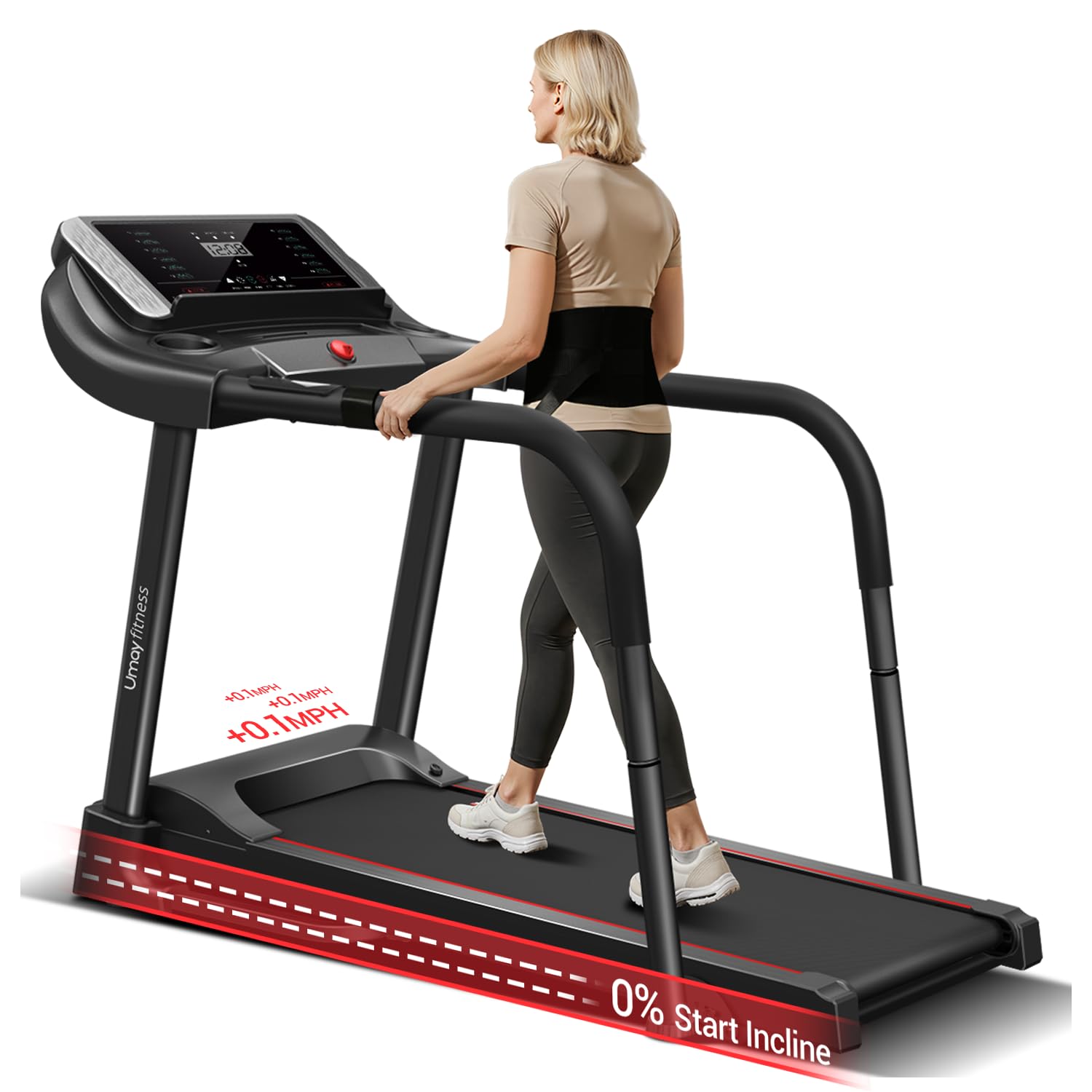
If your goal is to build a daily walking habit (and keep it for months, not days), this UMAY is the kind of treadmill that earns trust fast. It’s built around two “real home” priorities: stability and confidence. That sounds simple, but it’s exactly what makes a treadmill feel usable for seniors, beginners, and anyone returning to exercise after time off.
Owners repeatedly point out the same things: it feels sturdy underfoot, the noise level is surprisingly reasonable for a larger unit, and the long handrails change the entire experience. Handrails aren’t about holding on forever—they’re about giving your brain permission to relax. That’s why this model shows up in feedback from people recovering from knee procedures or trying to rebuild strength: the handrail support makes walking feel safer, and safer walking turns into longer sessions.
The incline system is a big reason it lands as “best overall.” In practice, incline is the intensity tool that doesn’t require running. When incline is easy to adjust (instead of a manual wedge ritual), it becomes something you’ll use regularly—short hill bursts, gentle ramps for knee-friendly cardio, or a steady climb to raise heart rate without pounding. That’s the kind of variety that prevents boredom.
Now the honest side: this is a larger treadmill. It’s not the unit you casually carry from room to room. Some owners mention assembly is manageable but easier with pre-planning (a clear space, laid-out parts, and patience). There are also real-world notes about occasional defects (as with many home treadmills) and how much you’ll appreciate responsive customer support if you ever need it.
Why it’s the best overall
- Confidence-first design – Extended handrails and safety features help you walk longer without feeling unstable.
- Incline you’ll actually use – Auto incline encourages consistency because you can change intensity without stopping and fiddling.
- Home-friendly stability – Owners describe a planted feel that reduces wobble anxiety (especially important for rehab and seniors).
- Folding assist – The folding system is built to make storage realistic for home spaces, not just “in theory.”
Good to know
- It’s a bigger unit: plan your room layout and “moving path” before it arrives.
- Assembly can be a one-person job for some, but it’s smoother if you stage parts and work methodically.
- If you want a purely under-desk walking pad, this is the wrong category—this one is about stability and handrail support.
Ideal for: walkers who want a stable, supportive treadmill that makes daily movement feel safe and repeatable—especially useful for recovery walking, beginners, and incline-focused cardio.
2. NordicTrack T Series 5 – The Structured-Training Upgrade That Feels “Gym-Like” at Home

This is the treadmill for people who want structure. Not just “I’ll walk sometimes,” but “I want a plan.” NordicTrack’s T Series lineup exists because a lot of home exercisers want something that feels closer to a commercial treadmill: longer running space, steadier frame behavior, and the option to plug into guided workouts.
What owners tend to praise about this unit is the physical feel: it’s stable, it feels well-built, and it runs smoothly enough that you don’t feel like the machine is fighting you. That matters more than it sounds. A treadmill that feels “solid” makes people more willing to increase speed, add incline, and stay consistent because they trust the platform.
The connected ecosystem can be motivating if you love guided sessions, auto-adjusting workouts, and “do what the coach says” simplicity. It’s also one of the most polarizing parts of owning a smart treadmill. Some people love training subscriptions because it removes decision fatigue. Others dislike the idea of paying ongoing fees for features they feel should be included. The important part is this: the machine can still function as a treadmill. But the full “smart treadmill” experience is tied to the ecosystem.
Real-world friction points show up in the unglamorous areas: delivery and setup can be a hassle because the unit is heavy, and assembly is easier with two people and a clear plan. Some owner stories also highlight how frustrating any early defect feels when a heavy treadmill is involved—because moving and servicing a large unit is not the same as swapping a small gadget. That doesn’t mean it’s a bad buy; it means you should treat setup day like a project: give yourself space, time, and a calm checklist.
Why it’s worth it
- More “real treadmill” feel – Stable frame behavior and a longer deck make it more comfortable for regular walking and jogging.
- Training structure – Great if you want guided workouts, auto-adjusting sessions, and consistency through programming.
- Comfort-forward deck – Cushioning helps many walkers feel less joint irritation over longer sessions.
- Brand ecosystem – Strong support community and familiarity for people who like established treadmill platforms.
Good to know
- Heavier equipment means setup is a “plan it” moment—space, tools, and ideally a second person help.
- Connected features are motivating for some and annoying for others—know which personality you are before buying.
- If you mainly want desk-walking, you’ll get more convenience from a smaller walking pad.
Ideal for: people who want a premium-feeling home treadmill and enjoy structured training, guided workouts, or a more “serious” cardio setup in a dedicated space.
3. KALWOL 6‑in‑1 with Speaker + App – The Walking Pad That Makes Workouts Feel Less Like Work
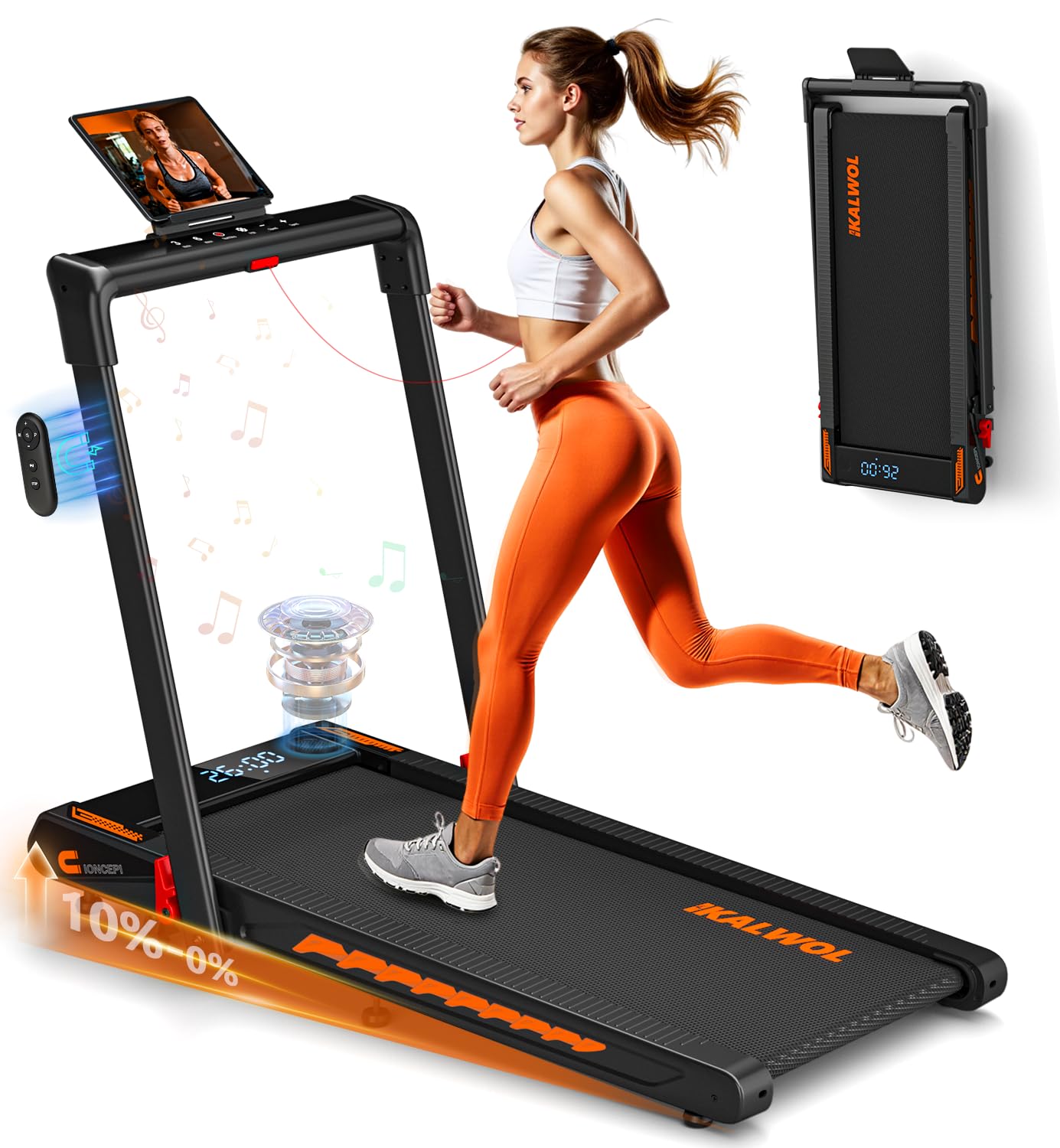
Some treadmills win because they’re “serious.” This one wins because it’s easy to enjoy. KALWOL leaned into a truth most brands ignore: the best treadmill is often the one that feels fun enough to use repeatedly. That’s where the built‑in speaker and app compatibility matter—not as gimmicks, but as habit glue.
Owners tend to describe the same experience: quick setup, surprisingly quiet operation for indoor living, smooth speed transitions, and a “sturdy enough” feel that doesn’t wobble when you pick up the pace. The speaker quality is frequently described as better than expected, which is rare praise in this category. And because it connects to popular fitness apps, it can turn a basic walk into a goal-driven session—challenges, tracking, and that little dopamine hit of “I did the thing.”
One underrated feature is the handlebar workflow. When the handle folds down, you can treat it like a compact walking pad. When it’s up, you get more control and stability for faster walking or light running. That flexibility is what makes it feel like a “one device” solution for mixed households—walkers, joggers, and desk walkers.
The incline implementation here is designed to be fast to change, which is exactly what you want if you plan to use incline often. The best incline is the incline you’ll actually switch on for short bursts, because those small “hills” add intensity without turning the session into a grind.
Why people love it
- Speaker + apps = habit fuel – Adds enjoyment and structure without needing a full smart treadmill console.
- Quiet feel – Owners consistently mention it works well for home use without being obnoxiously loud.
- Flexible modes – Handle down for desk-style walking, handle up for higher-confidence sessions.
- Built-in programs – HIIT-style presets help people who don’t want to design workouts from scratch.
Good to know
- This is still a compact category: if you’re a serious runner who wants maximum deck length, a full treadmill wins.
- App usage depends on your phone/tablet setup; if you hate pairing devices, you may ignore this feature.
- Speaker is a bonus, not a replacement for headphones if you want deep bass or total immersion.
Ideal for: people who want a modern, compact treadmill experience with entertainment and app-driven motivation—great for walking, light running, and consistent home cardio.
4. ZPUFDYM Folding Treadmill – Compact, Quiet, and Shock-Absorbing for Real Home Life
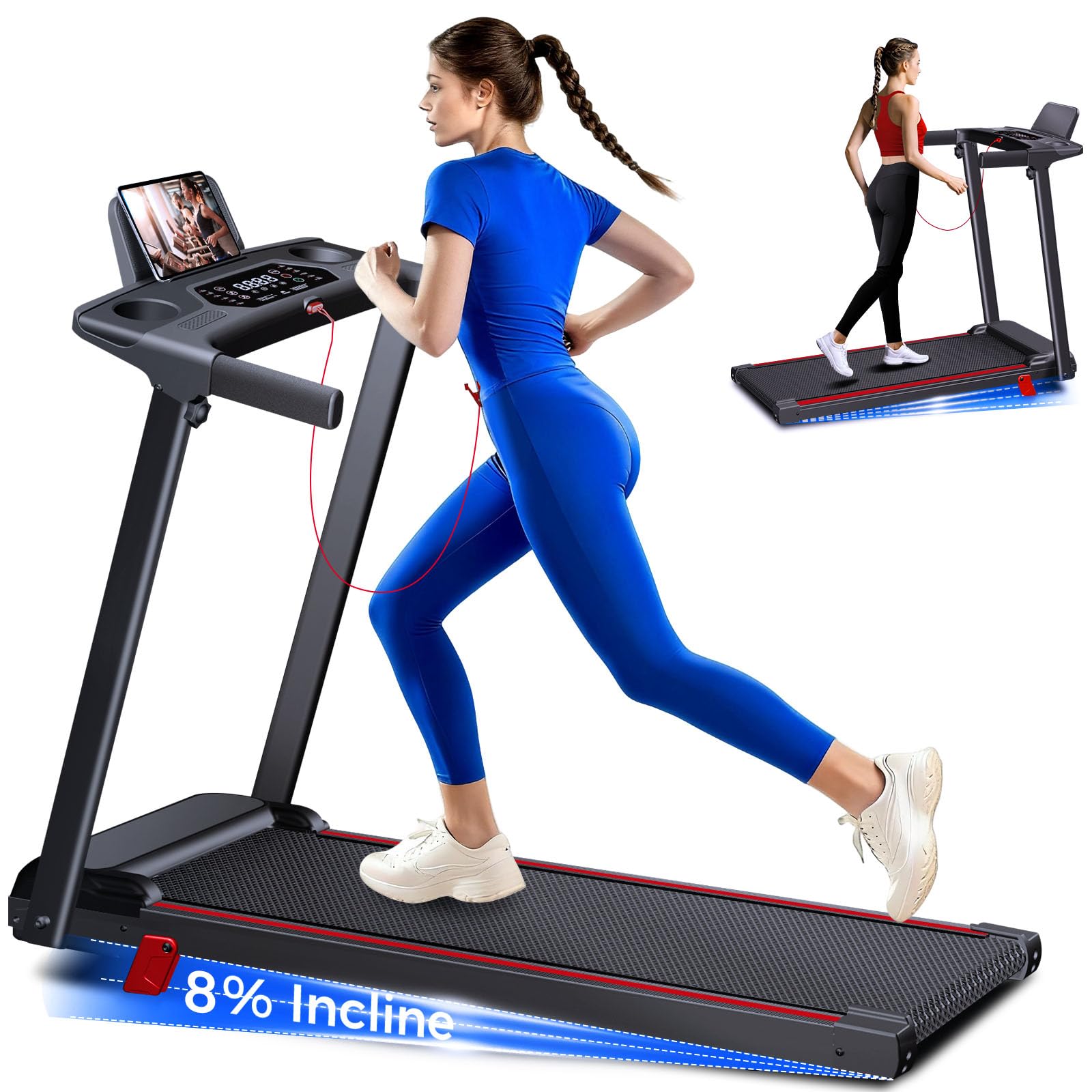
This is one of those “no‑name brand surprises” that people buy cautiously… and then end up defending enthusiastically. Owners often describe it with the same mix of emotions: “I expected cheap… and I’m shocked it feels solid.” That’s usually the sign of a compact treadmill that gets the fundamentals right: stable deck, smooth belt behavior, and manageable noise.
Where it really earns its place is portability. People love that it can live in a home without dominating the room. It folds down to a low profile and can be rolled out of the way, which is a big deal in apartments or multipurpose spaces. For many owners, that single trait becomes the difference between “I use it daily” and “I don’t use it because setting it up is annoying.”
The running surface is best described as “walking and light jogging friendly.” Real feedback points out the trade-off clearly: the deck is compact and can feel narrow for taller users or long strides. If you’re a confident runner with a big stride, you may feel like you’re constantly paying attention. But for walking, incline walking, and light jogging, it hits a sweet spot.
Two honest friction points show up repeatedly in owner notes. First: manuals can be confusing, and some assembly choices are less convenient than they could be. Second: folding may involve bolts/screws rather than a single “flip and go” mechanism. That doesn’t ruin the treadmill—it simply means you should treat it as a “store it occasionally” machine rather than something you fold up five times a day.
Why it’s a strong value
- Quiet, smooth feel – Owners frequently highlight surprisingly low noise for home use.
- Easy to move – Rolls and stores well in tight living spaces.
- Shock-absorbing belt design – Better comfort for daily walking than ultra-thin budget pads.
- Fast learning curve – Many users say it’s intuitive enough to use quickly even if the manual isn’t perfect.
Good to know
- Compact deck means tall users should be realistic about stride space.
- Folding/storage can involve hardware steps; it’s not always a one-button fold.
- Incline is manual and may feel modest; it’s better viewed as “extra challenge” than a mountain climb simulator.
Ideal for: small-space home users who want a compact treadmill for walking and light jogging with a quiet feel and easy storage—without paying for premium smart features.
5. Aiteid Treadmill with Handles – A Simple Home Routine Builder with Pause + Programs
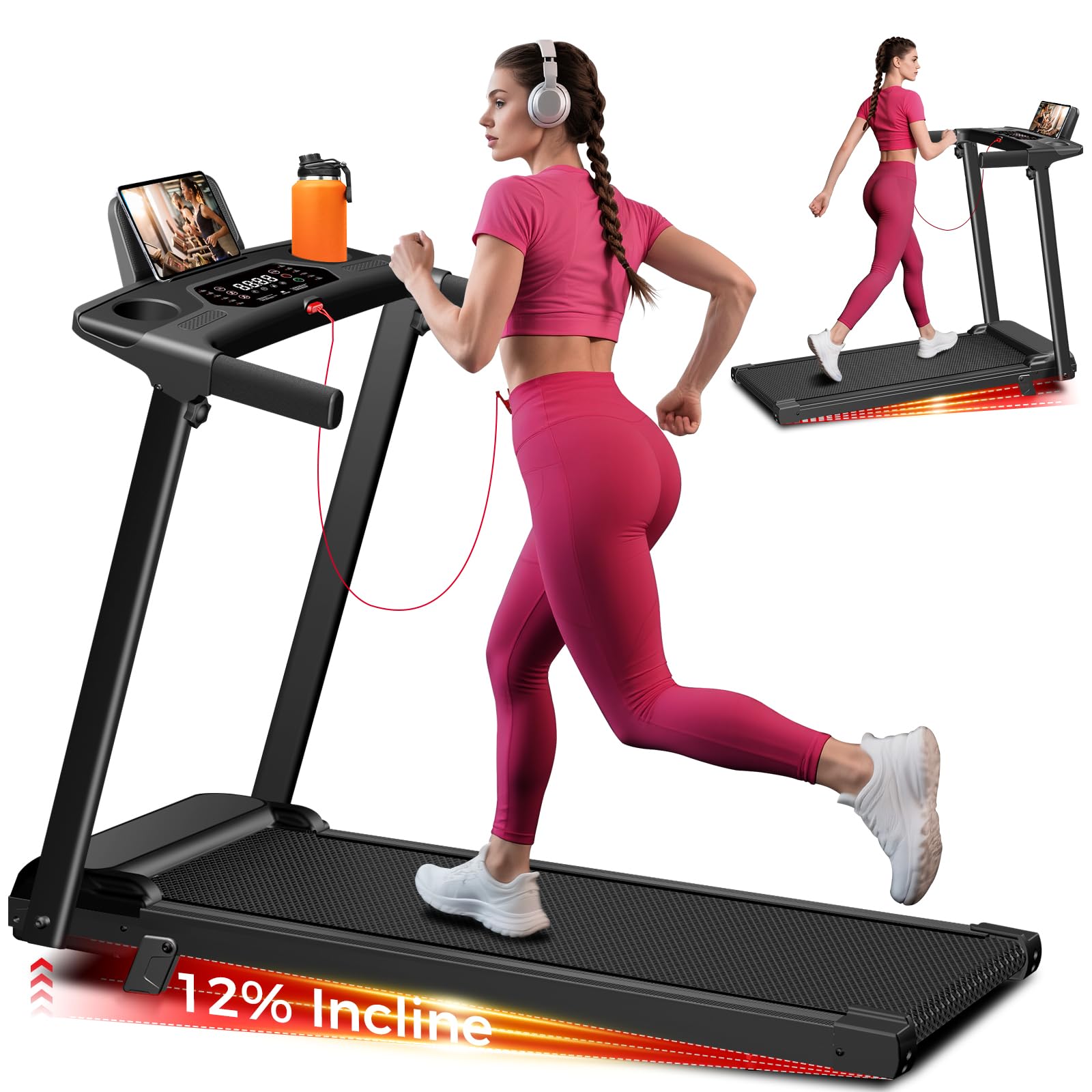
This is a treadmill built for people who want “simple and steady.” Not everyone wants a giant console or a subscription platform. A lot of people want a reliable home walking machine with clear stats, preset programs to prevent boredom, and enough stability to feel safe. That’s the lane this Aiteid model plays in.
The most consistent owner praise is comfort and ease: compact footprint, easy setup, quiet enough for daily indoor use, and helpful handles for confidence. That handle support is especially valuable for beginners, older adults, and anyone who’s rebuilding fitness. It changes the mental experience from “I hope I don’t lose balance” to “I can relax and just walk.”
The pause function is the quiet hero here. In real life, workouts get interrupted—doorbell, kids, phone calls, “I need water,” you name it. A pause feature that preserves your stats makes the treadmill feel forgiving instead of annoying. That’s a surprisingly important trait for consistency, because people quit routines when routines feel fragile.
The incline approach is best treated as “occasional hill spice,” not a high-end hill-climb system. Several users describe the incline setup as manual and somewhat inconvenient to change. That doesn’t matter if you plan to set an incline once and keep it, but it matters if you dream of switching incline often mid-workout.
Why it works for many homes
- Beginner-friendly controls – Clear display, simple programs, and easy tracking remove decision fatigue.
- Pause feature – Makes real life interruptions less frustrating.
- Handles add confidence – Great for longer walks and higher pace sessions without feeling unstable.
- Quiet enough for indoors – Owners describe using it while watching TV or during home downtime.
Good to know
- Incline adjustments are manual and can feel like a hassle if you switch often.
- Handles may feel less “rock solid” than heavier full-size treadmills.
- This category is best for walking and light jogging; runners who want long strides should consider longer decks.
Ideal for: beginners and everyday walkers who want a compact home treadmill that’s easy to use, stable enough to feel safe, and flexible enough to keep routines interesting.
6. UMAY 15% Incline Portable – The “Sleek, Easy to Store, Easy to Repeat” Walking Pad
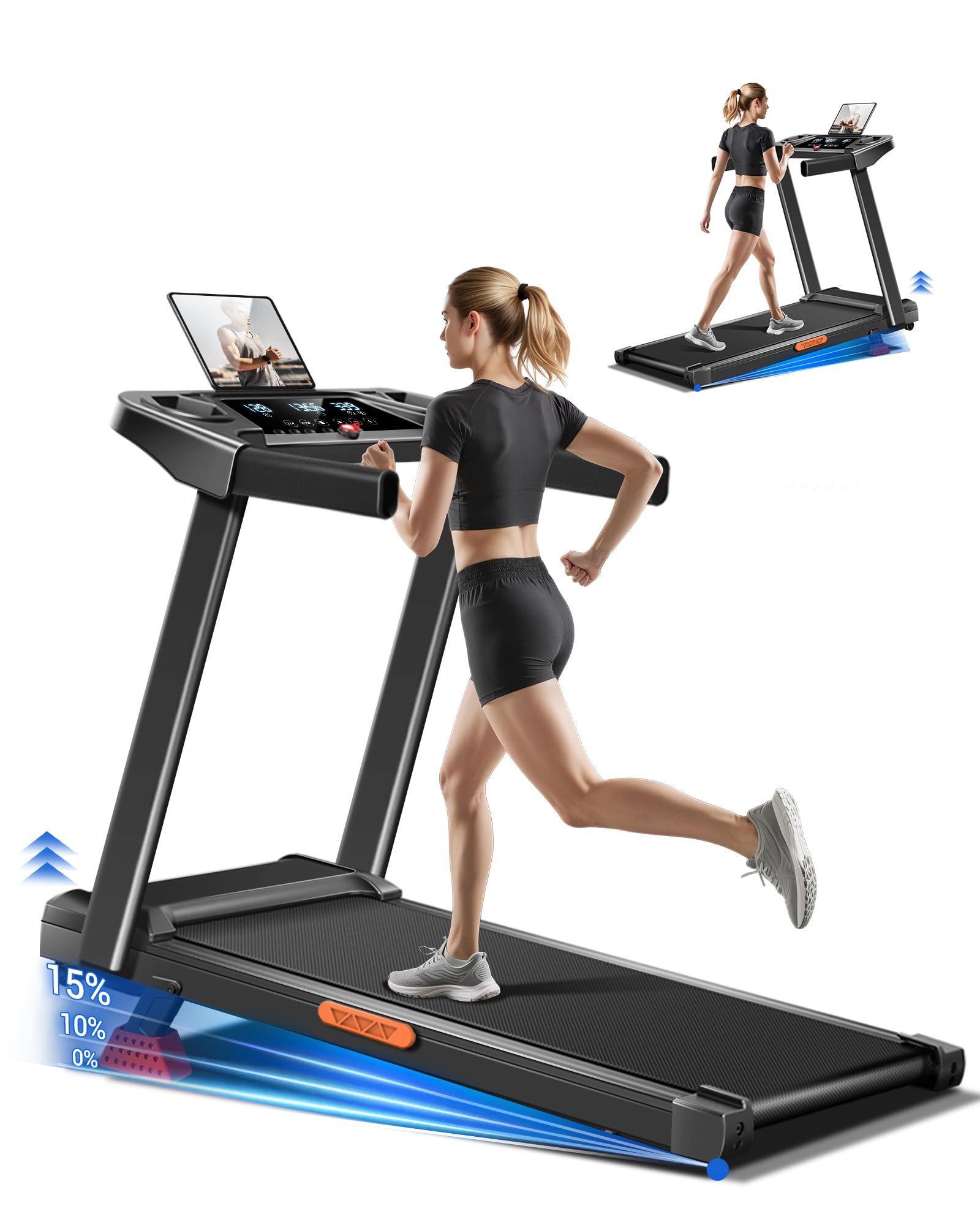
If you want a walking pad that feels “grown up” (not flimsy, not toy-like, not loud), this UMAY portable model is a strong contender. Owner feedback highlights the same daily-life wins: it’s sleek, compact, easy to maneuver, and easy to store under furniture. That’s exactly what keeps a walking routine alive in small homes—low friction.
The belt feel is another big theme. People often describe it as comfortable underfoot and easier on the knees than they expected. That usually comes from the combination of belt layering, shock-absorbing structure, and a frame that doesn’t rattle. When a walking pad feels stable, you stop thinking about “the machine” and start thinking about your podcast, your steps, and your stress melting away.
Incline on a compact unit is where things get interesting. Many walkers want incline because it boosts intensity without needing speed. On this model, incline is positioned as a practical home feature: add challenge, increase effort, and vary the routine. The key is how you plan to use it. If you want to switch incline constantly mid-session, auto incline systems are smoother. If you want to set a hill angle and do a “hill walk day,” manual incline is often perfectly fine.
The overall vibe of this treadmill is “modern, portable, and surprisingly capable.” It’s not a commercial gym replacement. It’s a home habit tool that’s easy to live with—which, for most people, is the entire point.
Why it’s a smart choice
- Sleek storage – Slides away easily and doesn’t demand a dedicated gym corner.
- Comfortable belt feel – Many users mention it feels stable and joint-friendly for daily walks.
- Tracking that’s easy to read – The triple display style makes “glance and go” monitoring simple.
- Incline variety – Adds intensity for walkers who want more burn without running.
Good to know
- Manual incline is best treated as “set and go,” not “change every minute.”
- As with many walking pads, belt length is more walk/jog friendly than long-stride running friendly.
- If you want built-in app training, the KALWOL option may suit you better.
Ideal for: people who want a portable walking pad with incline variety and a clean storage footprint—especially good for daily steps, small spaces, and home cardio consistency.
7. LONTEK 3‑in‑1 Incline Foldable – Great Concept, But Verify Fit and “What’s Included” Fast
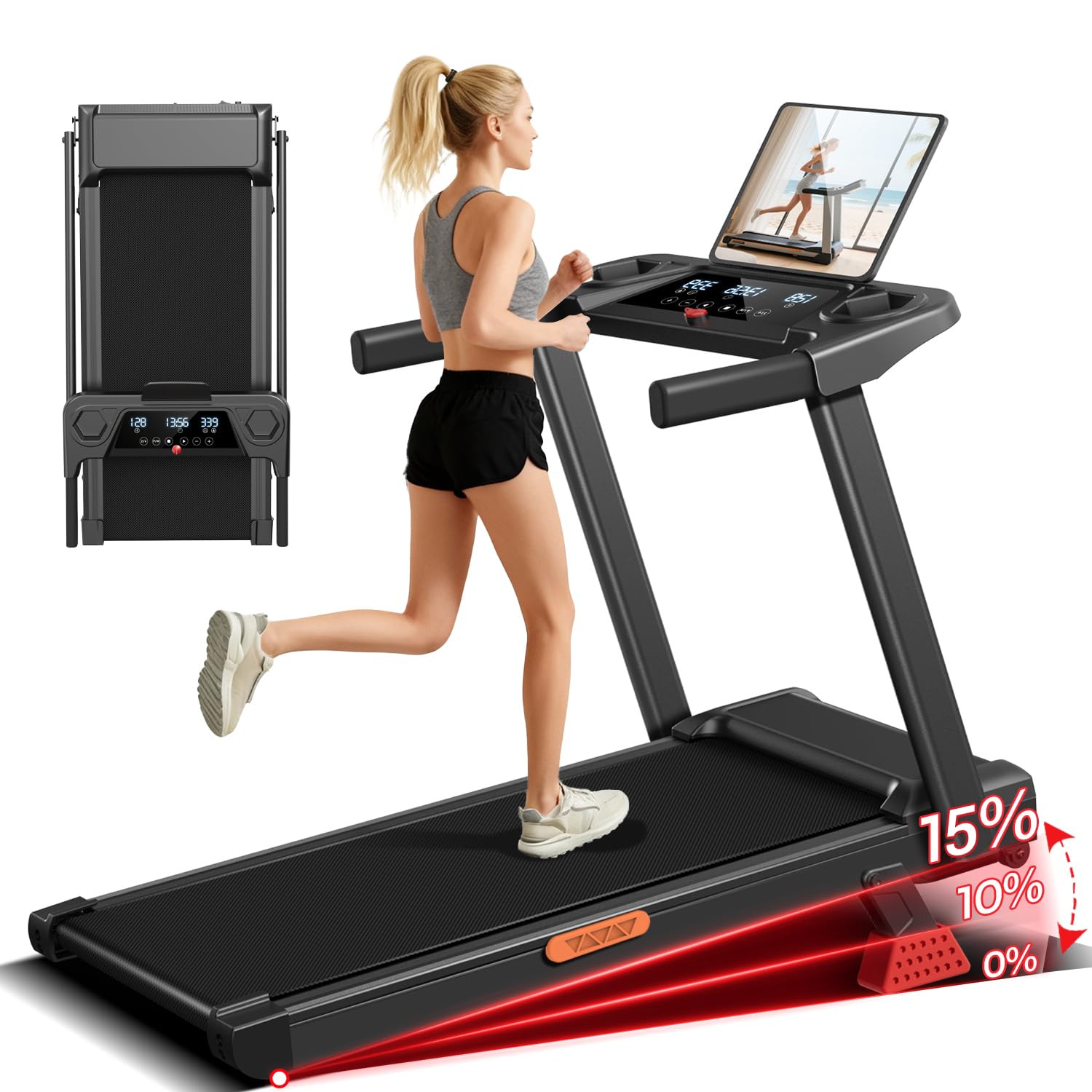
Let’s talk honestly: this treadmill has the kind of feature list that makes people click. Incline? Compact? Foldable? Multiple modes? A triple display? On paper, it sounds like the perfect small-space treadmill. And to be fair—many owners do describe it as smooth, quiet, and convenient for home walking and light jogging.
But it also has one of the clearest “high variance” feedback patterns in this roundup. Some buyers rave about stability and convenience. Others describe a unit that feels smaller than expected, with handrails that sit lower than the listing photos suggest. That matters because handrail height affects posture. If the handrail forces you to hunch, you won’t enjoy using it—and you won’t keep using it.
Incline is another area where expectations must match reality. In this category, incline is often achieved through an accessory or wedge style setup. Some users love that because it adds challenge. Others are disappointed because the incline “feels” less dramatic than advertised or is inconvenient to adjust. Again: this doesn’t make it unusable. It means you should treat the incline as a bonus feature, not the main reason you buy it.
The final friction point that appears in owner feedback: included accessories. Some people expect a remote because a listing or reviews mention it, then feel frustrated when their box includes a different control setup. If you love remote control for desk-walking, prioritize models that consistently ship with one (and have a storage place for it).
Why it can be a win
- Compact and foldable – Fits small rooms and stores without dominating your home.
- Quiet enough for indoor use – Many owners describe smooth operation without “monster treadmill” noise.
- Useful tracking display – Simple visuals help keep daily routines consistent.
- Incline adds variety – Great if you want occasional hill-style walking.
Good to know
- Handrail height and overall scale can feel smaller than some buyers expect—especially taller users.
- Incline style may be wedge-based and less convenient to change frequently.
- Accessory expectations can vary; confirm your package contents quickly after delivery.
Ideal for: small-space users (especially shorter walkers) who want a compact foldable treadmill and are comfortable treating incline as a “bonus challenge” rather than the core feature.
8. AoraPulse Foldable Treadmill – Quiet, Compact, and Easy… With One Data Quirk to Know
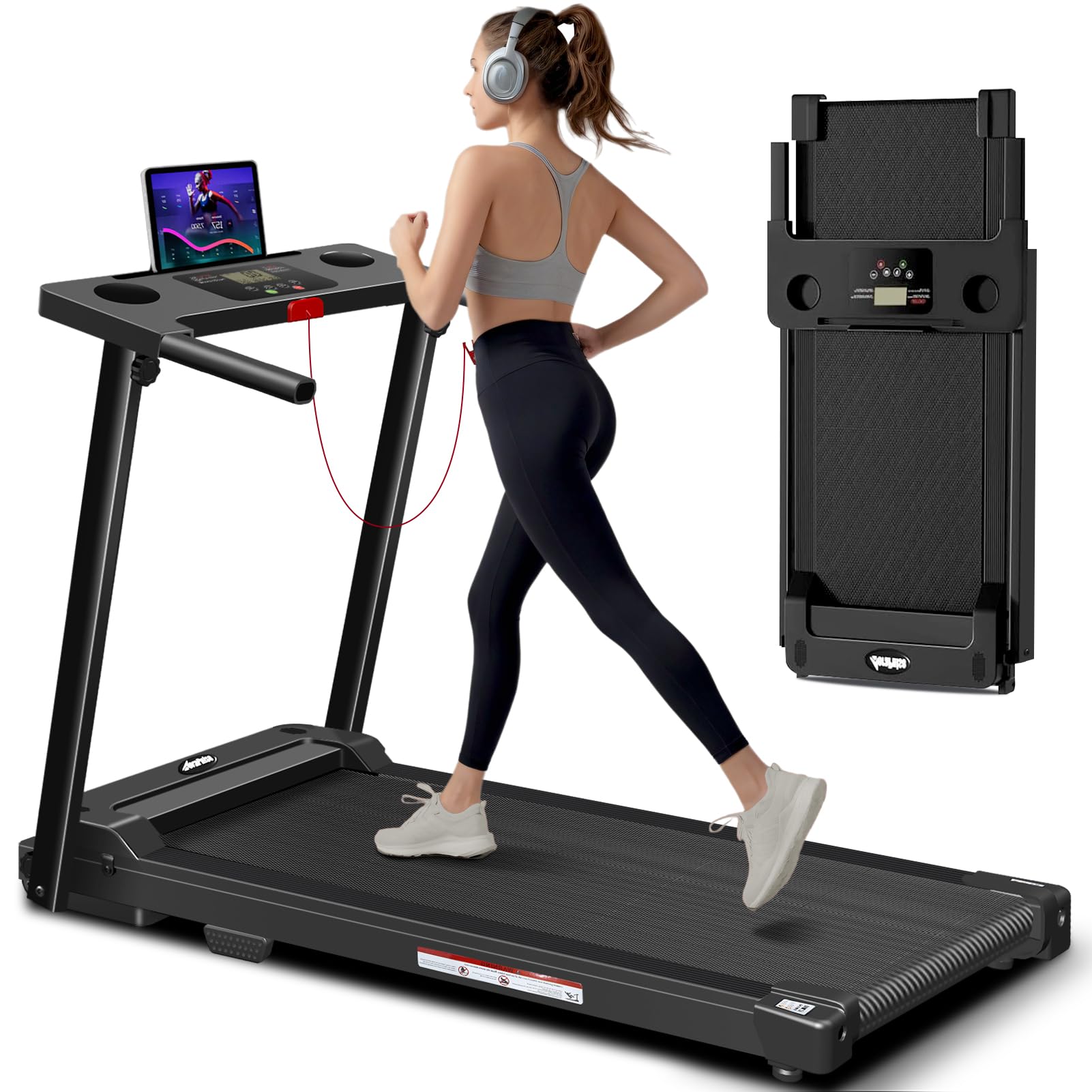
The AoraPulse is the type of treadmill people buy when they want something compact, quiet, and straightforward. And a lot of owners report exactly that: quick setup, comfortable handles, decent stability for walking and light jogging, and a display that’s easy to read at a glance.
One of the most practical positives is the “safety behavior.” Owners mention the treadmill won’t run unless the safety clip is attached. That can feel strict, but for many households it’s a feature—especially if you have kids, pets, or older adults using the machine. It creates an automatic habit of “clip in before you start,” which reduces risk.
Noise is another theme. People often buy compact treadmills because they don’t want to disturb neighbors or housemates. Feedback suggests this model tends to perform well in that respect, especially for walking and moderate speeds. Add a treadmill mat and you often get an even calmer experience.
Now the important “quirk”: at least one detailed owner report describes a distance tracking issue and a seller-advised workaround. Even if everything else performs well, fitness data accuracy matters for some people (especially if you track goals or training plans). If you’re in that category, choose a model with fewer “data stories” attached to it. If you’re not tracking distance obsessively and just want movement, you may never care.
Why it’s popular
- Fast setup – Owners frequently mention it’s quick to assemble and easy to start using.
- Quiet for home use – A strong match for apartments and shared spaces when used for walking/light jogging.
- Simple display + programs – Presets help reduce boredom without a complicated interface.
- Safety clip behavior – Encourages safer habits and prevents accidental starts.
Good to know
- Some buyers report distance readouts may be unreliable—test early if accuracy matters to you.
- Compact treadmills are not long-belt runners; they shine most for walking and moderate jogging.
- Short power cords come up in feedback; plan outlet placement or a safe extension strategy.
Ideal for: people who want a compact, quiet foldable treadmill for walking and light jogging and care more about daily movement than precise performance tracking.
9. BMJX Walking Pad with Desk – The Rare Treadmill That Actually Supports a Work Routine
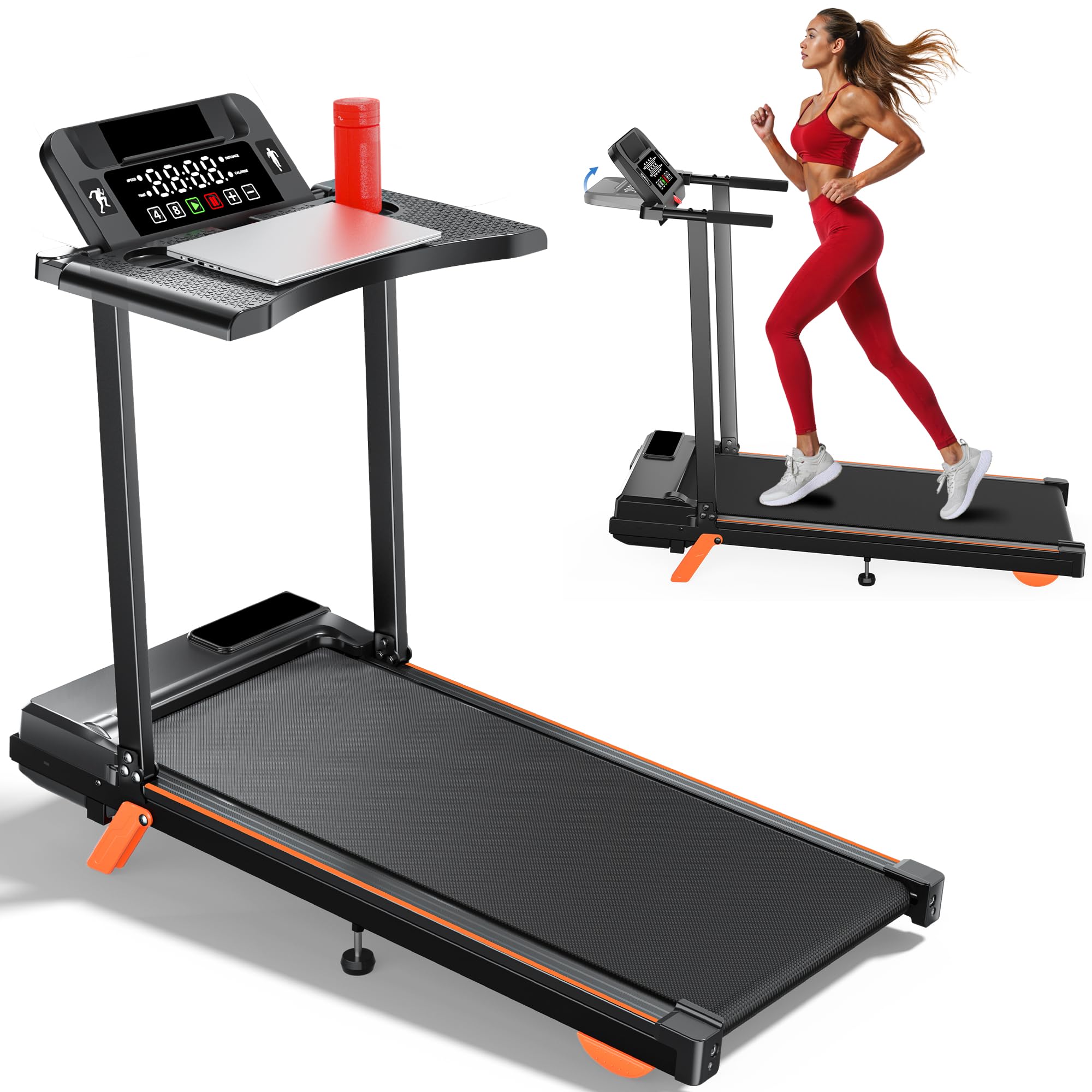
If you’ve ever tried to “just use a walking pad under a desk,” you already know the challenge: working while walking is a posture and workflow problem, not just a treadmill problem. That’s why a dedicated desk workstation treadmill can be a game-changer—when it’s designed well.
Owners who love this model tend to highlight the same experience: it feels sturdy, the incline option makes walking feel more effective, and the removable desk turns it into a true hybrid. Work mode at lower speeds becomes sustainable—emails, meetings, light tasks—then you can remove the desk and use it for higher pace walking, jogging, or running sessions. That flexibility is what makes it stand out.
Here’s the expert-style advice that makes desk walking work:
- Stay slower than you think for typing-heavy tasks. The goal is “effortless steps,” not “workout intensity” while you’re emailing.
- Keep the desk height neutral so you’re not shrugging shoulders or leaning forward.
- Use incline strategically: incline is fantastic for “walk workouts,” but for desk work, flat walking is often better for stability and focus.
The biggest caution in owner feedback is assembly/quality control variance: a few users report wiring/control errors after setup. That’s frustrating because workstation treadmills take longer to assemble than a basic walking pad. The upside is most reviews describe easy setup and smooth use. The takeaway is simple: treat the first day as a “testing day.” Make sure everything responds correctly—speed controls, display, and incline behavior—before you commit it permanently to your desk routine.
Why it’s a desk-walking standout
- Removable desk design – A true hybrid: work while walking, then convert to workout mode.
- Higher speed ceiling – More flexible than many basic walking pads if you want jogging sessions too.
- Incline for walking efficiency – Great for turning walking into “real cardio” without running.
- Sturdy feel – Owners often mention it supports heavier users confidently and stays stable.
Good to know
- Assembly can be more involved than a simple walking pad; plan a clear setup area.
- A small number of users report control wiring errors—test all functions early.
- Desk walking works best with calm speed changes; prioritize smooth control workflows.
Ideal for: home office users who truly plan to work while walking and want a treadmill designed to support that workflow—not just a pad shoved under a desk.
10. CURSOR FITNESS 16% Incline – An Under‑Desk Walking Pad That Adds Real Challenge
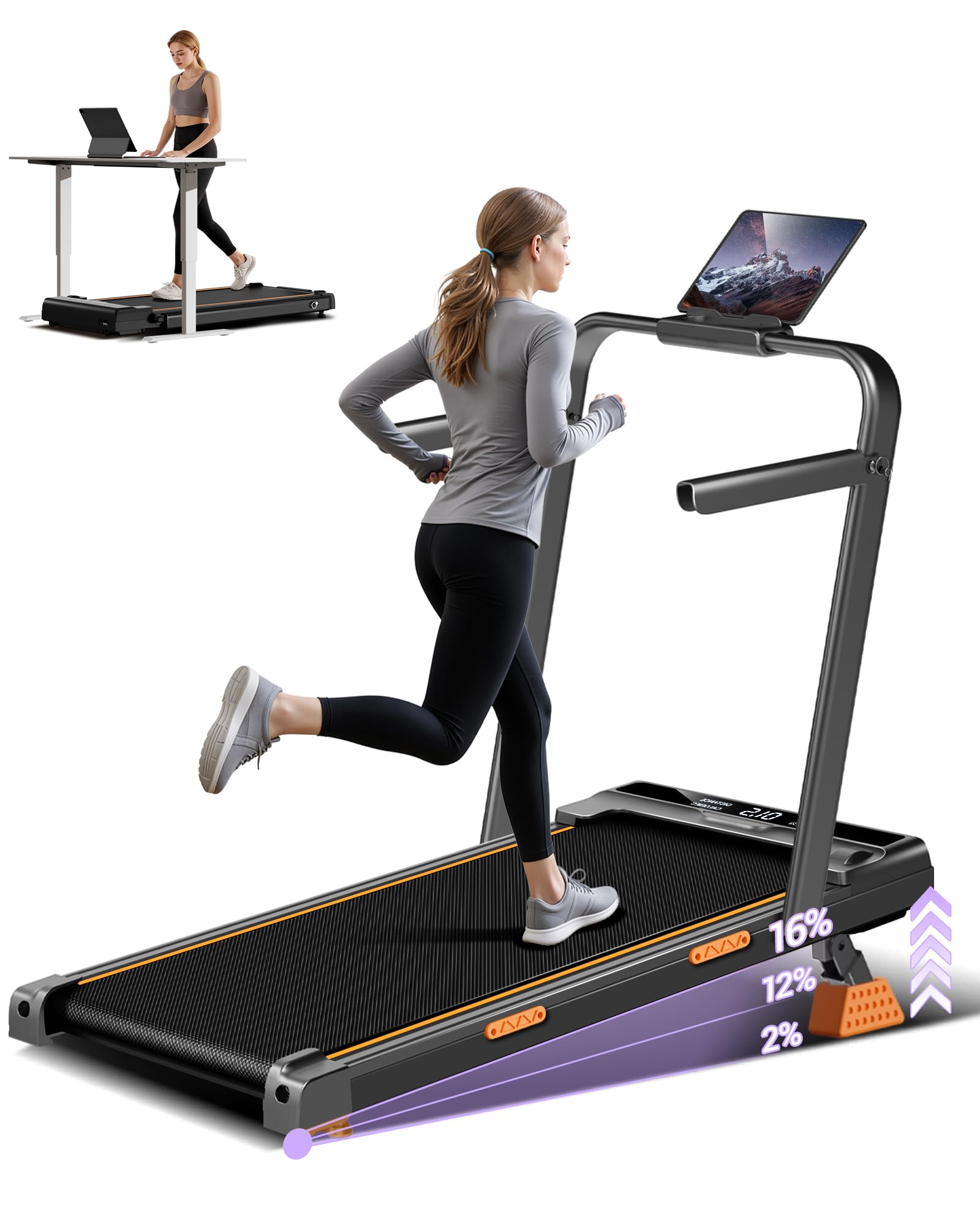
This model is built for a specific person: someone who wants more steps at home, wants it to store easily, and wants incline to make walking feel like a workout. That’s a very real need—especially in hot climates, cold winters, or busy work-from-home life where outdoor walks don’t always happen.
The strongest owner praise is “simple, effective, and compact.” People like that it gets them moving without taking over the house. They also like that incline exists in this compact category—because incline is the cheat code for intensity when you don’t want to run. It turns a basic walk into a sweat session without needing high speed.
But compact incline walking pads come with their own real-life quirks. Owners mention that these are often shorter and narrower than full treadmills. That’s not a flaw; it’s the category. It simply means you should treat it as a walking tool first, and a jogging tool only if you’re comfortable with tighter space. Another recurring point is “little pieces” during storage and setup. When a treadmill requires multiple pins/screws and a remote you can lose, daily convenience depends on your habits: do you store it every day, or do you keep it in a corner ready to go?
One of the more useful pieces of feedback is about small manufacturing variances: a few users mention handle rubber scuffing or minor build quirks. That doesn’t automatically mean the treadmill is unreliable—but it does mean it’s worth checking alignment, tightening hardware, and using a mat to prevent movement. Small setup choices often decide whether compact treadmills feel solid for months or start feeling “rattly.”
Why it’s a good home fit
- Incline in a compact footprint – Adds intensity without needing high speed.
- Handles for stability – Helps beginners feel safe, especially with incline walking.
- Quiet enough for daily use – Many owners mention it works well for indoor walking routines.
- Storage friendly – Designed to tuck away under furniture or in closets.
Good to know
- Best for walking; running on compact belts can feel tight for longer strides.
- Remote management matters—choose a “remote home” so you don’t lose it.
- Minor build variances appear in feedback; careful setup and tightening helps long-term feel.
Ideal for: home users who want an under-desk walking pad with incline to make workouts more effective—without needing a full treadmill footprint.
11. HevGlrm Walking Pad with Handle – The “How Is This So Good?” Compact Value Pick
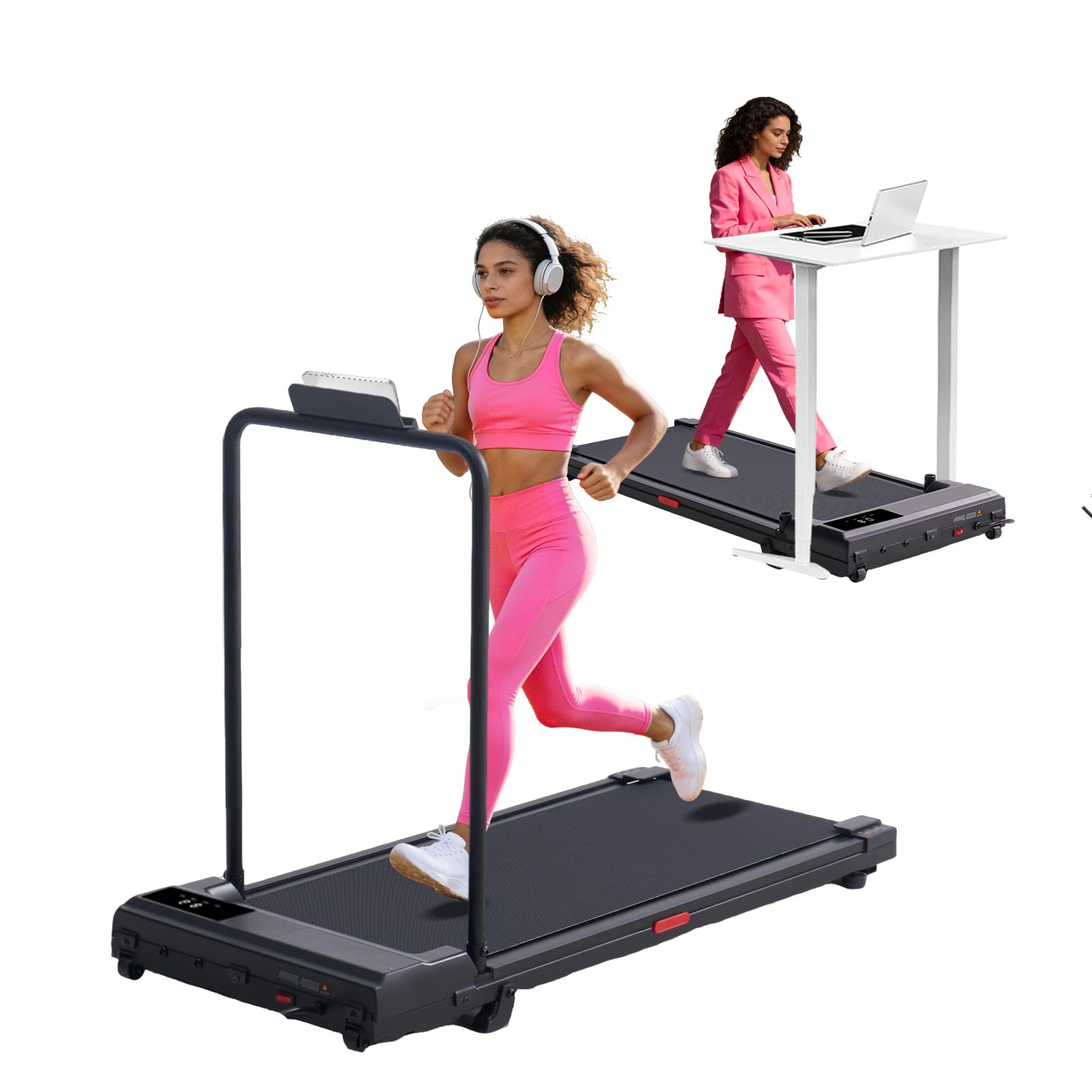
Some products earn unusually emotional reviews. This walking pad is one of them. You’ll see owners describe surprise, relief, and that “I can’t believe this works so well” energy. That usually happens when a budget-friendly machine nails the basics: stable belt behavior, quiet operation, and a setup process that doesn’t feel like punishment.
The handlebar design is a major reason people feel confident using it. Several owners mention that the handle height is usable even for tall users, and that it doesn’t make the unit feel bulky when folded down. That matters because the handlebar is the difference between “I’ll use it daily” and “I’m nervous to walk fast on this.”
The display and accessories are another small but real-life win. People like big, readable screens, simple controls, and included basics like oil and batteries that reduce the “first day friction.” A treadmill should be ready to become a habit the moment you unbox it. When setup is quick and the machine runs smoothly, people use it more.
The honest limitation is common to many walking pads: belt width and length are designed for walking and controlled jogging, not for aggressive sprint training. A few users wish it were slightly wider. That’s fair. But in the compact category, this model’s reputation is strong because it feels stable, quiet, and practical across family members—including teens and older adults.
Why it’s a standout value
- Surprisingly sturdy – Owners regularly mention a solid build feel for the compact category.
- Quiet operation – Great for early mornings, late evenings, and shared homes.
- Handlebar helps confidence – Makes faster walking feel safer and more stable.
- Easy setup – Many users describe it as mostly assembled and quick to get running.
Good to know
- Compact belt means it’s best for walking and controlled jogging, not long-stride running.
- Some users wish for slightly more width; placement and posture matter.
- Like any walking pad, it benefits from consistent lubrication for long-term smoothness.
Ideal for: budget-focused buyers who still want a sturdy, quiet walking pad with a handlebar—excellent for daily steps, family use, and small-space cardio routines.
12. Viamotion Walking Pad – A Quiet, Modern Desk-Walking Tool (Handle Height Matters)
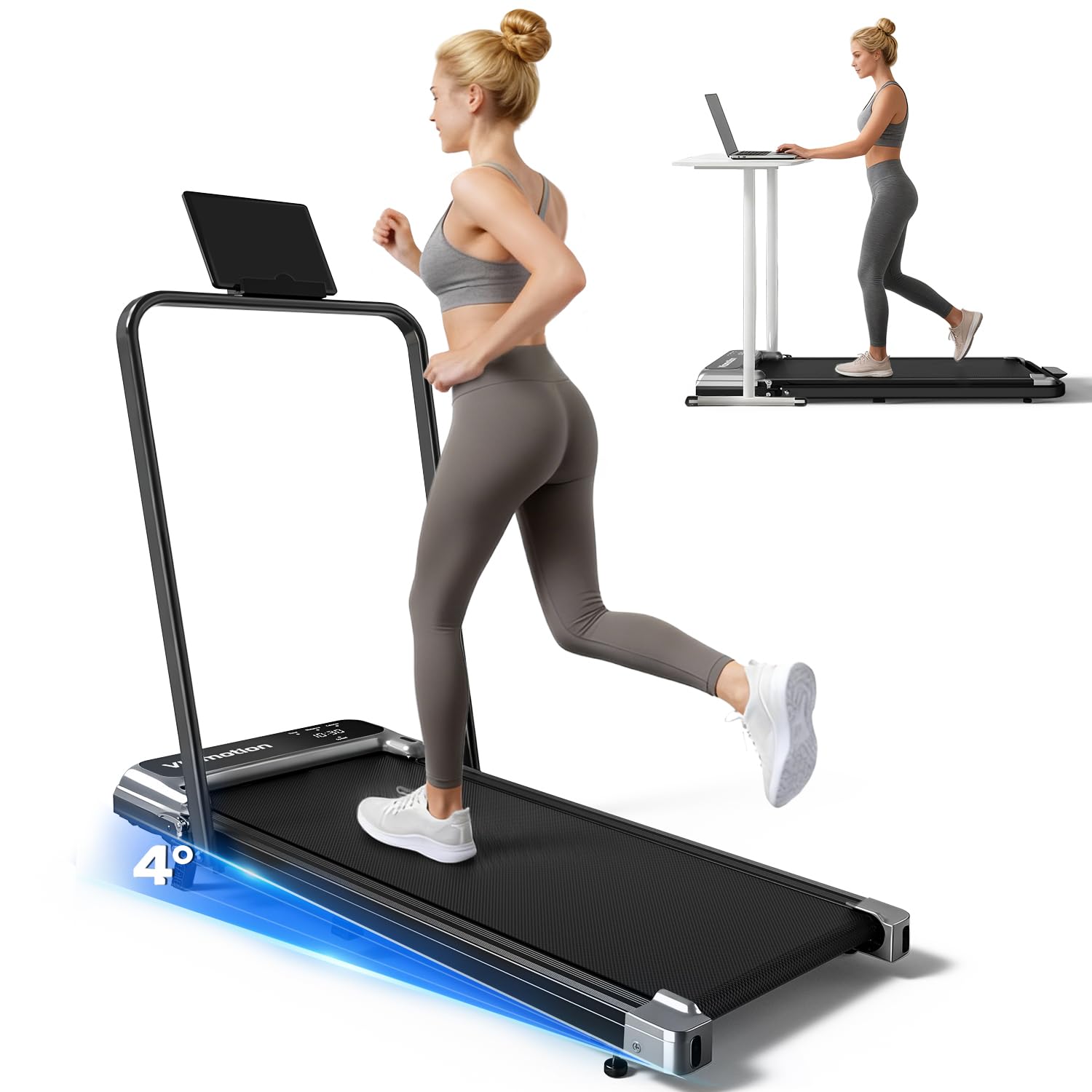
This is a desk-walking specialist. It’s built for quiet, steady steps, not for running training. Owners love it for exactly that: using it during meetings, studying, gaming, or watching TV without turning the room into a noisy workout zone. If your primary goal is “move more while living life,” that’s the correct mindset for this model.
The design details are what people praise: it looks clean and modern, it stores in a small footprint, and it’s easy to use right out of the box. The remote control matters here because desk-walking is all about smooth speed changes. You want the ability to gently bump speed up or down without stepping off or breaking focus.
The incline option adds a small “intensity bump” for walkers who want to feel more effort without increasing speed. In practice, modest incline is often perfect for desk-walking because it raises effort without making you feel unstable. You don’t want a dramatic incline when you’re trying to type.
The real-life caution is handlebar ergonomics. Some owners love the handle as extra stability. Others report the handle height and angle can feel awkward—especially for shorter users who want to hold the handle without leaning. That doesn’t kill the product; it means you should treat the handle as optional stability rather than the main hand position. Many desk walkers barely touch the handle anyway once they find a comfortable speed.
Why it’s a strong desk choice
- Very quiet behavior – Designed for home office use without disturbing calls and meetings.
- Compact storage – Fits under desks and stores easily in small apartments.
- Remote control workflow – Smooth speed adjustments without breaking your stride.
- Modern look – Owners often mention it blends into home decor better than bulky treadmills.
Good to know
- Top speed is walking-focused; it’s not built for running training.
- Handle height/angle can feel awkward for some users—consider it “stability support,” not a must-hold bar.
- Incline is modest by design (better for desk walking than for intense hill workouts).
Ideal for: home office users who prioritize quiet desk walking, compact storage, and simple remote controls—especially if your goal is daily steps, not running speed.
13. Buztrio Slim Walking Pad – No Assembly, No Fuss, Just Steps

This is the walking pad for people who hate complicated setups. Owners often highlight the same delight: it arrives ready, requires no assembly, and can be used within minutes. That matters because “setup friction” is the fastest way to kill motivation before it even begins.
The best use case is desk walking and low-impact daily movement. This is not a treadmill you buy to train for high-speed running. It’s a “walk while you work” tool and a “get my steps while watching TV” machine. When you treat it like that, it performs exactly the way people want: quiet enough for calls, stable enough for long walking sessions, and slim enough to disappear under a sofa or bed afterward.
Owners also mention that the design looks modern and doesn’t feel like an eyesore in a living room. That’s a real advantage, because the treadmill you can leave out is the treadmill you use. If it’s slim and visually calm, you’re more likely to keep it accessible.
The trade-off is the trade-off of the category: limited top speed and fewer “treadmill features.” If you want incline, handles, or higher jogging speeds, look higher up the list. But if you want the simplest “start walking today” solution, this model fits beautifully.
Why it’s a daily-steps winner
- No assembly – A true plug-in-and-walk experience.
- Slim storage – Slides under furniture easily and moves on built-in wheels.
- Quiet enough for work – A strong fit for meetings, calls, and late-night walks.
- Simple remote control – Easy speed changes while staying focused on work or entertainment.
Good to know
- Walking-focused speed range; not built for serious running.
- No handlebar—fine for confident walkers, less ideal if you rely on support.
- Like all pads, maintenance (lubrication) helps keep it smooth over time.
Ideal for: people who want a minimalist under-desk walking pad that requires almost no effort to start using—perfect for daily step goals and quiet home movement.
14. OLIXIS Under Desk Walking Pad – The Simple, Low-Profile “Just Walk” Choice
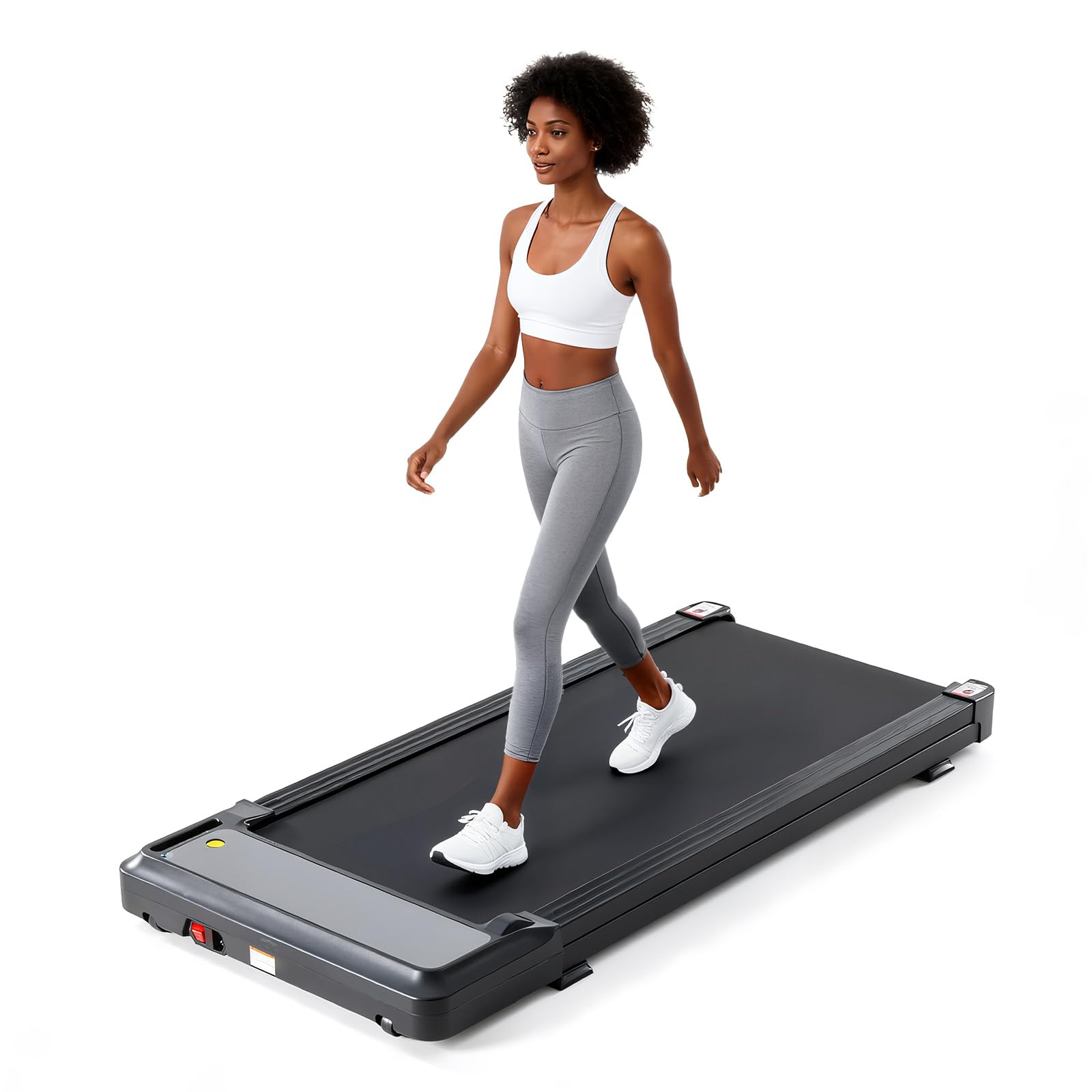
If your goal is simple—walk more, move more, and store the machine out of sight—this OLIXIS walking pad fits that life beautifully. It’s designed for walking speed ranges, low-profile storage, and easy daily use without a complicated interface.
Owners tend to praise the compact design first. It fits under desks, under beds, and in closets without requiring you to rearrange your home. That matters because space is the real currency in home fitness. When a machine fits your space, it fits your life.
The remote control routine is another common highlight. For desk walking, remote control isn’t a luxury—it’s how you keep the session smooth. You don’t want to step off and poke buttons. You want to gently adjust speed while staying in work mode.
A few practical notes appear in feedback: some users mention beeping is louder than expected (even if brief), and some note that walking noise (footstrike) will always be more noticeable than motor hum. That’s normal for this category. A treadmill mat and stable flooring setup often make a bigger difference than chasing tiny motor dB numbers.
Why it’s a great “steps tool”
- Low-profile storage – Fits small homes and slides away easily.
- Easy remote control – Smooth speed changes for desk-walking routines.
- Safety key workflow – Encourages safer use and automatic stop behavior.
- Simple LED tracking – Clear basics: time, speed, distance, calories.
Good to know
- Walking-focused speeds; not a running treadmill replacement.
- No handlebar—choose a handled model if you want extra stability.
- Beeping and footstep noise can be noticeable; mats and placement help a lot.
Ideal for: desk walkers and small-space users who want an ultra-simple, low-profile walking pad for daily steps, light movement, and easy storage.
How Treadmill Specs Translate at Home (and What Actually Matters)
Most treadmill disappointment isn’t caused by “bad treadmills.” It’s caused by mismatched expectations. Here are the real-world mechanics that explain why some treadmills feel amazing at home—and others feel irritating, cramped, or unused.
The 5 spec traps that fool buyers
- “Horsepower” without context – Many listings highlight peak numbers. Real performance depends on how the motor behaves under your body weight for sustained walking/jogging.
- Incline claims – Auto incline feels premium. Manual incline can be great. Wedge-style incline can still work, but it changes stability and convenience.
- Noise numbers – Motor noise and footstrike noise are different. Footstrike travels into floors, especially upstairs or in apartments.
- Deck size hidden in the excitement – Belt length is a confidence feature. Short belts can be perfect for walking and still feel sketchy for jogging.
- “Foldable” that requires effort – If folding needs bolts, heavy lifting, or multiple steps, you’ll fold less than you think.
That’s why this guide leans on owner feedback patterns: real people don’t complain about “only 12 programs.” They complain about wobble, awkward controls, noisy vibrations, and belts that feel too narrow when they’re tired.
Home setup tips that make any treadmill better
- Use a treadmill mat – It protects floors, reduces vibration, and makes “quiet motors” feel even quieter.
- Align the belt early – If you notice drift, adjust promptly. A centered belt feels smoother and reduces long-term wear.
- Lubricate consistently – Most walking pads include oil for a reason. Smooth belts reduce noise and stress on the motor.
- Create a “remote home” – If your treadmill uses a remote, pick a consistent spot so you don’t lose it (magnetic sides help).
- Dial the speed for your task – Desk walking is a different workout. Slow, smooth walking beats “too fast and wobbly” every time.
A treadmill doesn’t have to be perfect to be effective. It has to be easy to start, comfortable to use, and stable enough that you trust it. That’s the trifecta that turns a machine into a routine.
FAQ: Buying and Using a Home Treadmill Without the Guesswork
Should I buy a full treadmill or a walking pad?
How do I know if a belt will feel too short?
Is incline worth it for home workouts?
What’s the fastest way to make a treadmill quieter in an apartment?
Do I need a handlebar?
How do I avoid the “I bought it and stopped using it” outcome?
Final Thoughts: The Best Rated Treadmills For Home Are the Ones You’ll Actually Use
The treadmill that changes your health isn’t always the most expensive or the one with the flashiest marketing. It’s the one that fits your home and your habits so well that using it feels normal.
Here’s how to translate this guide into a confident purchase (with zero overthinking):
- Want the most stable, confidence-building “daily walking” treadmill? Start with the UMAY Fitness 20% Auto Incline. It’s built for steady routines, supportive handrails, and incline variety you’ll actually use.
- Want a premium-feeling treadmill for structured training and a more “gym-like” setup? Choose the NordicTrack T Series 5. It’s a strong fit for dedicated spaces and people who like guided training ecosystems.
- Want a compact treadmill that feels modern, fun, and motivating? The KALWOL 6‑in‑1 with Speaker + App is perfect for people who want entertainment, app tracking, and a low-friction routine.
- Want a compact foldable treadmill that surprises people with quiet, solid performance? The ZPUFDYM Folding Treadmill is a strong “small home cardio” pick for walking and light jogging.
- Want a simple beginner treadmill with helpful programs and a pause feature? Look at the Aiteid Treadmill with Handles for straightforward daily walking and low-drama usability.
- Want a sleek portable incline walking pad that stores easily? The UMAY 15% Incline Portable is a clean choice for small spaces and consistent step goals.
- Need a compact incline treadmill concept and you’re okay double-checking fit and included accessories? Consider the LONTEK 3‑in‑1 Incline Foldable as a small-space hill-walking style option.
- Want a straightforward compact foldable treadmill that’s easy to assemble and quiet for home use? The AoraPulse Foldable Treadmill is a practical pick for simple daily movement.
- Work-from-home and want a treadmill built for actual desk walking? Choose the BMJX Walking Pad with Desk Workstation for a true hybrid work+walk routine.
- Want an under-desk walking pad with incline and handles for extra challenge? The CURSOR FITNESS 16% Incline Under‑Desk adds intensity without taking over your room.
- Want a budget-friendly walking pad with handlebar that feels surprisingly sturdy? Go for the HevGlrm Walking Pad with Handle Bar for easy daily steps and family-friendly use.
- Want a quiet, modern desk-walker with a simple remote workflow? The Viamotion Walking Pad is designed for home office walking and clean storage.
- Want a slim, minimalist walking pad with basically zero setup friction? Pick the Buztrio Slim Walking Pad for “plug in and walk” simplicity.
- Want the simplest low-profile walking pad for pure walking and easy storage? Choose the OLIXIS Under Desk Walking Pad for a straight-to-the-point daily steps routine.
The truth is simple: the best rated treadmills for home are the ones that match how you actually live. Choose your category first, match the belt to your stride, pick incline only if you’ll truly use it, and prioritize low-friction storage. That’s how a treadmill becomes a habit—not a regret.

Mo Maruf
I created WellFizz to bridge the gap between vague wellness advice and actionable solutions. My mission is simple: to decode the research and give you practical tools you can actually use.
Beyond the data, I am a passionate traveler. I believe that stepping away from the screen to explore new environments is essential for mental clarity and physical vitality.