Our readers keep the lights on and my smoothie glass nicely filled. As an Amazon Associate, I earn from qualifying purchases.
If you’ve ever woken up with a stiff neck, a tight upper back, or that dull “I slept wrong” headache… it’s rarely random. Most of the time, it’s geometry. Your pillow is a spacer. When that spacer is too high, too low, too soft, or the wrong shape, your neck spends 6–8 hours bent in the wrong direction. And your back pays the invoice all day.
The internet will tell you to “just get memory foam.” Cool. But memory foam comes in wildly different shapes, densities, and designs—some cradle your head like a custom mold, others shove your chin forward like a bad airport pillow. The goal here is simple: find the best pillow for neck and back alignment for your body, so you stop guessing and start sleeping.
Here’s the part most buying guides skip: the “right” pillow is not just about comfort. It’s about keeping your cervical spine neutral, filling the shoulder gap when you side-sleep, and supporting the base of the skull without forcing your head to rotate. That’s why some people swear a contoured “butterfly” pillow changed their life… while others return it after two nights. Same product. Different anatomy.
This guide goes deeper than feature lists. I’m pulling from real owner feedback patterns (what people praise, what they complain about, and who the pillow actually works for), then layering on a practical fit framework you can use tonight. By the end, you’ll know exactly which design matches your sleep style—and why.
In this article
How to Choose the Best Pillow For Neck And Back Without Guesswork
Your pillow has one job: keep your head and neck “stacked” over your spine in a relaxed, neutral line—whether you sleep on your side, back, or somewhere in between. When you nail that, the upper back relaxes, shoulders stop creeping toward your ears, and morning stiffness fades. This is the decision framework I’d use if I was picking the best pillow for neck and back support for a friend who’s tired of wasting money.
1. Find your “shoulder gap” (the #1 reason side sleepers struggle)
Side sleeping creates a triangle of empty space between your head and the mattress. The wider your shoulders (or the firmer your mattress), the bigger that gap becomes. A good pillow must fill it without jacking your head upward.
- Quick test: Lie on your side with your arm relaxed. If your head tilts down toward the mattress, your pillow is too low. If your chin tilts up and your neck feels compressed, it’s too high.
- What “good” feels like: Your nose points straight ahead, your jaw feels relaxed, and your shoulder isn’t being forced forward.
- Best designs for big shoulder gaps: Higher side bolsters, dual‑height pillows, or adjustable loft (layers or fill).
2. Back sleepers: support the neck curve, not just the skull
Back sleepers often buy pillows that “feel soft” under the head… then wake up with neck tightness. Why? Because the base of the skull is supported, but the neck curve is left hanging. You want a design with a shallow cradle for the head plus a subtle ridge under the neck.
- Look for: A central hollow (head cradle) plus a neck contour that feels supportive but not pushy.
- Avoid: Flat pillows that let your head drift forward, and tall ridges that force your chin toward your chest.
3. Combo sleepers: choose a pillow that “forgives” movement
If you roll from side to back repeatedly, ultra‑aggressive contours can feel like you’re trying to sleep inside a helmet. Combo sleepers usually do better with either:
- Dual‑height contours: So you can use the higher side for side sleeping and the lower side for back sleeping.
- Adjustable fill (shredded foam): So you can build height where you need it and soften edges that feel restrictive.
- Smoother, seamless transitions: Great if you hate “edges” and pressure points.
4. Contour vs. adjustable fill: two completely different philosophies
These pillows solve different problems. Pick the one that matches your pain pattern.
- Contour (one‑piece molded foam): Best for people who want the pillow to “hold” them in alignment. Great if you wake up twisted, slide off your pillow, or default to stomach sleeping and regret it later.
- Adjustable fill (shredded foam): Best for people who hate being “locked in,” want a softer feel, or need micro‑adjustments because they’re between sizes/heights.
5. Cooling: “cold to the touch” is nice… but airflow is what lasts
Many pillows feel cool for the first 10 minutes, then heat up because foam holds warmth. Real cooling comes from:
- Breathable covers: Ice‑silk style fabrics can reduce that “stuffy” feeling.
- Ventilation paths: Mesh zones, perforations, or more breathable foam help heat escape after you’ve been sleeping for hours.
- Consistent foam behavior: Some foams feel like bricks in winter and mush in summer; temperature‑stable designs keep support predictable.
6. The 7‑night fit test (how to stop “return hopping”)
Don’t judge a new pillow after one night unless it’s obviously wrong. Use this simple sequence:
- Nights 1–2: Start with the lower height (or remove inserts/layers if it’s adjustable).
- Nights 3–5: If you still feel a neck “stretch,” try the higher side/added loft.
- Nights 6–7: Check your wake‑up signals: less stiffness, fewer position changes, and less need to “search” for comfort.
Quick Comparison: 15 Neck & Back Support Pillows
These are organized in a “premium-to-practical” flow: higher‑end, feature‑rich picks first, then strong value options that still do the core job—supporting alignment without drama.
On smaller screens, swipe or scroll sideways to see the full table.
| Model | Type | Best For | Key Feature | Amazon |
|---|---|---|---|---|
| Royal Therapy Memory Foam Pillow | Layered | Best Overall Balance | 3‑Layer Adjustable Loft | Amazon |
| HighBeds Side Sleeper Pillow | Soft Contour | Cooling Luxury | Seamless, Temperature‑Stable Feel | Amazon |
| Derila Ergo Cervical Neck Pillow | Compact | Travel + CPAP | Smaller Profile, Contour Cradle | Amazon |
| Sidney Sleep Adjustable Curved Contour Fill | Adjustable Fill | Most Adjustable | Extra Fill + Loft Control | Amazon |
| Cozyplayer Ultra Pain Relief Cooling Pillow | Contour | Structured Alignment | Adjustable Insert + Cooling Cover | Amazon |
| CHxxy Memory Foam Cervical Pillow | Contour | Pronounced Neck Support | Thick Neck Ridge + Insert | Amazon |
| Cozyplayer True Cooling Cervical Neck Pillow | Cooling Contour | Hot Sleepers | Wide Sleep Zone + Cooling Tech | Amazon |
| Polovo Contour Memory Foam Pillow | Contour | Soft‑Support Comfort | Cloud‑Feel Foam + Dual Heights | Amazon |
| Bespillow Contour Orthopedic Pillow | Contour | Combo Sleepers | Cover Snaps + Two Heights | Amazon |
| HAMYODO Cervical Pillow | Side‑Sleeper | Arm & Jaw Comfort | Shoulder Notch + Ear Relief | Amazon |
| DONAMA Cervical Pillow (Grey) | Classic Contour | Proven All‑Rounder | Dual Heights + Arm Grooves | Amazon |
| DONAMA Cervical Neck Pillow (Dark Blue) | Contour | Cooling + Dual Height | Widened Wings + Cool Cover | Amazon |
| Besyodo Cervical Pillow (White/Blue) | Contour | Taller Loft Fans | Higher Side Option + Cooling Cover | Amazon |
| Besyodo Cervical Pillow (Blue/Grey) | Contour | Side Sleeper Relief | Arm Numbness Reduction Design | Amazon |
| QIUBABYO Adjustable Cervical Pillow | Adjustable | Long‑Neck Support | Foam Inserts to Tune Height | Amazon |
In‑Depth Reviews: 15 Best Pillow For Neck And Back Picks
Instead of repeating marketing claims, these reviews focus on fit: how each pillow behaves under real bodies, real sleep positions, and real habits (earbuds, CPAP masks, shoulder pain, hot sleeping, and “I roll around all night” energy).
1. Royal Therapy Memory Foam Pillow – The “Dial‑In” Alignment Anchor

If you want one pillow that can genuinely adapt to different bodies (wide shoulders, smaller frames, side sleepers who need height, back sleepers who need neutrality), the Royal Therapy stands out because it’s built around a layered system rather than a single “take it or leave it” shape.
Here’s the real‑world advantage: when people complain that a contour pillow “pushes my head forward” or “my neck feels stretched,” that’s usually a loft mismatch—not a “bad pillow.” With Royal Therapy, you can remove a layer to reduce height without losing the contoured geometry that supports the neck curve. That turns a risky guess into a controlled adjustment.
Owner feedback patterns often point to three recurring wins: (1) it helps reduce tossing because the head and neck feel “settled,” (2) it fills the shoulder gap well for broader frames, and (3) it holds shape night after night without the “flat by morning” problem that drives people crazy.
Why it earns Best Overall
- Adjustable loft: You can tune height instead of gambling on one fixed size.
- Neck support that isn’t aggressive: Supportive without feeling like a brace.
- Works across positions: Strong for side sleepers, still friendly for back sleepers.
- Cover comfort: Soft, moisture‑friendly feel helps overall “sleepability.”
Good to know
- Not ideal for full stomach sleeping (most contoured designs aren’t).
- Like many memory foam pillows, it can feel warmer than a traditional down pillow if you run hot.
Ideal for: Side and back sleepers who want a premium pillow that can be tuned to fit, rather than hoping the factory loft magically matches their body.
2. HighBeds Side Sleeper Pillow – The Seamless “No Sharp Edges” Cooler
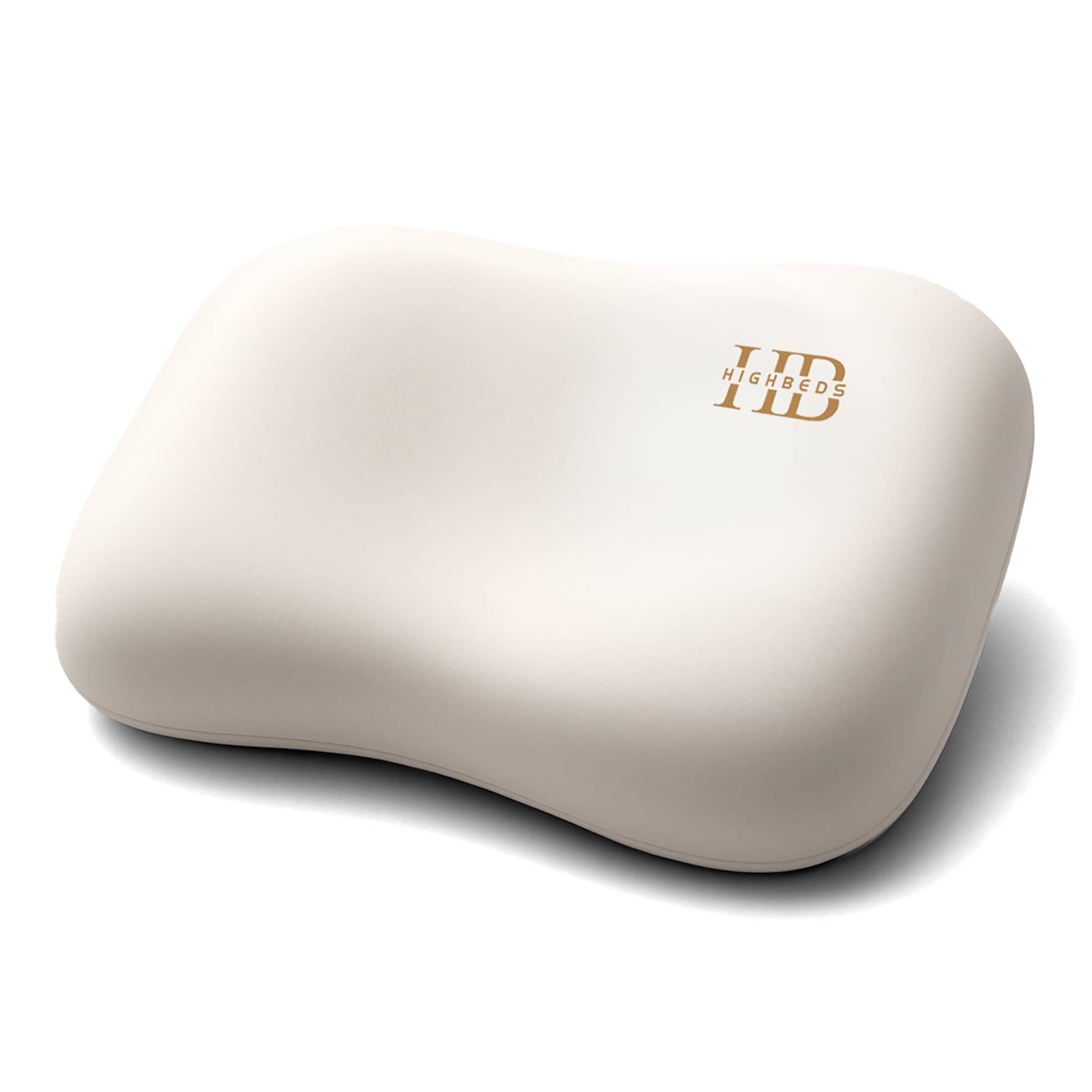
HighBeds is for the person who tried “butterfly contour” pillows and thought: why does this feel like sleeping on a shape, not a pillow? The design philosophy here is smoother and more continuous—less segmented, fewer hard transitions—so it supports alignment without creating pressure points that make you fight the pillow.
In owner stories, two themes pop up repeatedly: comfort without overheating and support that doesn’t feel stiff. That’s a big deal because many contour pillows solve alignment but create a new problem—heat and rigidity. HighBeds leans into a cooler, softer experience while still keeping enough structure to stop the neck from collapsing.
If you’re dealing with neck sensitivity (old injuries, fusion history, “anything too firm irritates me”), this style can be a safer bet. The trade‑off is simple: if you need an ultra‑pronounced cervical ridge that pushes the curve back into place, a softer contour may feel “not corrective enough.” But if your biggest issue is waking up sore because you can’t stay comfortable, HighBeds often hits the sweet spot.
What it does exceptionally well
- Smooth transitions: Great for combo sleepers who hate “edges.”
- Cooling feel: Strong for hot sleepers who wake up sweaty and annoyed.
- Gentle support: Helps reduce stiffness without feeling harsh.
- Durability focus: Built to resist flattening and “dead spots.”
Good to know
- If you prefer a very firm “neck shelf,” this may feel too plush.
- Like most molded designs, it’s a shape—use a stretchy case if you add one.
Ideal for: Hot sleepers and comfort‑first buyers who still want alignment support—but without a rigid, segmented contour feel.
3. Derila Ergo Cervical Neck Pillow – Compact, CPAP‑Friendly Cradle
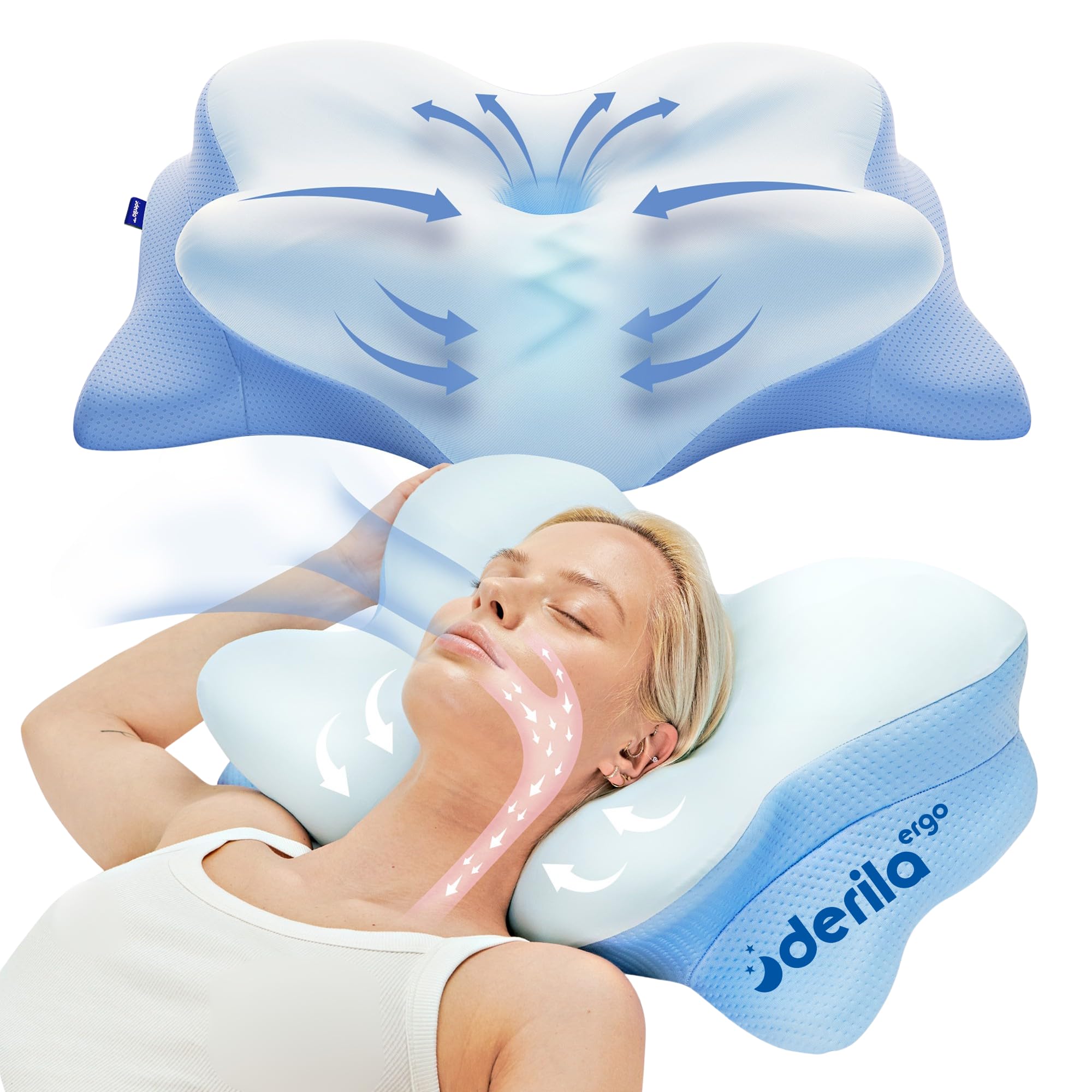
Derila’s “secret weapon” isn’t a fancy acronym—it’s proportions. A slightly more compact footprint changes how the pillow behaves in real life: it’s easier to travel with, easier to position, and for many people it reduces the feeling of “my pillow is taking over the bed.”
In reviews, you’ll see some buyers compare it to thicker, firmer pillows they already own and say this one feels more cooperative—it cradles the head without forcing a dramatic posture shift. That can be a huge win if you’ve tried premium pillows that felt too tall or too dense to settle into.
It’s also frequently mentioned as a better match for CPAP users than bulky pillows, because contoured sides can give mask hardware a bit more breathing room. The one caveat: side sleepers with very wide shoulders may crave more loft. A compact pillow can be perfect for some bodies and too low for others—this is why the shoulder gap test matters.
Why people keep it
- Compact profile: Great for travel, guest rooms, and smaller frames.
- Comfortable contour: Cradles without feeling like a brace.
- Good for gear: Can play nicer with CPAP setups than bulky pillows.
- Less tossing: Many users report calmer sleep posture overnight.
Good to know
- May feel small if you love oversized pillows.
- Not a great match for full stomach sleepers; contour edges can get in the way.
Ideal for: Travelers, CPAP users, and anyone who wants a contoured pillow that feels supportive without feeling huge.
4. Sidney Sleep Adjustable Curved Contour Fill – Custom Loft, Softer Feel

If molded contour pillows feel too “locked in,” Sidney Sleep is the pivot: it’s adjustable and it has a curved shape that naturally hugs the neck/shoulder area. Think of it as a “build‑your‑own” pillow with better structure than a standard bag‑of‑fluff pillow.
Real users tend to love it for one big reason: control. You can remove fill to soften the height, add fill to support a wider shoulder gap, and reshape the curve so your neck feels supported without pressure. People who’ve been through spine issues often mention how meaningful it is to find a pillow that supports alignment without aggravating sensitive areas.
Here’s the expert angle: shredded foam behaves differently than molded foam. It’s more forgiving, but it can shift over time. The “pro move” is simple—spend two minutes each night fluffing and redistributing fill (especially around the neck curve). That tiny habit prevents lumps and keeps the pillow performing like day one.
Why it’s a fit “saver”
- Micro‑adjustable: Great if you’re between heights or have asymmetric shoulder tension.
- Softer edges: Less “helmet feel” than rigid contours.
- Bonus fill: Extends the pillow’s lifespan and lets you tune firmness.
- Multi‑use comfort: Some people even use it for support between knees or lumbar comfort.
Good to know
- Shredded foam needs occasional redistribution to avoid clumping.
- If you want a precise, fixed cervical ridge, molded contour pillows do that better.
Ideal for: Combo sleepers, “I’m picky about height” sleepers, and anyone who wants to customize feel without giving up neck support.
5. Cozyplayer Ultra Pain Relief Cooling Pillow – The “Stay Put” Contour
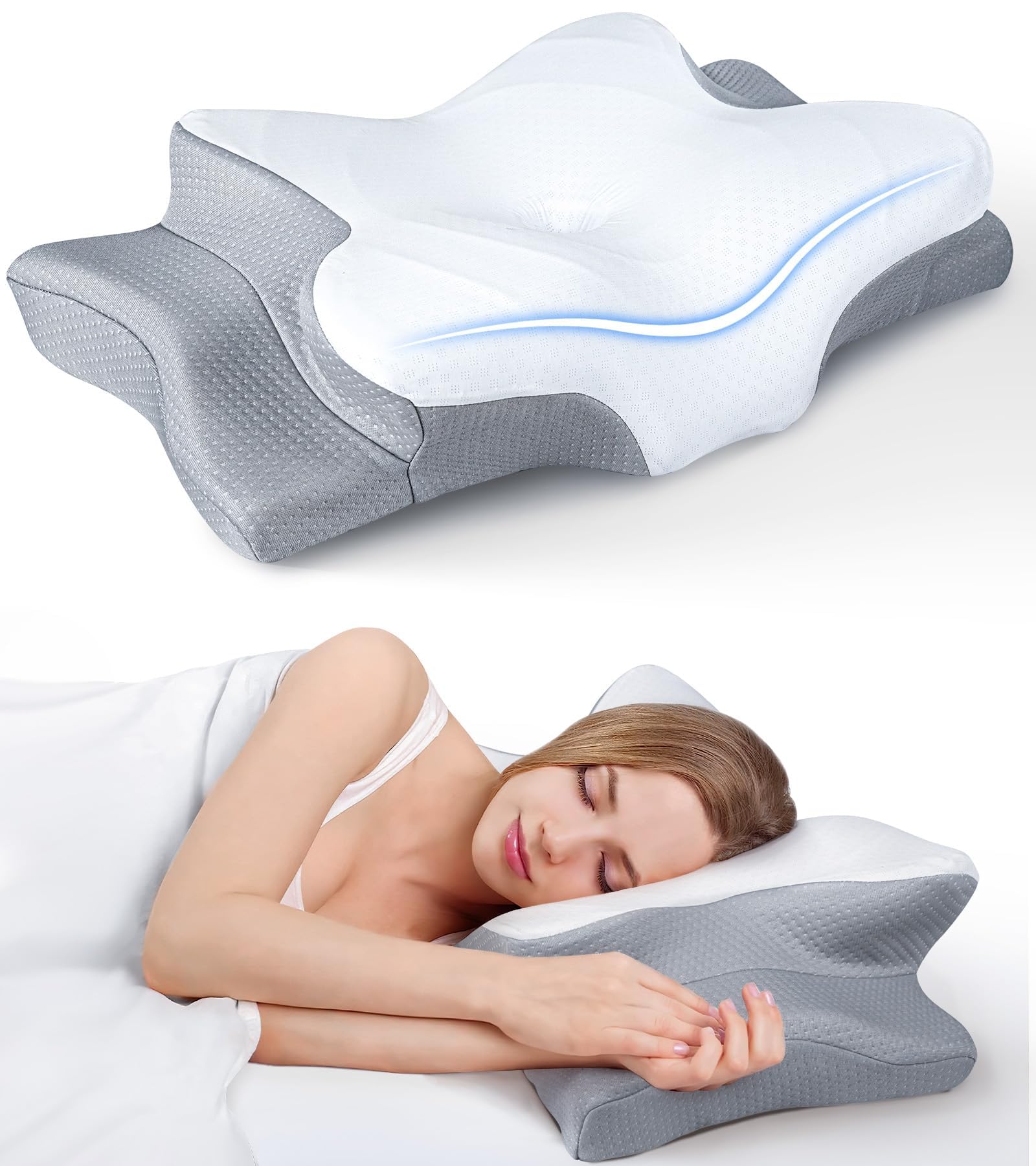
This is the pillow for the person who wakes up in weird positions and thinks, “How did I end up like this?” The Cozyplayer Ultra uses a hollow cradle plus defined side structures that gently keep your head where it belongs. That’s not restrictive—it’s stabilizing.
Owners who love it often describe the same outcome: fewer tosses, calmer sleep, and waking up feeling more “reset.” What’s happening is simple mechanics. A well‑designed cradle reduces micro‑adjustments. When your head feels supported and centered, your body stops searching for relief all night.
The adjustable insert is the smartest part. If you’re a side sleeper with a bigger shoulder gap, add loft. If you’re a back sleeper or have a shorter neck, remove loft so the pillow doesn’t push your chin forward. This one detail can be the difference between “life changing” and “returned.”
Why it performs
- Stabilizing contour: Helps reduce sleeping “drift” and awkward angles.
- Adjustable height: Insert lets you match your shoulder gap more accurately.
- Cooling feel: Designed to reduce that hot, stuck-to-the-pillow feeling.
- Strong neck support: Good for people who want structure, not fluff.
Good to know
- Arm cutouts can feel narrow if you love hugging your pillow aggressively.
- Like most contours, it’s not ideal for face‑down stomach sleeping.
Ideal for: Sleepers who want a structured pillow that keeps alignment consistent—especially if they wake up twisted or tense.
6. CHxxy Memory Foam Cervical Pillow – For People Who Need “More Support”

Some pillows are “gentle cradles.” CHxxy leans more “supportive structure,” especially around the neck contour. That’s why it tends to click with people who feel like normal pillows (even memory foam ones) let their head sink until the neck is doing all the work.
The standout here is the thicker neck contour plus an adjustable element. In practice, this means you can use it to create a stronger “shelf” under the cervical curve—often helpful if you wake up with tight traps, upper‑back tension, or that feeling that your neck never fully rests.
Feedback tends to split into two camps: people who love the support and feel immediate relief, and people who realize the loft/shape is simply too tall for their neck length. This isn’t a flaw—it’s fit. If you’re shorter‑necked, start with the insert removed and use the lower side for a few nights.
Why it’s worth considering
- Pronounced cervical support: Great if you feel “unsupported” on softer pillows.
- Adjustable options: Flip and insert changes help tune the feel.
- Cooling cover: Helps reduce heat buildup against the face.
- Holds shape: Designed to avoid the “goes flat” problem.
Good to know
- Some users note an initial foam smell (usually fades after airing out).
- Can be too tall for shorter necks if you use maximum loft immediately.
Ideal for: People who consistently feel under‑supported and want a stronger neck contour—especially side sleepers with medium‑to‑wide shoulder gaps.
7. Cozyplayer True Cooling Cervical Neck Pillow – Wide, Cool, and Stable

If your biggest complaint is “I get comfortable… then I overheat,” this Cozyplayer model is built around cooling as a full system: breathable foam, a ventilated cover, and a design that doesn’t trap your face in a warm pocket.
The detail that matters most in real life is the widened sleep area. Many contour pillows feel perfect until you move two inches—then you’re off the “sweet spot.” A wider zone gives you room to shift without falling off the supportive geometry. For side sleepers, that’s huge because micro‑rotation is normal; you don’t sleep like a statue.
Owners who like this style often describe it as “firm but not punishing,” with better morning comfort over time. That’s the profile you want when you need support but still want your head to feel cushioned—not perched.
What it nails
- Cooling comfort: Designed for people who sleep warm and hate humidity build‑up.
- Roomier surface: Less “falling off the contour” during the night.
- Multi‑zone support: Targets neck + shoulder comfort more intentionally than flat pillows.
- Clean feel: Many users note minimal odor on arrival.
Good to know
- Like any contour pillow, fit varies—give it a few nights before judging.
- Foam core should stay dry and should not be washed.
Ideal for: Hot sleepers who still want real alignment support—and side sleepers who need a wider “usable” contour area.
8. Polovo Contour Memory Foam Pillow – “Cloud Feel” Without the Flop
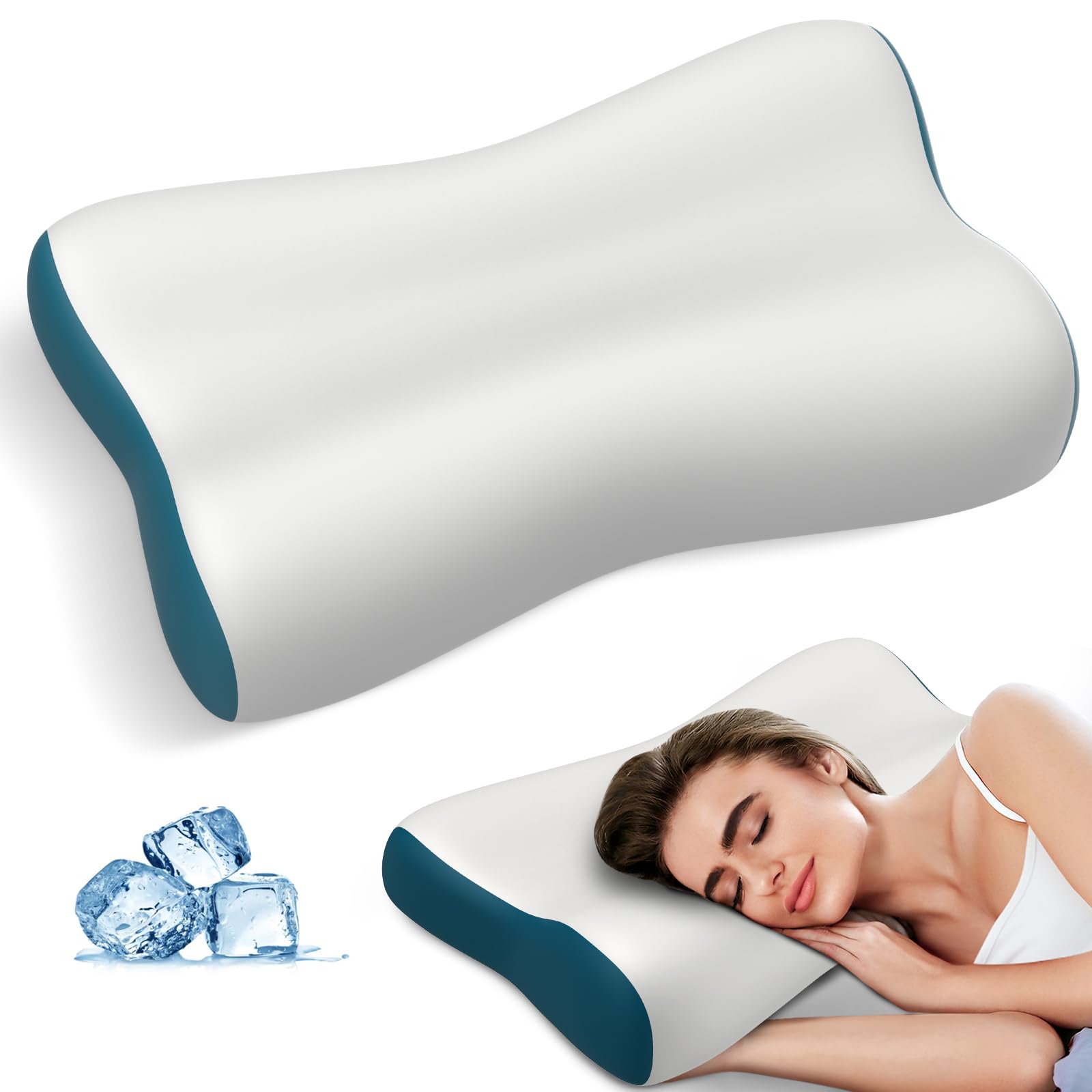
Polovo tends to win people over with a simple promise: soft comfort that still holds shape. That’s a surprisingly rare combo. Many “soft” pillows collapse, and many “supportive” pillows feel like a brick. Polovo tries to land in the middle.
In real feedback, you’ll see people mention that it expands quickly, feels comfortable immediately, and stays consistent through the night—no constant fluffing, no hunting for the cool side. The dual‑height layout is also a quiet advantage: it gives you a built‑in way to adjust without buying another pillow.
Expert note: if you’re dealing with severe neck instability and you need a pronounced cervical ridge, you may prefer a more structured option. But if your pain is tied to poor relaxation (tension, clenching, shoulders creeping up), a softer contour that keeps you neutral can be exactly what unlocks better sleep.
Why it’s a smart pick
- Comfort-first contour: Soft enough to relax into, supportive enough to stay aligned.
- Dual heights: Easy to experiment without complicated inserts.
- Cooling cover: Helps prevent the “sticky warm foam” feeling.
- Low fuss: Often praised for feeling natural quickly.
Good to know
- If you need very firm, corrective support, this may feel too gentle.
- Contour shape can be awkward for true stomach sleepers.
Ideal for: People who want a comfortable contour pillow that doesn’t collapse—and who prefer “supportive softness” over rigid structure.
9. Bespillow Contour Orthopedic Pillow – The “Cover That Stays Put” Detail

Bespillow is a great example of a pillow that wins on “small engineering.” Lots of contour pillows have decent foam… but the cover shifts, bunches, or twists—especially if you move a lot. This model’s cover design is built to stay aligned with the pillow’s curves, so the shape you bought is the shape you actually sleep on.
People who sleep in more than one position often praise this style because it offers two heights and a comfortable center cradle, while still giving the arms a natural place to go. The armrest zones matter more than people think: they can reduce the habit of stuffing an arm under the pillow, which is a classic recipe for numbness and shoulder tension.
If you’re a “half stomach” sleeper (the mountain‑climber posture where one knee is up and one arm is hugged in), the inward curves can also feel surprisingly natural—more forgiving than rigid, high‑wall pillows.
What stands out
- Cover stability: Less slipping, less bunching, more consistent feel.
- Two heights: Easier fit for side/back switching.
- Arm comfort: Supports natural arm placement, reducing nerve tingling.
- Shape retention: Foam tends to hold its form overnight.
Good to know
- Still not ideal for true face‑down stomach sleeping.
- Like many contours, it may take a few nights to “feel normal.”
Ideal for: Combo sleepers who move at night and want a contour pillow that stays aligned, stays supportive, and stays comfortable.
10. HAMYODO Cervical Pillow – Shoulder Notch + Earbud Relief Done Right
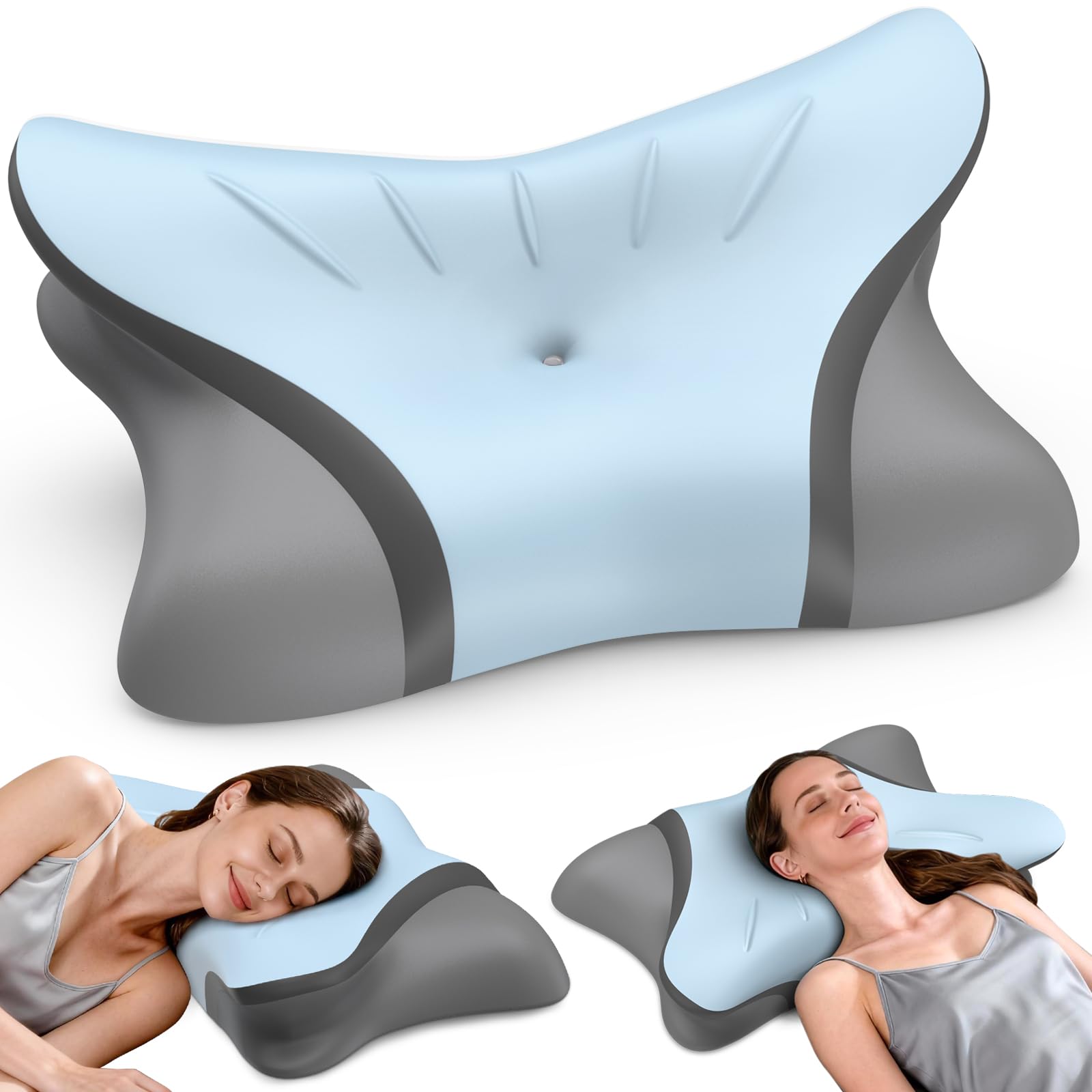
HAMYODO is one of those pillows where the best features aren’t flashy—they’re the ones you notice at 2 a.m. when you don’t have to adjust. Side sleepers often complain about three things: shoulder pressure, jaw/cheek discomfort, and the dreaded “arm fell asleep.” This design attacks all three with surprisingly thoughtful geometry.
The shoulder notch matters because it lets your shoulder sit slightly under the pillow edge without lifting your head. That keeps the neck neutral. Then the ear/center cradle reduces pressure on the side of the head—an underrated benefit if you wear earbuds to bed, have piercings, or simply hate ear pressure.
In owner feedback, you’ll see praise for how naturally the arm/hand zones get used. That’s a big deal: when your hands have a place to rest, you stop tucking them into weird positions that create nerve tingling and upper‑back tension.
Why side sleepers love it
- Shoulder-friendly curve: Reduces pressure without collapsing loft.
- Ear relief: Less side‑head pressure for earbuds and sensitive sleepers.
- Hand/arm zones: Helps prevent numbness and constant repositioning.
- Balanced “soft firmness”: Supportive feel without feeling harsh.
Good to know
- Can feel unusual for a night or two if you’ve only used flat pillows.
- Not ideal for full stomach sleeping because the contour has structure.
Ideal for: Dedicated side sleepers—especially if arm numbness, jaw discomfort, or ear pressure keeps sabotaging your sleep.
11. DONAMA Cervical Pillow (Grey) – The Classic Contour That Just Works

DONAMA’s grey model is a “reference point” pillow—meaning, if you want to understand what a well‑executed cervical contour feels like, this is a solid baseline. It uses the familiar butterfly layout: a central cradle for back sleeping, higher bolsters for side sleeping, and arm grooves that reduce shoulder and arm compression.
What owners tend to appreciate most is consistency. The foam is supportive without quickly losing structure, and the dual‑height design gives you a practical way to adjust the feel. Many people who felt “lost” with random pillows report that this kind of contour finally makes their sleep posture feel intentional.
Expert tip: the first two nights, don’t fight it. Let the pillow tell you where your head naturally wants to rest. If you find yourself sliding too low, move your shoulder slightly closer to the pillow’s lower edge. Small positioning tweaks matter more with contoured designs than they do with flat pillows.
Why it’s dependable
- Classic contour geometry: A proven layout for side and back sleeping.
- Dual heights: Easy experimentation without extra parts.
- Arm grooves: Helps reduce arm numbness and shoulder pressure.
- Breathable cover: Comfortable feel against the skin.
Good to know
- Not ideal for face‑down stomach sleeping due to structured shape.
- If you have very wide shoulders, you may prefer a taller/high‑loft option.
Ideal for: First‑time contour buyers and side/back sleepers who want a “safe bet” design with a long track record of satisfied sleepers.
12. DONAMA Cervical Neck Pillow (Dark Blue) – Dual Height with a Cooler Feel
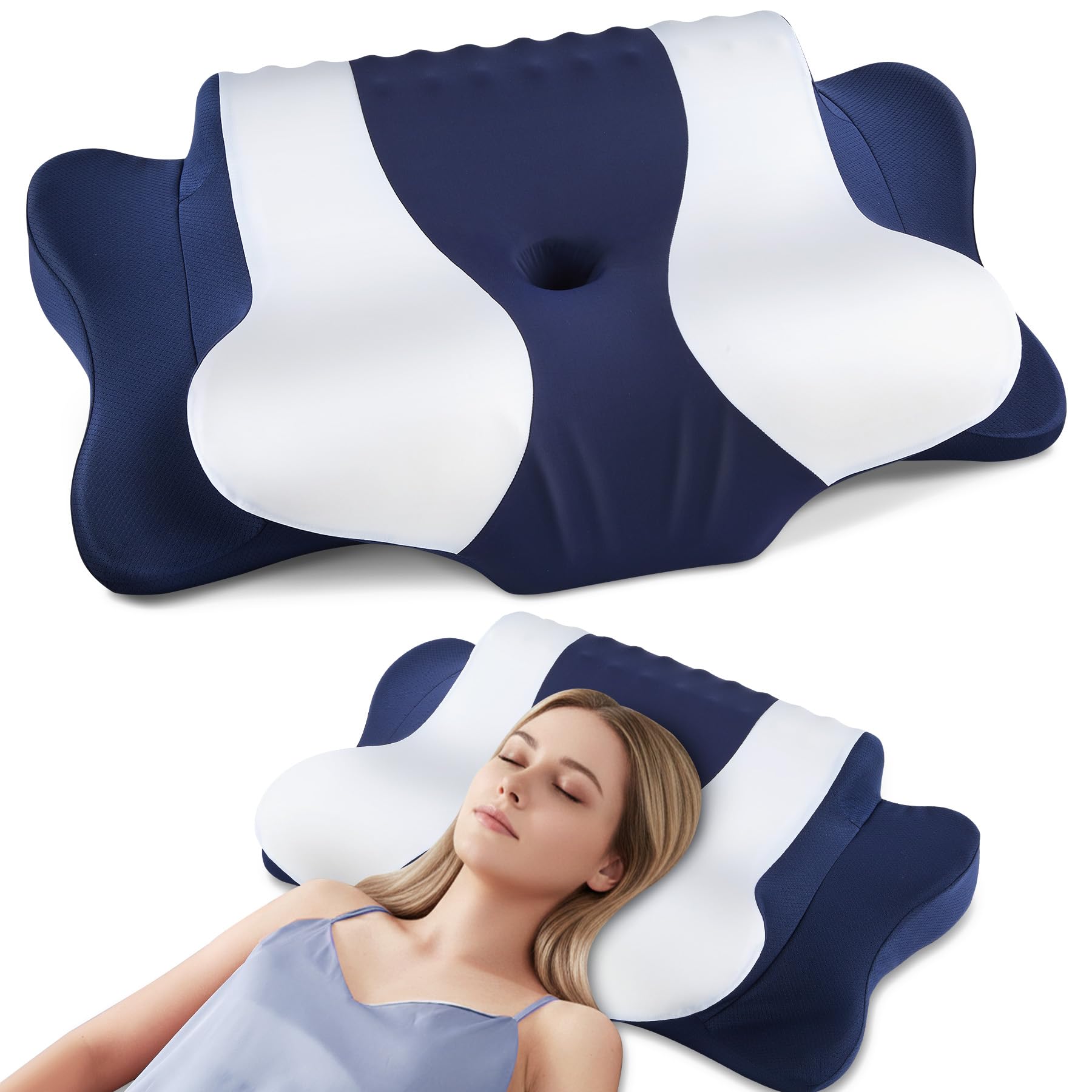
This dark‑blue DONAMA leans into the same winning blueprint—dual heights and supportive wings—but with more emphasis on a cooling, breathable feel. For sleepers who love the idea of contour support but hate waking up warm, this style is a practical step up.
One subtle feature many people overlook: widened side wings. Wider wings can stabilize the head better for side sleeping—especially if you rotate slightly forward (which many people do). That extra lateral support helps keep the neck from collapsing inward toward the mattress.
If you’re choosing between this and the classic grey DONAMA, think of it like this: grey is the traditional, proven baseline; dark blue is the “same idea, cooler personality” option.
Why it’s worth a look
- Dual height flexibility: Easier to match side vs back sleeping.
- Wing support: Stabilizes side sleeping posture well.
- Breathable feel: Better comfort for warm climates and hot sleepers.
- Firm‑comfortable balance: Support without harshness.
Good to know
- Textured zones (if you’re sensitive) may feel unusual for the first night.
- Like most contours, it’s not built for full stomach sleeping.
Ideal for: Side/back sleepers who want the DONAMA style of support but prefer a cooler cover feel and steadier side wings.
13. Besyodo Cervical Pillow (White/Blue) – For Broader Shoulders & Higher Loft
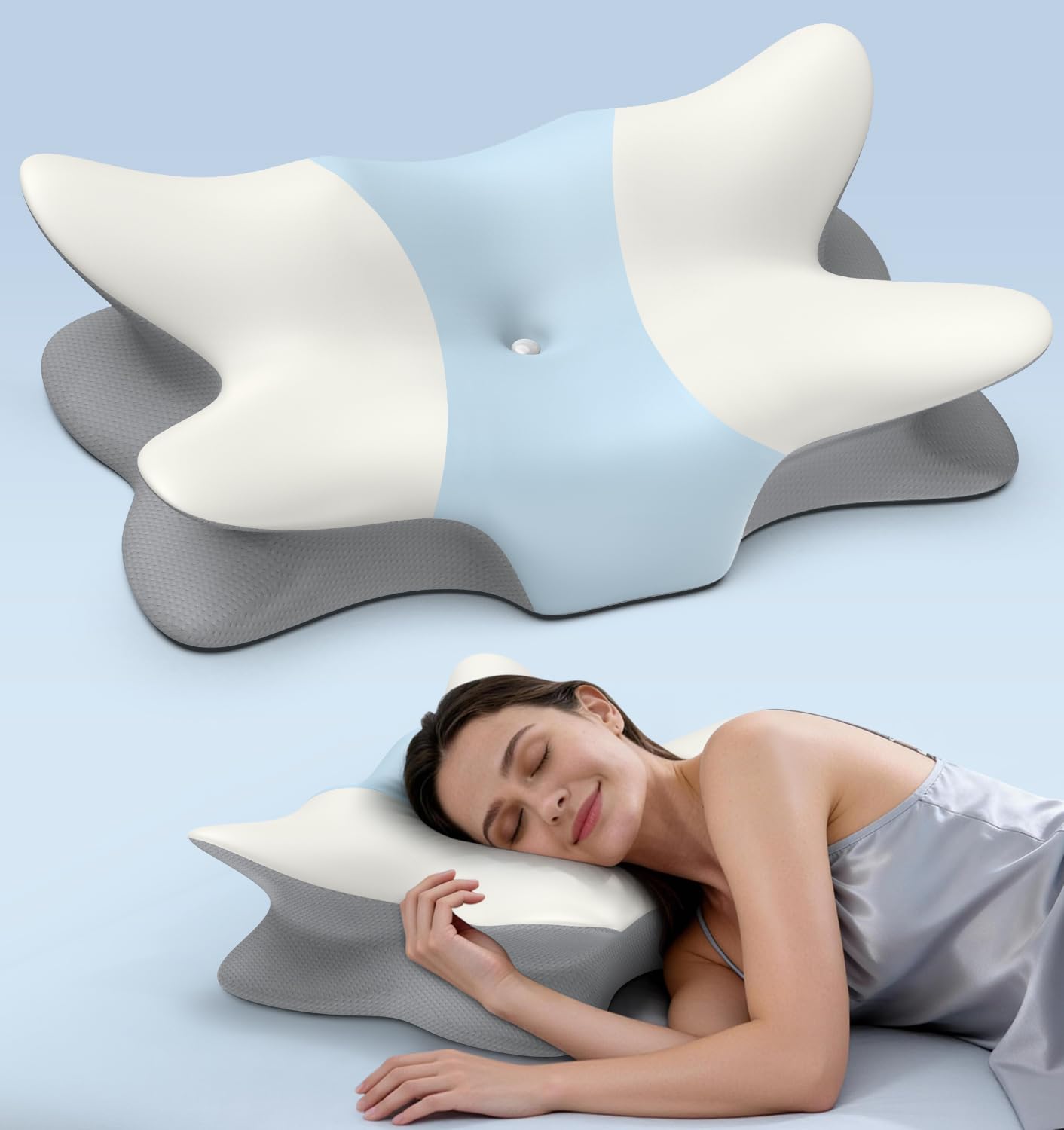
Besyodo’s white/blue model is a strong match for sleepers who often find contoured pillows “almost right” but slightly too low—especially side sleepers who need more clearance for the shoulder. This one offers a higher side option, which can be the missing piece for broader frames.
Feedback patterns highlight fast comfort (many users report they didn’t need a long “training period”) and a cooling cover that stays pleasant through the night. Back sleepers also tend to like how the head rests in the hollow without feeling jammed forward.
The watch‑out is predictable: if you have a shorter neck or narrow shoulders, a taller contour can feel like your head is being lifted too far. Start on the lower side first, then graduate upward only if you still feel your neck dipping.
Where it shines
- Better height range: More supportive for side sleepers needing loft.
- Balanced feel: Supportive foam without a harsh “neck jab.”
- Cooling cover: Helps reduce sweaty wake‑ups.
- Multi‑position friendly: Works for back and side sleeping.
Good to know
- Can be too tall for petite frames if you start on the high side immediately.
- As with most contours, full stomach sleeping is not its strong lane.
Ideal for: Side sleepers with broader shoulders who need a bit more loft—and back sleepers who like a stable head cradle.
14. Besyodo Cervical Pillow (Blue/Grey) – Comfort That Helps Arm Numbness
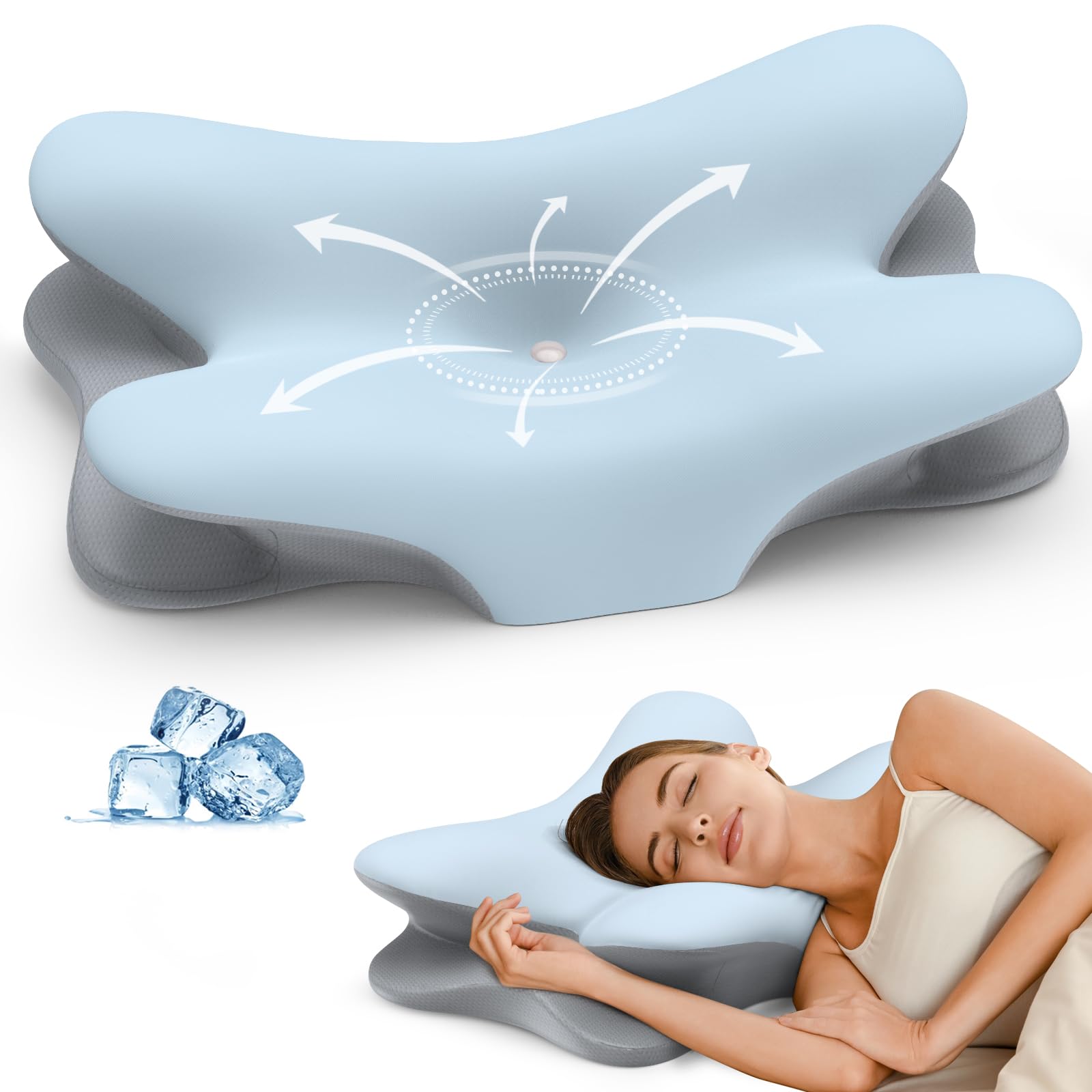
If your side sleeping habit comes with a bonus problem—tingling arms, numb hands, shoulder pressure—this Besyodo model deserves attention. The armrest zones are shaped to give your arms a “route” that doesn’t require stuffing them under the pillow.
Owners often describe waking up with less stiffness and feeling more supported, especially when sleeping hot. The top surface tends to be praised for that cool, smooth feel, which matters more than people think: when your face feels comfortable, you stop shifting and grinding your posture all night.
For best results, give it time to fully expand after opening and test both sides. Many people assume the higher side is always better for side sleeping, but if your mattress is soft, the lower side can sometimes keep you more neutral.
Why it’s practical
- Arm/hand comfort: Helps reduce numbness from awkward arm positioning.
- Cooling feel: Great for sleepers who run warm.
- Supportive contour: Encourages neutral neck alignment for side/back sleep.
- Easy adjustment: Flip to change height—no complicated assembly.
Good to know
- Not ideal for face‑down stomach sleeping due to contour shape.
- Some sleepers need a few nights to adapt to the geometry.
Ideal for: Side sleepers who sleep hot and want a contour pillow that supports the neck while also reducing arm/shoulder aggravation.
15. QIUBABYO Adjustable Cervical Pillow – Great for Long Necks (If You Tune It)

QIUBABYO is a perfect example of a pillow that can be a “miracle worker” for the right person—and frustrating for the wrong fit. The design is supportive and the height is adjustable via foam inserts, which makes it especially appealing to people who feel like most pillows are either too low or don’t hold the neck curve properly.
But here’s the real insight from mixed feedback: this pillow tends to favor longer necks and sleepers who like a more elevated, structured feel. If you have a shorter neck and you keep all inserts in, your head may never settle into the cradle correctly—and comfort falls apart.
The winning strategy is simple: begin at the lowest configuration, sleep on it for a few nights, then add height only if you still feel your head dipping toward the mattress. Done that way, the adjustability becomes a superpower, not a guessing game.
Why it can be excellent
- Adjustable height: Inserts let you tune loft for your body.
- Strong support: Good for people who need a firmer neck contour.
- Cooling cover: Helps comfort for warm sleepers.
- Shape retention: Designed to avoid flattening over time.
Good to know
- Can feel too tall if you don’t adjust it down first.
- Some side sleepers prefer a more gradual slope under the head.
Ideal for: Sleepers who want adjustable loft and a more structured neck feel—especially if they’ve felt “too low” on most standard pillows.
Support Guide: Understanding Pillow “Specs” in Real Sleep Terms
Pillow listings throw around words like “orthopedic,” “ergonomic,” and “cooling,” but the real performance comes down to how the pillow supports your head and your neck for hours, not minutes. Here are the two spec areas that matter most.
Loft (Height) & Neck Angle
Think of loft as your alignment lever. Too low and your head tilts downward (neck bends sideways). Too high and your chin lifts or tucks (neck compresses). Dual‑height pillows and adjustable loft designs make it easier to match your shoulder gap and mattress softness so your nose stays level and your neck stays neutral.
Foam Behavior & Cooling Reality
Memory foam can feel perfect at bedtime and different at 3 a.m. (heat + pressure changes the feel). Better pillows manage this with breathable covers, ventilation zones, and foam that rebounds consistently. Cooling is best when the cover feels smooth and the design allows heat to escape—so you don’t keep flipping your pillow to find relief.
FAQ: Neck & Back Pillows
How long should I give a new cervical pillow before judging it?
Should I choose a firm pillow or a soft pillow for pain relief?
How do I keep the pillow clean without ruining the foam?
Final Thoughts: My Verdict on the Best Pillow For Neck And Back
If you want one confident pick that fits the widest range of bodies and sleep styles, go with the Royal Therapy Memory Foam Pillow for its adjustable layers and consistently “neutral” support. If you sleep hot and hate rigid contours, the HighBeds Side Sleeper Pillow is the comfort‑cooling standout. If you want maximum customization without a fixed mold, the Sidney Sleep Adjustable Curved Contour Fill gives you control. And if side sleeping causes arm numbness, jaw pain, or ear pressure, the HAMYODO Cervical Pillow is the “small details, big difference” pick.

Mo Maruf
I created WellFizz to bridge the gap between vague wellness advice and actionable solutions. My mission is simple: to decode the research and give you practical tools you can actually use.
Beyond the data, I am a passionate traveler. I believe that stepping away from the screen to explore new environments is essential for mental clarity and physical vitality.