Our readers keep the lights on and my smoothie glass nicely filled. As an Amazon Associate, I earn from qualifying purchases.
If you’re a side sleeper, flying can feel like a personal insult. At home, you roll over, tuck your shoulder, and your pillow fills the space between your ear and your mattress. On a plane? You get a narrow seat, a headrest that’s always in the wrong place, and a neck that tries to “solve” the problem by collapsing forward.
Here’s the uncomfortable truth: most travel pillows are designed for the idea of sleep, not the physics of it. Side sleepers don’t just need something soft around the neck—they need a stable “ledge” that supports the head from the side, controls chin-drop, and doesn’t shove the skull forward like a battering ram.
That’s why this guide is built differently. Instead of ranking pillows by marketing buzzwords, I ranked them by what actually matters in economy seats: seat position (window, middle, aisle), sleep style (side-lean vs upright), and how much micro-adjustment you’ll tolerate at 3 a.m. with dry airplane air and a stiff shoulder.
If you came here hunting the best airplane pillow for side sleepers, you’re in the right place. Below you’ll find a brutally practical breakdown of 12 options—from full-body inflatable “side walls” to compact 360° wraps—so you can choose one, pack once, and stop doom-scrolling pillow lists forever.
In this article
How to Choose the Best Airplane Pillow For Side Sleepers
Buying the right travel pillow isn’t about “more padding.” For side sleepers, it’s about the right padding in the right places. The best option is the one that matches the way you actually try to sleep on a plane—because your window-seat strategy and your middle-seat strategy are totally different games.
1. Start with your “seat strategy” (this decides everything)
- Window-seat side sleeper: You want a pillow that creates a soft, stable bridge from your jaw/cheek to the window side. Think: side wings, J-shapes, or a wrap that locks your head in place.
- Middle-seat side sleeper: You need lateral support that keeps you from tipping onto strangers. Cross-body “body pillows” and anchored inflatables are usually the winners here.
- Aisle-seat side sleeper: You’re managing the same lateral tilt problem as the middle seat—but with the added risk of aisle bumps. Your best bet is a pillow that holds you upright while supporting side-lean gently, without sticking out into the aisle.
2. Watch out for “back thickness” (the silent neck-wrecker)
A thick, puffy back panel can push your head forward, forcing your chin toward your chest. That’s the fast lane to neck stiffness. Side sleepers often do better with a flatter back (so you can lean into the headrest) and strong side support (so the head doesn’t flop).
3. Chin support matters more than you think
Side sleepers don’t only tilt sideways—they also “nod” forward during lighter sleep. Good chin support isn’t about strangling your neck. It’s about creating a gentle shelf that stops your jaw from dropping, so your neck muscles can actually relax.
- Soft chin wrap: Comfortable for long wear, better if you hate anything rigid near the throat.
- Structured chin cradle: Better control against head-bobbing, but can feel bulky or “collar-like.”
4. Adjustability is the difference between “nice” and “life-changing”
The most comfortable pillow in the world becomes useless if it fits your neck poorly. Look for adjustment that matches your tolerance:
- Inflatable fine-tuning: Best for dialed-in comfort (squishy vs firm) and saving luggage space.
- Snaps/buttons/cinch cords: Best for fast, repeatable fit—especially during layovers.
- Moldable armature: Best if you like customizing shapes (but you must treat it gently).
5. Don’t ignore “pack friction” (will you actually bring it?)
A pillow can be amazing and still end up abandoned in a hotel room because it’s too bulky, too fiddly, or too annoying to keep clean. Side sleepers should prioritize:
- Easy storage: rolls up or compresses without a wrestling match.
- Washable contact surfaces: pillow covers, removable sleeves, or wipe-clean materials.
- Clean carry: a bag that actually keeps it off airport floors.
Quick Comparison: 12 Best Airplane Pillow For Side Sleepers
Use this table to shortlist fast, then jump to the deep reviews for the real-world “fit check.”
On smaller screens, swipe or scroll sideways to see the full table.
| Model | Type | Best For | Key Feature | Amazon |
|---|---|---|---|---|
| TRAVELREST All‑in‑One (Blue) | Cross‑Body | Best Overall Side‑Sleep Setup | Memory Foam + Inflatable Body Support | Amazon |
| J‑Pillow (Black) | J‑Shape | Window Seat Side Sleep | 3‑Way Head/Chin/Neck Support | Amazon |
| TripPal 360° Chin & Neck (Dusty Blue) | Wrap Collar | Head‑Bobbing Control | Flat Back + Dual‑Density Foam | Amazon |
| TRAVELREST Ultimate (Grey) | Inflatable Body | Middle Seat Side Lean | Anchors to Seat / Shoulder Strap | Amazon |
| Dot&Dot Twist (Gray) | Moldable | Custom Shapes Anywhere | Bendable Support Rod | Amazon |
| SZXYX 360° Memory Foam (Dark Grey) | 360 Wrap | Compact 360 Support | Anti‑Stick Closure + Low Back Profile | Amazon |
| WEERSHUN Memory Foam (Grey) | 360 Wrap | Soft Chin Wrap Comfort | Foldable + Washable Cover | Amazon |
| BLABOK Patented Inflatable (Blue) | Inflatable | Light Packers | 360° Support + Washable Cover | Amazon |
| Cirorld Memory Foam Kit (Black) | Flat‑Back U | Best Starter Kit | Snaps for Fit + Accessories | Amazon |
| BUYUE Q‑Shape (Grey) | Plush Wrap | Soft Chin Cradle | Machine Washable + Built‑In Pocket | Amazon |
| TRAVELREST Ultimate (Blue) | Inflatable Body | Same Shape, Color Option | Rolls Tiny + Straps to Seat | Amazon |
| Sunany Inflatable (Gray) | Forward Rest | Tray‑Table Style Sleep | Face‑Down Support + Packs Ultra Small | Amazon |
In‑Depth Reviews: 12 Airplane Pillows Ranked for Side Sleepers
I’m going to be very direct: the “best” pillow depends on where your head is going to lean. A window-seat side sleeper and a middle-seat side sleeper are solving different puzzles. So each review below focuses on what you can’t easily see in product photos—fit quirks, pressure points, setup friction, and how the pillow behaves after you drift off (the moment most pillows fail).
1. TRAVELREST All‑in‑One Travel Neck Support & Body Pillow (Blue) – The “Any Seat” Side‑Sleep System

If you’re a side sleeper who doesn’t always get the window seat, you want a pillow that creates a side wall—something you can lean into without tipping, twisting, or slowly sliding into a neck-crank. That’s exactly what the All‑in‑One does when it’s used properly.
The magic is the hybrid build: an inflatable body that gives you structure (so you don’t collapse), paired with a softer top surface that feels less “pool toy” and more “sleep gear.” Once strapped/positioned, it lets you lean left or right without having to fully wake up and reposition a traditional neck pillow. That matters on long-haul flights, where the real enemy isn’t discomfort—it’s the constant micro-waking that stops you from ever reaching deep sleep.
Where it shines most for side sleepers is the middle seat. Standard pillows are basically an invitation to fall onto the person next to you. This design gives your head and upper body a dedicated surface to rest on, so your neck isn’t doing all the work. It also works surprisingly well in an aisle seat if you angle it inward and keep your lean tight.
Why it’s #1 for side sleepers
- Works in any seat: window, middle, or aisle—because it creates lateral support, not just neck padding.
- Adjustable firmness: inflate it “squishy” for cheek comfort or firmer for serious support.
- Reduces drift: less sliding and “head hunting for a spot” compared to U‑shapes.
- Long-flight logic: it supports the upper body so your neck muscles can actually relax.
Good to know
- There’s a learning curve: the first flight is your “practice run” for straps and angles.
- Inflatables can require occasional topping up if you prefer a very firm feel.
Ideal for: Side sleepers who want one pillow that’s genuinely useful in any seat, especially when you’re not guaranteed the window.
2. J‑Pillow Travel Pillow (Black) – The Window‑Leaning Side Sleeper’s Secret Weapon

The J‑Pillow is the rare travel pillow that understands what side sleepers actually do on planes: we don’t want to “rest our head back.” We want to lean—into the window, into the seat edge, into anything that feels like a substitute for a mattress.
Its J‑shape matters because it fills the gap between your head and shoulder while also giving your chin somewhere to land. That chin element isn’t just comfort—it’s stability. When your jaw has support, your head is less likely to roll forward, and your neck doesn’t get stuck doing a slow-motion crunch for hours.
This pillow is at its best in a window seat: you can place the long arm against the window side and let your cheek sink in. For many side sleepers, that’s the closest you’ll get to a normal sleep posture without carrying a full-size pillow through the airport.
Why window-seat sleepers love it
- Side-lean support: creates a stable “bridge” between shoulder and jaw.
- Chin control: helps prevent the chin drop that triggers neck stiffness.
- Comfort texture: cozy feel that’s easier to tolerate for hours.
- Multi-use: also works nicely for couch naps and reading support.
Good to know
- If you switch sides often, you’ll reposition it (it’s not a “set-and-forget” wrap).
- It’s bulkier than inflatables, so it’s best clipped to luggage rather than packed deep.
Ideal for: Side sleepers who aim for the window seat and want the most natural cheek-and-chin support of the bunch.
3. TripPal Airplane Sleeping Travel Pillow – The “Upright Side‑Lean” Stabilizer
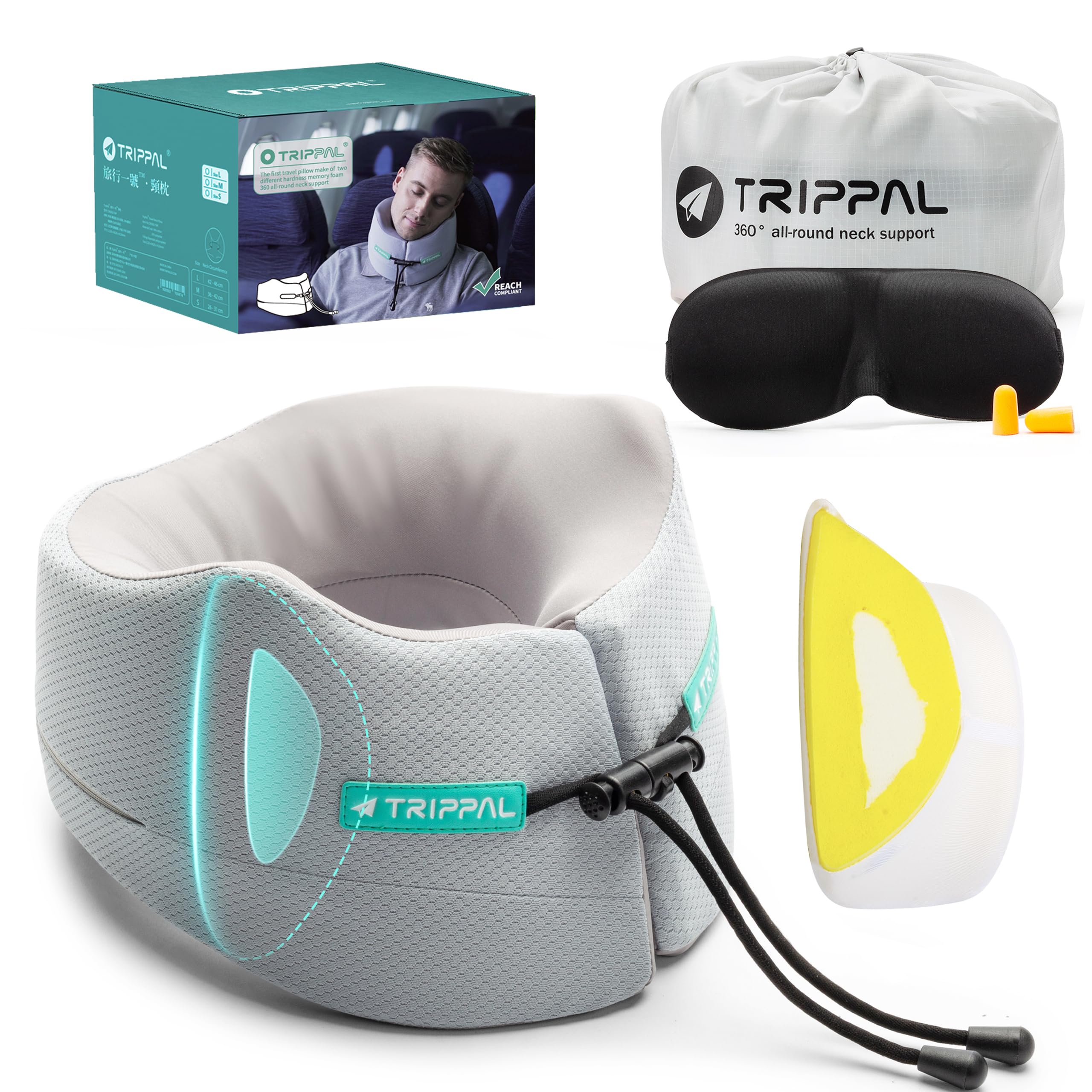
Some side sleepers don’t fully “lean sideways” on planes—they do a hybrid: mostly upright, with the head drifting to one side. TripPal is engineered for that exact pattern. It’s built like a structured scarf-collar with supportive side wings and a chin shelf, designed to reduce the classic head-bob wake-up.
The big win here is the flat back. Traditional bulky neck pillows can push your head forward, making your upper spine round and your neck complain by hour two. A flatter back keeps your headrest usable, while side wings do the real holding work.
This is one of those pillows where fit sensitivity matters. If you love a snug, secure feel, the wrap and cinch can be a dream—especially when you’re stuck in a middle seat and you refuse to become someone else’s shoulder nap. If you hate any sensation near the front of your neck, you’ll want to keep it looser and rely on the side wings more than the chin shelf.
Why it’s a top stabilizer
- Flat back: keeps your head from being shoved forward.
- Chin + side wings: excellent for preventing “micro-collapses” mid-sleep.
- Secure closure: a cinch/cord system tends to stay put better than weak velcro.
- Washable cover: practical for frequent flyers.
Good to know
- It can feel bulky for minimalists, especially if you pack one-bag.
- Very sensitive necks may need a looser fit to stay comfortable.
Ideal for: Side sleepers who mostly stay upright but need strong support to stop head bobbing and chin drop.
4. TRAVELREST Ultimate Inflatable Neck Support & Body Pillow (Grey) – The “Portable Side Wall”

This is one of the most side-sleeper-friendly shapes ever made for flying because it supports more than your neck. Side sleeping on a plane fails when your head has nowhere to lean and your upper body slowly collapses into a twist. The Travelrest Ultimate acts like a soft brace: it gives your cheek/temple a surface while also supporting the upper torso so you don’t wake up with your spine in a question mark.
For middle seats, the strap/anchor concept is the key. You can stabilize it against the seat so it doesn’t wander. When it’s dialed in, it’s the kind of comfort that feels unfair to everyone around you because you look like you’re “cheating” at economy class.
The trade-off is real: inflatable systems require a little patience. You may need a quick adjustment if you shift your posture, and if you tend to move a lot in your sleep, you’ll want to practice your preferred configuration before a big trip. But if your goal is side sleeping without becoming a human domino, it’s worth it.
Why it’s a side sleeper classic
- Upper-body support: keeps your torso aligned so your neck isn’t overworked.
- Inflation control: customize firmness for cheek comfort vs support.
- Packs down: typically easier to travel with than full foam pillows.
- Versatile placements: seat wing, shoulder strap style, or window-gap filler.
Good to know
- Strap placement can take a minute to get right, especially on new seat designs.
- Like any inflatable, you’ll want to treat seams kindly and avoid sharp pokes.
Ideal for: Side sleepers who want reliable lateral support in the middle seat (and don’t mind a small setup routine).
5. Dot&Dot Twist Memory Foam Travel Pillow – The “Make It Whatever You Need” Pick
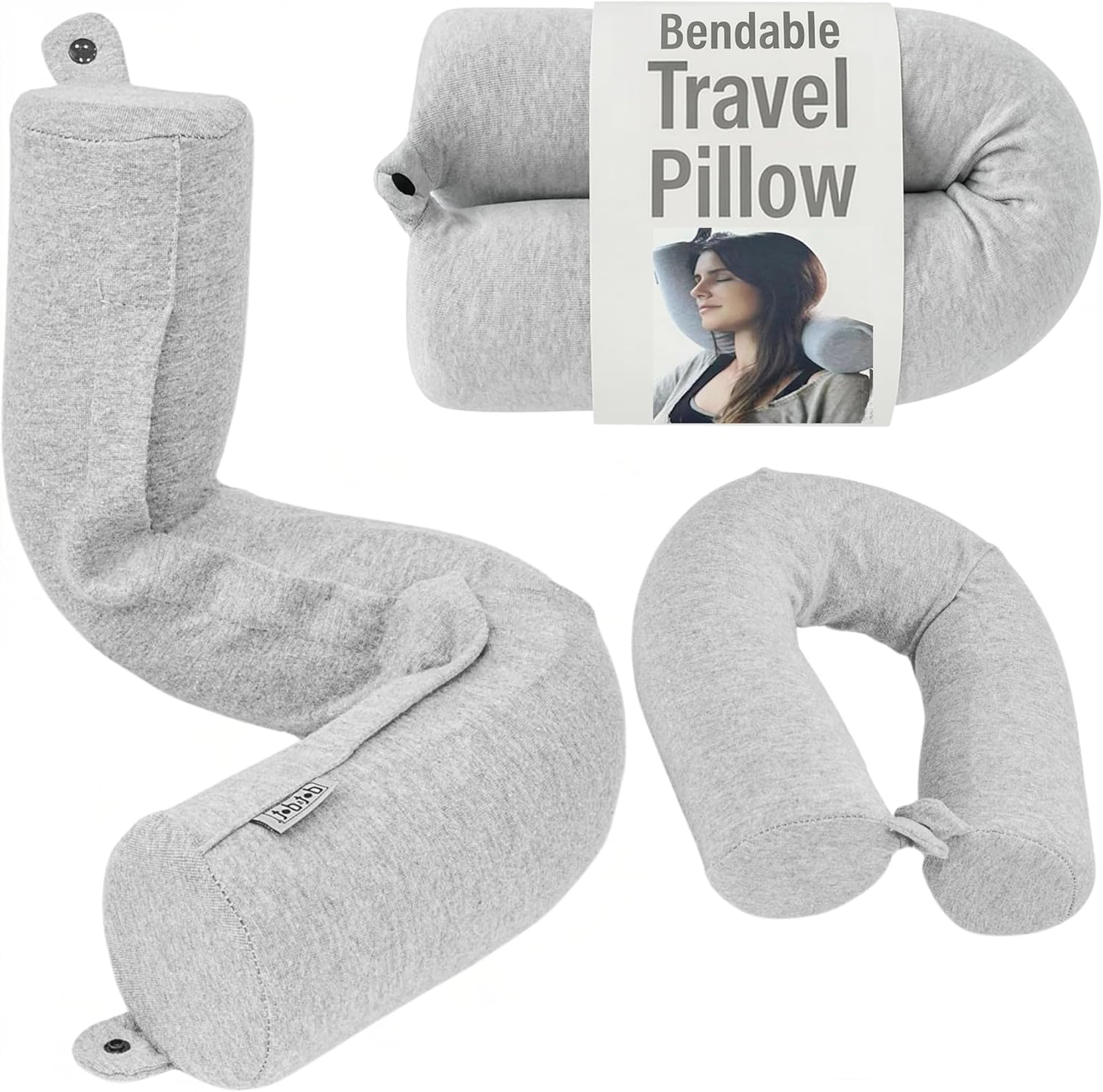
The Dot&Dot Twist isn’t a “neck pillow.” It’s a shapeable support tool. For side sleepers, that matters because the best support is often the weirdest: a wedge behind your shoulder, a bumper between your cheek and the window, a loop that holds your head at a specific angle so your neck muscles can finally stop bracing.
The internal bendable rod (the part that lets it hold shape) is what makes this pillow feel smarter than standard foam tubes. You can create a U-shape, but you can also create a tall side bolster, a chin-support arc, or a mini body pillow across your chest. If you’re traveling by plane, train, and car on the same trip, this “one tool, many jobs” versatility is gold.
Here’s the expert tip: don’t over-twist it aggressively like you’re wringing a towel. Mold it in smooth arcs. That keeps the foam from overstretching and reduces the chance of internal stress that can shorten the lifespan. Treat it like a bendable tripod: strong, but not invincible.
Why side sleepers keep it
- Custom shapes: you can build the support your seat doesn’t provide.
- Multi-zone comfort: neck, lumbar, shoulder, legs, even armrest padding.
- Holds position: doesn’t “flop” like soft U-pillows when you shift.
- Travel friendly: snaps closed for carrying and quick access.
Good to know
- Like all bendable pillows, it rewards gentle handling and smooth curves.
- If you want “no thinking required,” a fixed-shape pillow may feel easier.
Ideal for: Side sleepers who love customizing support and want one pillow that can solve multiple comfort problems on the same trip.
6. SZXYX Travel Pillow (Dark Grey) – Secure Wrap Without the “Pushed Forward” Feel
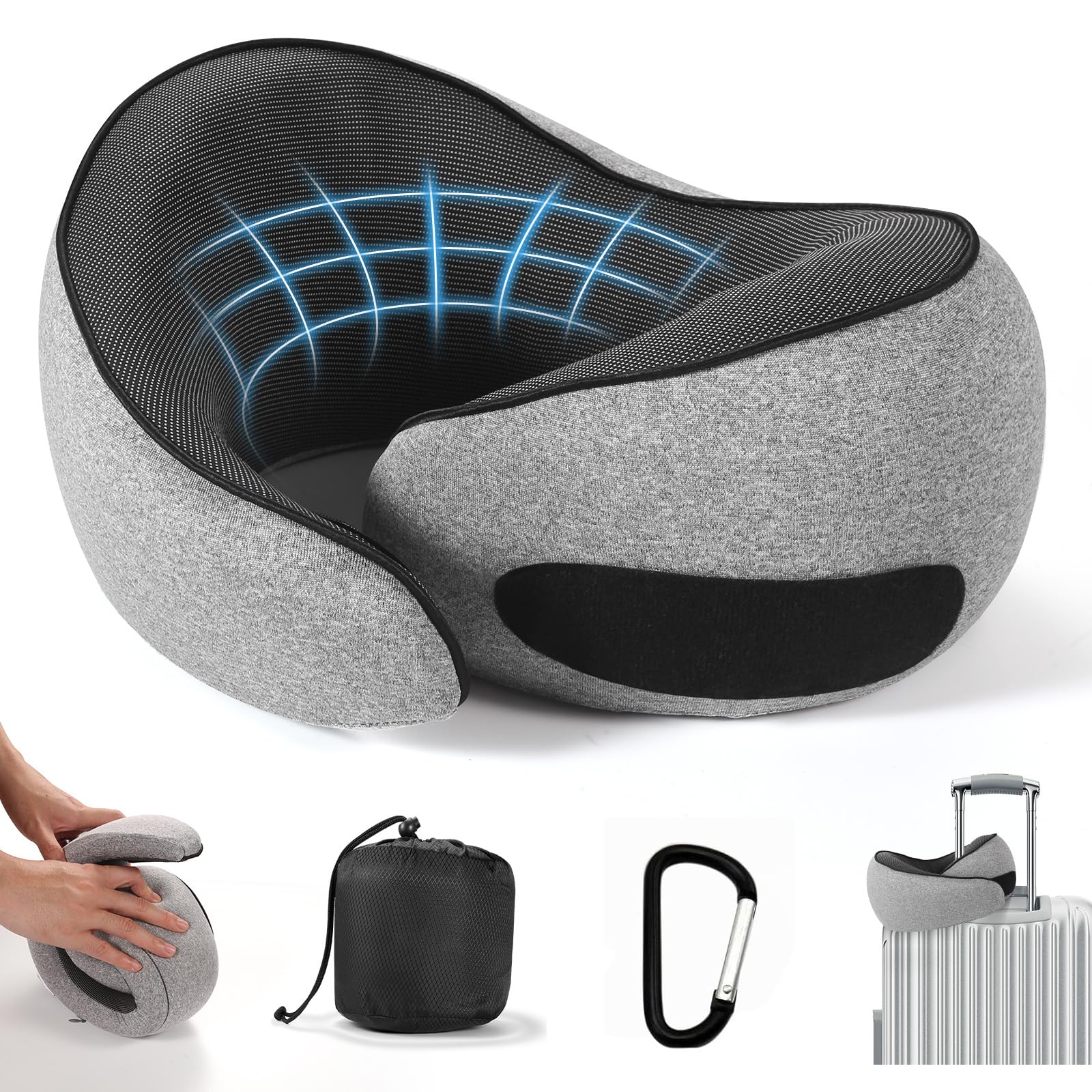
This style of 360° wrap is popular for a reason: it gives side sleepers a contained “nest” for the head, while the chin wrap helps prevent that sudden forward drop that jolts you awake. What separates the better versions from the annoying ones is how they handle the back of the neck.
The SZXYX leans into a more travel-realistic shape—supportive, but not so bulky at the back that it forces your head away from the seat. That makes it easier to lean into the headrest while still getting meaningful side support. Add the adjustable closure and you can dial in snugness without feeling trapped.
One small detail that actually matters: the “anti-stick” style closure concept (designed to keep the pillow from collecting lint and random airport fuzz) may sound minor, but it helps the pillow stay cleaner inside your bag and keep that “new pillow” feel longer.
Why it’s a great everyday pick
- 360 support: good for side-lean and upright naps.
- Less back bulk: reduces forward head push compared to many plush U-pillows.
- Compact carry: includes a bag and is easy to clip to luggage.
- Easy adjustment: you can tighten for sleep and loosen for comfort during boarding.
Good to know
- Memory foam can need a short “fluff time” after unpacking to rebound fully.
- 360 wraps vary by neck size—snug is good, but overtight is not.
Ideal for: Side sleepers who want a compact, all-around pillow that supports both side-lean and upright sleep without pushing the head forward.
7. WEERSHUN Travel Pillow (Grey) – Cozy Support with a Simple “Stay Put” Fit
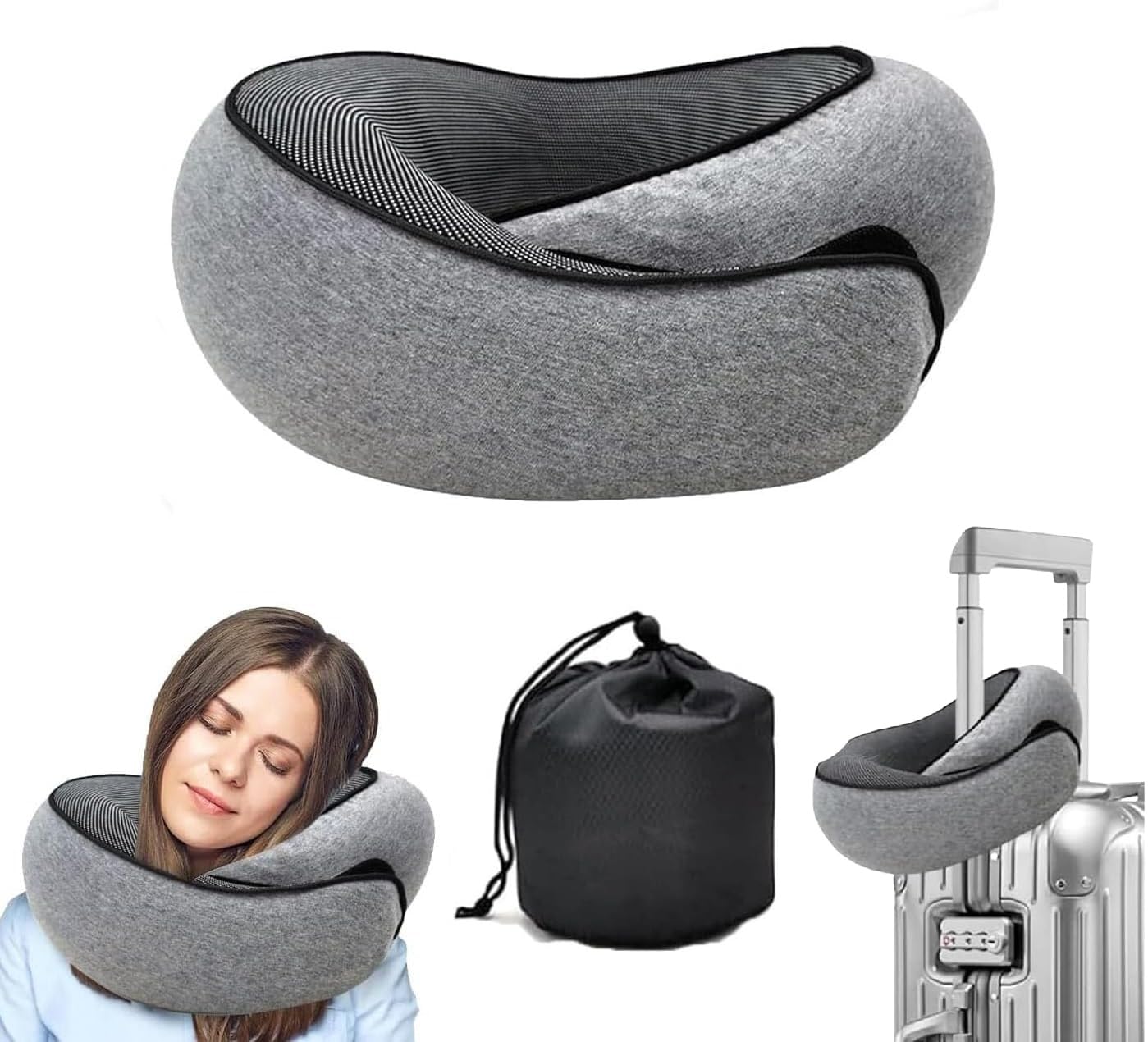
Some side sleepers don’t want a super-structured “neck brace” feel. They want something softer that still keeps the head from doing that slow sideways drift into a painful angle. The WEERSHUN is built around a memory-foam wrap concept with a chin wrap function—meaning it aims to keep you upright while still allowing a comfortable side-lean.
One of the most practical strengths here is usability. People stick with pillows that are easy to deploy: pull it out, let the foam rebound, wrap it, adjust, done. If you’re the type who doesn’t want to learn strap systems or build a pillow “configuration,” this style is friendly.
It also tends to work nicely as a “multi-location” pillow—airplane, car passenger naps, office chair head support—because it’s not overly specialized. That’s a big deal if you travel frequently and want something you’ll use often, not a niche gadget that only shines in one scenario.
Why it’s comfy and practical
- Soft memory foam: comfortable on the jawline and cheek for long wear.
- Adjustable wrap: helps reduce head drop without feeling rigid.
- Washable cover: a must for frequent flyers.
- Good “everywhere” use: plane, car, train, and office chair naps.
Good to know
- Foam pillows may arrive compressed and need time to fully expand.
- If you need strong lateral body support (middle seat), a cross-body pillow may outperform it.
Ideal for: Side sleepers who want a softer, simple-to-use wrap that improves comfort without feeling like equipment.
8. BLABOK Patented Inflatable Neck Pillow (Blue) – Pack Tiny, Support Big
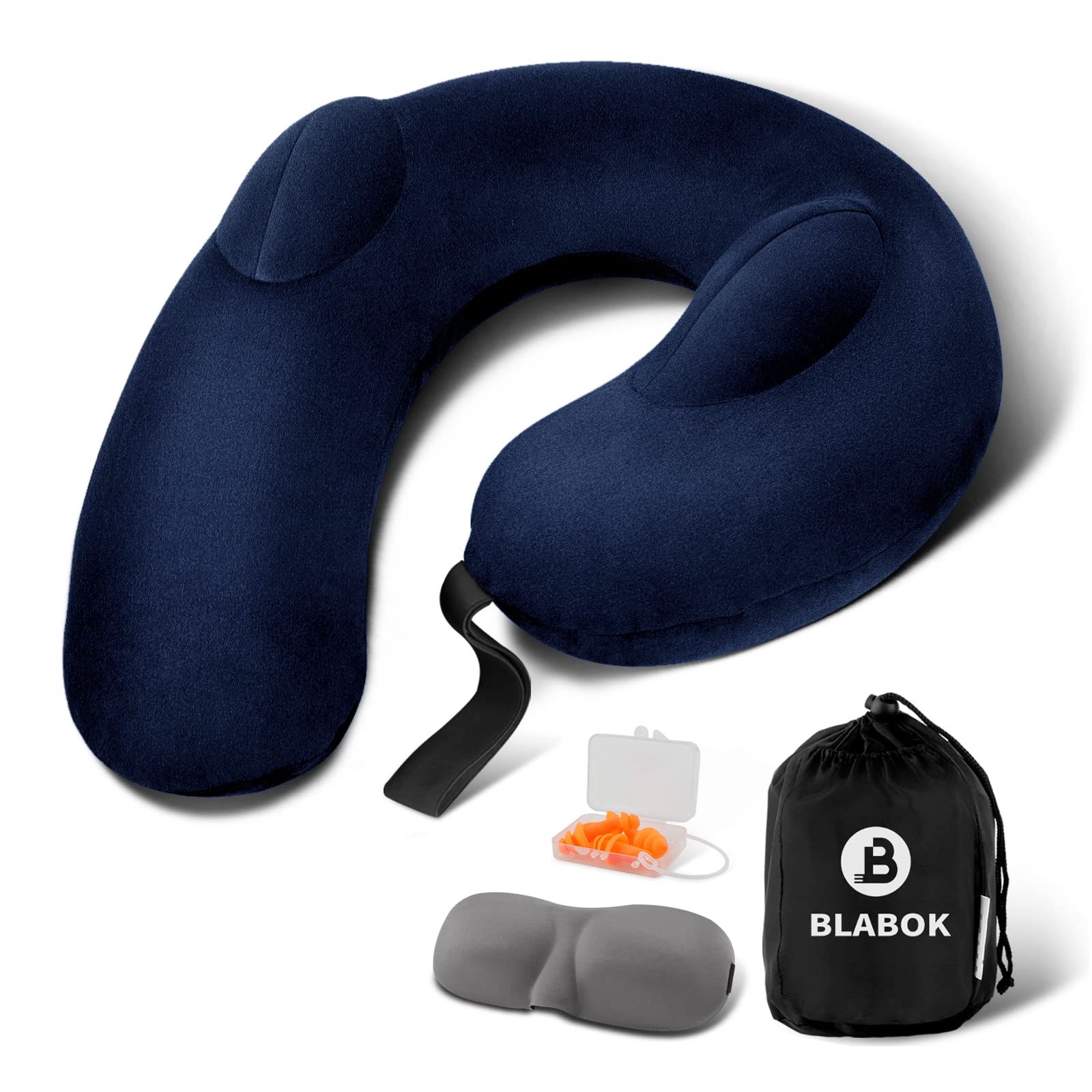
If you care about luggage space, inflatables are hard to beat. The real question is whether an inflatable can feel stable enough for a side sleeper. The better inflatable designs create “ear lobes” or raised sides that stop the head from rolling, and that’s what this BLABOK style aims to do.
The advantage you’ll feel immediately is customization. You can inflate it firm for strong head control, or slightly underinflate for a squishier cheek feel. That matters because side sleepers usually need a softer contact surface than upright sleepers—your cheekbone and jawline notice every pressure point after an hour.
This is also a hygiene win: a washable cover and a pillow that doesn’t soak up oils the way exposed foam does. If you’re hopping between flights, trains, and hotels, the ability to keep the contact surface fresh is not a luxury—it’s comfort insurance.
Why it’s a smart packable choice
- Ultralight travel: deflates down small, easy to keep in a personal item.
- Inflation control: adjust firmness based on cheek comfort and neck support.
- Side stability: raised sides help reduce head roll during naps.
- Washable cover: makes frequent travel more pleasant.
Good to know
- Inflatables feel best when you avoid overinflating—firm is good, rock-hard is not.
- If you want “instant comfort” with zero setup, foam may feel simpler.
Ideal for: Side sleepers who want maximum packability and like dialing in firmness for different flights.
9. Cirorld 100% Memory Foam Travel Neck Pillow Set – Flat‑Back Comfort Without the Bulk

For many side sleepers, the problem with basic U-shaped pillows isn’t the U—it’s the puffy back. A flat-back design reduces that “head pushed forward” posture and makes it easier to lean into the headrest naturally.
This Cirorld set also nails the practical stuff: it’s designed to compress and pack, and it comes as a travel-ready kit (pillow + sleep accessories). That matters because a pillow is only part of sleeping on a plane. Blocking light and managing cabin noise are the other two pillars of “actually falling asleep.”
If you’re new to travel pillows, this is an easy entry point. It’s not the most specialized side-sleep tool in this list, but it gives you a supportive baseline with less posture punishment than many traditional designs. For side sleepers, that flat-back detail is the quiet MVP.
Why it’s a great first buy
- Flat-back design: helps prevent forward head push.
- Adjustable snaps: quick fit tuning without complex straps.
- Travel kit value: built for flights, not just “a pillow in a bag.”
- Washable cover: practical for repeated use.
Good to know
- If you’re a true middle-seat side sleeper, a body-support pillow may work better.
- Contoured shapes are personal—some people prefer a simpler curve.
Ideal for: Side sleepers who want a simple, travel-ready kit and prefer a flat-back pillow that doesn’t force an awkward posture.
10. BUYUE 360° Head Support (Adult, Grey) – Soft, Cushy, Chin-Friendly (But Bulky)

If your dream travel pillow is “a soft cloud that catches my chin so I don’t wake up mouth-open,” BUYUE is aimed at you. It’s plush, it’s thick, and it’s designed to create a supportive ring around the head and neck.
For side sleepers, the comfort is real—especially if you’re sensitive to firmer foam edges. The chin-support element helps keep the head from tipping forward, which is one of the most common causes of neck pain after a flight. And because the pillow is designed with travel in mind, it typically includes storage/kit features that make it feel more complete than a bare-bones neck pillow.
The catch is portability. Thick pillows feel great in use, but they can dominate your personal item when packed. This is the classic trade-off: maximum cushion vs minimalist packing. If you travel with a small backpack, you’ll feel the bulk.
Why it’s comfort-first
- Plush feel: gentle for cheek and jaw pressure points.
- Chin support: reduces forward head drop during sleep.
- Machine washable: surprisingly practical for something this soft.
- Travel-friendly extras: pocket/storage features help keep your kit together.
Good to know
- Bulky to pack compared to inflatables or slim foam wraps.
- Tall travelers may prefer a design that holds the head slightly higher.
Ideal for: Side sleepers who prioritize softness and chin comfort—and don’t mind carrying a fuller-size pillow.
11. TRAVELREST Ultimate Travel Pillow & Body Pillow (Blue) – Same Sleep Logic, Different Look
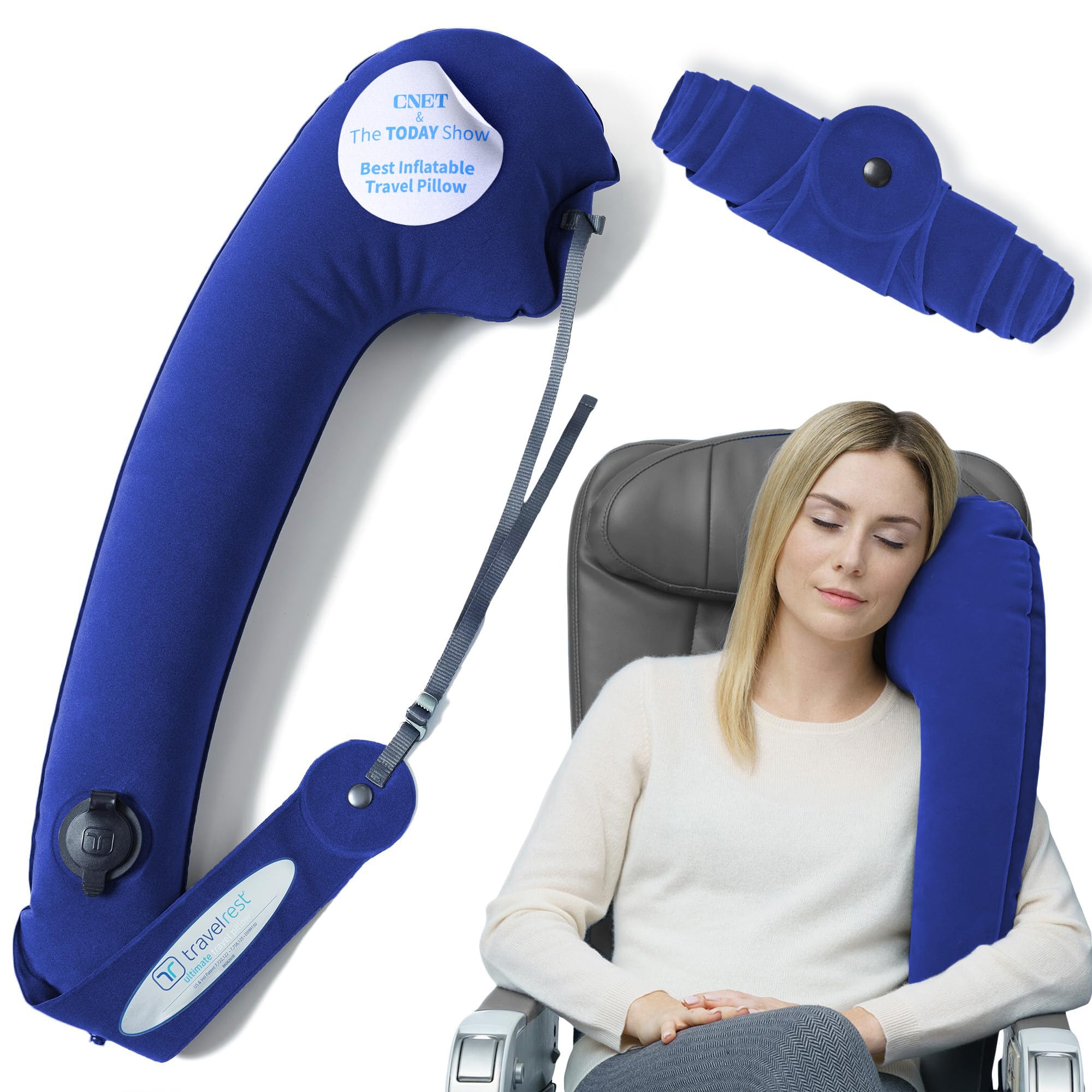
This is essentially the same “upper body lateral support” concept as the grey Travelrest Ultimate above—just in a different color option and listing. If you already know you like this style of inflatable side support, choosing between color variants is mostly about personal preference and what’s available for your trip.
For side sleepers, the reason this style works remains the same: your head needs a surface, but your torso also needs a little help staying aligned. When your upper body is supported, your neck stops fighting gravity all night.
Why it’s worth considering
- Same side-sleep benefit: supports head and upper body for better alignment.
- Travel practical: inflates quickly and stores compactly.
- Flexible positioning: can be anchored, worn, or placed against a window side.
Good to know
- If you dislike any setup, fixed foam shapes may feel simpler.
Ideal for: Side sleepers who want the Travelrest Ultimate concept but prefer this color/listing option.
12. Sunany Inflatable Travel Pillow (Gray) – The Forward-Lean Sleep Hack

Not every side sleeper can actually sleep “on their side” in a plane seat—especially in the middle seat. That’s where forward-lean pillows come in. These are designed to let you rest your upper body forward, often using the tray table as a base, creating a different kind of sleep posture that some people find dramatically more comfortable than upright neck pillows.
The Sunany style shines on portability: it inflates, deflates, and packs small. And it’s surprisingly versatile: it can fill the gap between you and a window, cushion an armrest, or act as a forward rest. For side sleepers who feel claustrophobic in wraps or collars, this gives you another option.
The expert reality check: forward-lean setups are highly personal. The face opening and pressure points need to match your body and the seat geometry. If you get it right, it can be amazing. If it’s slightly off, you’ll wake up with a sore forehead or chin. This is the “try-and-tweak” choice.
Why it can be a game changer
- Different posture option: great if upright side-lean sleep never works for you.
- Packs tiny: ideal for one-bag travel.
- Multi-use: window gap filler, armrest cushion, and forward rest.
- Easy to clean: inflatable surfaces are generally wipe-friendly.
Good to know
- Best results require experimentation with inflation and positioning.
- Tray-table use varies by aircraft and cabin rules, so be flexible with setup.
Ideal for: Side sleepers who can’t get comfortable upright and want a forward-lean sleep option that packs ultra small.
Support Guide: What Actually Makes a Travel Pillow Work
Side sleeping on a plane is basically an engineering problem: you’re trying to keep your head aligned while gravity, cramped seats, and light sleep stages constantly push you out of position. These are the “specs” that matter in real life.
Memory Foam vs. Inflatable (comfort vs. control)
Memory foam is usually best for cheek comfort and long wear—especially if you’re sensitive to pressure points on your jawline. The downside is bulk and less fine-tuning.
Inflatable designs win on packability and adjustability. The biggest mistake is overinflating. For side sleepers, slightly squishy is often more comfortable because it spreads pressure across the cheek and temple instead of creating one hard spot.
Chin Control + Back Profile (the neck pain combo)
If your chin drops, your neck flexes forward. If the pillow’s back is too thick, it pushes your head forward even when you’re awake. Put those together and you get the classic “I slept, but my neck is destroyed.”
The best designs either: (1) offer a flat back so your headrest stays usable, or (2) provide lateral support so you can lean sideways without collapsing.
FAQ: Airplane Pillows for Side Sleepers
Why do most neck pillows make my neck hurt more?
Should I choose a window-seat pillow or a middle-seat pillow?
How tight should a wrap-style pillow be?
What’s the best way to keep a travel pillow clean?
I wake up slipping off the pillow. Any hacks?
Final Thoughts: The Verdict
If you want the most reliable, any-seat solution, the TRAVELREST All‑in‑One is the top “system” pick because it gives side sleepers a real surface to lean into, not just neck padding. For dedicated window-seat naps, the J‑Pillow is the most natural-feeling cheek-and-chin support option. And if your main problem is head bobbing (especially on red-eyes), TripPal’s flat-back wrap design is built to keep your alignment steady.
Bottom line: the best airplane pillow for side sleepers is the one that matches your seat reality. If you pick based on how you actually sleep—window lean, middle-seat lean, or upright drift—you’ll finally land feeling rested instead of rearranged.
Ready to choose? Start here: TRAVELREST All‑in‑One, J‑Pillow, or TripPal.

Mo Maruf
I created WellFizz to bridge the gap between vague wellness advice and actionable solutions. My mission is simple: to decode the research and give you practical tools you can actually use.
Beyond the data, I am a passionate traveler. I believe that stepping away from the screen to explore new environments is essential for mental clarity and physical vitality.