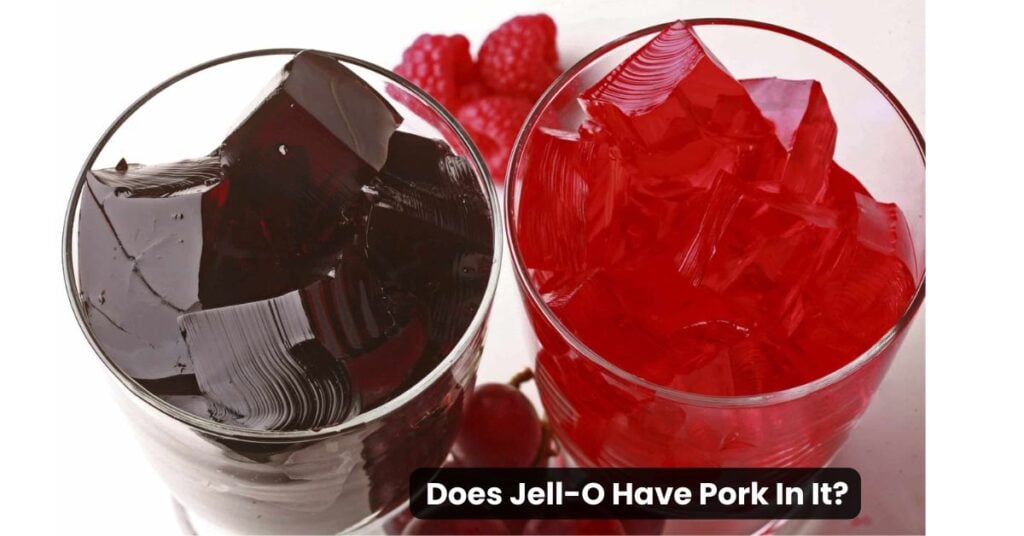
Yes, some mixes use pork-derived gelatin, while others use beef or fish; the ingredient label and certification marks tell the story.
If you avoid pork, a box of gelatin dessert can feel like a coin flip. The front says “gelatin,” the ingredient list says “gelatin,” and the brand name is all you can see. So where does that gelatin come from, and is there a way to know before you buy?
This article gives you a label-check routine for store aisles and online listings. You’ll learn when gelatin is present, when it isn’t, and how to pick a pork-free choice without guessing.
Why This Question Gets Confusing Fast
“Jell-O” can mean different products on one shelf. The classic powder you stir into boiling water is one item. Ready-to-eat cups are another. Pudding mixes and pudding cups sit nearby with the same logo. Only some of those products rely on gelatin for the familiar jiggle.
Others thicken with starches, gums, or dairy proteins. So start simple: confirm what type of product you’re holding, then read the ingredients list.
Products That Usually Contain Gelatin
- Gelatin dessert mixes (powder): Built around gelatin as the setting agent.
- Ready-to-eat gelatin cups: Pre-set gelatin desserts, so gelatin is typical.
Products That Often Skip Gelatin
- Pudding mixes and pudding cups: Many set with starch, not gelatin.
- Drink mixes: Powders for beverages, so no gelling agent is needed.
Product lines vary by country and can change over time. That’s why the ingredient list matters more than the front label.
What Gelatin Is, And Why Pork Shows Up
Gelatin is made by breaking down collagen from animal skin, bones, and connective tissue. Dissolve it in hot water, chill it, and it forms a gel that holds water in place. That’s the wiggle.
Commercial gelatin is commonly made from pork skin or from bovine hides and bones. Fish gelatin exists too, though it’s less common in mainstream grocery gelatin desserts.
Does Jell-O Contain Pork Gelatin In Some Mixes?
For classic boxed gelatin dessert mixes, the ingredient list usually includes “gelatin” without naming the animal source. Since gelatin can be made from pork or beef, a package that only says “gelatin” should be treated as possibly containing pork.
If you need a pork-free product, look for one of these signals: “beef gelatin,” “fish gelatin,” or a trusted certification mark that requires non-porcine ingredients. If none of those appear, treat it as unknown-source gelatin and move on.
Does Jell-O Have Pork In It?
Some Jell-O products contain gelatin, and gelatin can come from pork. When a Jell-O gelatin dessert lists “gelatin” with no source, pork remains on the table. If pork avoidance is strict for you, choose a source-labeled or certified product, or use a plant-set dessert.
Pudding products under the Jell-O name often skip gelatin, so pork gelatin is not a given. Turn the package around and let the ingredient list settle it.
One trick: the word “gelatin” shows up even when the front says “snack” or “dessert cup.” When you’re rushing, find the ingredient panel, scan for “gelatin,” then read the next few lines for source clues or certification marks. That tiny routine stops surprise pork ingredients. It works in-store and on delivery apps too.
How To Read A Label When You’re Avoiding Pork
Use the same fast scan each time. It takes under a minute once you know what to hunt for.
Step 1: Find “Gelatin” On The Ingredient List
If there’s no gelatin listed, pork gelatin can’t be the setting agent. That answers the pork-in-gelatin part of the question right away.
Step 2: Check For A Source Callout
Some labels name the source, such as “gelatin (beef)” or “fish gelatin.” When you see a source callout like that, you can decide on the spot.
Step 3: Use SmartLabel When You’re Shopping Online
For Kraft Heinz products, SmartLabel pages often show the ingredient panel for a specific item and size. A common Jell-O gelatin dessert mix SmartLabel lists gelatin as an ingredient and does not name the animal source. Kraft Heinz SmartLabel for a Jell-O gelatin dessert mix shows how that appears in the official panel.
Step 4: Know What Ingredient Rules Do And Do Not Require
In the United States, ingredients must be listed, and they’re listed by weight, yet a label can use the common name “gelatin” without stating the species. The FDA’s overview of ingredient-list rules explains how ingredients are listed and why some label terms stay broad. FDA guidance on ingredient listing helps you set expectations for what a package will spell out.
Step 5: Scan For Certification Marks
A certified symbol can remove a lot of uncertainty. A reliable kosher or halal certification program audits ingredient sourcing, so gelatin can’t quietly switch to a source that breaks the standard.
Step 6: Treat Vague Terms As A Caution Flag
Words like “natural flavor” and “artificial flavor” can appear without listing each component. That doesn’t mean pork is present, yet it does mean you’ll get fewer details from the package alone.
| Label Detail You See | What It Usually Means | What To Do Next |
|---|---|---|
| “Gelatin” with no source listed | Could be pork or beef; sourcing may change | Choose a certified product or a source-labeled gelatin |
| “Gelatin (beef)” or “beef gelatin” | Source is specified as bovine | Check certification if slaughter-method rules matter to you |
| “Fish gelatin” | Gelatin derived from fish | Confirm the product fits your fish rules |
| Kosher symbol from a known certifier | Ingredient sourcing is audited to meet kosher rules | Check the logo, then verify the certifier name |
| Halal certification mark from a known certifier | Ingredient sourcing is audited to meet halal rules | Check the logo, then verify the certifier name |
| “Vegetarian” or “vegan” claim | Gelatin should be absent; gelling agent is plant-based | Still scan ingredients to confirm no gelatin appears |
| Agar, pectin, carrageenan listed | Plant or seaweed-based gelling agents | Good sign for pork-free gels, then scan for other animal items |
| “May contain” statement | Usually allergen cross-contact notes, not meat sourcing | Don’t rely on this section for pork checks; use ingredients |
What Kosher And Halal Marks Can Tell You
If you keep kosher, gelatin is one of the ingredients that can make or break a dessert. A single-letter mark on a label can be vague, so look for a logo tied to a known certifying body. OU Kosher explains how kosher gelatin is defined and where it comes from, including bovine and fish sources. OU Kosher on kosher gelatin sources lays out the basics.
If you eat halal, the source and handling matter. IFANCA notes that halal gelatin can be produced from fish or from halal-slaughtered cattle, and that different sources behave differently in food. IFANCA’s gelatin resource explains what a halal gelatin claim points to.
Marks and labels still deserve a quick sanity check. Look for a full logo, not a single letter. On online listings, zoom in on the package photo and confirm the mark appears on the exact product size you’re buying.
Common Shopping Situations And How To Handle Them
When You’re Holding A Standard Gelatin Dessert Box
If the ingredients list only says “gelatin,” treat it as unknown-source gelatin. If that doesn’t work for your rules, pick a certified gelatin dessert, or pick a plant-set dessert mix that uses agar or pectin.
When You’re Buying Ready-To-Eat Cups
Turn the cup around and read the ingredients. Some cups are gelatin-based, some are pudding-based. Find the word “gelatin” first, then decide.
When You’re Buying Pudding
Many pudding mixes set with starches, yet some brands add gelatin for texture. Don’t assume; scan. If you don’t see gelatin, pork gelatin is not part of that item.
Pork-Free Ways To Get The Same Jiggle At Home
If you want full control, make your own gel desserts. You pick the setting agent, sweetness, and flavor.
Agar Gels For A Firm, Clean Slice
Agar (often sold as agar-agar) comes from seaweed. It sets at room temperature and holds up well in warm rooms. Agar gels can feel firmer than gelatin, so fruit gels and cut shapes work well.
Simple Agar Fruit Gel
- Whisk 1 teaspoon agar powder into 2 cups juice in a small pot.
- Bring it to a boil, then simmer 1 minute while whisking.
- Pour into a mold. Chill 30–60 minutes for a firm set.
Pectin For A Softer Set
Pectin is used to set jam. It shines in fruit desserts. Read the pectin package directions, since some types need sugar and acid to set.
Carrageenan And Starches For Spoonable Desserts
If what you want is pudding texture, check carrageenan, cornstarch, or tapioca starch. These build body without animal gelatin.
| Setting Agent | Texture In Dessert | Best Use |
|---|---|---|
| Agar | Firm, clean bite | Fruit gels, cut shapes, layered desserts |
| Pectin | Soft, jam-like set | Fruit cups, glazes, quick jams |
| Carrageenan | Silky, spoonable body | Puddings, dairy desserts, creamy cups |
| Cornstarch | Thick, smooth | Stovetop pudding, pie filling |
| Tapioca starch | Glossy, stretchy | Fruit pie filling, chewy puddings |
| Beef gelatin | Classic wiggle | Traditional gelatin desserts with source clarity |
| Fish gelatin | Soft set, lower melt point | Cold desserts when fish sourcing fits your rules |
What To Ask A Brand When The Label Stays Vague
If the source matters to you, reach the maker with a short, specific question.
- Ask: “Is the gelatin in this exact product pork, beef, fish, or mixed?”
- Share the UPC or product code so they don’t guess.
- Ask whether the source can change by batch or region.
If you still can’t get clarity, choose a product that states its gelatin source or use plant-set mixes.
Fast Checklist Before You Buy
- Confirm the product is a gelatin dessert, not pudding.
- Scan ingredients for the word “gelatin.”
- When gelatin is listed with no source, treat it as unknown.
- Prefer source-labeled gelatin or a trusted certification mark.
- For full control, set desserts at home with agar or pectin.
References & Sources
- Kraft Heinz SmartLabel.“Jell-O Strawberry Gelatin Dessert Mix, 3 oz Box.”Ingredient panel lists gelatin.
- U.S. Food and Drug Administration (FDA).“Types of Food Ingredients.”Describes ingredient listing rules.
- OU Kosher Certification.“Kosher Gelatin: Innovation and Tradition.”Explains kosher gelatin sourcing.
- Islamic Food and Nutrition Council of America (IFANCA).“Gelatin.”Explains halal gelatin sourcing.

Mo Maruf
I created WellFizz to bridge the gap between vague wellness advice and actionable solutions. My mission is simple: to decode the research and give you practical tools you can actually use.
Beyond the data, I am a passionate traveler. I believe that stepping away from the screen to explore new environments is essential for mental clarity and physical vitality.