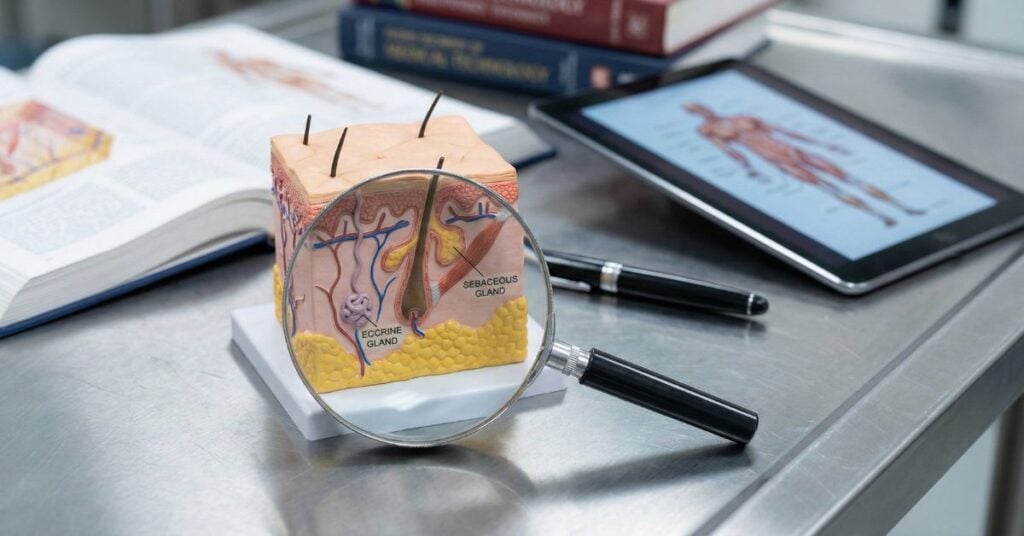
People don’t have dedicated scent glands like many mammals, yet sweat, skin oils, and bacteria still create a personal odor profile.
If you’ve wondered whether people have scent glands, you’re not alone. Most of the time, the question shows up after a day where deodorant didn’t keep up, a shirt started smelling “warm” again, or underarms seemed to change overnight.
Here’s the plain truth: human skin does have glands that release fluid and oil, yet those glands weren’t built as scent-marking organs the way many mammals use them. The smell you notice comes from what your glands release, plus what skin bacteria do with it.
This article clears up what “scent glands” means, which human glands shape odor, why underarms are the main trouble spot, and what changes tend to reduce odor without turning your routine into a science project.
What People Mean By “Scent Glands”
In many animals, a “scent gland” is a specialized gland whose main job is chemical signaling. These glands can help with territory marking, recognition, and mating cues. The secretions are often oily and long-lasting, so the scent sticks to fur, skin, or objects.
Humans don’t have a single, widely named organ that works like that. When people say “scent glands” in everyday talk, they usually mean, “What makes armpits smell?” or “Where does my body odor start?” That’s a different question, and it has a clear, anatomy-based answer.
Do Humans Have Scent Glands? The Real Answer
Humans don’t have dedicated scent glands in the classic animal-marking sense. Still, humans do have skin glands that can lead to odor once skin bacteria break down the secretions. The main players are apocrine sweat glands, eccrine sweat glands, and sebaceous (oil) glands.
Here’s a quick way to think about it: sweat and oils are the raw ingredients. Skin bacteria “cook” those ingredients into odor molecules. Time, moisture, and fabric decide how strong that odor gets.
Human Scent Glands And Body Odor Basics
If “scent glands” is shorthand for “why do I smell,” it helps to map what each gland type does. Not all sweat is the same. Not all body zones behave the same. That’s why underarms can smell sharp while your forehead sweat barely smells at all.
Eccrine Sweat Glands And Cooling Sweat
Eccrine sweat glands sit across most of your skin. They release watery sweat onto the skin surface. That sweat evaporates and helps cool your body. Fresh eccrine sweat is mostly water and salts, so it usually has little smell at the start.
A plain-language overview from the U.S. National Library of Medicine explains that odor forms when sweat mixes with bacteria on skin. You can read it on the MedlinePlus sweat overview.
Apocrine Sweat Glands And Underarm Odor
Apocrine sweat glands are concentrated in areas like the armpits and groin. They release a thicker fluid into hair follicles. This secretion contains more proteins and lipids than watery eccrine sweat, which gives skin bacteria more material to break down.
That bacterial breakdown is what creates much of the familiar “underarm” smell. Puberty matters here, since apocrine activity rises around that time, which is why many teens notice new odor even with daily showers.
Sebaceous Glands And Skin Oils
Sebaceous glands release sebum, an oily mixture that coats hair and skin. Sebum helps keep skin flexible and forms part of the skin barrier. It can also hold onto odor compounds longer than water alone.
That’s one reason odor can cling to the scalp, hair, and certain clothing. Oil plus sweat plus warmth can turn fabric into a smell “reservoir” that wakes up again when you heat it.
Where The Anatomy Details Live
If you want the clinical breakdown of eccrine versus apocrine sweat glands, including where they sit in the skin and where their ducts open, the National Library of Medicine’s NCBI Bookshelf hosts a clear summary in StatPearls: “Anatomy, Skin, Sudoriferous Gland”.
Why Sweat Doesn’t Smell At First
People often assume sweat itself is “smelly.” Fresh sweat is usually not. Odor shows up after bacteria metabolize components in sweat or skin oils. Moisture gives bacteria time to work. Friction and heat can ramp up secretion. Tight fabric can trap both moisture and odor compounds.
This is why two people can do the same workout and end up with different odor. The starting mix differs (sweat volume, oiliness, hair), and the skin bacteria mix differs too. Even the shirt fabric can change the outcome.
It also explains why deodorant can help without reducing sweat. Many deodorants aim at the chemistry on the skin surface: masking odor, shifting pH, or limiting the conditions bacteria like.
Glands And Body Areas That Shape Smell
“Scent glands” gets used as one label, yet multiple glands and structures shape what you smell. This table maps the main contributors and where they show up.
| Gland Or Structure | Where You’ll Notice It | How It Relates To Smell |
|---|---|---|
| Eccrine sweat glands | Most skin; dense on palms, soles, forehead | Watery sweat for cooling; odor forms after bacterial action on skin or fabric |
| Apocrine sweat glands | Armpits, groin, around nipples | Thicker secretion into hair follicles; often linked to stronger underarm odor |
| Sebaceous glands | Scalp, face, upper chest, back | Oily sebum can hold odor compounds and change how sweat smells |
| Hair follicles and hair | Armpits, groin, scalp, beard area | Hair can trap moisture and secretions, giving bacteria more time to create odor |
| Ceruminous glands | Ear canal | Help form earwax; earwax has its own scent and can trap odor molecules |
| Meibomian glands | Eyelids | Oil for the tear film; eyelid inflammation can create an “off” smell near the eyes |
| Mammary glands | Breast tissue | Milk production; odor is more about residue on skin than gland secretion itself |
| Foot skin and shoes | Feet, socks, footwear | High eccrine sweat plus trapped moisture in shoes can drive strong foot odor |
Smell Signals, Pheromones, And Human Sensing
Some people jump from “scent glands” to “pheromones.” In many animals, pheromone signaling involves specialized organs and receptor systems. In humans, the picture is less direct.
One structure that comes up a lot is the vomeronasal organ (VNO). Scientific reviews describe ongoing debate about adult human function and what’s present in humans compared with species that rely on pheromone pathways. A detailed review is available via PubMed Central: “The Vomeronasal Organ: A Neglected Organ”.
Even without a clean “pheromone switch,” smell still carries real-world cues. Your nose can pick up food residues, smoke, scented products, and sweat byproducts. That’s enough to shape first impressions and comfort in close spaces.
Why Odor Changes Over Time
Odor can shift week to week without anything “wrong.” Small changes in sweat volume, oiliness, bacteria mix, or clothing habits can shift the final smell. These are common drivers.
Puberty, Cycles, And Hormone Shifts
Apocrine sweat activity rises around puberty, so new underarm odor is common during the teen years. Hormone swings can also change sweat patterns, which can change when odor shows up and how strong it feels.
Food, Drinks, And Residues
Garlic, onions, and some spices can shift breath and sweat odor. Alcohol can do the same for some people. Smoke can cling to hair and clothing fibers and re-release later when warmed.
Fabric And Laundry Timing
Some synthetic fabrics hold onto odor compounds. You may notice a shirt that smells fine when cold, then starts smelling as soon as it warms up. Washing soon after sweating, drying fully, and rotating workout clothes can help.
Medicines And Health Changes
Some medicines can change sweating patterns. Illness can change body odor too. If a strong, new smell shows up and sticks around with other symptoms, it’s worth bringing it up at a checkup.
Practical Steps For Fresher Skin And Clothes
There’s no one-step fix for everyone, since odor can come from sweat volume, bacteria mix, fabric, or all three. The goal is to reduce residue, reduce moisture time, and keep clothing from storing odor.
Clean, Rinse, Dry
For underarms and groin, a quick splash may leave residue behind. Use soap, rinse fully, then dry the skin before dressing. Moisture gives bacteria a head start and helps odor compounds spread into fabric.
Deodorant Versus Antiperspirant
Deodorant targets smell. Antiperspirant targets wetness. If wetness is the driver, lowering moisture can reduce odor by shortening the time bacteria have to act. Many people do better applying antiperspirant to dry underarms at night, then using deodorant in the morning if they like the scent.
When Sweat Is Heavy
If sweating is heavy and hard to manage, dermatologists share practical day-to-day steps that can make a difference, from fabric choices to application timing. The American Academy of Dermatology lists these tips in “Hyperhidrosis: 6 tips dermatologists give their patients”.
Clothes, Shoes, And Habits That Add Up
- Rotate shoes so each pair dries fully between wears.
- Change socks after heavy sweating, especially on long days.
- Wash sweaty shirts soon after use instead of letting them sit damp.
- Choose breathable fabrics for heat and long walks.
- Trim underarm hair if it traps moisture for you; keep skin calm and avoid irritation.
Common Odor Patterns And First Moves
Many odor complaints fall into repeat patterns. Matching the pattern helps you pick a first change without guessing.
| Pattern | What’s Often Driving It | First Moves |
|---|---|---|
| Underarms smell soon after a shower | Apocrine residue plus fast bacterial regrowth | Wash well, dry fully, try night antiperspirant, deodorant in the morning |
| Feet smell even with clean socks | Eccrine sweat trapped in shoes | Rotate shoes, dry insoles, change socks mid-day, dry between toes |
| Workout shirts smell when warmed | Odor compounds stored in synthetic fibers | Wash soon after use, dry fully, rotate gear, avoid re-wearing damp items |
| Groin odor spikes with tight clothing | Heat and friction raising moisture time | Looser underwear, breathable fabric, shower after sweating |
| New odor plus other symptoms | Illness, medicine change, or metabolic shift | Track timing, list new meds and foods, bring it up at a checkup |
| Deodorant stings or rash appears | Irritation or allergy to fragrance or ingredients | Stop the product, switch to fragrance-free, seek care if it spreads |
When A Smell Change Deserves A Checkup
Most odor is routine skin biology. A few patterns are worth a medical chat, especially when the change is sudden, strong, and sticks around despite normal hygiene.
- New odor paired with fever, fatigue, or skin pain
- Night sweats that soak clothes or bedding
- New sweet, fruity, fishy, or ammonia-like smell that persists
- Rapid sweating changes without an obvious trigger
- Boils, draining sores, or repeated painful lumps in the armpits or groin
If any of these show up, jot down when the change started, what you ate, any new medicines, and whether the smell links to sweat, breath, or urine. That short log can make the next appointment smoother.
Practical Checklist
- Underarm odor is often apocrine secretion plus bacteria, not “dirty sweat.”
- Eccrine sweat is mainly for cooling; odor grows when moisture sits on skin or fabric.
- Oil and fabric can store odor compounds and bring them back when warmed.
- Dry skin and fast laundry turn down odor more than masking sprays alone.
- Sudden, persistent odor changes with other symptoms are worth a checkup.
How This Page Was Built
This article uses anatomy and dermatology references from U.S. National Library of Medicine resources and the American Academy of Dermatology. The goal is clear language, conservative claims, and steps that fit everyday life.
References & Sources
- U.S. National Library of Medicine (MedlinePlus).“Sweat.”Explains sweating as a normal cooling process and notes how odor forms when sweat mixes with skin bacteria.
- National Library of Medicine (NCBI Bookshelf, StatPearls).“Anatomy, Skin, Sudoriferous Gland.”Summarizes eccrine and apocrine sweat glands, where they are found, and how secretions relate to odor.
- U.S. National Library of Medicine (PubMed Central).“The Vomeronasal Organ: A Neglected Organ.”Reviews what is known and debated about vomeronasal structures and pheromone-related pathways in humans.
- American Academy of Dermatology.“Hyperhidrosis: 6 tips dermatologists give their patients.”Shares practical self-care steps for heavy sweating, which can drive odor issues.

Mo Maruf
I created WellFizz to bridge the gap between vague wellness advice and actionable solutions. My mission is simple: to decode the research and give you practical tools you can actually use.
Beyond the data, I am a passionate traveler. I believe that stepping away from the screen to explore new environments is essential for mental clarity and physical vitality.