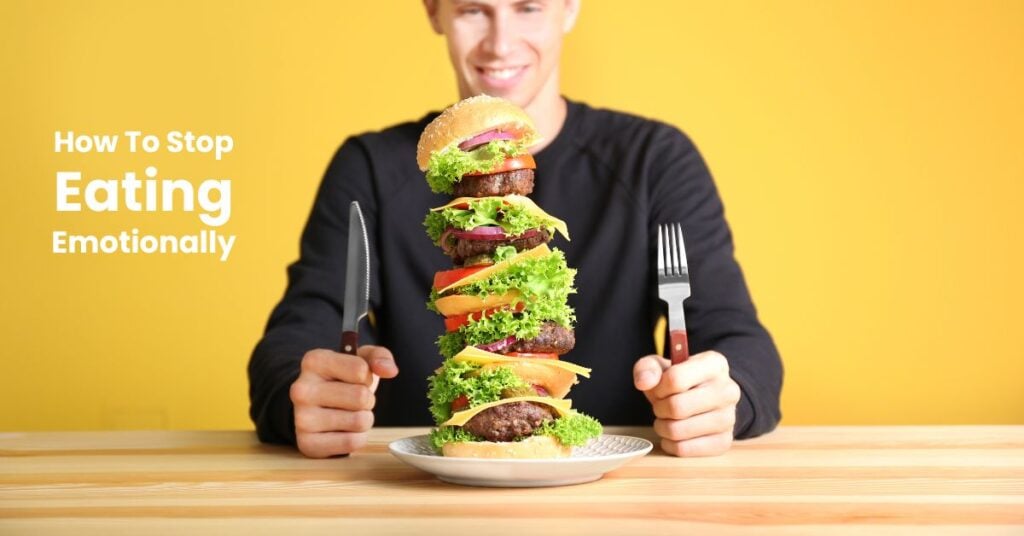
Build a steadier routine, pause before snacking, and keep a few ready moves so cravings stop bossing you around.
Emotional eating can feel sneaky. You’re not hungry in the body, but your hand still finds the chips, the cookies, the second bowl. The fix isn’t iron willpower. It’s a handful of small choices you can repeat.
Use the checks and routines below to slow urges down and stay satisfied. If you want to learn how to stop eating emotionally without turning meals into a fight, start here.
Fast Clues That You’re Not Physically Hungry
Before you change anything, you need a clean read on what’s happening. Physical hunger builds in the body. Emotional hunger shows up fast and asks for a specific food, right now.
Use the table as a quick check. You don’t need perfection. You just need a repeatable way to tell “fuel need” from “feeling need.”
| Moment | What It Often Feels Like | Small Next Move |
|---|---|---|
| Sudden craving after a tense message | Urgent, narrow choice (“only chocolate”) | Drink water, set a 5-minute timer |
| Snacking while standing in the kitchen | Restless grazing, barely tasting bites | Sit down, plate the food |
| Eating right after dinner | “I want something” while already full | Brush teeth or make mint tea |
| Mid-afternoon slump | Tired, foggy, craving sugar | Protein + fiber snack, then a short walk |
| Late-night fridge checks | Wired, lonely, or numb | Dim lights, screens off, warm shower |
| Reward eating after a hard task | “I earned this” | Pick a non-food reward first, then decide |
| Eating during a show | Automatic handfuls | Portion into a bowl, pause at credits |
| Snacking from boredom | Need for stimulation | Do a 2-minute reset task (tidy, stretch) |
| Picking at food while cooking | Constant tasting turns into a mini meal | Use one tasting spoon, then step back |
How To Stop Eating Emotionally When Stress Hits
Stress is a common spark for extra eating. Your brain wants fast relief, and food is a familiar shortcut.
Use The “Pause, Name, Choose” Sequence
This is the core skill. It works because it slows the reflex and gives you one clean decision point.
- Pause: Stop for ten slow breaths. Count them. No multitasking.
- Name: Put a plain label on the feeling: “tense,” “irritated,” “sad,” “flat,” “overloaded.”
- Choose: Pick one next move before food. If you still want the snack after, eat it on purpose.
That’s it. No long pep talk. Just a tiny gap between urge and action.
Pick Three “Before Food” Moves And Keep Them Easy
If your only option is “be strong,” you’ll keep losing the moment. Give yourself easy alternatives that take under five minutes:
- Step outside and feel the air for one minute.
- Send a quick message to a friend: “Long day. Say hi.”
- Do a short stretch: neck, shoulders, hips.
- Write three lines: “What happened / What I feel / What I need.”
These moves don’t erase feelings. They keep food from being your only tool.
Make A Tiny Trigger Map For Three Days
Keep a note on your phone. Each time you eat when you weren’t hungry, jot this in ten seconds:
- Time
- Place
- Feeling word
- Food
- What you wanted the food to do (calm, reward, numb, distract)
Patterns show up fast. Maybe it’s meetings. Maybe it’s late nights. Once you see the pattern, you can plan for it instead of getting blindsided.
If you want a plain-language reference, this NHS leaflet on managing emotional eating walks through hunger clues and trigger mapping in a clear way.
Build Meals That Leave You Satisfied
Urges get louder when your body is underfed or your meals don’t stick. You need meals that keep you steady.
Use The “Protein, Fiber, Fat” Plate Check
At most meals, aim to include:
- Protein: eggs, yogurt, tofu, beans, fish, chicken
- Fiber: vegetables, fruit, oats, lentils, whole grains
- Fat: olive oil, nuts, seeds, avocado
This combo slows digestion and helps you stay full longer.
Plan One “Bridge Snack” For The Tough Gap
A lot of people get hit between lunch and dinner, or after dinner. Pick one planned snack window.
Try one of these:
- Greek yogurt with berries
- Apple with peanut butter
- Carrots and hummus
- Cheese with whole-grain crackers
- Edamame with a pinch of salt
Keep Treats, But Make Them Intentional
Cutting all “fun” foods often backfires. Decide when you’ll have them, then sit down and eat them without your phone.
Treat food stays on a plate, eaten at a table, with a start and finish. No roaming bites.
Change The Setup That Feeds Autopilot
Some emotional eating is about cues. Not feelings alone. The easiest cue to change is what’s in your line of sight and how easy it is to grab.
Make The Default Option The One You Want
Try this for one week:
- Put fruit on the counter where you’ll see it.
- Move snack foods to a higher shelf or an opaque bin.
- Keep a ready protein in the fridge (boiled eggs, tofu, yogurt, chicken).
- Set a “tea spot” so you can reach for a warm drink first.
You’re not banning foods. You’re making the pause easier to pull off.
Portion Once, Not Ten Times
If you eat from the bag, you’ll keep reaching. That’s normal. Portion snacks into small bowls or containers. Label a few with “after dinner” so you don’t have to decide each night.
Build One “Speed Bump” For Late-Night Eating
Add one small barrier that makes you stop and decide:
- Kitchen closes after a set time, with lights dimmed.
- Your go-to after-dinner drink is ready (tea, sparkling water, warm milk).
You’re aiming for a gentle pause, not a hard rule.
Practice A Hunger Scale Without Turning It Into Math
A hunger scale helps you notice your body before you’re frantic. Keep it loose. You’re building awareness, not grading yourself.
- 0–2: shaky, too hungry, hard to choose well
- 3–4: ready to eat, steady, clear-headed
- 5–6: satisfied, can stop without effort
- 7–10: stuffed, uncomfortable
A useful target is to start eating around 3–4 and stop around 5–6.
Use A Two-Week Practice Plan
Big change usually fails when you try to change ten things at once. Pick one skill, repeat it, then stack the next one. The table below gives you a simple rhythm.
| Days | Daily Practice | What To Track |
|---|---|---|
| 1–2 | Write down one hunger check before a snack | Body hunger or feeling hunger? |
| 3–4 | Do “Pause, Name, Choose” once per day | Which feeling word showed up? |
| 5–6 | Eat one meal seated, no screens | Where did fullness land on the scale? |
| 7–8 | Plan one bridge snack window | Did urges drop later? |
| 9–10 | Prep one steady breakfast you like | Energy by mid-morning |
| 11–12 | Change one kitchen cue (fruit out, snacks away) | Did autopilot snacking shift? |
| 13–14 | Pick one non-food reward after a hard task | Did you still want a treat? |
Handle The Feeling Under The Craving
Food can work like a mute button. It softens the feeling for a bit, then the feeling comes back. You just need one or two ways to ride the wave without eating it away.
Try A 60-Second Body Reset
When you notice the urge, do this quick sequence:
- Drop your shoulders.
- Exhale longer than you inhale for ten breaths.
- Unclench your jaw and hands.
- Say one sentence: “I feel ___, and I can handle a minute of it.”
After a minute, decide what you want next: a snack, a meal, or one “before food” move.
Use A Script When You Want A Reward
Reward eating is common after a hard day. Try this script:
- “I want relief.”
- “My first reward is five minutes off.”
- “Then I’ll decide what I want to eat.”
Five minutes can be a shower, a short walk, or sitting with your feet up. Then, if you still want dessert, have it on purpose.
Get Better At The Moment After A Slip
Slips happen. The skill is what you do next. If you spiral into guilt, you may keep eating to numb that feeling. Do a quick reset and move on.
- Drink water.
- Brush your teeth or rinse your mouth.
- Write one line: “What set this off?”
- Pick the next meal and make it normal.
No punishment. No skipping meals. Just a clean return to your routine.
When The Pattern Feels Bigger Than Tips
If you’re having frequent episodes where you feel out of control around food, or you’re eating in secret and feeling trapped in a cycle, it may help to talk with a licensed clinician who works with eating concerns.
For habit basics you can adapt to snacking triggers, the CDC steps for improving eating habits describe a simple “reflect, replace, reinforce” approach.
A Personal Checklist For Calmer Eating
Use this list once a day for a week. Keep it on your phone. You’re building repeatable moves, not chasing perfection.
Two tips make this stick: pick one check to nail each day, and keep notes short. If you miss a day, shrug and restart at the next meal. When a craving hits, read the list top to bottom and do the first line you haven’t done yet. It stops you from negotiating with yourself. After a week, circle the two lines that helped most and keep those going.
Keep snacks you love, just eat them seated and present.
- I ate regular meals today, not skipped ones.
- I used a pause before one snack.
- I named one feeling instead of stuffing it down with food.
- I ate a treat on a plate, seated, without a screen.
- I changed one cue in my kitchen setup.
- After any slip, I did a reset and moved on.
If you’re reading this because you want to learn how to stop eating emotionally, keep the plan small and repeatable. The wins stack fast when you stop turning every urge into a moral test.
References & Sources
- University Hospitals Sussex NHS Foundation Trust.“Managing emotional eating.”Describes hunger cues, trigger mapping, and practical steps for changing responses.
- Centers for Disease Control and Prevention (CDC).“Steps for Improving Your Eating Habits.”Outlines a reflect–replace–reinforce method you can apply to eating patterns.

Mo Maruf
I created WellFizz to bridge the gap between vague wellness advice and actionable solutions. My mission is simple: to decode the research and give you practical tools you can actually use.
Beyond the data, I am a passionate traveler. I believe that stepping away from the screen to explore new environments is essential for mental clarity and physical vitality.