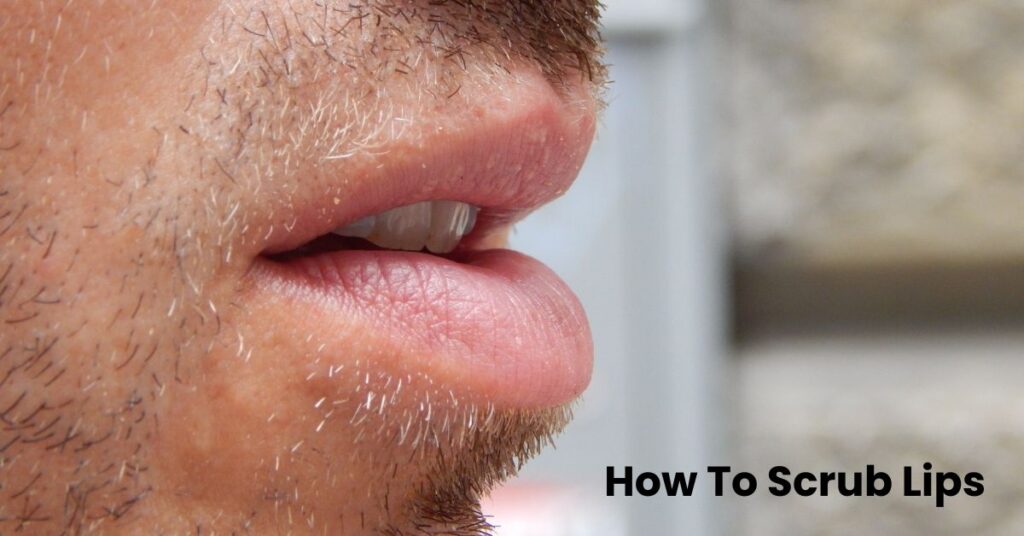
A light sugar-and-oil buff once or twice weekly clears loose flakes, then a bland balm keeps lips smooth and comfy.
Flaky lips are annoying. You can drink water all day and still feel a rough rim by lunchtime. Then you swipe on balm, and it pills. You try lipstick, and it grabs every dry bit like Velcro.
A scrub can fix that gritty layer, but lips aren’t elbows. The skin is thinner, it dries out faster, and it gets irritated quicker. The goal is to lift only what’s already loose, keep the barrier calm, and leave with lips that feel normal again.
This piece walks through a lip-safe routine, ingredient picks that tend to behave, and the small habits that keep flakes from bouncing right back.
| Scrub method | Best time to use it | Notes to keep it lip-safe |
|---|---|---|
| Sugar + petroleum jelly | When you’ve got light flaking before balm or lipstick | Use fine sugar, mix until pasty, stop at the first sting |
| Sugar + honey | When you want a stickier scrub that clings | Skip if you react to honey; rinse well so it doesn’t feel tacky |
| Oatmeal + water paste | When lips feel tender but still need a little smoothing | Grind oats fine; the paste should feel more like cream than grit |
| Warm washcloth wipe | After a shower, when flakes are softened | Press, then wipe in short strokes; no back-and-forth scrubbing |
| Soft silicone lip brush | When you prefer a tool over grains | Use with balm, not dry; keep it clean and let it air-dry |
| Store-bought sugar scrub | When you want a consistent texture | Avoid strong scent, mint, or tingle agents that can irritate |
| Enzyme-based lip mask | When you want less rubbing | Patch test; follow the label time; balm right after |
| Petroleum jelly only | When lips are cracked, sore, or peeling in sheets | Skip exfoliation and stick to barrier care until it settles |
Scrubbing Lips At Home With A Soft Touch
If your lips feel raw, split, or burning, pause the scrub plan. Start with balm and let the surface calm down. When the top layer feels more like dry paper than an open scrape, you can try a gentle buff.
Step 1: Soften First
Start with warm water, not hot. Splash your lips, or hold a damp washcloth to them for 20–30 seconds. This loosens flakes so they lift with less force.
Step 2: Pick One Mild Scrub
Choose either a tiny amount of fine sugar mixed with an ointment, or a washcloth wipe. Don’t stack methods in one session. Your lips don’t need a “double cleanse” vibe.
Step 3: Use Less Pressure Than You Think
Put the mix on your fingertip, touch it to the lips, and move in small circles for 10–15 seconds. Think “polish,” not “scrape.” If you feel stinging, stop right there.
Step 4: Rinse And Pat
Rinse with lukewarm water. Then pat dry with a clean towel. Don’t rub with the towel, since that’s just another scrub in disguise.
Step 5: Seal With An Ointment
Apply a plain, fragrance-free ointment or thick balm. This is the moment that decides whether you feel smooth later or tight and thirsty.
Step 6: Keep Hands Off After
It’s tempting to chase the last speck. Don’t. Picking turns a small flake into a sore spot, and it resets your progress.
A Quick Self-Check
- If the scrub leaves your lips pink and comfortable, you did fine.
- If they feel hot, stingy, or shiny-tender, you went too hard.
- If you see bleeding, stop exfoliating until the skin heals.
Ingredients That Play Nice With Lips
A good lip scrub is boring on purpose. Strong scents, tingles, and “plumping” tricks can feel fun for a minute, then leave you flaky again. When you’re building or buying a scrub, scan the label like it matters.
Grit: Keep It Small And Rounded
Fine sugar tends to melt as you rub, so it’s less scratchy than big crystals. Avoid salt scrubs for lips. Salt can sting on tiny cuts you can’t even see.
Slip: Add Something That Cushions
Petroleum jelly is plain and steady, which is why it shows up in a lot of dermatologist routines. A thick, unscented balm can also work. If you like plant oils, stick with a small amount and watch for reactions.
Extras: Skip The Tingle Aisle
Menthol, peppermint, camphor, and strong fragrance can irritate some people. Cinnamon oils can be rough on sensitive lips. If a product makes your lips burn, that’s not “working,” that’s irritation.
One Simple DIY Mix
Stir 1 teaspoon of fine sugar into 1 teaspoon of petroleum jelly until it looks like wet sand. That’s enough for several uses. Keep it in a clean, covered container and toss it if it changes smell or texture.
How To Scrub Lips
When people search how to scrub lips, they often want a fix they can do right now, not a ten-step spa routine. Here’s a simple version that fits into a normal day.
- Warm water on lips for 20–30 seconds.
- Finger-pad scrub for 10–15 seconds with fine sugar + ointment.
- Rinse, pat dry, then apply a thick, bland balm.
That’s it. No brush drills. No long sessions. If you still feel flakes, wait until the next day and stick to balm in between. You’ll get farther with steady care than with one aggressive round.
Timing And Frequency That Keeps Lips Calm
Most people do well with exfoliation once a week, sometimes twice if flakes build up. Daily scrubbing is a fast way to end up sore. If you live in a dry season or sit in air-conditioned rooms, your lips may need more balm, not more scrubbing.
Best Moments To Scrub
- After a shower, when the surface is already softened.
- At night, so you can layer ointment and let it sit.
- Before a long-wear lip color, when you want a smoother canvas.
Times To Skip
- When lips are split, bleeding, or crusted.
- When you’ve got a cold sore or a fresh blister.
- Right after using a strong acne or retinoid product near the mouth.
Aftercare That Stops The Flakes From Coming Back
Scrubbing removes what’s loose. Aftercare keeps new flakes from forming. If you do only one thing after a scrub, make it this: seal in moisture with an ointment layer and reapply when you eat, drink, or wipe your mouth.
The American Academy of Dermatology’s tips for healing dry, chapped lips center on bland, non-irritating products and habits that reduce irritation. That advice pairs well with a gentle scrub routine.
The Mayo Clinic’s overview of chapped lips causes and treatments also calls out lip licking and other triggers that dry the surface out. If you fix those triggers, scrubs become an occasional helper instead of a weekly rescue mission.
Pick A Balm That Behaves
Look for fragrance-free, flavor-free options. If you’re prone to irritation, skip products that taste sweet. Sweet flavors can make you lick without noticing.
Add SPF When You’re Outside
Lips can burn like the rest of your skin. A lip balm with SPF is a simple add-on, and it helps stop that dry, tight feel that shows up after a sunny day.
Use A Humidifier If Indoor Air Feels Dry
If you wake up with tight lips and a dry mouth, the air in your room might be pulling moisture out while you sleep. A humidifier can help, and so can keeping a glass of water by the bed.
Makeup Tips That Don’t Wreck Your Progress
If you wear lipstick, the goal is smooth application without over-prepping. A scrub the night before often works better than a scrub right before you paint on color. At night, you can seal with ointment and let the lips settle. In the morning, you can wipe gently, then use balm, then color.
For matte formulas, let balm sink in for a few minutes, then blot once with tissue. That keeps the finish from sliding while still helping with comfort.
Common Problems And What To Do Next
Sometimes the issue isn’t the scrub. It’s the stuff around it: a flavored balm, a toothpaste that irritates, mouth breathing, or a habit of nibbling your lips when you’re stressed. Use the chart below to spot patterns and adjust without guessing.
| What you notice | What it often means | What to do next |
|---|---|---|
| Stinging during the scrub | Too much pressure or a reactive ingredient | Stop, rinse, switch to balm-only for 48 hours |
| Flakes return in a day | Not enough aftercare or frequent lip licking | Reapply ointment often and catch the licking habit |
| Peeling in sheets | Barrier is irritated, not just dry | Skip scrubs and use plain ointment until it settles |
| Red ring around the mouth | Product irritation from balm, toothpaste, or cosmetics | Go fragrance-free, switch toothpaste, pause new products |
| Cracks at the corners | Saliva irritation or dryness at the edges | Keep ointment on corners and avoid licking the area |
| Burning after sunscreen lip balm | Sensitivity to filters or flavoring | Try a different SPF lip balm, keep it fragrance-free |
| Bleeding or repeated sores | Scrubbing too often or an underlying skin issue | Stop exfoliating and get checked by a clinician |
A Repeatable Routine For Steady Results
If you like simple systems, use this mini plan for two weeks. It’s gentle, it’s predictable, and it gives your lips time to recover between buffs. If anything stings or feels raw, drop the scrub step and stay with balm.
- Nightly: apply a thick, bland ointment before bed, then again midday.
- Morning: use balm, then SPF lip balm if you’ll be outside.
- Once weekly: do one short scrub session, then seal with ointment.
- Any day: if you catch yourself picking, pause and reapply balm instead.
If you’re still unsure how to scrub lips without irritation, treat the scrub as optional and the balm as your daily anchor. Smooth lips come from the boring part you repeat, not the scrub you do once.
References & Sources
- American Academy of Dermatology (AAD).“7 dermatologists’ tips for healing dry, chapped lips.”Practical habits and product guidance that reduce irritation and help lips heal.
- Mayo Clinic Press.“Chapped lips: Causes and treatments.”Common triggers and home-care steps that pair with a gentle lip routine.

Mo Maruf
I created WellFizz to bridge the gap between vague wellness advice and actionable solutions. My mission is simple: to decode the research and give you practical tools you can actually use.
Beyond the data, I am a passionate traveler. I believe that stepping away from the screen to explore new environments is essential for mental clarity and physical vitality.