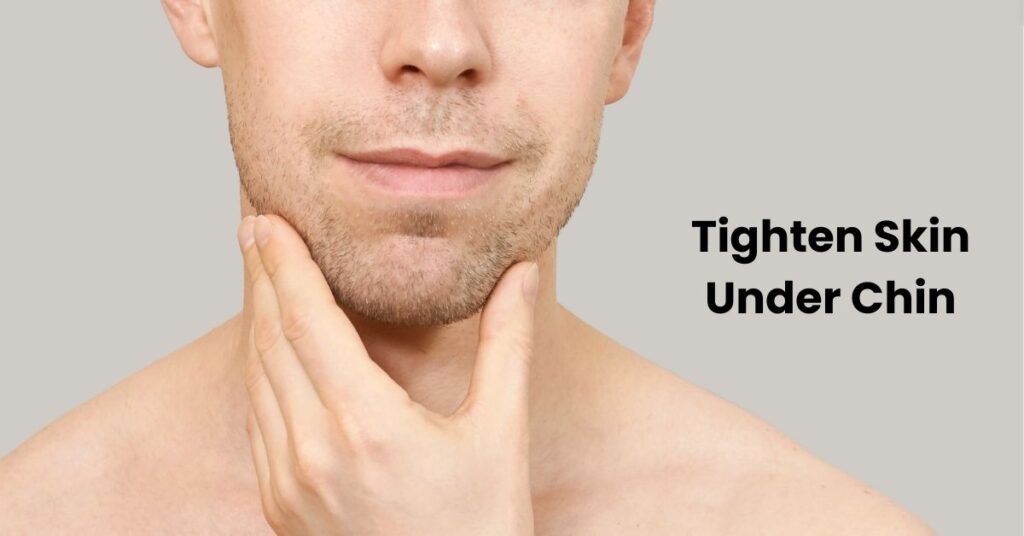
Loose skin under the chin can look firmer with posture work, smart skincare, and, when needed, in-office tightening.
Skin under the chin is a mix of thin skin, mobile fat, and constant motion. A small posture change can make it look smooth in one mirror and creased in the next. If you’re searching for how to tighten the skin under chin, you’ll get better results by treating it like a small project: figure out what’s driving the “soft” look, then pick actions that match.
You’ll learn how to tell skin laxity from submental fat, how to train the neck and jaw without strain, what skin-care ingredients make sense for this zone, and when an in-office treatment is worth it. You’ll finish with a simple 30-day routine.
| What You Notice Under The Chin | Most Likely Driver | What Usually Helps |
|---|---|---|
| Crepey texture that folds when you turn your head | Skin laxity + dryness | Moisturizer, gentle retinoid routine, sun care |
| Soft “pouch” that feels thicker than the rest of your neck | Submental fat | Weight stability, fat-targeting treatments, contouring |
| Shadow line that appears when you look down at a phone | Forward-head posture | Posture resets, chin tucks, screen height fixes |
| Banding when you tense your neck | Platysma muscle activity | Gentle training, sometimes in-office options |
| Loose skin after weight loss | Reduced volume + stretched skin | Time, strength work, collagen-stimulating treatments |
| Uneven texture or small bumps | Follicles, irritation, shaving habits | Barrier care, softer shaving, mild exfoliation |
| Sudden swelling or one-sided fullness | Medical issue, not cosmetic | Prompt medical visit |
| Skin looks fine straight on, loose from the side | Angle + lighting + structure | Posture, photo setup, realistic expectations |
| Fine lines that keep returning | Repeated bending + dryness | Daily neck care, pillow tweaks, screen habits |
How To Tighten The Skin Under Chin Without Surgery
Start with one honest check: is this mostly skin, mostly fat, or mostly posture? Most people have a mix. Your job is to choose what to spend effort on first.
Check What You’re Working With
Use a mirror and calm light. Stand tall, relax your shoulders, and turn your head slightly to the side. Now do two quick checks.
- Pinch test: Gently pinch under the chin. A thick pad points to fat. A thin, papery pinch points to lax skin and dryness.
- Posture test: Take a selfie at eye level, then one with the phone lower. If the “double chin” shows up fast, posture is a big lever.
Keep the goal simple: reduce the shadow, smooth the texture, and help the skin sit closer to the frame of your jaw.
Daily Posture Reset That Changes The Look Fast
Posture shifts can change your profile in days because they change the angle of the skin. Do small resets often, not one long session.
- Screen lift: Bring your phone up to eye level.
- Shoulder drop: Exhale, let the shoulders fall, and widen the collarbones.
- Chin glide back: Keep your eyes level and slide your head straight back. Hold 3 seconds. Repeat 6 times.
Do this set morning, mid-day, and evening. If your neck feels tight, reduce the range and keep it slow.
Jaw And Neck Moves That Train The Right Muscles
These moves train deep neck muscles that stabilize your head. They should feel controlled, not dramatic. Stop if you feel sharp pain or tingling.
Chin tuck holds
Lie on your back with knees bent. Keep the back of your head on the floor. Tuck your chin slightly, then lift your head one inch. Hold 5 seconds. Do 6 reps. Rest, then repeat once.
Tongue-to-palate press
Press your whole tongue to the roof of your mouth. Keep lips closed and breathe through the nose. Hold 10 seconds. Repeat 8 times.
Isometric jawline press
Make a fist and place it under your chin. Try to open your mouth while the fist resists. Hold 6 seconds. Repeat 6 times. Keep effort at a 6 out of 10.
Train three days a week. On off days, stick to posture resets. Overworking can lead to neck tension and jaw clenching.
Skin Care That Matches Under-Chin Skin
Under-chin skin is thin, so it dries and creases. Treat it like your face, but go gentler. If you shave, treat it like sensitive skin.
- Cleanse lightly: Use a mild cleanser, then pat dry. Scrubbing can leave the skin irritated and rough.
- Moisturize daily: A plain moisturizer with glycerin or ceramides can soften the look of lines.
- Retinoids with care: A low-strength retinol used 2 nights a week may improve texture over time. Increase only if your skin stays calm. If you’re pregnant or nursing, skip retinoids and ask your clinician about safer options.
- Sun care on the neck: UV exposure breaks down collagen. Put broad-spectrum sunscreen on your neck and under your chin when you’ll be outside.
The American Academy of Dermatology’s page on firming sagging skin is a good reality check on what treatments tend to do best, and which marketing claims deserve side-eye.
Tightening Skin Under The Chin With At-Home Habits
Habits matter because this area folds all day. Small changes add up: less time with your head down, steadier weight, and a routine that keeps the skin calm.
Keep Weight Swings Small
Big swings stretch the skin, then ask it to shrink fast. Slow changes are kinder to the tissue. If you’re trying to lose weight, aim for steady progress and strength training so you keep muscle as you go.
Eat And Drink In A Skin-Friendly Way
Skin needs protein to build collagen, plus enough fluids to keep the surface from looking dry. Get protein at each meal, add fruit and vegetables for vitamin C and other nutrients, and drink enough water that your urine stays pale most of the day.
Set Up Sleep So The Neck Isn’t Scrunched
Sleep lines happen when the neck folds the same way for hours. If you sleep on your side, use a pillow that keeps your head level with your spine. If you sleep on your back, a thinner pillow can keep your chin from being pushed toward your chest.
Grooming Tricks That Help While You Wait
Skin changes take time. While you’re building that, small grooming choices can make the area look tighter in photos. Shave with the grain to reduce bumps, moisturize before makeup, and avoid heavy matte products that catch texture.
Clinic Options When Home Steps Stall
At-home work can tighten the look by improving posture, tone, and texture. If you want more lift, clinics use energy devices, injections, or surgery to change deeper structures.
If fullness is the main issue, some medical treatments target fat under the chin directly. Deoxycholic acid injections are one option. The Mayo Clinic’s deoxycholic acid overview explains what it is used for and why it must be given by a medical professional.
Ultrasound And Radiofrequency Tightening
These treatments warm deeper layers to trigger new collagen over time. They’re used for mild to moderate laxity. Results build slowly, and some people need more than one session.
Microneedling With Energy
Microneedling creates tiny channels that prompt repair. When paired with radiofrequency, the effect reaches deeper than needles alone. It can help with texture, mild laxity, and the look of fine lines.
Fat-Focused Treatments And Surgery
When fat is the main driver, reducing it can make the jawline look cleaner, which makes the skin look tighter. Swelling is common for a short period, so timing matters if you have an event coming up. If there’s a lot of loose skin, procedures like a neck lift can remove skin and tighten deeper layers, with longer healing time.
| In-Office Option | Best Match | Downtime Pattern |
|---|---|---|
| Ultrasound tightening | Mild to moderate laxity | Redness, mild soreness, back to routine fast |
| Radiofrequency tightening | Texture + slight looseness | Often none, sometimes mild swelling |
| RF microneedling | Texture, pores, fine lines | Redness for a few days, makeup after healing |
| Deoxycholic acid injections | Submental fat with decent skin tone | Swelling and tenderness for days to weeks |
| Submental liposuction | Fat with some skin snap-back | Compression and bruising for weeks |
| Neck lift | Loose skin, banding, structure change | Weeks of healing, longer scar care |
Build A 30-Day Routine That You’ll Actually Do
Consistency beats intensity here. You’re teaching posture, building small muscle endurance, and keeping the skin calm. Use this structure.
Week 1: Set Your Baseline
- Take two photos: front and side, both at eye level.
- Do posture resets twice a day.
- Moisturize the neck each morning.
- Use retinol one night, then watch for irritation.
Weeks 2 And 3: Add Training Without Tension
- Train the three strength moves three days a week.
- Add one more retinol night if your skin is quiet.
- Raise screens and drop shoulders during work breaks.
Week 4: Keep The Plan Simple
- Stay steady. Don’t chase soreness.
- Retake the same two photos and compare angles.
- If you want in-office care, book a visit.
This is the core of how to tighten the skin under chin over time: steady posture, gentle training, and skin care that you keep up.
Common Mistakes That Keep The Area Looking Loose
- Doing endless “face yoga” reps: High-rep motions can increase jaw clenching and neck tension.
- Skipping sunscreen on the neck: The neck ages fast when it’s left bare in the sun.
- Using harsh scrubs: Irritated skin looks rough and creases more.
- Expecting a one-week fix: Collagen change takes time. Most visible shifts come from posture first, then texture, then lift.
- Chasing the strongest products: Under-chin skin gets red easily. Calm skin looks tighter than inflamed skin.
When A Medical Check Makes Sense
Not all change under the chin is cosmetic. Get medical care if you notice a new lump, one-sided swelling, pain, trouble swallowing, fever, or rapid change that doesn’t match weight or posture shifts.
For routine cosmetic goals, a dermatologist or plastic surgeon can help you choose options that match your skin tone, budget, and timeline.
References & Sources
- American Academy of Dermatology (AAD).“Many ways to firm sagging skin.”Explains evidence-based at-home steps and in-office treatments used to improve the look of sagging skin.
- Mayo Clinic.“Deoxycholic acid (subcutaneous route) — description.”Describes deoxycholic acid use for submental fat and notes it must be administered under medical supervision.

Mo Maruf
I created WellFizz to bridge the gap between vague wellness advice and actionable solutions. My mission is simple: to decode the research and give you practical tools you can actually use.
Beyond the data, I am a passionate traveler. I believe that stepping away from the screen to explore new environments is essential for mental clarity and physical vitality.