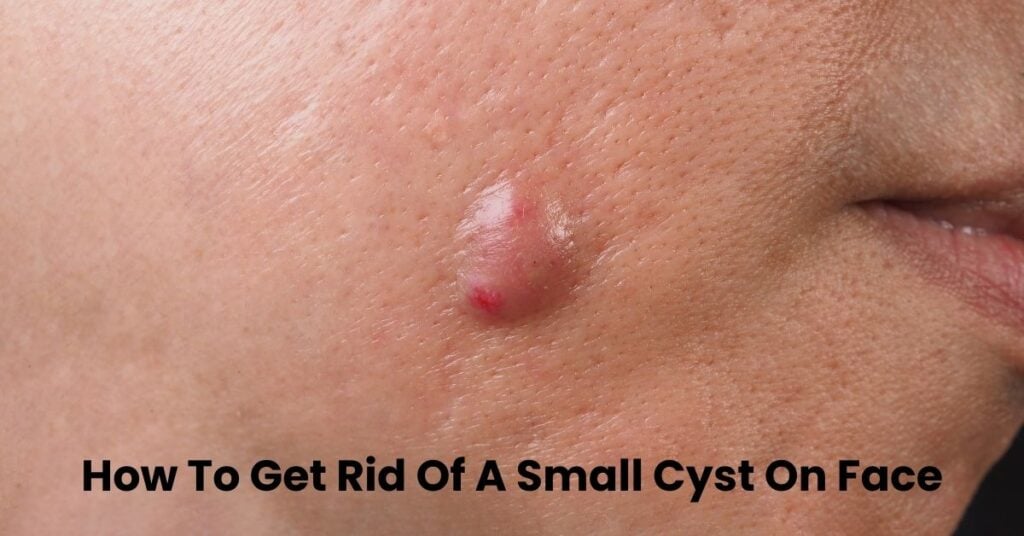
A small facial cyst often settles with gentle care and warm compresses, while painful, fast-growing, or draining bumps need a clinician.
A bump on your face can mess with your day. When it feels like a little marble under the skin, it may be a cyst. Some settle on their own. Some hang around. A few flare after squeezing, friction, or shaving.
This piece walks you through how to handle a small cyst on facial skin without turning it into a bigger problem. You’ll get a quick “what am I dealing with” check, safe home care, skin-barrier habits that lower flare-ups, and clear signals that mean it’s time to see a dermatologist with less guesswork.
| What You Notice | Common Clues | What To Do Next |
|---|---|---|
| Small, firm bump under skin | Slow-growing, skin-colored, moves a little | Leave it alone; start warm compress routine |
| Little black dot on top | Central “plug” that looks like a pore | Don’t pick; keep area clean and dry |
| Redness and tenderness | Feels sore, warmer than nearby skin | Pause active products; use cool then warm compress |
| Soft center or “squishy” feel | May be inflamed or starting to drain | Bandage with clean dressing; avoid pressure |
| Drainage with odor | Thick material, may look cheesy | Clean gently; book medical visit soon |
| Rapid swelling in 24–48 hours | Can signal infection or rupture | Seek same-day care, especially on the face |
| Close to eye, nose, or lip line | Higher-risk area for swelling and marks | Skip DIY; get it checked early |
| Hard, fixed lump that changes shape | Not typical for a simple cyst | Get prompt medical assessment |
What Counts As A “Small Cyst” On The Face
Most “small cyst” stories fall into a few buckets. The first is an epidermoid cyst, a sac under the skin that holds keratin. It tends to feel firm, smooth, and round. Some have a tiny dark dot at the surface.
Another is a pimple that sits deep and acts cyst-like. It hurts more than it shows and can flare with stress, friction from masks, or heavy products. A third group is milia, those tiny white bumps that sit shallow. They are not the same thing as a true cyst, yet they get lumped together in casual talk.
Your goal is simple: calm the skin, stop extra trauma, and let the body do the slow work. When that doesn’t happen, a clinician can treat the sac itself, not just the swelling around it.
How To Get Rid Of A Small Cyst On Face
If you searched how to get rid of a small cyst on face, you’re likely tempted to poke at it. Skip that. Face skin scars easily, and squeezing can push contents deeper, raise swelling, and set up infection. The NHS guidance on skin cysts warns against squeezing because it can trigger infection.
Step 1: Switch To “Hands Off” Mode
Make a deal with yourself for a week: no picking, no pinching, no “just checking.” Stick to it each day. Touch transfers oil and bacteria. Pressure can rupture the sac under the skin, which makes the bump look bigger and last longer.
- Keep hair products off the area.
- Avoid tight mask seams that rub the spot.
- Skip facial massage tools near the bump.
Step 2: Use Warm Compresses The Right Way
Warmth can soften trapped material and ease tenderness. Use a clean washcloth soaked in warm water, wrung out, then laid over the bump. Aim for 10–15 minutes, 3–4 times a day. The water should feel like a warm bath, not hot.
Step 3: Clean Gently, Then Leave It Alone
Wash with a mild, fragrance-free cleanser once or twice daily. Pat dry. Avoid scrubs, brushes, and gritty cleansers. Those can tear the surface and set off more swelling.
After cleansing, use a plain moisturizer if your skin feels tight. Dry, irritated skin triggers more touching and more product hopping, which keeps the area unsettled.
Step 4: Pause Strong Actives Until The Bump Calms
When the bump is irritated, step back from strong acids, retinoids, and harsh spot treatments on that exact area. They can sting and ramp up redness. Keep your routine basic for a few days, then restart slowly once the spot is quiet.
Step 5: Bandage It When You Can’t Stop Touching
If you catch yourself grazing the area while thinking, bandage it. A small hydrocolloid patch can block fingers and reduce rubbing. Change the covering daily and keep it clean.
Getting Rid Of A Small Cyst On Your Face With Fewer Marks
A small cyst often leaves a mark because the skin around it gets inflamed, not because the bump itself is huge. Your job is to keep swelling down and protect the skin’s surface.
Shaving, Makeup, And Sunscreen Tips
Shaving over a cyst can nick it. If the cyst sits in your beard line, shave around it or use an electric trimmer with a guard. For makeup, choose non-comedogenic products and remove them fully at night. If you use a makeup sponge, wash it often.
Use sunscreen daily. Sun darkens post-bump marks and makes them linger. A simple mineral sunscreen can be a calm choice if your skin is reactive.
What Not To Put On A Facial Cyst
- Toothpaste, rubbing alcohol, and peroxide. They irritate skin and do not remove the sac.
- Needles, pins, or “sterile” lancets at home. A tiny puncture can still lead to infection and scarring.
- Heavy occlusive oils on the bump. They can trap heat and sweat.
When Home Care Isn’t Enough
Some cysts sit quietly for months, then flare. Others grow or drain. When that happens, home care turns into a waiting game you don’t need to play. A clinician can confirm what the bump is, rule out other lesions, and treat the cyst wall so it’s less likely to return.
The Mayo Clinic’s epidermoid cyst treatment page lists home care like warm compresses and warns against squeezing. It also outlines medical options when a cyst is inflamed or keeps coming back.
Signs That Call For Prompt Care
- Rapid growth over days.
- Spreading redness, warmth, or throbbing pain.
- Pus-like drainage, crusting, or a bad smell.
- Fever or feeling unwell.
- Location near the eye, inside the nostril, or on the lip border.
Why The Face Gets Extra Caution
Facial skin shows marks more easily, and swelling around the eyes or nose can move fast. Also, squeezing in these areas can spread bacteria into deeper tissue. If you’re on the fence, getting it checked sooner usually saves you time, discomfort, and after-marks.
What A Dermatologist Can Do For A Small Facial Cyst
In a clinic, treatment targets the cyst wall. Draining the contents alone can shrink the bump, yet the sac can refill. Removing the sac lowers recurrence, though it can leave a small scar. Your clinician weighs the trade-off based on size, location, and irritation level.
| Clinic Option | What It Does | Typical Notes |
|---|---|---|
| Diagnosis check | Confirms cyst type, rules out other lesions | Often visual exam; photos may be taken |
| Steroid injection | Calms swelling in an inflamed cyst | Can flatten faster; may need repeat visit |
| Incision and drainage | Releases contents to reduce pressure | Fast relief; sac may remain |
| Minimal excision | Removes sac through a small opening | Small scar; best when not inflamed |
| Full excision | Removes sac and contents completely | Lowest recurrence; stitches may be used |
| Antibiotics | Treats true infection when present | Not used for each red cyst |
How To Prep For Your Visit
Bring a short timeline: when it showed up, how fast it changed, and what you tried. If it drains, note the color and whether it has odor.
What Healing Usually Looks Like
After drainage, swelling can drop fast, yet mild redness can linger. After excision, you’ll have a small wound that needs gentle cleansing and sun protection. Avoid heavy sweating and makeup on the site until your clinician says it’s fine.
Habits That Reduce Repeat Cysts On The Face
You can’t control each cyst. Some form from blocked follicles or trapped keratin. Still, daily habits can lower flare-ups and keep skin calmer.
Keep Your Routine Steady For Two Weeks
Skin likes consistency. Pick one gentle cleanser, one moisturizer, and one sunscreen. Stick with them.
Watch Friction And Occlusion
Masks, helmet straps, and phone screens can rub the same spot daily. Clean mask fabric often. Wipe your phone screen. If a strap hits the same area, adjust it or add a soft barrier.
Be Careful With Home “Extraction” Tools
Comedone tools, needles, and peeling gadgets can tear skin. On the face, that can leave a mark that lasts longer than the cyst itself. If you like extractions, save them for a professional setting.
How To Tell If It’s Not A Simple Cyst
Most small cysts feel smooth and round. They change slowly. If your bump is hard, fixed, irregular, bleeds, or keeps crusting, treat it as a “get checked” issue. Skin cancer on the face is not common in younger people, yet any changing lesion deserves a proper exam.
A Simple 7-Day Plan You Can Follow
- Day 1: Stop touching it. Take a clear photo in good light.
- Days 1–7: Warm compress 10–15 minutes, 3–4 times daily.
- Days 1–7: Gentle cleanse, then moisturize if needed.
- Days 1–4: Skip strong actives on the area.
- Days 1–7: Bandage it if your fingers wander.
- Day 4: If redness or pain climbs, plan a medical visit.
- Day 7: If it’s unchanged, book dermatology to talk removal options.
If you’re still searching how to get rid of a small cyst on face after a week of steady care, that’s your cue. A clinician can confirm the diagnosis and treat the cyst wall so you’re not stuck in a loop.
One last reminder: the safest win is boring. Clean hands, gentle skin care, steady warmth, and patience beat squeezing each time. If the bump turns painful, grows fast, or drains, get it checked early and protect your skin from extra trauma.
References & Sources
- National Health Service (NHS).“Skin cyst.”Notes that squeezing a cyst can lead to infection and gives basic care guidance.
- Mayo Clinic.“Epidermoid cysts: Diagnosis and treatment.”Lists home care like warm compresses and outlines medical treatment options.

Mo Maruf
I created WellFizz to bridge the gap between vague wellness advice and actionable solutions. My mission is simple: to decode the research and give you practical tools you can actually use.
Beyond the data, I am a passionate traveler. I believe that stepping away from the screen to explore new environments is essential for mental clarity and physical vitality.