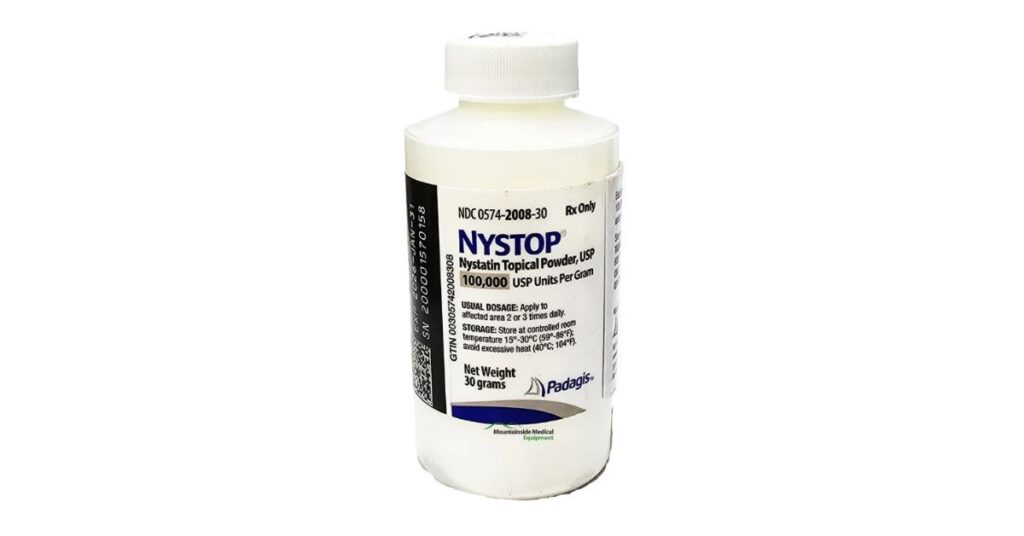
Apply nystatin powder in a light, dry layer on clean skin 2–3 times daily, then wash hands and keep the area dry.
Nystatin powder is a prescription antifungal used on skin yeast rashes. It’s often chosen for spots that stay damp, like skin folds, the groin, under a belly fold, or inside shoes for certain foot infections. If you’ve been handed a bottle and you’re thinking, “Okay… where do I start?” this page walks you through the practical stuff: prep, application, cleanup, and the common slip-ups that keep a rash hanging around.
Before you begin, match what you do to the directions on your pharmacy label. Dosing and duration can vary by the condition and the body area. If your rash is painful, oozing, spreading fast, or paired with fever, call a clinician before you keep self-treating.
| What You’re Doing | What To Do | Why It Helps |
|---|---|---|
| Confirm the target | Use nystatin powder only on the area it was prescribed for. | It treats Candida yeast on skin, not every rash. |
| Clean first | Wash with mild soap and water, then rinse well. | Removes sweat, oils, and residue that block contact. |
| Dry fully | Pat dry with a clean towel; wait a minute for moisture to leave folds. | Powder clumps on wet skin and can trap dampness. |
| Apply a light layer | Dust a thin coat that just coats the rash and the nearby edge. | Even contact beats thick piles that cake up. |
| Hands in, hands out | Wash hands before and after each application. | Limits spread to eyes, mouth, and other skin. |
| Keep the zone dry | Choose breathable clothing; change sweaty items promptly. | Yeast grows best in warm, damp areas. |
| Footwear use | If treating feet, dust feet and the inside of shoes or socks as directed. | Reduces re-seeding from damp footwear. |
| Missed dose plan | Apply when you remember, then return to your usual times. | Keeps a steady routine without doubling up. |
| Watch for irritation | Stop and call a clinician if burning, swelling, or a new rash starts. | Some people react to ingredients in the base. |
| Store correctly | Keep capped, at room temperature, away from heat and humidity. | Helps the powder stay free-flowing and stable. |
When Nystatin Powder Makes Sense
Nystatin is built to treat Candida yeast on the skin. Many “yeast rashes” show up where skin rubs and sweat sits: under breasts, between thighs, in armpits, under a belly fold, or around the diaper area. The powder format is handy when cream feels greasy or when the area stays moist.
If you’re trying to figure out how to apply nystatin powder for the first time, it helps to know what it won’t do. It won’t treat bacterial infections, shingles, or most ringworm infections caused by dermatophytes. If you’re not sure what you’re treating, a quick check with a clinician can save days of guesswork.
How to Apply Nystatin Powder For Skin Yeast
The goal is simple: clean skin, dry skin, then a light dusting that stays put. These steps match common pharmacy directions and the official patient guidance for topical nystatin products. You can also read the MedlinePlus nystatin topical drug information for plain-language reminders on use.
Prep the skin
- Wash your hands.
- Clean the area with mild soap and water.
- Rinse well so no cleanser film is left behind.
- Pat dry. Don’t rub; friction can crack already sore skin.
- Let folds air-dry for a minute. A cool fan setting can help if your clinician says it’s fine.
Apply the powder without caking
- Shake the bottle gently so the powder loosens.
- Hold it a few inches from the skin and dust a thin, even layer.
- Use just enough to coat the rash and a small border around it.
- If powder piles up, tap off the excess with clean, dry gauze.
Thick layers can clump once sweat returns, and clumps can trap moisture against the skin. A light coat usually feels more comfortable and stays in place longer.
Handle feet and footwear the right way
If your prescription is for a Candida foot infection, treat both the skin and the things that touch it. Dust the powder on clean, dry feet, then dust inside socks or shoes if your label says to. DailyMed label for topical nystatin powder mentions dusting footwear in that situation.
Finish up
- Wash your hands again.
- Put on clean, breathable clothing.
- Keep the cap on tight so humidity doesn’t clump the powder.
Applying Nystatin Powder Safely On Sensitive Areas
Nystatin topical powder is meant for skin use. Don’t put it in the eyes, mouth, or vagina, and don’t use it on large open wounds unless your clinician told you to. If you’re treating a fold or groin area, aim for a thin coat that doesn’t drift.
Try these small moves that lower mess and irritation:
- Apply after a shower, once the area is fully dry.
- Use a mirror for folds you can’t see well.
- Wear loose cotton underwear or shorts to cut rubbing.
- Avoid fragranced body products on the rash until it settles.
For babies with diaper rash, follow your pediatrician’s plan. Many rashes in the diaper area aren’t yeast, and some need a different treatment.
How Often To Use And How Long To Keep Going
Most topical nystatin powder directions land at two or three times a day. MedlinePlus notes that nystatin powder is often used two or three times daily, and many product labels say the same. Your own label wins if it differs.
Stick to a steady rhythm. If you miss a dose, apply when you remember, then return to your normal schedule. Skip the urge to double up. More powder doesn’t speed healing, and it can raise irritation.
Many yeast rashes feel better within a few days, yet the skin can still hold yeast after the itching fades. Finish the full course your prescriber set. If there’s no lift after several days of correct use, or if it gets worse, call a clinician and ask if the diagnosis needs a second look.
Signs The Rash Might Not Be Yeast
Yeast rashes often look red and shiny in folds, with small “satellite” bumps nearby. Still, plenty of skin problems mimic each other. If any of these show up, pause and get checked:
- Honey-colored crust, pus, or a strong odor
- Sharp pain, fever, or chills
- Blisters, purple patches, or sores that bleed
- A ring-shaped rash with a raised edge that keeps spreading
- A new rash after starting the powder
Those clues can point to bacteria, viruses, allergic reactions, or a different fungus. A swap in medication, or a lab check, can make treatment match the cause.
Mistakes That Keep Nystatin Powder From Helping
Most problems come from moisture, friction, or using the wrong product for the rash. The fixes are simple, but they do take routine.
| Slip-Up | What It Can Lead To | What To Do Next Time |
|---|---|---|
| Putting powder on damp skin | Clumps, poor contact, more wetness trapped in folds | Pat dry, then wait a minute before dusting |
| Using a thick layer | Caking, rubbing, stinging when sweat returns | Dust a light coat; tap off excess |
| Stopping as soon as it feels better | Rash returns after a short break | Finish the course on your label |
| Rewearing damp clothes | Yeast keeps getting fed by sweat and friction | Change socks/underwear after workouts |
| Sharing towels | Spread to other skin or other people | Use your own towel; wash hot if allowed |
| Mixing with heavy ointments | Powder turns pasty and slides off | Ask your pharmacist if layering is okay |
| Using it on ringworm | No improvement, rash keeps expanding | Get checked; a different antifungal may be needed |
When To Call A Clinician Quickly
Most skin yeast infections are mild, yet some situations need faster help. Call a clinician soon if you have diabetes with broken skin, a weakened immune system, or a rash near a surgical wound. Also call if the rash spreads past the original area, keeps cracking, or starts draining fluid.
Get urgent care if you have trouble breathing, face or throat swelling, or widespread hives after applying the powder. Those can signal an allergic reaction.
Storage And Hygiene That Keep Treatment On Track
Keep the bottle tightly closed and store it at room temperature, away from heat. Many product labels list controlled room temperature storage and warn against excess heat. If the powder turns into hard chunks, it’s harder to apply evenly.
Pair the medication with small hygiene habits that help skin stay dry:
- Use a clean towel each day on the affected area.
- After bathing, dry folds with a patting motion.
- Choose breathable fabrics; change out of sweaty clothes fast.
- If your clinician approves, place a clean, dry cotton pad in a deep fold to absorb sweat.
If you’re also using other prescription skin meds, keep a simple schedule so products don’t pile up together. Your pharmacist can tell you how to space them.
Quick Dose Checklist You Can Keep By The Sink
This is the routine most people follow when they want the powder to stay put and do its job. It’s also a handy way to teach a teen or caregiver the same steps.
- Wash hands.
- Wash the area, rinse, and pat dry.
- Wait for folds to dry fully.
- Dust a light layer of powder; no piles.
- Put on clean, breathable clothing.
- Wash hands again.
- Log the time so you don’t miss the next dose.
If you’re still unsure how to apply nystatin powder for your specific situation, read your prescription label and call your pharmacist with the bottle today. A 60-second check can prevent a week of trial and error.

Mo Maruf
I created WellFizz to bridge the gap between vague wellness advice and actionable solutions. My mission is simple: to decode the research and give you practical tools you can actually use.
Beyond the data, I am a passionate traveler. I believe that stepping away from the screen to explore new environments is essential for mental clarity and physical vitality.