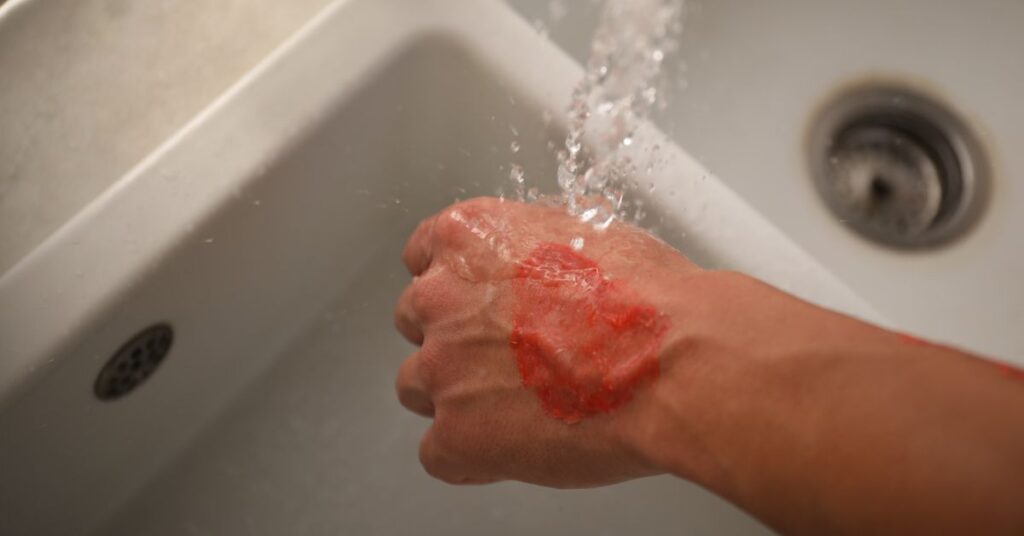
For bad burns at home, cool the area under running water for 20 minutes, cover it cleanly, and get medical help for large or deep burns.
Burns feel scary because skin can keep taking damage after the heat is gone. At home, stop the burn, cool it, cover it cleanly, then decide if you need urgent care.
If you searched what to do for bad burns at home? you want steps you can do now.
This page is first aid, not medical care. If you’re unsure, get checked.
Fast Burn Check Before You Do Anything Else
Use the checks below to sort “treat at home for now” from “get help now.” If the burn looks worse than you expected, start cooling while you arrange care.
| What You See | What It Can Mean | What To Do Now |
|---|---|---|
| Red, sore skin with no blisters | Superficial burn | Cool with running water, cover, manage pain, watch for change |
| Blisters, weeping skin, strong pain | Partial-thickness burn | Cool for 20 minutes, cover with non-stick dressing, get medical advice if larger than your palm |
| White, brown, or charred patches | Deep burn | Call emergency services or go to urgent care; keep cooling only if it doesn’t delay help |
| Burn on face, hands, feet, genitals, or over a big joint | Higher risk area | Start first aid, then seek same-day medical care |
| Ring, watch, tight clothing near the burn | Swelling can trap blood flow | Remove it early if it isn’t stuck to skin |
| Chemical spill, cement, drain cleaner, battery acid | Chemical burn keeps damaging tissue | Brush off dry powder, rinse for a long time, call poison advice or urgent care |
| Electrical source, outlet, lightning, appliance shock | Hidden internal injury | Call emergency services even if the skin mark looks small |
| Coughing, soot around nose or mouth, hoarse voice | Smoke or airway injury | Call emergency services right away |
What to Do for Bad Burns at Home?
Start with these steps in order. Skip creams and kitchen fixes. Cooling and clean coverage do more than home remedies.
1) Stop The Burning
Move away from the heat source. Turn off electricity or gas if that’s part of the injury. If clothing is on fire, drop and roll. If anything is melted or stuck to the skin, leave it in place.
2) Cool With Running Water For 20 Minutes
Hold the burned area under cool or lukewarm running water for 20 minutes if you can. This limits how deep the burn goes. Don’t use ice or iced water.
When you need a reference, follow the NHS burns and scalds treatment advice on cooling and covering burns.
3) Remove Tight Items Before Swelling Starts
Take off rings, bracelets, watches, belts, and snug clothing near the burn as soon as you can. Swelling can happen fast. If fabric is stuck to the burn, don’t peel it off.
4) Cover The Burn The Right Way
Once the burn is cooled, cover it to keep germs out and air off. A sterile non-stick pad works well. If you don’t have one, use clean cling film laid loosely over the area. Avoid fluffy cotton or tissue.
5) Keep The Person Warm, Not The Burn
Cooling a large area can chill the body, especially in kids and older adults. Use a blanket or extra clothing on the rest of the body. Keep the burn itself bare except for the dressing.
6) Manage Pain And Swelling
Over-the-counter pain medicine can help you stay still while the burn settles. Paracetamol or ibuprofen are common choices for adults who can take them. Follow the label and don’t mix products that share the same ingredient.
If the burned area is on an arm or leg, rest it on pillows to reduce swelling. Keep fingers and toes moving so they don’t stiffen.
Bad Burn First Aid At Home For Blisters And Big Areas
Blisters are the fork in the road. A small blistered burn can still heal well with careful dressing. A large blistered burn, or one with patchy color and numb spots, needs medical care.
Leave Blisters Alone
Don’t pop blisters. The roof acts like a natural cover. If a blister breaks on its own, rinse gently with clean water, pat dry, and re-dress with a non-stick pad.
Pick A Dressing That Won’t Stick
Look for “non-adherent” or “non-stick” pads in a first-aid kit. Secure them with gauze or a light wrap. Keep it snug but not tight. If you use cling film, lay it on and tuck the edges; don’t wrap it around a limb like a bandage.
Watch The Size Rule
A quick size check: if the blistered area is larger than the person’s palm, treat it as a “get seen” burn. The same goes for burns that cross a joint.
What Not To Put On A Burn
A lot of classic home “fixes” trap heat or irritate tissue. Skip them, even if someone swears by them.
- Ice, ice packs, frozen gel packs
- Butter, oils, toothpaste, egg white, powders
- Alcohol wipes or strong antiseptics on fresh burns
- Fluffy cotton, paper towels, or tissues stuck directly on the wound
- Adhesive bandages placed over blistered skin
The American Red Cross lists the same “no ice, no greasy products” rules in its American Red Cross burn first aid steps.
When You Should Get Medical Care Right Away
Bad burns can change quickly. Go to urgent care or call emergency services if any of these fit:
- The burn is deep, white, brown, or charred
- The burn is larger than the person’s palm
- It’s on the face, hands, feet, genitals, or over a major joint
- There are signs of smoke injury: trouble breathing, hoarse voice, coughing soot
- The burn came from electricity or chemicals
- The person is a baby, an older adult, or has a condition that slows healing
- Pain is severe, or the person seems drowsy, confused, or faint
If you’re in doubt, treat it like an emergency. Keep cooling the burn while someone else calls for help.
Home Care Over The Next Two Days
Once the first aid is done, the next 48 hours are about cleanliness, comfort, and spotting trouble early. Many burns hurt more on day two, so plan for that.
Change Dressings Gently
Wash your hands. Peel the old dressing back slowly. If it sticks, dampen it with clean water until it releases. Rinse the area with water, pat the skin around it dry, then place a fresh non-stick pad.
Keep The Burn Clean And Dry
A light shower is fine once the burn is covered. Skip soaking in a tub or swimming until the skin is closed. If the burn is on a hand, a clean plastic bag over the dressing can keep it dry while you wash.
Look For Infection Or Worsening Damage
Get medical care if you notice spreading redness, rising pain, swelling that keeps growing, pus, bad smell, fever, or red streaks up an arm or leg. Also get checked if the burn isn’t improving over a few days.
If the burn is on a hand, keep nails short and clean. Wear loose clothing over dressings. If itching starts, don’t scratch; tap around the area or apply a cool cloth.
Pain Relief And Dressing Options You Can Use
You don’t need fancy gear to do a solid job at home. You need the right basics and a calm routine. If you’re shopping, stick to supplies made for wounds.
| Option | How To Use | Notes |
|---|---|---|
| Cool running water | Cool the burn for 20 minutes | Best first step; avoid ice |
| Non-stick sterile pad | Place over cooled burn, secure lightly | Reduces pain from air and friction |
| Cling film | Lay loosely over the burn | Good short-term cover; don’t wrap tight |
| Gauze roll | Hold a non-stick pad in place | Keep it loose to avoid pressure |
| Paracetamol | Use label dosing for age and weight | Avoid doubling up with combo cold meds |
| Ibuprofen | Take with food if your stomach is sensitive | Avoid if you have ulcers, kidney disease, or are late in pregnancy |
| Oral fluids | Drink regularly through the day | Large burns can dehydrate you |
Special Cases You Should Treat Differently
Chemical Burns
Dry chemicals can keep reacting with skin. Brush off any dry powder with a cloth or gloved hand first, then rinse with running water for a long time. Remove contaminated clothing while rinsing. Call poison advice or urgent care for guidance.
Electrical Burns
Turn off the power source if it’s safe. Don’t touch the person until the power is off. Electrical burns can injure tissue under the skin, so get emergency care even if the outside mark looks small.
Sunburn That Blisters
Blistering sunburn is a deeper burn. Get out of the sun, cool the skin with a cool shower, drink water, and cover broken blisters with a non-stick pad. Seek medical care if there’s widespread blistering, fever, or chills.
Burn First Aid Checklist To Keep On Your Phone
If you ever find yourself typing what to do for bad burns at home? in a panic, run this list. It’s short on purpose.
- Stop the burn source. Leave stuck material alone.
- Cool under running water for 20 minutes.
- Remove rings and tight items before swelling.
- Cover with a sterile non-stick pad or loose cling film.
- Keep the person warm. Don’t warm the burn.
- Use pain medicine only as labeled.
- Get urgent care for large, blistered, deep, chemical, electrical, or face/hand/genital burns.
- Watch for infection and worsening pain over the next two days.

Mo Maruf
I created WellFizz to bridge the gap between vague wellness advice and actionable solutions. My mission is simple: to decode the research and give you practical tools you can actually use.
Beyond the data, I am a passionate traveler. I believe that stepping away from the screen to explore new environments is essential for mental clarity and physical vitality.