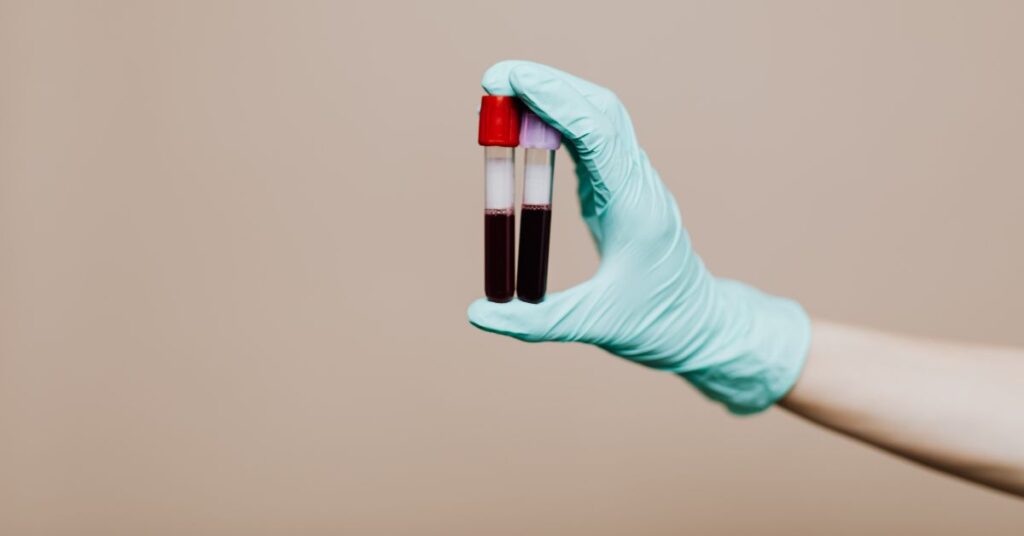
Blood alcohol (BAC) reflects drinking in the last 12 hours; PEth and CDT may show heavier alcohol use across the prior 2–4 weeks.
If you’ve ever had to take a lab test after a night out, you’ve probably wondered what the lab can see. Some blood tests show alcohol that’s in your bloodstream right now. Others don’t measure alcohol itself—they track body changes that tend to follow repeated drinking.
This guide lays out the blood tests used most often, what each one can and can’t tell you, and how long results may stay positive.
What Blood Tests Show Alcohol Use? Detection Windows By Test
There isn’t one single “alcohol blood test.” Labs pick from a menu based on timing and the reason for testing. A direct test looks for ethanol or a byproduct of ethanol. Indirect tests look for patterns that line up with heavier drinking over time.
| Blood Test | What It Can Show | Common Detection Window |
|---|---|---|
| Blood alcohol (ethanol / BAC) | Alcohol in blood at the moment of the draw | Up to 12 hours after the last drink |
| Ethyl glucuronide (EtG) in blood | A direct alcohol metabolite that extends the window past ethanol | Often 1–2 days after drinking |
| Ethyl sulfate (EtS) in blood | A direct alcohol metabolite; paired with EtG to reduce mix-ups | Often 1–2 days after drinking |
| Phosphatidylethanol (PEth) | A direct marker made only when alcohol is present; linked with repeated intake | Commonly up to 2–4 weeks |
| Carbohydrate-deficient transferrin (CDT) | An indirect marker linked with sustained heavier drinking | Often reflects the prior 2–3 weeks |
| GGT | Liver enzyme that may rise with heavy drinking and other liver stressors | Days to weeks; not alcohol-specific |
| AST, ALT, and the AST:ALT ratio | Liver enzymes and patterns that can align with alcohol-related injury | Days to weeks; depends on the cause |
| MCV | Red blood cell size that can drift upward with long-running heavy drinking | Weeks to months; changes slowly |
How Labs Choose A Blood Test
Choosing the right test is mostly about timing and the question being asked. A recent drinking check is different from ongoing monitoring, and both differ from routine bloodwork where alcohol is only one possible piece of the puzzle.
Recent Drinking Check
If the goal is “did this person drink recently,” the lab may start with blood ethanol (BAC). The MedlinePlus blood alcohol level test page notes that BAC can show alcohol in blood for up to 12 hours after drinking.
BAC has one job: it measures ethanol in your blood when the sample is taken. It doesn’t prove a pattern of drinking over weeks, and it won’t stay positive once your body clears the alcohol.
Markers With A Longer Window
If the question is “has there been drinking over the last few weeks,” labs often use PEth or CDT. The SAMHSA advisory on alcohol biomarkers explains that heavier drinking over about two weeks can raise CDT, and it summarizes how direct markers are used in care settings.
PEth is formed only when ethanol is present, which is why many labs treat it as a cleaner fit for tracking repeated intake. CDT is indirect, so it needs more clinical context.
Routine Panels That Raise Questions
Sometimes alcohol testing isn’t ordered. A clinician may see a pattern on a liver panel or a complete blood count and ask follow-up questions. These routine labs aren’t “proof,” yet they can prompt a closer review of drinking habits and other causes.
Blood Alcohol And Short-Window Metabolite Tests
Blood Alcohol (Ethanol / BAC)
Blood ethanol is the most direct answer to “is alcohol present right now.”
Timing drives the result. BAC rises and falls based on how fast you drank, whether you ate, and liver function. If the sample is taken late, BAC can read low or negative even after heavy drinking.
EtG And EtS In Blood
EtG and EtS are metabolites your body makes after it processes ethanol. They can stay detectable after blood ethanol is gone, so they’re used when the lab needs a wider window than BAC.
Many labs order EtG with EtS because the pair reduces mix-ups. Even so, timing still rules: a draw too early might miss them, and a draw too late may return to negative.
Longer-Window Blood Tests For Alcohol Use Patterns
PEth (Phosphatidylethanol)
PEth forms in blood cell membranes when ethanol is present. Since it isn’t produced without drinking, it’s used when the goal is tracking repeated intake over weeks. Reviews describe PEth as detectable for up to four weeks, with cutoffs to separate low from heavier use.
PEth isn’t a stopwatch. Trends across tests often matter more than one point.
CDT (Carbohydrate-Deficient Transferrin)
CDT is a change in transferrin that can rise with sustained heavier drinking. It tends to reflect drinking over the prior couple of weeks, and it drops with abstinence over time. It’s used as a pattern marker, not a “last drink” marker.
CDT is less sensitive for lighter drinking. It fits best when the concern is steady heavy intake, not occasional use.
Routine Bloodwork That Can Point Toward Heavy Drinking
Routine labs move for many reasons, so treat them as clues, not verdicts. When alcohol plays a role, it often shows up as a pattern across several results, paired with a history of intake and symptoms.
Liver Enzymes (GGT, AST, ALT)
GGT can rise with heavy drinking, yet it can also rise with bile duct issues, some medicines, and other liver conditions. AST and ALT can rise with liver injury from many causes. Clinicians sometimes check the AST:ALT ratio, since certain alcohol-related injuries can tilt that ratio upward.
If your results are abnormal, the next step is often repeat testing and a review of medicines, supplements, and symptoms. One lab draw rarely tells the whole story.
MCV And Other CBC Changes
MCV measures the average size of red blood cells. Long-running heavy drinking can raise MCV over time. Since red blood cells live for months, MCV shifts slowly, so it doesn’t answer “did you drink yesterday.”
Low folate, low B12, thyroid disease, and some blood disorders can also raise MCV, so it’s best read alongside other findings.
How To Read A Report Without Guessing
When people ask “what blood tests show alcohol use?” they’re often trying to match a result to a real-life timeline. Start by checking which test was ordered. A BAC result answers a different question than a PEth result, even if both get called an “alcohol test” in casual speech.
Next, read the units and the lab’s cutoff. PEth is often reported in ng/mL, while ethanol may be reported in mg/dL. A result just over a cutoff can reflect recent intake or timing that caught the tail end of clearance.
Then match the number to the draw time. Write down the date and time of the blood draw and the time of the last drink you recall. That small step makes result reviews far less stressful.
Common Reasons Results Don’t Match What You Expect
Mismatch stories are common: “I had one drink and the test was positive,” or “I drank a lot and the test was negative.” Most of the time the cause is timing, the wrong test for the question, or a medical factor that nudges an indirect marker.
| Situation | What’s Going On | Practical Next Step |
|---|---|---|
| Negative BAC after heavy drinking | The sample was drawn after ethanol cleared from blood | Ask if EtG/EtS or PEth fits the timing |
| Positive EtG/EtS with light drinking | Metabolites can detect small amounts within a short window | Match draw time to last drink; list alcohol-containing products used |
| PEth lower than expected | Long gap since the last drink or fewer drinking days than assumed | Track drinking days and repeat if monitoring continues |
| CDT not raised in a light-to-moderate pattern | CDT rises best with sustained heavier intake | Use CDT only for the question it answers; use PEth when a wider fit is needed |
| High GGT with no drinking | Other liver or bile issues, medicines, or metabolic conditions can raise GGT | Review meds, repeat labs, and follow a clinician’s workup plan |
| High AST/ALT after intense exercise or illness | Muscle injury, viral illness, and fatty liver can raise enzymes | Share recent exercise, symptoms, and medicine use before conclusions |
| High MCV with minimal drinking | Folate/B12 issues, thyroid disease, or blood conditions can raise MCV | Check nutrition labs and history alongside alcohol questions |
| Conflicting results across tests | Different windows, targets, and cutoffs | Line up each test with the timeline it spans, then retest with a consistent plan |
When A Blood Test Isn’t The Full Answer
Even the best lab marker is one piece of a bigger picture. Drinking patterns are usually assessed with a mix of self-report, clinical history, and labs when they add clarity. A test can show exposure, yet it can’t explain symptoms or goals.
If you’re asking what blood tests show alcohol use? because you’re worried about your own intake, start with a straight chat with a licensed clinician. Bring your lab report, share your typical week of drinking, and ask which marker fits the goal: screening, monitoring, or sorting out symptoms.
Simple Checklist Before You Get Tested
- Ask which exact test is being ordered (ethanol, EtG/EtS, PEth, CDT, or routine labs).
- Write down the date and time of your last drink and the blood draw.
- List all medicines and supplements, plus products with alcohol in them, like mouthwash.
- If monitoring abstinence, keep a short log of drinking days to match the marker window.
- Plan a follow-up visit so results are read with symptoms and history.

Mo Maruf
I created WellFizz to bridge the gap between vague wellness advice and actionable solutions. My mission is simple: to decode the research and give you practical tools you can actually use.
Beyond the data, I am a passionate traveler. I believe that stepping away from the screen to explore new environments is essential for mental clarity and physical vitality.