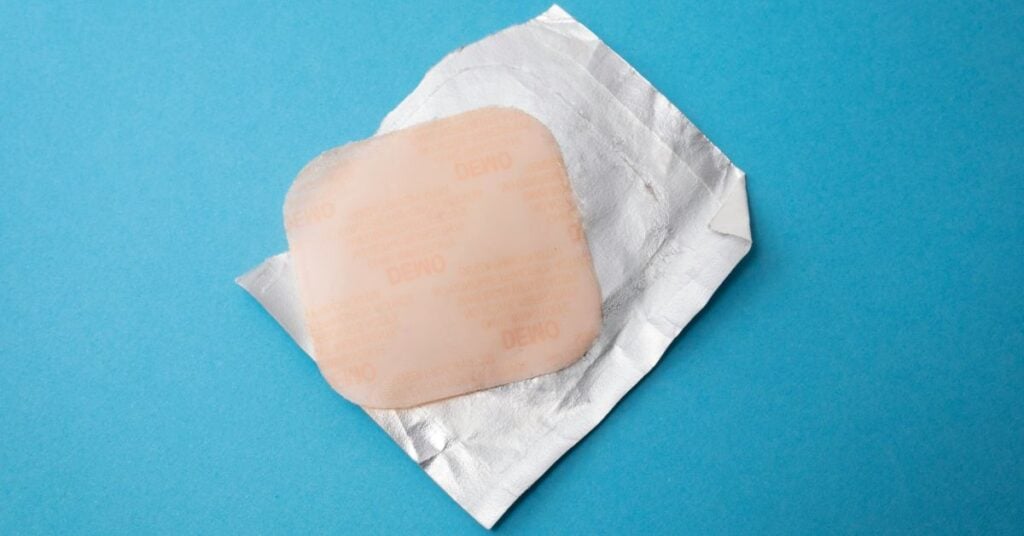
A clean, dry site and firm pressure keep an estrogen patch stuck through showers, sweat, and daily movement.
Estrogen patches are meant to be boring: stick it on, forget it, swap it on schedule. When a patch peels, it turns into a daily check, a wardrobe game, and a worry that you’re not getting the dose you were given. The good news is that most “falling off” problems trace back to a few fixable patterns: skin prep, placement, timing, and friction.
This article sticks to practical steps that match common label directions for estradiol transdermal systems. You’ll learn how to set the patch up for a full wear time, what to do when edges lift, and which habits quietly sabotage adhesion.
| Step | Do this | Why it works |
|---|---|---|
| Clean the site | Wash with mild soap and water, rinse well, pat fully dry. | Removes oils and residue that block adhesive contact. |
| Skip products | No lotion, body oil, sunscreen, powder, or perfume on or near the spot. | Many products act like a slippery film under the patch. |
| Trim hair | Use an electric trimmer or scissors; avoid shaving right before. | Hair breaks contact; fresh shaving can irritate skin. |
| Choose a flat area | Lower abdomen or buttocks, away from waistbands and skin folds. | Less rubbing and less moisture pooling at edges. |
| Press and seal | Press with your palm for 10–15 seconds, then trace the border. | Warmth and pressure help the adhesive bond evenly. |
| Let it set | Wait at least one hour before swimming, bathing, or heavy sweating. | Early water and sweat can weaken a new bond. |
| Rotate sites | Use a different area each change; rest a spot for at least a week. | Rested skin grips better and tends to react less. |
| Check daily | Once a day, smooth the edges with dry fingers. | Catching a lift early prevents a full peel later. |
How to Keep Estrogen Patch From Falling Off
Start with skin that is clean, dry, and cool
Adhesive likes bare skin. Wash the area with mild soap and water, rinse until it feels clean, then pat dry. If you run warm after a shower, wait a few minutes so the skin is cool and not damp from steam. If you sweat while drying your hair or getting dressed, apply the patch after you’ve cooled down.
Keep the application area free of skincare. If you moisturize daily, make a small “no-product zone” where the patch will sit. Put lotion on after the patch is on, and keep it well away from the edges.
Apply on relaxed skin, then use real pressure
Stand naturally and place the patch on skin that isn’t stretched. Avoid sucking in your stomach or twisting to reach the spot. Once it’s in place, press with the flat of your hand for 10–15 seconds. Hold it steady. Then run a finger around the edge like you’re sealing an envelope.
Match the placement rules for your patch
Brands vary on where they want you to place the system and how often to change it. The clearest source is your own label and the instructions that came in the box. Two reliable references are DailyMed estradiol transdermal system “Instructions for Use” and MedlinePlus estradiol transdermal patch information. These references stress clean, dry skin, site rotation, and avoiding the waistline where clothing can rub.
Placement and clothing choices that reduce peeling
Pick a spot that stays flat when you move
A patch may look fine when you’re standing, then wrinkle when you sit, bend, or reach. Wrinkles create tiny channels where water and sweat slip under an edge. Favor a smooth area on the lower abdomen or buttocks that stays flat through your normal day.
Avoid seams, waistbands, and rolling fabric
Friction is a slow pry bar. Tight underwear seams, jeans waistbands, shapewear, and leggings that slide can catch the edge again and again until it curls. If you wear compression clothing, place the patch where the garment does not roll or press into it.
Give a new patch a calm first hour
The first hour after placement sets the tone. Try not to do a sweaty workout, hop into a pool, or take a long hot bath right away. If mornings are hectic, an evening change can be easier: clean skin, apply, press, then let it settle while you relax.
Keeping your estrogen patch from falling off on hot days
Plan patch changes around heat and sweat
Heat softens many adhesives. On hot days, change the patch when you’re coolest, not right after you’ve been outside. Dry off, then wait a few minutes before you apply. If you know you’ll be sweating later, pick a spot that sits under loose, breathable fabric, not under a tight band.
Keep direct heat off the patch
Do not place heating pads, hot water bottles, or heated blankets directly over the patch. Heat can loosen adhesion and may change how the medication is released through the skin. If you use heat for cramps or back pain, move the heat source to a different area of the body.
Shower and swim without scrubbing the edge
Most patches are built to handle normal bathing once they’ve set. Still, rubbing a towel across the border can start a corner lift. After a shower, pat around the patch instead of dragging the towel across it. If you swim often, choose a spot that is not right where a swimsuit rubs.
When edges lift or the patch comes off
Fix a small lift before it turns into a peel
If you notice a corner lifting, press it down with dry fingers and hold it for several seconds. Then smooth the full edge. Catching it early often saves the rest of the wear period.
Use an overlay only when it fits your product
Some people keep a patch in place with a thin, transparent film dressing over the system. Labels differ, so read your package insert before you place an overlay on a patch. If you’re unsure what your brand allows, ask your pharmacist. Avoid thick, opaque tape that traps sweat and can irritate skin.
What to do if the patch fully detaches
If the patch falls off, look at the sticky side. If it is clean and still tacky, many labels say you can press it back onto the same area. If it is dirty, wrinkled, or no longer sticky, replace it with a new patch. Keep your usual change schedule unless your label tells you to reset it. If you need help deciding, call the clinician who prescribed it.
Don’t stack patches to “make up” for lost time unless your prescriber tells you to. More than one patch at a time can raise estrogen exposure beyond what you were given.
| What you see | Likely cause | Try this next time |
|---|---|---|
| Edges curl within hours | Lotion, oil, powder, or soap film on skin | Wash, rinse well, pat dry, then apply to bare skin only. |
| Patch slides after a bath | Soaking too soon after placement | Change earlier and give it at least one hour to set. |
| Patch sticks to clothing | Placed where fabric rubs | Move it away from seams, waistbands, and rolling bands. |
| Patch won’t stick on day two | Sweat pooled under an edge | Pick a drier, flatter spot and smooth edges daily. |
| Itching under the patch | Mild irritation or adhesive sensitivity | Rotate sites, rest the skin longer, report worsening rash. |
| Red mark after removal | Normal mild skin response | Wash gently and avoid using that spot for at least a week. |
| Patch peels during workouts | Heat plus friction | Apply well before exercise and wear softer fabric over it. |
| Patch lifts in hot weather | Adhesive softening | Change when you’re cool and keep direct heat off the patch. |
Skin care and rotation between changes
Remove gently and clear leftover adhesive
Peel the patch back slowly. Fast removal can irritate skin and make the next patch harder to wear. Wash the area with mild soap and water after removal. If you have residue, follow your label directions for cleanup. If you use an oil-based remover, wash again so the next site is clean and dry.
Rotate sites with a simple pattern
Rotation helps comfort and adhesion. A simple pattern works for many people: left lower abdomen, right lower abdomen, left buttock, right buttock, then repeat. Keep at least a week before you return to the same spot.
Know when skin needs medical care
Light redness where the patch sat can happen. Raised welts, blistering, open skin, or swelling should be checked by a clinician. Stop using that area until it heals.
A simple change-day checklist
On change day, aim for consistency. Wash and dry the site. Apply the patch to a flat, low-rub spot. Press hard for 10–15 seconds. Give it a calm first hour. Then do a quick edge check each day. Those steps solve most complaints that lead people to search “how to keep estrogen patch from falling off.”
After you dress, run a fingertip around the border again, since fabric can snag the edge while pulling clothes up.
If you’ve tried these basics and the patch still fails, bring the box to the pharmacy and ask about brand-to-brand differences in adhesive and patch size. A different system may fit your skin better. When your patch stays put, it fades back into the background, right where it belongs.
Use this page as your reset the next time you wonder how to keep estrogen patch from falling off. Start with clean skin and placement, then change one variable at a time until the patch behaves.

Mo Maruf
I created WellFizz to bridge the gap between vague wellness advice and actionable solutions. My mission is simple: to decode the research and give you practical tools you can actually use.
Beyond the data, I am a passionate traveler. I believe that stepping away from the screen to explore new environments is essential for mental clarity and physical vitality.