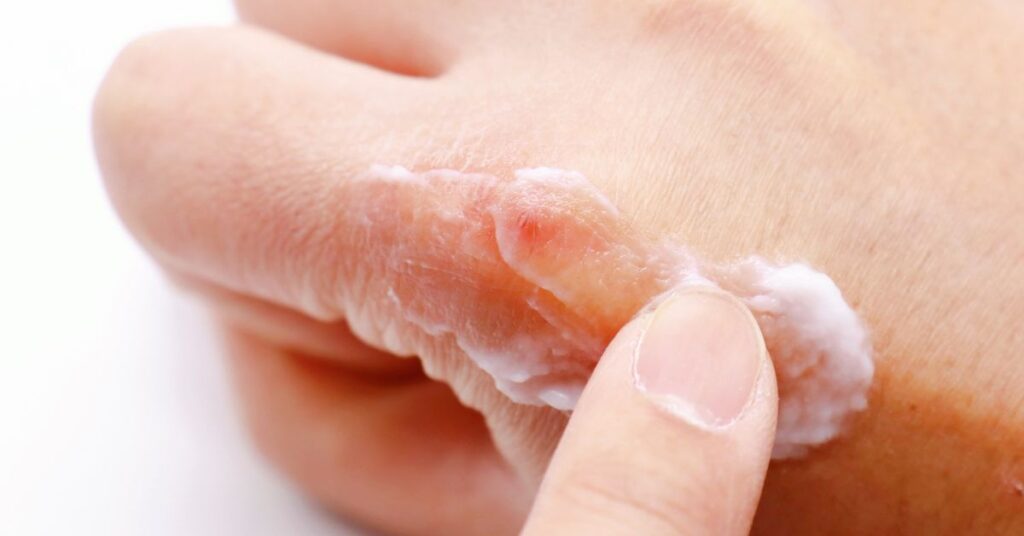
Soothe dry cracked hands by washing gently, sealing damp skin with a thick moisturizer, and using an overnight ointment layer to cut sting and help skin mend.
Dry, cracked hands can make small tasks—typing, cooking, opening a jar—hurt. If you searched for how to soothe dry cracked hands, you want relief that starts now, not a pile of product guesses. Most cracking comes from a damaged outer skin layer that keeps losing water.
The fix is plain: stop the stripping, then seal water back in at the right moments. This article lays out a routine you can follow today, plus a 7-day reset that keeps splits from reopening.
What dry cracked hands are telling you
Hand skin deals with water, soap, sanitizer, cold air, and friction. Each one removes oils or pulls water out of the outer layer. Once that layer gets leaky, skin tightens, stings, and splits at knuckles and fingertips.
Common triggers you can spot fast
- Hot water and long rinses: feels good, then you dry out fast.
- Foaming soaps and detergents: lots of bubbles, lots of oil loss.
- Frequent sanitizer use: alcohol can sting open micro-cracks.
- Wet work: dishes, cleaning, childcare, food prep.
- Cold, windy air: low humidity dries skin.
- Fragrance, dyes, and “tingly” additives: can irritate raw skin.
| What you notice | Common reason | What to do today |
|---|---|---|
| White flakes and tightness | Soap and hot water stripping oils | Use lukewarm water and moisturize right after drying |
| Stinging with sanitizer | Alcohol hitting open micro-cracks | Rinse with water when you can, then apply ointment to sore spots |
| Cracks at knuckles | Flex points splitting under tension | Use thick cream after each wash, then dab petrolatum on splits |
| Red patches and itch | Irritant dermatitis from wet work | Wear gloves for chores, then reapply cream when finished |
| Peeling around nails | Repeated rubbing and drying | Massage cream into cuticles twice daily and stop picking loose skin |
| Rough, thick skin on palms | Friction plus dryness | Try a low-urea cream at night, then seal with ointment |
| Splits that bleed | Barrier breakdown plus pressure | Seal cracks with a hydrocolloid, then moisturize around it |
| New rash after a product change | Reaction to fragrance, preservative, or latex | Stop the new item, use plain petrolatum, and track what touched your hands |
When to get help
See a clinician soon if cracks are spreading, oozing, warm, crusty, or paired with fever. Also get checked if deep fissures won’t close, or a rash returns each time you do dishes, glove up, or use a new product.
How to Soothe Dry Cracked Hands
This routine works because it pairs gentle cleansing with fast sealing. Do the daytime reset after every wash, then do the night repair most nights until your skin feels smooth again.
The two-minute after-wash reset
- Wash with lukewarm water. Keep it short. Use a mild, fragrance-free cleanser when you can.
- Pat dry. Leave a faint damp feel on the skin.
- Apply a thick cream within 60 seconds. Tube cream beats a thin pump lotion for cracks.
- Spot-seal splits. Dab petrolatum on fissures and sore corners, then smooth the edges.
If you want a simple rule, stick with “wash, pat, seal.” The American Academy of Dermatology gives similar guidance, including moisturizing right after washing; see AAD dry-skin care tips.
The night repair that actually stays on
Night care is where cracks close faster because product stays put longer. Use this setup when hands feel rough, tight, or stingy.
- Warm rinse or short soak. Plain water for 2–5 minutes rehydrates the surface.
- Thick cream over all hand skin. Press it into knuckles, fingertips, and cuticles.
- Ointment layer on top. A thin coat of petrolatum slows water loss.
- Cotton gloves for 30–90 minutes. If sleeping in gloves annoys you, wear them earlier in the evening.
For deep splits, pad the worst spot first with a small hydrocolloid dressing. It cushions the crack and reduces sting when you bend your fingers.
For paper cuts and fissures, a hydrocolloid patch can cushion the spot, then you can wash without sharp sting today.
When sanitizer is part of the day
Pick an alcohol hand rub that dries clean and skip scented options. After it dries, rub in a pea-size amount of cream so your hands don’t feel chalky. When hands are visibly dirty, soap and water still win; the CDC lays out the basics at CDC clean-hands basics.
Product choices that stop the cycle
Most “hand creams” fail because they’re too light or too scented. For cracked skin, you want a thicker base and a short ingredient list.
Pick a base that matches your day
- Lotion: light feel, wears off fast. Fine for mild dryness.
- Cream: solid daily choice for most people.
- Ointment: best seal for fissures and sore spots, but slippery.
Ingredients that tend to work well
Look for glycerin to bind water, petrolatum to slow water loss, and ceramides to help the outer layer recover. If palms are thick and rough, a low-percentage urea cream at night can soften the texture.
If a product burns for more than a minute, stop it. Go back to a plain ointment, then try a different cream later.
A quick patch check for new products
Test a new cream on a small area for two days. Use it on one hand only so you can compare. If redness or swelling shows up, drop that product.
Soothe dry cracked hands overnight with less mess
Ointment works, but it can get everywhere. These tricks keep the benefits without greasy chaos.
- Go thin, then repeat. Two light layers 10 minutes apart can feel cleaner than one thick coat.
- Use gloves for a set window. Wear cotton gloves for an hour, then take them off before sleep.
- Protect the worst crack. A small dressing over a split keeps ointment from sliding off.
- Keep supplies together. One pouch by the bed beats hunting for gloves at midnight.
Ingredient and product cheat sheet
Brands vary, but patterns stay the same. Use this table to pick a product type that fits your routine.
| Option | When it fits | What to look for |
|---|---|---|
| Thick hand cream | After every wash, daytime use | Fragrance-free, glycerin, ceramides |
| Petrolatum ointment | Cracks, knuckles, night sealing | Short ingredient list, no added scent |
| Urea cream (low %) | Rough palms, thick flaking | Urea plus a simple moisturizer base |
| Barrier cream | Before wet work or gloves | Film-forming feel, fragrance-free |
| Gentle cleanser | Handwashing at home | Mild surfactants, no strong dyes |
| Hydrocolloid dressing | Deep splits that reopen | Flexible, small-size patches |
| Liquid bandage | Fine cracks that sting | Dries fast, forms a thin seal |
| Cotton gloves | Night routine, short wear sessions | Snug cuff, breathable cotton |
Habits that keep cracks from coming back
Once your hands feel better, keep the gains. Most relapses happen after long hot washes, skipped cream, or bare-hand chores with detergents.
Make handwashing gentler without getting lax
- Use lukewarm water.
- Rinse well and dry fully between fingers.
- Apply cream after each wash.
- Keep sanitizer for moments when water isn’t available.
Set up the places you wash
Hand care is easier when supplies live where you use them. Put a gentle cleanser and a thick cream next to each sink, then add a small ointment jar in your bedside pouch. If you share a home, label yours so it doesn’t vanish.
- Kitchen sink: cream that absorbs fast
- Bathroom sink: the same cream, plus a spare tube
- Bag or car: a travel-size tube for quick reapply
When you dry, use a soft towel and press it on, then apply cream right away. Air-drying can leave hands tight before you reach your moisturizer.
Gloves that help, not hurt
For dishes and cleaning, use reusable gloves with a cotton liner or wear thin cotton gloves under the rubber pair. Replace gloves that feel sticky inside. If you sweat in gloves, rotate pairs and let them dry fully.
Stop the sneaky friction
Rough sponges, paper towels, and tight grips roughen skin when it’s dry. Swap scrubby tools for gentler ones. Use handles and brushes instead of bare fingertips during chores.
A 7-day reset you can actually follow
Think of this as a short sprint. You’re getting skin from “leaky and stingy” to “sealed and calm.” Stick to the same steps every day and you’ll feel the change.
Days 1–2: Calm the sore spots
- Switch to lukewarm water and pat-dry after every wash.
- Use thick cream after each wash, plus petrolatum on cracks.
- Do the night repair routine once.
Days 3–4: Seal and protect
- Use gloves for dishes and cleaning every time.
- Wear cotton gloves for an hour at night, three times this week.
- Add a low-urea cream at night if palms stay rough.
Days 5–7: Hold the line
- Keep a small cream where you wash hands most: kitchen, bathroom, desk, car.
- Repeat the night routine twice more, even if you feel better.
- Keep one “plain” product on hand for flare days: petrolatum.
By day seven, many people see fewer painful splits and less flaking. If you’re still stuck, revisit your triggers and your timing. The method for how to soothe dry cracked hands works when the steps happen after every wash, not just once a day.
Next steps if cracks keep reopening
Some hand cracking is more than dryness. If you see recurring redness, itch, tiny blisters, or thick scaly patches, you may have hand dermatitis. A dermatologist can confirm the type and offer treatment that matches it, which can include prescription creams and testing for contact allergy.
Also review exposures: new cleaning sprays, dish soaps, gloves, nail products, or work chemicals. One trigger can keep the cycle going.

Mo Maruf
I created WellFizz to bridge the gap between vague wellness advice and actionable solutions. My mission is simple: to decode the research and give you practical tools you can actually use.
Beyond the data, I am a passionate traveler. I believe that stepping away from the screen to explore new environments is essential for mental clarity and physical vitality.