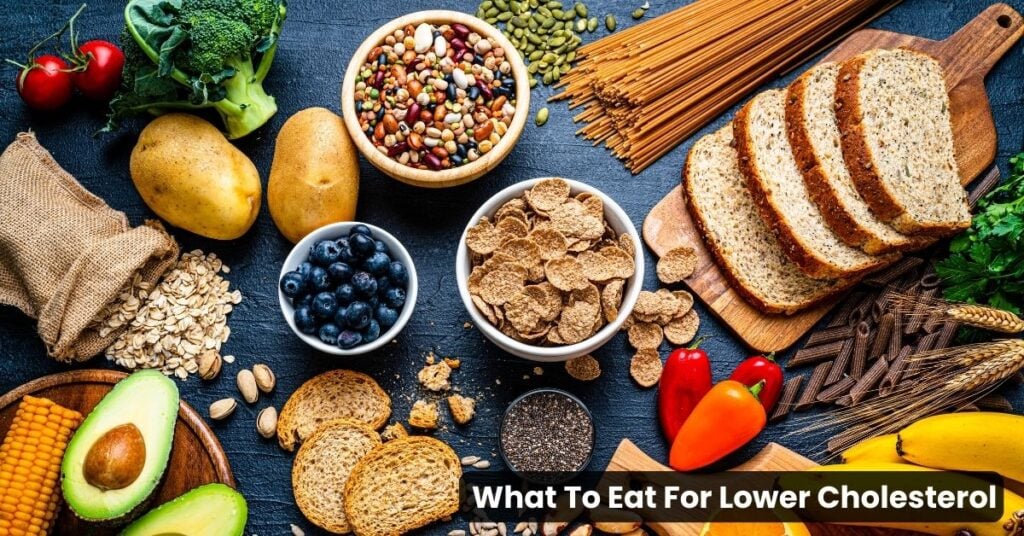
Center meals on oats, beans, nuts, fish, and produce, then swap butter and fatty meats for olive oil and lean proteins.
If you’re searching what to eat for lower cholesterol, start with repeatable staples and a few smart swaps. You can build meals that feel normal and still pull LDL down.
You’ll get a grocery-first checklist, simple plate rules, and a one-day menu you can repeat. If you take cholesterol medicine, these same food choices still stack up well.
| Food Or Habit | Why It Helps LDL | Easy Ways To Use It |
|---|---|---|
| Oats, barley, oat bran | Soluble fiber grabs bile acids so the body pulls more cholesterol from blood. | Overnight oats, oatmeal with fruit, barley in soups, oat bran stirred into yogurt. |
| Beans and lentils | Fiber plus plant protein can lower LDL when they replace red or processed meat. | Chili, lentil curry, bean tacos, hummus, beans tossed into salads. |
| Nuts and seeds | Unsaturated fats can lower LDL when they replace saturated fats. | Handful as a snack, sprinkle on oats, blend into sauces, add chia to smoothies. |
| Fatty fish | Helps triglycerides and replaces higher-saturated-fat meats. | Salmon bowls, sardines on toast, canned tuna in bean salad. |
| Vegetables and fruit | Fiber and plant compounds crowd out ultra-processed snacks. | Half-plate produce, frozen veg for speed, fruit with nuts instead of sweets. |
| Olive, canola, avocado oils | Swapping these for butter, ghee, and shortening can lower LDL. | Roast veg with olive oil, vinaigrette, pan-sear fish, oil-based dips. |
| Whole grains | More fiber than refined grains, which helps daily intake add up. | Whole-wheat pasta, brown rice, popcorn, whole-grain bread with 3+ g fiber. |
| Plant sterols and stanols | They reduce cholesterol absorption in the intestine. | Fortified spreads or yogurt drinks, used as labeled, not piled on. |
How Food Shifts Cholesterol Numbers
Most diet changes target LDL. HDL matters too, yet many foods that lower LDL don’t raise HDL much. Triglycerides respond to sugar, alcohol, and overall calorie load, so the same plate can help more than one number.
Two levers do most of the work. One is soluble fiber, found in oats, barley, beans, and some fruit. It thickens in the gut and drags bile acids out with it. Your liver then uses more cholesterol to make new bile acids.
The second lever is fat quality. Saturated fat tends to raise LDL in many people. When you swap saturated fat for unsaturated fat, LDL often drops. This is why olive oil, nuts, seeds, and fish show up again and again.
What To Eat For Lower Cholesterol On A Normal Grocery Budget
Budget-friendly doesn’t mean bland. Start with staples that last: oats, dried beans, lentils, frozen vegetables, and canned fish. Add a few “flavor builders” like garlic, onions, lemon, vinegar, and spice blends. Those do a lot of lifting when you cut back on butter and heavy cheese.
Lean On Soluble Fiber At Breakfast
Breakfast repeats, so it’s a clean spot to add soluble fiber. Oats are the classic move, and oat bran cooks fast when mornings are tight.
- Quick bowl: oats, berries, and ground flax stirred in.
- Grab-and-go: overnight oats with chia, cinnamon, and chopped apple.
Make Beans Your Default Protein A Few Nights
Beans keep dinner cheap and steady for LDL, mainly when they replace higher-saturated-fat meats. Rinse canned beans well, or cook a batch of dried beans and freeze portions.
Easy meals that don’t feel like “diet food”:
- Black bean tacos with cabbage slaw and a lime-yogurt sauce.
- Lentil soup with carrots, tomatoes, and smoked paprika.
- Chickpea salad with cucumber, red onion, herbs, and olive oil.
Use Nuts And Seeds Like A Condiment
Nuts can cost more, so treat them like a topping. A small handful adds crunch and unsaturated fat. Choose unsalted or lightly salted when you can.
Nut butter works too. Pick one with just nuts and salt, then stir it into oats or whisk it into a quick sauce.
Pick Fish That Fits Your Routine
Fish helps triglycerides and can replace fattier meats. Canned salmon, sardines, and tuna make weeknights easier.
- Sardines on toast with lemon and sliced tomatoes.
- Salmon rice bowl with edamame and cucumber.
Build Half Your Plate From Produce
Produce doesn’t lower LDL by magic. It lowers it by nudging your whole plate in a better direction. When vegetables and fruit take up room, there’s less space for pastries, chips, and heavy creamy sides.
Swap Fats, Don’t Just Remove Them
Don’t chase zero-fat meals. Swap the type of fat: cook with olive or canola oil, use avocado in sandwiches, and add nuts for crunch.
The American Heart Association page on dietary fats lays out which fats to favor and which to limit. Use it as a quick check when you’re scanning labels.
Cooking Moves That Keep Meals Tasty
Most people don’t quit because they can’t buy oats. They quit because food feels flat. A few kitchen habits can keep flavor high while saturated fat stays lower.
Use Acid And Heat For Punch
Lemon juice, vinegar, and pickled vegetables wake up food the way butter often does. Add a squeeze of lemon to fish. Splash vinegar into bean soups near the end. Keep jarred salsa and kimchi on hand for a fast topping.
Choose Methods That Drain Fat
Roasting, grilling, broiling, and air-frying let fat drip away. Pan-frying in a lot of oil does the opposite. When you sauté, use a measured spoon of oil, then add broth or water if the pan dries out.
Go Big On Spices And Herbs
Spice blends can turn the same staples into different meals. Taco seasoning for black beans one night. Curry powder for lentils the next. Italian herbs for a tomato-barley soup. Fresh herbs help too, yet dried works fine.
What To Limit Without Making Meals Miserable
You don’t have to live on steamed vegetables. You do need to watch the usual culprits that push LDL up. Saturated fat is the main one. It hides in fatty cuts of meat, processed meats, full-fat dairy, butter, and many baked goods.
Trans fat is another one, though it’s less common than it used to be. It still shows up in some packaged foods. Check the ingredient list for “partially hydrogenated oil.”
Sugar and refined starch don’t raise LDL the same way saturated fat does, yet they can push triglycerides up and crowd out higher-fiber foods. If dessert is your thing, keep it, but shrink the portion and pair it with fruit or yogurt so it feels like a treat, not a spiral.
A Day Of Meals Built For Lower LDL
This isn’t a strict plan. It’s a template you can remix. The idea is to hit soluble fiber early, lean on plant proteins often, and use unsaturated fats in place of butter and fatty meats.
| Meal | What To Eat | Notes |
|---|---|---|
| Breakfast | Oatmeal with berries, ground flax, and plain yogurt | Use cinnamon and vanilla to keep added sugar low. |
| Snack | Apple plus a small handful of walnuts | Crunch + fiber helps curb grazing. |
| Lunch | Chickpea salad bowl with cucumber, tomato, herbs, olive oil, and lemon | Add whole-grain pita if you want more heft. |
| Snack | Carrots with hummus | Rinse canned chickpeas to cut sodium. |
| Dinner | Salmon or sardines, roasted vegetables, and barley | Use olive oil and a squeeze of lemon at the end. |
| Dessert | Greek yogurt with sliced fruit and a sprinkle of chia | Sweeten with fruit first; add honey only if you want it. |
What To Eat For Lower Cholesterol When Eating Out
Restaurants can be a minefield because saturated fat shows up in butter, cream sauces, and big portions of fatty meat. You can still eat out and keep your plan intact with a few moves that don’t feel awkward.
Order By Cooking Method
Scan for grilled, baked, steamed, broiled, roasted, or poached. Ask for sauces on the side. If a dish is built around cream or cheese, see if there’s a tomato-based option instead.
Build A Plate, Not A Pile
A good restaurant plate often looks like this: a lean protein, a big vegetable side, and a whole-grain or bean option if it’s on the menu. If the meal comes with fries, swap for a salad or vegetables when you can.
Use The “Add One Plant” Rule
If you want a burger, pick a leaner patty, skip the bacon, and add a side salad. If you want pasta, choose marinara, then add beans or vegetables. One plant add-on can swing the whole meal.
Label Reading That Takes Two Minutes
Check saturated fat per serving, then check fiber. Lower-saturated, higher-fiber picks usually treat LDL better.
- Whole-grain bread: look for 3 grams of fiber or more per slice.
- Snacks: nuts, popcorn, or fruit beat pastries most days.
If you’re curious about a structured eating pattern, the NHLBI Therapeutic Lifestyle Changes (TLC) program spells out food groups and targets used in clinical guidance.
Shopping List And Pantry Setup
Pick a few items from each group, then repeat them in different combinations. A stocked kitchen makes it easier to stick with what to eat for lower cholesterol on busy days.
Staples To Keep Around
- Rolled oats or oat bran
- Dried or canned beans and lentils
- Brown rice, barley, or whole-wheat pasta
- Olive oil or canola oil
- Canned salmon, sardines, or tuna
- Frozen mixed vegetables and frozen berries
- Nuts or seeds (walnuts, almonds, chia, flax)
Flavor Builders
- Garlic, onions, ginger
- Lemons or limes
- Vinegar (balsamic, rice, or apple cider)
- Tomato paste or canned tomatoes
- Spice blends you like
- Mustard, salsa, hot sauce
When To Check Progress
Cholesterol levels don’t change overnight. Keep a food log for two weeks. Many people recheck labs after a few months of steady habits. If you have heart disease, diabetes, or a strong family history, ask your clinician how often to test and which targets apply to you. Food is one piece, and it works best when it’s paired with the plan you already have.
References & Sources
- American Heart Association.“Dietary Fats.”Used here for which fats to favor and which fats to limit for heart health.
- National Heart, Lung, and Blood Institute (NHLBI).“Therapeutic Lifestyle Changes (TLC) To Lower Cholesterol.”Used here for structured dietary targets and food-group guidance tied to cholesterol lowering.

Mo Maruf
I created WellFizz to bridge the gap between vague wellness advice and actionable solutions. My mission is simple: to decode the research and give you practical tools you can actually use.
Beyond the data, I am a passionate traveler. I believe that stepping away from the screen to explore new environments is essential for mental clarity and physical vitality.