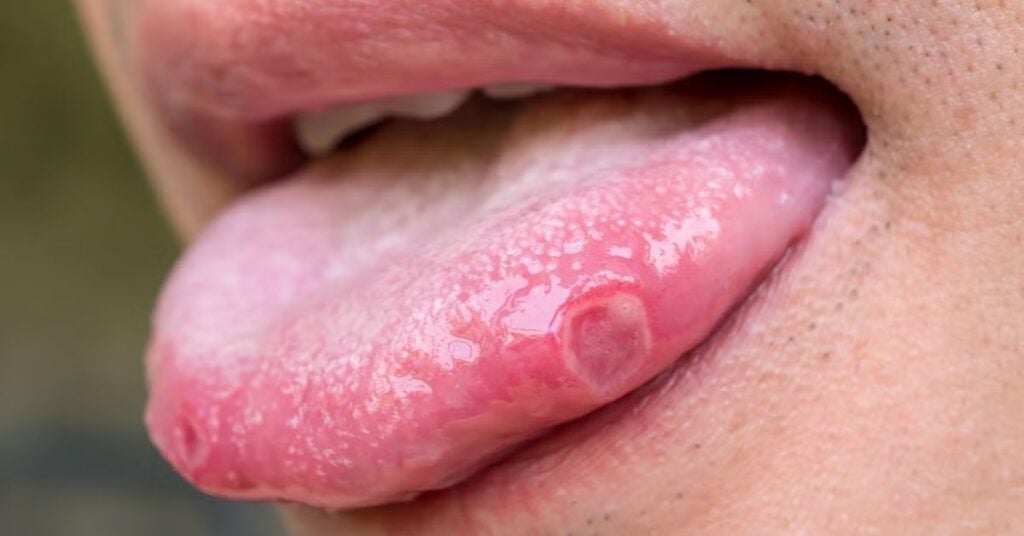
A tongue blister often settles with gentle rinses, soft foods, and removing the trigger while you watch for infection signs.
A blister on your tongue can feel huge even when it’s small. It rubs on your teeth, catches on hot coffee, and makes every bite feel sharp. Most tongue blisters heal on their own, yet the first day or two can be rough. The goal is simple: cut irritation, ease pain, and spot the red flags that mean you shouldn’t wait it out.
You’ll get home steps, what to avoid, and clear points for when to get medical care.
Common Causes And First Steps
“Blister” is a loose label. Some tongue bumps are true fluid blisters from heat or friction. Others are ulcers, small cuts, or yeast patches. Match what you see and feel to a likely trigger, then pick a gentle first step.
| Likely Trigger | Typical Clues | First Home Steps |
|---|---|---|
| Accidental bite | Tender spot on the edge; clear bubble or shallow scrape | Cool water rinse; soft foods; keep it clean |
| Hot food or drink burn | Pain starts right after heat; pale or clear blister | Cool sips; ice chips; avoid heat and spice for 48 hours |
| Friction from braces or sharp tooth | Sore lines up with a wire, bracket, or rough edge | Orthodontic wax; rinse after meals; dental check for the sharp spot |
| Canker sore (aphthous ulcer) | Round sore with a light center and red rim | Salt-water rinse; gentle brushing; oral gel if needed |
| Irritant foods or mouth products | Burning after cinnamon, alcohol mouthwash, or whitening products | Stop the irritant; mild toothpaste; rinse with plain water |
| Cold sore virus (HSV-1) | Tingling then clustered blisters, often near lips | Avoid kissing and sharing cups; wash hands; ask about antivirals |
| Thrush or yeast overgrowth | White patches that wipe off and leave soreness | Call a clinician for diagnosis; rinse after inhaled steroids |
| Mucous cyst (mucocele) | Soft, smooth bump that comes and goes | Don’t pop it; avoid chewing on it; see a dentist if it lasts |
What To Do For Blister On Tongue
If you’re stuck on “what to do for blister on tongue,” start with three moves: cool it, clean it, and stop the rubbing. That combo handles most bite and burn blisters, and it also helps many ulcers feel calmer.
Step 1: Cool The Area
Swish cool water for 20–30 seconds and spit. Then let an ice chip melt on the sore for a few minutes. Skip crunching ice, which can scratch tender tissue.
Step 2: Keep It Clean
Rinse after meals so food bits don’t sit on the sore. A salt-water rinse is a common choice: mix 1/2 teaspoon of salt in a cup of warm water, swish for 15–30 seconds, then spit. If salt stings, use plain water.
MedlinePlus lists cool water or salt-water gargles and avoiding hot, spicy, salty, and citrus foods as home care steps for mouth sores. Read the full guidance on MedlinePlus mouth sores home care.
Step 3: Remove The Trigger
Heat and friction keep a tongue blister angry. Let hot foods cool, skip crunchy snacks, and pause spicy meals for a couple of days. If braces, a retainer, or a rough tooth edge is scraping the sore, cover the spot with orthodontic wax and schedule a dental fix.
Pain Relief That Won’t Fight Healing
Pain control helps you eat and drink normally. Start simple, then add one tool at a time.
Gentle Rinses
If you want an alternate rinse, baking soda can feel softer than salt for some people. Stir 1/2 teaspoon into a cup of water, swish, and spit. Keep it to a few times per day.
Over-The-Counter Options
Topical gels or patches made for oral sores can form a thin layer that reduces rubbing. Follow the package directions and stop if the area burns more.
An over-the-counter pain reliever can help when the tongue throbs. Acetaminophen is one option many people tolerate well. If you have liver disease, take blood thinners, or you’re pregnant, check with a clinician or pharmacist about what fits your situation.
Eating And Talking Without Reopening The Sore
The tongue heals fast when it gets a break from friction. Small tweaks keep the sore from cracking open each time you chew.
- Choose lukewarm drinks and let soups cool before the first sip.
- Stick to soft foods like yogurt, eggs, oatmeal, bananas, and mashed potatoes.
- Use a straw for cold drinks if the sore sits on the tip or side.
- Rinse with water after meals to clear salt, acids, and crumbs.
If the blister is on the tip, a straw and bites can spare it today.
Brush with a soft toothbrush and a mild toothpaste. If mint or whitening pastes sting, switch to a simple formula for a week.
When A Tongue Blister Needs A Clinician
Most mouth sores clear within 1–2 weeks. A sore that hangs on, keeps returning, or comes with fever calls for a check. NHS guidance says to see a GP or dentist if a mouth ulcer lasts longer than 3 weeks. That time mark is useful when you’re unsure if waiting is safe. See the NHS advice on mouth ulcers and when to get help.
Go Sooner If Any Of These Show Up
- Rapid swelling of the tongue, lips, or throat, or trouble breathing
- Severe pain that blocks drinking
- Pus, spreading redness, or a bad taste that hints at infection
- Blisters plus a new rash, eye pain, or trouble swallowing
- A lump that feels firm, or a sore that bleeds often
These signs don’t prove a serious problem. They do mean you’ll get safer answers with an exam. A clinician can check for infection, medication reactions, vitamin shortages, immune issues, or a lesion that needs a biopsy.
Moves To Skip
Some popular “fixes” spread germs or keep the sore raw. Skip these moves, even if the blister is tempting.
- Don’t pop it. Opening a blister invites infection and can extend pain.
- Don’t scrub with alcohol rinses. Alcohol can sting and irritate mouth tissue.
- Don’t use straight acids. Apple cider vinegar, lemon juice, and harsh rinses can burn.
- Don’t keep testing spice. Each sting can reset the healing clock.
Table Of Home Options And Safety Notes
Use this as a pick list. If you’re mixing remedies, keep it gentle and limit it to one new item per day.
| Option | What It Does | Safety Notes |
|---|---|---|
| Cool water rinse | Clears irritants and soothes | Safe for all ages; repeat after meals |
| Salt-water rinse | Helps keep the area clean | Stop if it burns; avoid swallowing large amounts |
| Baking soda rinse | Buffers acids from food | Use a mild mix; stop if irritation rises |
| Ice chips | Numbs pain and cools burns | Let it melt; don’t chew ice |
| Oral numbing gel | Short-term pain relief | Follow label; keep away from hot drinks right after use |
| Protective mouth patch | Shields the sore from friction | Use products made for oral tissue |
| Acetaminophen | Whole-body pain relief | Stay within label dose; avoid if your clinician told you not to |
Repeat Sores: Find The Pattern
If this keeps happening, treat it like a pattern. Repeats often come from friction, food triggers, or a sore spot in the mouth that never fully heals.
A Two-Minute Note That Pays Off
Write three quick notes: what you ate in the prior day, any new mouth product, and any tongue bite or burn. Patterns show up fast when you track them.
Check For Mechanical Irritation
Run your tongue lightly along teeth, fillings, and the edge of a night guard. If one spot feels sharp, a dentist can smooth it quickly. If you grind at night, a guard can reduce fresh trauma.
Dry Mouth And Medicines
Dry mouth raises friction and can make sores sting more. Many common medicines can dry the mouth, along with vaping and mouth breathing during sleep. Sip water often and ask a clinician if a medication change is possible.
Healing Timeline And What You May Notice
Most simple tongue blisters follow a steady arc. Knowing the pattern can cut worry.
- Day 1–2: Sharp pain, swelling, and a raw feel with salty foods.
- Day 3–5: Pain drops; the surface may look white or yellow as it seals.
- Day 6–10: The sore shrinks and stings only with rough foods.
- After 2 weeks: Many minor sores are gone. If yours isn’t, get it checked.
A white film can be normal for an ulcer. A sore that grows, bleeds often, or feels hard at the edges needs a check.
Small Habits That Lower Repeat Blisters
A mouth can’t avoid every bite or burn. Still, a few habits cut the odds of repeats without turning meals into a chore.
Cool The First Bite
Test the first spoonful of soup on your lip, not your tongue. Let pizza cool before that first bite.
Keep Products Mild
If you get frequent sores, try a toothpaste without strong flavor oils and skip alcohol mouthwash for a while. If you use an inhaler steroid, rinse and spit after each dose.
Slow Down When You Chew
Tongue bites spike during rushed meals, chewing gum while talking, and late-night snacks. A slower chew can save you days of soreness.
Checklist For The Next 24 Hours
Use this list when pain makes it hard to think straight.
- Rinse with cool water after meals.
- Use ice chips to numb for 5 minutes at a time.
- Eat soft, lukewarm foods and drink plenty of water.
- Skip spice, citrus, crunchy snacks, and alcohol mouthwash.
- Brush gently with a soft brush and mild paste.
- Cover sharp braces or edges with wax and book a dental fix.
- Use an oral numbing gel only as directed.
- If the sore lasts past 2 weeks, or any red-flag sign shows up, get medical care.
If you came here asking what to do for blister on tongue, start with the cooling and rinsing steps, then add one pain tool. Many people feel a shift within a day.
References & Sources
- MedlinePlus (U.S. National Library of Medicine).“Mouth sores.”Home care tips and typical healing window for common mouth sores.
- NHS (UK National Health Service).“Mouth ulcers.”When to seek care, including the three-week duration check for persistent ulcers.

Mo Maruf
I created WellFizz to bridge the gap between vague wellness advice and actionable solutions. My mission is simple: to decode the research and give you practical tools you can actually use.
Beyond the data, I am a passionate traveler. I believe that stepping away from the screen to explore new environments is essential for mental clarity and physical vitality.