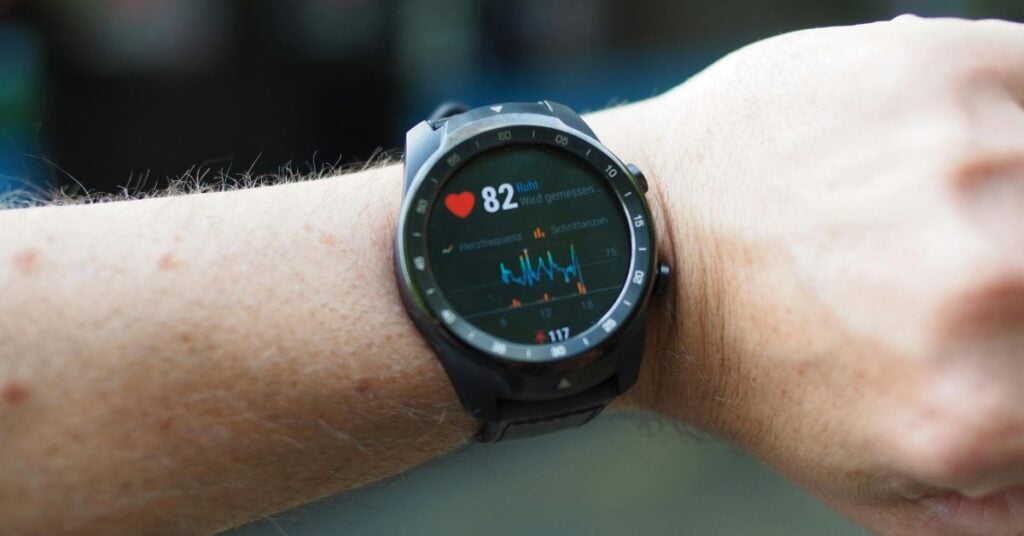
For many adults, a brisk walking heart rate sits near 50–70% of max, often 90–140 bpm.
You’ll see a lot of “normal” ranges online. Walking doesn’t work that way. A slow stroll, a fast commute walk, a hill climb, and a post-meal walk can all be normal, even on the same day.
This guide shows how to spot a steady, healthy walking zone, how to measure it well, and what to watch for when the number doesn’t match how you feel today.
What Is Normal Heart Rate For Walking?
A walking heart rate is the number of beats per minute while you’re on your feet. It rises as your muscles ask for more oxygen. The “normal” range is a blend of your age, pace, fitness, temperature, sleep, and medicines.
A better question than “What number is normal?” is “What number fits this walk?” A calm walk to loosen up will sit lower than a brisk walk meant to build stamina.
Start With Two Anchors
Use two reference points so your walking number has meaning:
- Resting heart rate: Check it when you’re relaxed and seated. Many adults land between 60 and 100 beats per minute at rest, with lower numbers common in trained athletes.
- Estimated max heart rate: A common rule is 220 minus your age. It’s a rough starting point, not a diagnosis.
Use Effort Cues So The Number Makes Sense
Heart rate is useful, yet it can drift. Cues from your breathing keep you honest.
- Easy: You can talk in full sentences.
- Moderate: You can talk, yet singing feels tough.
- Hard: You can say a short phrase, then you want a breath.
Normal Heart Rate For Walking By Age And Effort
Most people get the cleanest walking range by working in zones. The American Heart Association shares target heart rate ranges tied to age and effort on its Target Heart Rates Chart. Those ranges are built for aerobic work, which includes brisk walking.
For many adults, moderate walking lines up with about 50–70% of max heart rate. A “pushing it” walk can rise toward 70–85%, though walking hits that upper band more often on hills, stairs, or fast intervals.
A Quick Way To Set Your Walking Zone
- Write your age.
- Compute max heart rate: 220 minus age.
- Multiply that max by 0.50 and 0.70 for a moderate band.
- During your walk, pair the number with the talk test so you don’t chase a number that doesn’t fit the day.
What “Normal” Looks Like In Real Walks
These patterns show up again and again:
- Casual stroll: Often 20–40 beats above resting.
- Brisk, steady walk: Often 40–70 beats above resting.
- Hills or stairs: Short spikes are common, then your rate settles when the grade eases.
- Intervals: Peaks during the hard minutes, then a clear drop during rest minutes.
How To Measure Your Walking Heart Rate Well
Wearables are handy, yet a quick manual check keeps you grounded. The NHLBI explains how heart rate changes with activity, which helps when you compare resting and walking numbers. MedlinePlus shows the steps for checking pulse at the wrist on its Pulse (heart rate) guide.
- Slow your pace for 10–15 seconds so you can measure without tripping.
- Place your index and middle finger on the inside of your wrist, below the thumb base.
- Count beats for 30 seconds and double it, or count for a full minute if you want a steadier read.
- Write the number with a short note: pace, hills, heat, and how you felt.
Try to measure at the same point of the walk each time, like minute 10 of a steady pace. Random checks during a stoplight or right after a hill can make the data jumpy.
Quick Tip For Watch Users
If your watch shows sudden spikes that don’t match your breathing, tighten the strap one notch and keep the sensor clean. Wrist sensors can misread during arm swing, cold hands, or heavy sweat.
How Long It Takes To Settle Into A Steady Rate
Most walks have a “ramp” phase. Your rate rises in the first minutes, then levels off once your pace is steady. A warm-up that starts easy helps the ramp feel smooth and keeps the first reading from looking oddly high.
Walking Heart Rate Zones You Can Use On Any Day
Use this table as a quick map. For the talk test, see the CDC page on measuring physical activity intensity. Match the cue column first, then glance at the heart-rate guide. If the cue and the number disagree, trust the cue and adjust pace or terrain.
| Walk Type | Breathing And Talk Cue | Heart-Rate Guide |
|---|---|---|
| Warm-up stroll | Easy nose breathing, full sentences | Resting + 10 to 30 bpm |
| Easy rest walk | Chat feels easy, no urge to speed up | About 40–55% of max |
| Steady daily walk | Talk feels normal, light warmth in legs | About 50–65% of max |
| Brisk fitness walk | Talk works in short sentences | About 60–70% of max |
| Hill repeat or stair walk | Short phrases, quick breathing on the climb | About 70–85% of max during the climb |
| Walk-run mix | Breathing rises fast during run parts | Often 70–88% of max on run parts |
| Post-meal walk | Easy pace, calm breathing | Resting + 10 to 35 bpm |
| Cool-down | Breathing slows, you can talk freely | Dropping toward resting + 10 to 25 bpm |
When A Walking Heart Rate Looks High
A higher number can be normal on a given day. Heat, poor sleep, illness, pain, dehydration, caffeine, and stress can all push heart rate up. Carrying a heavy bag or walking into wind can do the same.
Use this quick check: if your pace feels easy yet your heart rate sits in a hard zone, slow down for two minutes and recheck. If it drops fast, it was a short spike. If it stays high, the day may call for an easier walk.
Medication And Medical Factors That Shift The Number
Some medicines change heart rate. Beta blockers can keep it lower than you expect. Thyroid medicines can raise it. If you track with heart rate, write down any med changes and use effort cues on days when the number feels “off.”
If you have known heart disease, chest pressure, fainting, new shortness of breath, or a racing heartbeat that won’t settle with rest, get medical care right away.
Age-Based Targets For Brisk Walking
The table below uses the common max heart rate rule (220 minus age), then shows bands that line up with moderate and hard effort. Use it as a starting point, then adjust by your talk test and how your body feels. The AHA chart uses the same general banding by age for target zones.
| Age | Moderate Walking (50–70% Max) | Hard Walking (70–85% Max) |
|---|---|---|
| 20 | 100–140 bpm | 140–170 bpm |
| 30 | 95–133 bpm | 133–162 bpm |
| 40 | 90–126 bpm | 126–153 bpm |
| 50 | 85–119 bpm | 119–145 bpm |
| 60 | 80–112 bpm | 112–136 bpm |
| 70 | 75–105 bpm | 105–128 bpm |
| 80 | 70–98 bpm | 98–119 bpm |
How To Use Walking Heart Rate To Build Fitness
Once you know your usual range, heart rate becomes a pacing tool, not a score. Here are three simple walk styles that work for many people.
Base Walks For Consistency
Do most walks at an easy or moderate pace. You should be able to talk. The goal is time on your feet with a steady rhythm. Many people feel best when this is 30–60 minutes, several days per week.
Brisk Blocks For Speed
Pick a flat route. Warm up for 8–10 minutes. Then do 3–6 brisk blocks of 2–4 minutes with 2 minutes easy between. Watch how fast your heart rate drops in the easy blocks. A quicker drop over weeks is a good sign of rising fitness.
Hill Minutes For Strength
Find a hill that takes 30–90 seconds to climb. Walk up with short, strong steps, then walk down easy. Keep form tall and relaxed in shoulders. Hills push heart rate up fast, so keep the work bursts short and the rest long enough for breathing to calm.
Small Tweaks That Lower Heart Rate During A Walk
If your heart rate keeps drifting up while your pace stays steady, try these changes one at a time so you know what worked.
- Start slower: Take 5–8 minutes to ramp up.
- Shorten stride: A quick, light step can feel easier than long steps.
- Relax your hands: A tight fist can raise tension through your arms and neck.
- Walk in shade when it’s hot: Heat pushes heart rate up even at the same pace.
- Drink water before you head out: Mild dehydration can raise heart rate.
- Lighten what you carry: A heavy backpack can turn a moderate walk into a hard one.
A Simple Log That Makes Your Numbers Useful
Data is only helpful when it’s easy to keep. After each walk, jot down three lines:
- Route and duration (flat, rolling, hills).
- Steady heart rate at minute 10 or the first steady section.
- Talk test result (full sentences, short sentences, short phrases).
After two weeks, you’ll know your usual walking range on flat ground, plus what bumps it up. That’s the closest thing to “normal” that actually matches your body.
When To Get Checked
Get medical care if you feel chest pain, fainting, new severe shortness of breath, or a fast heartbeat that won’t settle with rest.
How To Spot Progress Without Chasing Speed
Pick one route and walk it once a week at the same pace. Note your heart rate at minute 10, then time the drop for two minutes after you stop. Over weeks, the same pace can sit lower, and the drop can speed up.
References & Sources
- National Heart, Lung, and Blood Institute (NHLBI), NIH. “How the Heart Beats.” Notes the common resting range and explains why heart rate rises with activity.
- Centers for Disease Control and Prevention (CDC). “Measuring Physical Activity Intensity.” Explains intensity cues like the talk test and links intensity to breathing and heart rate.
- American Heart Association (AHA). “Target Heart Rates Chart.” Provides age-based target heart rate ranges used to frame moderate and hard walking bands.
- MedlinePlus (U.S. National Library of Medicine). “Pulse.” Shows how to measure pulse at common sites like the wrist and how to count beats.

Mo Maruf
I created WellFizz to bridge the gap between vague wellness advice and actionable solutions. My mission is simple: to decode the research and give you practical tools you can actually use.
Beyond the data, I am a passionate traveler. I believe that stepping away from the screen to explore new environments is essential for mental clarity and physical vitality.