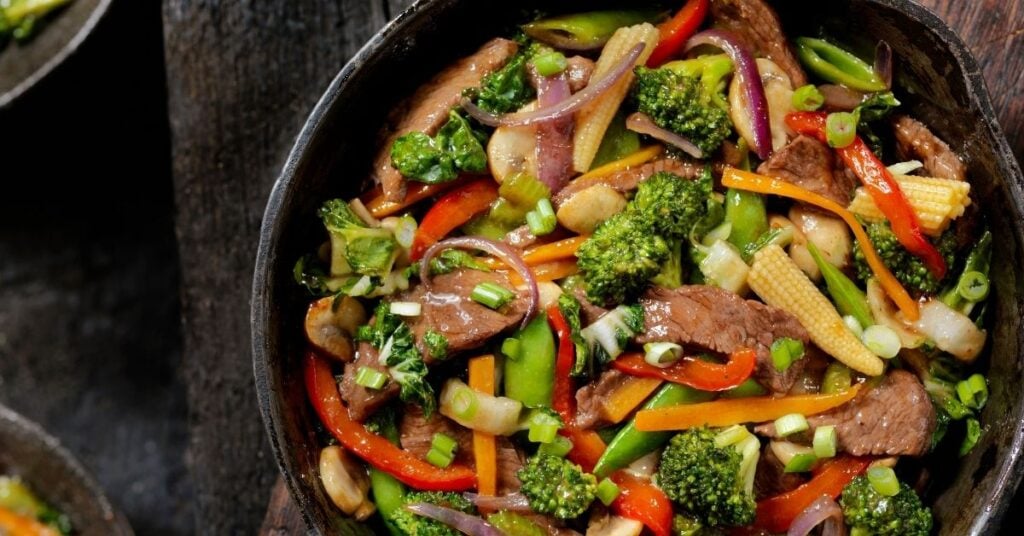
A healthier stir-fry comes from high heat, lean protein, lots of veg, and a light sauce that clings without extra oil.
Stir-fry can be a weeknight win: fast, flexible, and full of color. It can slide into “takeout mode,” too—slick with oil, salty sauce, and a giant scoop of rice. The fix isn’t bland food. It’s a handful of small choices that change the whole pan.
This article shows how to keep stir-fry lighter, tasty, and without losing the sizzle. You’ll get a clear pan formula, smart swaps that still taste like stir-fry, and a cook order that keeps veggies crisp and the sauce glossy.
| What You Want | Common Habit | Healthier Move |
|---|---|---|
| More veg per bite | One or two vegetables | Use 4–6 cups mixed veg per 2 servings |
| Protein that feels light | Fatty cuts, breaded pieces | Chicken breast, shrimp, tofu, tempeh, lean pork |
| Less oil in the pan | Pouring straight from the bottle | Measure 1–2 teaspoons; add a splash of water if needed |
| Sauce with less salt | Full-sodium soy sauce | Low-sodium soy sauce or tamari; stretch with citrus, vinegar, broth |
| Thick, shiny glaze | More oil or sugar | Cornstarch slurry (cornstarch + cold water) |
| Better crunch | Overcrowded pan | Cook in batches; keep heat high |
| More fiber | White rice most nights | Brown rice, quinoa, cauliflower rice, or half-and-half |
| Flavor that pops | Only soy sauce | Garlic, ginger, scallion, chili, toasted sesame (small amount) |
| Less added sugar | Sweet bottled sauces | Use a juice splash, grated apple, or skip sweetness |
How To Make Stir Fry Healthy At Home
Think of stir-fry as a hot pan plus smart prep. Most of the “health” work happens before the stove turns on: what you cut, how you portion it, and what goes into the sauce cup.
Build A Simple Plate Ratio
A steady ratio keeps you from drifting into a sauce-and-starch bowl. A solid starting point for one big skillet meal is:
- Vegetables: about 4 cups, mixed colors and textures
- Protein: 10–12 ounces raw (or 14–16 ounces tofu)
- Starch: 2–3 cups cooked grains, or a lighter base like cauliflower rice
- Sauce: 1/3 to 1/2 cup total, mixed ahead of time
If you want a lighter bowl, cut starch first and keep the veg pile tall. The pan still eats like dinner.
Pick Vegetables That Cook In The Same Window
Stir-fry moves fast. If one vegetable needs eight minutes and another needs two, something turns soft. Group your prep by cook time:
- Fast: spinach, bean sprouts, snow peas, scallions
- Medium: bell pepper, broccoli florets, mushrooms, zucchini
- Slow: carrots, cauliflower, green beans
Cut slow vegetables thinner, or start them first with a tablespoon of water and a lid for one minute. Then remove the lid and keep going.
Use The Right Fat, In The Right Amount
Oil carries flavor and keeps food from sticking, but it’s easy to overdo. Measure it. One teaspoon looks small in a spoon and bigger once it coats a hot pan. If the pan starts to grab, add a splash of water or broth, scrape, and keep moving.
When you want nutty aroma, finish with a few drops of toasted sesame oil off heat. Treat it like a seasoning, not a frying fat.
Making Stir Fry Healthy With Less Oil And More Veg
This is the part people worry about: “Won’t it taste flat?” Not if you replace oil with heat control and low-volume flavor. Stir-fry is built on contrast—hot pan, crisp veg, salty-sour balance, and a sauce that grabs.
Get A Sauce That Clings Without Sugar Bombs
Many store sauces thicken with sugar. You can get the same cling with starch. Start with this base for two servings:
- 3 tablespoons low-sodium soy sauce or tamari
- 2 tablespoons rice vinegar or lime juice
- 2–4 tablespoons unsalted broth or water
- 1 teaspoon grated ginger
- 1–2 garlic cloves, grated
- 1 teaspoon cornstarch mixed with 1 tablespoon cold water
Shake it in a jar. Pour it in at the end. Stir until glossy, then stop cooking so the veg stays bright.
If you’re watching sodium, use label math. The FDA’s sodium guidance for the Nutrition Facts label explains how % Daily Value helps you spot high-salt sauces.
Lean On Acid And Heat For Big Taste
Acid wakes up a stir-fry the way extra salt does, without stacking sodium. A squeeze of lime, a splash of rice vinegar, or a spoon of pineapple juice can brighten the pan. For heat, use fresh chili, chili flakes, or a small spoon of chili paste stirred into the sauce cup.
Choose Proteins That Brown Fast
Fast browning means you can use less oil and still get that roasted edge. Slice meat across the grain into thin pieces. Pat it dry. For tofu, press it, cut it, then toss with a teaspoon of cornstarch for a crisp shell.
Cook Flow That Keeps Crunch And Cuts Grease
A healthy stir-fry isn’t only about ingredients. The sequence matters. When the pan is packed and the heat drops, food steams, you chase color with more oil, and things turn soft.
Step 1: Prep On The Counter
- Cut all your ingredients before you heat the pan.
- Keep veg in cook-time piles: slow, medium, fast.
- Mix sauce in a cup or jar.
- Set a plate for cooked protein.
Keep a towel nearby.
Step 2: Sear Protein, Then Park It
Heat the pan until a drop of water skitters. Add measured oil, then protein in a single layer. Let it sit for 30–60 seconds so it browns. Stir, cook through, then move it to the plate.
Pick A Pan That Holds Heat
A wok is great, yet a wide skillet works fine. What matters is room. If food piles up, it steams. If your pan is small, cook in two rounds. Heat the pan first, then oil, then food.
Step 3: Hit Vegetables In Waves
Add slow veg first. If needed, add a tablespoon of water and cover for one minute to jump-start softening. Remove the lid, keep the heat up, then add medium veg. Add fast veg last so it stays snappy.
Step 4: Sauce At The End
Return protein to the pan. Shake the sauce again, then pour it around the sides so it hits heat. Toss for 30–60 seconds until thick and shiny. Turn off the heat. Taste, then add acid or chili, not extra salt.
Smart Carbs And Portions That Still Feel Like Dinner
Stir-fry often goes heavy on rice or noodles because it’s easy. You can keep the comfort and still lighten the plate with one of these moves:
- Half-and-half base: half cooked brown rice, half cauliflower rice.
- High-fiber grains: quinoa for chew.
- Portion shift: serve more stir-fry mix and less grain.
The USDA’s MyPlate message to fill half your plate with fruits and vegetables fits stir-fry bowls. The MyPlate Vegetable Group page lays out what counts as vegetables and ways to mix types.
| Component | Target Amount Per Person | Notes For A Lighter Bowl |
|---|---|---|
| Mixed vegetables | 2–3 cups cooked | Go bigger here for volume and crunch |
| Protein | 4–6 oz cooked | Choose lean cuts or tofu; sear well |
| Cooked grains | 1/2–1 cup | Try brown rice, quinoa, or half cauliflower rice |
| Sauce | 2–4 tbsp | Thicken with cornstarch; keep sugar low |
| Added oil | 1/2–1 tsp | Measure; use water or broth if pan dries |
| Crunch add-ons | 1 tbsp | Roasted peanuts or sesame seeds, sprinkled |
| Finishing acid | 1–2 tsp | Lime or vinegar lifts flavor without extra salt |
Flavor Moves That Don’t Rely On Heavy Sauce
When you cut back on oil and salty sauce, you need other levers. These are small, cheap, and easy to keep on hand.
Aromatics That Carry The Pan
Garlic, ginger, scallion whites, and chili hit the nose before the tongue. Cook them fast so they don’t burn: 10–20 seconds in hot oil, then straight into veg. If you’re using a nonstick pan, you can bloom aromatics in a spoon of water, then add veg.
Texture Tricks That Make It Feel Like Takeout
- Dry the veg: rinse, then pat dry so it sears instead of steaming.
- Cut for bite: keep broccoli in florets, slice carrots on a sharp angle.
- Batch cook: if the pan looks crowded, pull half out and finish in two rounds.
Common Mistakes That Make Stir Fry Feel Heavy
Most “healthy stir-fry fails” come from a few habits. Fix these and the dish changes fast.
Pouring Sauce Freehand
Sauce is where sugar and salt hide. Measure it into a cup, taste it, then pour. You can always add a spoon more.
Cooking All Ingredients At Once
It feels quicker, but it cools the pan and turns food soft. Cook protein first, then veg in waves.
Skipping A Finishing Taste Check
Before serving, taste one piece of veg. If it’s flat, reach for acid, chili, or a pinch of sesame seeds. Salt is the last move, not the first.
Two Stir Fry Combos To Keep On Repeat
If you want quick ideas that stay within the same rules, try one of these combos. Each uses the same cook flow, so you can rotate flavors without buying new sauces.
Ginger-Lime Chicken And Broccoli
Chicken breast, broccoli, red pepper, and snap peas. Sauce: low-sodium soy, lime juice, ginger, garlic, cornstarch slurry. Finish with scallion greens.
Garlic-Tofu Veg Mix With Chili
Pressed tofu, mushrooms, bok choy, carrots, and cabbage. Sauce: tamari, rice vinegar, broth, chili paste, cornstarch slurry. Finish with roasted peanuts.
When you keep these building blocks in mind, “how to make stir fry healthy” stops being a question and turns into a habit. Start with veg volume, measure oil and sauce, and let high heat do the heavy lifting.
One last reminder: “how to make stir fry healthy” doesn’t mean stripping out pleasure. It means choosing the parts that give you the most taste per bite—aromatics, acid, and a sauce that clings—while the plate stays light and filling.
References & Sources
- U.S. Food & Drug Administration (FDA).“Sodium in Your Diet.”Explains how to use % Daily Value on labels to judge sodium levels in foods and sauces.
- USDA MyPlate.“Vegetable Group – One of the Five Food Groups.”Defines what counts as vegetables and offers guidance on mixing types across meals.

Mo Maruf
I created WellFizz to bridge the gap between vague wellness advice and actionable solutions. My mission is simple: to decode the research and give you practical tools you can actually use.
Beyond the data, I am a passionate traveler. I believe that stepping away from the screen to explore new environments is essential for mental clarity and physical vitality.