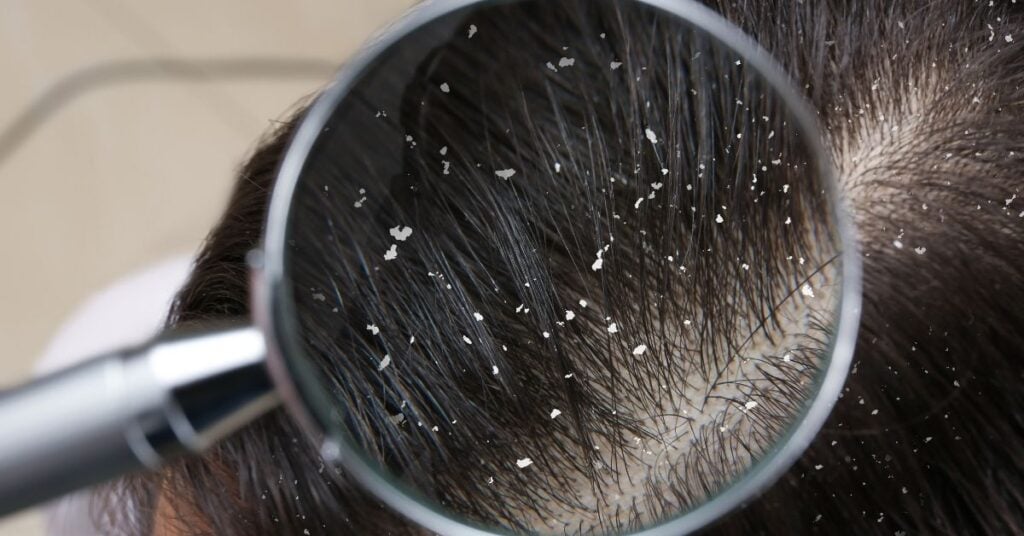
Dandruff often brings larger, oily flakes with itch and redness, while dry scalp sheds smaller dry specks with tight, thirsty skin.
Scalp flakes can look the same from three feet away, yet they don’t behave the same once you start treating them. The fastest way to stop wasting money on random shampoos is to match what you’re seeing to the right lane: dandruff-type scaling or plain dryness.
This walk-through gives you clear quick checks you can do at home, plus a two-week test plan. By the end, you’ll know how to know if it’s dandruff or dry scalp without guesswork.
| Clue You Can Check | Leans Toward Dandruff | Leans Toward Dry Scalp |
|---|---|---|
| Flake size | Medium to large sheets or clumps | Fine, powdery specks |
| Flake feel | Waxy or slightly sticky | Light, dry, dusty |
| Color | White to yellow-tinged | White, pale, or skin-colored |
| Roots | Oily within a day or two | Not greasy, even day two or three |
| Itch pattern | Returns fast after washing | Spikes after hot water, drying, or strong shampoo |
| Redness | Pink or red patches can show | Usually minimal redness |
| Where it shows up | Brows, ears, beard area can join in | Mostly scalp and part line |
| After gentle moisture | Often little change | Tightness eases and specks drop |
| After anti-dandruff shampoo | Itch and clumps may ease | Can feel drier or sting |
Knowing If It’s Dandruff Or Dry Scalp With A Few Fast Checks
One glance rarely settles it. Stack three things: what the flakes look like, how oily the roots feel, and how your scalp reacts after a wash. Treat it like a small experiment, not a one-day verdict.
If your hair is thick or curly, part the hair in a few lines so you’re seeing skin, not just hair. If you wear a lot of styling product, do the checks on a day when you haven’t used dry shampoo or heavy paste. That keeps the clues cleaner for many hair types.
What Dandruff Usually Looks And Feels Like
Dandruff is often tied to seborrheic dermatitis, a common skin condition that favors oilier areas. Mayo Clinic’s seborrheic dermatitis symptoms describe scaly patches and stubborn dandruff, often in areas like the scalp, ears, and face.
Clues that lean toward dandruff include bigger flakes that cling to hair, a greasy feel at the roots, itch that returns quickly, and redness at the hairline.
Signs That Point Toward Dandruff
- Flakes that clump or stick to strands.
- Greasy roots paired with visible scale.
- Itch that pops back within hours or a day.
- Flaking in eyebrows or around the nose.
Heavy styling products can make dandruff look worse by trapping sweat and buildup on the scalp. If your flakes spike after a week of dry shampoo, that’s a hint that residue is part of the picture.
What Dry Scalp Usually Looks And Feels Like
Dry scalp is dry skin on the head. It often feels tight after a hot shower, and the flakes tend to be fine and light. The roots usually look normal, not slick.
Dryness often tracks with cold air, indoor heat, over-washing, or strong detergents in shampoo. If gentle washing and moisture calm things down, dryness is the better fit.
Signs That Point Toward Dry Scalp
- Fine specks that fall like dust when you scratch.
- Tightness that eases after moisture.
- Itch that spikes after washing or blow-drying.
- Dry patches on arms or legs at the same time.
Dry scalp can still itch a lot. The pattern is the clue: it flares after stripping, friction, or heat, then eases when you treat the skin gently.
How To Know If It’s Dandruff Or Dry Scalp
Set a timer for five minutes, grab a phone light, and check the same spots each time: crown, hairline, and behind the ears. You’re looking for repeatable clues.
Step 1: Check The Flakes Up Close
Tap a few flakes onto a dark tissue or your palm. Waxy, yellow-tinged pieces lean toward dandruff. Fine white dust leans toward dryness.
Step 2: Check Oil Level At The Roots
Run a fingertip along the scalp near the part. A slick feel leans toward dandruff. A dry, slightly rough feel leans toward dryness.
Step 3: Scan For Redness
Part your hair in a few lines and scan the skin. Redness sitting under flaking leans toward dandruff. A normal-looking scalp that feels tight leans toward dryness.
Step 4: Check Beyond The Scalp
Look at eyebrows, ears, beard area, and the sides of the nose. If those zones also flake, dandruff-type scaling becomes more likely. If the rest of your face is calm, dryness becomes more likely.
Step 5: Do A Two-Wash Split Test
Wash one day with a gentle shampoo and warm water. Next wash day, use an anti-dandruff shampoo and let it sit for the label time. Notice which one calms itch and flaking.
Step 6: Log Results For Two Weeks
Write down the day, shampoo used, itch level, and flake amount. If anti-dandruff shampoo helps, dandruff is more likely. If gentle washing plus moisture helps, dryness is more likely.
First Moves That Match What You’re Seeing
If dandruff seems likely, start with an anti-dandruff shampoo two to three times per week and give it contact time. The American Academy of Dermatology explains how to treat dandruff, including switching actives when the first one doesn’t work.
If dryness seems likely, switch to a gentle shampoo, lower your water temperature, and add moisture after washing. Keep leave-ins light until the scalp calms down.
If you’re on the fence, do one week of gentle care first, then add an anti-dandruff shampoo once per week and watch the reaction.
How To Use Dandruff Shampoo So It Actually Works
Many people “try” a dandruff shampoo and decide it failed, when it never got a fair shot. Two things matter most: contact time and consistency.
Start by wetting hair fully and working the shampoo into the scalp, not the hair lengths. Use fingertips and small circles. Then pause. Let it sit for the time on the label, often three to five minutes. That’s when the active ingredient can do its job.
Rinse well, then condition the lengths. If your hair feels dry after a medicated wash, use conditioner on mid-lengths and ends, not on the scalp. If itching drops but flakes remain, keep going for two full weeks before you judge.
Moisture For Dry Scalp Without Making It Greasy
Dry scalp care is a balance: clean enough to prevent buildup, gentle enough to avoid stripping. A mild shampoo, warm water, and a short wash time are a good start.
Right after rinsing, pat hair until it’s damp, then add moisture. That can be a light, fragrance-light scalp serum or a few drops of oil spread thinly across the skin. If oil makes you itch, skip it and stick with a water-based hydrator.
Shampoo Ingredients That Match The Job
Actives for dandruff aim to cut yeast and slow scaling. Dry-scalp routines aim to clean without stripping and to calm irritated skin.
Common Actives For Dandruff
- Zinc pyrithione or selenium sulfide for many everyday cases.
- Ketoconazole when yeast control is needed.
- Salicylic acid when scale is thick and stubborn.
What Helps When The Issue Is Dryness
- Mild cleansers that don’t leave you squeaky-tight.
- Hydrators like glycerin in scalp serums or gentle shampoos.
- Fragrance-light formulas if you sting easily.
Stick with one change at a time. Two new shampoos plus a new scalp spray makes it hard to tell what helped.
When Flakes Point To Something Else
Some scalp issues mimic dandruff or dryness. Thick silvery scale that extends beyond the hairline can fit psoriasis. Patchy hair loss with scaling can fit a fungal infection. Burning after hair dye can fit contact dermatitis.
Watch for these red flags: pain, drainage, bleeding, fever, swollen nodes, patchy hair loss, or rash spreading past the scalp. Those deserve medical care sooner.
If you’ve tried steady care for two weeks with no change, book a dermatology visit and bring your log. Your notes on flake type, itch level, and products used can speed up diagnosis.
What To Try First Based On Your Clues
| What You Notice | Try This For 14 Days | Watch For |
|---|---|---|
| Large oily flakes + itch | Anti-dandruff shampoo 2–3x/week, 3–5 minutes on scalp | Less itch by week one, fewer clumps by week two |
| Fine flakes + tightness | Gentle shampoo, warm water, moisture after wash | Less tightness after each wash, fewer specks on shoulders |
| Flakes plus redness at hairline | Rotate dandruff shampoo with gentle shampoo; skip heavy oils on scalp | Redness fading, less soreness |
| Flakes after a new product | Stop the new item, wash gently, pause styling sprays | Sting easing within days |
| No change after 2 weeks | Dermatology visit with your log | Clear diagnosis, targeted plan |
Daily Habits That Help The Routine Work
Keep the basics tidy so your chosen shampoo can do its job. Use fingertips, not nails. Rinse longer than you think. Keep hats and brushes clean. Pat hair dry instead of scrubbing.
For dandruff, avoid piling thick conditioners and heavy oils onto the scalp. For dryness, avoid hot water and harsh cleansers, and add moisture while the scalp is still a bit damp.
A Straightforward Two-Week Plan
Days 1–3: wash once with a gentle shampoo and warm water. Add moisture after washing if you feel tight. Days 4–14: if your flakes look oily or clumped, add an anti-dandruff shampoo on two wash days per week and give it contact time.
By day 14, you should see a pattern. If symptoms are painful, spreading, or not improving, see a dermatologist. If you came here searching how to know if it’s dandruff or dry scalp, keep the simple rule: match care to the flake type, then track change.
References & Sources
- American Academy of Dermatology.“How to treat dandruff.”Dermatologist-written steps on shampoo actives and how to use them.
- Mayo Clinic.“Seborrheic dermatitis: Symptoms and causes.”Overview of dandruff-linked scaling, redness, and common body areas affected.

Mo Maruf
I created WellFizz to bridge the gap between vague wellness advice and actionable solutions. My mission is simple: to decode the research and give you practical tools you can actually use.
Beyond the data, I am a passionate traveler. I believe that stepping away from the screen to explore new environments is essential for mental clarity and physical vitality.