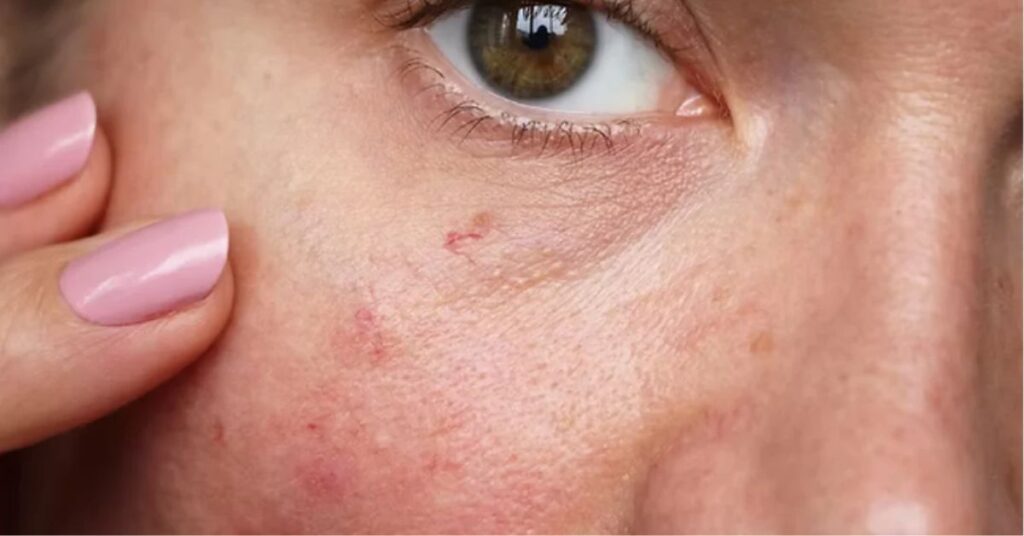
Visible facial veins can fade with daily sun protection and, when needed, dermatologist-performed laser or sclerotherapy.
Thin blue, red, or purple lines on the face can grab your attention. They may sit around the nose, spread across the cheeks, or show under the eyes. The look is common, and it has a few different causes.
This page is for everyday cases: surface vessels (often called thread veins), under-eye veins that show through thin skin, and small spider patterns. It also lists red flags that need medical care.
If you searched for how to get rid of visible veins on face, you want fewer lines now and fewer new ones later. You can get both with a gentle routine and the right in-office option.
| What You See | Common Name | What It Often Means |
|---|---|---|
| Fine red lines on cheeks or around the nose | Thread veins / broken capillaries | Small surface vessels widened by sun, irritation, or flushing |
| Red “spider” pattern with tiny branches | Spider veins | Cluster of widened surface vessels |
| Blue-green lines under the eyes | Under-eye veins | Thin skin plus genetics, aging, or low facial fat in that area |
| One thicker blue vein near the temple | Prominent facial vein | Normal anatomy that stands out with lower body fat or thinner skin |
| Redness that comes and goes with warmth | Flushing | Reactive vessels; can pair with rosacea-type sensitivity |
| Red-purple spot that does not fade | Angioma | Small cluster of vessels; often treated with laser |
| Veins that look raised, tender, or ropey | Inflamed vein | Not typical for the face; needs medical assessment |
| Sudden new vein pattern after injury | Post-trauma change | Swelling and tissue change can make vessels stand out |
What visible facial veins usually are
Most visible facial “veins” are not deep veins. They’re small surface blood vessels that sit close to the skin. The medical term you might hear is telangiectasia, which means tiny vessels that have widened and become easier to see.
They can show up after years of UV exposure, repeated heat and flushing, harsh skin products, or long stretches of irritation. Some skin tones show red vessels sooner, while others show blue-green vessels through thinner skin.
Under-eye veins are a separate story. The skin under the eyes is thin, and the area has less oil and fewer structural fibers. As that skin thins with age, or if you naturally have less padding there, blue veins can show even when the vessels themselves are normal.
How To Get Rid Of Visible Veins On Face
Start with the fixes that lower contrast between the vessel and the skin, then step up to procedures that close the vessel. The best plan depends on the color (red vs blue), the depth, and the spot on your face.
Steps at home that change how veins show
Home care can’t erase a widened vessel, but it can calm redness and slow new lines.
- Use daily sunscreen. Pick broad-spectrum SPF 30+ and reapply on long outdoor days. UV exposure is a steady driver of new surface vessels.
- Cleanse gently. Use lukewarm water and a mild cleanser. Hot water and aggressive scrubbing can leave skin reactive.
- Moisturize to lower irritation. A plain moisturizer can cut stinging and dryness, which often triggers rubbing.
- Skip harsh exfoliation for now. Strong acids, frequent peels, and gritty scrubs can keep blood vessels “turned on.”
- Try redness-friendly ingredients. Niacinamide and azelaic acid are common picks for facial redness. Patch test first, then increase slowly.
Same-day camouflage options
If you want a fast cosmetic change, makeup does more than you might think, especially for red vessels. Use thin layers and build only where you need it.
- Green corrector for redness. Tap it onto red lines, then add a skin-tone concealer on top.
- Peach corrector under the eyes. This can soften blue tones before concealer.
- Go for a satin finish. Heavy shimmer can make texture and vessels stand out in side light.
Habits that keep new lines from showing
Small patterns add up. A few day-to-day choices can mean fewer new vessels over time.
- Cool down after heat. If you flush after workouts, try a cool rinse and avoid steamy showers right after.
- Go easy on triggers that cause facial flushing. Common ones are hot drinks, spicy food, and alcohol.
- Don’t pick at acne or scabs. Repeated trauma raises the chance of lasting redness and visible vessels.
Getting rid of visible veins on your face with clinic treatments
When a vessel is widened and stable, an in-office procedure that targets blood in the vessel can close it. Choice depends on color, depth, and skin tone.
Vascular lasers for red facial vessels
Vascular lasers target the color in blood. The goal is to heat the vessel wall so it closes, then the body clears it over time. The best-known devices include pulsed dye lasers, KTP lasers, and Nd:YAG lasers, chosen by depth and skin tone.
Realistic expectations help. The American Academy of Dermatology notes that laser or light treatment for visible blood vessels often leads to around a 50% to 75% reduction after one to three sessions, spaced a few weeks apart. Read their patient overview here: American Academy of Dermatology on laser and light therapy.
After treatment, the skin may look pink, puffy, or bruised for a short time. Follow the clinician’s timing for makeup and sun exposure.
IPL for diffuse redness and mixed patterns
Intense pulsed light (IPL) is not a laser. It uses a band of light that can target redness and brown sun spots in the same session. IPL can suit people who have widespread redness with small vessel lines, not just a few isolated threads.
IPL tends to involve a series of sessions. Mild swelling and a warm, tight feel are common right after.
Sclerotherapy and why it is less common for the face
Sclerotherapy closes a vessel by injecting a solution that irritates the vein lining so it scars shut. It’s widely used for spider veins on the legs. For the face, it’s used less often because facial vessels are smaller and the stakes are higher.
If you’re told sclerotherapy is an option for your facial vessels, ask who performs it and how often they treat facial cases. The Mayo Clinic explains how the procedure works and what it treats: Mayo Clinic page on sclerotherapy.
Other options your clinician may suggest
For tiny, isolated vessels, some clinics use electrosurgery or other energy devices. For under-eye veins, a plan may involve a mix of concealer technique, skin care to calm redness, and a procedure chosen for that thin area. Avoid DIY needle or heat tools at home. The risk of burns, scars, and pigment change is real.
Side effects and trade-offs to weigh
Most people treat facial veins for appearance, so the trade-offs matter. Ask what the skin may look like tomorrow, and what could linger.
- Bruising. More common with some lasers and with sclerotherapy.
- Temporary darkening. A vessel can look darker before it fades.
- Post-inflammatory pigment. More likely after sun exposure during healing.
- Scarring. Uncommon in skilled hands, but possible with burns or infection.
- Recurrence. New vessels can form over time, so maintenance may be part of the plan.
Treatment options compared
Use this table to match what you see with a typical next step.
| Option | Best Fit | What You May Notice After |
|---|---|---|
| Daily sunscreen + gentle routine | All types, plus prevention | Less redness and irritation over weeks; vessels stay but can look softer |
| Niacinamide or azelaic acid | Redness with sensitive skin | Less flushing and sting; start slow to avoid irritation |
| Color correction makeup | Fast cosmetic change | Immediate masking; needs blending and good skin prep |
| Vascular laser (PDL, KTP, Nd:YAG) | Thread veins, angiomas, focal vessels | Pinkness or bruising for days; gradual fading over weeks |
| IPL | Diffuse redness plus sun spots | Warmth and swelling for a day or two; spots can darken then flake |
| Sclerotherapy | Selected vein patterns, more common off-face | Bruise risk; fading takes weeks; face use is less common |
| Electrosurgery or spot energy devices | Tiny isolated vessels | Small crusts or scabs; strict sun avoidance while healing |
When visible veins deserve a prompt medical check
Most facial vessels are a cosmetic issue. Some patterns should be checked soon, especially when they are new and paired with other symptoms.
- Sudden swelling on one side of the face
- New, severe pain, warmth, or a tender cord-like vessel
- Vision changes, severe headache, or facial weakness
- Bleeding that won’t stop, or a spot that crusts and keeps returning
- A new growth that changes shape, color, or size
If any of these happen, get urgent medical care. If your veins have built up slowly over months or years with no other symptoms, a non-urgent dermatology visit is a solid next step.
Aftercare that protects your results
After an in-office treatment, keep the skin calm, shield it from UV, and follow the clinician’s written instructions.
- Skip heat. Avoid saunas, hot yoga, and long hot showers for the period you’re given.
- Use a bland cleanser and moisturizer. Fragrance-free products lower sting while the skin settles.
- Wear sunscreen daily. Reapply if you’re outdoors, even on cloudy days.
- Don’t pick. Let any crusts fall off on their own.
Plan your next step without wasting time
Use this plan to pick your next step based on your vessel type.
- Take two photos. One in natural light, one under bathroom light. Note which one shows the vessels more.
- Track triggers for a week. Note when you flush: heat, workouts, spicy meals, alcohol, or skin products.
- Run a two-week calm routine. Gentle cleanser, plain moisturizer, and daily sunscreen. No scrubs.
- Then reassess. If redness drops but vessels stay crisp, you’re a good match for a device-based option.
If you still feel stuck, use how to get rid of visible veins on face as a filter: “Is this step reducing visibility, stopping new vessels, or both?” If it does neither, skip it.
References & Sources
- American Academy of Dermatology (AAD).“Lasers and lights: How well do they treat rosacea?”Patient-facing expectations for laser/light treatment of visible blood vessels, including typical session counts and results.
- Mayo Clinic.“Sclerotherapy”Overview of what sclerotherapy is and how it closes spider veins.

Mo Maruf
I created WellFizz to bridge the gap between vague wellness advice and actionable solutions. My mission is simple: to decode the research and give you practical tools you can actually use.
Beyond the data, I am a passionate traveler. I believe that stepping away from the screen to explore new environments is essential for mental clarity and physical vitality.