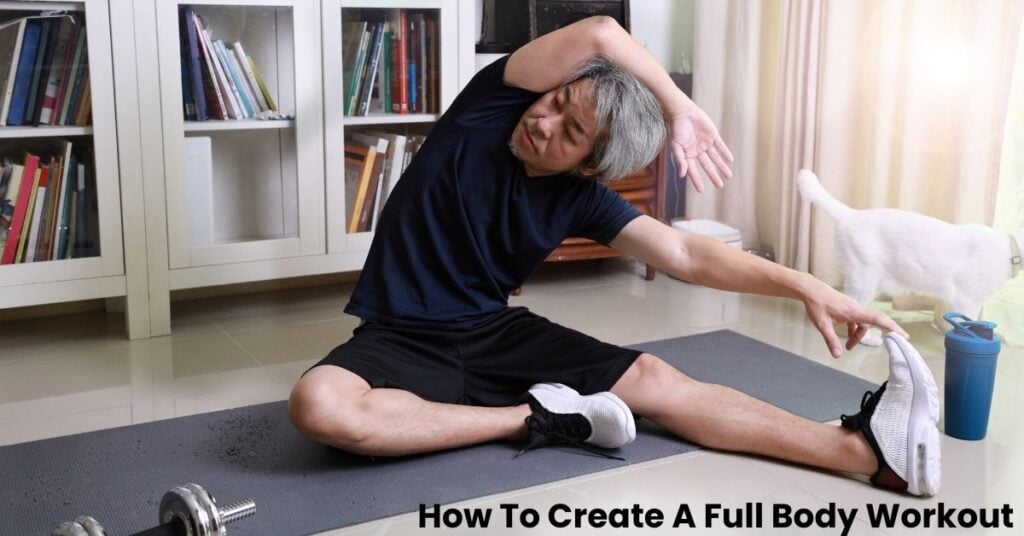
A balanced full-body plan trains squat, hinge, push, pull, and trunk work 2–4 days weekly, adding reps or load while keeping form steady.
Full-body training has one big perk: you still practice the main lifts often, without living in the gym. The catch is that “full body” can turn into a grab-bag fast. Too many exercises, too little progress, and your sessions start feeling noisy.
Below is a build method you can reuse. You’ll pick patterns, set a simple weekly layout, and write a progress rule you can stick to.
Creating A Full Body Workout That Fits Your Week
Start with time. Choose a number of training days you can repeat for the next month, then choose a session length that won’t wreck your schedule. Consistency wins because your plan only works when you show up.
If you want a public baseline, the CDC adult activity recommendations outline weekly aerobic targets plus at least two muscle-strengthening days.
Pick One Primary Training Aim
Full-body sessions can push strength, muscle size, or general fitness. Pick one aim for the next month.
- Strength lean: 3–6 reps, longer rests, fewer total exercises.
- Muscle lean: 6–12 reps, steady effort, more total sets across the week.
- Mixed lean: 5–10 reps on most lifts, plus a short finisher once or twice weekly.
Set A Simple Weekly Split
Space sessions with a rest day between them when you can. A Monday/Wednesday/Friday rhythm works because soreness usually settles before the next lift.
For two days, split patterns across A and B. For three days, rotate squat, hinge, and lunge patterns across the week.
Movement Menu For A Balanced Session
A full-body routine stays tidy when you build around patterns, not body-part days. Use this menu to pick one lift from each row and you’ll avoid blind spots.
| Pattern | Primary Lift Options | Simple Add-On Options |
|---|---|---|
| Squat | Goblet squat, front squat, back squat | Split squat, step-up |
| Hinge | Romanian deadlift, trap-bar deadlift, hip thrust | Kettlebell swing, good morning |
| Horizontal push | Push-up, dumbbell bench press, barbell bench press | Incline push-up, cable press |
| Horizontal pull | One-arm row, barbell row, ring row | Face pull, rear-delt fly |
| Vertical push | Dumbbell overhead press, landmine press | Lateral raise |
| Vertical pull | Pull-up, lat pulldown, assisted pull-up | Straight-arm pulldown |
| Carry | Farmer carry, suitcase carry | Rack carry, sled drag |
| Trunk | Plank, dead bug, side plank | Pallof press |
How To Create A Full Body Workout With Limited Equipment
You don’t need a full rack of gear. You need ways to hit the same patterns and a plan for steady progress.
Make One Dumbbell Feel Heavier
When load is limited, adjust the challenge with tempo, pauses, and range of motion. Slow the lowering phase to three seconds. Pause one second in the hard spot. Add reps before you add weight.
Keep one change per lift per week. If you change all parts at once, it’s hard to tell what drove progress.
Scale Bodyweight Work Without Guesswork
Bodyweight moves scale by changing body angle. For push-ups, start with hands on a bench, then move to the floor, then raise feet. For rows, start with a high bar or table edge, then lower the bar or use rings.
Stop each set while you can still keep a tight brace and smooth reps. Next session, add one rep. That slow build keeps elbows and shoulders happier.
Build Your Full-Body Session Step By Step
Use the steps below each time you build or rebuild a routine. The order matters, so don’t skip ahead.
Step 1: Choose Two Main Lifts
Pick one lower-body main lift and one upper-body main lift. These get the most warm-up sets and the longest rests.
- Lower-body: squat pattern or hinge pattern.
- Upper-body: push pattern or pull pattern.
Across the week, rotate patterns.
Step 2: Add Two Balancing Lifts
Balancing lifts fill gaps. If your main work is press-heavy, add a row. If your main work is pull-heavy, add a press. Keep the rep range moderate and the technique crisp.
Then add one single-leg or single-arm move. It builds control and helps you spot side-to-side differences early.
Step 3: Finish With Trunk Work And A Carry
Trunk work is more than bending and twisting. Train resisting motion: resist extension, resist rotation, resist side-bending. Carries tie that together with grip and posture.
Two to three rounds is plenty. Think 30–45 seconds per round, or 6–10 slow reps per side.
Step 4: Set Sets, Reps, And Rest
Pick a rep range that matches your training aim. Strength leans toward 3–6 reps. Muscle leans toward 6–12. Mixed work often sits in the 5–10 range.
For main lifts, start with 3–4 working sets. For balancing lifts, 2–3 sets usually does the job. For trunk and carries, 2–3 sets works well.
Rest long enough to keep reps smooth: about 2–3 minutes for main lifts and 60–90 seconds for accessories.
Step 5: Write One Progress Rule
Progress can be plain. Pick one rule and run it for four to eight weeks.
- Double progression: stay at one load until you hit the top of the rep range on all sets, then add a small load.
- Top set plus back-off: one heavier set, then 2–3 lighter sets with clean reps.
- Rep build: keep load steady and add one rep somewhere each week.
Log it. If it isn’t written, it’s easy to drift into random effort.
Session Flow That Keeps You Moving
Put skill-heavy lifts first, then pair simpler moves to save time.
Warm-Up In Three Short Blocks
Block 1 (2 minutes): easy bike, rower, or brisk walk.
Block 2 (3 minutes): a few mobility drills for what you’ll load.
Block 3 (3 minutes): two ramp-up sets for your first lift.
Pair Non-Competing Lifts
Pair a lower-body lift with an upper-body lift, or pair a push with a pull. Do both moves, rest, then repeat.
- Goblet squat + one-arm row
- Romanian deadlift + push-up
- Overhead press + lat pulldown
Sample Templates You Can Run For Weeks
Use these templates as starting points, then swap exercises from the movement menu while keeping the patterns the same.
The weekly mix here also matches the broad federal direction to pair aerobic work with muscle-strengthening days in the Physical Activity Guidelines for Americans.
Two-Day Template
Day A: squat, horizontal push, horizontal pull, trunk, carry.
Day B: hinge, vertical push, vertical pull, single-leg, trunk.
Three-Day Template
Day 1: squat + press focus.
Day 2: hinge + pull focus.
Day 3: lunge + mixed upper focus.
| Day | Main Lifts | Sets × Reps And Notes |
|---|---|---|
| Day 1 | Squat, bench press, row | 3–4 × 3–8 on squat; 3–4 × 6–12 on upper lifts; finish with planks |
| Day 2 | Romanian deadlift, pull-up or pulldown, overhead press | 3–4 × 4–10 on hinge; keep pulls clean; add carries at the end |
| Day 3 | Split squat, incline press, one-arm row | 3–4 × 6–12 on lunge; upper work moderate; finish with dead bug or Pallof press |
Adjusting The Routine When Life Gets Messy
A routine should bend. When sleep is short or soreness sticks around, use a small change first.
Swap The Lift, Keep The Pattern
If a lift feels rough, keep the pattern and switch the tool. Trade barbell squats for goblet squats. Trade pull-ups for pulldowns. Keep the same sets and reps for two weeks, then see how you feel.
Use A Simple Effort Check
On most sets, finish with 1–3 reps left. If you hit all-out sets often, progress can stall and aches can pile up.
If you feel fresh, add one extra rep on one set.
Tracking That Makes Progress Clear
A notebook or notes app is enough if you keep it consistent.
- Log the exercise, sets, reps, and load.
- Add one short form note, like “hips rose fast” or “smooth reps.”
- Circle one target for next time.
After four weeks, scan your log and pick one small change for next week.
One-Page Build Checklist
Use this list when you need a routine in ten minutes.
- Pick 2–4 training days and a session length you can repeat.
- Pick one lower-body main lift and one upper-body main lift.
- Add two balancing lifts: one push or pull, plus one single-leg or single-arm.
- Add trunk work and one carry.
- Set a rep range and rest times that match your aim.
- Choose one progress rule for 4–8 weeks.
- Log your work and adjust one knob at a time.
If you’re new to training, start with two sessions this week and keep loads light. Add a little work each week and let technique lead.
When you need a reset, use the same steps again. That’s how to create a full body workout that stays useful as your schedule and equipment change.
One more time in plain words: how to create a full body workout comes down to patterns, steady progress, and a routine you’ll repeat.
References & Sources
- Centers for Disease Control and Prevention (CDC).“Adult Activity: An Overview.”States weekly aerobic targets and at least two muscle-strengthening days, used as a planning baseline.
- Office of Disease Prevention and Health Promotion (ODPHP), U.S. Department of Health and Human Services.“Physical Activity Guidelines for Americans.”Federal page describing the activity recommendations that inform many training plans.

Mo Maruf
I created WellFizz to bridge the gap between vague wellness advice and actionable solutions. My mission is simple: to decode the research and give you practical tools you can actually use.
Beyond the data, I am a passionate traveler. I believe that stepping away from the screen to explore new environments is essential for mental clarity and physical vitality.