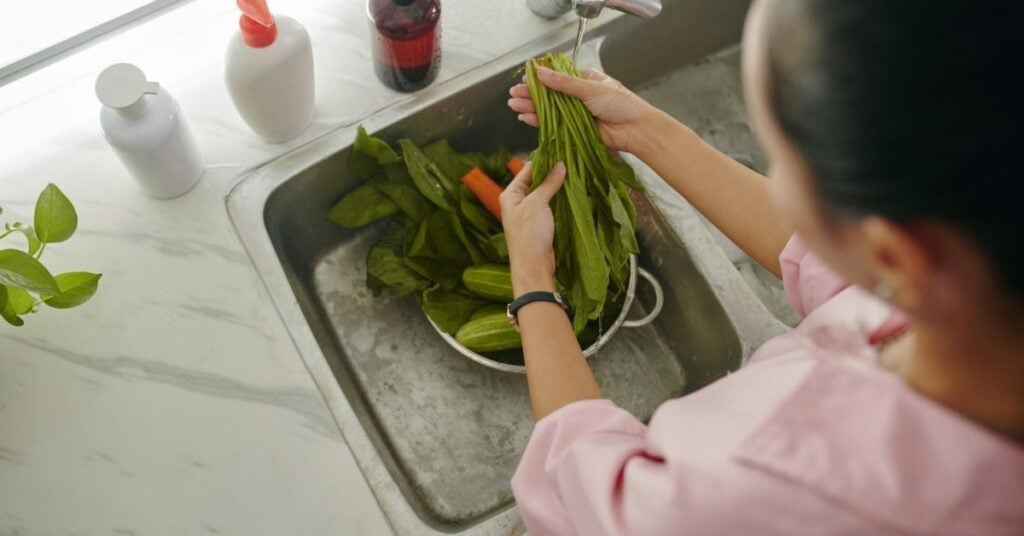
Rinse vegetables under cool running water, dry them fully, then store them with the right airflow and humidity to keep them crisp longer.
Vegetables can go from crisp to limp fast. A little water left on spinach, a damp bag around mushrooms, or a sealed container for herbs can shave days off their life. If you’ve searched how to clean and store vegetables, you’re in the right spot.
The goal is simple: get visible dirt off, keep moisture under control, and place each vegetable where it stays happy. You don’t need fancy sprays or special tools. You need good timing, clean hands, and storage that fits the veggie in front of you.
This is the system: clean smart, dry hard, store by texture, and set up your fridge so “use me first” items don’t vanish behind a head of cabbage.
| Vegetable | Clean It Like This | Store It Like This |
|---|---|---|
| Spinach, lettuce, kale | Swish in cold water, lift out grit, spin dry | Dry container + paper towel; high-humidity drawer |
| Broccoli, cauliflower | Rinse under running water, shake dry | Perforated bag; high-humidity drawer |
| Carrots, beets, radish | Scrub with a produce brush under water | Bag or box with a lightly damp towel; drawer |
| Green beans, snap peas | Rinse, drain, pat dry | Perforated bag; drawer or shelf |
| Bell peppers | Rinse, dry, wipe around stem | Low-humidity drawer; keep dry |
| Cucumbers, zucchini | Rinse, dry | Drawer (not the cold back); away from apples |
| Mushrooms | Brush or wipe; quick rinse only if gritty | Paper bag on a fridge shelf |
| Herbs (parsley, cilantro) | Quick rinse, shake, pat leaves dry | Jar with a little water + loose bag; shelf |
| Onions, garlic | Do not wash; brush off soil | Dark, dry spot with airflow; not sealed |
| Tomatoes | Rinse right before eating | Counter until ripe; then chill only if needed |
Why Vegetables Go Bad So Fast
Most spoilage in a home kitchen comes from three culprits: trapped moisture, rough handling, and the wrong temperature. Trapped moisture creates condensation. Condensation turns into slime or mold. Rough handling bruises skins and opens soft spots. The wrong temperature either dries vegetables out or makes them break down early.
There’s a tug-of-war happening inside your fridge. Many vegetables want humid air so they don’t shrivel. At the same time, they need airflow so water can’t collect on the surface. When storage matches both needs, vegetables last longer and taste better when you cook them.
How To Clean And Store Vegetables For A Busy Week
The best time to do most of the work is right after you get home. Not hours later. Not tomorrow. A short reset on shopping day keeps the rest of the week easy.
Set Up A Clean Work Zone
Start by clearing the sink and counter. Give the sink a quick wash with hot water and soap, then rinse it well. You’re going to rinse produce here, and you don’t want yesterday’s residue getting involved. Put out a clean towel for drying and grab a second towel or paper towels for blotting.
Stick With Running Water
For most vegetables, running water plus gentle rubbing does the job. Skip dish soap and “produce wash” liquids. The FDA’s page on Selecting and Serving Produce Safely recommends washing produce under running water and warns against using soap on fruits and vegetables.
Use A Brush Only Where It Helps
A clean produce brush is useful on firm skins with creases, like carrots and potatoes. For thin-skinned items, rubbing with your hands is enough. Keep the brush for produce only, and let it air-dry between uses so it doesn’t stay damp.
Dry Like It Matters
Drying is the step that separates “fresh all week” from “why is this slimy.” Water left in a container turns into condensation once the lid goes on. Spin greens, blot herbs, and towel-dry anything you plan to store. If you’re short on time, spread vegetables on a towel for ten minutes, then pack them away.
Store Whole, Cut Later
Whole vegetables last longer than chopped ones. Cut surfaces leak moisture and soften faster. If you like prep, do the “clean + dry + sort” part now, then slice only what you’ll cook in the next day or two.
Cleaning Steps By Vegetable Type
Leafy Greens And Salad Mixes
Greens hide grit in folds. Fill a large bowl with cold water, swish the leaves, then lift them out so sand stays behind. Pour out the gritty water, refill, and repeat until the water looks clean. Spin dry, then store with a paper towel inside the container to catch stray moisture.
For bagged greens labeled “triple-washed,” keep the bag closed and cold. Rewashing adds moisture and can spread germs from your sink onto clean leaves.
Broccoli, Cauliflower, And Brussels Sprouts
Rinse under running water and rub the surface. For broccoli, angle the head so water runs through florets. Shake off water, then let it sit on a towel for a few minutes before storing. A perforated bag works well here because it balances humidity with airflow.
Root Vegetables
Brush roots under running water to remove soil. If carrots or beets came with tops attached, cut the tops off before storing. The greens pull moisture from the root in the fridge. Dry the roots well and store them in a bag or box with a lightly damp towel so they don’t shrivel.
Peppers, Cucumbers, And Zucchini
These do best when they stay dry on the surface. Rinse, dry, then store in a drawer. Keep them away from apples and bananas when you can, since those fruits release ripening gas that can speed softening in some vegetables.
Mushrooms
Mushrooms soak up water fast. If they’re dusty, brush them or wipe with a barely damp cloth. If they’re gritty, a quick rinse is fine, but dry them right away. Store mushrooms in a paper bag so moisture can escape.
Herbs
Herbs fail when they sit wet. After a quick rinse, shake them dry and blot the leaves. Trim the stems, stand them in a jar with a little water, and loosely cover with a bag. Store the jar on a fridge shelf where it won’t get crushed.
Onions And Garlic
Skip washing. Brush off dirt and store in a dry, dark spot with airflow. A basket or mesh bag works well. Keep onions away from potatoes, since storing them together can speed sprouting and soft spots.
Storing Vegetables In The Fridge Without Guesswork
Your fridge has warm and cold zones. The door runs warmer. The back runs colder. Drawers hold humidity better than open shelves. USDA’s produce safety guidance on Storing Fresh Produce notes that refrigerators should stay at 41°F (5°C) or below and that temperatures vary by location inside the refrigerator.
Make One Drawer High Humidity And One Low Humidity
If your crispers have sliders, set one to higher humidity for leafy greens, broccoli, carrots, and herbs. Set the other to lower humidity for peppers and items that hate condensation. If your fridge has only one drawer, group vegetables by moisture needs using separate bags or containers.
Choose Containers That Match The Vegetable
- Dry container with a paper towel: Best for washed greens and herbs that are already dry.
- Perforated bag: Good for broccoli, beans, and peas.
- Paper bag: Best for mushrooms.
- Bag with a lightly damp towel: Works for carrots and radishes to slow drying.
Keep A “Use First” Bin Up Front
Put a small bin on the front shelf for vegetables that won’t last long once opened or cut. Think half onions, cut peppers, opened salad bags, and herbs that are starting to droop. When you can see it, you use it.
Cleaning And Storing Vegetables With Less Waste
Speed comes from batching. Do it in three passes. First, handle greens, herbs, and mushrooms since they’re the easiest to ruin with moisture. Next, scrub roots. Last, rinse and dry sturdy items like peppers and broccoli. Once everything is dry, store by humidity needs.
After a week or two of doing this, you stop guessing. You’ll know what belongs in a drawer, what belongs on a shelf, and what belongs on the counter. That’s when how to clean and store vegetables starts feeling like a habit instead of a chore.
Room-Temperature Storage That Works
Not all vegetables belong in the fridge. Some get mealy, lose flavor, or sprout faster when stored cold. For pantry storage, aim for a dark spot with airflow and steady cool temperatures.
Best Pantry Picks
- Onions and garlic: Basket or mesh bag in a cabinet.
- Potatoes and sweet potatoes: Paper bag or bin in a cool closet; keep separate from onions.
- Winter squash: Shelf in a cool, dry place.
Tomatoes
Keep tomatoes on the counter until ripe. Once ripe, you can refrigerate them if you need extra days. Bring them back to room temperature before eating for better texture.
Midweek Fixes When Produce Starts To Slip
Even with good storage, life happens. The good news: some vegetables bounce back, and others can still be cooked even after they lose crunch. Use smell and texture as your guide. If something smells sour, feels slimy, or shows fuzzy mold, toss it.
Revive Wilted Greens
Soak greens in a bowl of ice water for ten minutes, then spin dry and store with a fresh paper towel. If the leaves feel slick or smell off, don’t try to save them.
Bring Back Limp Carrots And Celery
Trim the ends and soak in cold water for twenty minutes. Dry and store again. If they’re still rubbery, switch plans and roast them or add them to soup.
Use Yellowing Broccoli The Right Way
Yellow tips mean it’s older, not unsafe on its own. If it smells fresh, cook it soon. Stir-fries, soups, and sheet-pan roasts are good options.
| What You Notice | What Likely Happened | What To Do Next |
|---|---|---|
| Slime on greens | Stored wet or sealed tight | Discard; next time dry fully and add paper towel |
| Mold spots on peppers | Condensation + crowding | Discard affected pieces; dry container; give space |
| Herbs turn mushy | Leaves stayed wet | Rinse, blot dry, store upright in jar + loose bag |
| Carrots go limp | Dry fridge air | Bag with a lightly damp towel; keep in a drawer |
| Mushrooms feel slick | Plastic trapped moisture | Switch to paper bag; keep on a shelf |
| Cucumbers soften early | Stored too cold or near ripening fruit | Move to drawer; keep away from apples and bananas |
| Onions sprout | Warm spot or too much moisture | Move to cooler, dry place with airflow |
| Potatoes turn green | Light exposure | Cut away green parts; store in a darker spot |
Freezer Options When You Bought Too Much
Freezing is a smart exit ramp for extra vegetables. Many vegetables freeze best after blanching: a short dip in boiling water, then a quick chill in cold water, then a full dry-off before packing. It keeps color and texture steadier once frozen.
Freeze vegetables in flat bags so they stack and thaw faster. Push out excess air, seal, and label with the date. Onions and peppers can be frozen chopped for cooking with no blanch step.
References & Sources
- U.S. Food and Drug Administration (FDA).“Selecting and Serving Produce Safely.”Gives safe washing and handling steps for fresh produce and advises against using soap on produce.
- USDA Food and Nutrition Service (FNS).“Storing Fresh Produce.”Explains fridge temperature targets and how different fridge zones affect produce storage.

Mo Maruf
I created WellFizz to bridge the gap between vague wellness advice and actionable solutions. My mission is simple: to decode the research and give you practical tools you can actually use.
Beyond the data, I am a passionate traveler. I believe that stepping away from the screen to explore new environments is essential for mental clarity and physical vitality.