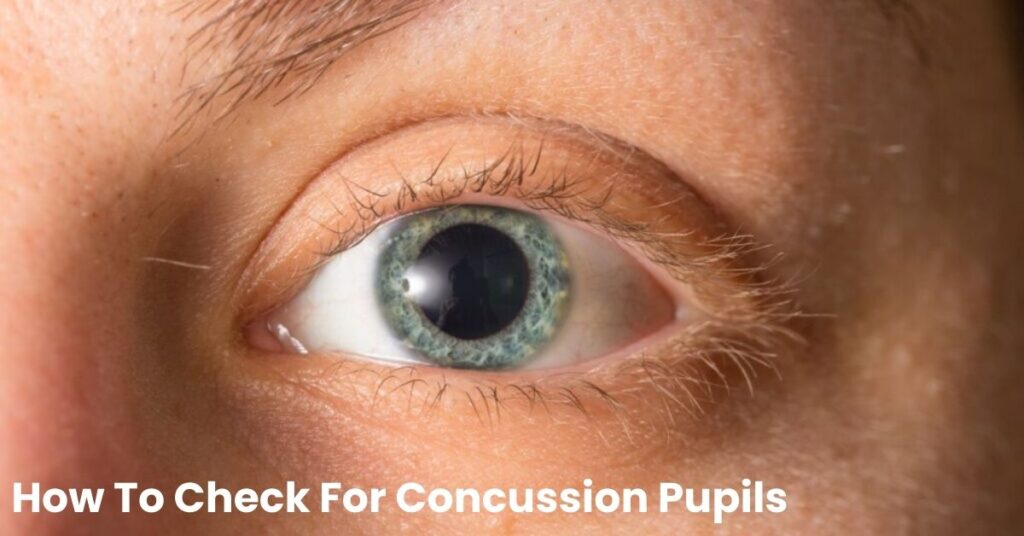
Uneven, fixed, or slow pupils after a head hit can point to a brain emergency, so check gently and get urgent care if anything looks off.
A pupil check can’t confirm a concussion. It can still help you notice eye changes that sometimes show up after a head injury. If you spot a new, obvious change, treat it as a reason to get medical help fast.
This article shows a simple, repeatable way to check pupils, what findings should worry you, and what details to write down. If you came here searching how to check for concussion pupils, you’ll get a clear step-by-step routine you can run in under two minutes.
Skip the pupil check and call emergency services right away if the person is hard to wake, has trouble breathing, has a seizure, or has neck pain after a hard fall or crash. Don’t move their head and neck unless you must for safety.
Fast Safety Screen Before You Check Pupils
Take ten seconds to scan the whole person. Pupils are only one clue.
- Breathing: If breathing is noisy, slow, or absent, get emergency help now.
- Bleeding: Stop heavy bleeding with firm pressure using clean cloth if you have it.
- Neck pain: If they report neck pain or you saw a high-force hit, keep the head still.
- Eye injury: If something pierced the eye, don’t press on it and don’t shine bright light for long.
Once those basics are steady, you can check pupils in a calm way. Rushing leads to mixed signals.
| What You See | What It Can Suggest | What To Do Next |
|---|---|---|
| Pupils equal and shrink fast with light | Reassuring pupil response | Keep watching symptoms and recheck later |
| One pupil clearly larger than the other | Possible serious brain problem or nerve/eye issue | Get emergency care now |
| One pupil stays large and barely shrinks | Possible nerve problem or rising pressure in the skull | Get emergency care now |
| Both pupils stay wide in bright light | Can come from drugs, shock, or brain injury | Get urgent medical evaluation |
| Both pupils stay tiny and barely change | Can come from drugs or brainstem injury | Call emergency services |
| Reaction is slow, not crisp | Can come from fatigue, meds, or head injury | Recheck soon; get care if other symptoms rise |
| New double vision | Eye movement problem after head hit | Get medical care today; go sooner if it worsens |
| Eyes can’t smoothly track a moving target | Eye coordination issue that can follow concussion | Stop sports; get medical evaluation |
| Droopy eyelid with a new pupil change | Possible nerve issue after head/neck trauma | Get emergency care now |
| Sudden vision loss, severe eye pain, or blood in the eye | Direct eye injury | Go to urgent eye or emergency care |
How To Check For Concussion Pupils
You only need a phone flashlight or small torch. Keep it gentle. Your job is to compare the two eyes and note change over time.
Set Up The Room
Pick a quiet spot. Sit the person upright if they feel steady. If they feel faint, have them lie on their side. Keep the head still.
Start in normal room light. Then dim the room a bit so you can see pupil size more clearly. Full darkness is not needed.
Ask Two Quick Orientation Questions
Before any light, check baseline brain function.
- What is your full name?
- What happened?
If answers are getting worse, treat that as urgent even if pupils look equal.
Check Size And Shape In Normal Light
Stand in front of them. Ask them to look past you at a fixed point. Then glance at both pupils together.
- Size: Are they small, medium, or large for the room?
- Symmetry: Do they look the same, or is one plainly bigger?
- Shape: Are they round, or is one oval or ragged?
A small, lifelong size difference exists in some people. What matters here is a new and obvious difference after a hit.
Test Light Reaction
Tell them what you’re about to do. Sudden light can startle people and make them pull away.
- Hold the light 4–6 inches from one eye and aim from the side, not straight in.
- Turn it on for about one second.
- Watch that pupil shrink.
- Turn the light off and let it reopen.
- Repeat on the other eye.
You’re looking for two things: does each pupil shrink, and do they shrink at the same speed?
Check Eye Tracking And Near Focus
Pupil checks are stronger when paired with a quick eye movement screen.
- Tracking: Hold your finger at arm’s length and move it slowly left to right. Ask them to follow it with only their eyes.
- Near focus: Move your finger from arm’s length toward the bridge of the nose. Ask if it becomes double, blurry, or painful.
Stop if the test triggers sharp eye pain, strong dizziness, or nausea. Write that reaction down.
Write Down What You See
Notes beat memory when stress is high. Write the time and a short description like “equal and fast,” “left larger,” or “both slow.” If you can, take a short video in steady light for later comparison.
Checking Concussion Pupils After A Head Hit: What Changes Matter
Pupils react to light through nerves that run from the eye to the brain and back. A concussion can leave pupils looking normal. So a normal pupil check does not clear a concussion.
What should make you sit up straight is a new and clear change, mainly uneven pupils or a pupil that barely reacts. Those patterns can show up with more serious injury than concussion.
There are common reasons pupil checks can mislead you. Contact lenses can make pupils look odd in bright light. Some eye drops can widen pupils. Certain migraine meds, nausea meds, and allergy meds can affect pupils. Direct eye trauma can change pupil size without brain injury. That’s why you treat pupil findings as a warning sign, not a diagnosis.
If you suspect the person had different pupil sizes before the injury, ask if they have old photos in similar lighting. If you can confirm the difference is old and they feel well, that’s useful context. If you can’t confirm it, treat it as new.
When To Get Emergency Care Right Away
Go now if you see pupil red flags or serious brain symptoms. The safest approach is to act on clear danger signs, not to wait for them to pile up.
These danger signs are listed on the CDC HEADS UP signs and symptoms page and show when emergency care is needed after a head injury.
- One pupil larger than the other
- A pupil that barely reacts to light
- Repeated vomiting
- Slurred speech, weakness, numbness, or poor coordination
- Seizure activity
- Worsening headache that doesn’t ease
- Rising confusion, agitation, or behavior that is clearly not typical for them
- Loss of consciousness or being hard to wake
The Mayo Clinic concussion symptoms page also lists pupil changes and other emergency warning signs after head injury. Use those checklists when you’re unsure whether the situation is urgent.
What To Do While You Wait For Help
If you’re waiting for emergency help, keep the person still and warm. Keep the lights low. Don’t give alcohol. Don’t give sedating drugs. Avoid aspirin or similar blood-thinning pain meds unless a health professional already told them to use it for a known reason.
If they might vomit, turn them on their side. If you suspect a neck injury, turn the whole body as one unit. Don’t force food or drink if they are drowsy.
Keep checking breathing and alertness. If they stop breathing or you can’t wake them, call emergency services again and follow dispatcher instructions.
Home Watch For Mild Symptoms Over The Next Day
If a medical professional has checked them and sent them home, follow those instructions first. If you are watching mild symptoms at home, aim for a quiet day with light activity only.
Recheck pupils in steady lighting every few hours while the person is awake. Look for change, not perfection. If a new uneven pupil appears, or reactions become slow, treat that as urgent.
Check for symptom drift too. Headache that grows, nausea that ramps up, confusion that rises, or balance that worsens should push you toward medical care.
Sleep can be normal after a head injury. If they are easy to wake, can answer simple questions, and symptoms are not climbing, rest is fine. If they are hard to wake, that’s a red flag.
| Situation | Pupil Check Result | Action |
|---|---|---|
| Clear uneven pupils after the hit | One larger, new change | Emergency care now |
| Strong drowsiness | Any result | Emergency care now |
| Headache rising over time | Equal but slow, or changes over time | Urgent evaluation today |
| Single vomit episode, then stable | Equal and fast | Watch closely; get care if vomiting repeats |
| Double vision starts after injury | Equal or uneven | Medical evaluation today; emergency if it worsens |
| Light sensitivity and headache | Equal and fast | Rest and watch; avoid sports until cleared |
| Confusion or behavior shift | Equal and fast | Urgent evaluation now |
| Symptoms fade and stay low | Equal and fast | Keep watching; follow return-to-activity rules |
Mistakes That Make Pupil Checks Misleading
A clean method matters more than fancy technique. These slips can create false alarms.
- Shining the light straight in: Aim from the side to avoid glare and squinting.
- Holding light too long: A one-second flash is enough for a basic reaction check.
- Switching lighting conditions: Compare checks done in similar room light.
- Comparing one eye at a time only: You need a quick side-by-side glance too.
- Ignoring eye trauma: A scratched cornea or blunt eye hit can change pupils and vision on its own.
- Skipping the brain check: Confusion, slurred speech, and poor balance can outweigh pupil findings.
If you’re uncertain, run the same check again after five minutes in the same lighting. If the result is still clear and new, treat it as real.
What To Tell Medical Staff
If you go in for care, your notes help. Bring the story in plain language.
- Time of injury and how it happened
- Any loss of consciousness and how long it lasted
- Any vomiting, seizure activity, or severe headache
- Your pupil notes, with times (equal, uneven, slow, fixed)
- Any vision change like double vision, blur, or light sensitivity
- Meds, alcohol, or eye drops taken that day
If you took a short video of the pupil check in steady light, show it. It can make change over time easier to judge.
One last reminder: pupil checks are a safety screen, not a verdict. If you’re here again later searching how to check for concussion pupils after symptoms shift, treat new uneven pupils or a weak light reaction as a reason to act fast.
References & Sources
- Centers for Disease Control and Prevention (CDC).“Signs and Symptoms of Concussion | HEADS UP”Lists danger signs after head injury, including one pupil larger than the other and other emergency warnings.
- Mayo Clinic.“Concussion – Symptoms and causes”Summarizes concussion symptoms and warning signs, including vision or pupil changes that need prompt medical care.

Mo Maruf
I created WellFizz to bridge the gap between vague wellness advice and actionable solutions. My mission is simple: to decode the research and give you practical tools you can actually use.
Beyond the data, I am a passionate traveler. I believe that stepping away from the screen to explore new environments is essential for mental clarity and physical vitality.