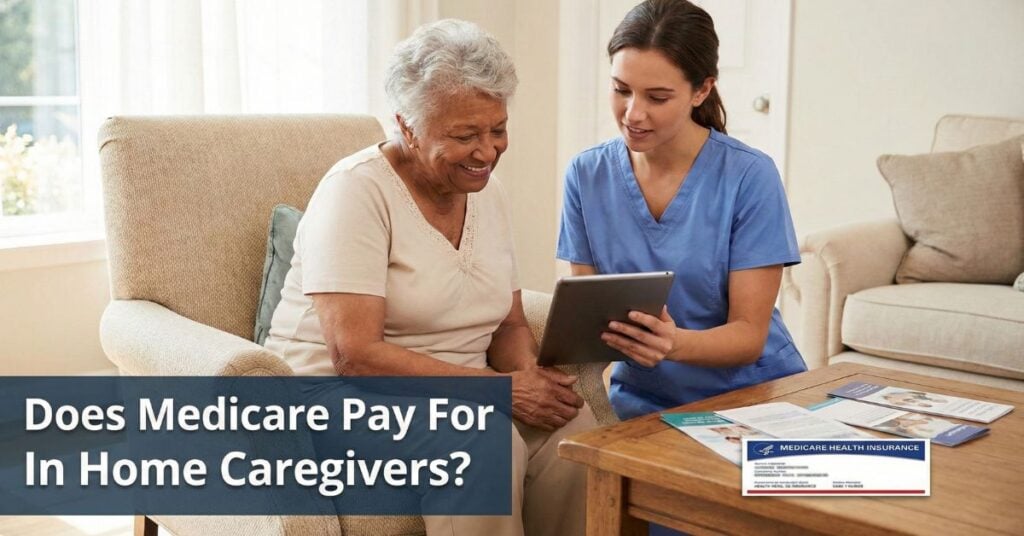
Original Medicare won’t pay for long-term in-home aides, but it can pay for short-term home health services when skilled care is part of the plan.
If you’re trying to keep someone safe at home, the payment rules can feel like a maze. People say “caregiver,” but Medicare splits home help into distinct buckets with strict boundaries. Some services get paid by Medicare. Many don’t, and that gap can change your monthly budget in a hurry.
This article lays out what Medicare may pay for in the home, what it won’t pay for, and how to figure out your next move without wasting weeks on dead ends. You’ll also get a clean set of questions to ask doctors, agencies, and Medicare Advantage plans so you can plan care with fewer surprises.
Does Medicare Pay For In Home Caregivers? What Medicare will and won’t pay for
Most people mean “someone who comes to the house and helps with day-to-day tasks” when they ask this. Under Original Medicare, ongoing day-to-day help is not a standard benefit. The narrow lane where Medicare may pay for home help is the home health benefit, and it usually starts with a skilled need.
So the decision point is simple: do you need skilled home health services ordered by a clinician, or do you mainly need hands-on help with daily living? Medicare treats those as two different categories with two different payment outcomes.
When Medicare may pay for help at home
Medicare may pay for home health services through a Medicare-certified home health agency when you meet eligibility rules and a clinician orders the care. In that setting, Medicare may pay for skilled nursing visits and therapy visits, and it may also pay for limited home health aide visits that go along with the skilled services.
Medicare’s official home health page spells out what this benefit includes and what it excludes. Read the exact language on Home health services on Medicare.gov, then use it as your checklist when you talk with an agency.
Checklist that usually needs to be true
- A doctor or other allowed clinician orders home health services and certifies the need.
- You need intermittent skilled nursing care, physical therapy, occupational therapy, or speech-language therapy.
- You’re homebound, meaning leaving home takes effort and you don’t go out often.
- A Medicare-certified home health agency provides the services.
- A plan of care is created and reviewed as required.
If you qualify, the aide portion is often time-limited and scheduled around the skilled visits. Think short visits that help with a supervised bath, grooming, or getting dressed. It’s not a daily, open-ended caregiver schedule, and it’s not meant to replace long-term personal care.
When Medicare won’t pay for an in-home caregiver
Original Medicare does not pay for long-term custodial care when that is the only need. Custodial care is hands-on help with daily activities that doesn’t require a licensed clinician. That’s the category most families mean when they say “in-home caregiver.”
Medicare’s home health page lists examples of services Medicare does not pay for at home, including 24-hour-at-home care, home meal delivery, homemaker services unrelated to a care plan, and personal care when it’s the only care you need. Medicare also explains the broader long-term care limits on Long-term care on Medicare.gov.
What Medicare means by skilled home health services
“Skilled” is not about how hard the day feels. It’s about whether a licensed professional is needed for the service. Skilled services usually include nursing tasks that need a nurse’s training and therapy services that need a licensed therapist’s training.
Common skilled nursing needs include wound care, injections that need clinical oversight, medication teaching, and monitoring when a clinician documents a medical reason. Common therapy needs include rehab after a fall, balance training, mobility work, and speech therapy after a neurological event. When skilled services are in place, an aide may be part of the plan for limited personal care tied to the skilled goals.
If the only need is help with bathing, dressing, toileting, meal prep, housekeeping, or staying nearby for safety, that’s typically custodial care. Under Original Medicare, families usually fund that through other programs or private pay.
How caregiver terms get mixed up
Two people can say “home care” and mean two different services, so billing conversations go off the rails fast. Getting the terms straight makes every phone call easier.
Home health aide
A home health aide works under a Medicare-certified home health agency during a home health episode that includes skilled services. The aide helps with personal care tasks tied to the plan of care. Visits are commonly limited in length and frequency.
Personal care aide or homemaker
This is the more common “in-home caregiver” people hire privately. Tasks can include bathing, toileting, dressing, meal prep, light housekeeping, laundry, and staying with someone who can’t be left alone. When this is the main need, Original Medicare usually won’t pay for it.
Family caregiver
Many families do the hands-on work themselves and bring in paid help for gaps. Original Medicare does not pay a family member for ongoing non-medical caregiving. A family member can still help coordinate medical visits and communicate with clinicians, but that coordination is different from paid caregiving.
Medicare payment for in-home caregivers through Medicare Advantage plans
Medicare Advantage (Part C) plans must pay for all the services Original Medicare pays for, and they can also offer extra benefits. Some plans offer limited home-based services that feel closer to caregiver help, like short-term help after a hospital stay, meal services, transportation, or other non-medical services tied to health or function.
These extras vary by plan, by county, and by year. Many have limits like a set number of visits, a narrow eligibility trigger, or a requirement to use a contracted provider. Some also require prior approval.
CMS has published guidance on “special supplemental benefits for the chronically ill,” which some plans use when offering certain non-medical extras. If you want to see what CMS allows and how plans should apply the rules, read CMS guidance for chronically ill supplemental benefits.
Questions that cut through plan marketing
- What home-based services do you offer that are not part of Original Medicare?
- What triggers the benefit: discharge, diagnosis, functional assessment, or something else?
- Is there a cap on hours, visits, or dollar amount per year?
- Do I have to use a specific agency or network provider?
- Do I need prior approval before services start?
A simple script works well on the phone: “I need hands-on help at home with bathing and meals. What home-based benefits do you offer, and what steps do I follow to start them?”
Payment options compared side by side
Once you see the categories together, the pattern is clearer. Original Medicare is built around skilled, time-limited medical care. Long-term daily help is usually funded in other ways.
| Option | May pay for in-home caregiving? | What it often looks like |
|---|---|---|
| Original Medicare (Parts A & B) | Only in narrow home health situations | Part-time aide visits tied to skilled nursing or therapy |
| Medicare Advantage (Part C) | Sometimes, as an extra benefit | Plan-specific home-based services with caps and eligibility rules |
| Medigap | No, it does not add new home care services | Pays some Medicare cost sharing, not ongoing daily caregiving |
| Medicaid (state program) | Often, if you qualify financially and functionally | Personal care hours set by a state assessment process |
| PACE program | Often, for eligible enrollees | Coordinated medical care with services that may include home help |
| VA pension add-on benefits | Yes, for eligible Veterans and survivors | Monthly payments added to a VA pension that may help pay for in-home care |
| Private long-term care insurance | Yes, if the policy includes home care benefits | Daily or monthly limits, elimination periods, and claim rules |
| Private pay | Yes | Hourly caregiver rates and schedules you choose |
How to check if Medicare will pay for home help
If you’re hoping Medicare will pay for services at home, start by matching your needs to the home health rules. These steps help you figure it out quickly and reduce surprises.
Step 1: Start with the skilled need
Ask the treating clinician whether there is a skilled need that must be done at home. If the clinician says the need is only help with bathing, dressing, toileting, meals, or safety supervision, that points away from Medicare home health payment under Original Medicare.
Step 2: Ask for a home health order when skilled care is needed
If a skilled need exists, ask the clinician to order home health services and document why home care is medically needed. Clear notes help the agency and help you ask better questions about what services will be scheduled.
Step 3: Confirm the agency is Medicare-certified
Under Original Medicare, payment runs through Medicare-certified home health agencies. If you hire a private aide on your own, Medicare does not reimburse that cost as a home health benefit.
Step 4: Ask what aide visits are included
Ask the agency what aide visits are planned, how long the visits are, and what tasks are included. If you need daily hands-on help, start budgeting for other funding sources right away. Home health aide visits under Medicare are often not enough for round-the-clock needs.
Step 5: Ask about non-Medicare add-ons before you agree
Some agencies offer extra services outside Medicare payment. Ask for the price in writing, then decide if the add-on makes sense for your household.
What you may still pay out of pocket
Even when Medicare pays for home health services, many households still pay for gaps. The most common gap is daily personal care: bathing every day, meal prep, evening routines, and supervision when someone can’t be left alone.
Medicare’s home health page notes that Medicare does not pay for 24-hour-at-home care and does not pay for personal care when it’s the only care you need. That’s why many families end up combining Medicare-paid skilled visits with privately funded caregiver hours.
If you plan to hire a private caregiver, get written schedules that show hours, duties, and the weekly total. Comparing two schedules side by side makes trade-offs clearer than comparing vague hourly rates.
| Need at home | Medicare payment signal | Common next step |
|---|---|---|
| Skilled nursing or therapy ordered for home | May fit home health rules | Request a home health order and use a Medicare-certified agency |
| Bathing, dressing, toileting every day | Often custodial-only | Price private caregivers and ask about Medicaid eligibility in your state |
| Supervision due to memory loss | Not paid as custodial supervision | Check adult day programs, plan extras, and private pay schedules |
| Short-term help after a hospital discharge | Sometimes offered by Part C plans | Call your plan and ask about post-discharge home services |
| Veteran needs help with daily activities | May fit VA pension add-on criteria | Review VA rules and file an application |
Other ways people pay for in-home caregivers
If Medicare isn’t paying for the daily help you need, you still have options. Each option has its own gatekeeping rules, so it helps to start with the one that matches your situation.
Medicaid personal care programs
Many states pay for personal care aides for people who meet financial and functional eligibility rules. The state usually sets the number of hours and the tasks allowed after an assessment. If income is above the limit, some states have spend-down pathways.
PACE programs
PACE may be available for adults who meet nursing home level-of-care rules and can live safely at home with services. PACE combines medical care and services, which can make scheduling home help easier. Availability depends on where you live.
VA pension add-on benefits
If the person needing care is a Veteran or a surviving spouse, VA pension add-on benefits may help pay for home care. The VA explains eligibility for Aid and Attendance and Housebound payments on VA Aid and Attendance and Housebound payments.
Long-term care insurance and life insurance riders
Some long-term care policies pay for in-home caregiving, often after an elimination period and with daily or monthly limits. Some life insurance policies have riders that allow early access to part of the benefit under certain conditions. Pull the policy and ask the insurer how the home care benefit is triggered and what documentation is required.
Questions to ask before you hire an in-home caregiver
A caregiver is coming into your home, so details matter. These questions keep expectations clear and protect everyone involved.
- Is the caregiver employed by an agency, or are you hiring directly?
- What tasks are included, and what tasks are off-limits?
- How is the hourly rate set, and what triggers overtime?
- Who fills in when the caregiver calls out?
- What training does the caregiver have for transfers, bathing safety, and dementia behaviors?
- How are updates shared with family, and how often?
- What’s the cancellation policy if the schedule changes?
If you’re using a Medicare Advantage extra benefit, add this: “Do I have to use a contracted provider, or can I choose my own agency?” Plan rules often decide that.
Common situations and how payment usually plays out
These snapshots can help you map your own situation without getting lost in jargon. Your exact outcome depends on clinical documentation, eligibility rules, and plan details, but the patterns below are common.
Recovery after surgery with therapy needs
If someone is homebound and needs therapy at home, Medicare home health may be an option under Original Medicare. Aides may be scheduled for limited personal care tied to the plan. Families often add private caregiver hours for meals and evening routines.
Progressive dementia with daily supervision needs
Ongoing supervision and cueing are usually custodial care. Original Medicare typically does not pay for long-term help just to stay nearby for safety. Many households blend adult day programs, private caregivers, and state programs if eligible.
Chronic illness with recurring nursing tasks
When intermittent skilled nursing is needed, home health services may be an option, and some aide visits may be scheduled alongside the skilled care. The goal is medical care at home, not round-the-clock caregiving. If hands-on help is needed most days, plan on an additional funding source.
A decision checklist you can use today
If you want a clean way to decide what to do next, run through these yes/no prompts. They point you toward the right phone call.
- Is there a skilled need at home, ordered by a clinician?
- Is the person homebound under Medicare’s definition?
- Can a Medicare-certified home health agency accept the case?
- If a Part C plan is in place, do any extra home-based benefits apply right now?
- If daily personal care is needed, what is the weekly private pay budget?
- Does the person meet Medicaid eligibility rules in the state, or a spend-down pathway?
- Is the person a Veteran or surviving spouse who may qualify for VA pension add-ons?
If you answer “yes” to the first three, start with a home health order and ask the agency what aide visits are scheduled. If you answer “no” to the skilled need, shift to plan extras, Medicaid screening, VA screening, and private caregiver quotes. That’s where long-term daily caregiving is most often funded.
References & Sources
- Medicare.gov.“Home health services on Medicare.gov”Lists what Medicare may pay for through home health and what Medicare does not pay for at home.
- Medicare.gov.“Long-term care on Medicare.gov”Explains Medicare’s limits for long-term custodial care and where people often turn next.
- Centers for Medicare & Medicaid Services (CMS).“CMS guidance for chronically ill supplemental benefits”Describes how Medicare Advantage plans may offer certain non-medical supplemental benefits for eligible enrollees.
- U.S. Department of Veterans Affairs (VA).“VA Aid and Attendance and Housebound payments”Describes eligibility for monthly VA pension add-ons that may help pay for in-home care.

Mo Maruf
I created WellFizz to bridge the gap between vague wellness advice and actionable solutions. My mission is simple: to decode the research and give you practical tools you can actually use.
Beyond the data, I am a passionate traveler. I believe that stepping away from the screen to explore new environments is essential for mental clarity and physical vitality.